
I Drove the 2026 Aston Martin Vantage S, and It Proves the 911 Isn’t the Only Answer

Look at the spec sheets side by side and the S badge appears to be a swindle. A standard Vantage makes 656 horsepower. The S makes 671. Fifteen horsepower, on a car with this much of it already, is a rounding error you will never detect from the driver’s seat, and Aston Martin charges $5,000 for the privilege.

Drive them back to back and the math inverts. The power is the least significant thing the S trim changes, and the things it does change are the ones that determine how a sports car feels on a road you actually enjoy. This is the version to buy, and the reasons have almost nothing to do with the engine.
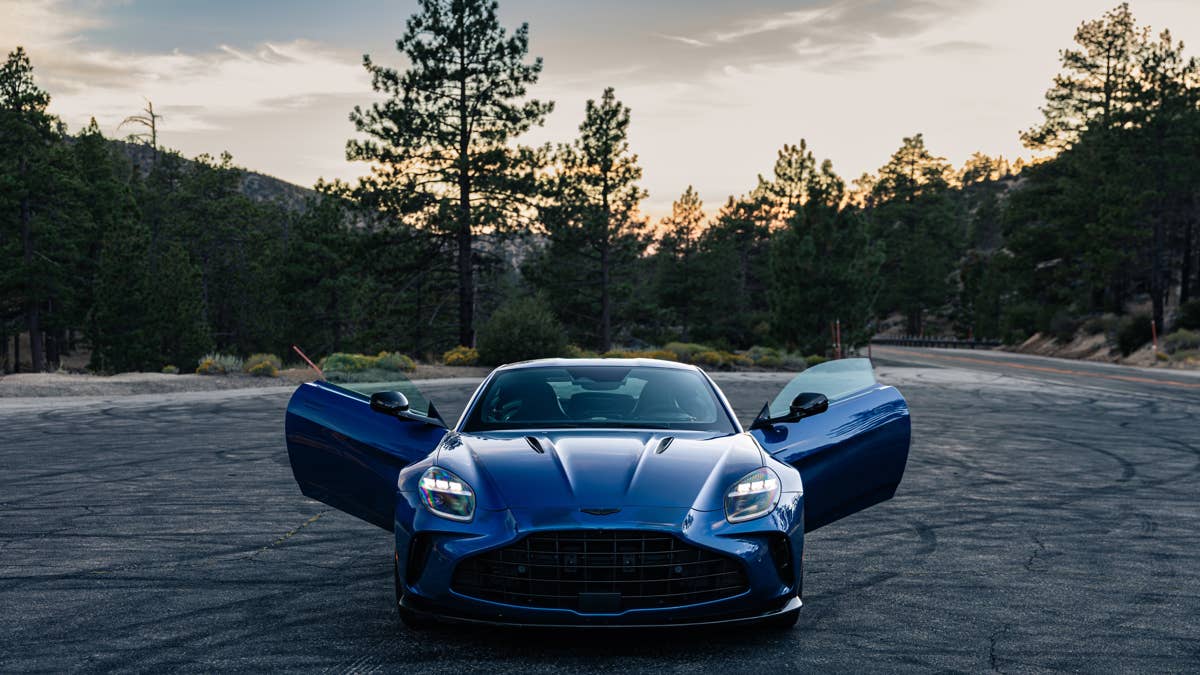
2026 Aston Martin Vantage S

Gabi Wabi

What the S Badge Actually Buys

Start with the structure. The rear subframe is now solid-mounted rather than isolated in bushings, which raises torsional stiffness by 5% and, more to the point, sharpens turn-in and gives the front end a confidence it did not previously have at lower speeds. You feel it immediately, on the first corner, before you have touched the throttle in anger.
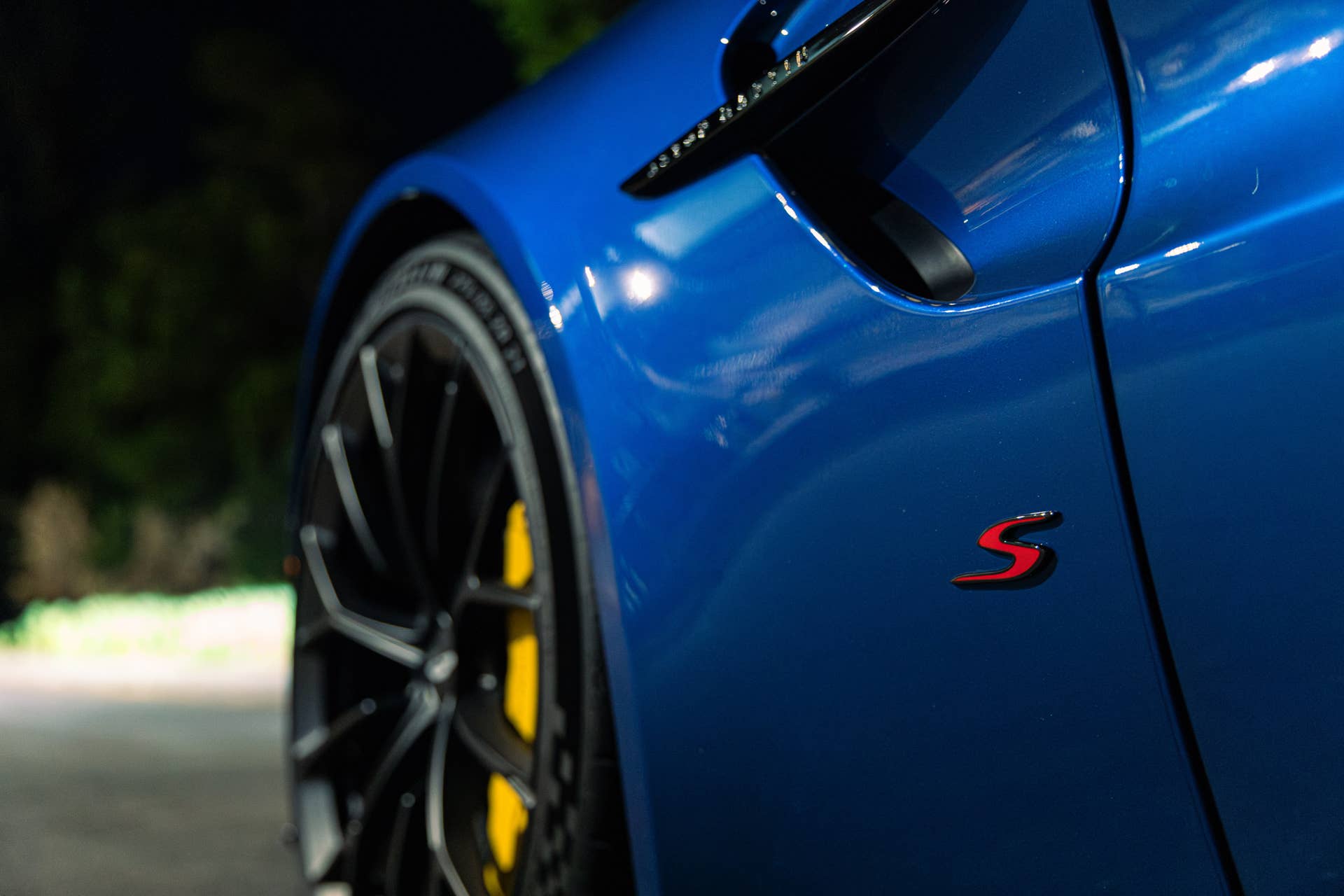
2026 Aston Martin Vantage S

Gabi Wabi

The final drive ratio drops to 3.083:1, which makes in-gear acceleration noticeably more urgent without changing a single figure in the performance specifications. Stability control has been retuned. A new throttle calibration delivers power more linearly than the standard car manages, which matters enormously in something making 590 pound-feet from 2,000 rpm.

Outside, hood blades vent hot air from the engine bay, a full-width decklid spoiler spans the tail, and quad tailpipes replace the standard exhaust exits. The S badges on each front fender are forged brass filled with red glass enamel. On a car where the base price is $194,500, spending $5,000 on all of that is the easiest decision in the configurator.

The Engine Is Mercedes-Derived and Aston-Finished

Output lands at 671 horsepower at 6,000 rpm and 590 pound-feet held from 2,000 to 5,000 rpm, from a hand-built version of the Mercedes-AMG-derived 4.0-liter twin-turbocharged V8. Power reaches the rear wheels alone through a ZF eight-speed torque converter automatic mounted as a rear transaxle, which is where a good deal of this car’s balance comes from. Aston quotes 3.3 sec, est. to 60 mph and 202 mph.
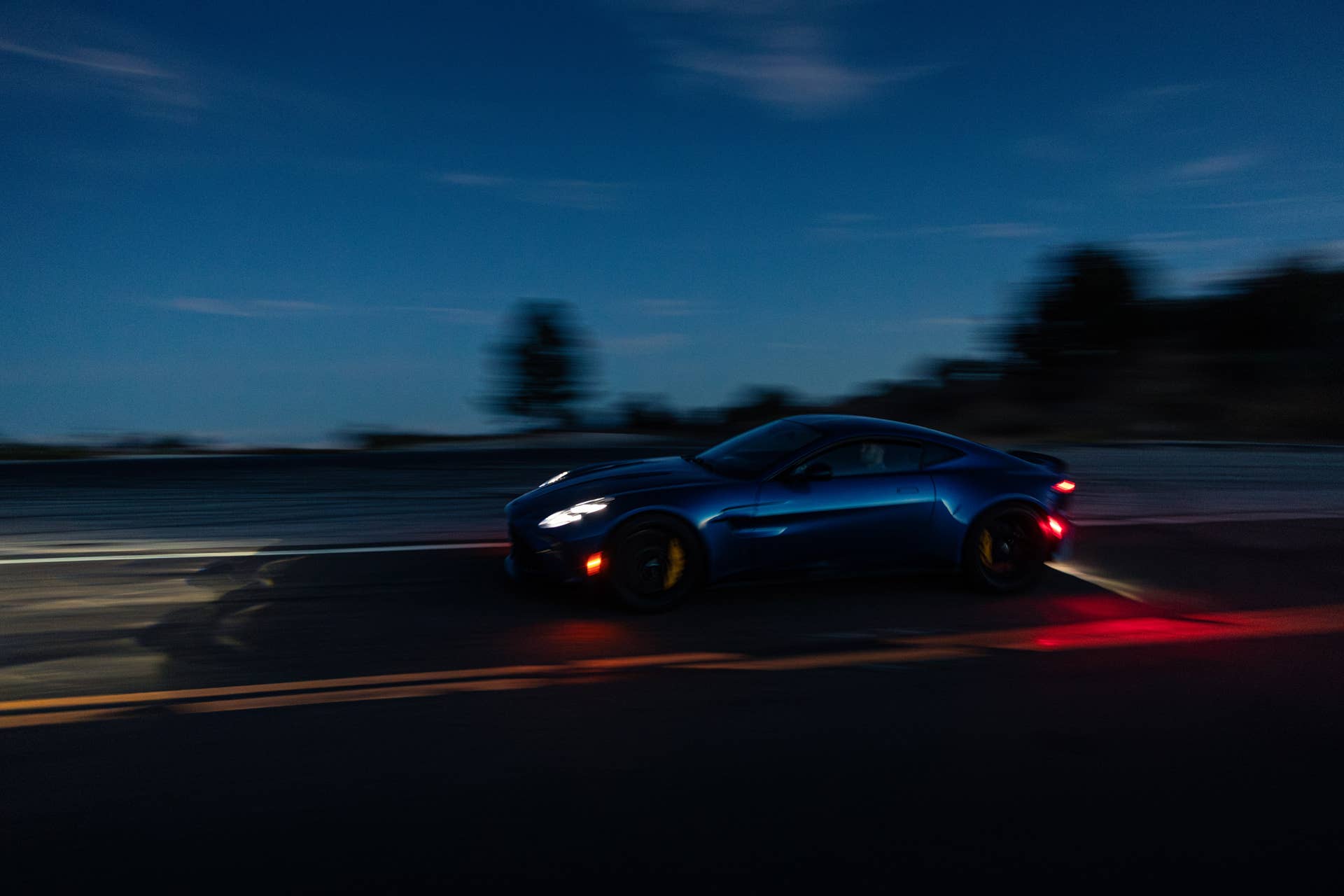
2026 Aston Martin Vantage S

Gabi Wabi

At 3,847 pounds the Vantage is light by modern standards, and specifying the available carbon fiber components lifts the power-to-weight ratio to 394 horsepower per metric ton. What the numbers do not convey is the noise, which is excellent, or the throttle response, which is now genuinely linear rather than turbocharged in the old sense. On a canyon road this thing simply hauls.

Nobody Else Builds an Interior Like This

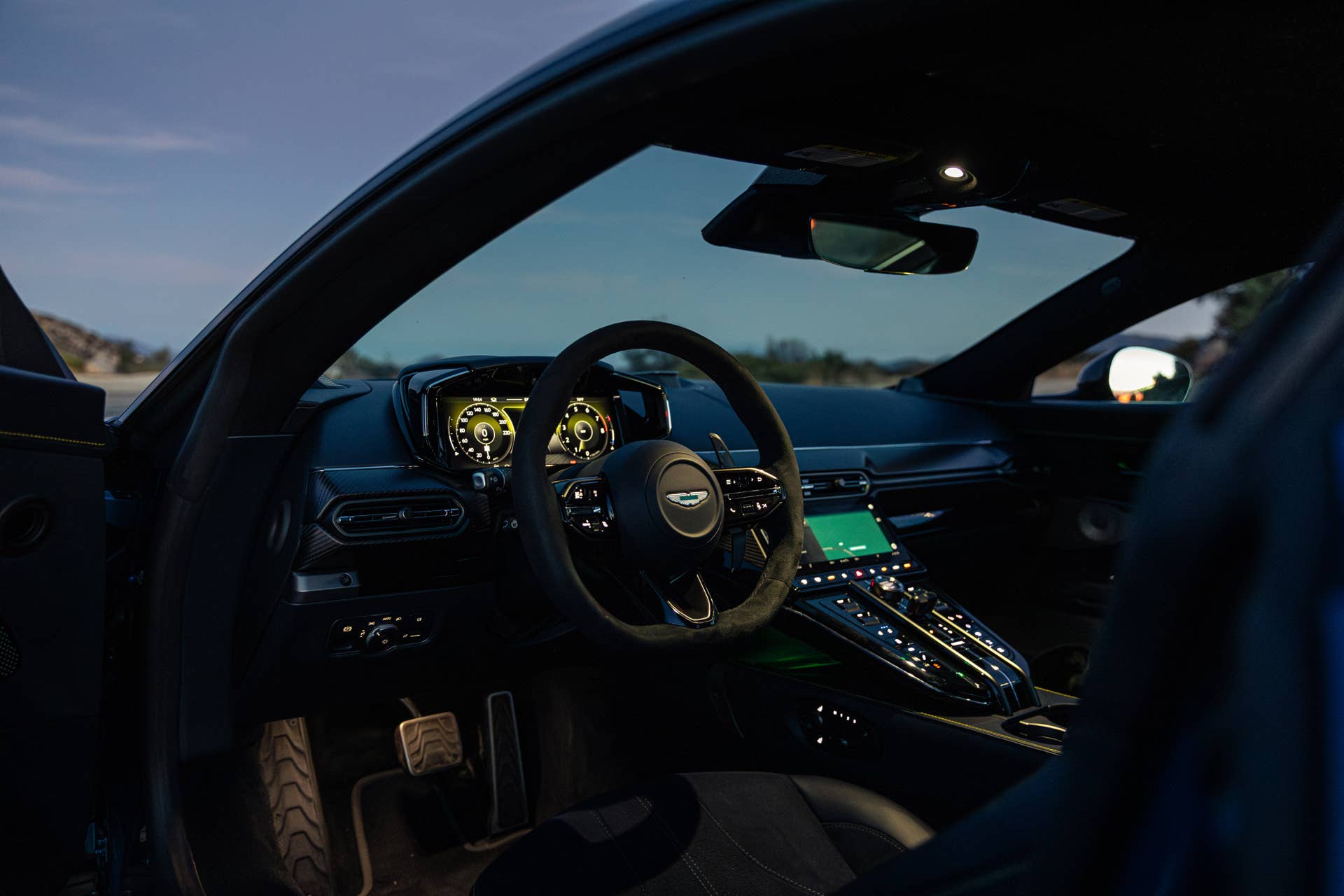
Aston Martin finally made the cabin its own. Across the Vantage, the DB12 and the Vanquish, the company developed an interior identity that stands on its own rather than borrowing its way to competence, and Q by Aston Martin means effectively nothing is off the table where materials are concerned.
2026 Aston Martin Vantage S

Gabi Wabi

What separates it is the tactile experience. Physical metal knobs, buttons with real weight and a positive action, switchgear that feels engineered rather than sourced. Sitting in this car and operating it is a pleasure before you have moved a foot. Nobody else is doing this anymore. Lamborghini, Porsche and McLaren have all migrated the bulk of their controls onto screens, and in the process they surrendered the connected, personal feeling that proper hardware provides. The S trim adds heated carbon sports seats with embroidered S logos, and the optional interior highlight package brings anodized red billet aluminum controls, contrast stitching and herringbone quilting.

The Shape Has Not Been Improved On

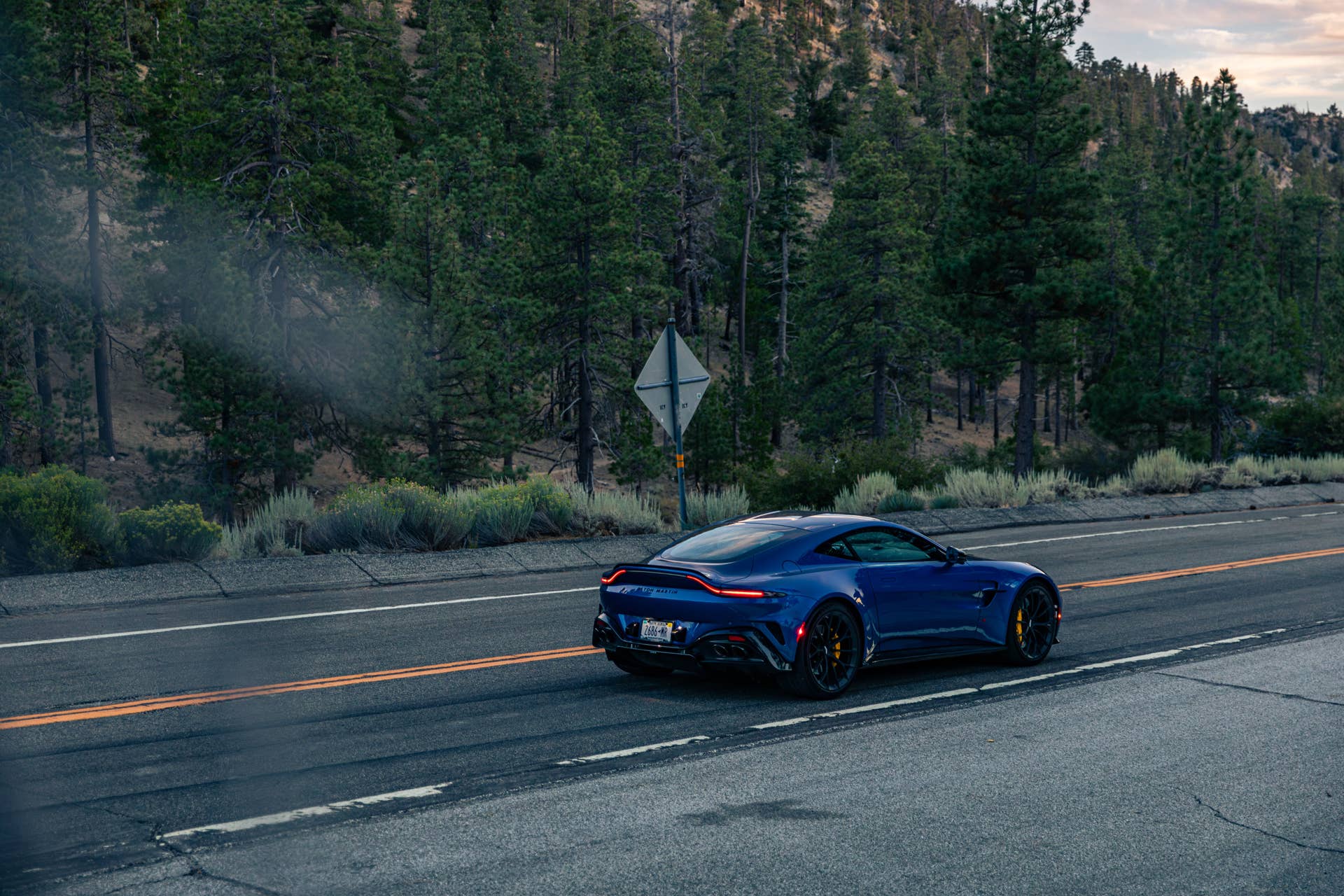
Simply stunning. Proportions carry it: a long hood, a cabin pushed back toward the rear axle, an aggressive tail that closes the design properly. Plenty of sports cars manage two of those three. This one is a class act from any angle.
2026 Aston Martin Vantage S

Gabi Wabi

The details hold up to inspection. The lines, the headlamps, the way the S hardware integrates without disrupting anything. Twenty-one-inch forged wheels wear Michelin Pilot Sport S 5 tires at 275/35 front and 325/30 rear, and the frameless swan-wing doors remain one of the great theatrical gestures in this business. Aesthetics are not a small part of why anyone spends this money, and the Vantage delivers on them completely.

Technology Does Its Job

Aston brought infotainment development in-house with the 2025 redesign, and the result is a 10.25-inch touchscreen that responds promptly instead of making you wait. Apple CarPlay Ultra is here, and the Vantage was among the first cars anywhere to get it, with Android Auto supported as well.

2026 Aston Martin Vantage S

Gabi Wabi

The optional Bowers and Wilkins system is best-in-class and worth ordering if sound matters to you. Equally worth crediting is the control layout, which balances physical buttons against on-screen functions properly. None of this is groundbreaking measured against the wider industry, which keeps the score at an 8, but none of it is frustrating either, and several rivals at this price cannot claim as much.

Pricing, Running Costs and Coverage

Pricing starts at $199,500 for the S trim against $194,500 for the standard Vantage. Optioned examples climb fast, and a well-specified test car reached $248,400. Aston Martin does not publish a United States destination charge on its configurator, so the delivered figure runs above the base number.

Environmental Protection Agency (EPA) figures come in at 15 mpg city, 22 mpg highway and 18 mpg combined from a 19.3-gallon tank. Those are competitive within the segment, where rivals of similar output return the same or worse, and the highway number means the drive to a good road will not punish you. Warranty coverage runs three years with unlimited mileage on basic and powertrain alike, with corrosion protection extending 10 years. Complimentary scheduled maintenance is not included, so you pay for every service from the first one, and on a hand-built V8 those are not inexpensive.

Category

Figure

Pricing and Value

7/10

Efficiency

7/10

Warranty Information

7/10

EPA city / highway / combined

15 / 22 / 18 mpg

Basic and powertrain warranty

3 years / unlimited miles

Corrosion warranty

10 years / unlimited miles

Scheduled maintenance

Not included

Safety Ratings

No crash data exists. Neither the National Highway Traffic Safety Administration (NHTSA) nor the Insurance Institute for Highway Safety (IIHS) has tested the Vantage, which is normal for a two-seat sports car at this volume and price, since neither agency can justify destroying examples. Buyers who rely on independent testing have nothing to consult.

Standard equipment covers blind-spot alert, collision warning, a driver attention monitor, stability and traction control, front and rear parking sensors and a rear camera. That list is adequate rather than comprehensive and trails what a comparable Porsche or Mercedes-AMG provides on driver assistance. The score reflects sound fundamentals with no verification behind them.

Competition

The Porsche 911 is the benchmark and the comparison has genuinely shifted. A 911 Turbo S now opens above $270,000, roughly $70,000 clear of the Vantage S. Porsche still builds the more clinically capable car and backs it with a far deeper dealer network, but it does not build the more engaging one. On a canyon road the Aston is more fun, more exotic and the better drive, and it costs substantially less. Nobody could have written that sentence about a Vantage five years ago.

Elsewhere, the Mercedes-AMG GT shares this engine’s origins while offering all-wheel drive and a more technology-forward cabin, and the Chevrolet Corvette Z06 delivers comparable performance for far less money behind a naturally aspirated V8 that sounds extraordinary. Neither answers the interior. Nothing in this segment matches the Vantage for material quality, switchgear feel or depth of personalization. Depreciation is the Aston’s structural disadvantage against all of them, and it is the strongest argument for buying one a few years old rather than new.

Final Thoughts: 9/10

This is a totally fantastic car, and the S trim is the one to have. The price gap over the standard Vantage is small, and what it buys, the stiffer structure, the shorter final drive and the sharper throttle, transforms an already excellent sports car into a better one. Aston Martin now competes with the Italians and the Germans on merit rather than on charm, which is a genuine change in what buying one of these means. Go in knowing depreciation is steep, the warranty is short and you pay for every service. None of it will matter the first time you find a good road.
I Drove the 2026 Genesis Electrified GV70. It No Longer Feels Like an Underdog

Two Weeks With The Genesis That No Longer Needs An Excuse

Genesis used to be one of those brands that required an explanation. You told somebody it was Hyundai’s luxury marque, pointed out how much equipment you were getting for the money, reassured them that the interior really was that good, and eventually arrived at the argument that perhaps paying extra for the BMW, Mercedes-Benz or Audi badge was not automatically the smartest decision.

Adam Lynton / Autoblog

View the 2 images of this gallery on the original article

Adam Lynton / Autoblog

I am not sure the Electrified GV70 needs that speech anymore, and that matters because Genesis itself no longer seems interested in giving it. I spent time with the brand at Le Mans earlier this year, where everything from the GMR-001 race program to Magma and the hospitality operation felt designed to make one point: Genesis wants to be judged alongside established luxury brands, not as the interesting newcomer standing just outside the club. The company has also been explicit that it wants pricing power rather than living indefinitely as the discounted alternative to BMW and Mercedes.

Related: Genesis Went To Le Mans To Prove It Belongs In The Luxury Big League

That sounds ambitious until you live with one of the cars. I had the updated Electrified GV70 for two weeks, including a couple of 200-mile family road trips clocking plenty of highway miles, plus errands, town driving, and country roads. Most of that time was spent with the family aboard, so this was not a carefully managed EV test built around ideal charging stops and efficiency runs. I used it as a normal luxury family SUV, which is exactly what most owners will do.

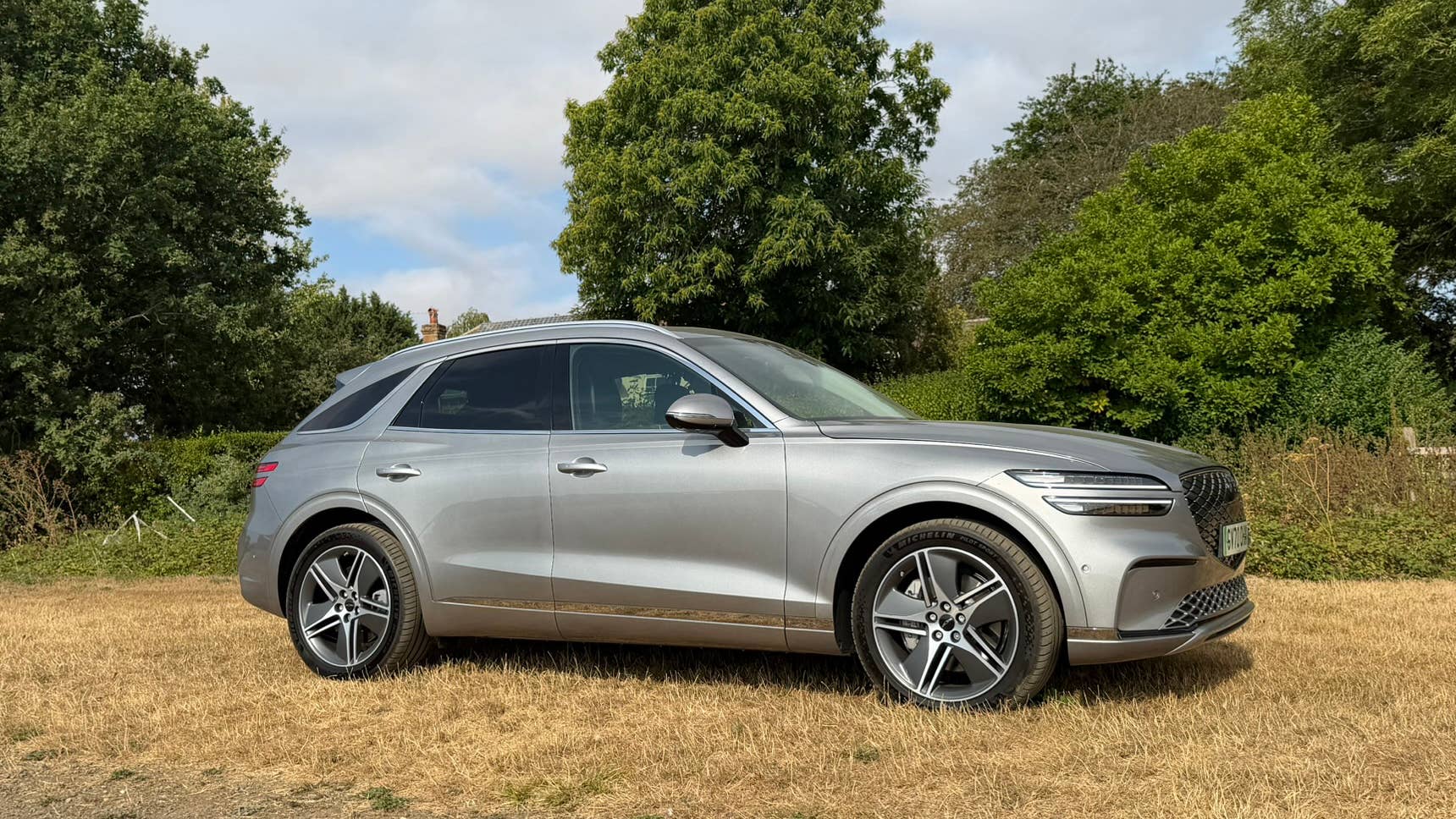
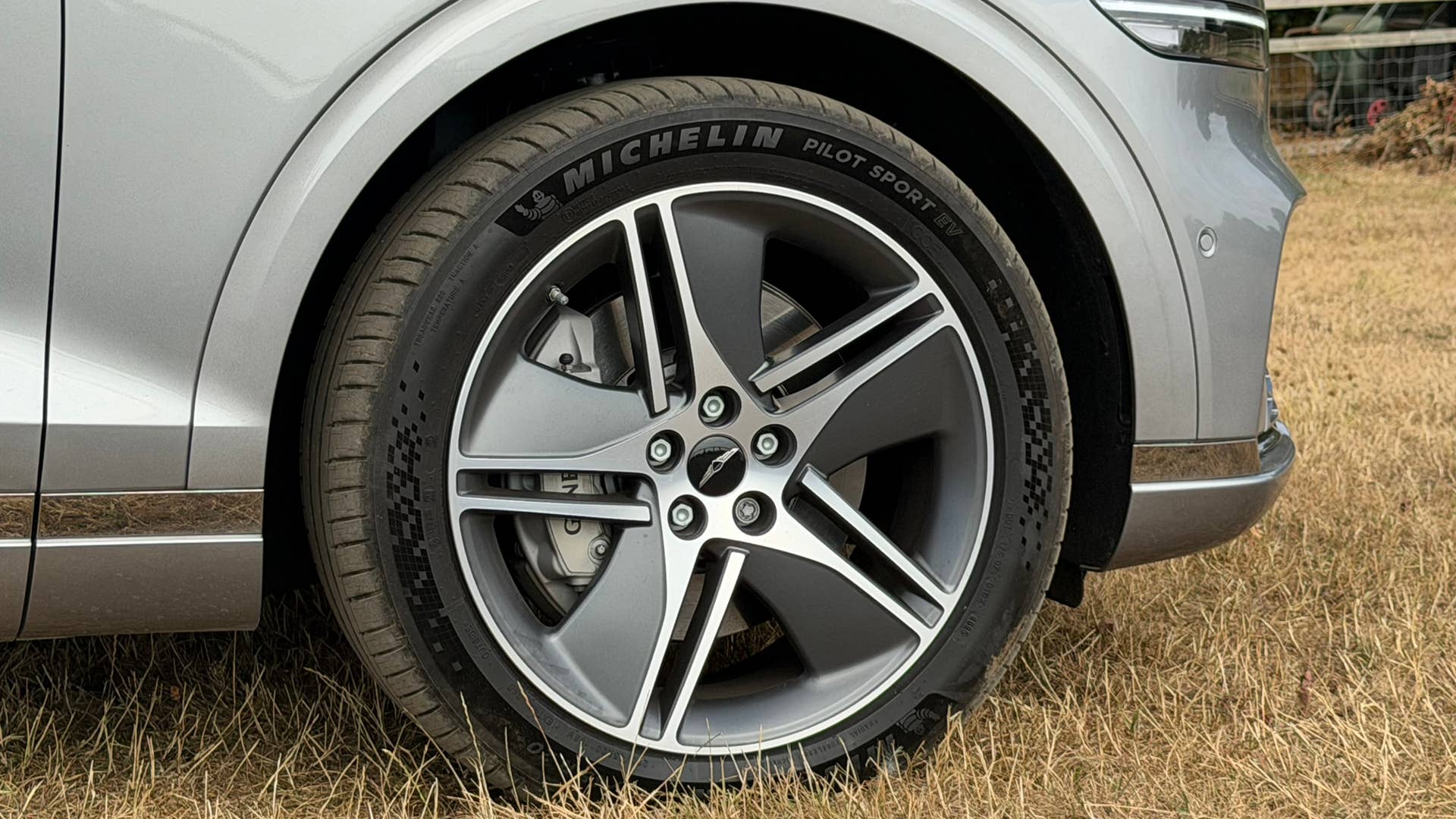
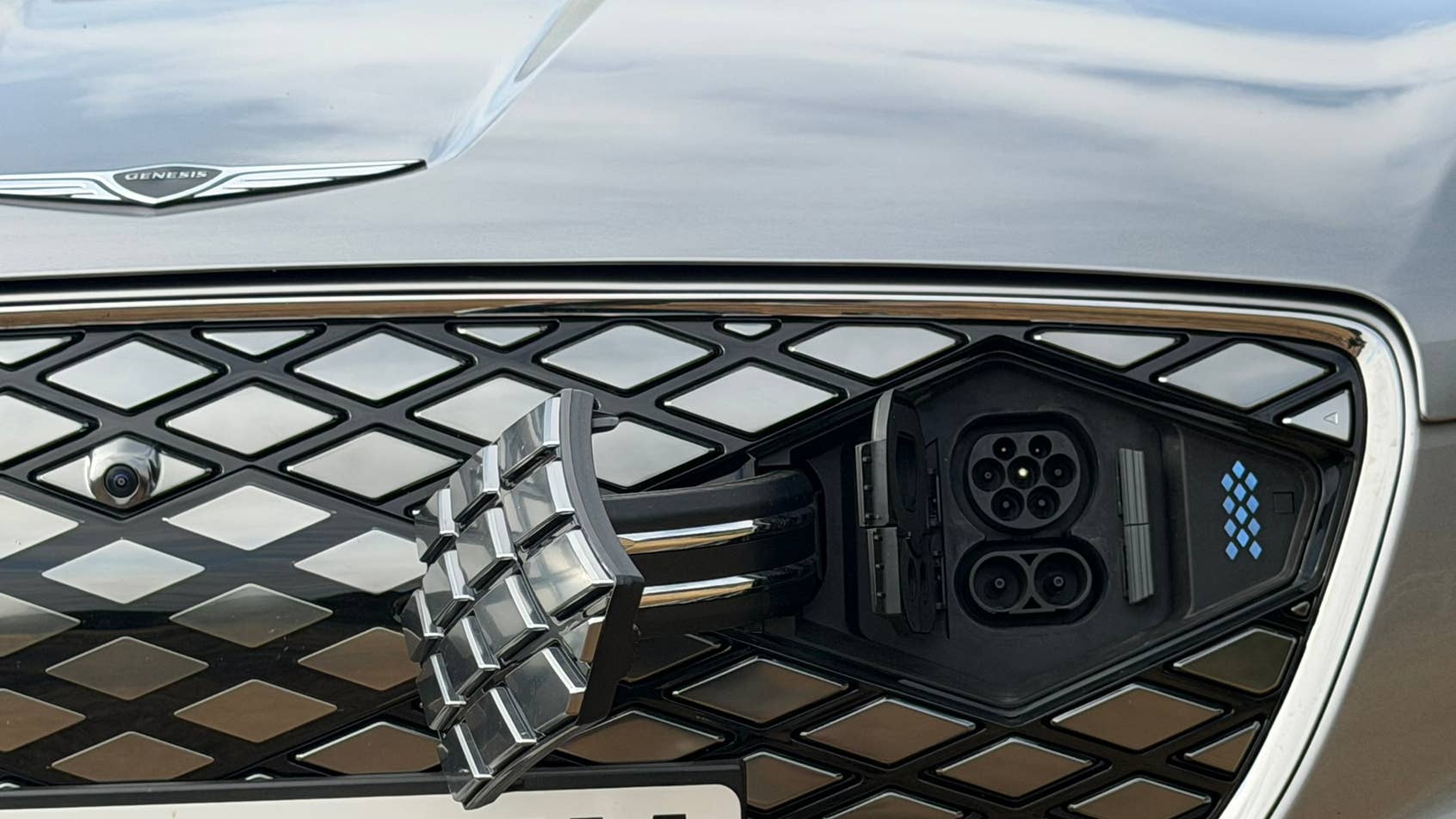
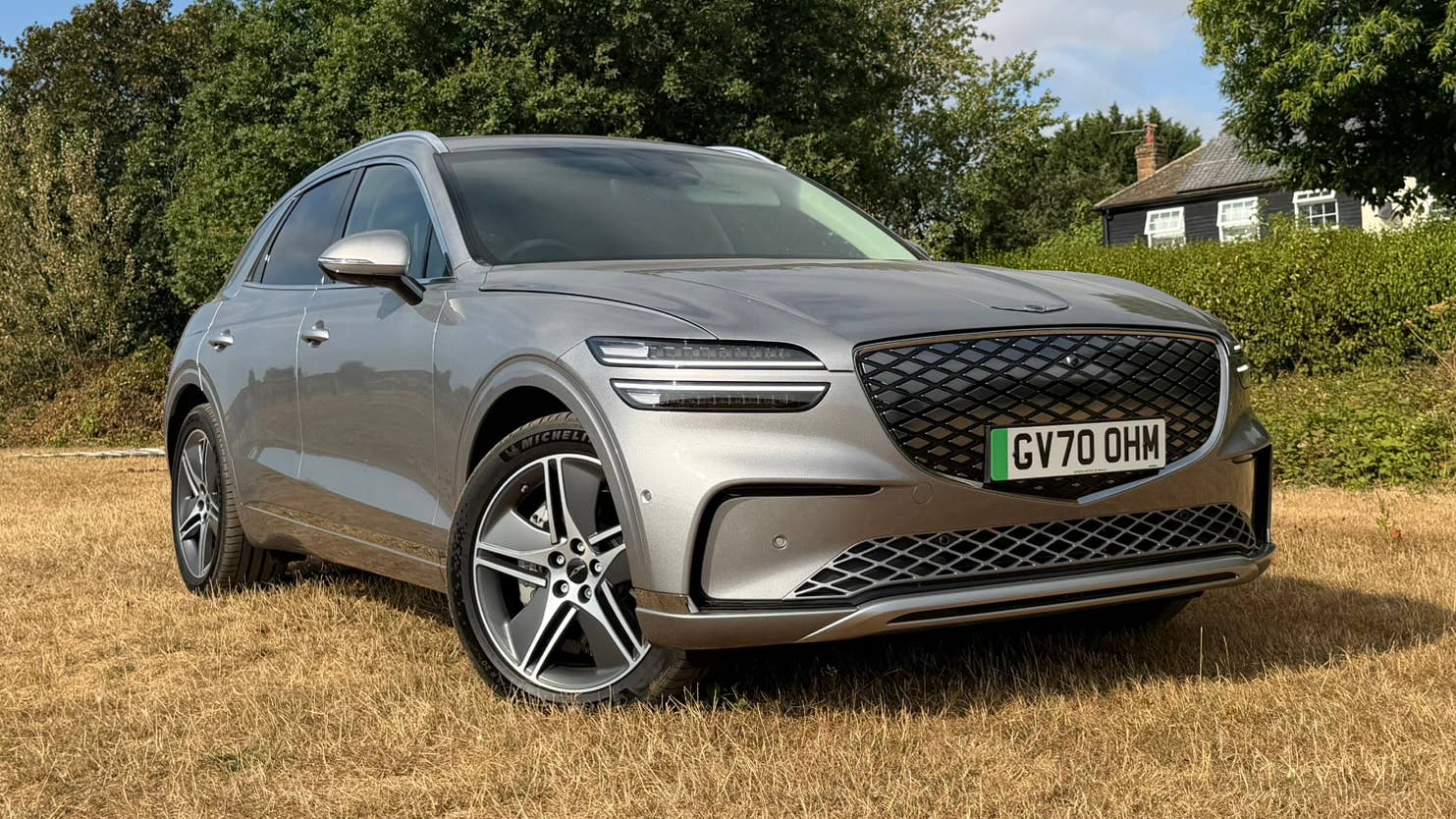
My car was an Electrified GV70 Luxury in Saville Silver with an Obsidian Black interior, fitted with the Comfort Pack, Nappa Leather Seat Pack, Digital Centre Mirror and Serenity Pack. It uses an 84-kWh battery, produces 483 hp and 516 lb-ft of torque, rides on 20-inch wheels and carries a quoted WLTP range of 287 miles. With options, delivery and fees, the on-the-road price was £79,975 (about $106,700). You can find something similar in the US for less than $80,000, which is discussed below.

At that sort of money, Genesis can no longer rely on the old argument that it is nearly as good as the Germans for much less. The GV70 simply has to be good enough to stand alongside them.

Adam Lynton / Autoblog

Design: Genesis Has Stopped Looking Over Its Shoulder

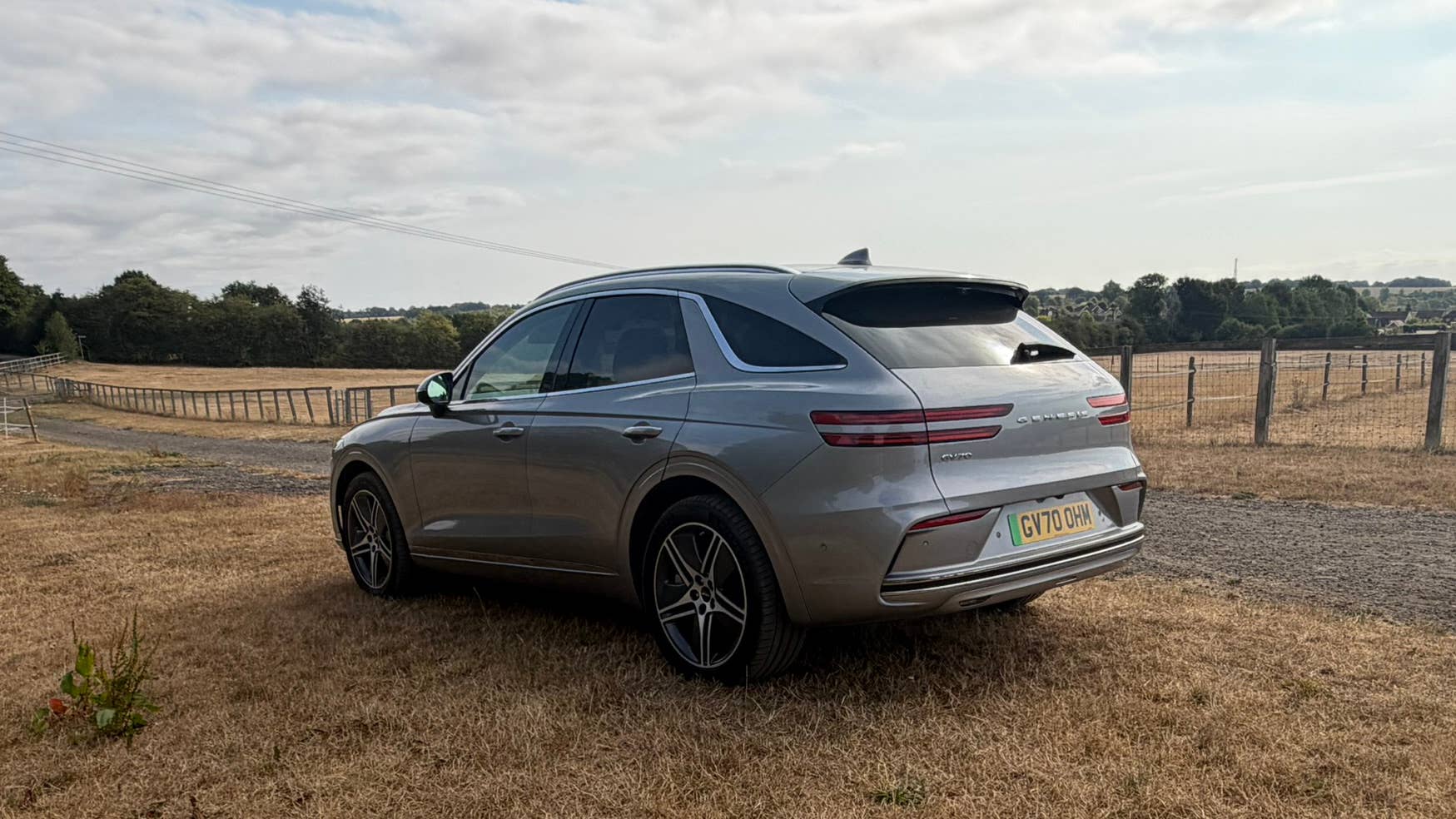
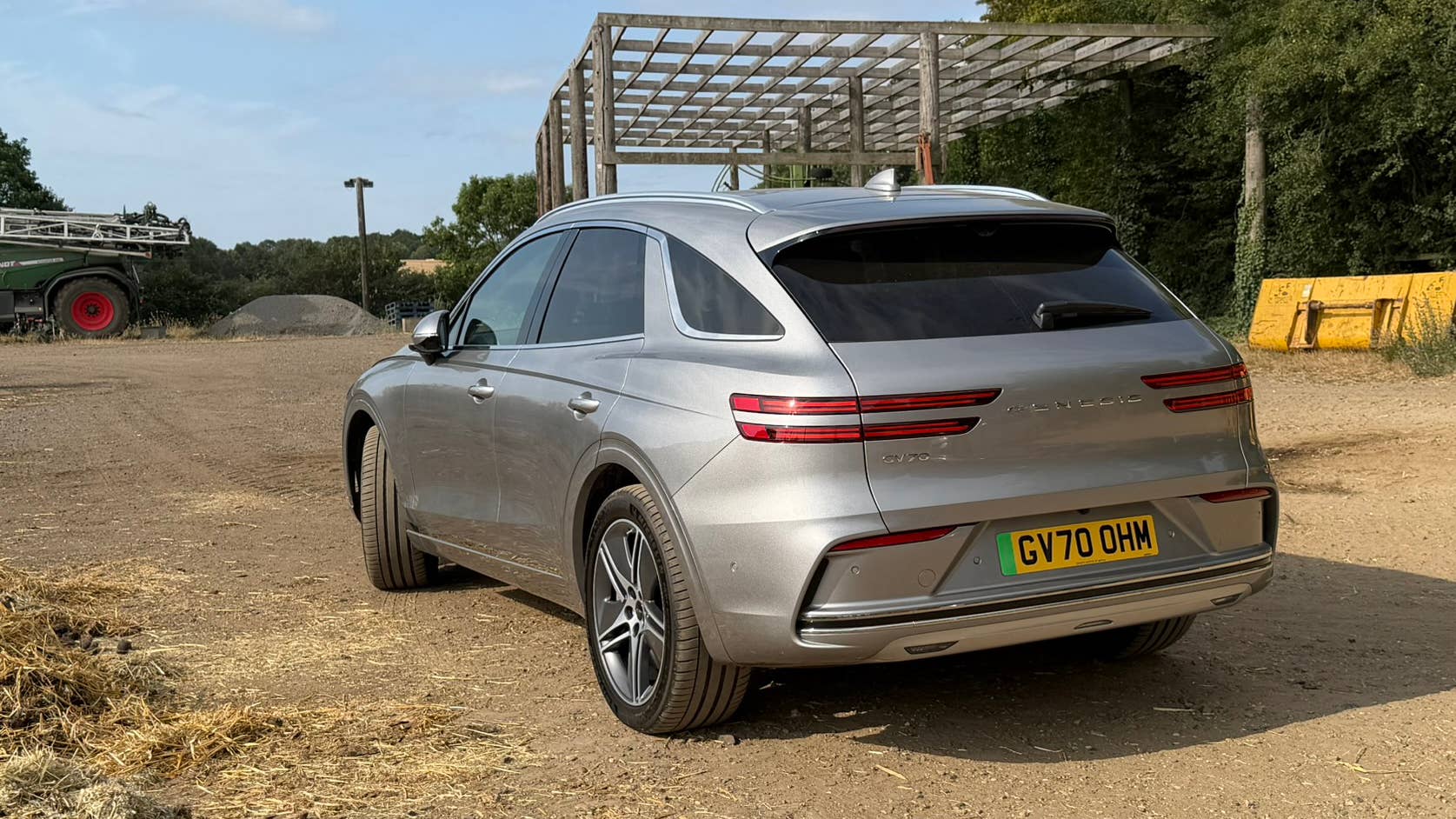
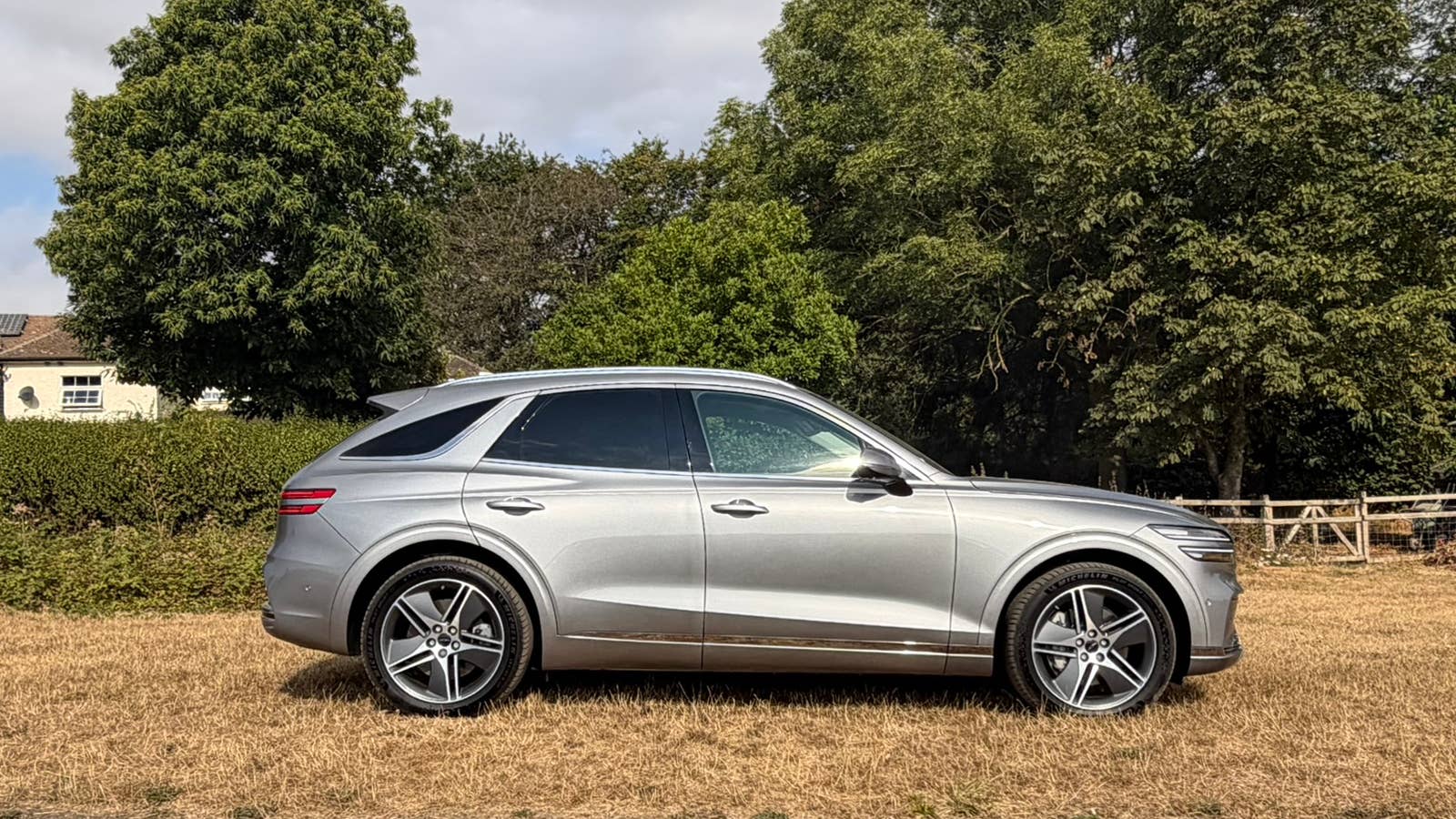
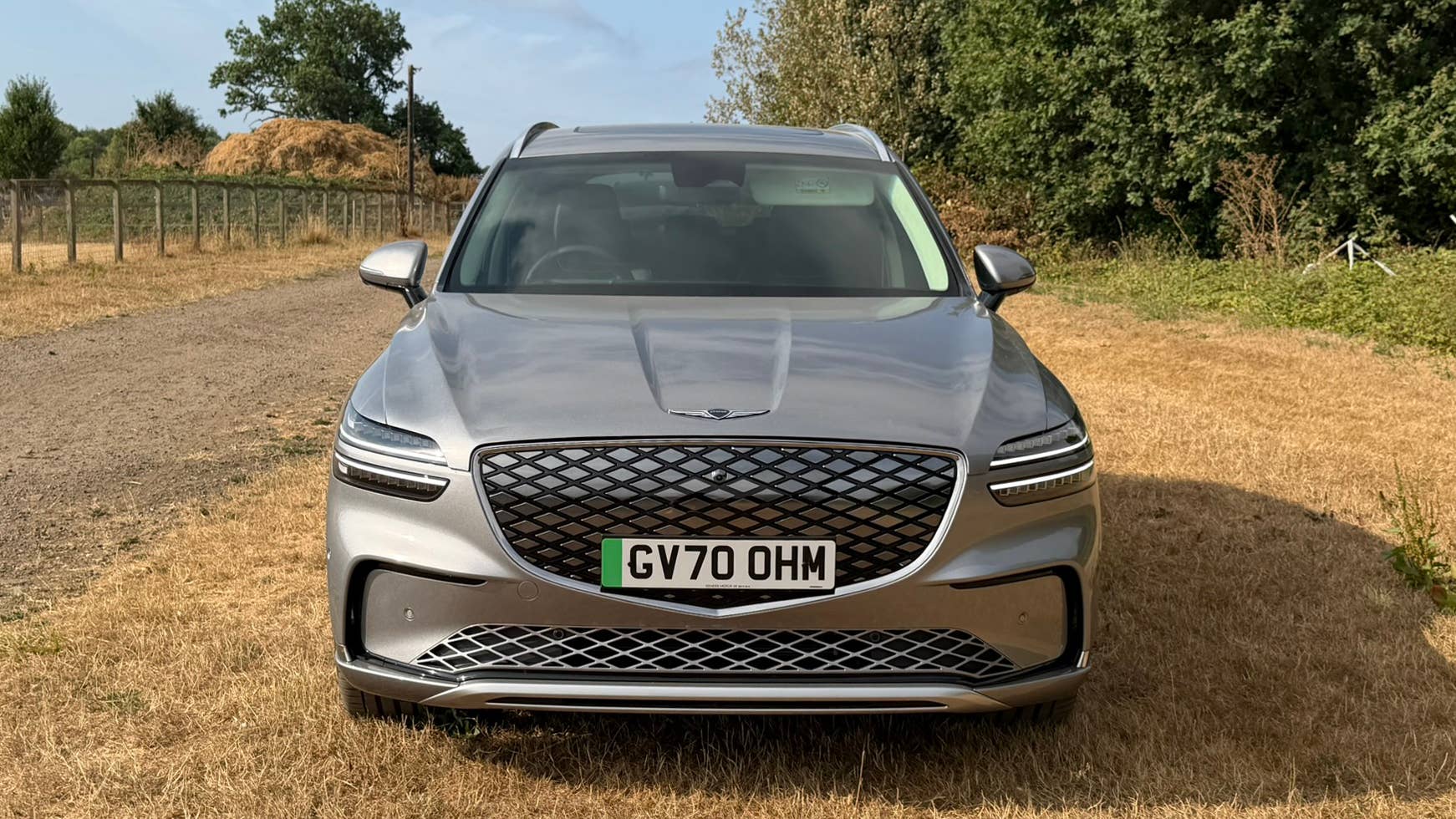
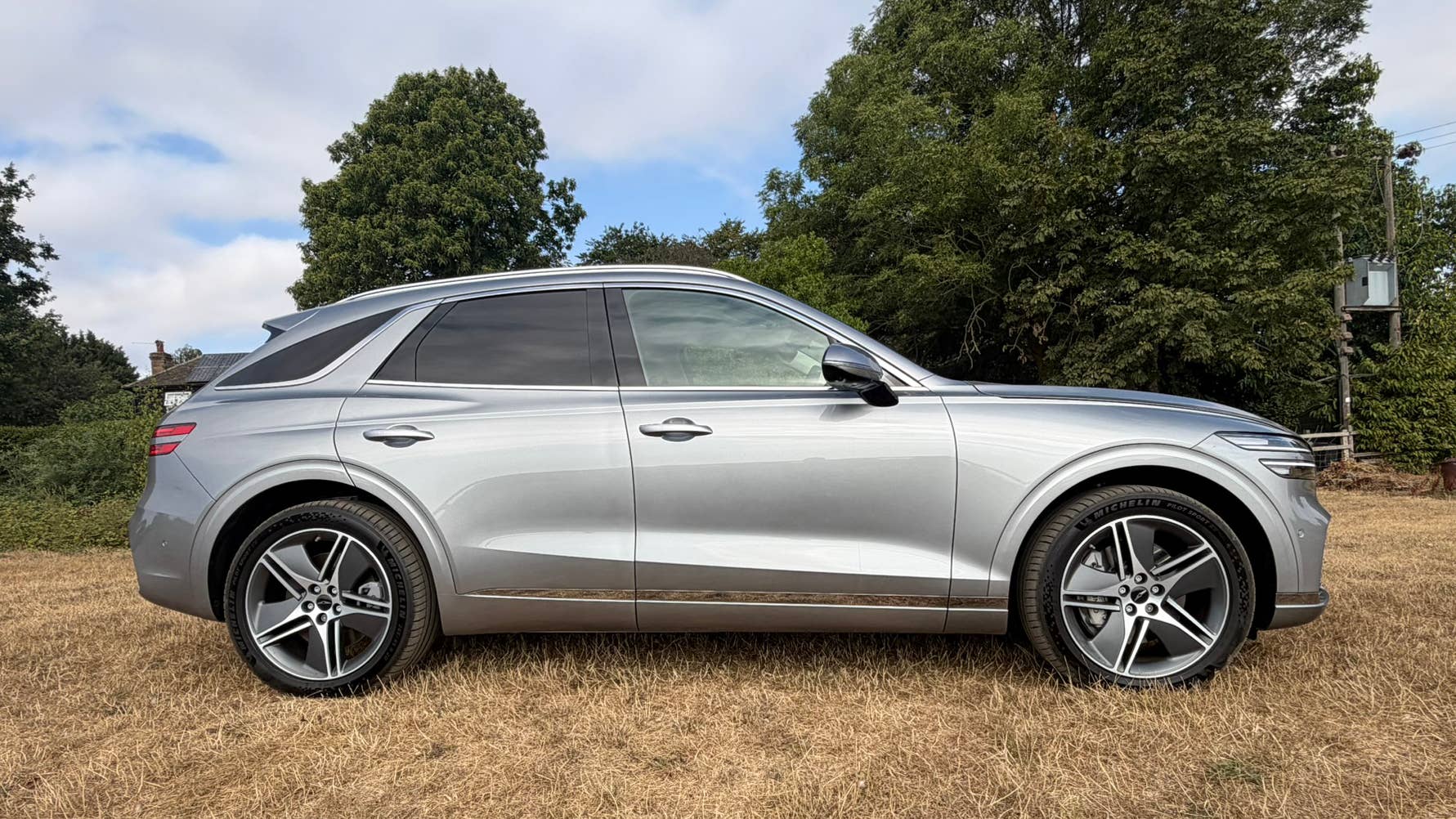
The GV70 looked more athletic in person than I expected. The proportions work better when you are standing beside it, with a long hood, relatively low roofline, broad rear haunches and those twin-line lights giving it more visual width than photographs suggest. In Saville Silver, mine looked stylish and expensive without becoming overly flashy, and one unsure passer-by thought it might be a Bentley.

There are worse brands to be mistaken for and I can see why the comparison happened, particularly around the grille and general visual weight, but the more important point is that Genesis no longer feels like it is borrowing an identity. The twin-line lighting, crest grille and flowing bodywork are recognisably Genesis now, and that is something the brand’s relative youth may actually have helped.

Adam Lynton / Autoblog

View the 2 images of this gallery on the original article

Genesis executives have talked about being relatively untethered from decades of legacy, which gives the company freedom to experiment with products older luxury marques might struggle to justify. That is more obvious with its wild concepts, wagons, convertibles and Magma projects, but some of the same freedom filters down into a mainstream SUV like the GV70. It does not look like Genesis started with an X3 or Q5 and changed enough panels to create a different badge; it increasingly looks like something only Genesis would build.

Related: Genesis Does Not Want To Be The Discount Alternative To BMW And Mercedes

Interior: Genuine Luxury, Not Good “For The Money”

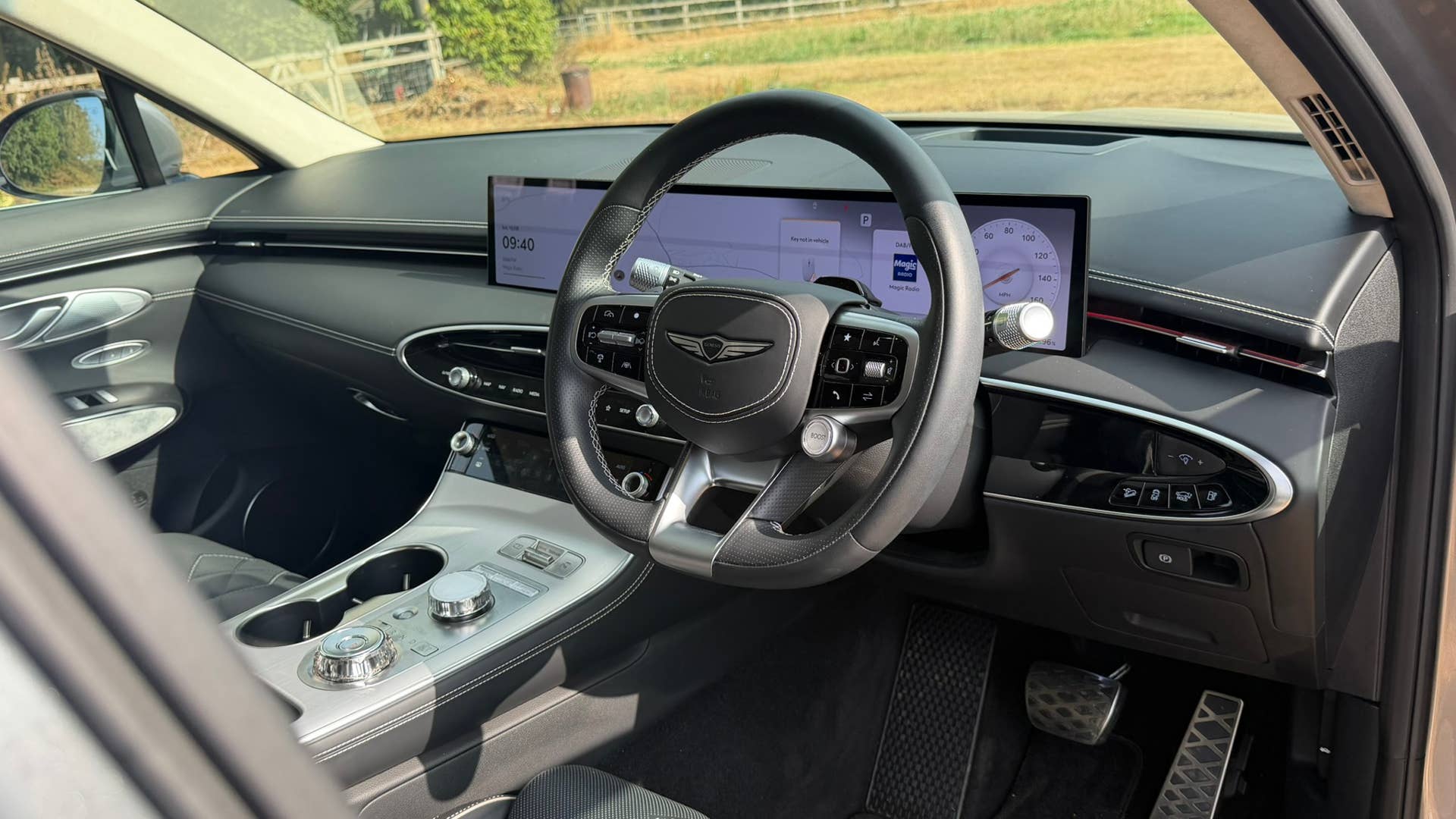
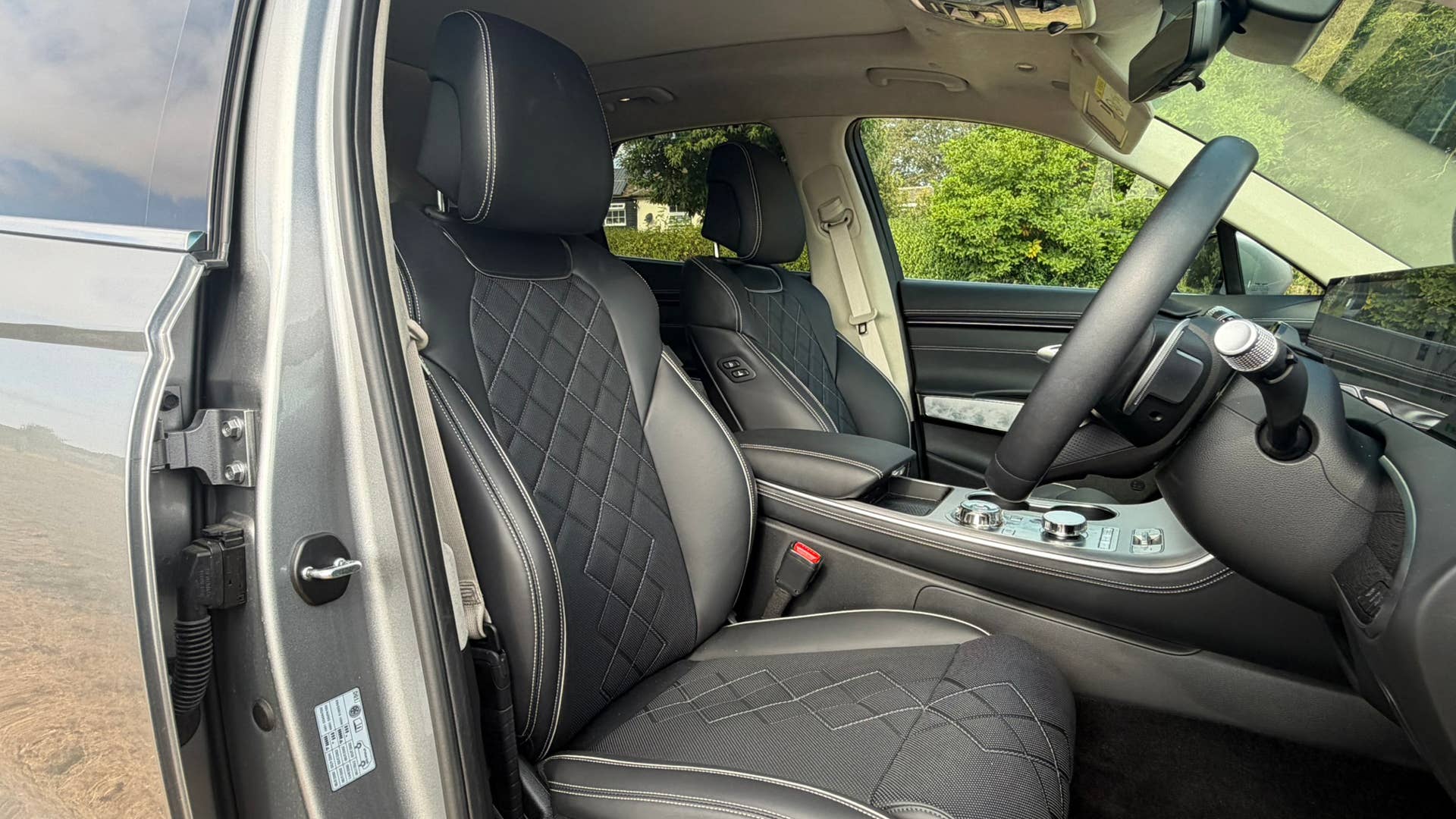
The cabin is where any lingering underdog narrative really starts to unravel, because this is not an interior that needs to be praised with the qualifier “for a Genesis.” The materials, fit and finish, seats and general atmosphere are genuinely luxurious, and I would put the GV70 comfortably on par with Audi and BMW while placing it a clear step above the Volkswagens I have driven recently.

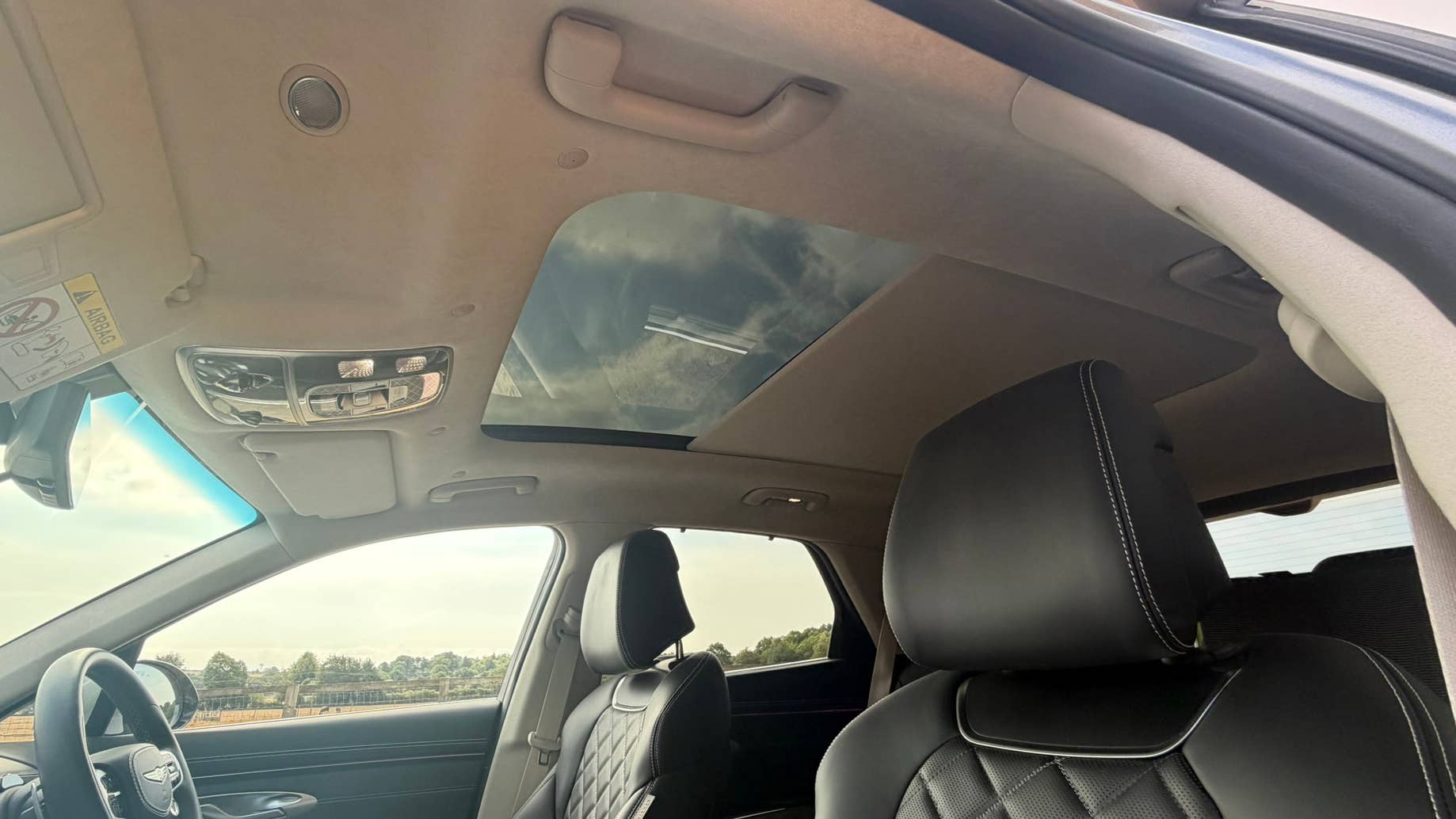
The specification obviously helps. My car had quilted Nappa leather, suede across the headliner, pillars and sun visors, illuminated door trim, ventilated front seats, heated seats front and rear, an electric panoramic roof, ambient lighting and a 15-speaker Bang & Olufsen system with Dolby Atmos. The Comfort Pack added Ergo-Motion front seats with massage, memory, cushion extension and adjustable bolsters.

Adam Lynton / Autoblog

View the 4 images of this gallery on the original article

Those seats were superb, and I had enough long-distance time in them to find out properly. After several hours at a stretch behind the wheel, I arrived without the usual complaints about lower-back support or cushioning. I used the massage and ventilation regularly, and unlike some cars where those features feel like toys added to justify a trim level, in the GV70 they fit naturally into the broader sense of comfort.

There are some more unusual touches too. The Serenity Pack adds an air-aroma diffuser and a UV-C sterilisation box, which sounds faintly ridiculous until you remember that luxury cars have spent decades finding increasingly elaborate ways to make owners feel looked after. Genesis talks about Son-Nim, the Korean idea of treating customers as honoured guests, and after seeing how deliberately the company applies that philosophy to its wider luxury strategy, some of these details make more sense.

Adam Lynton / Autoblog

Infotainment: Big Screen, Minimal Drama

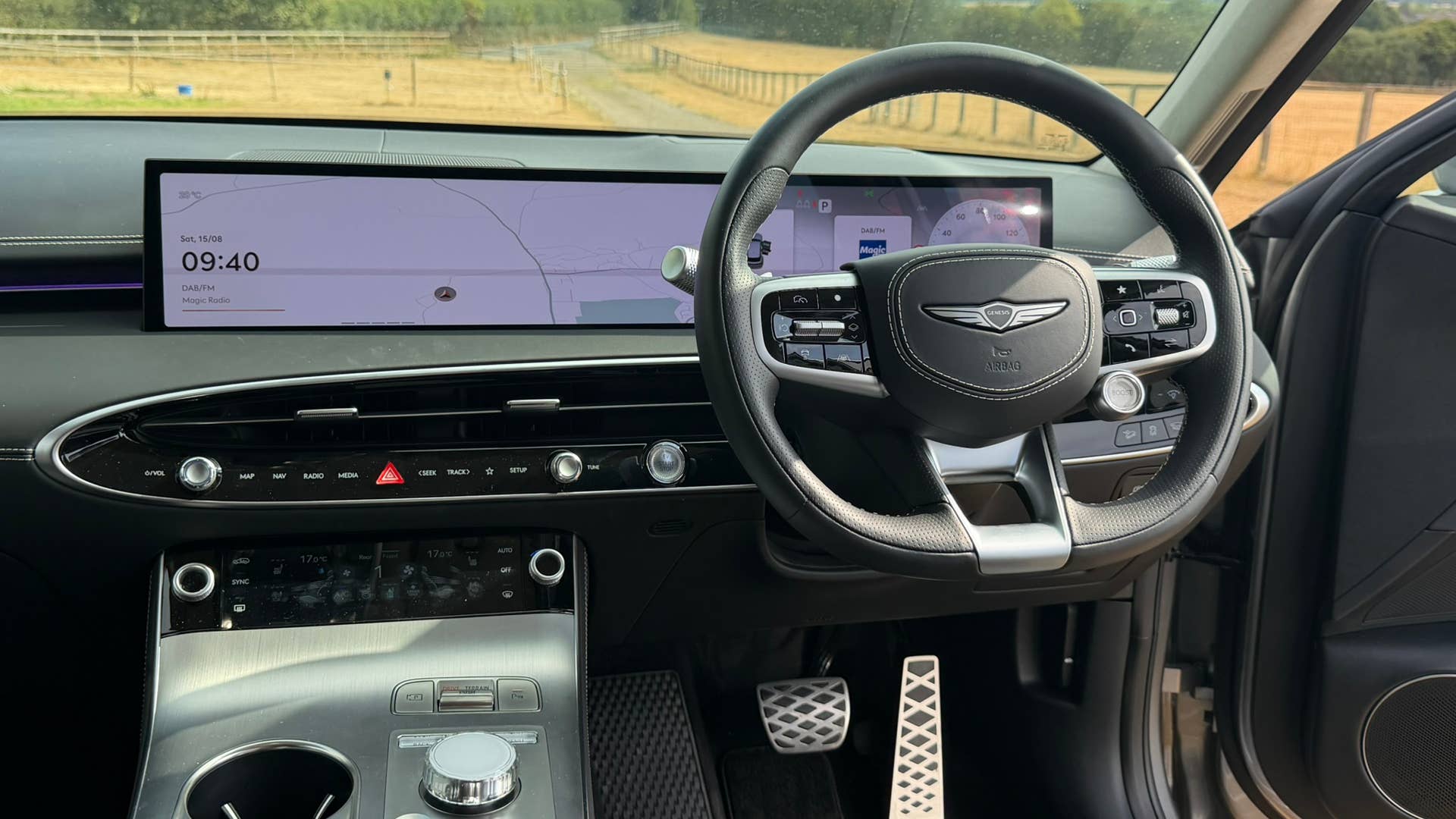
The updated dashboard is dominated by a 27-inch OLED display combining the instrument cluster and infotainment system, which sounds like exactly the sort of setup that should result in a paragraph complaining about modern cars replacing every function with a touchscreen.

By contrast, the graphics are crisp, wireless Apple CarPlay worked throughout my two weeks, the menus are logically arranged, and I never found myself fighting with basic functions. The rotary controller took a day or so to become completely instinctive, partly because Genesis puts multiple circular controls close together on the centre console, but once I was used to it I stopped thinking about the interface almost entirely.

That is usually the best compliment I can give an infotainment system. The GV70 has plenty of technology, including a head-up display, blind-spot camera views, a 360-degree camera, fingerprint authentication, wireless charging and Highway Driving Assist 2, but none of it dominated the experience or constantly asked me to admire how clever it was.

Having recently spent time in several cars where touchscreen-heavy controls became an entire review topic, the Genesis felt refreshingly settled.

Adam Lynton / Autoblogg

View the 3 images of this gallery on the original article

Family Practicality: Excellent For Four, Less Convincing For Five

Over two weeks, the GV70 worked extremely well as a family SUV, although there is one limitation I would take seriously before buying one.

For four people, it is excellent. There is good rear legroom, the trunk handled everything we needed for both longer family trips, there is enough useful storage around the cabin, and the quietness makes several hours on the motorway much less tiring than it could be.

Adam Lynton / Autoblog

View the 2 images of this gallery on the original article

The issue appears when you try to put two adults and a baby seat across the second row. I did it, and it is possible, but it becomes a squeeze. If three genuinely usable rear positions are part of your normal routine, this probably is not the GV70’s strongest use case. A family of four should have very little to complain about, but families regularly needing three across should look carefully before signing anything.

That is a more meaningful limitation to me than a spreadsheet comparison of cargo capacities because I actually had the car loaded with people and luggage rather than theoretical suitcases. For our trips, the trunk was big enough and the rear accommodation was comfortable until I asked it to operate as a proper five-seater.

Performance: Much Faster Than It Needs To Be

The Electrified GV70 is properly quick, although the interesting thing is how little the performance defines the car. My UK-spec model produces up to 483 hp and 516 lb-ft of torque. The US-market version normally produces 429 hp, with Boost mode unlocking up to 483 hp for short bursts, so American buyers get essentially the same headline experience: far more acceleration than any family luxury SUV realistically requires.

Overtaking takes almost no thought; highway slip roads are effortless, and I never wanted more performance. Most of the time, though, I drove the GV70 like a luxury car rather than a performance EV because that is where its personality feels most coherent.

Adam Lynton / Autoblog

It is quiet, smooth and relaxed, but Sport mode wakes it up enough that a good country road can become entertaining. The steering is relatively light but sharp, body control is good, and the GV70 changes direction better than its battery weight suggests. I never found myself particularly conscious of that mass, which is probably the more important achievement.

Genesis is currently building a more explicit performance identity around Magma, and company executives have been adamant that the idea cannot simply mean adding horsepower. The cars still need to combine speed with refinement and luxury, and the regular Electrified GV70 already gives them a convincing starting point because it understands that being fast does not require being exhausting.

Related: Genesis’ Stunning Magma GT Supercar Is Now Down To The Numbers

Ride And Refinement: This Is Where The Money Shows

The ride may have been the part that impressed me most, because the GV70 remained composed across broken local roads, country lanes and hundreds of highway miles without the 20-inch wheels ever making the suspension feel brittle.

My car had Genesis’ Preview Electronic Control Suspension, which uses information about the road ahead to prepare the chassis for upcoming surfaces. Whatever the system is doing behind the scenes, it works well enough that I stopped thinking about it. The car deals with poor surfaces without crashing through them, remains controlled when you increase the pace and never gave my passengers much reason to notice what was happening beneath us.

Adam Lynton / Autoblog

Highway refinement was excellent too. I did not notice intrusive tire noise or wind roar, and the active road-noise cancellation contributes to a cabin that feels properly isolated at speed. Combined with the seats and general smoothness of the powertrain, it made the long road trips feel much shorter than they could have.

That may not be as exciting to write about as 483 horsepower, but luxury SUVs are supposed to make distance disappear, and the GV70 is very good at it.

Range And Charging: Around 280 Miles Felt Honest

Genesis quotes 287 miles of WLTP range for my exact specification, and I was seeing around 280 miles indicated from a charge. For comparison, the 2026 US Electrified GV70 was EPA-rated at 263 miles on the smaller wheels, while the updated 2027 model is currently rated at 250 miles across its listed trims.

Range is therefore good rather than class-leading, but charging is where the Genesis claws some ground back. Its 800-volt architecture supports very fast DC charging, with Genesis quoting 10 to 80% in 19 minutes under the right conditions, while my test car supports up to 240 kW.

For long-distance family use, I care almost as much about how quickly an EV can recover range as how far it can travel in the first place, and the GV70’s ability to take on energy quickly makes its merely good range much easier to live with.

Adam Lynton / Autoblog

View the 2 images of this gallery on the original article

Price: No Longer The Cheap Alternative

My test car cost £79,975 (about $106,700) as configured. The closest US equivalent is the Electrified GV70 Prestige AWD, which started at $75,350; with Savile Silver and $1,495 freight, the comparable configuration comes to about $77,495.

That still leaves Genesis with a meaningful price advantage in the US, but not one large enough to excuse shortcomings elsewhere. Fortunately, after two weeks with the GV70, I did not find many that needed excusing.

Adam Lynton / Autoblog

Verdict: Genesis Is No Longer The Underdog

Genesis says it reached one million cumulative global sales faster than any luxury brand in history, and while that “fastest” claim comes from Genesis itself rather than an independent industry ranking, the broader trajectory is difficult to dispute. This is no longer a tiny experiment trying to convince a handful of adventurous buyers that Korea can build a luxury car.

I had already seen that ambition up close at Le Mans, where Genesis parked itself alongside long-established names and quite deliberately started building some of the heritage it cannot inherit. The race program, Magma cars, design concepts and customer-experience push all matter to the long-term brand story, but spending two weeks in the Electrified GV70 gave me the simpler proof point: the product is already there.

It looks distinctive, the interior is genuinely luxurious, the seats are excellent, the ride and highway refinement are among the strongest parts of the car, and it has far more performance than a family SUV realistically needs without allowing that performance to overwhelm the experience. The compromises are real: three across the rear bench with a child seat is tighter than I would want regularly, and the range is good rather than exceptional.

I would not automatically choose the Electrified GV70 over an X3, Q5 or GLC without driving them back-to-back, particularly once you are spending this kind of money, but I would be very tempted, and I would now approach that decision without thinking of Genesis as the outsider that needs to prove itself first.

That may be the clearest measure of how far the brand has come. Genesis spent its first decade trying to convince luxury buyers it deserved to be in the conversation; the Electrified GV70 suggests it is time to stop acting surprised that it is.

Adam Lynton / Autoblog

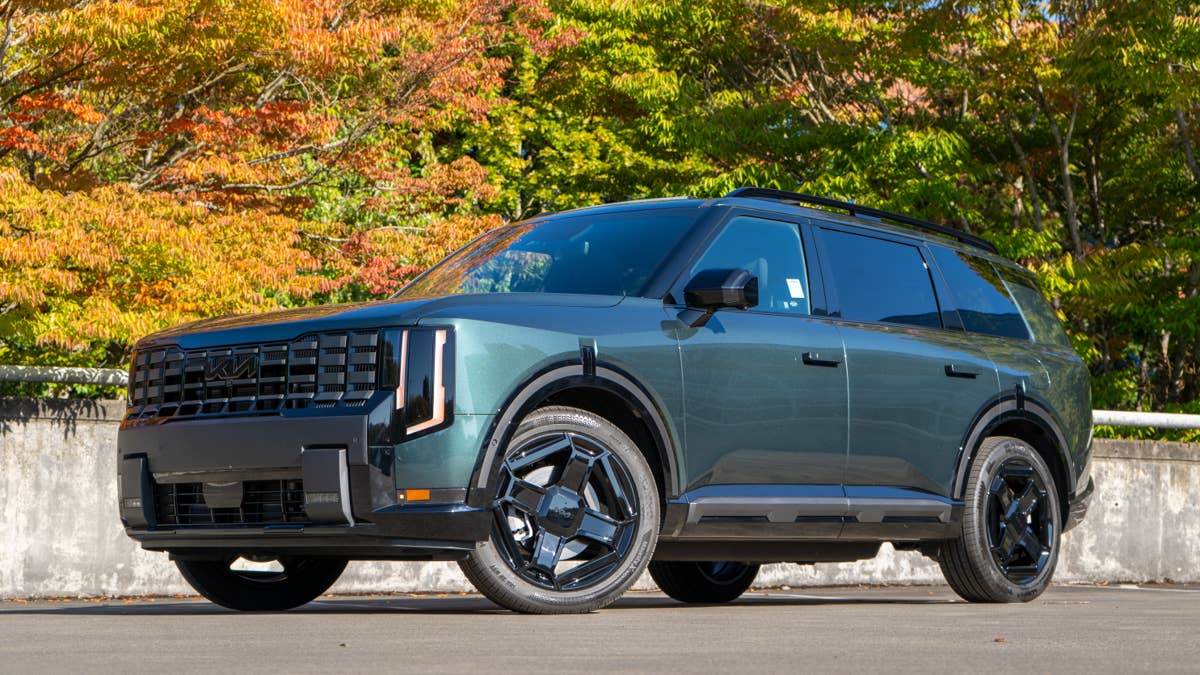
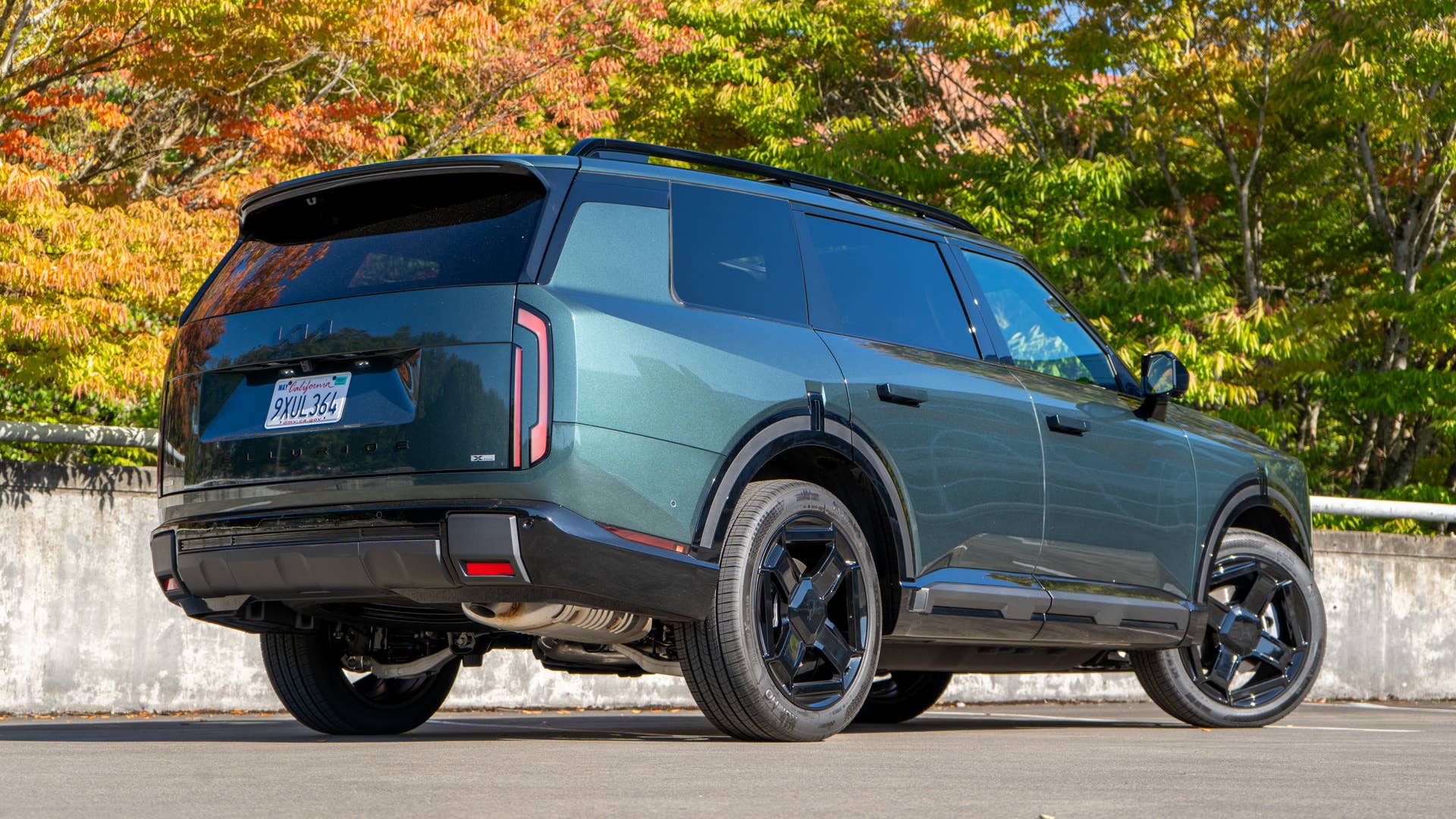
I Drove the 2027 Kia Telluride X-Pro SX-Prestige: $58,335 Buys a Lot of SUV

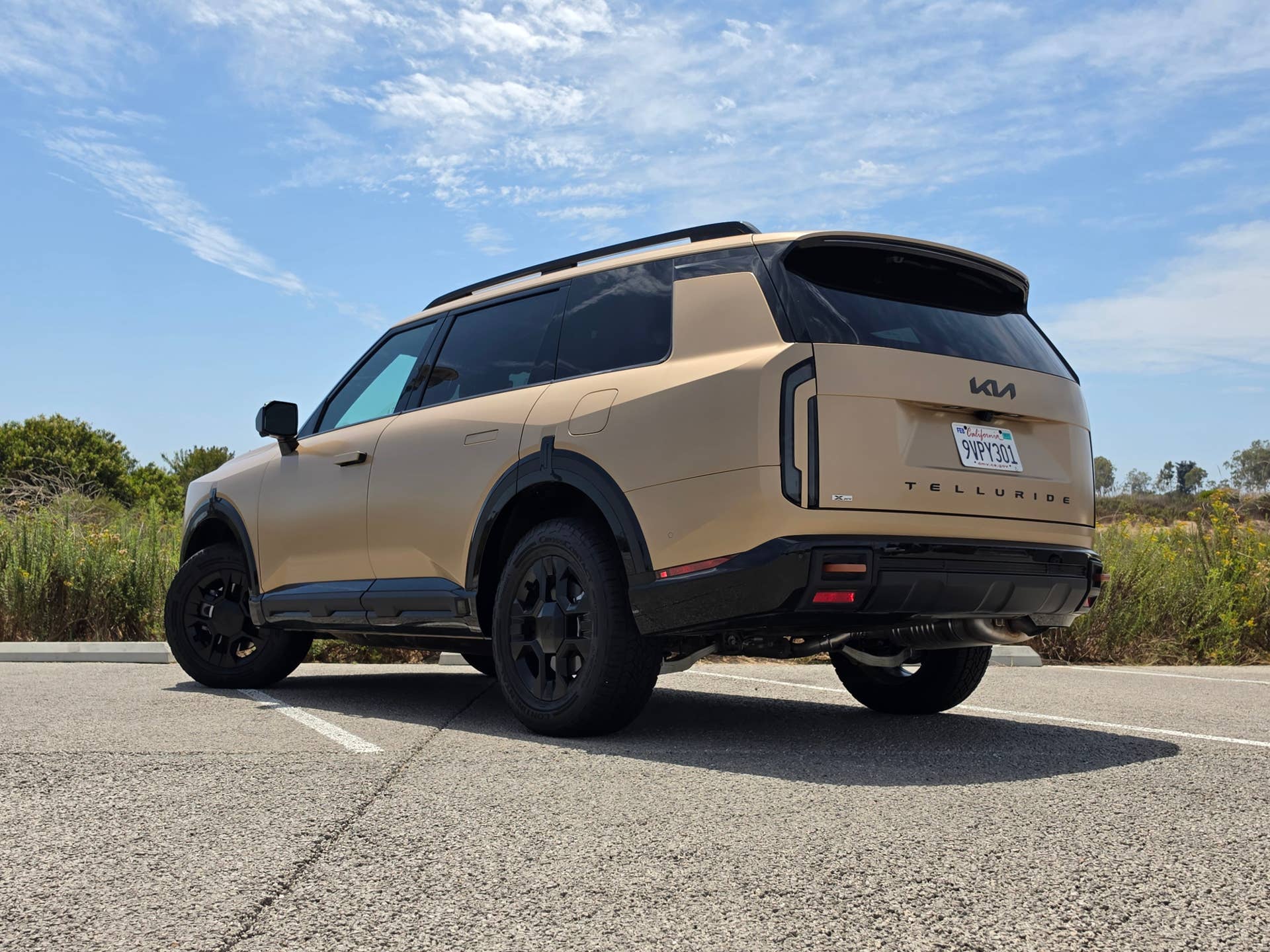
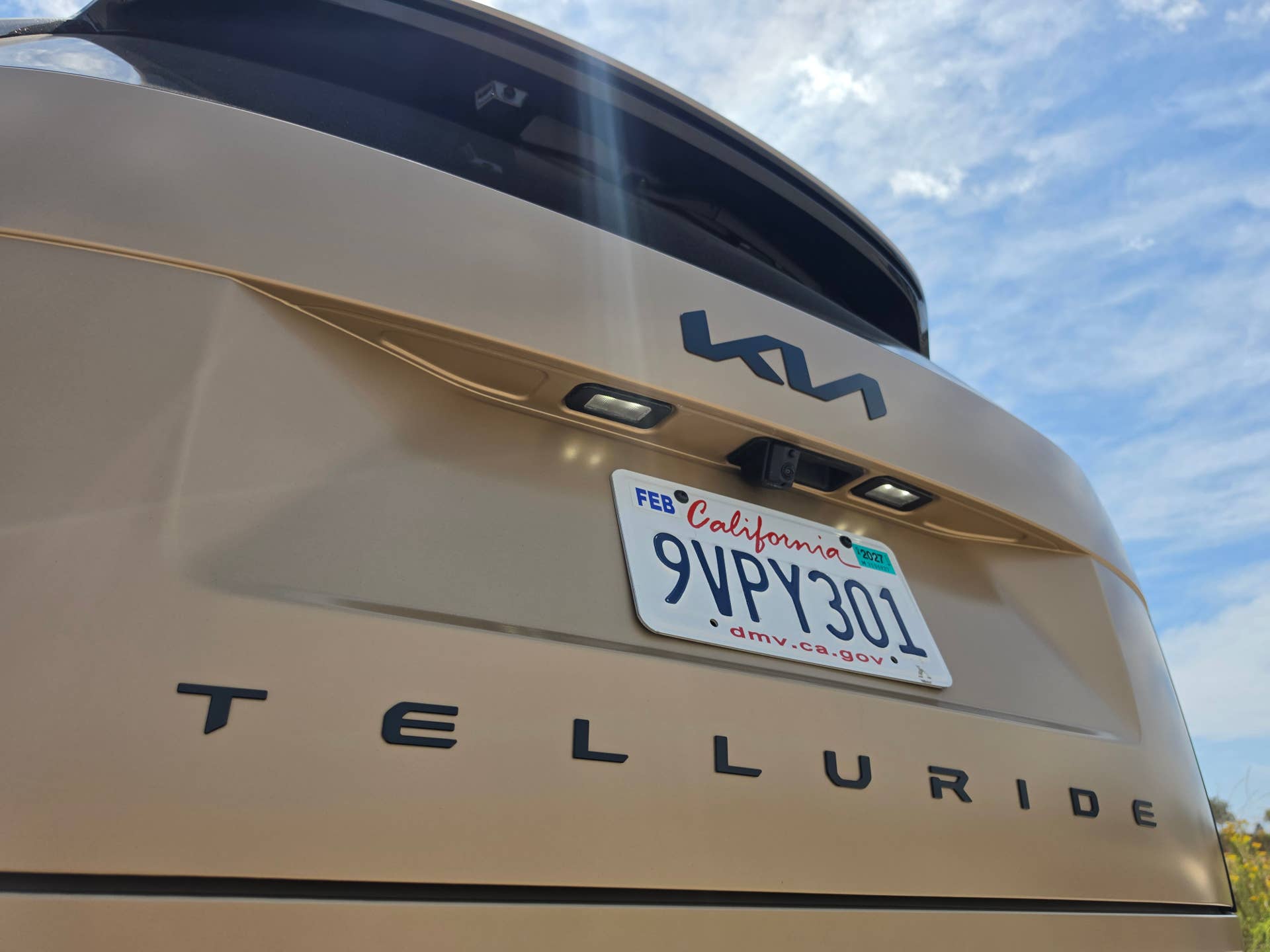
Two quick pieces of housekeeping. There is no 2026 Telluride. Kia ended the first generation with the 2025 model year, skipped 2026 entirely, and launched the redesigned second generation as a 2027 model that reached dealers during the 2026 calendar year. Anything advertised as a 2026 is either leftover first-generation stock or this car listed under the wrong badge.

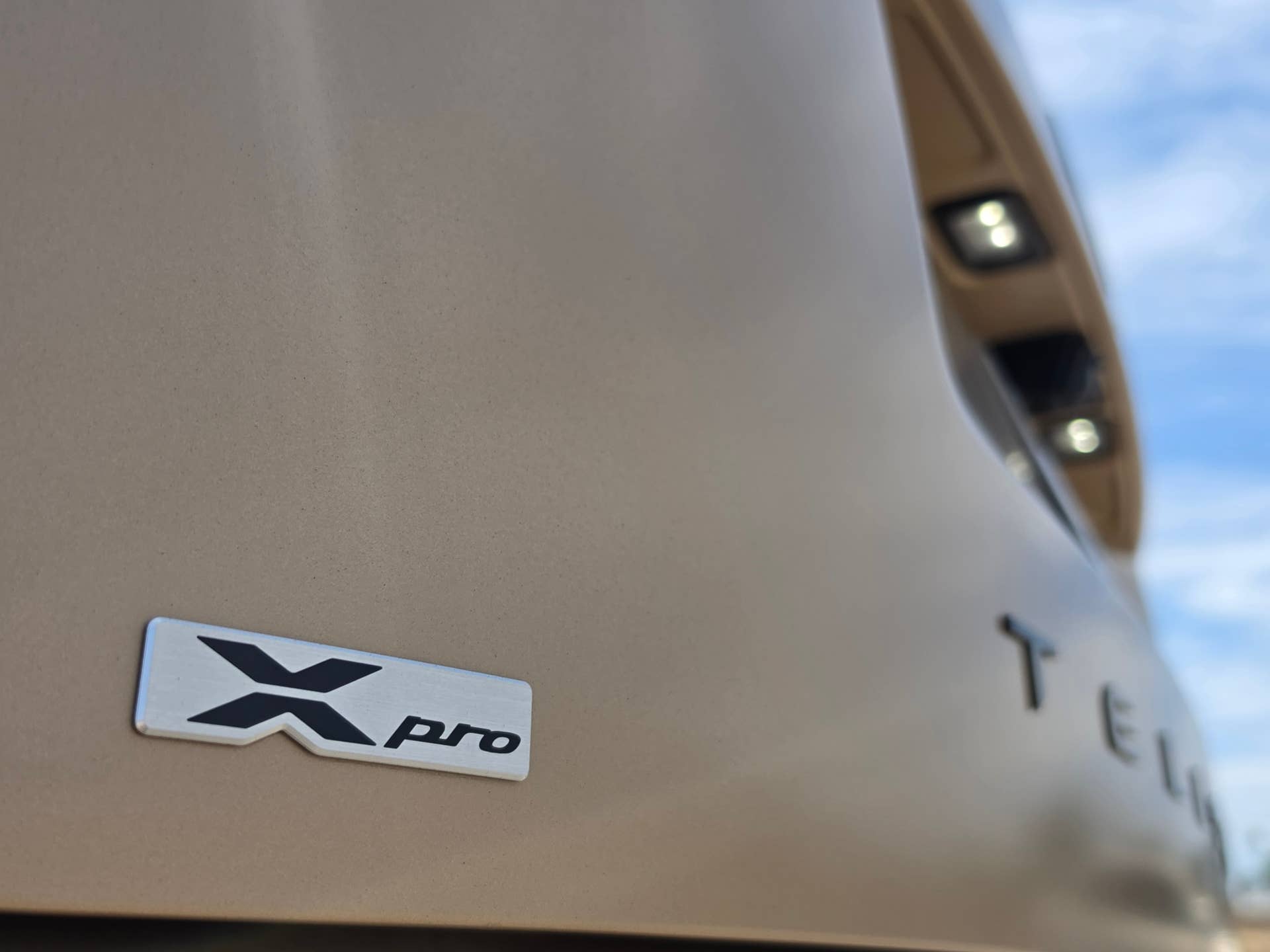
The second item is the actual story. Kia replaced the old 3.8-liter V6 with two powertrains, and the hybrid is clearly the better one, making 329 horsepower and 339 pound-feet against the turbocharged four-cylinder’s 274 and 311, while returning 35 mpg combined instead of 22. Kia also built the X-Pro, the most interesting trim in this vehicle’s history and the only one offering genuine off-road hardware. You cannot order them together. The X-Pro is gasoline only, and that single decision shapes every buying recommendation in this review.

2027 Kia Telluride X-Pro SX-Prestige

Kyle Edward - Autoblog

Powertrain and Driving

The hybrid pairs the 2.5-liter turbocharged engine with electric assistance and a 1.65 kWh battery for 329 horsepower and 339 pound-feet combined, which is 38 horsepower and 77 pound-feet more than the V6 it replaces. Fuel economy lands at 35 mpg combined with front-wheel drive and 31 with all-wheel drive, against 23 for the old engine, and total range reaches 637 miles. Towing drops to 4,500 pounds. A Stay Mode runs climate, lighting and infotainment on battery for up to an hour with the engine off, which parents waiting through practice will use constantly.

2027 Kia Telluride X-Pro SX-Prestige

Kyle Edward - Autoblog

The gas engine is no disappointment on its own terms. At 274 horsepower and 311 pound-feet through an eight-speed torque converter automatic, it is considerably livelier around town than the V6 was, because the torque arrives early instead of waiting for revs. Peak horsepower actually falls by 17 against the old engine while torque climbs 49 pound-feet, and the torque is what you notice. Independent testing puts 0 to 60 mph in the mid-to-high seven-second range. Properly equipped it tows 5,000 pounds, and the X-Pro SX-Prestige trim is rated for 5,500.

Load the family and a week of luggage, though, and the hybrid’s extra output stops being a specification and starts being the reason you are not flooring it up every on-ramp.

It’s The Trim You Want

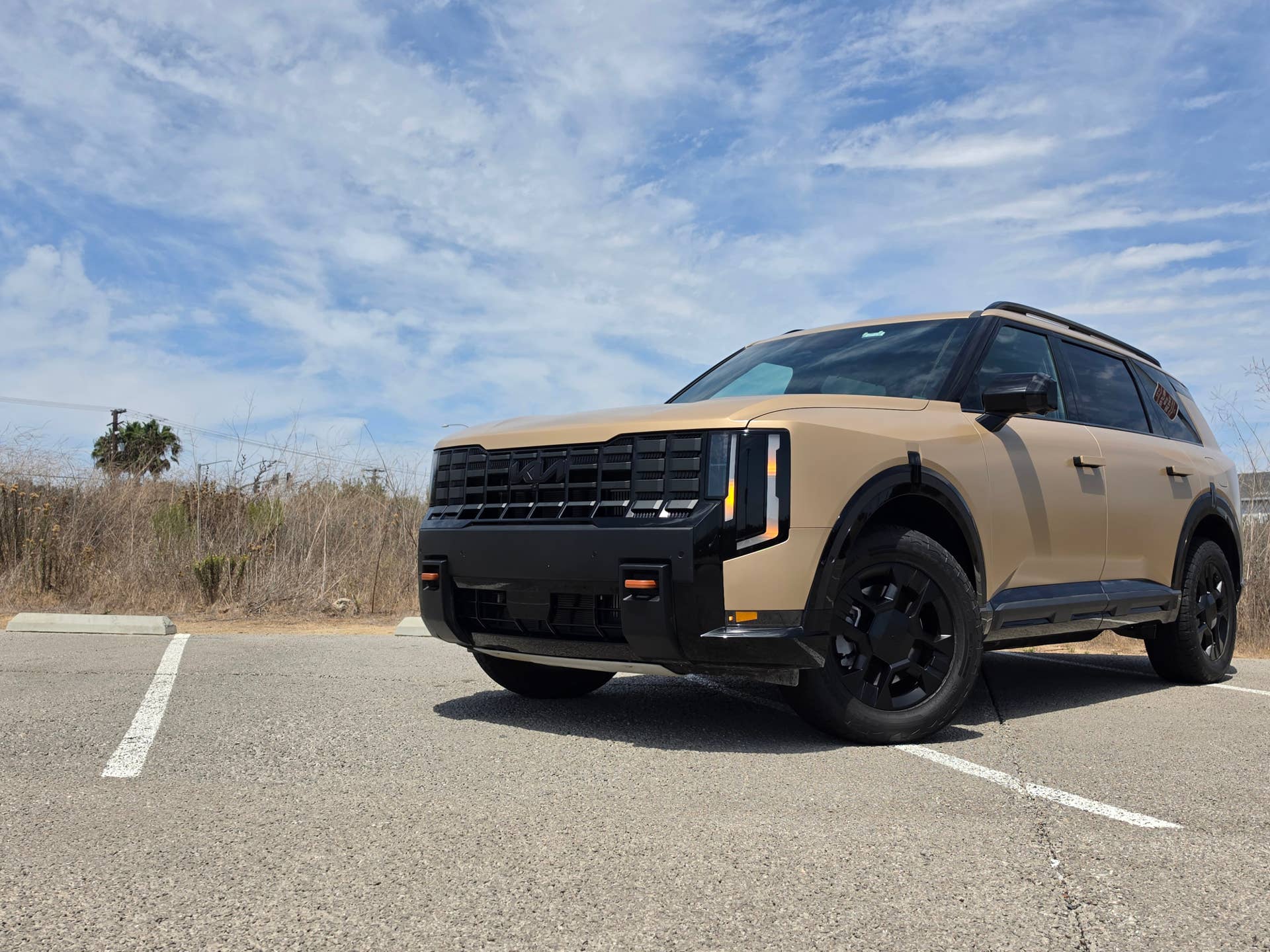
The X-Pro is the version worth caring about. Ground clearance rises to 9.1 inches, an electronic limited-slip differential goes in, all-terrain tires replace the road rubber, and skid plates plus front and rear recovery points make the capability real rather than decorative.

2027 Kia Telluride X-Pro SX-Prestige

Kyle Edward - Autoblog

It also looks the part in a way the rest of the range does not, with orange tow hooks and yellow-hued daytime running lights sharpening the off-road character. Then there is the paint. The matte Terrain Brown finish is a $995 factory option, and I cannot name another manufacturer selling matte paint at that price. Nobody. It is also X-Pro exclusive, which is the small cruelty at the center of this whole discussion: the trim with the best color is the trim without the best engine.

What It Costs

The gas lineup runs from $39,190 for the LX with front-wheel drive to $56,790 for the X-Pro SX-Prestige trim with all-wheel drive, before Kia’s $1,545 destination charge. That puts a fully equipped, genuinely off-road-capable three-row SUV at $58,335 delivered, with real-world optioned examples landing near $59,500. Hybrid pricing opens at $46,490 for the EX with front-wheel drive and climbs past $57,000 for the X-Line SX-Prestige trim.

2027 Kia Telluride X-Pro SX-Prestige

Kyle Edward - Autoblog

Value remains this vehicle’s foundation. Nothing in the class delivers this much equipment at this money, and the interior quality, feature count, warranty and safety results together build a case rivals have to discount toward. The second generation moved upmarket without surrendering the pricing advantage that made the first one a phenomenon.

Fuel Economy

The hybrid is why this score is what it is. Thirty-five mpg combined with front-wheel drive and 31 with all-wheel drive, in a three-row SUV, changes the ownership math entirely.

Be clear-eyed about the gas version, though. Front-wheel drive examples rate 20 mpg city, 26 mpg highway and 22 mpg combined, which is par for the class and not meaningfully better than the V6 it replaced. The X-Pro on all-terrain tires is the least efficient configuration Kia sells, and yet independent testing has consistently beaten its estimates, with observed results of 20.7 mpg over a mostly off-road route and 21.8 mpg across a week of mixed driving. Buy the gas car for capability, not economy.

Powertrain

EPA combined

Hybrid, front-wheel drive

35 mpg

Hybrid, all-wheel drive

31 mpg

Gas, front-wheel drive

22 mpg

Previous-generation V6

23 mpg

Where It Falls Short

Handling is the honest weakness. Steering feel and body control are both on the less direct side, and the steering is simply not communicative. You do not get much sense of what the vehicle is doing underneath you. I will concede that the X-Pro on softer all-terrain tires is the least favorable version to judge this on, but even discounting for that, this is not a vehicle that rewards a good road.
Most three-row buyers will never notice, and for them this is a non-issue. If you are the kind of driver who does notice, drive a Mazda CX-90 before you sign anything, because that is the one vehicle in this class that answers the complaint.

Interior and Technology

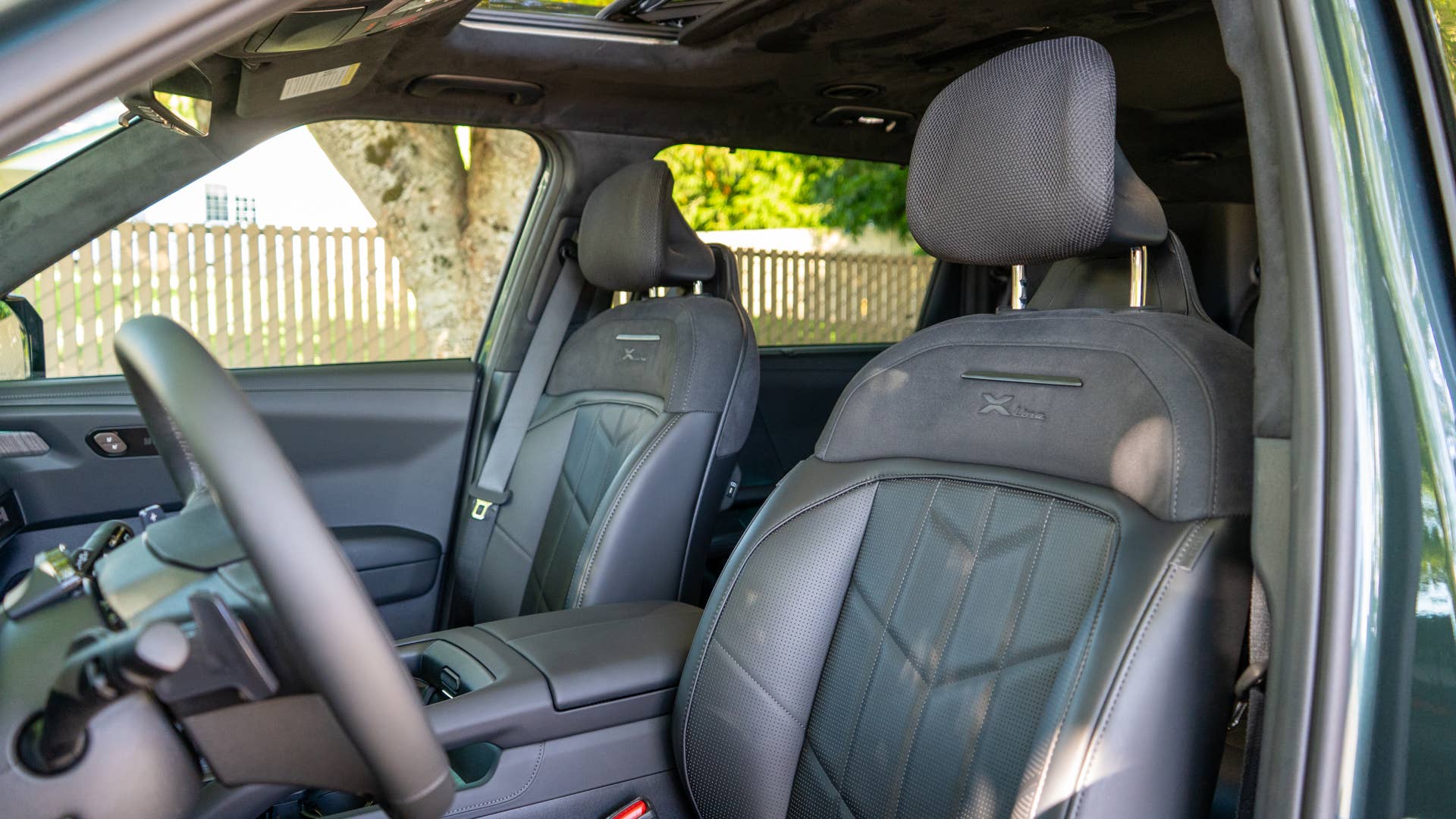
Fit and finish sit slightly above the class average, and the cabin is a genuinely pleasant place to spend time. Seats are comfortable, heated and ventilated, and the outward visibility is excellent.

2027 Kia Telluride X-Pro SX-Prestige

Kyle Edward - Autoblog

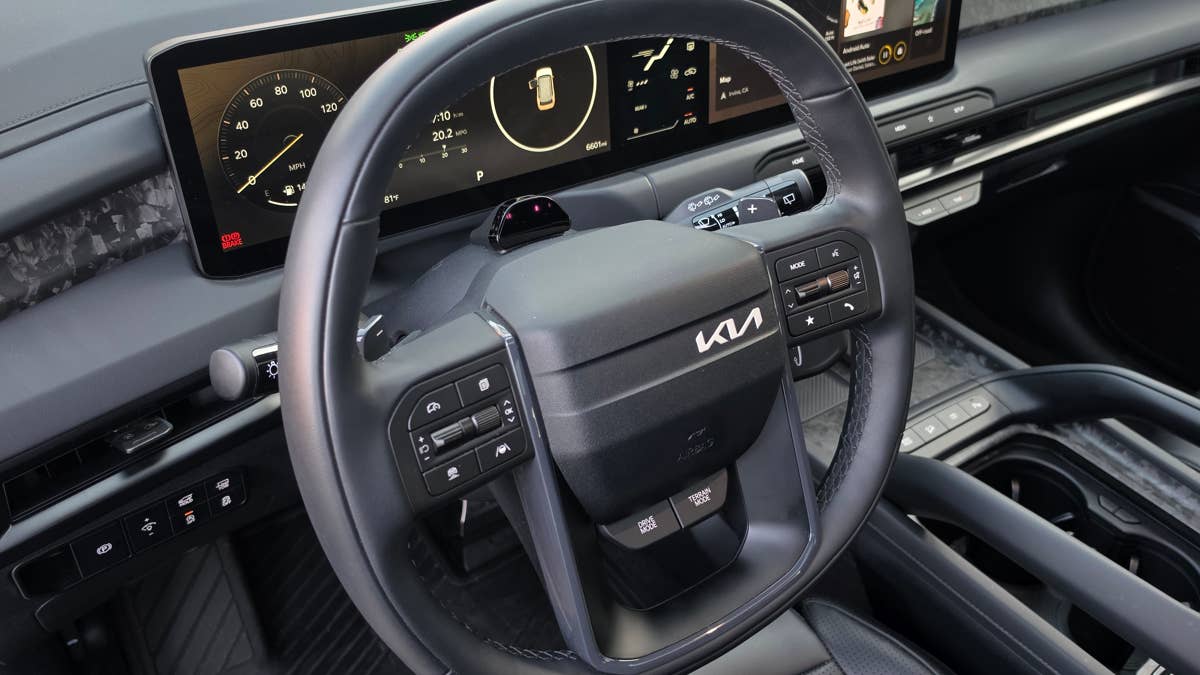
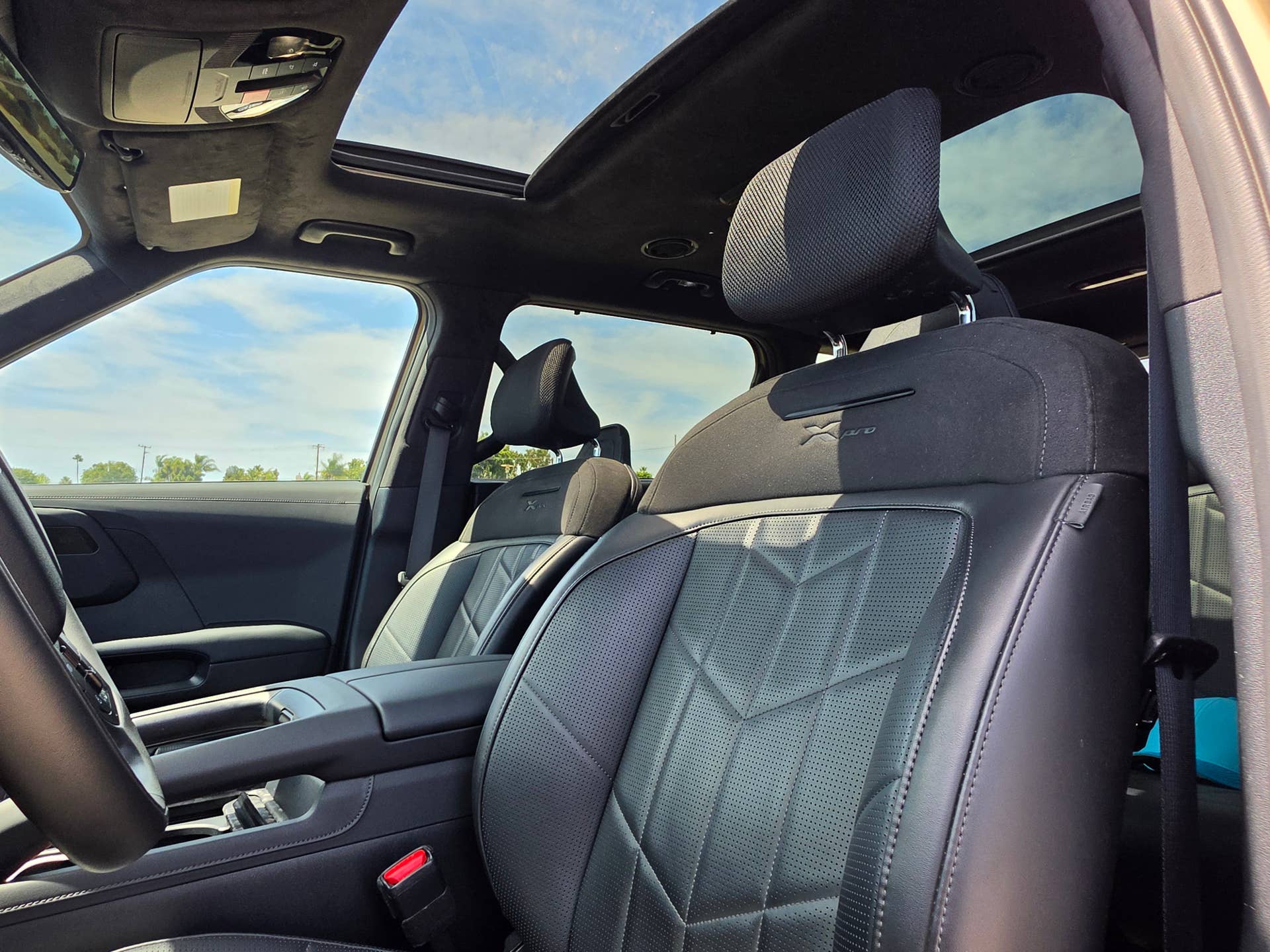
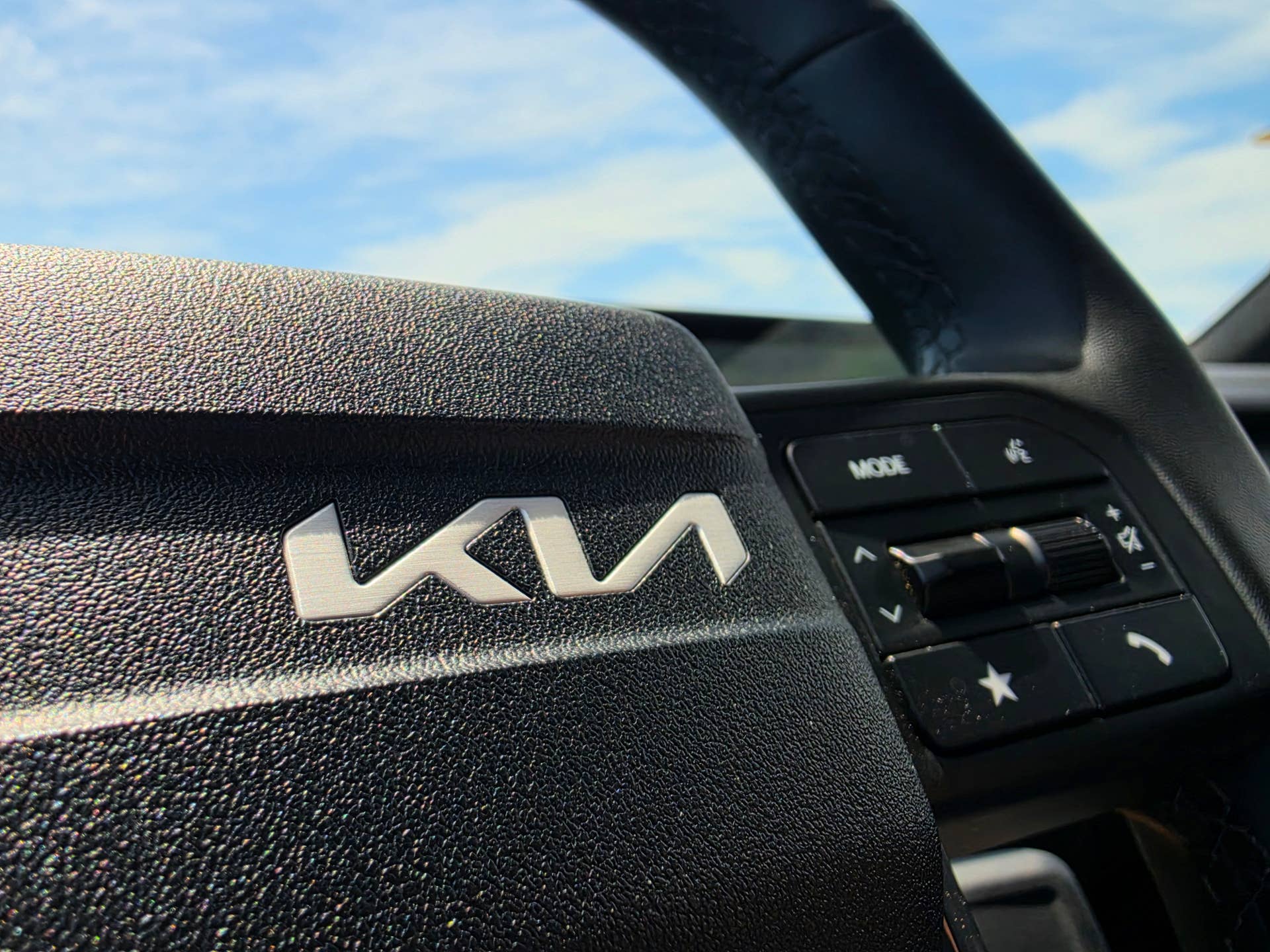
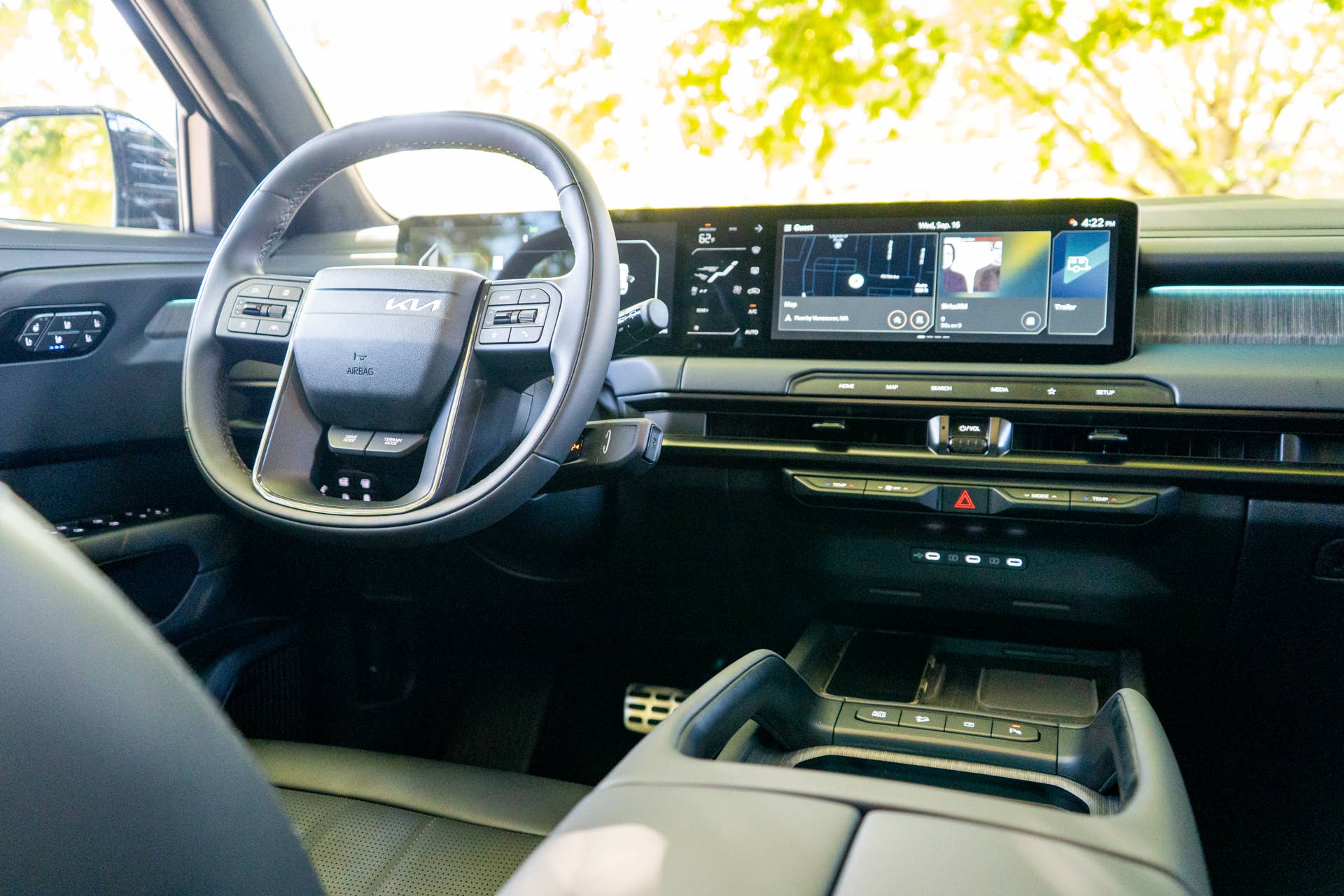
The new steering wheel with its off-center Kia badge is a small detail that does real work reinforcing the rugged character. Space is the substantive gain: the wheelbase grew 2.7 inches to 116.9 and overall length 2.3 inches, with nearly all of it going to passengers, and cargo runs 22.3 cubic feet behind the third row expanding to 89.3 with everything folded. Higher trims add relaxation seats with power leg rests, a massaging driver’s seat, power climate-controlled second-row captain’s chairs and heated third-row outboard seats.

2027 Kia Telluride X-Pro SX-Prestige

Kyle Edward - Autoblog

Technology is solid without a headline. The multimedia system responds quickly and the screen resolution holds up, but Highway Driving Assist is the ceiling and it keeps your hands on the wheel. Anyone wanting hands-free highway driving needs General Motors or Ford, because Kia has no answer yet. The premium audio system is a genuine generational improvement over the previous one, which was poor for something marketed as premium. Dual wireless charging pads, USB-C ports in all three rows, a 12-inch head-up display and tri-zone climate round it out.

Warranty and Safety

Nobody in this segment beats the warranty. Coverage runs five years or 60,000 miles bumper to bumper and 10 years or 100,000 miles on the powertrain, with corrosion at five years or 100,000 miles and roadside assistance matching the basic term. Hybrid models carry 10 years or 100,000 miles on the battery pack. That powertrain term is double what most rivals offer, and on a new turbocharged four replacing a proven V6 in a heavy SUV, it addresses the exact worry buyers will raise.

2027 Kia Telluride X-Pro SX-Prestige

Kyle Edward - Autoblog

Safety results are strong under demanding conditions. The Telluride earned IIHS Top Safety Pick+ in the Institute’s 2026 award cycle, after IIHS tightened its criteria that year for rear-seat occupant protection in moderate overlap front crashes and raised the bar on pedestrian crash prevention. Qualifying requires Good ratings in the small overlap front, moderate overlap front and side tests plus acceptable or good headlights on every trim, which is where many vehicles fail. Ten airbags are standard, including a front-center airbag. The National Highway Traffic Safety Administration has not yet rated the redesigned vehicle.

Category

Rating or term

Warranty Information

10/10

Safety Ratings

9/10

Basic

5 years / 60,000 miles

Powertrain

10 years / 100,000 miles

Hybrid battery

10 years / 100,000 miles

IIHS Top Safety Pick+ (2026 award cycle)

Awarded

NHTSA overall

Not yet rated

Competition

The closest rival shares its bones. Hyundai redesigned the Palisade on the same platform with the same powertrains, and pricing and dimensions track closely enough that the decision comes down to styling and which dealer you prefer. The Telluride leans rugged and offers the X-Pro, which the Palisade does not answer. The Toyota Grand Highlander is the efficiency benchmark and carries a reliability reputation Kia is still building, but it cannot match the feature count at equivalent money or the warranty at any money.

Among the off-road-flavored alternatives, the Honda Pilot TrailSport makes the most direct case against the X-Pro with genuine hardware of its own, and the Chevrolet Traverse Z71 shares the intent. Neither offers a hybrid, which is the Telluride’s trump card, and neither matches the interior. On total value, warranty and breadth of powertrain choice, nothing in this segment is currently ahead.

Final Thoughts: 9/10

The Telluride is one of the best choices in its class once you weigh price, powertrains, space and design together. No single element is best in class, and it does not need to be, because the combination beats what anyone else assembles at this money.

Which one you buy depends on how you answer the question at the top. If fuel economy and output matter most, take the hybrid and accept a different trim. If you actually leave pavement, or you want that matte paint enough to swap the tires afterward, take the X-Pro and accept 22 mpg. The vehicle Kia does not sell, an X-Pro hybrid, is the one I would order. Here is hoping somebody in Georgia is reading.

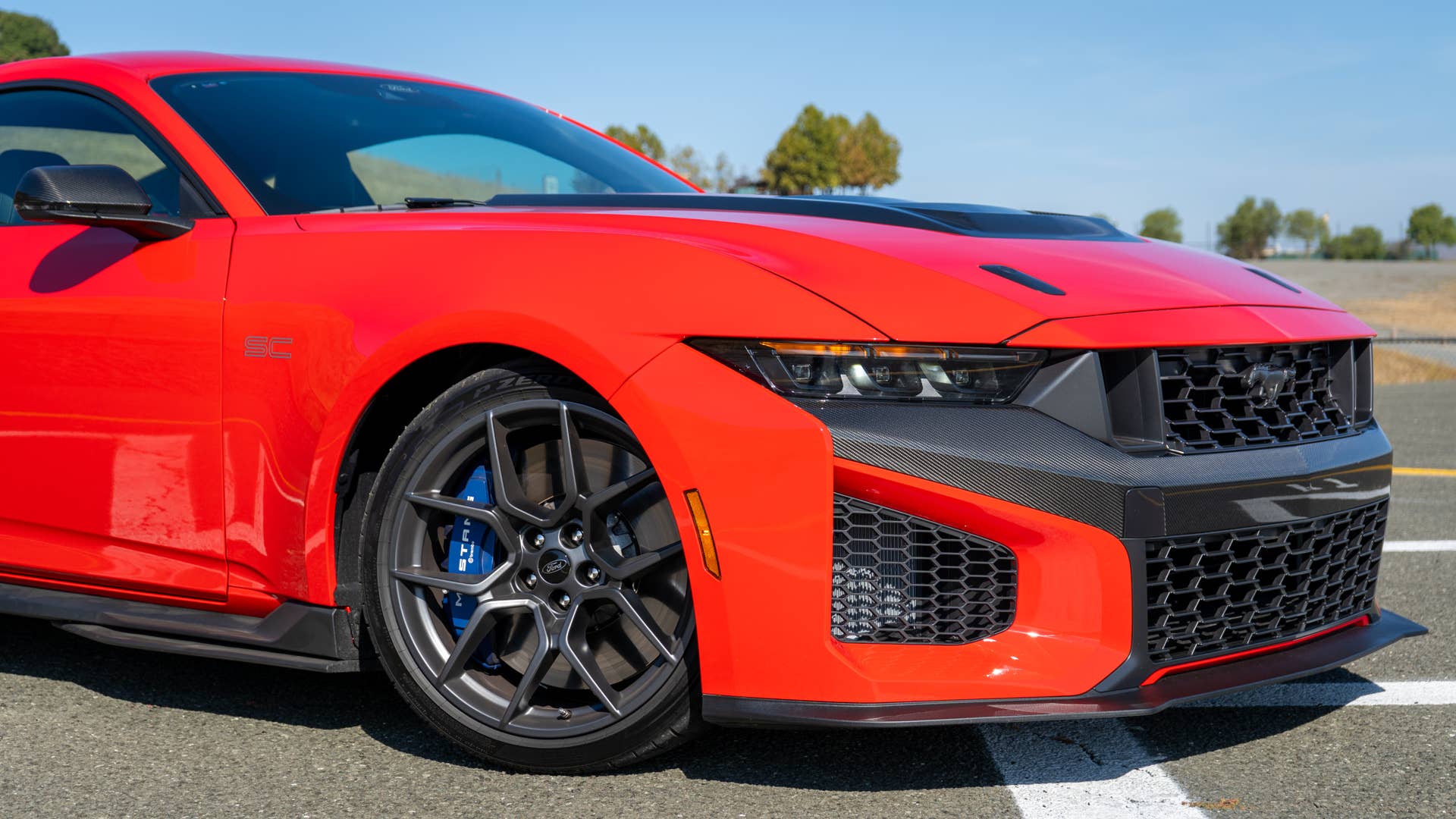
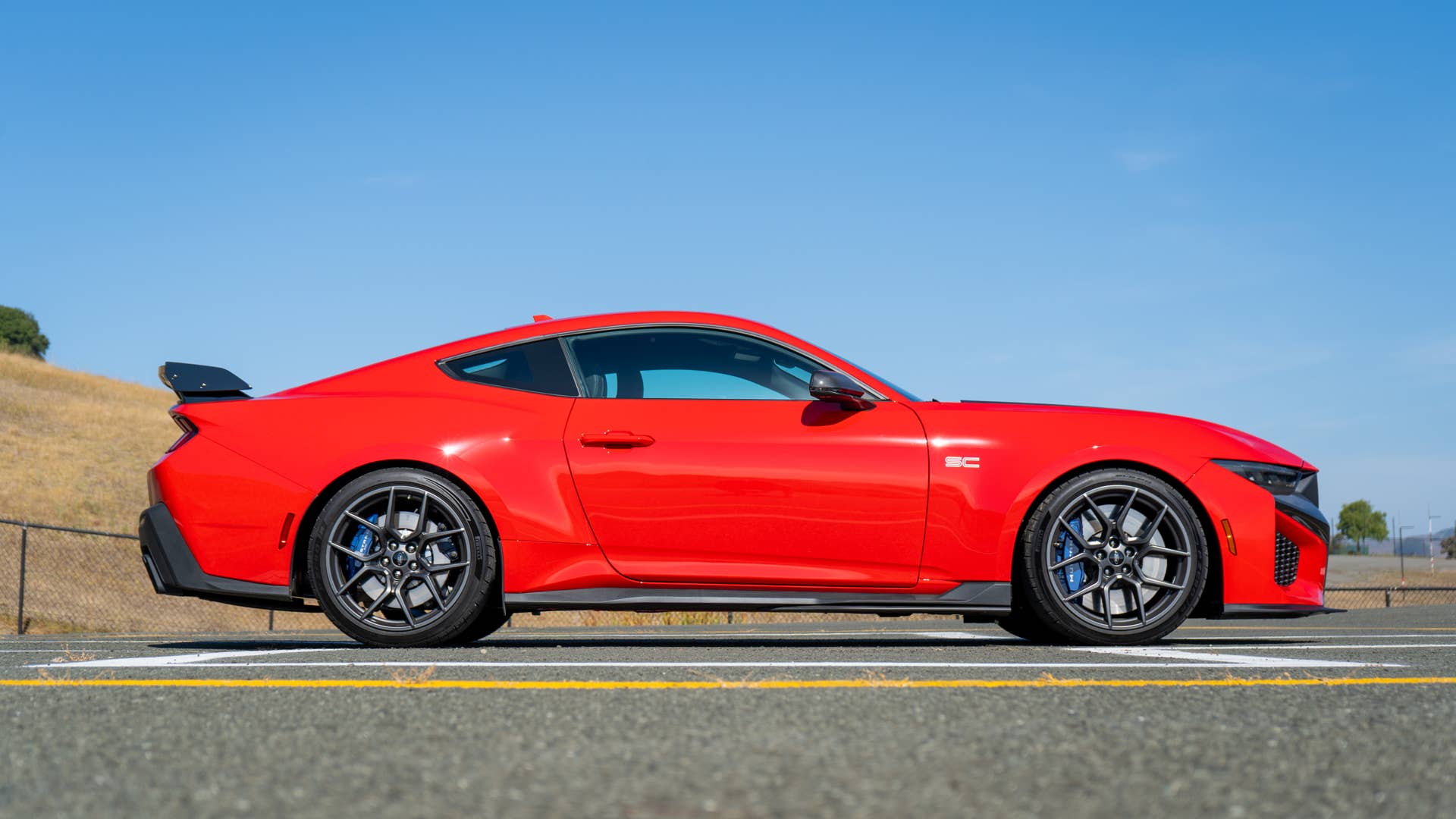
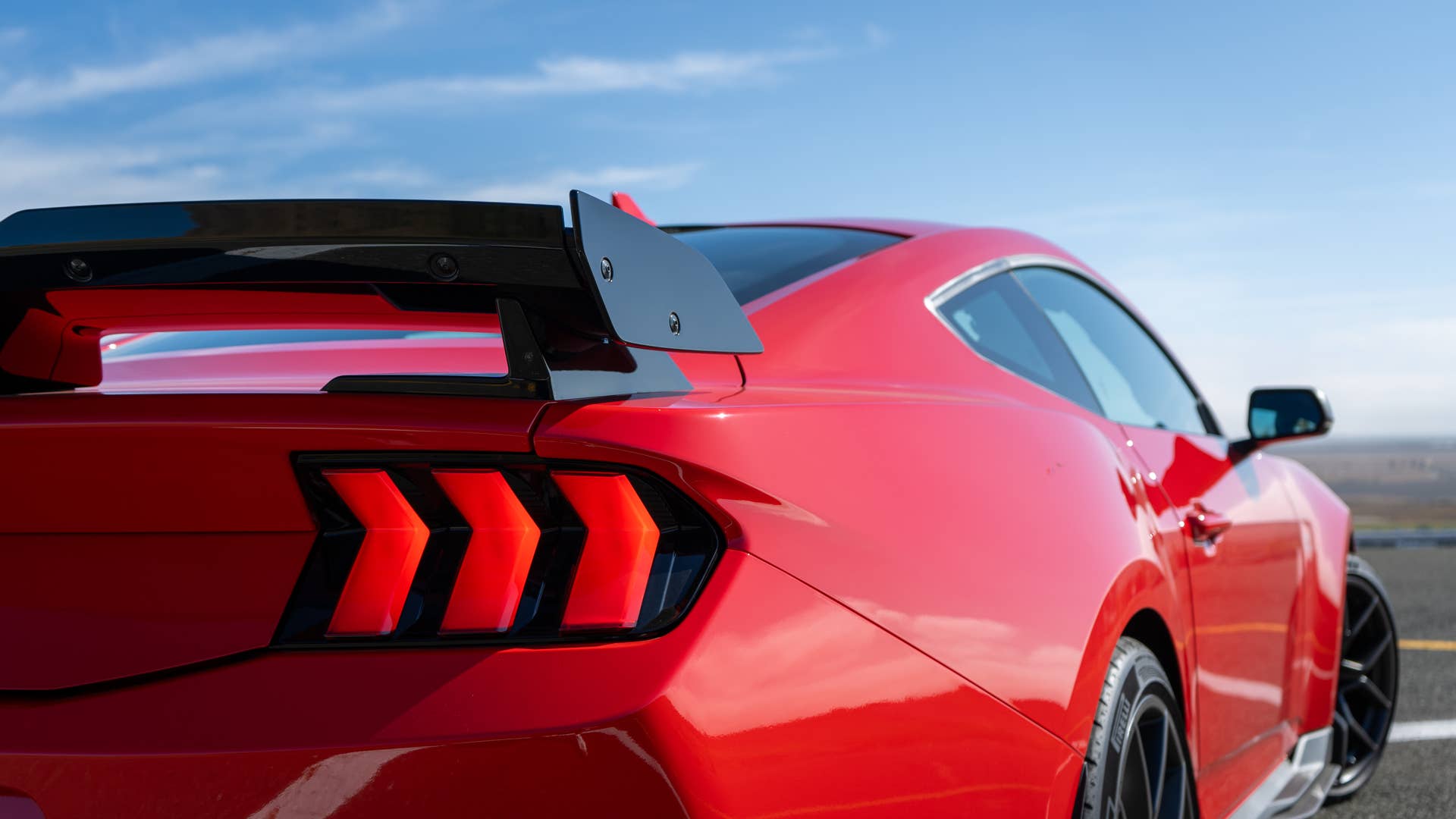
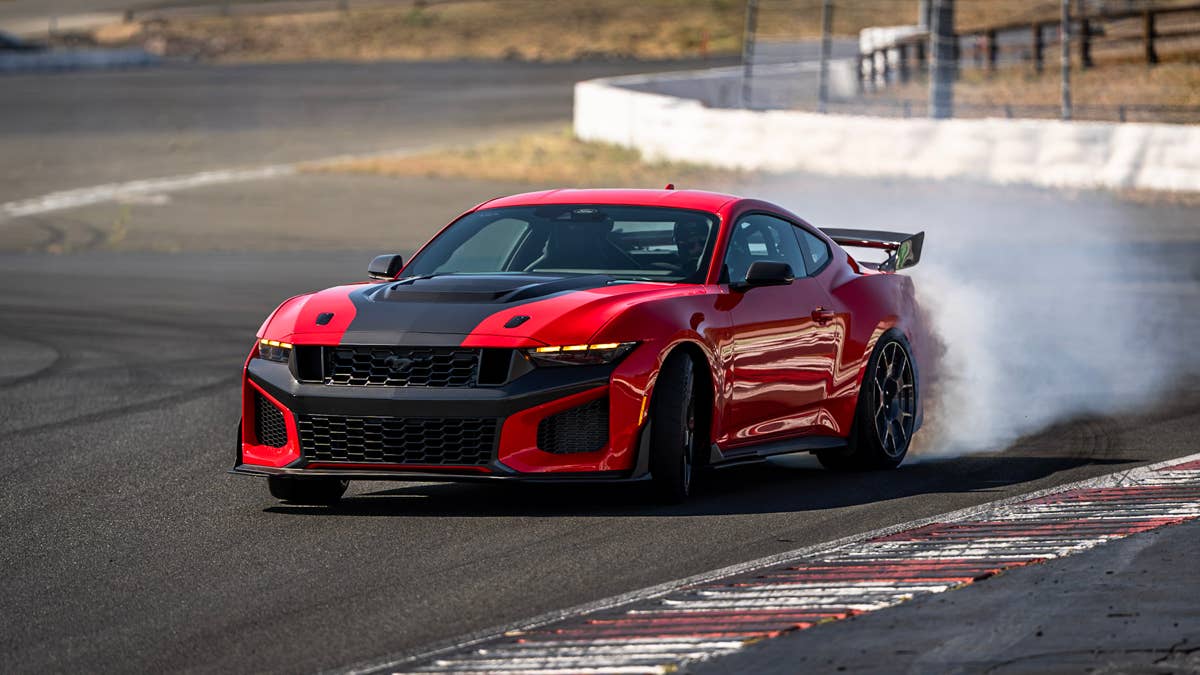
I Drove The 2026 Ford Mustang Dark Horse SC: Here’s My Honest Review Of Ford’s Most Powerful Dark Horse Yet

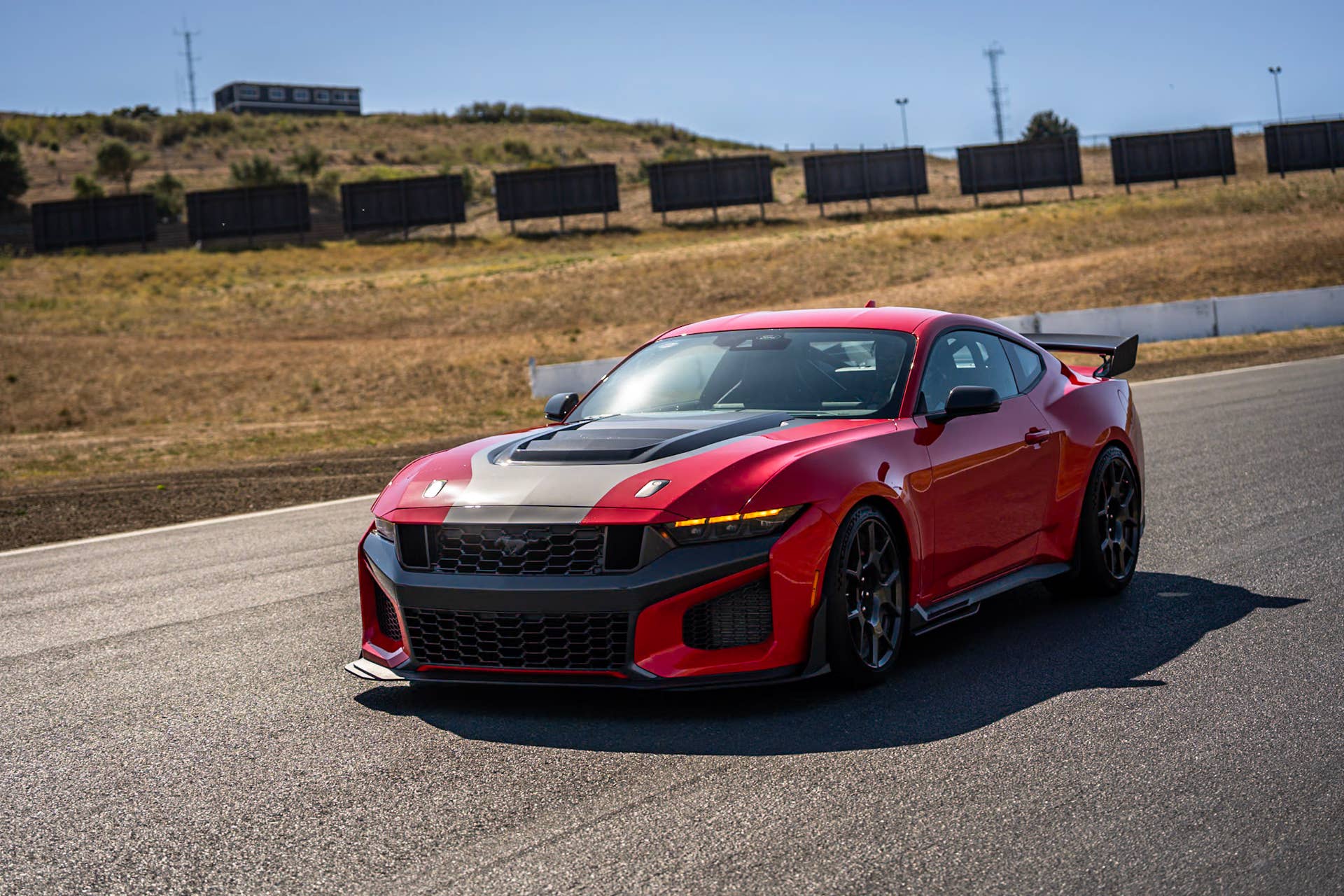
Think about some of the greatest performance Mustang names of the past. GT500. Boss. Cobra R. Terminator. Ford’s latest addition to that storied lineage adds just two letters that sound a bit more like an option code: SC. As I geared up to drive Ford’s latest hot ‘Stang, its name was starting to bother me. With Ford and Shelby no longer attached at the hip, this was the company’s opportunity to revive one of its own great performance names. It could have been called the SVT Cobra R, the Boss, or even the new Terminator, and the exact same car would have been a thousand times cooler.

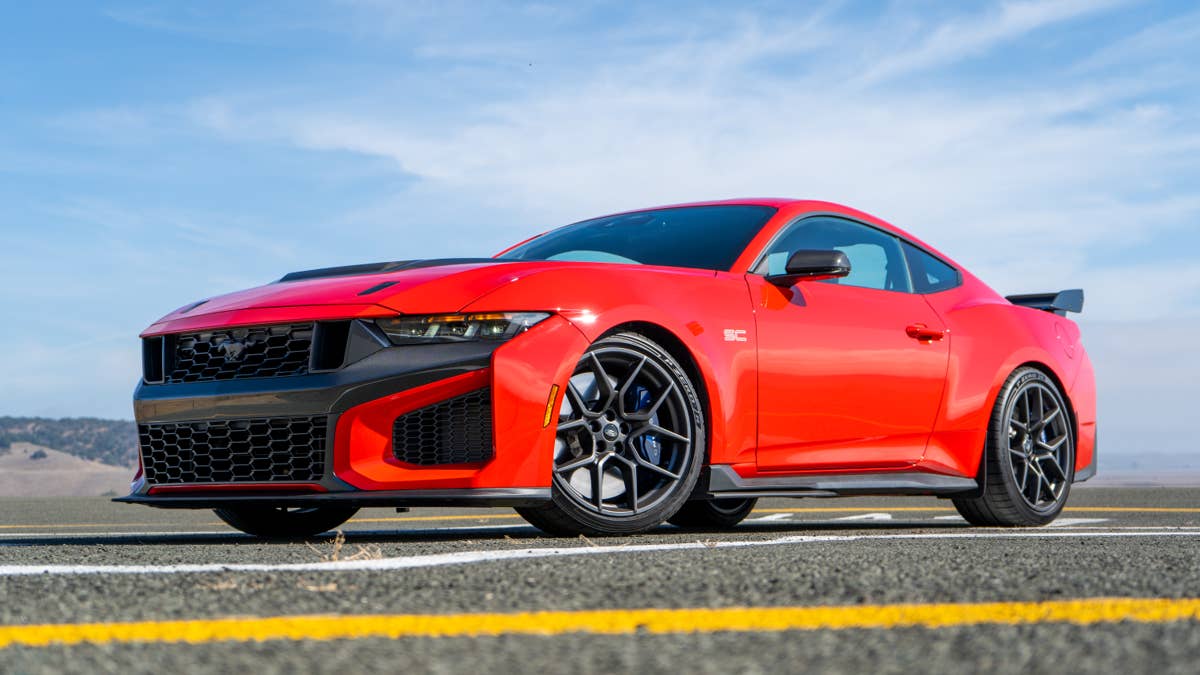
I kept thinking about that on the flight down to San Francisco, where I passed the time learning Sonoma Raceway in Gran Turismo on my old PSP. My virtual car was a red Mustang SVT Cobra R—a machine whose name and sheer performance carry decades of pedigree. The very next day, Ford handed me the keys to a red Dark Horse SC and sent me out onto the track for real, and I almost immediately stopped caring about its naming convention. Over the course of one jam-packed day, I drove the standard SC through tight California canyon passes, ran the Track Pack down Sonoma’s drag strip, completed six laps of its road course, and then drove the Track Pack back to my hotel in Yountville. The program exposed the Mustang to three very different environments, and it emerged as something much more complete than a mere supercharged engine stuffed into a Dark Horse. The SC might have an underwhelming name, but it feels like the most appropriate flagship for the Mustang lineup in years—even if it isn’t technically the top dog.

2026 Ford Mustang Dark Horse SC

Cole Attisha

2026 Ford Mustang Dark Horse SC

Specification

Engine

5.2-litre supercharged V8

Output

795 hp / 660 lb-ft

Transmission

7-speed Tremec dual-clutch automatic

Drivetrain

Rear-wheel drive; Torsen limited-slip differential

Curb weight

4,263 lb; 4,110 lb with Track Pack

Seating

Four; two with Track Pack

Base MSRP

$103,490 plus destination and gas-guzzler tax

Track Pack

$36,500

Highest supplied as-tested price

$169,820

Thinking about selling your car? Get an instant cash offer online now. Click here to get started.

2026 Ford Mustang Dark Horse SC

Cole Attisha

More Than A Supercharged Dark Horse

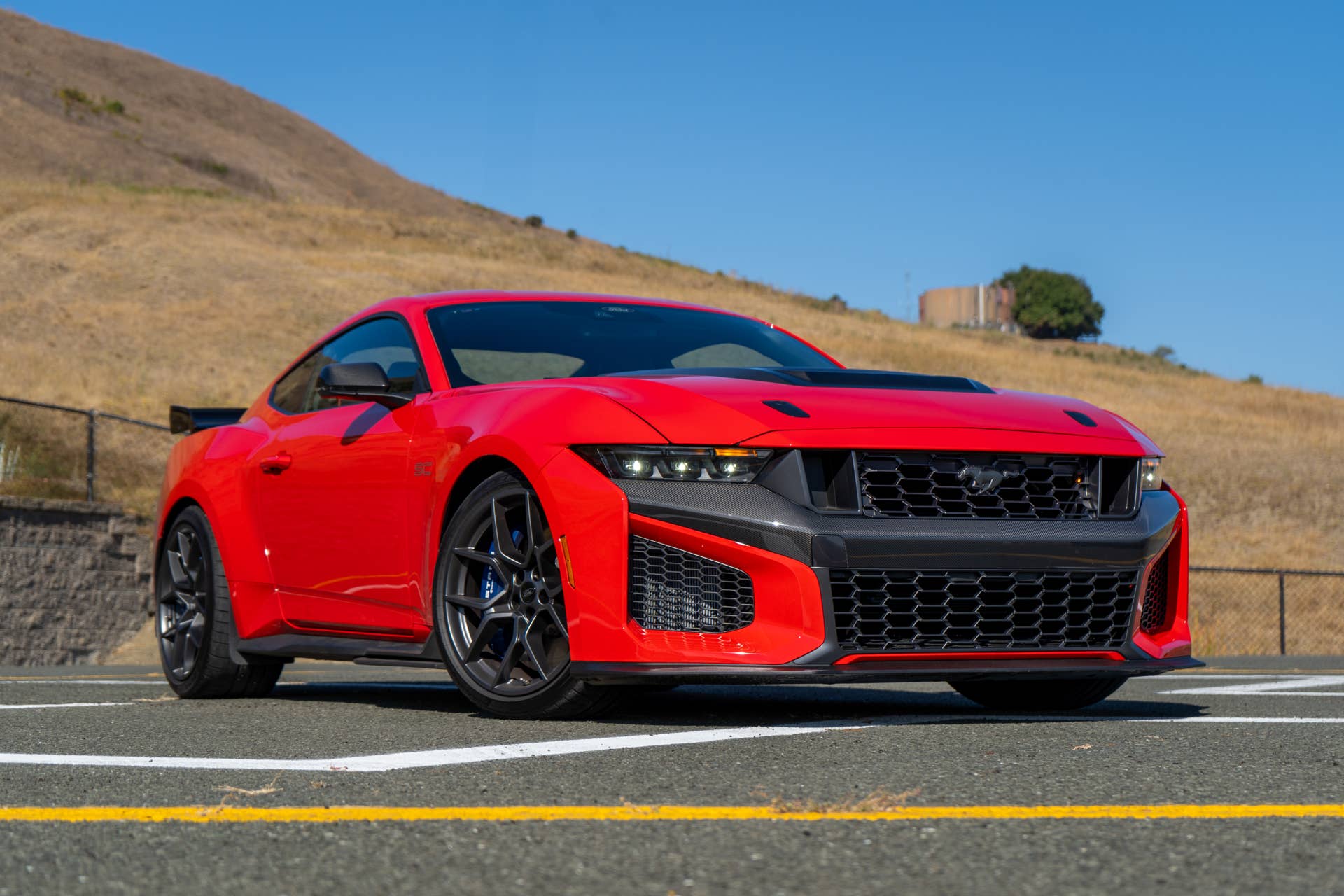
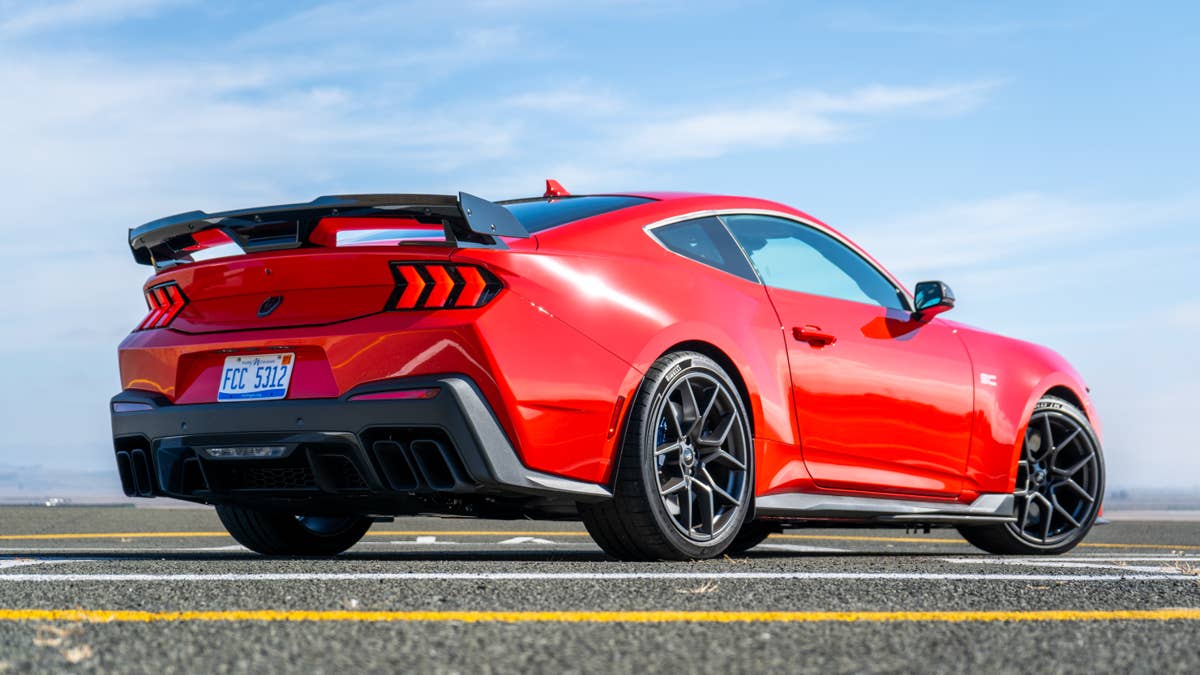
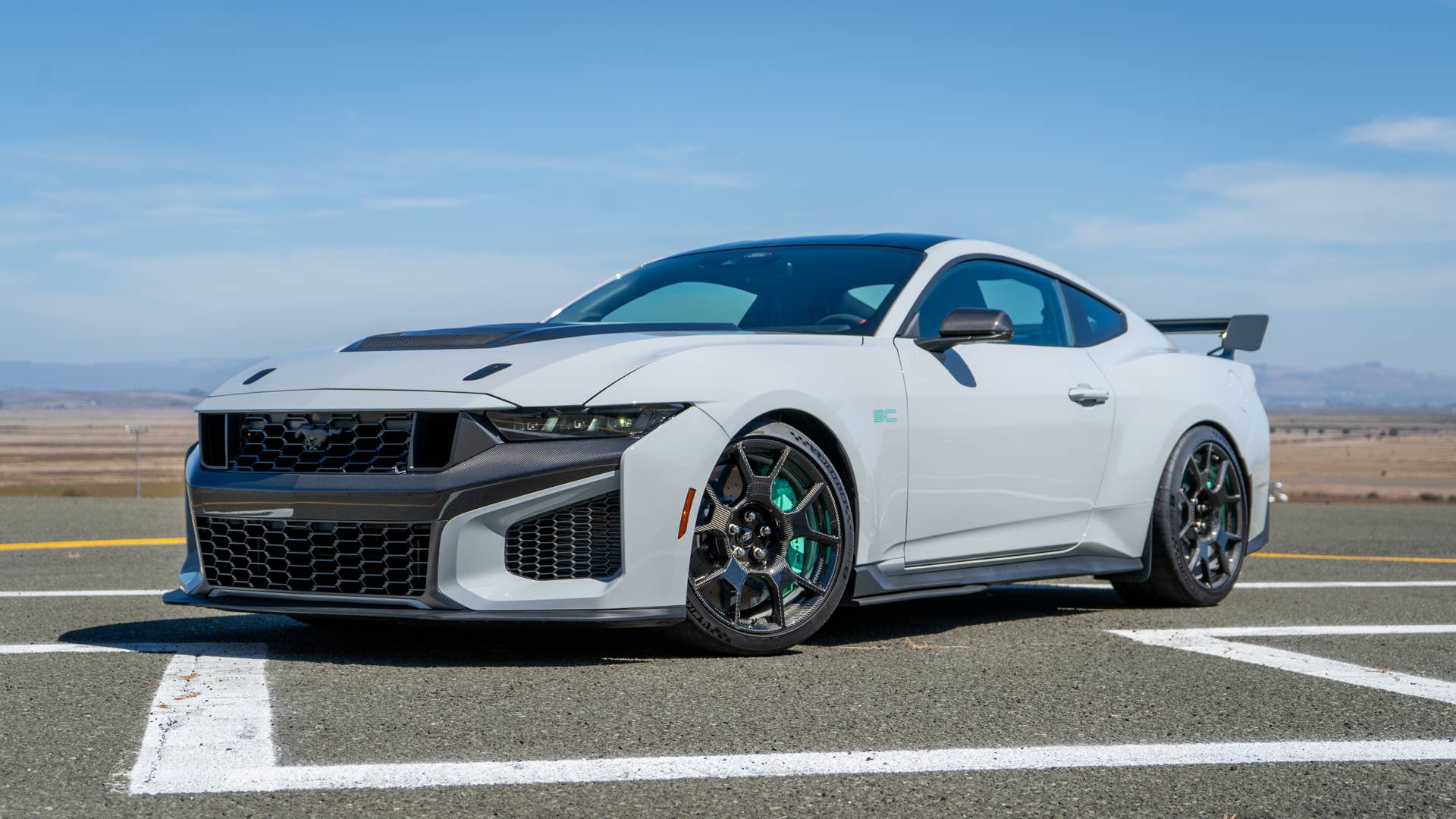
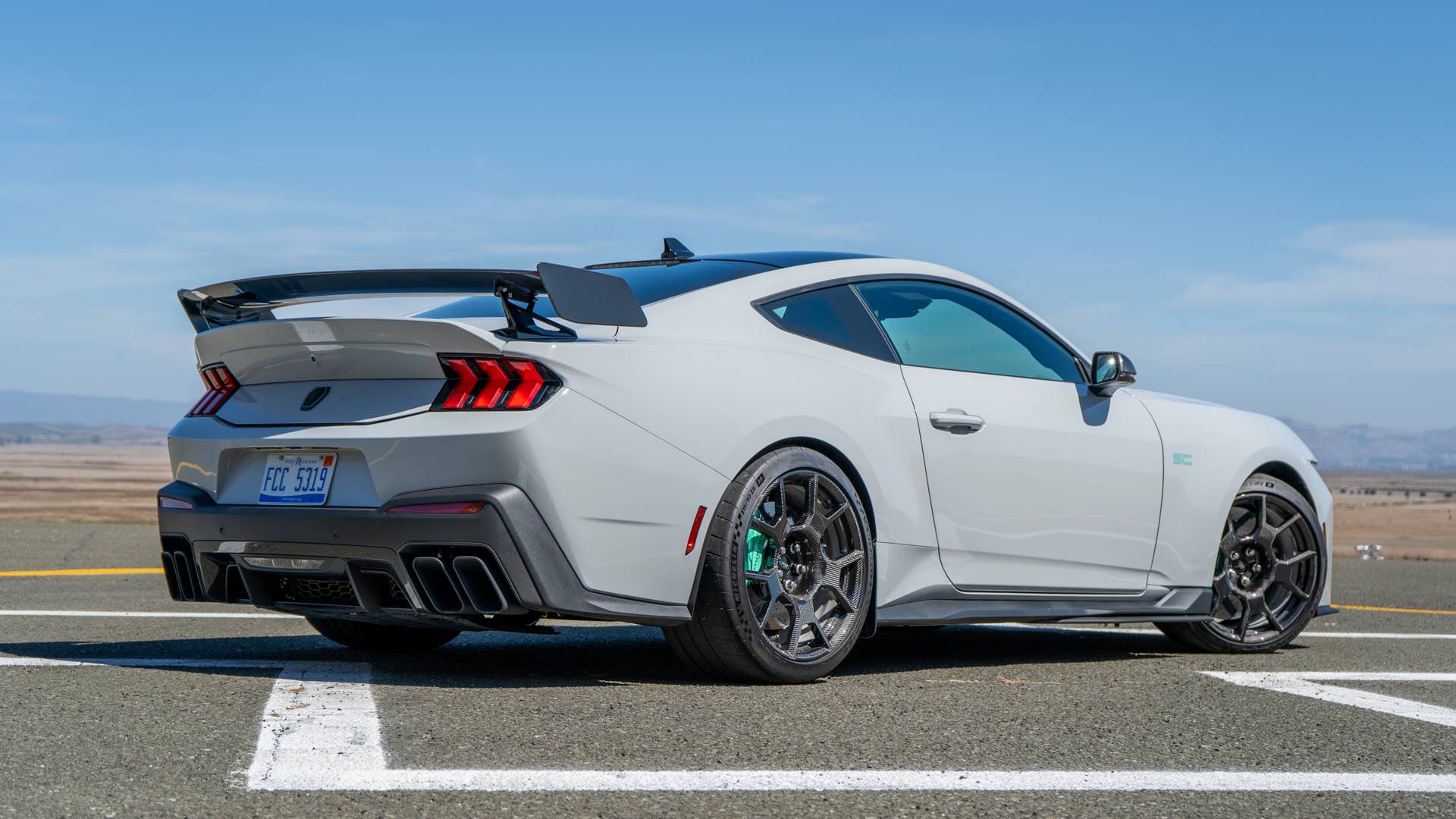
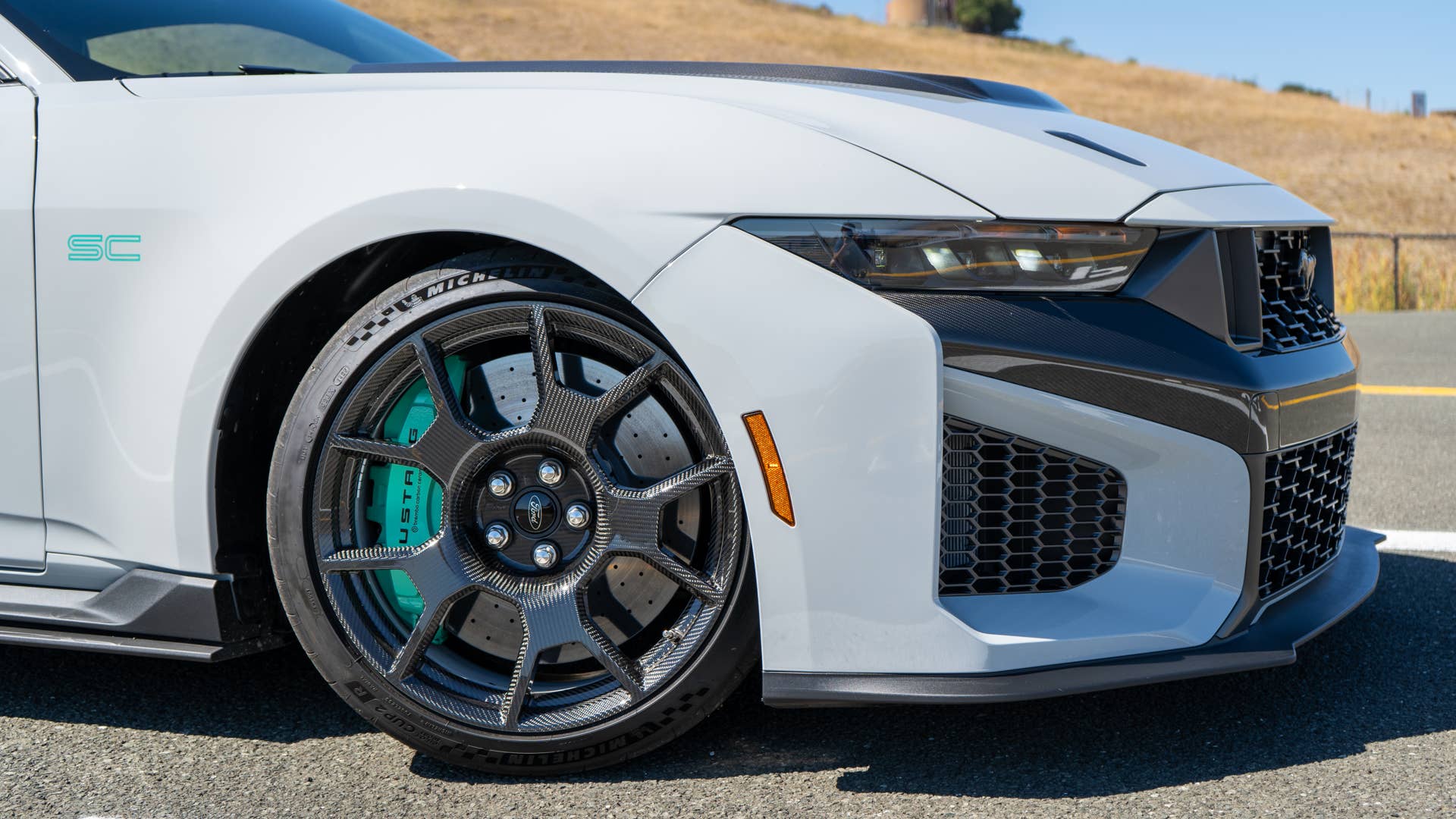
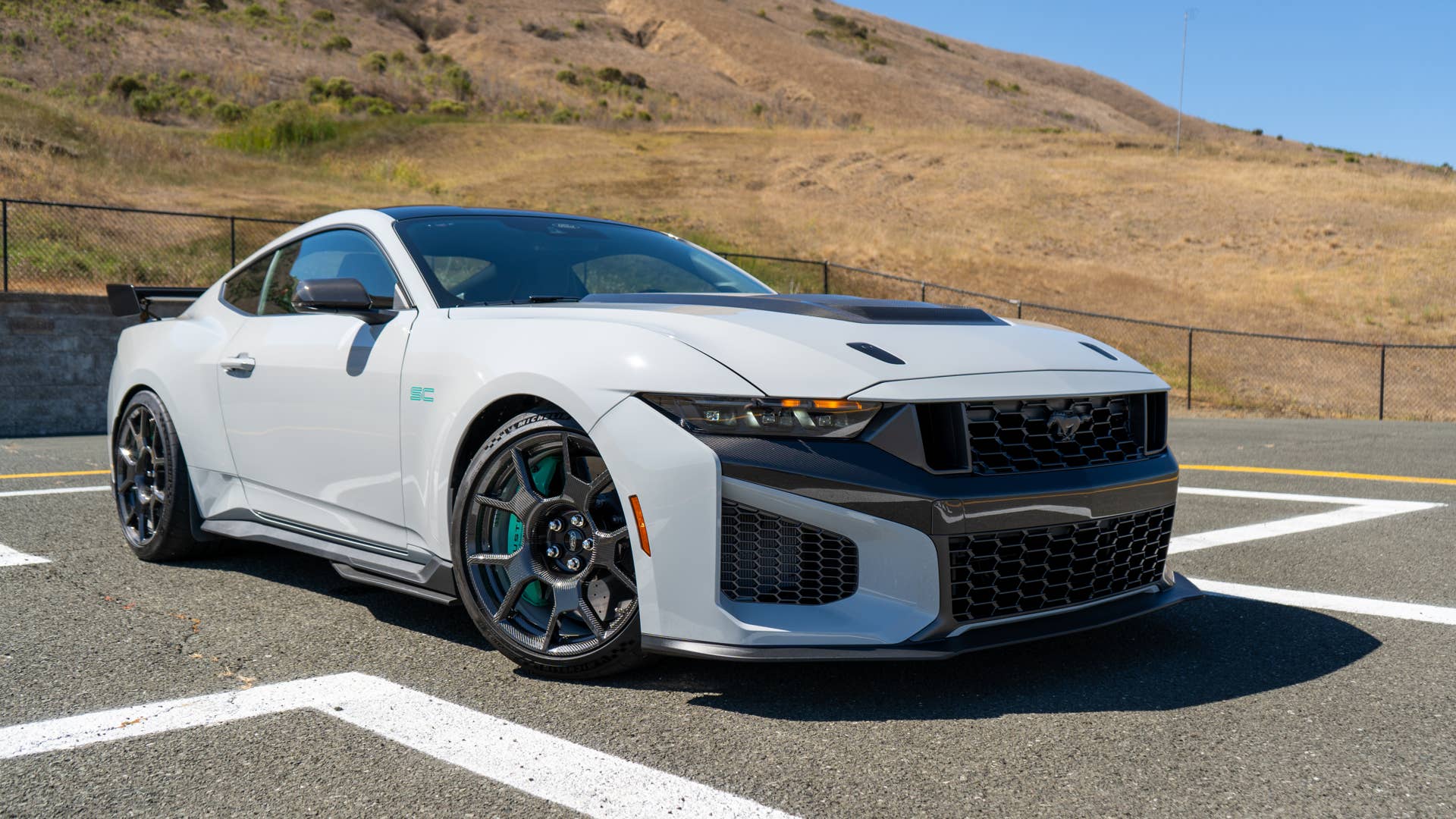
Calling it a modern GT500 successor is the easiest way to explain the Dark Horse SC in Ford lore terms, particularly now that Shelby branding is absent. Its supercharged 5.2-liter cross-plane-crank V8 sends 795 horsepower and 660 pound-feet of torque through a seven-speed Tremec dual-clutch transmission. But the SC also draws upon the Mustang GTD and Ford’s GT3 program, giving it a more diverse personality than purely straight-line intimidation. Every SC receives MagneRide dampers, forged suspension links, revised geometry, enlarged stabilizer bars, a magnesium strut-tower brace, a carbon-fiber driveshaft, and enormous Brembo brakes. Its wider body and reshaped fascia are actually functional rather than just theatrical, feeding air where it’s needed while making the car look spectacularly serious.

2026 Ford Mustang Dark Horse SC

Cole Attisha

The standard car was my initial introduction to the model. My drive partner and I left Yountville alone, free from the kind of conga line precession that can reduce a first-drive route to mere sightseeing. The road tightened as we headed toward Sonoma, and so did my attention. There is no avoiding the fact that this is a large automobile, and its width never quite disappears on a narrow canyon pass. But its responses quickly shrink the experience around its driver. The steering is intuitive, quick, and fiercely communicative. Its front end reacts immediately, while the chassis remains ruthlessly planted. With its standard Pirelli P Zero R tires warmed up, the non-Track-Pack SC found more grip than any public road sensibly requires. Its ride was equally surprising. The standard suspension breathes with imperfect pavement rather than abusing its occupants, and the Pirellis produce less road noise than the Track Pack’s stickier Michelin Pilot Sport Cup 2 Rs. This is no soft Mustang, but neither is it a car that makes every drive feel like being punished for driving a high-performance track machine on the street.

2026 Ford Mustang Dark Horse SC

Cole Attisha

Its Gearbox Might Be The Biggest Upgrade

The engine is truly absurd, but the dual-clutch transmission might still be the Dark Horse SC’s single most transformative component. Compared with the 10-speed automatic used elsewhere in the Mustang family, it feels like it belongs in an entirely different class of car. It handles traffic smoothly, selects gears intelligently when left alone, and is seriously addictive in manual mode. Each pull of the substantial magnesium paddle produces an immediate, clean response. The shifts are rapid enough for serious circuit work without filling ordinary driving with low-speed clunks or indecision. But still, there’s that engine. Its power feels immediate, but what stays with you is the combination of exhaust rhapsody and mechanical fury. It’s like riding a ferocious steed into battle—a harnessed adrenaline rush that feels closer to a blend of GT500 and GTD than to an amplified Mustang GT.

2026 Ford Mustang Dark Horse SC

Cole Attisha

Normal mode settles things down effectively, but open up the taps and give it room in Sport or Track mode, and all 795 horses make themselves known. The performance is surprisingly approachable, although unquestionably excessive on public roads. What prevents that power from dominating every corner is Ford’s Variable Traction Control system. Rather than repeatedly reminding you how easily nearly 800 horsepower can overwhelm two rear tires, it helps the SC behave like a sports car whose throttle you can trust with your own well-being.

Shopping for a new car? Click here to get a great deal on your next vehicle. Powered by Carvana: no-haggle pricing, 100% online.

2026 Ford Mustang Dark Horse SC

Ford

Sonoma Raceway Revealed Its Natural Identity

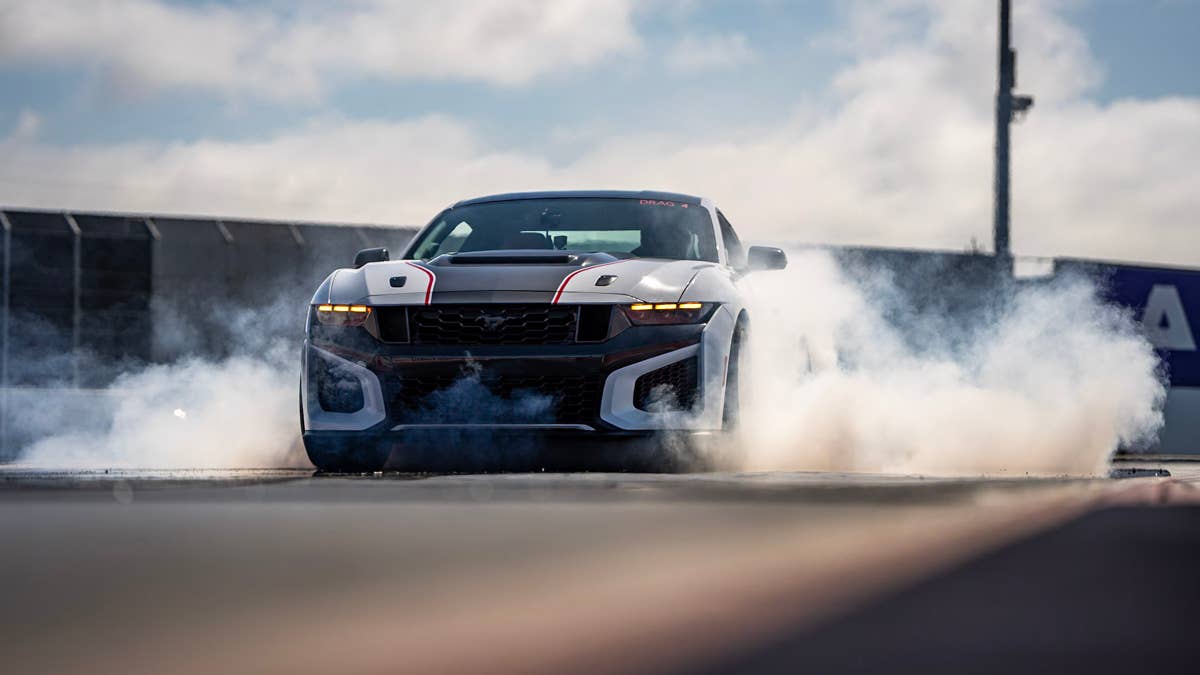
The drag strip at Sonoma demonstrated how calmly the SC can accomplish something objectively absurd. We received three runs in Track Pack cars, with Ford’s line-lock and launch-control systems making preparation an intuitive, repeatable process under controlled track conditions. My first attempt allowed some wheelspin, but on the second, the car hooked cleanly and shoved off hard, its dual-clutch shifts feeling almost serene against the force of the acceleration. I covered the quarter-mile in 10.992 seconds at 131.75 mph. Another driver eventually recorded a 10.7-second pass, suggesting Ford had left considerably more capability in the car than I extracted. The time was impressive, but its composure mattered more. The SC didn’t squirm or demand corrections. It gathered speed with the calmness of something engineered to do this over and over again, rather than a road car performing a party trick.

2026 Ford Mustang Dark Horse SC

Ford

Sonoma’s road course, though, provided the biggest revelation of all. The circuit’s blind elevation changes made my opening lap genuinely frightening. The first tight corners arrive as the track’s dramatic rise and fall obscure what comes next, and the changing load briefly unsettles the car. With this much power waiting under my right foot, building trust took time. But after just a few laps, it had been fostered. Over six total hot laps, after I established my own rhythm, the Track Pack seemed easier to drive as the pace increased. Its steering stayed tight under load, its body barely rolled, and its balance remained willing to rotate without treachery. Variable Traction Control deserves some serious credit here: it allowed meaningful adjustment while preserving the confidence to feed power into corner exits.

2026 Ford Mustang Dark Horse SC

Ford

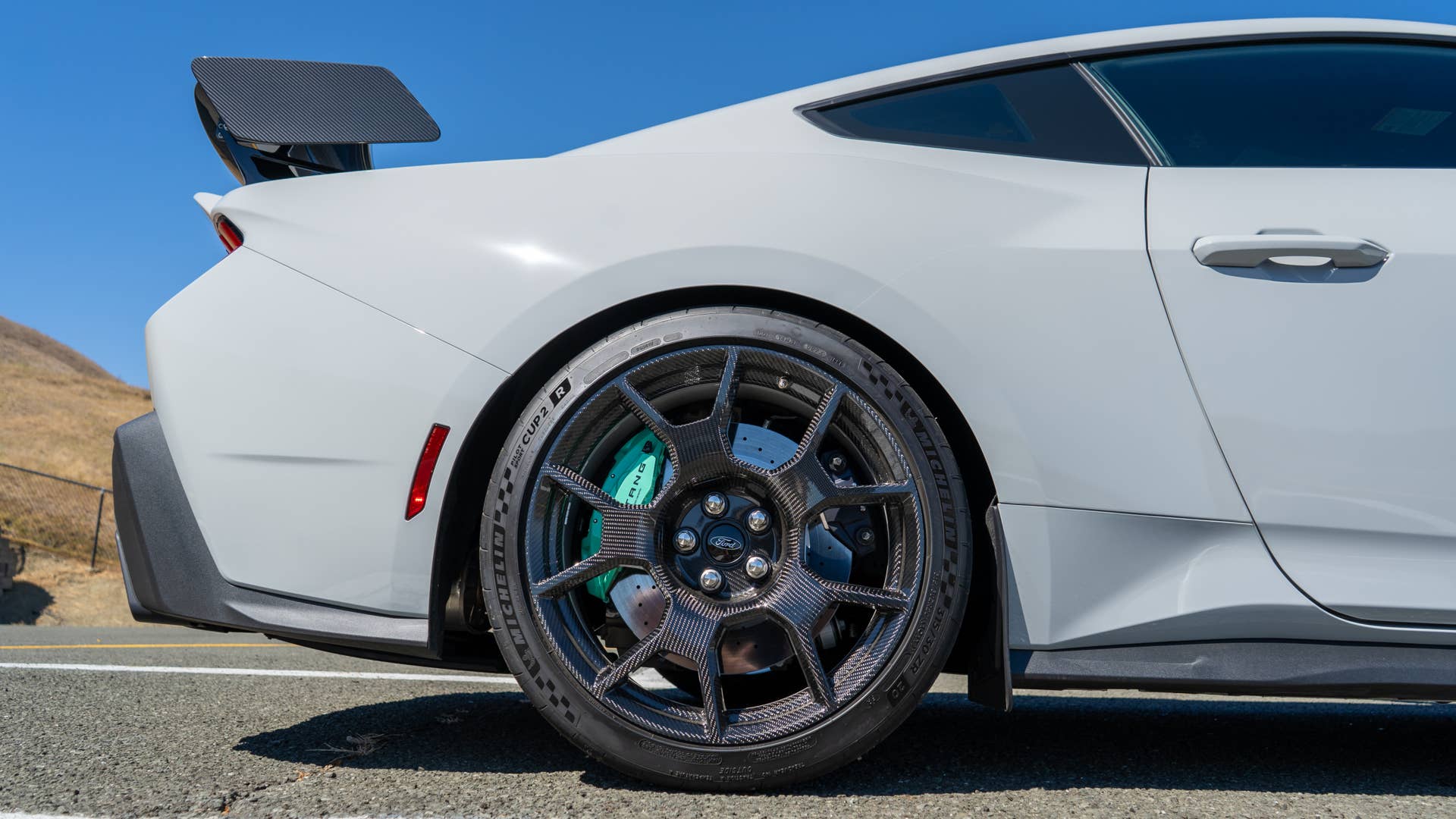
The long, sweeping downhill left-hander captured the car at its best. A corner that can make weight transfer feel awkward became easy to attack, with the carbon wheels, Cup 2 R tires, and carbon-ceramic brakes working together to make a two-ton Mustang feel improbably cohesive. The aerodynamics communicated themselves primarily through stability, while the brakes remained consistent throughout the session. This isn’t just a muscle car taught to survive a racetrack—it feels more like a genuine track car that has managed to retain its muscle-car identity.

2026 Ford Mustang Dark Horse SC

Cole Attisha

Is the Track Pack Worth $36,500?

Key equipment

Dark Horse SC

Dark Horse SC Track Pack

Wheels

20-inch aluminum

20-inch carbon fiber

Tires

Pirelli P Zero R

Michelin Pilot Sport Cup 2 R

Brakes

Brembo iron rotors

Brembo carbon-ceramic rotors

Seats

Four

Two: Recaros and rear storage shelf

Suspension

MagneRide

Track-specific MagneRide calibration

Aerodynamics

Standard SC package

Carbon wing and revised rear decklid

Curb weight

4,263 lb

4,110 lb

Best suited to

Road use with occasional track work

Regular circuit use

2026 Ford Mustang Dark Horse SC

Cole Attisha

The difference between the standard Dark Horse SC and Track-Pack-equipped models is more subtle on public roads than the EcoBoost-sized price gap suggests. The normal SC already has tremendous grip, excellent steering, and a surprisingly livable ride. It’s quieter, retains its rear seats, and provides most of the same emotional experience, even when speed and space are limited. The Track Pack is firmer and louder, although never punishing. Its Recaros actually proved more comfortable through winding roads because their additional bolstering reduced the effort required to hold myself in place. More importantly, much of its weight reduction comes from unsprung and rotating mass—the carbon wheels and carbon-ceramic brakes—so the car feels more alert where those savings matter most.

2026 Ford Mustang Dark Horse SC

Cole Attisha

2026 Ford Mustang Dark Horse SC

Cole Attisha

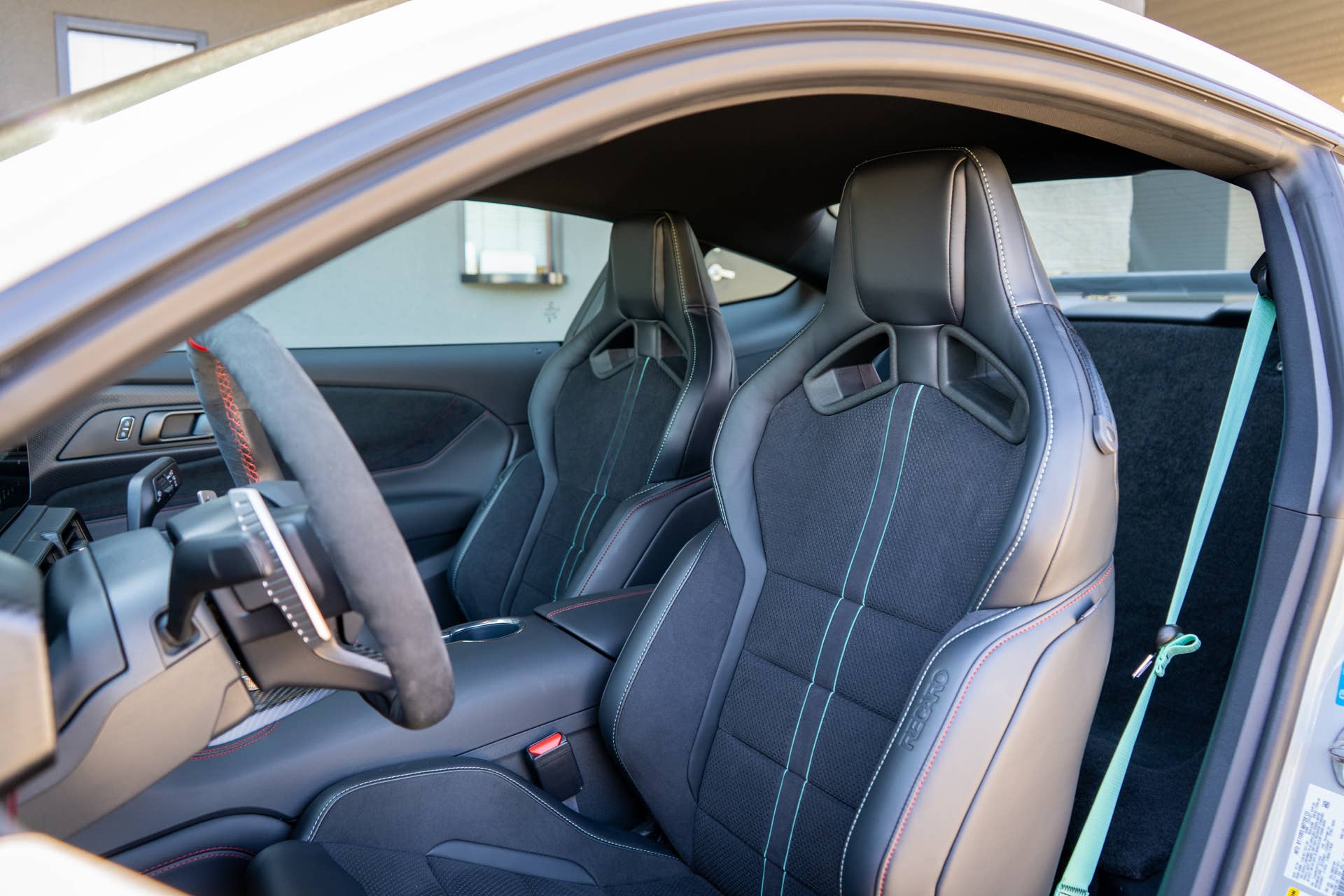
If road use will dominate, the standard SC is the better value and arguably the more rational specification. If serious track use is on the agenda—or if it’ll sit still in a collection for the next few—the Track Pack is essential. And yet, if someone is already committing to a six-figure Mustang, I understand the temptation to go all the way regardless of intended use. My preferred specification would be the Avalanche Gray Track Pack with the $3,000 Teal Accent Package. The teal calipers, badges, and seat belts give the car a visual identity its name lacks. Ford’s $10,000 carbon-fiber exterior treatment and equally expensive painted graphics also enhance its presence, but they helped push our loaded example to $169,820. That’s an enormous amount of money for a Mustang—even one that drives this well.

2026 Ford Mustang Dark Horse SC

Cole Attisha

The Cabin Remembers Its Origins

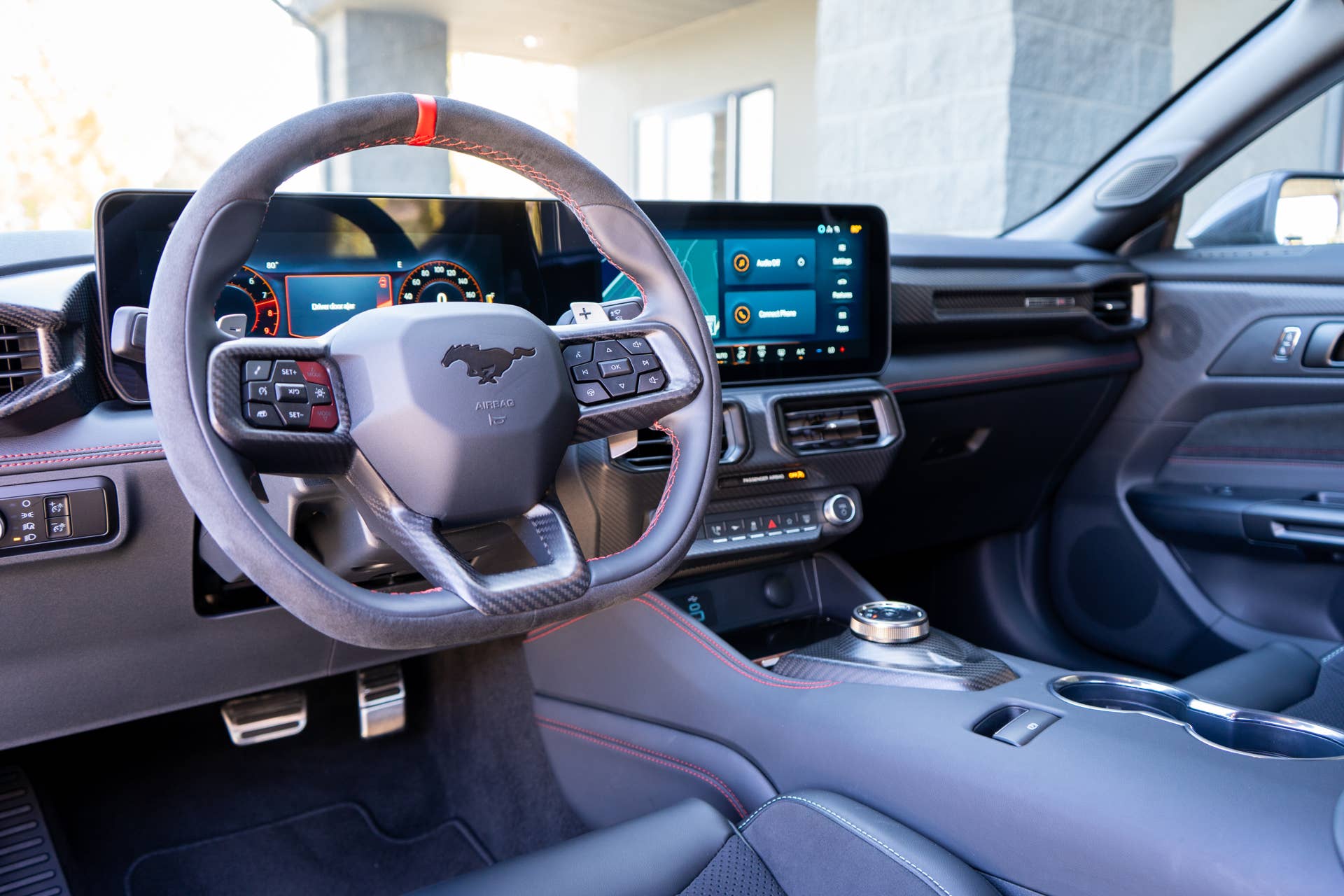
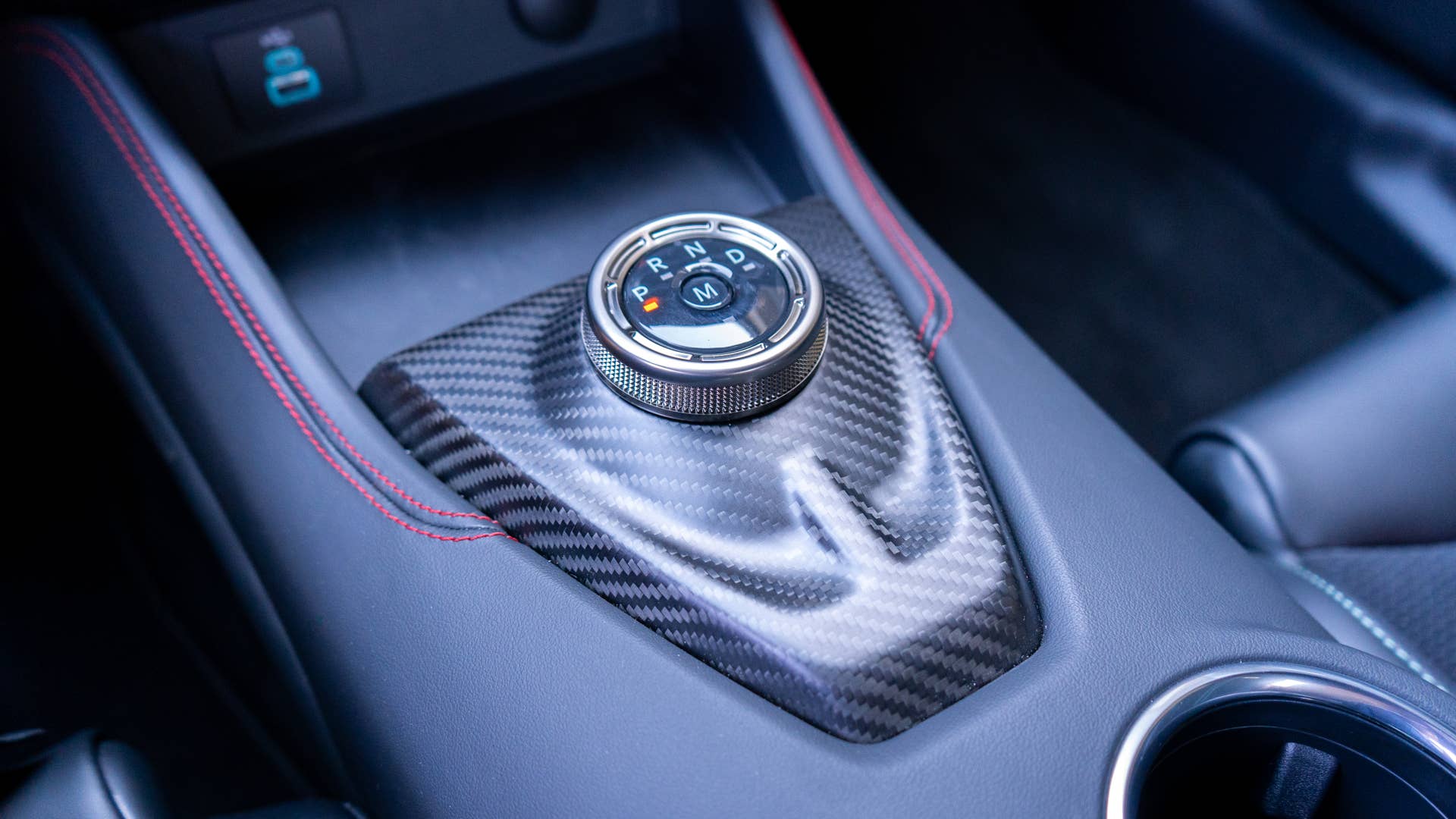
The SC’s greatest weakness has nothing to do with dynamics. It’s the reminder that beneath the carbon fiber and Alcantara sits the cabin of a comparatively affordable pony car. Some panels creaked in our standard car, continuing an unfortunate modern-Mustang tradition. Curiously, the Track Pack we drove home felt more solid despite lacking rear seats, so build quality varied between production examples, and neither vehicle was a prototype. The GTD-derived flat-bottom steering wheel helps, and the Track Pack’s Alcantara covering and Recaros make the driving environment feel significantly more purposeful. The controls are straightforward, the performance settings are easy to navigate, and the screens function well. Yet their presentation and the surrounding materials struggle to convey a six-figure-plus experience.

2026 Ford Mustang Dark Horse SC

Cole Attisha

2026 Ford Mustang Dark Horse SC

Cole Attisha

At least the standard car can function as a frequent road companion. Its rear seats offer little meaningful accommodation, but the ride, visibility, noise levels, and automatic transmission make the rest of the car unexpectedly easy to live with. A manual transmission might make that version even more appealing: imagine a Dark Horse SC conceived like a 911 GT3 Touring, with less track-focused aero, three pedals, and a design built for the road without sacrificing the engine. That’s the version I would find hardest to resist if it ever existed.

2026 Ford Mustang Dark Horse SC

Cole Attisha

Verdict: The Last Of Its Kind, And Perhaps The Best

The Corvette and Porsche 911 are obvious alternatives at this price point, especially once options push the SC even deeper into six-figure territory. Neither, however, delivers quite the same raw, rumbly, and unmistakably American performance-car experience on top of their impressive statistics the way the DHSC does. To me, this Mustang feels more authentically rooted in traditional American muscle than even the Corvette does, what with its newfound flat-plane-crank howl and exotic mid-engine platform dimensions. Calling the Dark Horse SC the ultimate Mustang feels like a complicated statement as long as the GTD exists, but the GTD is a rare and extravagantly priced halo car, almost entirely detached from the Mustang most people recognize. The Dark Horse SC feels like the more natural family topper: outrageous, attainable only to a fortunate few, but still recognizably descended from the budget pony car beneath it.

2026 Ford Mustang Dark Horse SC

Cole Attisha

Ford could’ve given it a cooler name. It could have been a Cobra, a Boss, or a new Terminator. Instead, the company gave two anonymous letters to a driving experience rich in historical identity. The Dark Horse SC succeeds because it feels like the last of its kind and, simultaneously, the best of its kind—old-school supercharged fury made faster, friendlier, and more capable by thoroughly modern mechanical engineering. Whatever “SC” lacks in mythology, this Mustang makes up for it on the road, the strip, and the circuit.

Autoblog aims to feature only the best products and services. If you buy something via one of our links, we may earn a commission.

2026 Lexus RZ 550e F SPORT Review: A Swift Luxury Bargain With a Short Leash

It’s hard to disguise the relationship between the Lexus RZ and Toyota bZ. Both ride on Toyota’s e-TNGA electric vehicle platform, and some of the family resemblance is right there in the sheet metal. The difference is what each brand does with those bones. The Toyota is aimed at a broader audience, while the Lexus tries to deliver luxury, performance and a more distinctive driving experience. I recently drove the 2026 Lexus RZ 550e F SPORT AWD, the most powerful RZ in the lineup, and came away impressed by how much fun Lexus managed to squeeze out of it. There are compromises, though, and one of them is large enough to deserve its own charging stop.

Chase Bierenkoven

Powertrain and performance

The RZ 550e F SPORT uses two electric motors and Lexus’ DIRECT4 all-wheel-drive system to produce 402 horsepower. Lexus estimates 0 to 60 mph in 4.1 seconds, which is pretty quick for a luxury crossover. Its battery has 76.96 kWh of capacity, and the EPA-estimated range is 229 miles with the standard 20-inch wheels. That last number is the problem. You get excellent punch around town, but plenty of competing EVs give you more breathing room when the trip stretches beyond town.

The 2026 RZ also gets a standard NACS charging port and an 11-kW onboard AC charger. Lexus says a DC fast charger can take the battery from 10% to 80% in about 30 minutes under ideal conditions. Access to more charging stations is welcome, but the shape of the plug alone doesn’t make the car charge faster; the charger, battery conditions, and the vehicle’s charging capability still determine how long you’ll be sitting there. It is DC fast-charge rated at 150kW.

Related: After A Week With The Land Rover Defender 110 OCTA, These Features Stayed With Me

Then there’s M Mode, Lexus’ simulated eight-speed manual shifting system. You use paddles to click through imaginary gears while the car supplies simulated engine and exhaust sounds. Yes, an electric Lexus gets a little shifty. I laughed the first time I tried it, then found myself using it again. It isn’t as gloriously unhinged as the Hyundai Ioniq 5 N’s version of this idea, and I’m sure some drivers will turn it off immediately. I found it entertaining once I stopped asking why an EV needed pretend gears and enjoyed the silliness.

Chase Bierenkoven

View the 2 images of this gallery on the original article

Exterior and interior design

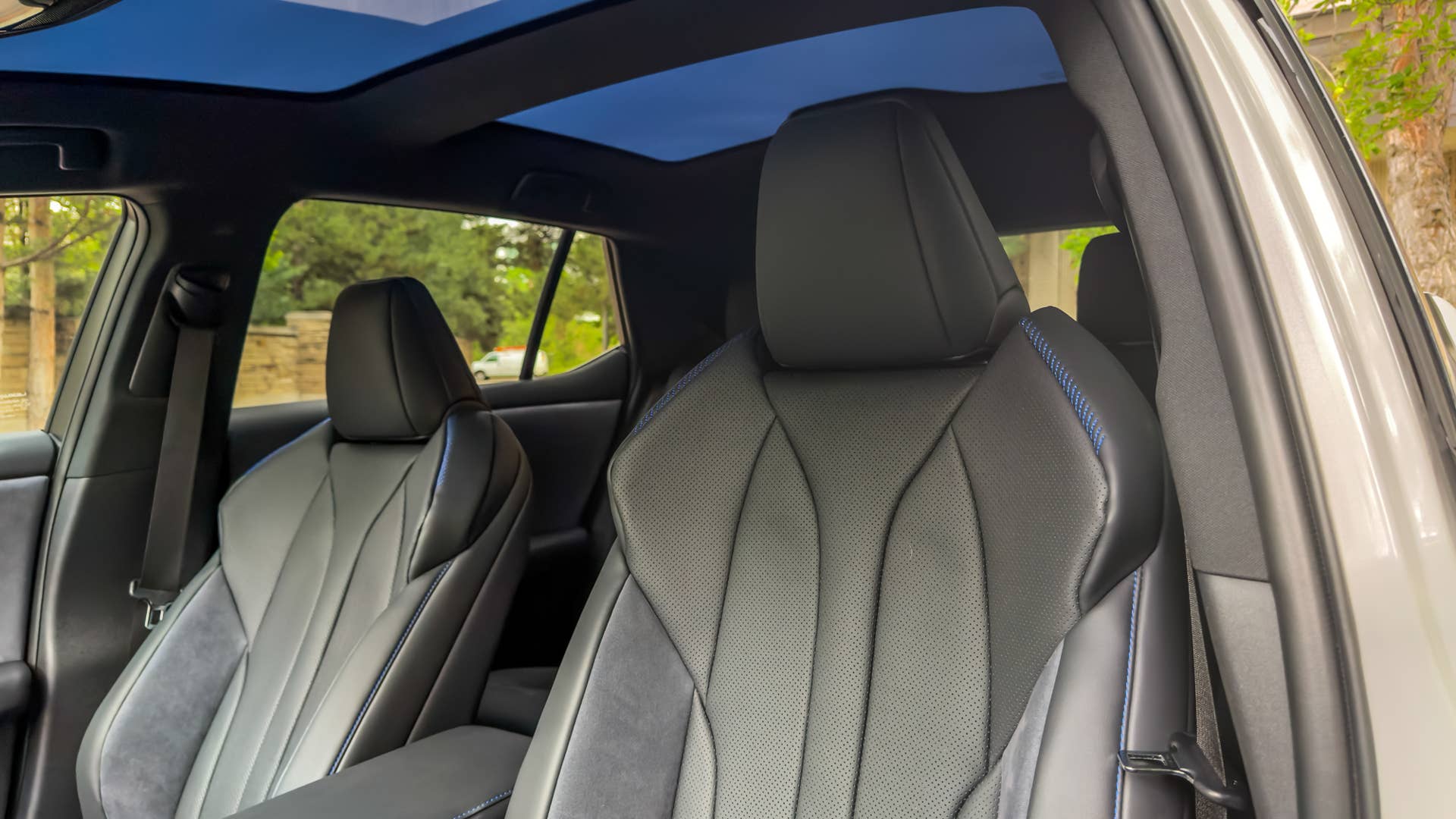
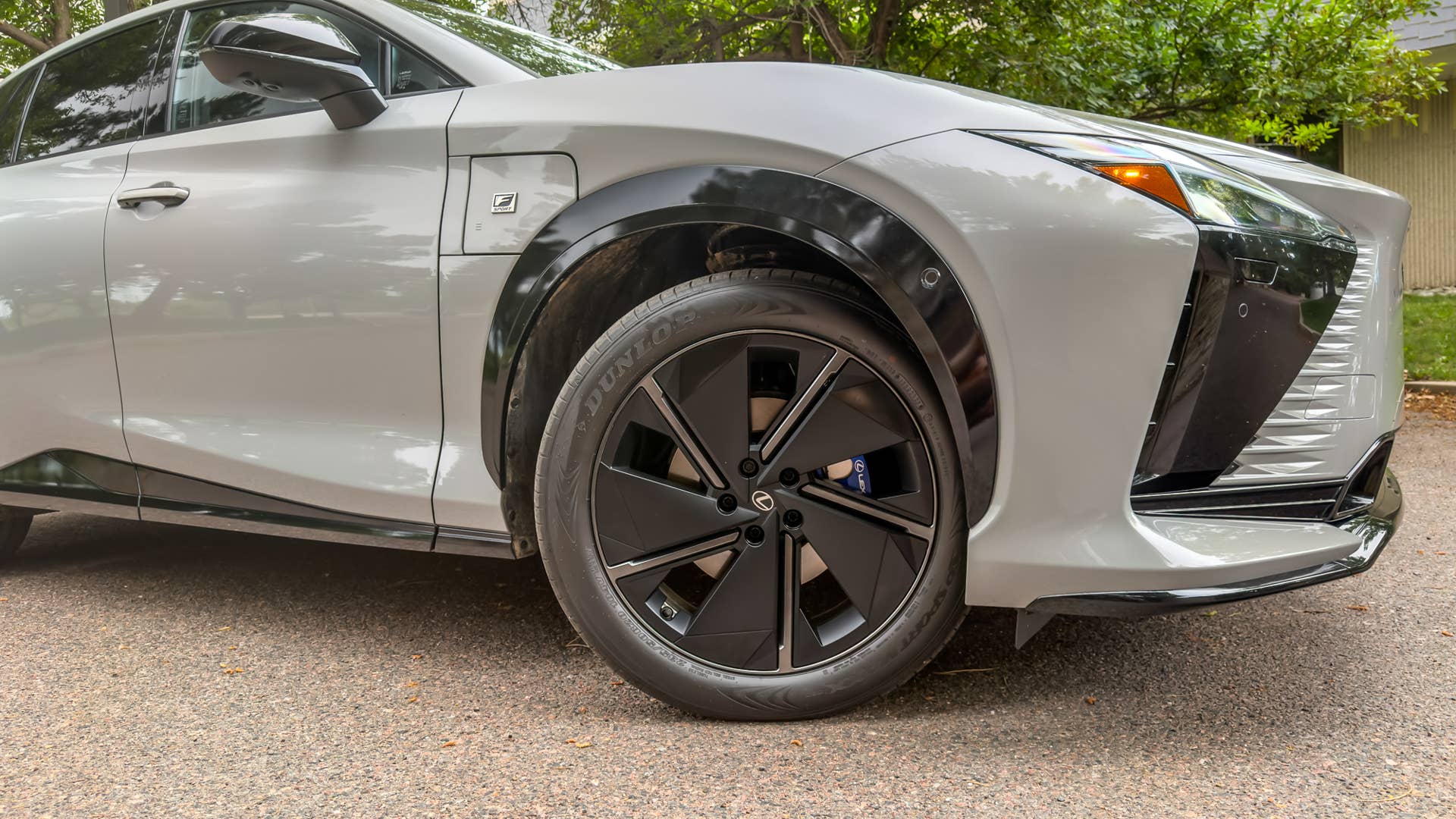
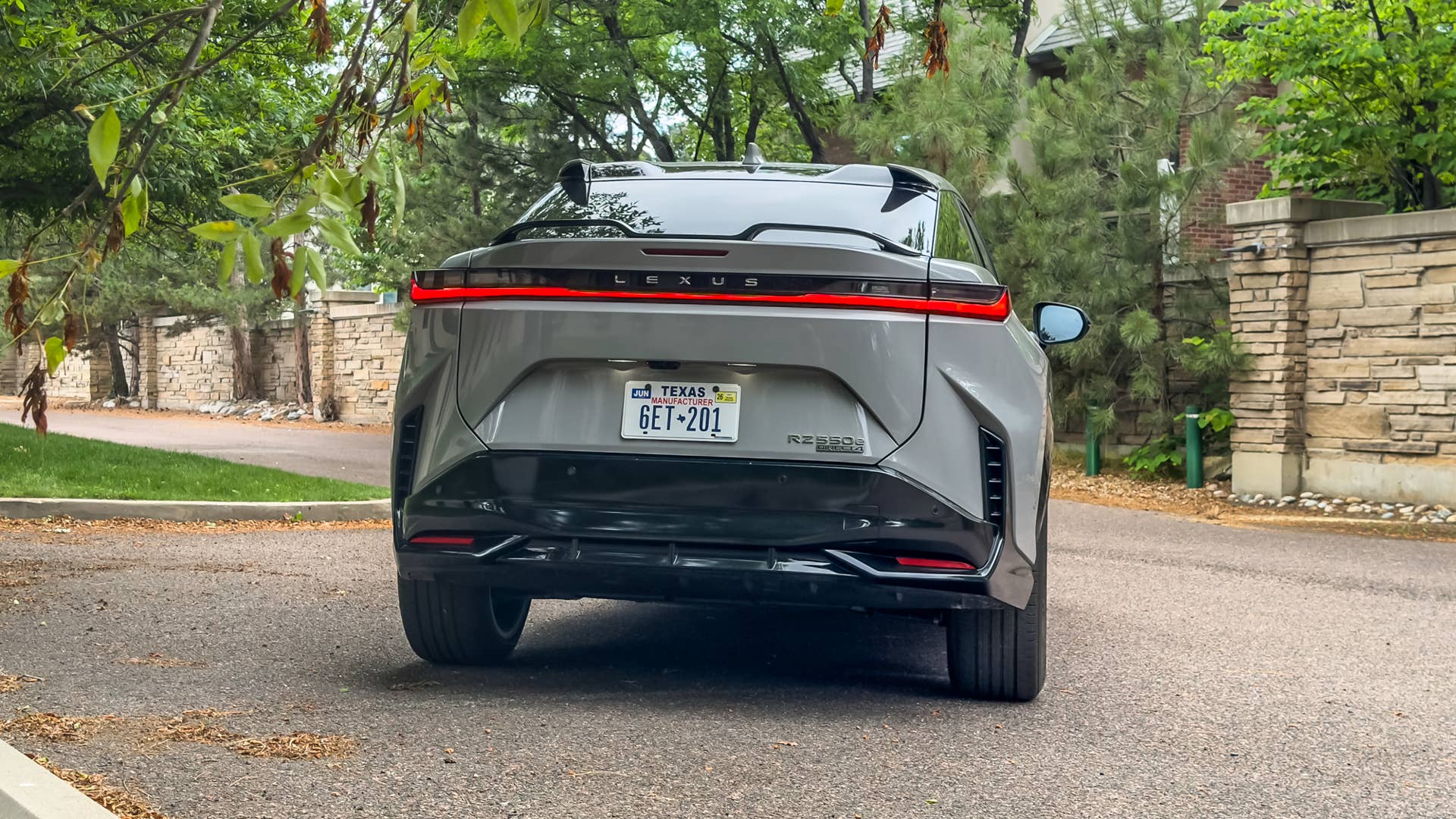
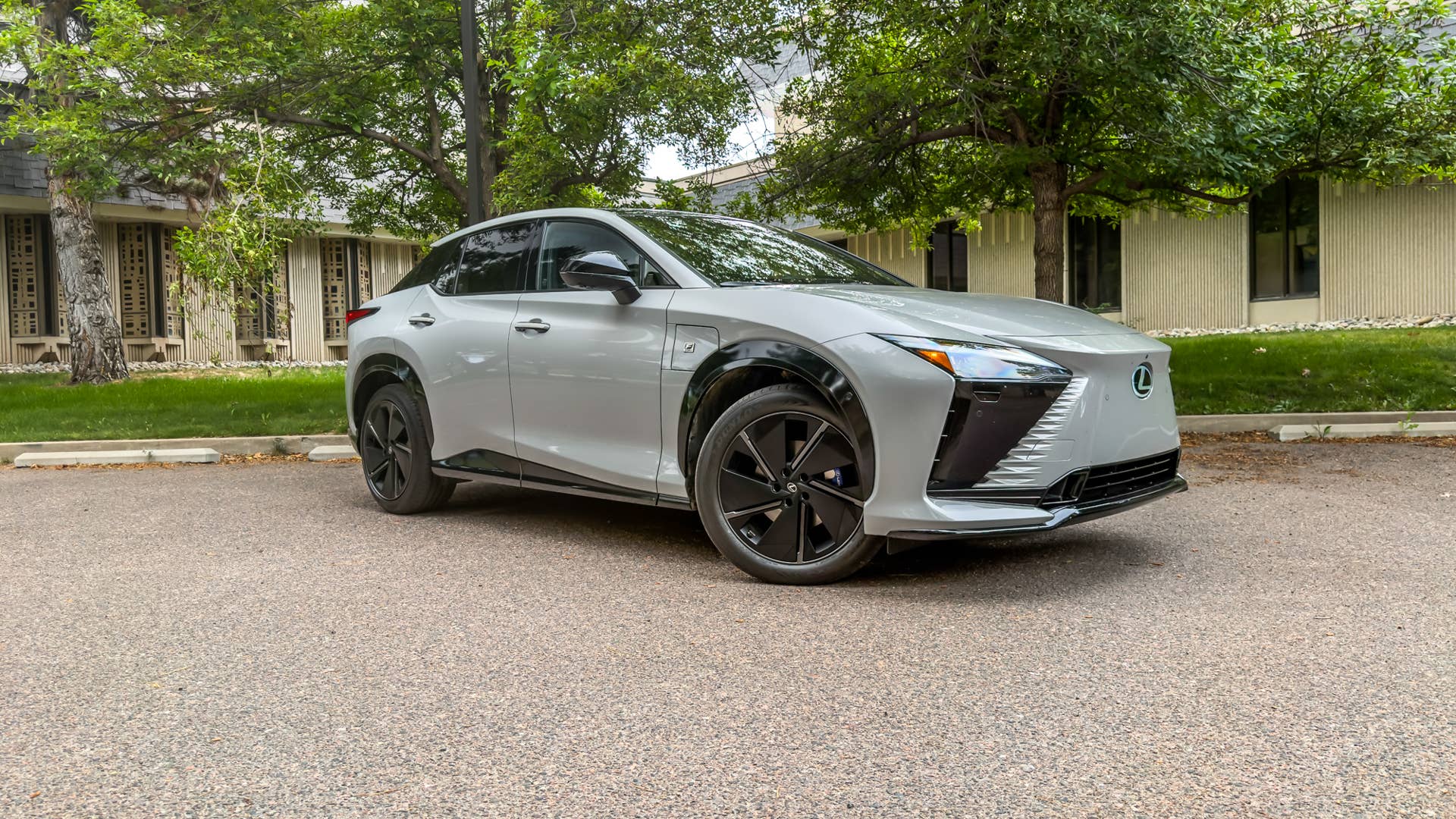
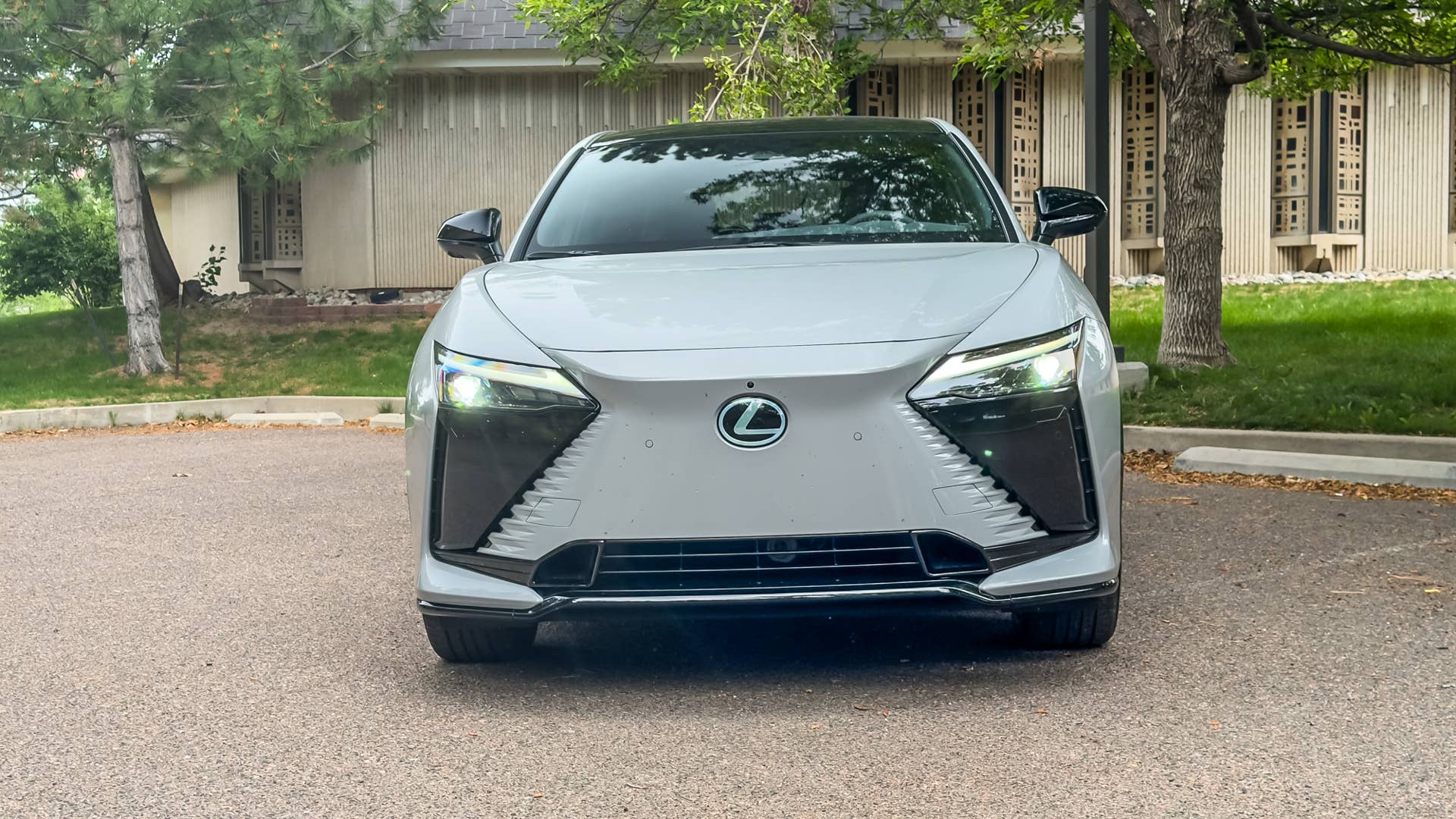
I think the updated RZ is handsome, and the F SPORT treatment gives it some needed swagger. The sharper details, 20-inch wheels, blue brake calipers, lower bumper accents and rear spoiler make this version look more athletic without turning it into a rolling costume. It still looks like a Lexus, which matters. When you’re spending this kind of money, it helps if the vehicle announces itself as something more special than the Toyota parked next to it.

Chase Bierenkoven

View the 3 images of this gallery on the original article

Inside, the Ultrasuede-trimmed seats feel supportive and comfortable, although they lean more sporty than cushy. The cabin has the refinement I expect from Lexus, but I wouldn’t call it the most lavish interior in this class. I’m also still not in love with the 14-inch touchscreen. Too many ordinary tasks require poking through menus when a few more physical controls would let me keep my eyes on the road. Perhaps I’m old-fashioned, but I don’t want to conduct a small research project every time I adjust something while driving.
Chase Bierenkoven

Driving the 2026 Lexus RZ 550e F SPORT

This is where the RZ makes its best argument. Acceleration is immediate, the steering is reassuring, and the F SPORT suspension tuning gives it a more eager feel than I expected. Lexus has made an EV that I wanted to drive for the fun of it, which is a compliment I don’t hand out to every electric crossover. It isn’t the most maneuverable vehicle I’ve driven lately; the Mercedes-Benz GLC 400 Electric, with its available rear-wheel steering, is remarkable in tight spaces. I also prefer the Audi Q6 e-tron’s highway ride. Still, the Lexus holds its own on a twisty road and costs considerably less than some luxury EVs equipped to a similar level.

Related: The 2026 Mercedes-Benz GLC 400e: It’s Full of Surprises

The virtual shifting remains the strangest part of the experience. Hearing a simulated engine climb through a simulated gear while an electric motor delivers very real acceleration is an uncanny combination. It made me giggle, and I mean that as praise. There’s a time and place for quiet, seamless EV motoring, and the RZ does that too. Lexus simply gives you an extra toy to play with when the road and your mood permit.

Chase Bierenkoven

View the 3 images of this gallery on the original article

Final thoughts

The RZ 550e F SPORT starts at $58,395 on Lexus’ current listing, while my well-equipped tester came in around $65,000. That’s compelling money for a quick, well-finished electric Lexus. Some of its rivals feel more luxurious or travel farther on a charge, but the RZ offers a lot of performance and character for the price. I’d be careful about claiming a bigger battery would necessarily spoil its handling; that trade-off depends on how Lexus engineers the whole vehicle. What I can say is that I’d happily give up a little of this car’s impressive acceleration for more highway range.

As it stands, the 2026 RZ 550e F SPORT is a fun, attractive, and surprisingly good-value luxury EV. If your driving is mostly local and you can charge at home, its 229-mile EPA rating may be easy to live with. If you routinely cross states, you’ll need more patience than its 402 horsepower might suggest.

It’s an oddly quick car that asks you to slow down and plan.

Related: Infiniti QX60 vs Infiniti QX65: Style vs Substance?

2026 Hyundai Venue vs. 2026 Chevrolet Trax: I Drove Both Affordable SUVs—Here’s My Honest Comparison Review

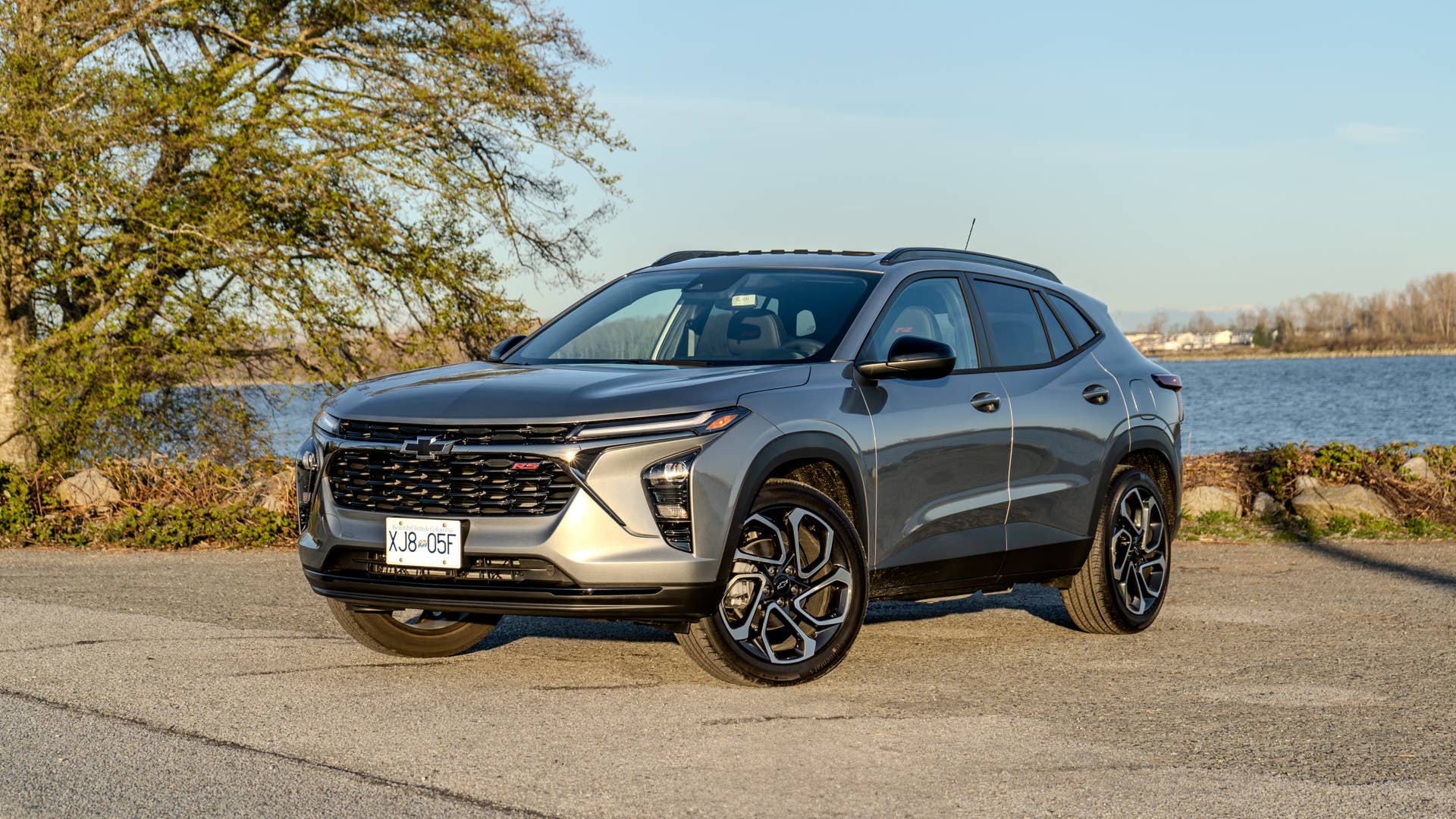
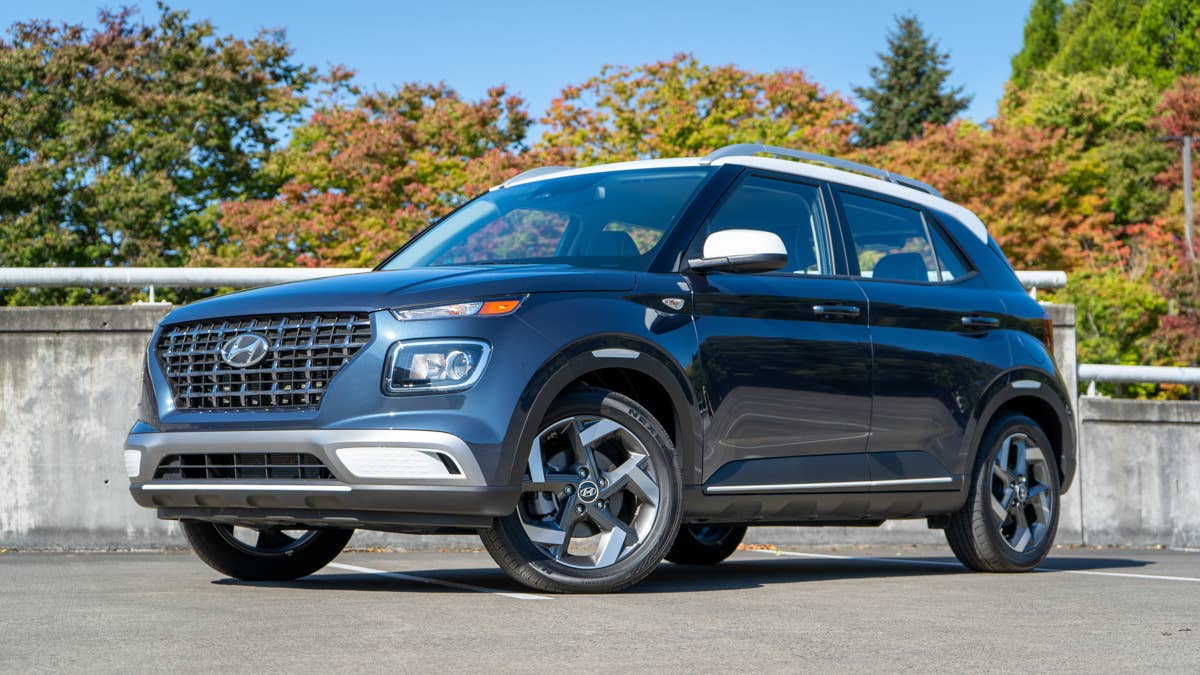
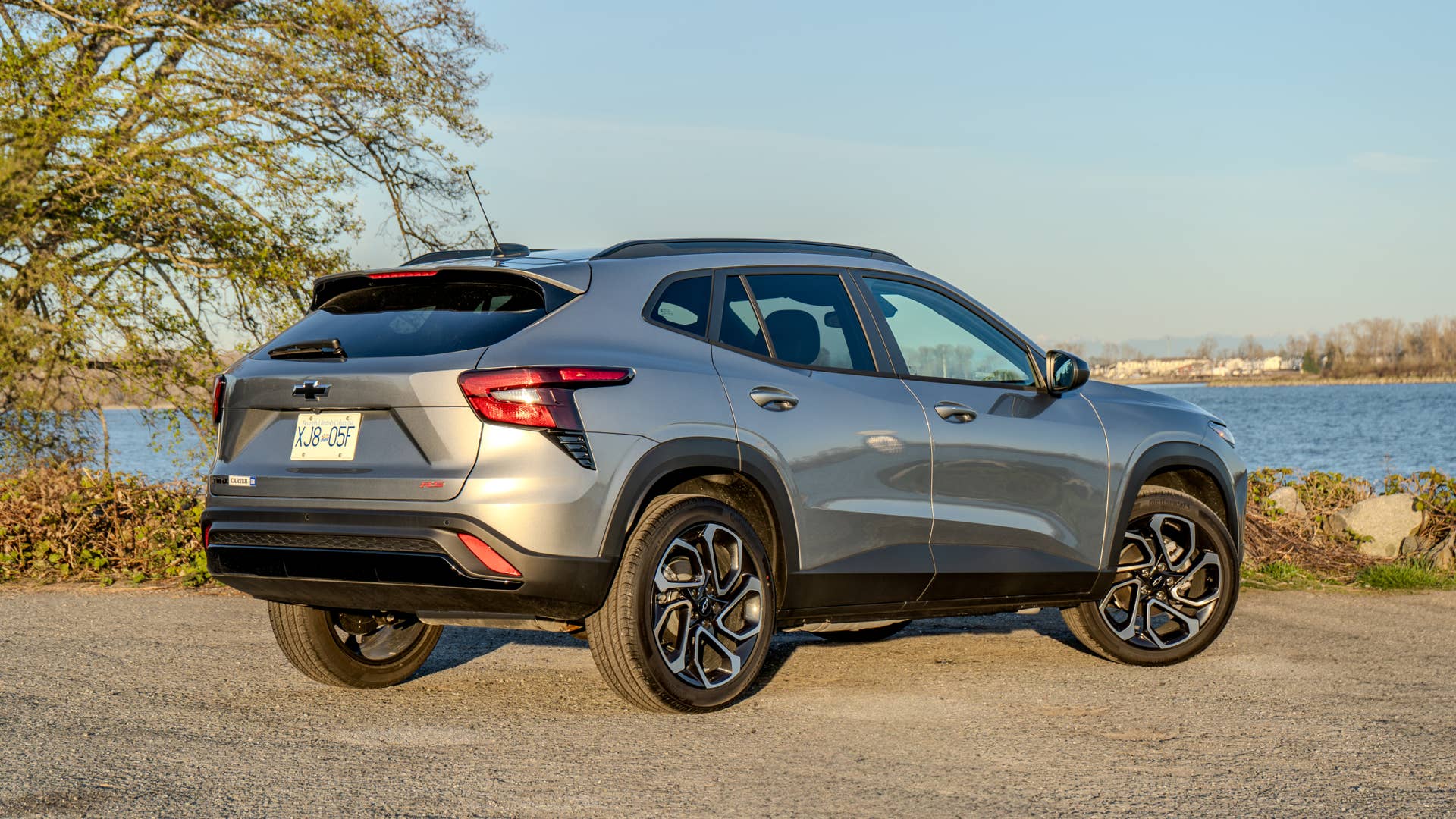
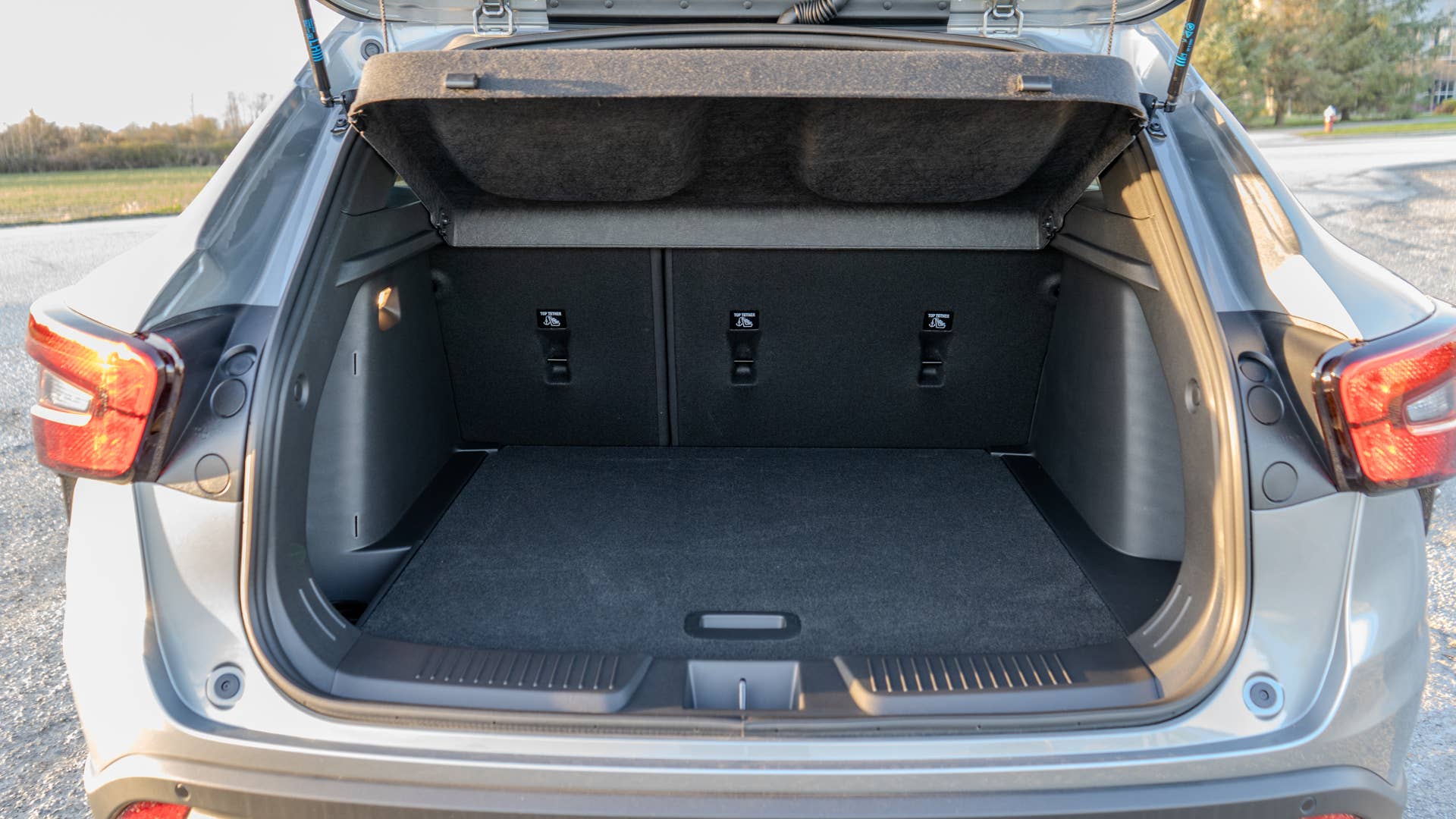
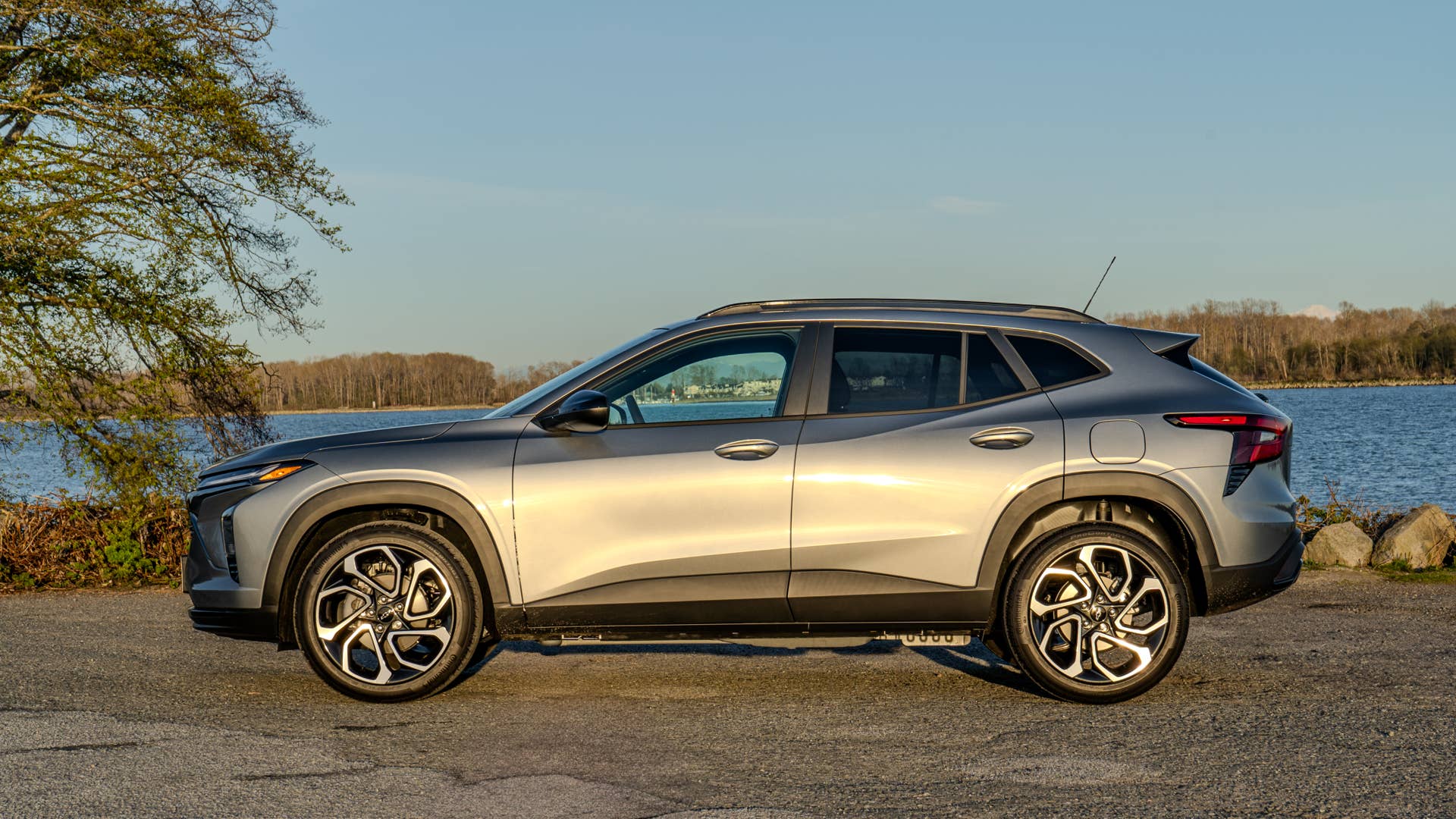
The best affordable car isn’t necessarily the one that gives you the most metal for your money. Sometimes, it’s actually the one that makes spending less feel least like a sacrifice. The Chevrolet Trax presents a much stronger argument in theory. It’s longer, roomier, more powerful, and barely any less efficient, and it gives American buyers more of nearly everything they traditionally value. But after driving both, I realized these two inexpensive SUVs are built around fundamentally different definitions of value. The Trax gives you more car, but the Venue feels as though Hyundai put more care into its substance. I spent a week with the Trax 2RS earlier this year, but my Venue SEL two-tone drive only lasted approximately 30 minutes in Drive Revolution in Vancouver, Washington. So while this wasn’t a more in-depth, back-to-back test, my time with both vehicles was enough to reveal the sacrifices each asks of its buyers.

2026 Chevrolet Trax RS

Cole Attisha

2026 Hyundai Venue vs. Chevrolet Trax Specifications

Specification

Hyundai Venue SEL Two-Tone

Chevrolet Trax 2RS

Engine

1.6-liter naturally aspirated I4

1.2-liter turbocharged I3

Horsepower

121 hp

137 hp

Torque

113 lb-ft

162 lb-ft

Transmission

IVT

6-speed automatic

Drivetrain

Front-wheel drive

Front-wheel drive

EPA fuel economy

29/33/31 mpg

28/32/30 mpg

Cargo space, seats raised

18.7 cu ft

25.6 cu ft

Maximum cargo space

31.9 cu ft

54.1 cu ft

Tested trim MSRP

$22,600

$25,400

Price including destination

$24,440 as tested

$27,195 before options

Thinking about selling your car? Get an instant cash offer online now. Click here to get started.

2026 Hyundai Venue SEL W/ 2-Tone Roof

Cole Attisha

The Venue Might Be Slow, But It’s Exceptionally Well Calibrated

With only 121 horsepower and 113 lb-ft of torque, the Venue requires some patience when merging onto an interstate. You have to plan the maneuver, build speed early in anticipation, and keep your foot planted when necessary. It can complete the task perfectly well, but effortless acceleration isn’t quite how I’d describe it. That didn’t mean it was unpleasant, though; you just have to be patient and alert. The Venue’s low weight and linear, naturally aspirated power delivery help it feel more energetic than its specifications suggest. Its IVT—or Intelligent Variable Transmission, Hyundai’s clever name for what is essentially a CVT—also operated pretty seamlessly during my drive. I would still rather have the six-speed manual or conventional six-speed automatic offered in certain foreign markets, but Hyundai has calibrated the North American powertrain remarkably well for the kind of driving we do.

The way the Venue handles was another pleasant surprise. It felt tight, properly weighted, and actually more communicative than the systems in either the Kia Seltos or K4 I drove at the same event. The Venue was nimble, easy to place, stable at highway speed, and far less strained or noisy than I expected. Although it was the least powerful—and probably least sporty—vehicle at Drive Revolution, it was nowhere near my least favorite to drive. Its simplicity and lightness gave it a mechanical honesty missing from several larger, more complicated crossovers.

2026 Chevrolet Trax RS

Cole Attisha

The Trax, on the other hand, is appreciably stronger in terms of performance. Its 137-hp turbocharged three-cylinder produces 162 lb-ft of torque, giving it a substantial advantage when merging, overtaking, or climbing through hilly terrain. Once the turbo wakes up, it feels legitimately punchy, but its delivery is less polished. The Trax I tested exhibited a noticeable lull before boost arrived, followed by an abrupt swell of power once it did. Its six-speed automatic could also become indecisive at lower speeds, so compared with Hyundai’s uncomplicated response, the Chevrolet occasionally felt as if its engine and transmission were on slightly different wavelengths. For urban driving, I prefer the Venue, but for interstate travel or hilly and mountainous regions, I would gladly accept the Trax’s rougher manners in exchange for its additional muscle.

Shopping for a new car? Click here to get a great deal on your next vehicle. Powered by Carvana: no-haggle pricing, 100% online.

2026 Hyundai Venue SEL W/ 2-Tone Roof

Cole Attisha

Cheap Doesn’t Have To Mean Degrading

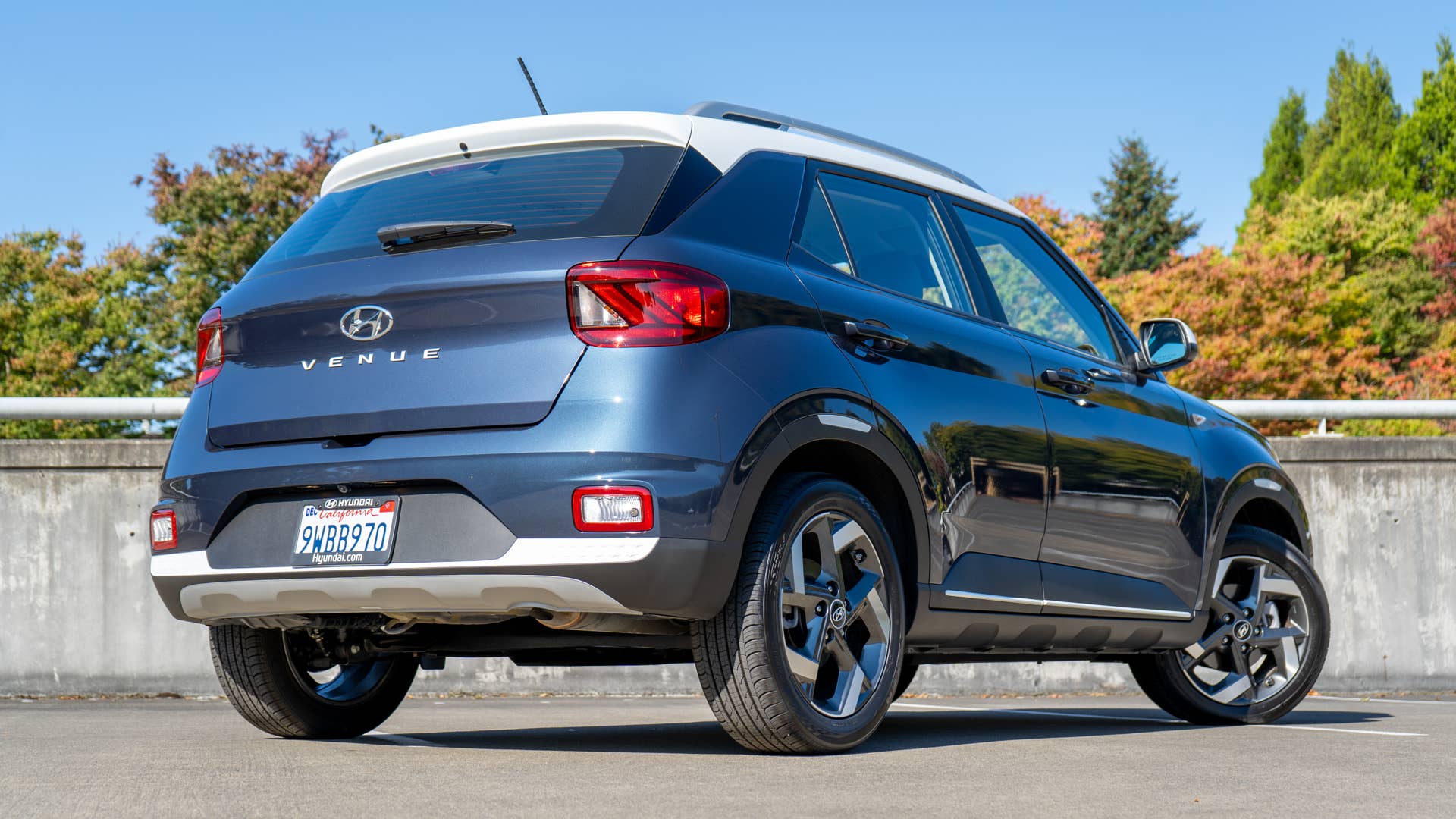
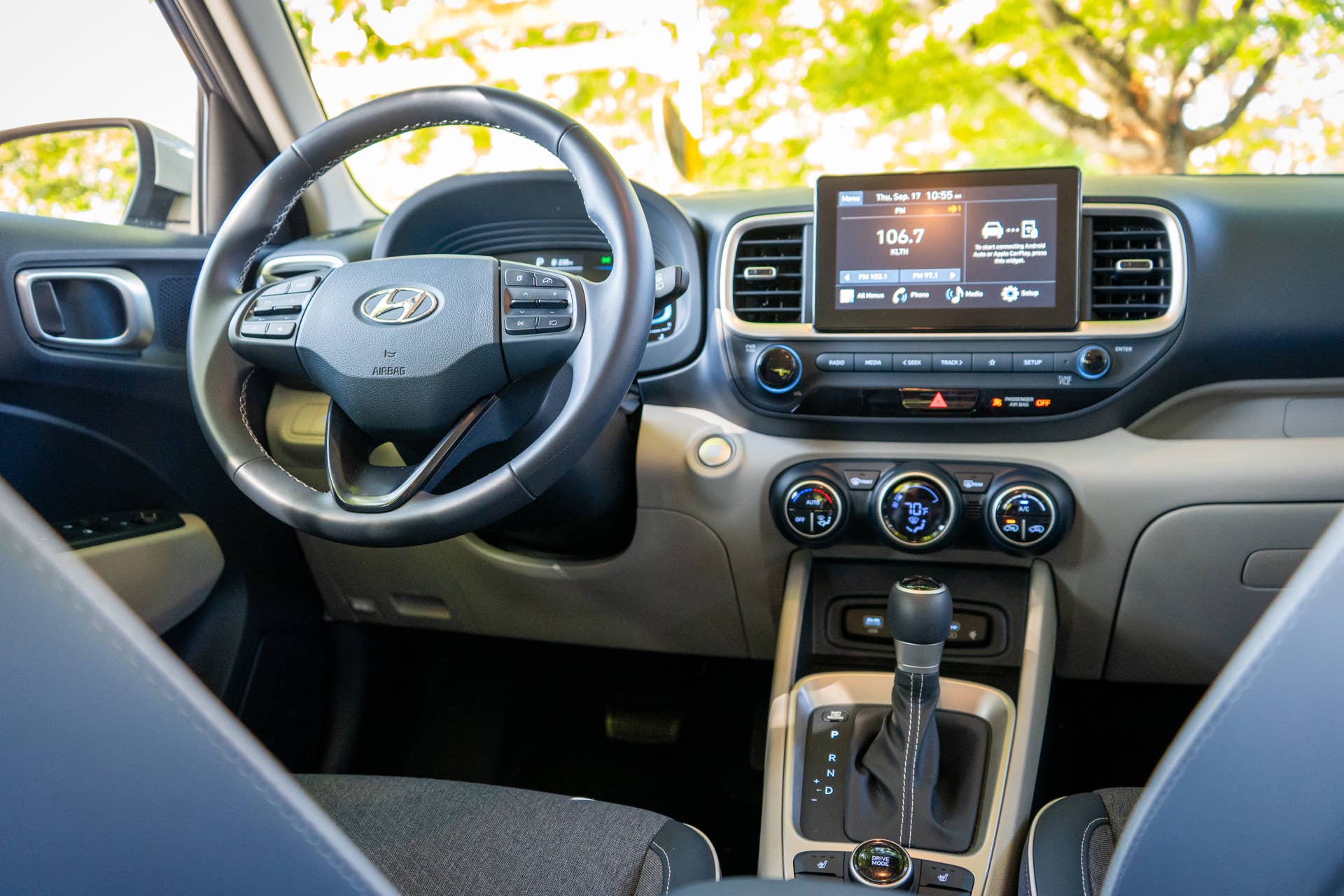
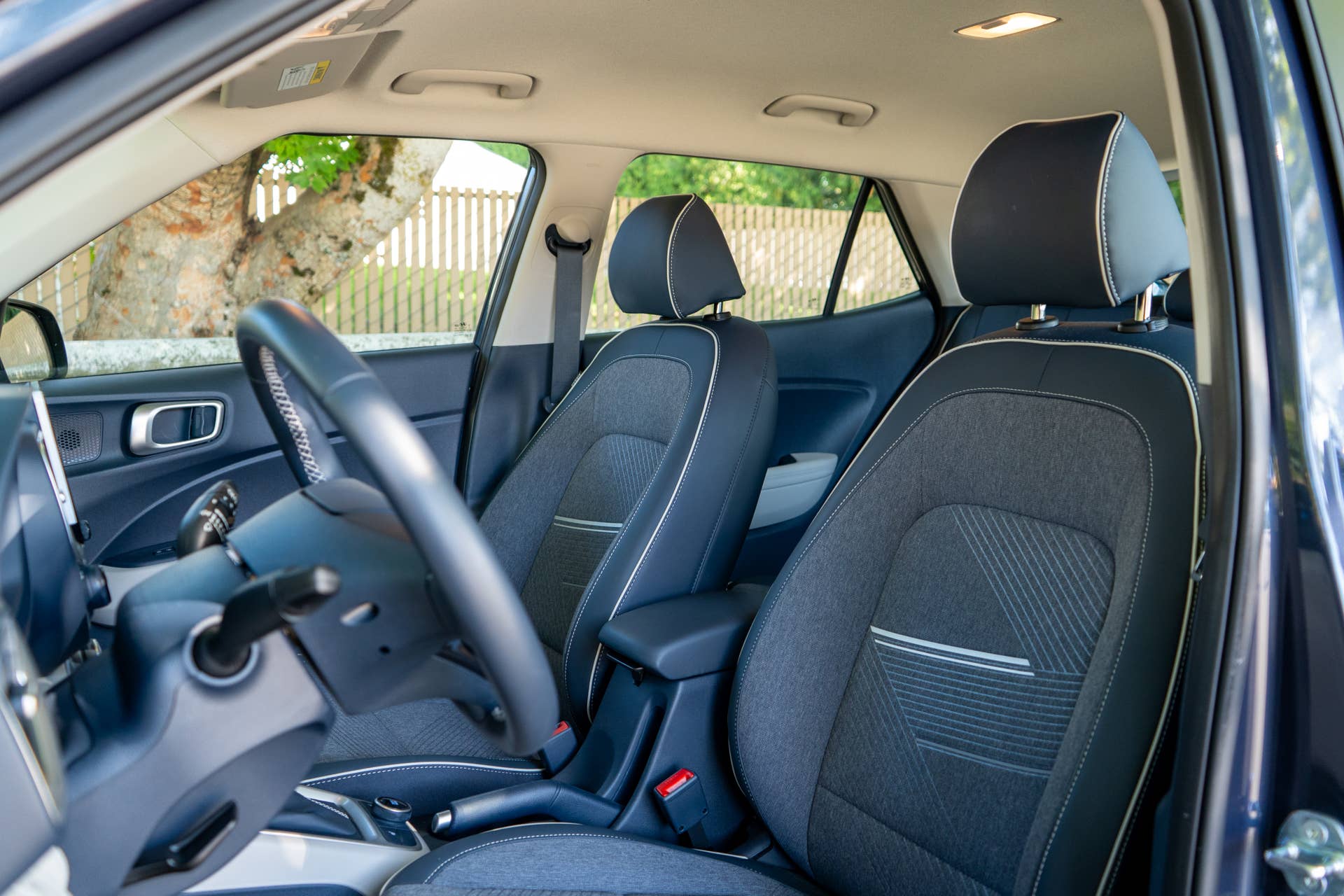
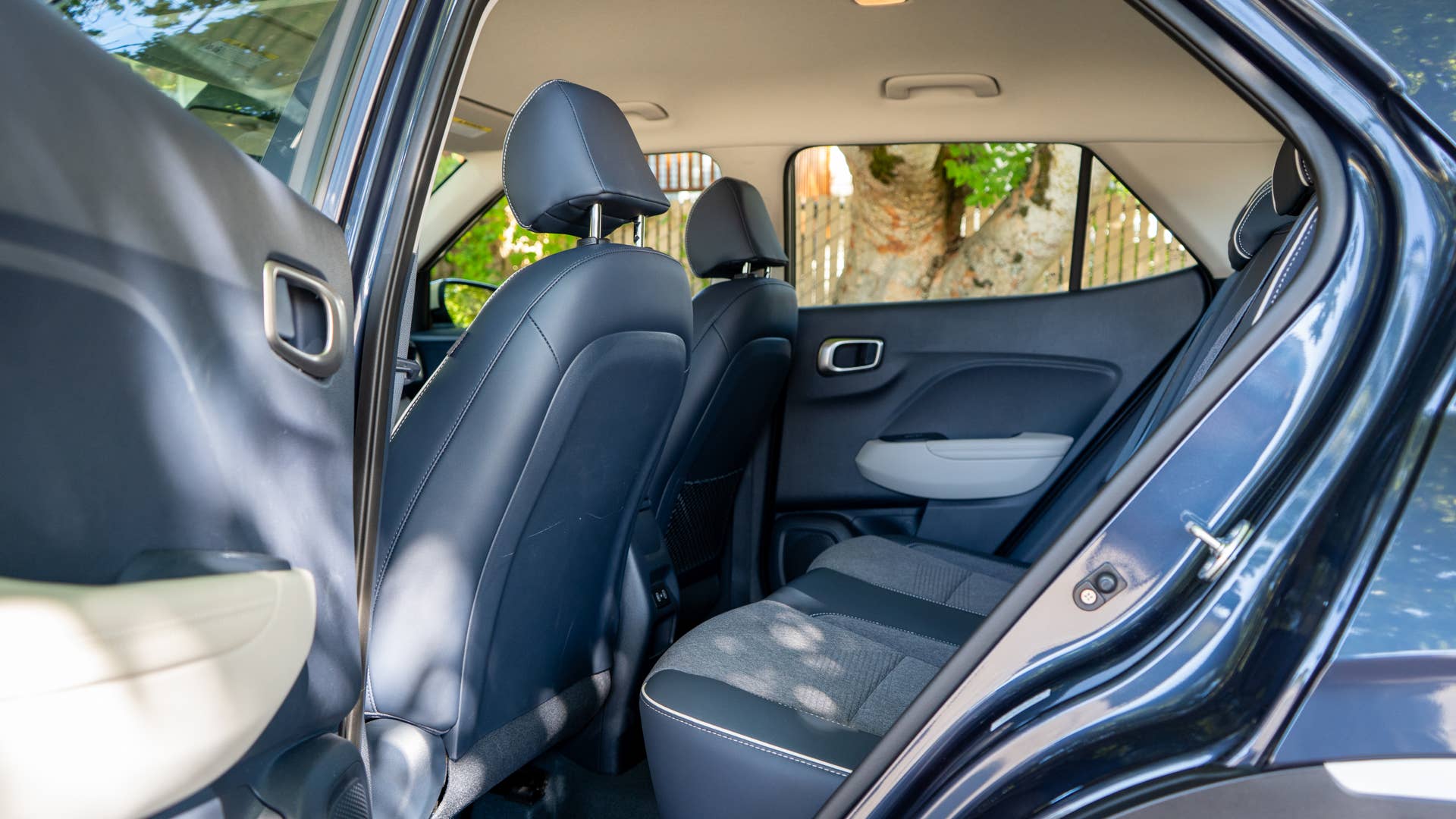
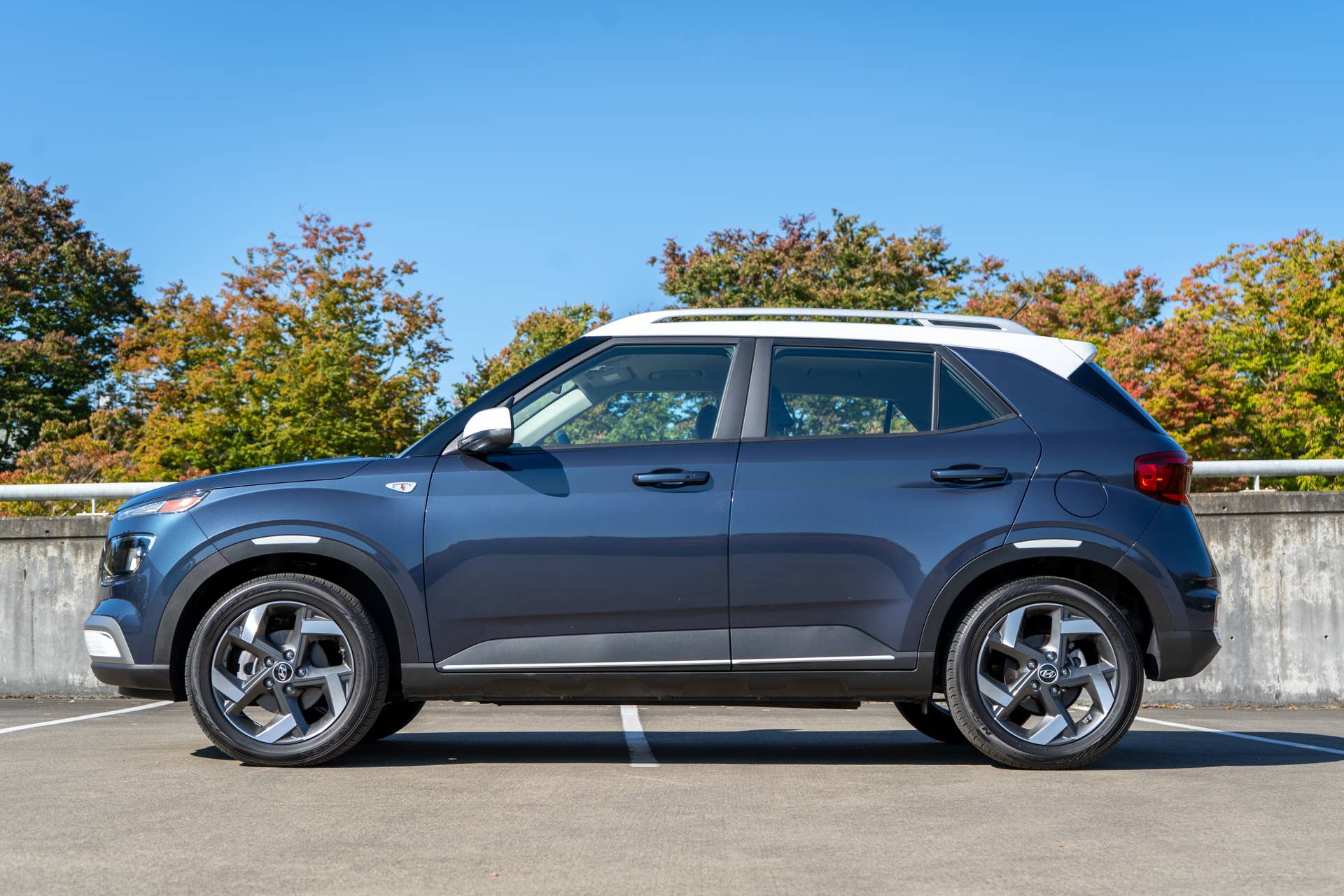
Although the Venue’s exterior is beginning to show its age, the SEL’s two-tone specification helps a great deal, and it’s that added sense of creative charm that underscores the Hyundai’s entire philosophy. For example, my Denim-colored tester wore a white roof and contained a visually striking blue-grey interior with textured white trim. Its design, both inside and out, appears inexpensive to some degree, sure, but it never assumes that inexpensive things must also be lifeless, nor does it assume that they should ever lack the same sense of refinement you’d expect from other models in the same lineup.

2026 Hyundai Venue SEL W/ 2-Tone Roof

Cole Attisha

2026 Hyundai Venue SEL W/ 2-Tone Roof

Cole Attisha

Its eight-inch infotainment system and 4.2-inch driver display look admittedly dated beside the Trax’s available 11-inch touchscreen and eight-inch digital cluster. Yet the Venue’s technology worked just as well; its physical controls were easy to understand, and the cabin felt finely assembled. The SEL also includes heated front seats, wireless Apple CarPlay and Android Auto, and a wireless phone charger, all of which make the cabin feel far more current than it actually is.

2026 Chevrolet Trax RS

Cole Attisha

2026 Chevrolet Trax RS

Cole Attisha

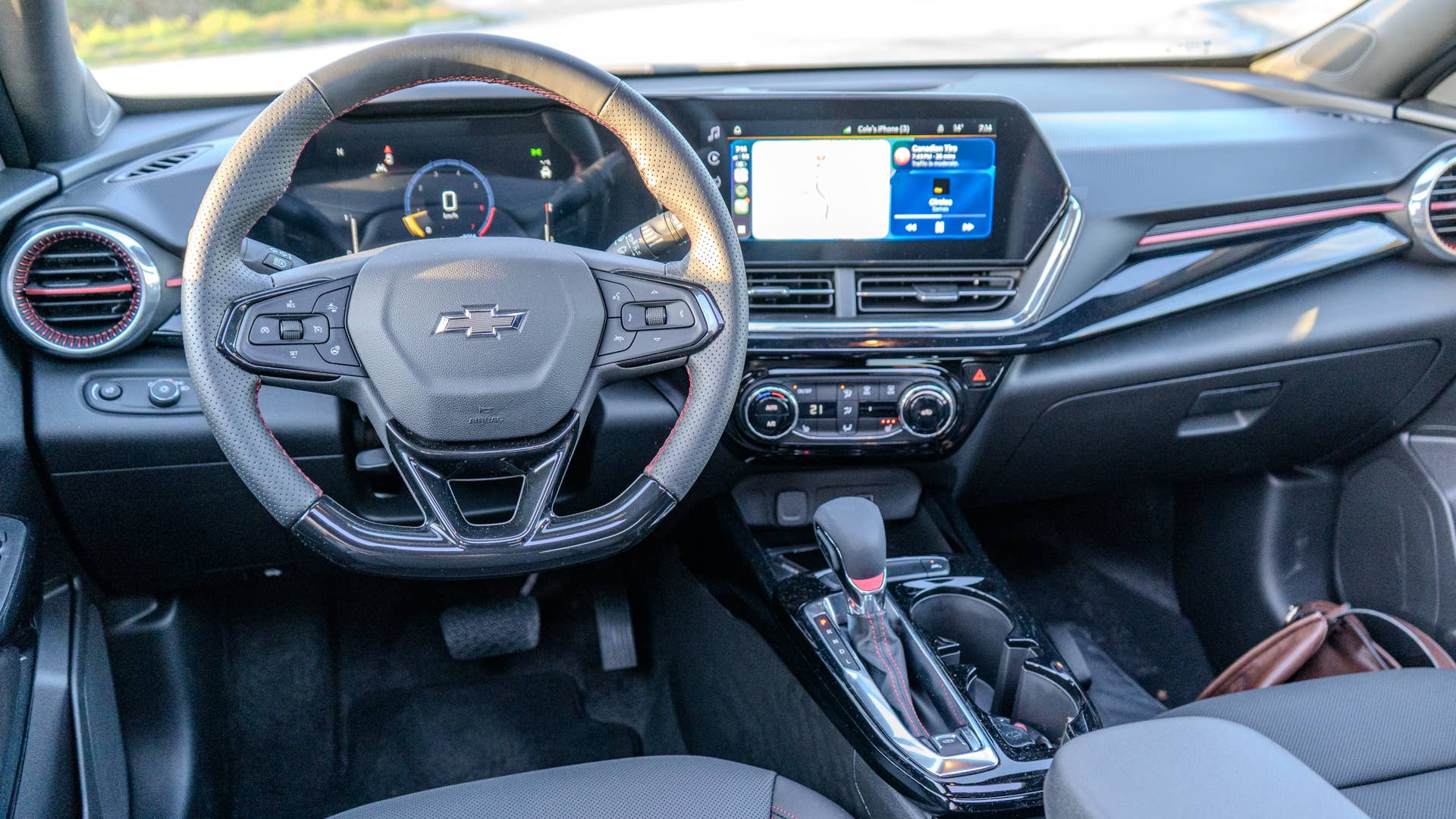
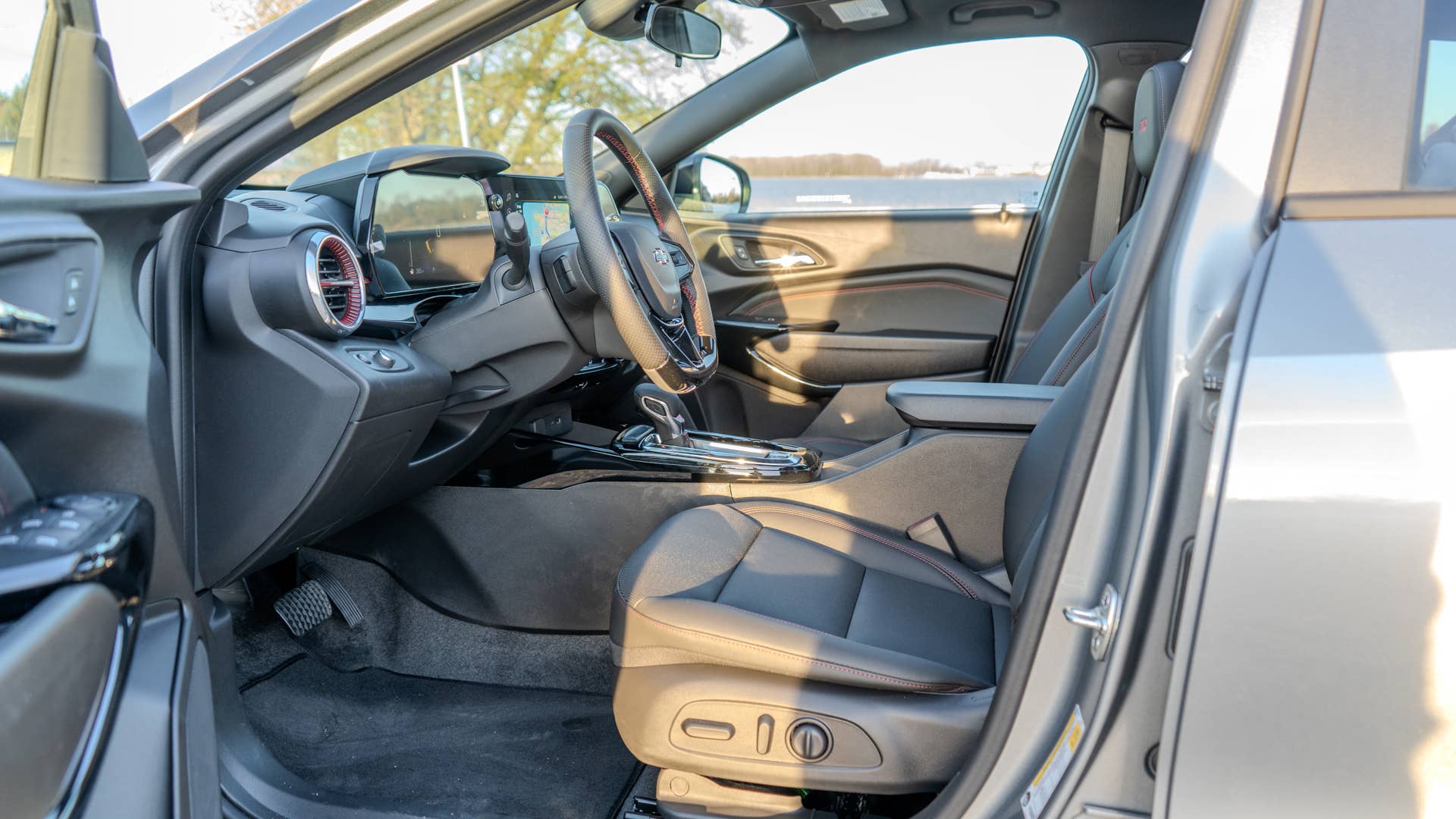
The Trax appears more contemporary inside and out. Its long, wagon-like proportions give it a mature appearance, while the 2RS’s 19-inch wheels, dark trim, and red interior accents disguise its entry-level origins remarkably well. It offers more visual theatre than the Venue and occasionally feels more premium. The Hyundai counters with better perceived material quality, a more natural driving position, better outward visibility, and seats I found more accommodating. Its interior feels refreshingly simple rather than conspicuously basic, and that was ultimately the Venue’s greatest accomplishment: driving it never felt like you were sacrificing a standard of refinement for a lower price tag. The Trax, though, counters by ensuring you don’t feel like you’re sacrificing ease of use—in terms of both power and spaciousness—which can’t be said as earnestly of the Venue.

2026 Chevrolet Trax RS

Cole Attisha

2026 Chevrolet Trax RS

Cole Attisha

The Trax Wins The Measuring Tape Battle By A Long Way

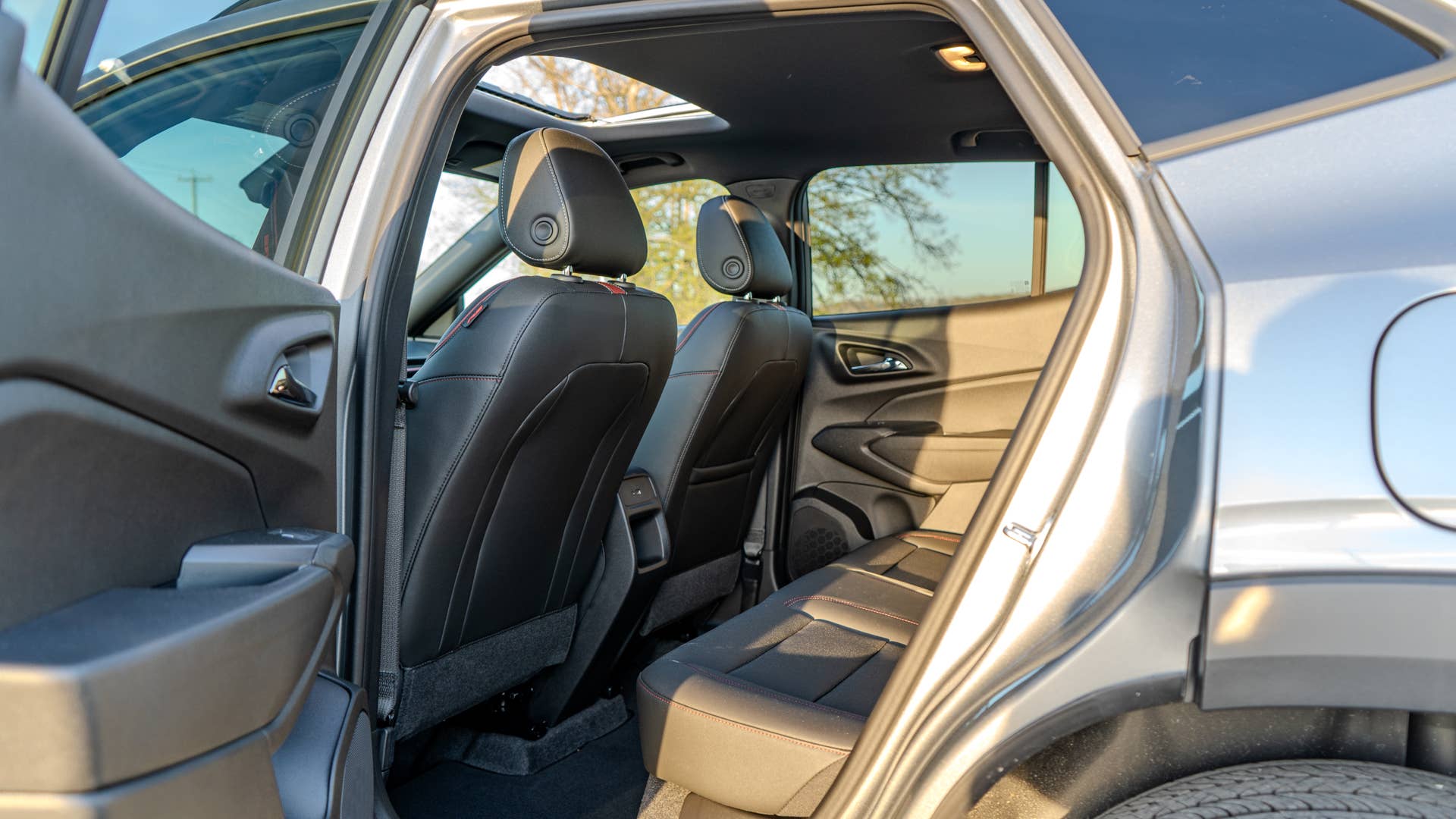
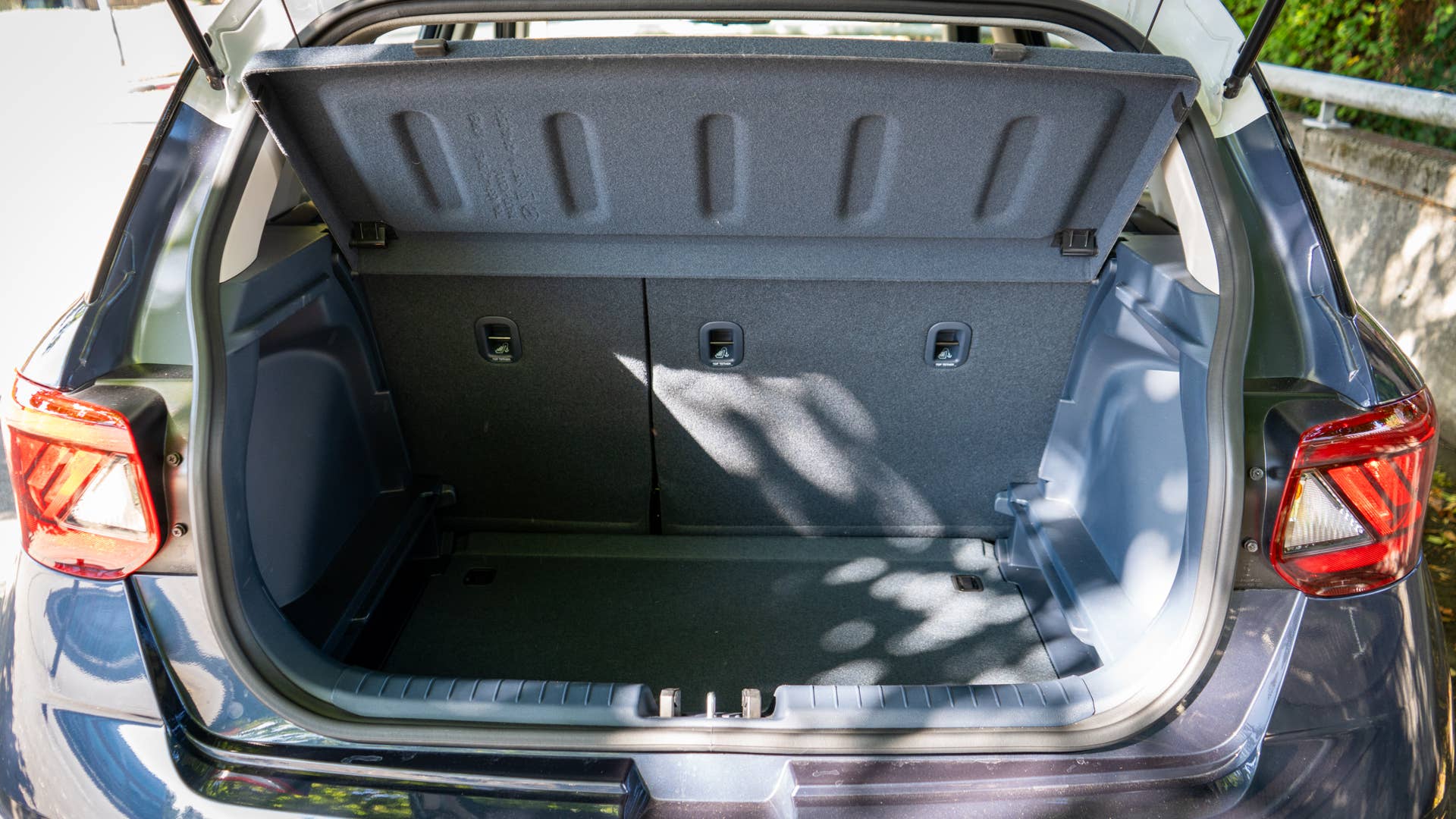
There’s simply no argument for creative design or marginally better materials in a budget subcompact SUV that can effectively outweigh the Trax’s enormous packaging advantage. Chevrolet provides 25.6 cubic feet of cargo room behind the rear seats and 54.1 with them folded. The Venue manages just 18.7 and 31.9 cubic feet, respectively. The Trax’s rear seat is substantially roomier, too, making it the de facto recommendation for adults carrying other adults, sports equipment, strollers, or anything else that accumulates in suburban life.

2026 Hyundai Venue SEL W/ 2-Tone Roof

Cole Attisha

2026 Hyundai Venue SEL W/ 2-Tone Roof

Cole Attisha

The Venue feels more vertically oriented and remains comfortable for taller occupants, but its narrower cabin and shorter body impose unavoidable limits. Its compact dimensions are wonderful in crowded cities and parking garages, but they become harder to defend when the Trax delivers so much additional room for comparatively little money. Neither offers all-wheel drive, so that limitation effectively cancels itself out. Buyers who need AWD will have to look toward something like the Chevrolet Trailblazer or Hyundai Kona instead.
2026 Hyundai Venue SEL W/ 2-Tone Roof

Cole Attisha

Two Separate Ideas Of Value

My Venue’s sticker totaled $24,440, including its $1,600 freight charge and $240 in accessories. A Trax LT starts at $23,200, plus a $1,795 destination charge, for $24,995 before options. For roughly $555 more than this particular Venue, the Trax LT provides considerably more space and torque while returning nearly identical EPA fuel economy. That is an enormous blow to Hyundai’s objective value proposition.

At Drive Revolution, though, the Kia K4 GT-Line Turbo Hatchback ultimately won the Best Value award, while the Venue and substantially more expensive Seltos tied for second. The Venue received my vote. It earned that vote because Hyundai hasn’t responded to a price constraint by letting assembly quality, ergonomics, or driving calibration slip. The Venue isn’t trying to cram the largest possible automobile into the smallest possible monthly payment. It simply gives you less automobile, assembled with nearly as much care as Hyundai’s costlier products. Its lengthy 10-year/100,000-mile powertrain warranty further strengthens that argument.
2026 Chevrolet Trax RS

Cole Attisha

Verdict: The Venue For Me, The Trax For Thee

For the broadest cross-section of North American subcompact-SUV buyers, the Trax is easier to recommend. Its additional space, stronger highway performance, more contemporary technology, and nearly identical official fuel economy make it the more versatile choice for comparatively little extra money. But that recommendation comes with several qualifications. The Trax’s ride can feel clunky; its turbocharged engine and six-speed automatic transmission lack the Venue’s low-speed polish, and neither vehicle offers all-wheel drive. Urban buyers who value compact dimensions, predictable responses, and a satisfying sense of mechanical simplicity may find the Hyundai more appealing.

That’s ultimately where I land: the Trax makes more sense, but the Venue makes a greater impression. The Chevrolet serves the segment better, but the Hyundai suits me better. If your affordable crossover must do a little of everything, choose the Trax. If you want a small, honest, unusually polished city car, choose the Venue.

Autoblog aims to feature only the best products and services. If you buy something via one of our links, we may earn a commission.

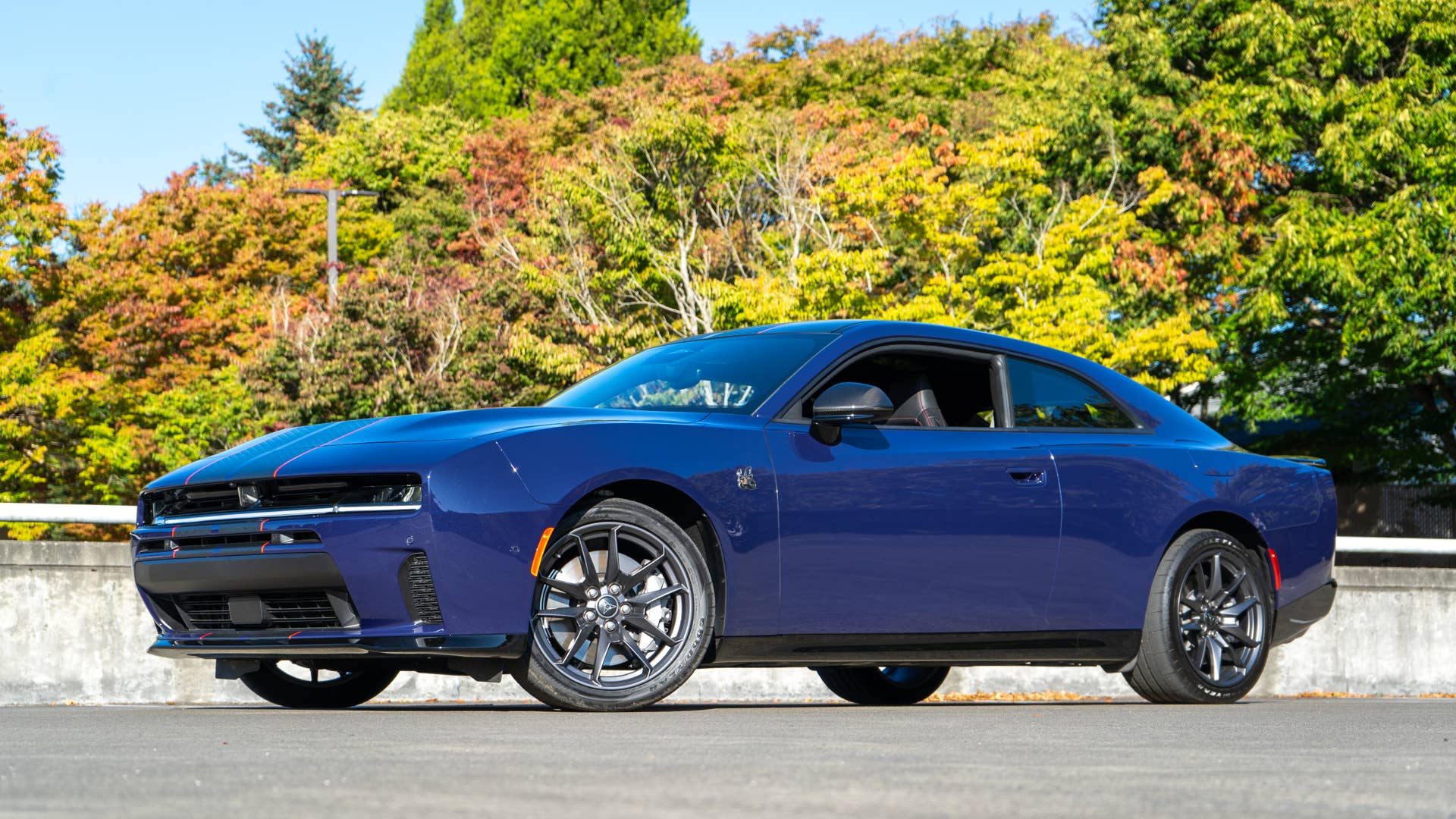
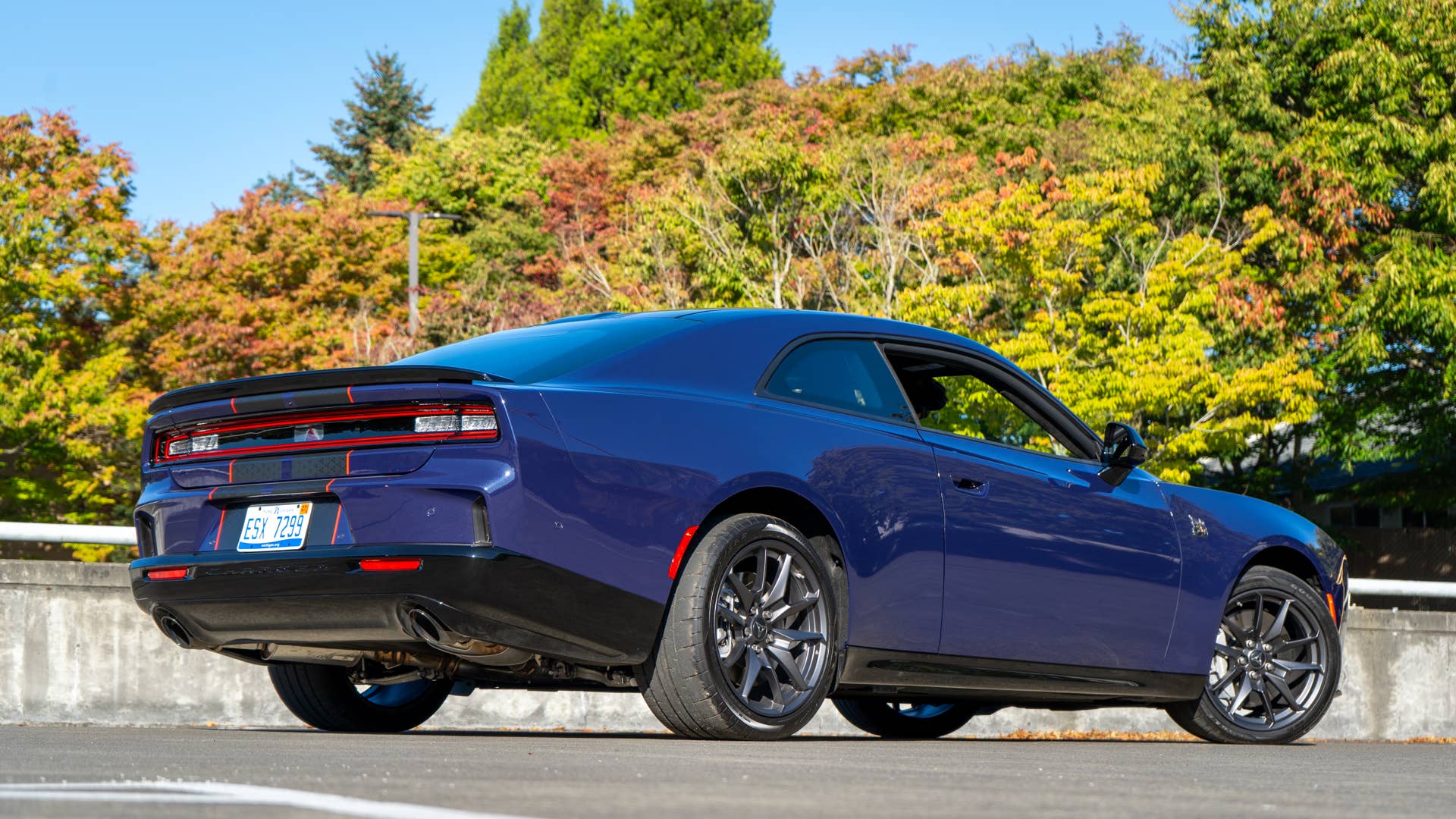
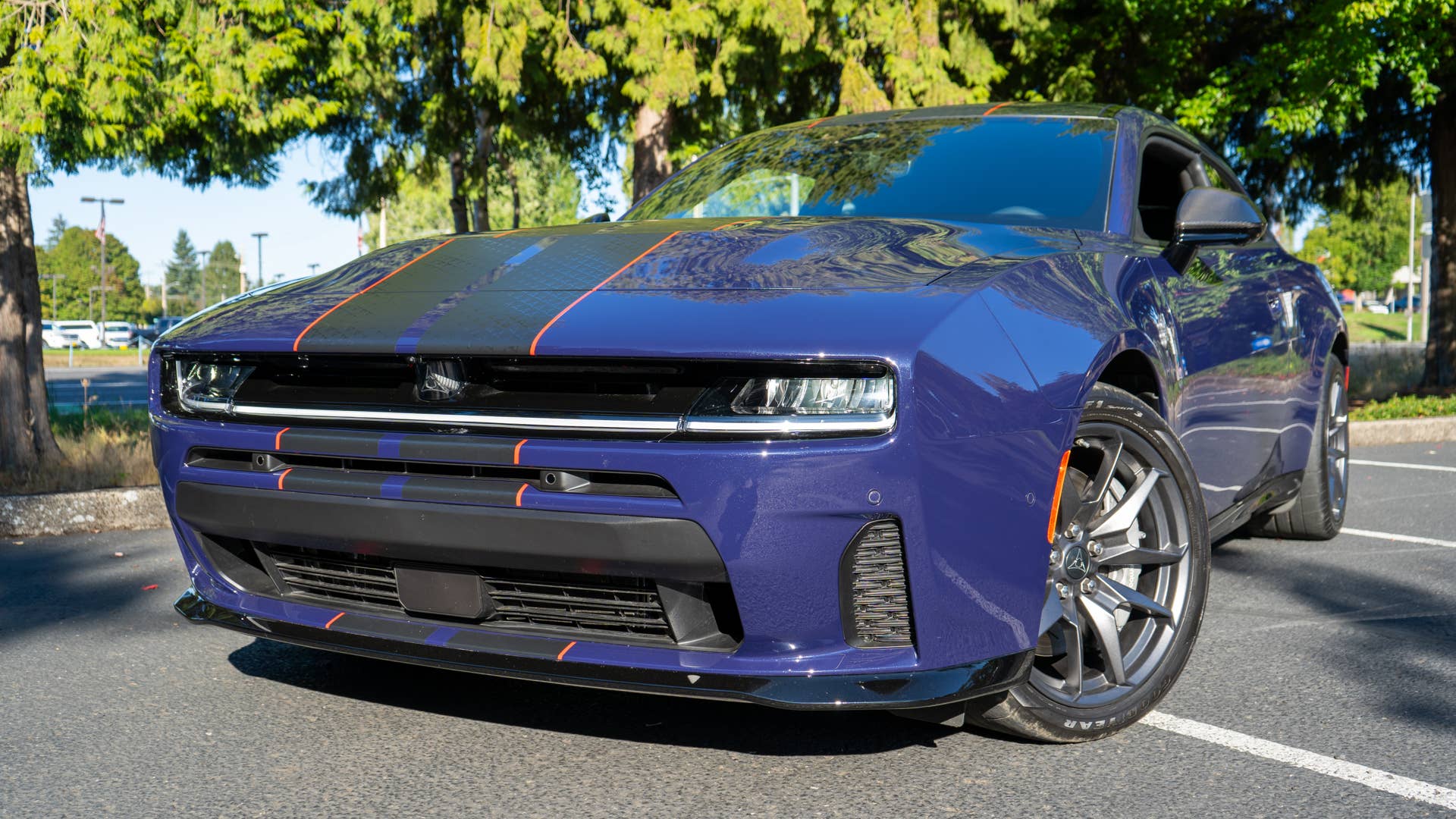
2027 Dodge Charger Scat Pack vs. 2026 Dodge Charger R/T: I Drove Both To See If The Scat Pack Is Worth The Upgrade

Performance-car hierarchies used to be so much easier to understand. A more expensive badge typically bought a larger engine, a louder soundtrack, and, in Dodge’s case, a noticeably angrier personality. Moving from an R/T to a Scat Pack meant graduating from a 5.7-liter Hemi V8 to the 6.4-liter 392. It was easy to understand the appeal. But the new Dodge Charger complicates that ladder and introduces a power struggle within the model lineup. Both the R/T and Scat Pack use differently tuned versions of the same 3.0-liter twin-turbocharged Hurricane straight-six, now marketed as the SIXPACK.

The R/T produces 420 horsepower, while the Scat Pack turns the wick up to 550. That sounds like an enormous difference—and on paper, it is. After spending nearly 1,000 kilometers with a 2026 Charger R/T and later driving a 2027 Scat Pack at NWAPA’s Drive Revolution program, however, I came away thinking the Scat Pack feels less like a different animal and more like the R/T has simply been given a longer leash. That isn’t necessarily a bad thing—it just makes choosing between them more complicated than ever before.

2027 Dodge Charger Scat Pack

Cole Attisha

Charger Scat Pack vs. R/T Specs And Pricing

2026 Charger R/T

2027 Charger Scat Pack

Engine

3.0L twin-turbo inline-six S.O.

3.0L twin-turbo inline-six H.O.

Horsepower

420

550

Torque

468 lb-ft

531 lb-ft

Transmission

8-speed automatic

8-speed automatic

Drivetrain

AWD with selectable RWD

AWD with selectable RWD

0–60 mph

4.6 seconds

3.9 seconds

Quarter mile

12.9 seconds

12.2 seconds

Two-door base MSRP

$49,995

$54,995

Four-door base MSRP

$51,995

$56,995

Thinking about selling your car? Get an instant cash offer online now. Click here to get started.

2027 Dodge Charger Scat Pack

Cole Attisha

Dodge charges the same $5,000 premium for the Scat Pack regardless of the number of doors. The versions I drove weren’t identically configured—my R/T was a four-door Canadian-market car, while the Scat Pack was a two-door U.S. model—but I didn’t notice any meaningful dynamic difference attributable to the body style. The two-door mostly changes ergonomics and rear-seat access. The Scat Pack’s high-output engine also offers more than merely an ECU tune. It receives larger 54-mm turbochargers producing up to psi of boost, forged rather than cast aluminum pistons, twin fuel pumps, and freer-flowing intake and exhaust systems. Dodge claims 550 horsepower, 531 pound-feet of torque, a 3.9-second 0–60 time, and a 12.2-second quarter mile. The R/T uses smaller 50-mm turbochargers producing up to 22 psi, along with cast pistons and a single fuel pump. Its claimed 4.6-second sprint to 60 mph trails the Scat Pack by 0.7 seconds. That’s a substantive enough difference in theory, but from behind the wheel, unless you’re actually drag racing, these upgrades don’t really transform the Charger’s personality.

2027 Dodge Charger Scat Pack

Cole Attisha

Faster And Louder, But Not Angrier

My 30-minute Scat Pack speed date covered city streets and highways around Vancouver, Washington, in warm, dry weather. Normal mode demonstrated that it could still behave like a large grand tourer, while Sport mode naturally provided the clearest picture of what the additional power accomplishes. The Scat Pack is undoubtedly quicker than the R/T. Obviously. Its improvement is apparent when leaving a stop, accelerating onto a highway, and passing at speed. Once the turbos are producing boost, the car surges forward with significantly more force. Yet another 130 horsepower doesn’t hit quite as dramatically as that number implies. The Charger is still an enormous, heavy automobile, and the additional output has plenty of mass to overcome. Instead of altering the experience entirely, the Scat Pack only pushes it further.

The Scat Pack’s turbo lag is more obvious because the subsequent surge is stronger, and its larger turbines inherently take longer to spool up. Its sharper throttle response adds liveliness, but it can also make the Scat Pack harder to drive smoothly. The R/T settles into a relaxed rhythm more easily, whereas the Scat Pack occasionally feels eager to turn every ordinary input into a showcase of its talents. The eight-speed automatic is also fundamentally similar in its operation. It doesn’t erase the occasional hesitation I noticed in the R/T, nor do its shifts introduce an entirely new layer of aggression. Sound follows the same pattern—the Scat Pack is louder and trades some of the R/T’s grumbly raspiness for higher-frequency noise, but louder doesn’t automatically mean better. Some of that added theatre also appears to be electronically generated, especially when in Sport mode. The R/T already sounds legitimately good without augmentation, and disguising the straight-six only makes it seem insecure about not being a V8. The Scat Pack should celebrate what its Hurricane engine is—not try to impersonate what it replaced.

2026 Dodge Charger Sixpack R/T 4-Door

Cole Attisha

Sharper Hardware, Familiar Personality

The Scat Pack’s stronger brakes inspire more confidence, and my tester’s 305-section summer tires provided slightly more grip than the R/T’s 275-width all-seasons. Its rear-biased behavior also affords it the playfulness expected from a Charger, despite AWD helping deploy its power more cleanly. Steering feels marginally sharper, but not enough to reshape the experience. The Scat Pack never lets you forget it’s still a very large car whose weight never fully disappears, while its firmer ride is an expected consequence of the added performance focus. The R/T I tested was equipped with the Performance Handling Group, including its performance suspension, upgraded brakes, launch control, and wider 20-inch tires. A standard R/T would likely leave a larger dynamic gap between the two versions, but against my well-equipped R/T, the Scat Pack’s chassis didn’t feel dramatically more dialed in.

Shopping for a new car? Click here to get a great deal on your next vehicle. Powered by Carvana: no-haggle pricing, 100% online.

2027 Dodge Charger Scat Pack

Cole Attisha

Its visual presentation, however, did make my mouth water appropriately. Purple Haze is one of those colors photographs struggle to do justice to, but in person, it has an extraordinary presence. The optional dual stripes incorporate Dodge’s Fratzog logo and continue across the glass roof, creating one of the most impactful modern interpretations of a traditional muscle-car stripe I’ve seen. The Carbon and Suede Package also makes the cabin feel all the more special, even though its overall layout and functionality remain familiar. My Scat Pack Plus tester carried $16,405 in options, raising its $54,995 base price to $73,395 after destination. The result looked spectacular, but many of those additions enhanced superficial appearance and luxury rather than performance.

2027 Dodge Charger Scat Pack

Cole Attisha

Is the Scat Pack Worth the Extra $5,000?

Another 130 horsepower, 63 pound-feet of torque, stronger acceleration, upgraded engine hardware, louder exhaust noise, and standard performance equipment for $5,000 is an objectively compelling proposition. That represents roughly 31% more horsepower for a 10% increase in base price. Buyers primarily interested in performance will have little trouble justifying it. Subjectively, though, I would still choose the R/T. The R/T supplies perhaps 85% of the Scat Pack experience. It’s still quick, sounds good, looks nearly identical, and can be fitted with much of the equipment that made my Scat Pack tester feel special. It’s also easier to drive smoothly and plenty powerful enough for its grand-touring mission.

2026 Dodge Charger Sixpack R/T 4-Door

Cole Attisha

Older R/T and Scat Pack models had related personalities, but different engines made each rung of the range feel like a far less forgiving bully than the one beneath it. The new Scat Pack isn’t angrier than the R/T. It’s the same bully, just one who knows it can get away with a bit more aggression. And I think the 6.4-liter V8 it lost would change that calculation. Even with 50 less horsepower, its throttle response, soundtrack, history, and mechanical character would give the Scat Pack a distinct enough identity that the high-output Hurricane can’t fully replicate. The standard-output six feels like a credible successor to the old 5.7-liter Hemi in the R/T, but the high-output version merely leaves me missing the 392.

So then, the Scat Pack is ideal for a very specific buyer: someone who wants the sensation of a modified R/T without resorting to aftermarket modifications, warranty concerns, drivability compromises, or unknown effects on reliability. The R/T and Scat Pack therefore win for different people. The R/T is the more well-rounded everyday grand tourer and my personal choice, whereas the Scat Pack is the better deal for someone who knows 420 horsepower will never feel like enough. It turns the boost up, sharpens the edges, and uncorks the Charger—but it stops just short of becoming something fundamentally different.

Autoblog aims to feature only the best products and services. If you buy something via one of our links, we may earn a commission.

I Drove the 2027 Kia Telluride Hybrid: Here’s Why It Won Best Hybrid at Drive Revolution

Some vehicles win comparison tests by dominating one specific category so decisively that their specialization captivates the hearts and minds of automotive journalists like me, who revel in the mastery of single-mindedness. These can be anything from the quickest, cheapest, and most efficient to the most exciting entrants in their respective groupings. The best family vehicles, however, tend to win for vastly different reasons. Rather than acing one subject and scraping by on the rest, the best family cars—SUVs, especially—are made up of dozens of very small yet impactful decisions that result in a package so cohesively well-rounded that families can’t help but fall in love with them; parents and children alike.

That, as it turned out, was the 2027 Kia Telluride Hybrid’s preferred strategy when it took on the Northwest Automotive Press Association’s annual Drive Revolution competition in Vancouver, Washington. Seventeen automotive journalists evaluated 20 new vehicles before naming the Telluride the event’s Best Hybrid. I was one of them, and it received my vote, too. As with every test drive at Drive Revolution, my time with the vehicle was limited to about 30 minutes, yet I was almost immediately convinced the Telluride Hybrid would be a massive hit with its target audience. It’s great to drive, looks modern and mature, feels remarkably refined, and makes effective use of its considerable dimensions. More importantly, every part of it appears to understand what an active family needs from a three-row SUV

2027 Kia Telluride HEV X-Line SX-Prestige AWD

Cole Attisha

2027 Kia Telluride HEV X-Line SX-Prestige AWD

Specification

Powertrain

2.5-liter turbocharged four-cylinder hybrid

Output

329 hp / 339 lb-ft

Transmission

Six-speed automatic

Drivetrain

AWD

EPA fuel economy

30 city / 32 highway / 31 combined mpg

Maximum towing capacity

4,500 pounds

Seating capacity

Seven

Cargo space behind third row

21.3 cubic feet

U.S. Base MSRP

$57,590

As-tested price

$61,180

Thinking about selling your car? Get an instant cash offer online now. Click here to get started.

2027 Kia Telluride HEV X-Line SX-Prestige AWD

Cole Attisha

The Telluride Won For Its Exceptional Balance

The Telluride competed against an unusually diverse field of hybrids this year. Rather than force a comparison with the much smaller, lower, and more driver-focused Honda Prelude, which was also present in the same category by sheer technicality, it makes much more sense to examine it alongside the other partially electrified SUVs: the Toyota RAV4 GR Sport, Mazda CX-50 Hybrid, and Jeep Cherokee. The Kia was considerably larger than all three, and the only one to offer a third row, yet size alone didn’t earn it the award. Even though I don’t require those extra seats, this is still the SUV I would have chosen for myself.

Of course, it’s important to note that the Telluride Hybrid did not face any of its most direct three-row hybrid SUV rivals, such as the Toyota Grand Highlander, the Mazda CX-90, or the Hyundai Palisade Hybrid, with which the Telluride shares plenty of DNA. It’s entirely possible that, had any of these models shown up, the outcome could have been different. Still, when pitted against other three-row family SUV rivals earlier this year at NWAPA’s Mudfest competition, the Telluride X-Pro SX Prestige came out on top in its category, beating the Hyundai Palisade XRT Pro, the Honda Pilot Elite, and even the Genesis GV80 Prestige Black.

2027 Kia Telluride HEV X-Line SX-Prestige AWD

Cole Attisha

2027 Kia Telluride HEV X-Line SX-Prestige AWD

Cole Attisha

2027 Kia Telluride HEV X-Line SX-Prestige AWD

Cole Attisha

Out of all the hybrid SUVs in attendance, the Telluride Hybrid delivered the most convincing combination of material quality, intelligent ergonomics, creative design, usable technology, and satisfying driving dynamics. It possessed enough road presence to make itself known without appearing desperate for attention, and, especially finished in Black Jade Green with the X-Line’s blackened exterior details, it looked trendy and adventurous yet serious and earnestly deserving of its somewhat playful cues.

That same balance continued inside, where the curved dashboard felt cohesive, the physical controls remained intuitive, and the abundance of space never made the cabin feel empty or impersonal. Kia’s design team has crafted an intentional atmosphere rather than merely filling a dashboard with screens. Some harder plastics remain visible, particularly lower in the cabin, but the suede headliner, engineered-wood accents, comfortable seating, and sheer abundance of features compensate effectively. The third row remains a bit tight for adults, but children and teenagers should find it entirely usable.

2027 Kia Telluride HEV X-Line SX-Prestige AWD

Cole Attisha

A Hybrid That Lets You Forget It’s A Hybrid

The Telluride pairs a turbocharged 2.5-liter four-cylinder with electric assistance for 329 horsepower and 339 lb-ft of torque. Those figures represent considerably more output than the gasoline-only Telluride, but the hybrid doesn’t necessarily feel dramatically faster. What it aims for instead is to feel smoother, quieter, and more responsive, which benefits a large family SUV more usefully than sheer speed alone ever could. Some turbo lag remains, but the electric motor fills most of that gap before the engine reaches its productive range. Push the accelerator hard enough, and the four-cylinder can sound a little bit coarse, while the Telluride’s considerable mass occasionally leaves me wishing for just a bit more power. A hybrid system paired with a larger V6—perhaps the 3.5-liter unit still available in the Telluride’s platform twin, the Palisade—would be an intriguing premium-upgrade offering, although the existing combination remains more than adequate for normal use.

Its conventional six-speed automatic also makes an enormous difference to the experience. There are real gears shifting beneath the surface, giving acceleration a natural rhythm that several other hybrids lack, even when they mimic shift points. The response isn’t as linear or immediate as it would be in an EV, but that almost becomes part of the Telluride’s appeal. You simply operate it like a normal automobile and eventually forget it’s a hybrid at all, only to be reminded later on at the gas pump, where its EPA-rated 31-mpg combined figure should make the experience considerably less painful. Its steering-wheel paddles are genuinely functional, too. Unlike those in the RAV4 GR Sport—which provide little sensation that anything meaningful is happening—the Telluride’s paddles provide real control over its behavior. Its drive modes produce tangible but restrained alterations without attempting to reinvent its sense of control. Regenerative braking is similarly unobtrusive—it isn’t nearly as strong as the one-pedal-style calibration found in many EVs, but it blends smoothly into the conventional brakes and disappears into the background. Passengers prone to motion sickness will appreciate the absence of abrupt regenerative deceleration.

2027 Kia Telluride HEV X-Line SX-Prestige AWD

Cole Attisha

Hybrid Technology Improves More Than Fuel Economy

Kia equips the hybrid with electronic dynamic torque-vectoring control, which uses braking and motor control to improve stability and handling. Compared with the gasoline Telluride X-Pro I drove at Mudfest, the Hybrid felt more composed and quieter on pavement. It changed direction confidently for something of its size and delivered a level of polish that suited its family-luxury aspirations. Its brake-pedal calibration felt natural, its inputs were consistently satisfying, and its ride remained comfortable without feeling cumbersome or nautical. It never pretended to be a performance SUV, but it also didn’t use its family-oriented mission as an excuse for lazy responses. The mechanically related Hyundai Palisade Hybrid, though, still feels slightly tighter and more intuitive to drive, as both vehicles are calibrated differently to give each a distinct feel. Although their output figures are identical, the two don’t feel like interchangeable products with swapped badges.

Shopping for a new car? Click here to get a great deal on your next vehicle. Powered by Carvana, no haggle pricing, 100% online.

2026 Hyundai Palisade Hybrid

Cole Attisha

The Palisade Hybrid Is Still Its Greatest Problem, But That’s Not Such A Bad Thing…

The Telluride’s $61,180 as-tested price includes Black Jade Green paint, a towing package, and several cargo and floor-protection accessories. That is serious money for a Kia, even one as comprehensively equipped as this. But I think its most pressing problem comes from within its own Hyundai Motor Group family tree. I still prefer the Hyundai Palisade Hybrid’s more traditionally upscale interior, slightly more intuitive driving dynamics, and exterior styling. The Palisade feels softer and more luxurious, while the Telluride leans harder into adventurous imagery and practical versatility. Both have their own comparative strengths and weaknesses, but I enjoyed the Palisade’s driving dynamics ever so slightly more, and it costs ever so slightly less—a base Palisade Hybrid comes in at nearly $2,000 less than a base Telluride Hybrid. If I were weighing the two against each other (because why wouldn’t you), I’d have a tough time finalizing the paperwork on the Telluride if I knew a Palisade was just across the street.

Nevertheless, the Telluride was unquestionably deserving of its Drive Revolution victory. None of the other hybrid SUVs demonstrated such a wholehearted understanding of who their intended buyers are and what exactly they desire. The RAV4 GR Sport was more overtly niche in its enthusiast-chasing mission, the CX-50 Hybrid was more compact and very approachable, and the Cherokee offered good looks and great efficiency. The Kia simply did more things well. It’s ideally suited to active families who need real space but refuse to accept something dull, poorly finished, or unpleasant to drive. It can carry children, equipment, and everything accumulated between home and the next weekend destination without feeling or looking like a minivan. The Telluride Hybrid won because it felt most in tune with the wants and needs of its most loyal customers. It’s evident that Kia understands its audience exceptionally well, and sometimes that understanding is more valuable than acing any single category. This year, at Drive Revolution, it was enough for it to win the whole hybrid class.

Autoblog aims to feature only the best products and services. If you buy something via one of our links, we may earn a commission.