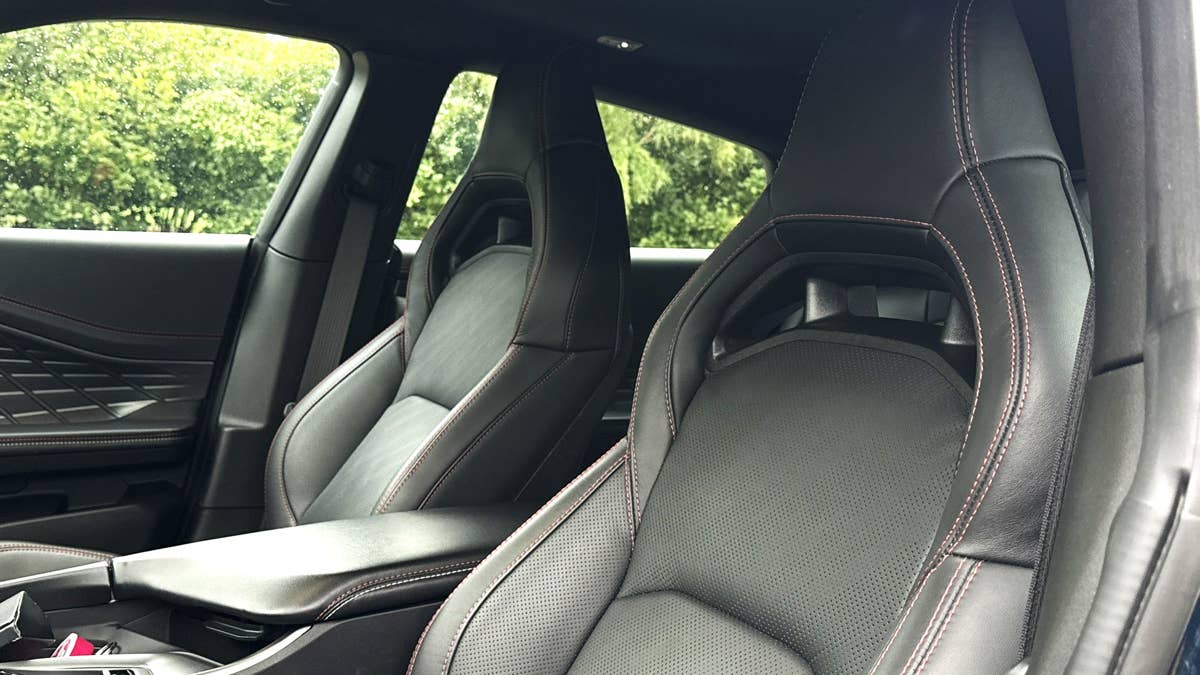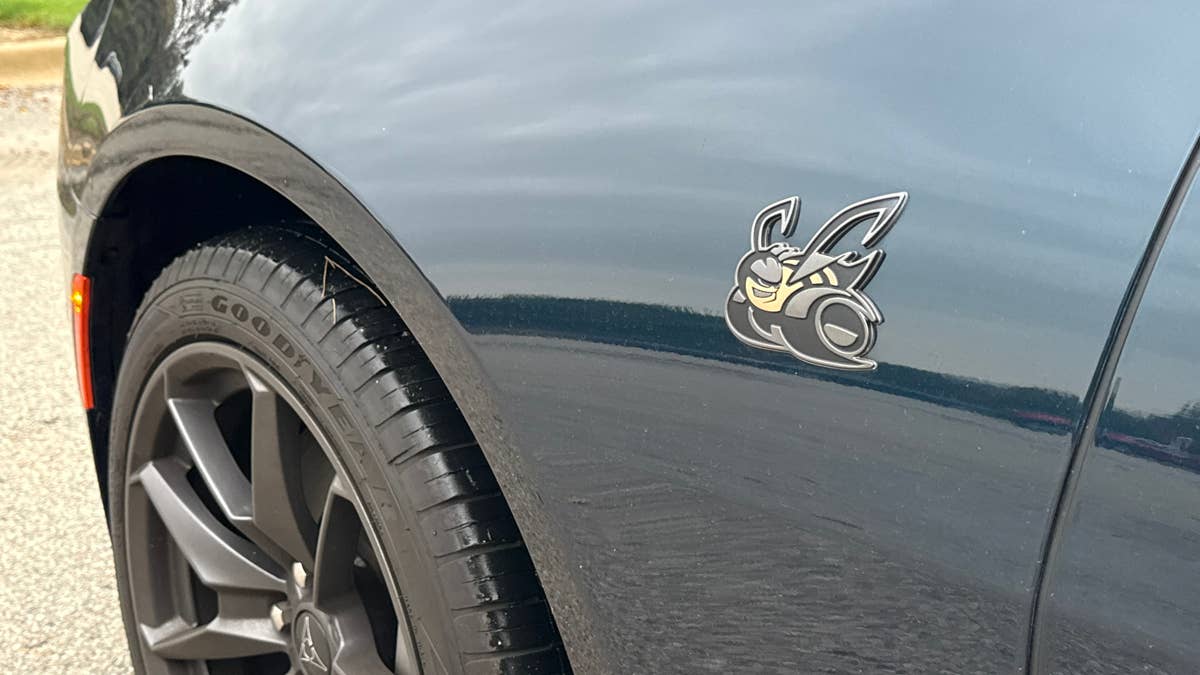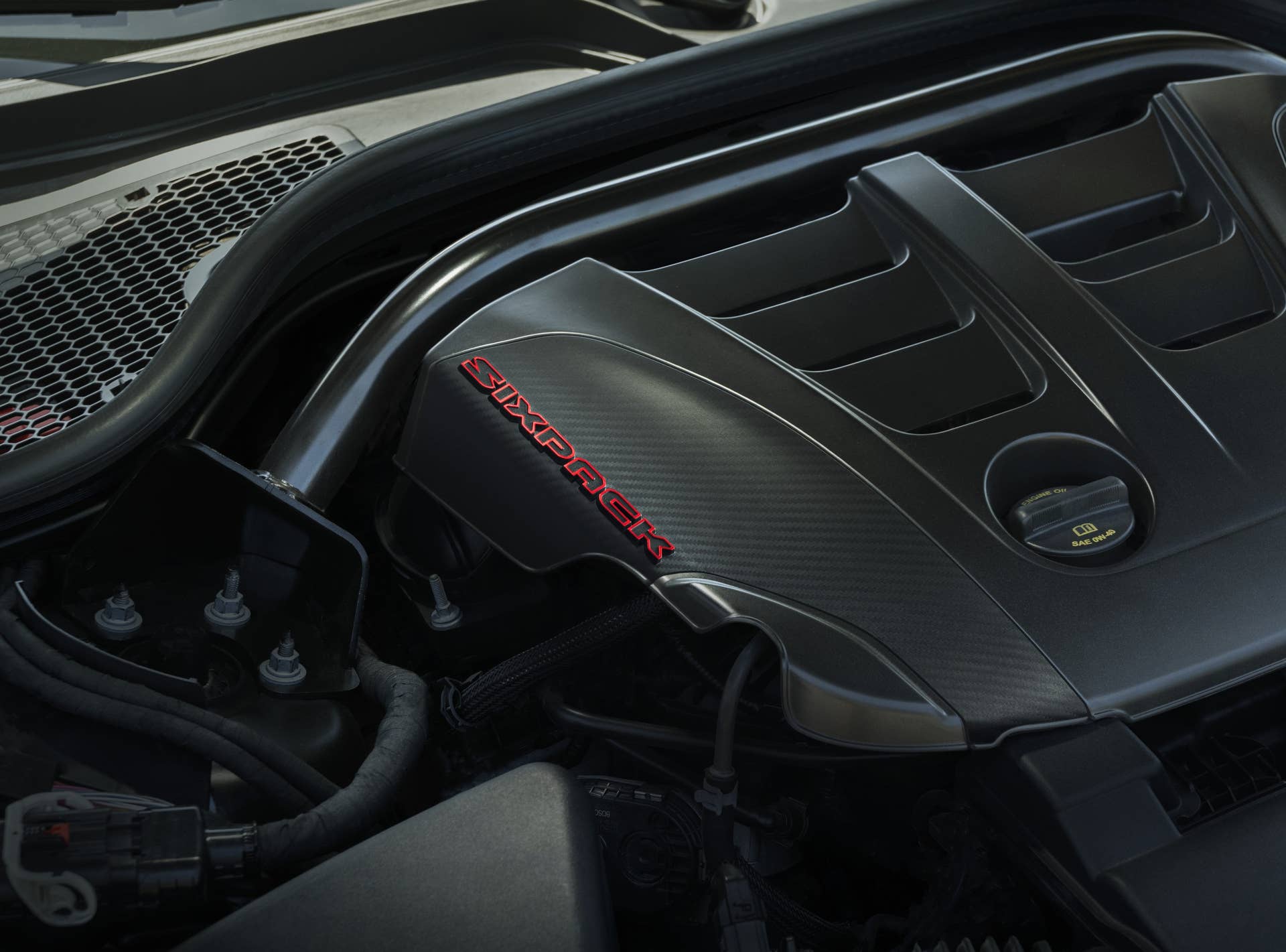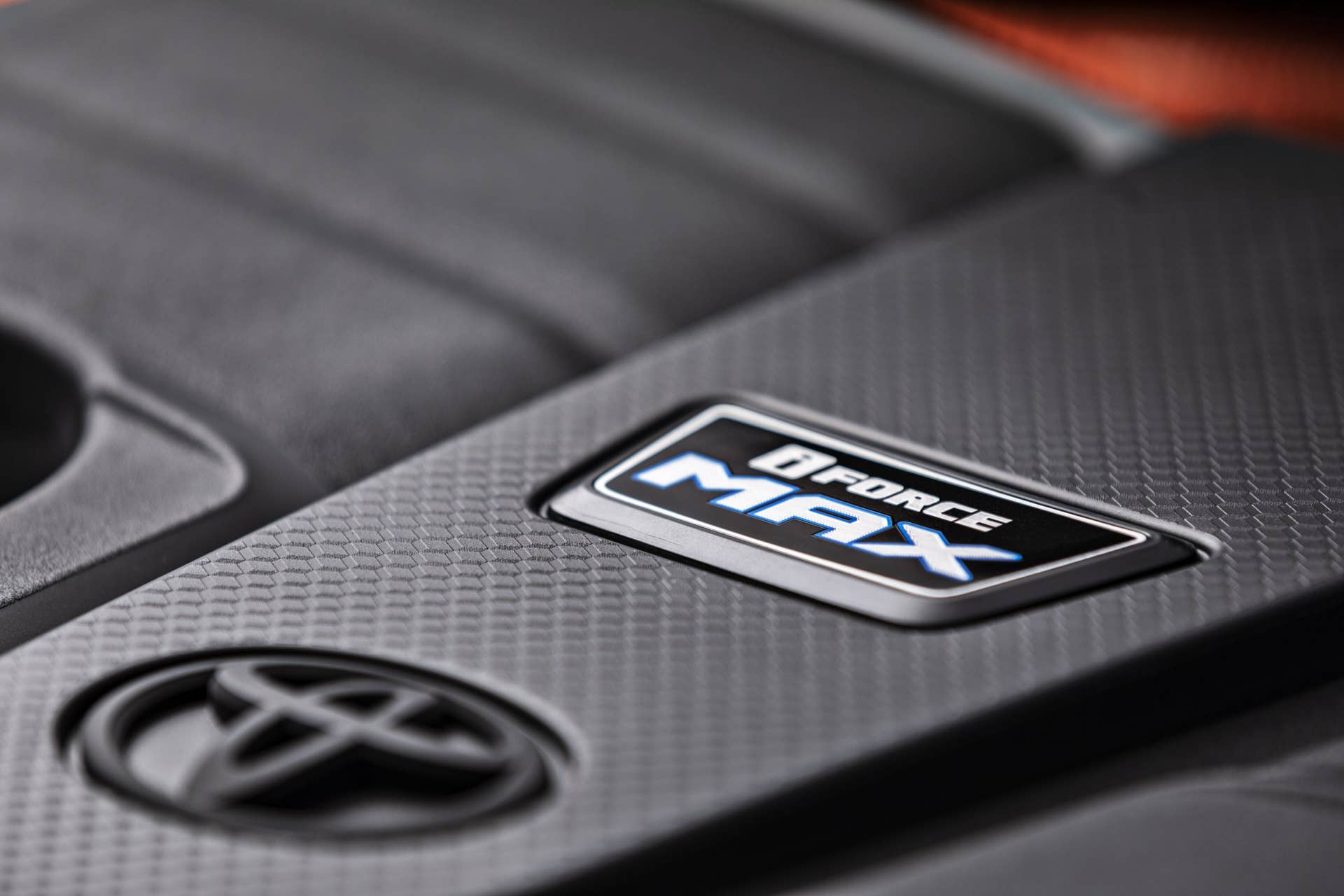

I Drove The 2027 Genesis G80 Prestige Black: Here’s My Honest Review Of Genesis’ Darker Take On Executive Luxury

Down to its quad headlights, the 2027 Genesis G80 Prestige Black reminded me of everything I loved most about the W211-generation Mercedes-Benz E-Class, but that connection ran considerably deeper than its four-eyed face. Like that mid-2000s Mercedes, the G80 makes an occasion out of the simplest driving inputs. Easing onto the throttle, guiding it through a sweeping bend, or bringing it smoothly to a stop feels immensely satisfying, even when you’re barely approaching the speed limit. For a sporty sedan with twin-turbocharged V6 muscle under the hood, it makes a surprisingly compelling case for taking your sweet, sweet time.

That all became especially apparent on British Columbia’s picturesque Sea-to-Sky Highway—my all-time favorite driving road—where the Genesis seemed to filter the outside world with remarkable judgment. A gentle rush of ambient wind remained audible over the wing mirrors, enough road feel still came through to my hands to keep me informed, and its suspension softened the pavement beneath me without compromising control. I enjoyed driving it smoothly enough that simply getting somewhere became an enjoyable part of the day instead of a chore. And when I turned things up a notch, the G80 handled spirited drives with as much composure and gratification as it did when driven like a chauffeur.

Of all the Genesis models I’ve driven, the G80 might offer the most convincing balance of everything the brand does so well these days. It feels more substantial than the bread-and-butter GV70, yet its luxury remains approachable in a way the more grandiose G90’s sometimes doesn’t. In other words, it’s something of a Goldilocks Genesis, and the Prestige Black spec adds yet another layer of richness. That impression may have sprouted from how satisfying it was to drive, but a luxury sedan’s appeal has to extend to the moments spent just sitting in traffic, adjusting the climate controls, or getting comfortable on a longer journey. Over my week spent with the G80, those everyday details helped explain why this particular Genesis resonated with me so strongly, while also exposing a few areas where its flagship aspirations deserved closer scrutiny.
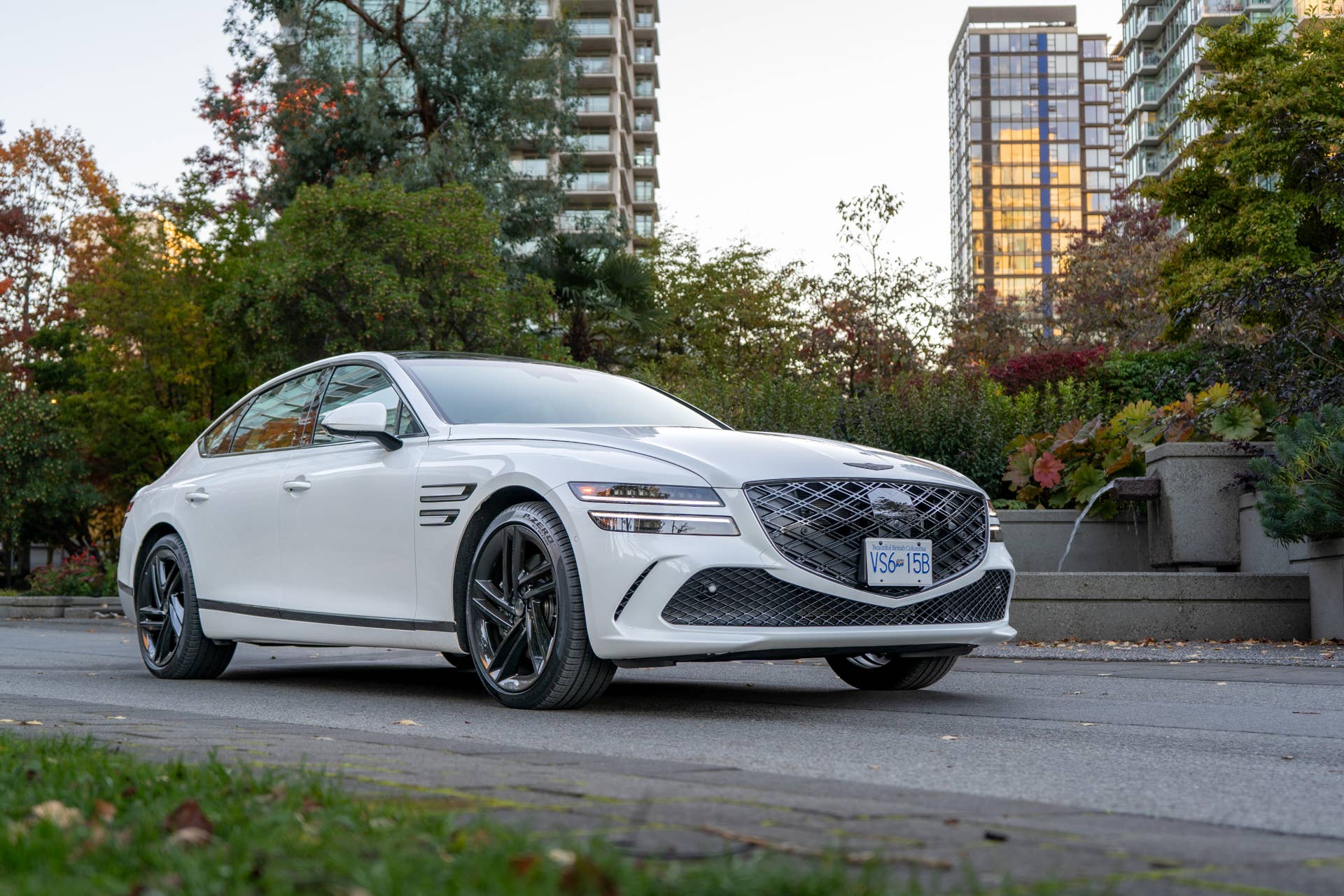
2027 Genesis G80 Prestige Black

Cole Attisha

Specification

2027 Genesis G80 3.5T Prestige Black AWD

Engine

3.5-liter twin-turbocharged V6

Output

375 hp / 391 lb-ft

Transmission

Eight-speed automatic

Drivetrain

All-wheel drive

Suspension

Electronically controlled suspension with Road Preview

Wheels

20-inch alloy

EPA fuel economy: city/highway/combined

16/24/18 mpg

Canadian rating: city/highway/combined

15.3/10.0/12.9 L/100 km

U.S. Prestige Black starting price

$80,150; $81,695 including freight, before options

Canadian price as tested

C$91,000, including delivery, before taxes

Thinking about selling your car? Get an instant cash offer online now. Click here to get started.
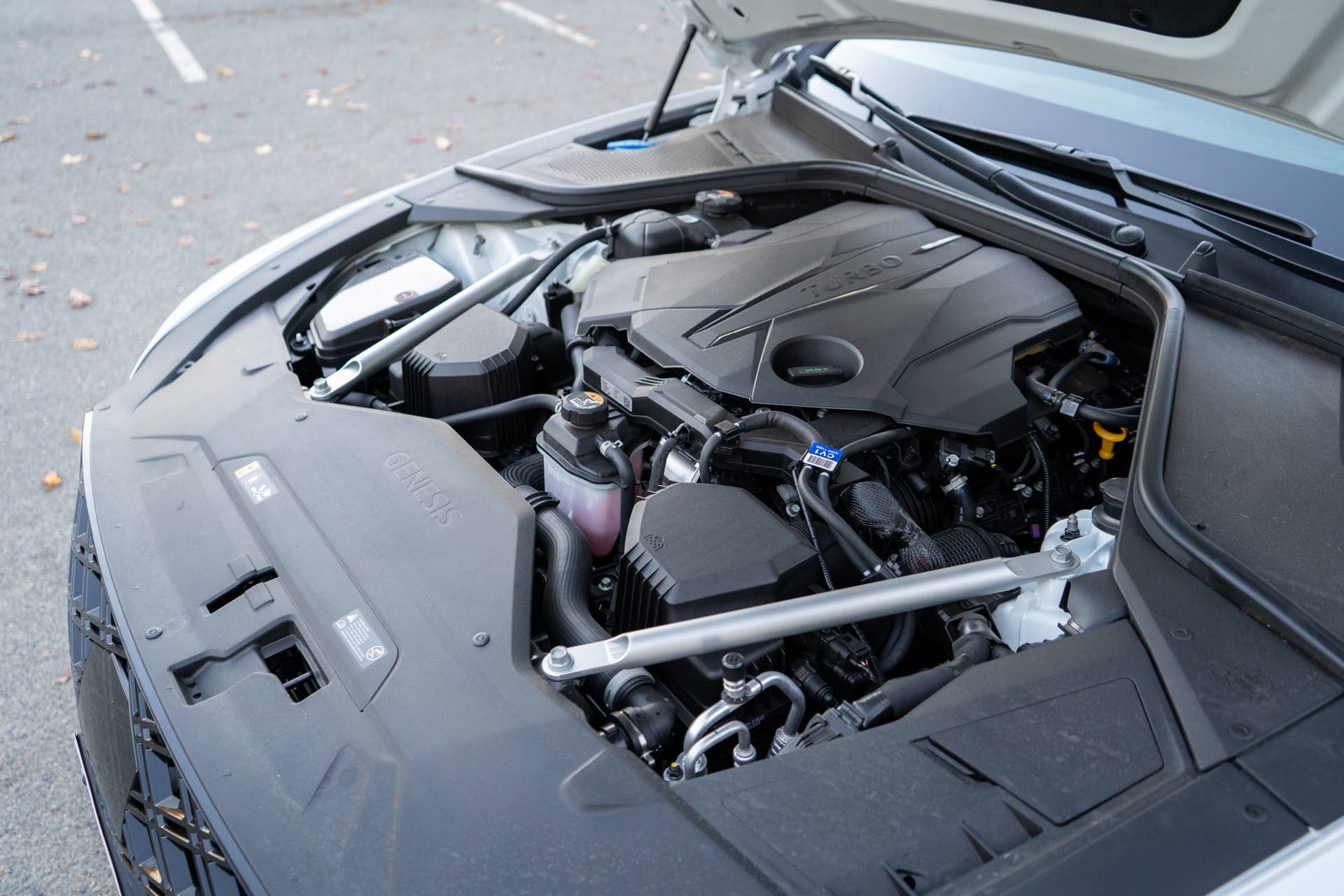
2027 Genesis G80 Prestige Black

Cole Attisha

Powertrain And Driving: Making Every Input Count — 9.5/10

When I reviewed the Genesis GV80 Coupe 3.5T E-SC earlier this year, its calibration felt a bit jolty at lower speeds, especially compared with the G90 flagship sedan, which shares its electrically supercharged V6. I found none of that awkwardness in the G80, which, for clarification, omits the electric supercharger. Its twin-turbocharged 3.5-liter V6 feels so naturally suited to this application that it’s easy to imagine Genesis designed the engine specifically for it. Easing onto the throttle produces a progressive, satisfying build of power, with the whole experience feeling as richly indulgent as miso sablefish melting in your mouth. Lean harder on the accelerator, and dessert arrives; all 375 horsepower and 391 lb-ft of torque make their presence known quickly. Still, the G80’s appeal extends well beyond its ability to gather speed. The relationship between what you ask of it and how it responds makes even modest acceleration enjoyable, while the eight-speed automatic lets that smoothness carry through the experience at any rate of acceleration.

The suspension contributes just as much to that impression. Its Road Preview system uses a forward-facing camera and navigation information to anticipate the road ahead and adjust its damping, but from the driver’s seat, what impressed me most is how thoughtfully the outside world reaches you. Enough sensation remains to keep you involved, while the rougher edges are effectively dulled. Subtle wind noise rushes over the wing mirrors, providing ambient white noise without letting in so much that it feels unrefined, and although its suspension eats up bumps and bruises and offers cloud-like ride quality, the steering still communicates road feel clearly and, specifically in Sport mode, offers impressive feedback for an electronic steering system. I eventually settled on a custom My Mode configuration combining Sport steering, Comfort suspension, and Smart powertrain settings, and it captured what I appreciated most about the whole car: satisfying control over its movements, a supple ride, and power delivery that suited my driving style no matter what mood I was in.
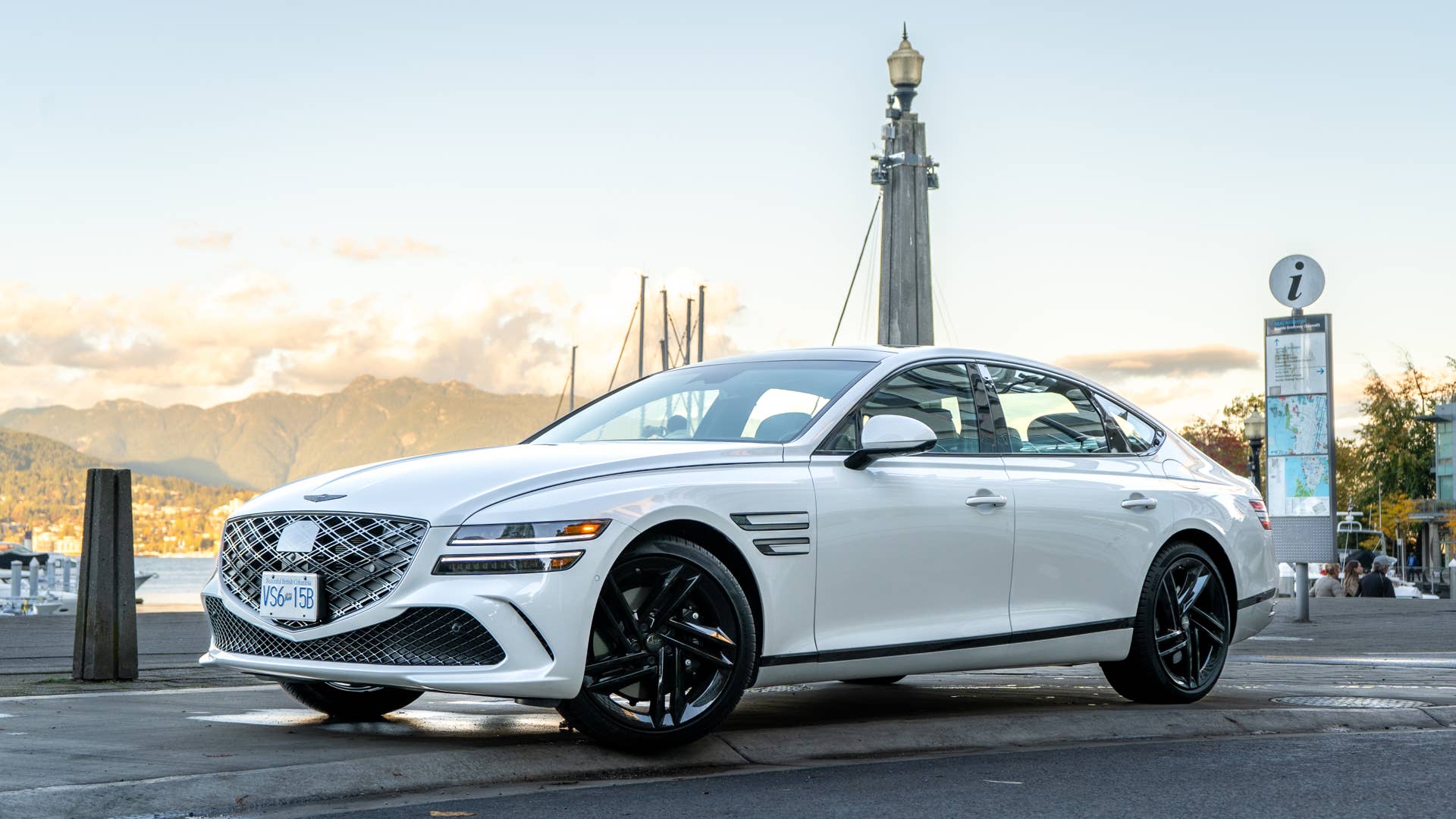
2027 Genesis G80 Prestige Black

Cole Attisha

Balancing comfort and performance effectively is hardly unique to the G80, and is ultimately a necessary achievement for any modern luxury automobile to be worthy of consideration. But what stuck with me was how consistently its character carried through both ideals. I never felt that it needed an exaggerated response to make a normal input seem exciting and engaging. Instead, it reminded me of the deeply satisfying interaction I associate with older German luxury cars, and sometimes miss in their modern counterparts, and that same emphasis on natural experience is perhaps best demonstrated by its cabin.

Shopping for a new car? Click here to get a great deal on your next vehicle. Powered by Carvana: no-haggle pricing, 100% online.
2027 Genesis G80 Prestige Black

Cole Attisha

Technology: Modern Features, Familiar Pleasures — 9.0/10

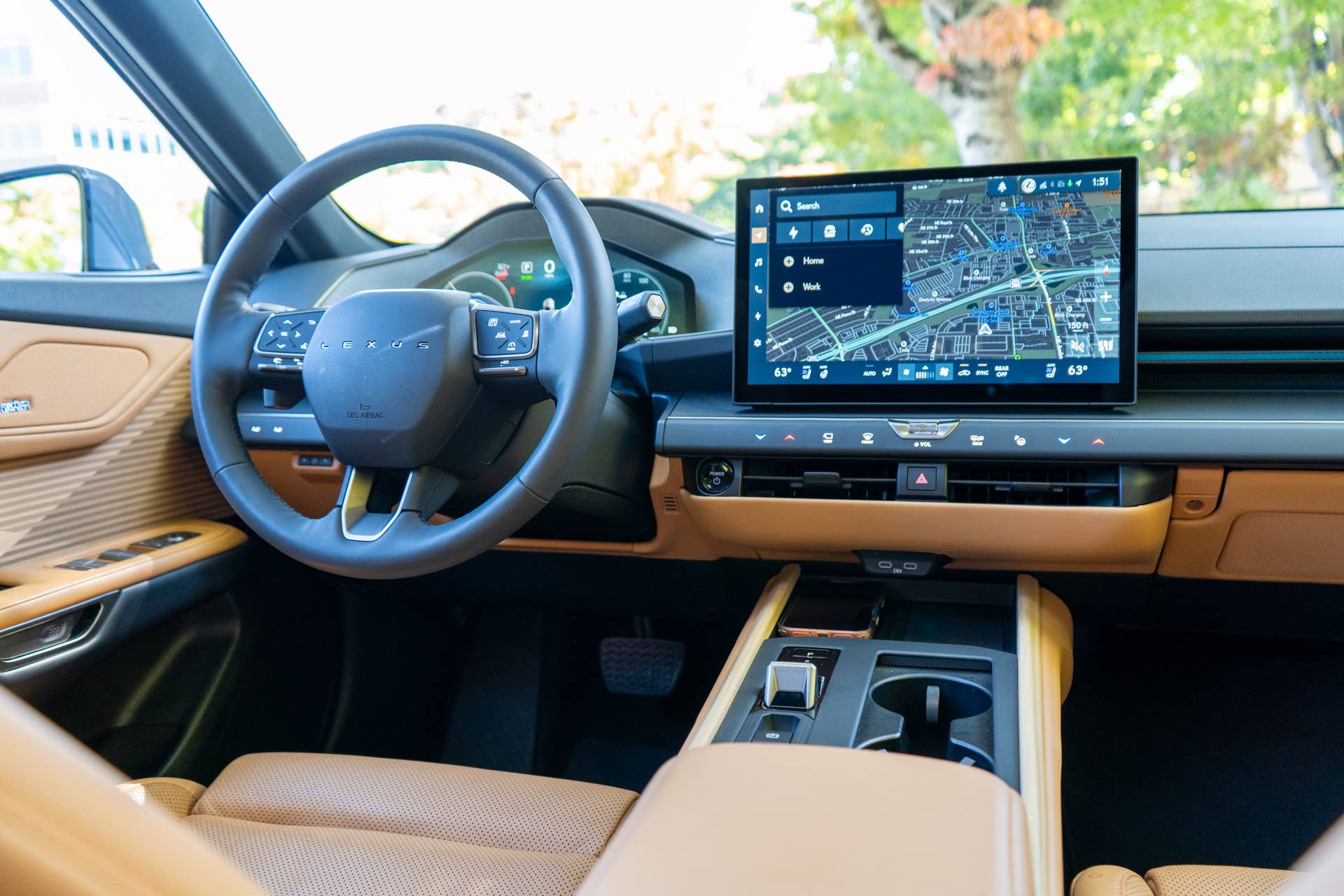
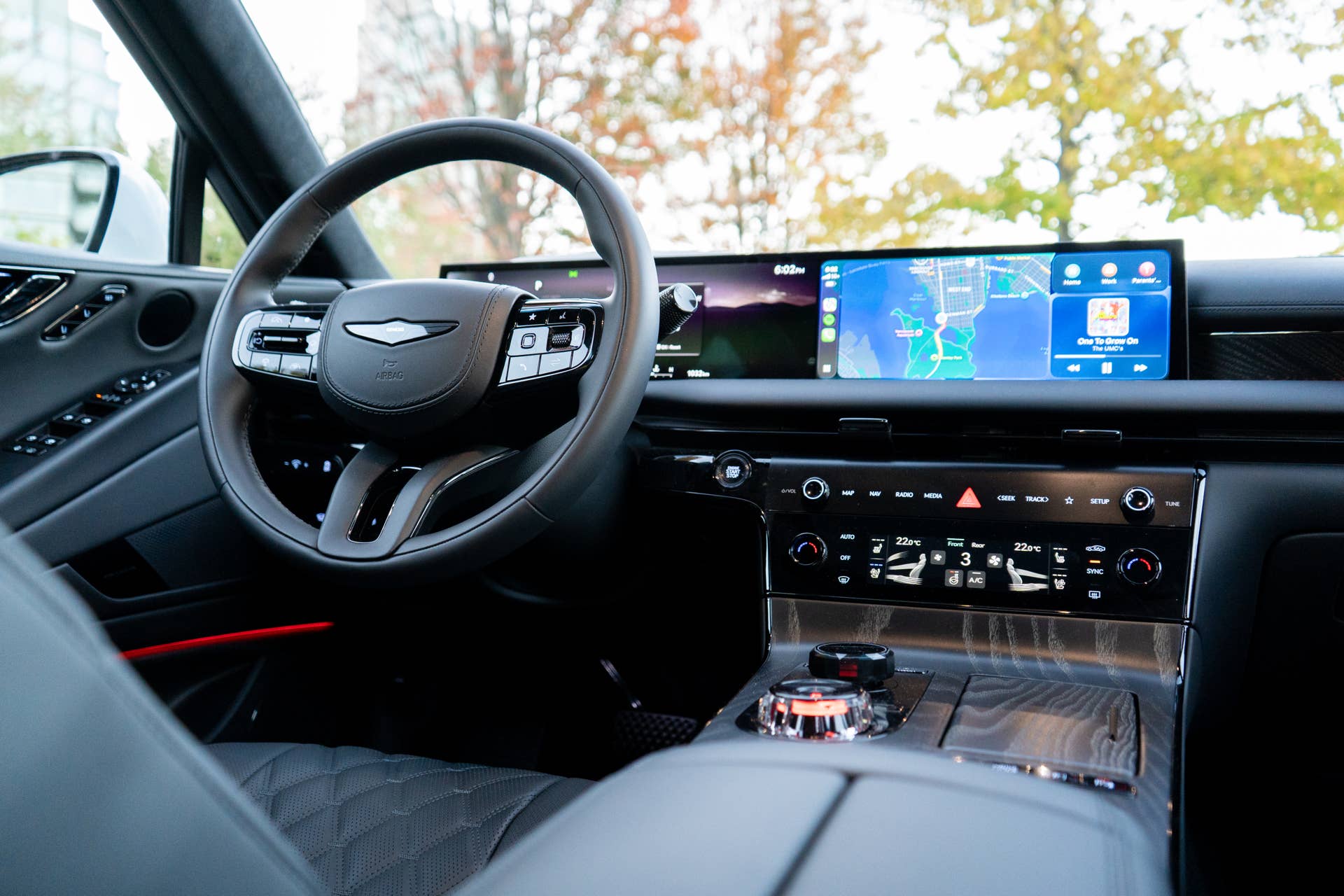
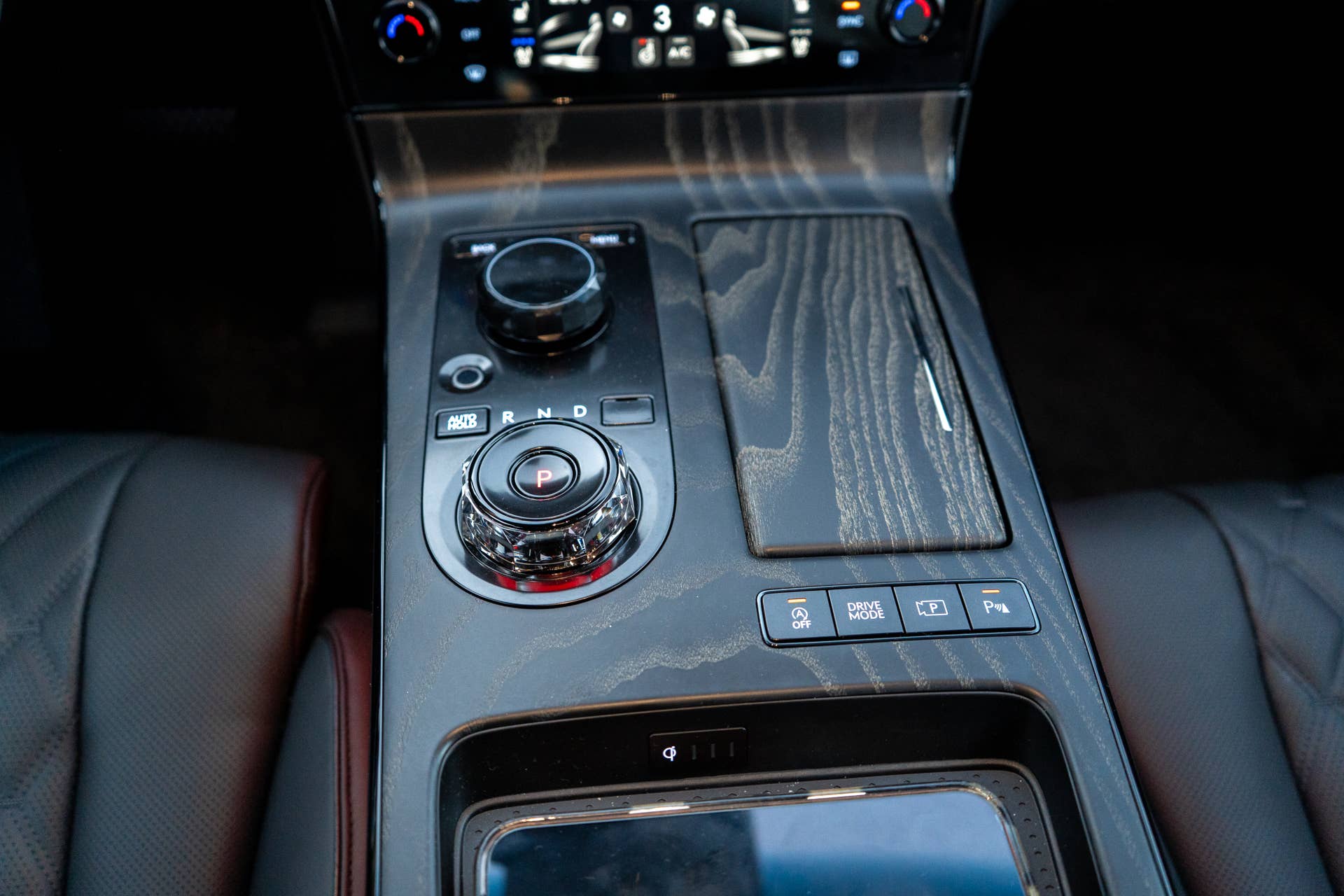
Genesis’ approach reminds me of a beautifully made hi-fi amplifier: modern electronics do the complicated work, while tactile, well-crafted dials make interacting with them feel rewarding and familiar, and in a luxury car, operating it ought to be as pleasant as looking at it. The G80’s 27-inch OLED display is sizeable, but the rotary infotainment controller and separate climate panel keep it from becoming the sole point of interaction, unlike in many of the sedan’s contemporary rivals.
2027 Genesis G80 Prestige Black

Cole Attisha

Although the climate panel is touch-sensitive, its dedicated layout preserves a welcome sense of familiarity, and its rapid responsiveness and quick-serving haptic feedback leave little to criticize. The 18-speaker Bang & Olufsen system was every bit as impressive as the GV70’s, making music a memorable part of the experience. Wireless Apple CarPlay gave me some minor trouble at first, but those problems somehow disappeared after the first few hours. It worked without issue for the rest of the week, allowing the technology to settle into the background and letting me enjoy the drive.
2027 Genesis G80 Prestige Black

Cole Attisha

Exterior Styling: A Luxury Sedan With Its Own Identity — 10/10

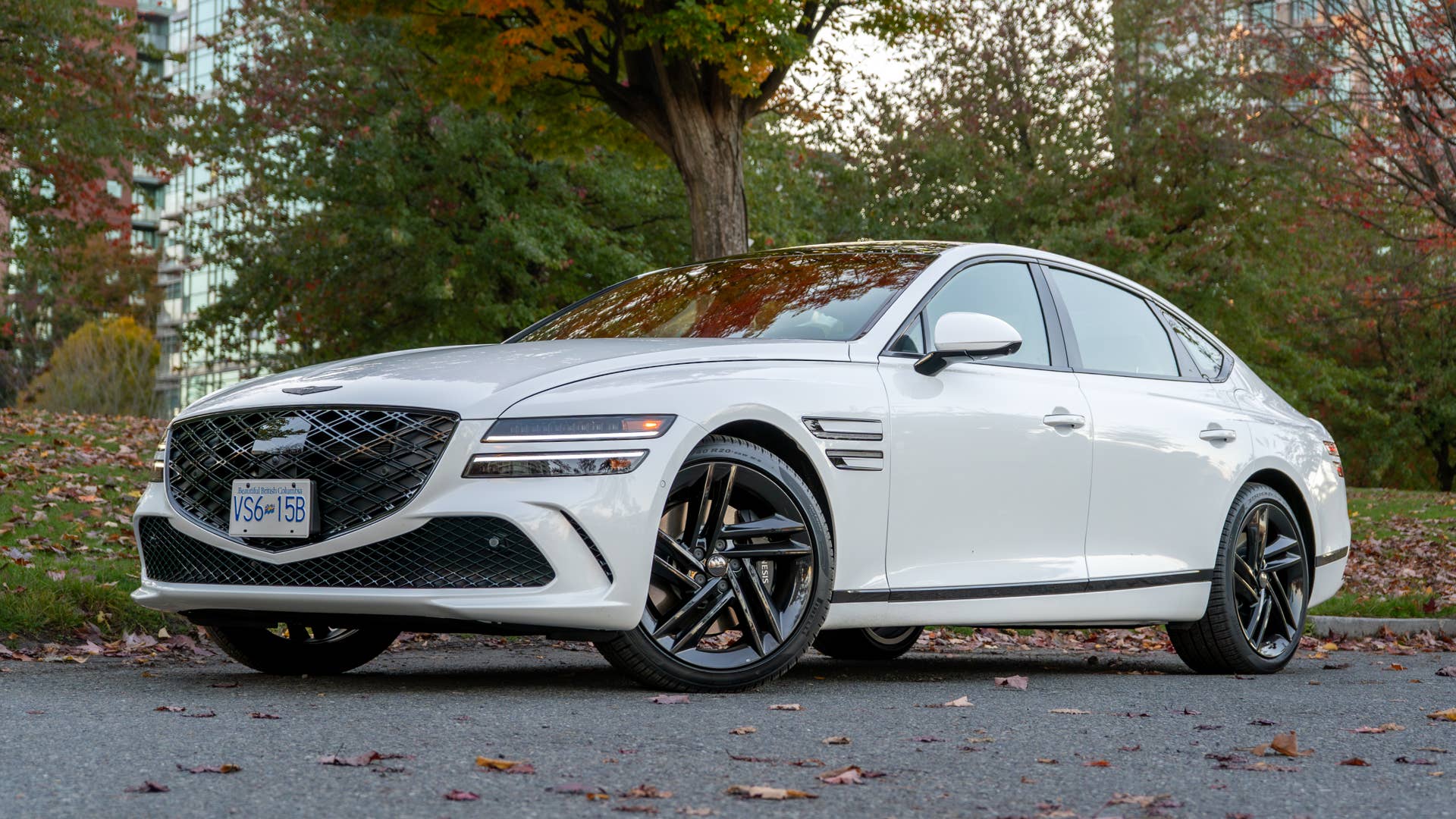
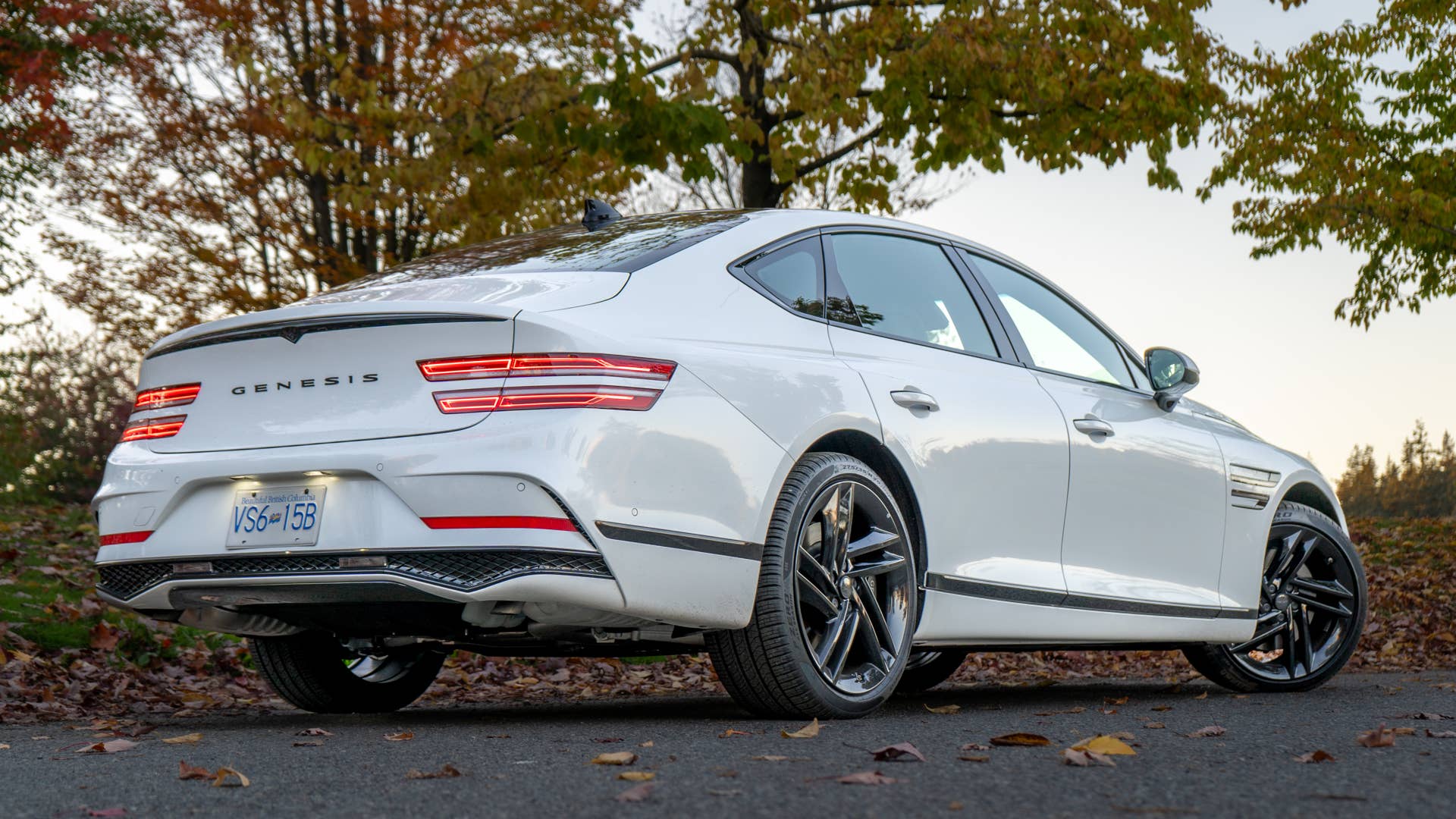
Despite wearing one of the prettiest contemporary luxury automobile design languages out there today, the G80’s proportions still do most of the talking here. Its long hood, flowing roofline, and gently sculpted flanks give it the presence I want—nay, insist upon—from a luxury sedan, while the two-line lighting establishes an identity that feels unmistakably Genesis. I also can’t help but feel the stacked headlights subtly nod to the W211 E-Class, which featured horizontally detached quad headlamps, and shares much of its spirit with the G80.
2027 Genesis G80 Prestige Black

Cole Attisha

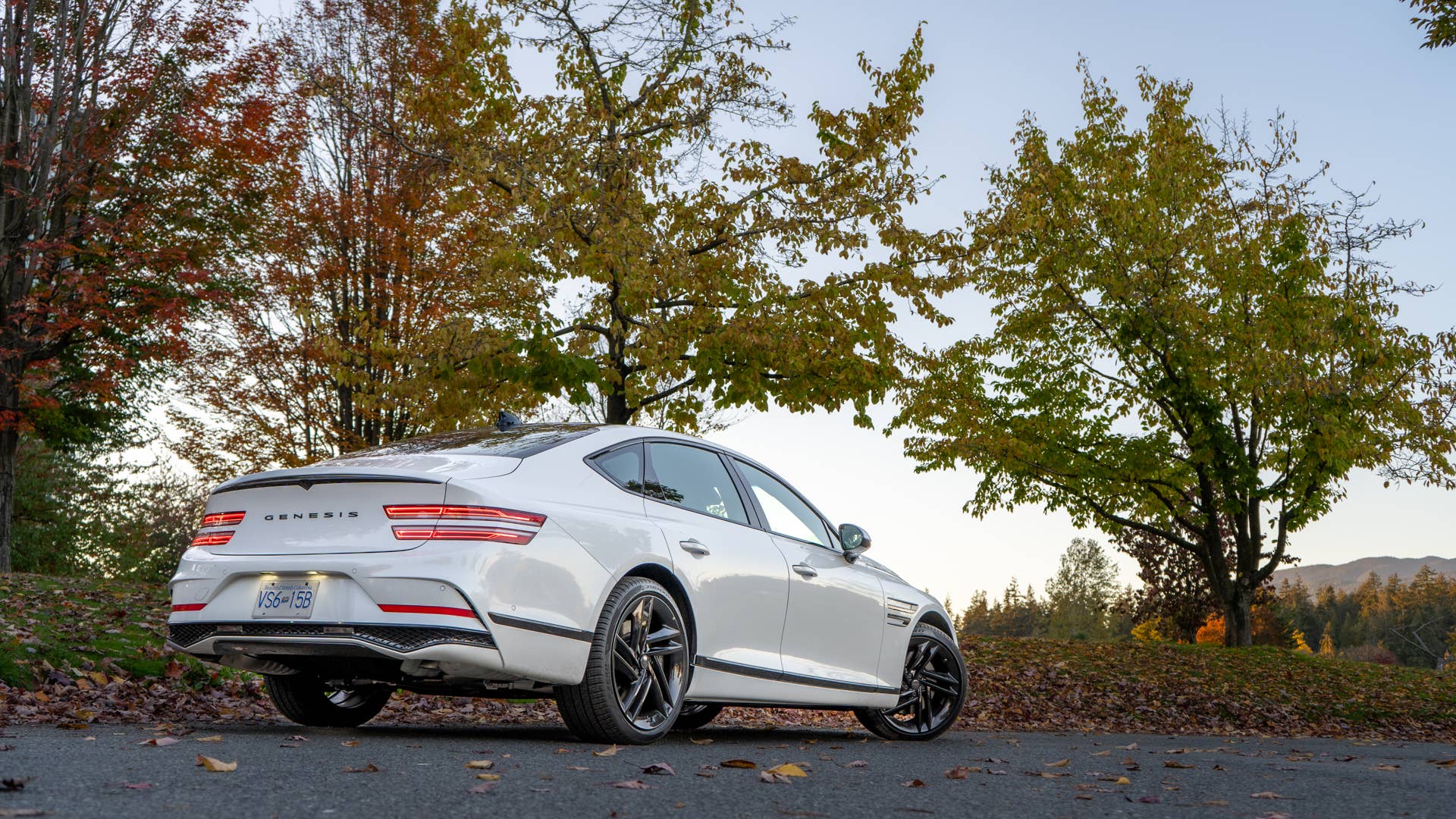
Against my tester’s white paint, the Prestige Black’s darkened grille, window surrounds, and 20-inch wheels give those softer curves a more assertive edge. The contrast highlights the shape, and the simple Genesis lettering across the rear keeps the tail clean and composed. What I appreciate most is how cohesively these details belong together. The G80 looks distinctive from almost every angle, with enough visual detail to reward a closer look. Its sense of occasion comes from the innovative, boundary-pushing artistry behind modern Genesis design, and that uniquely intriguing language bleeds into the experience of ogling the G80 from near or far, making you proud to stand next to it, and even prouder to call it your own. I couldn’t stop myself from staring whenever I had the chance, and I have no notes. To my eyes, this is one of—if not the—best-looking vehicles on sale today.
2027 Genesis G80 Prestige Black

Cole Attisha

2027 Genesis G80 Prestige Black

Cole Attisha

Interior And Practicality: Almost Flagship Luxury — 9.5/10

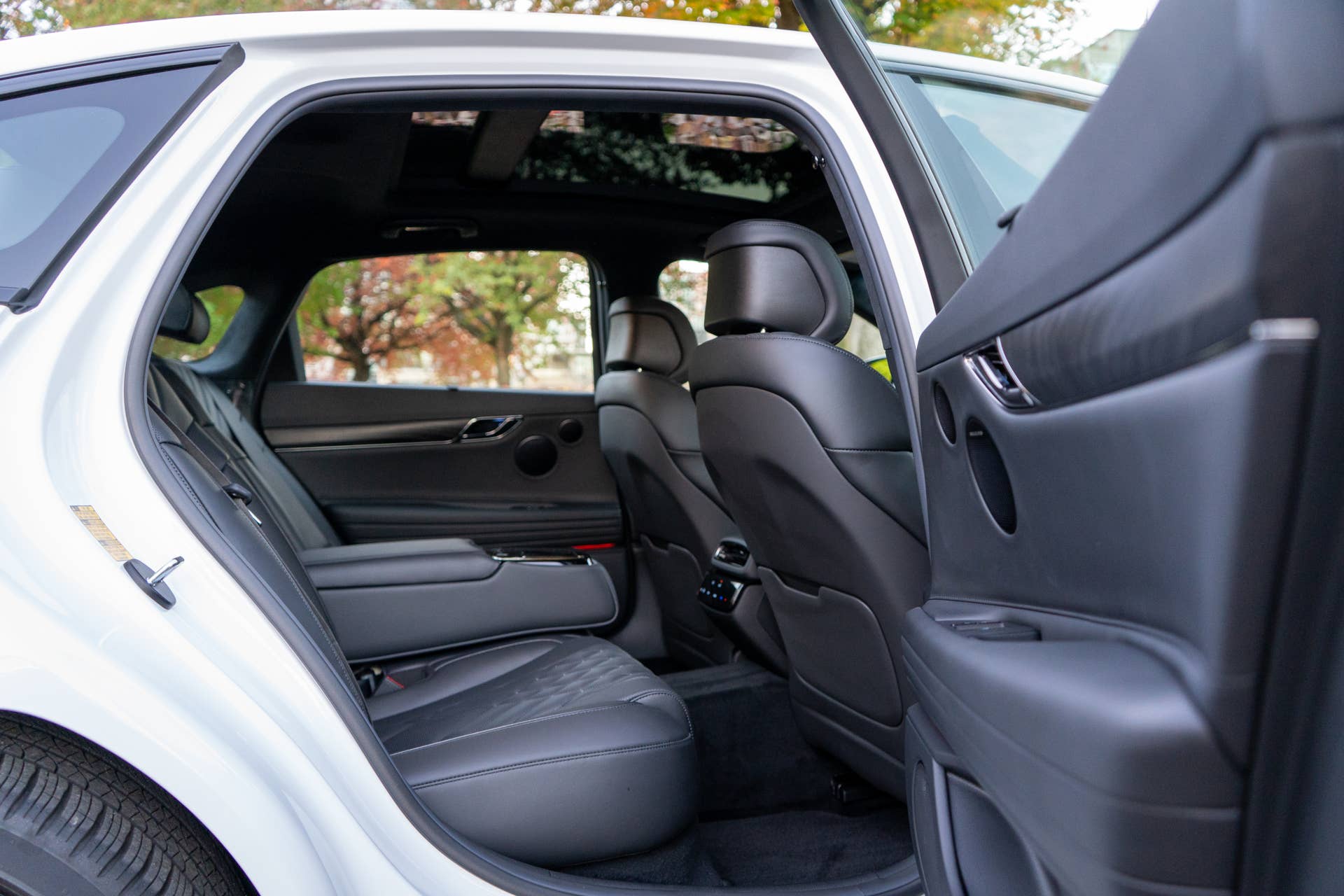
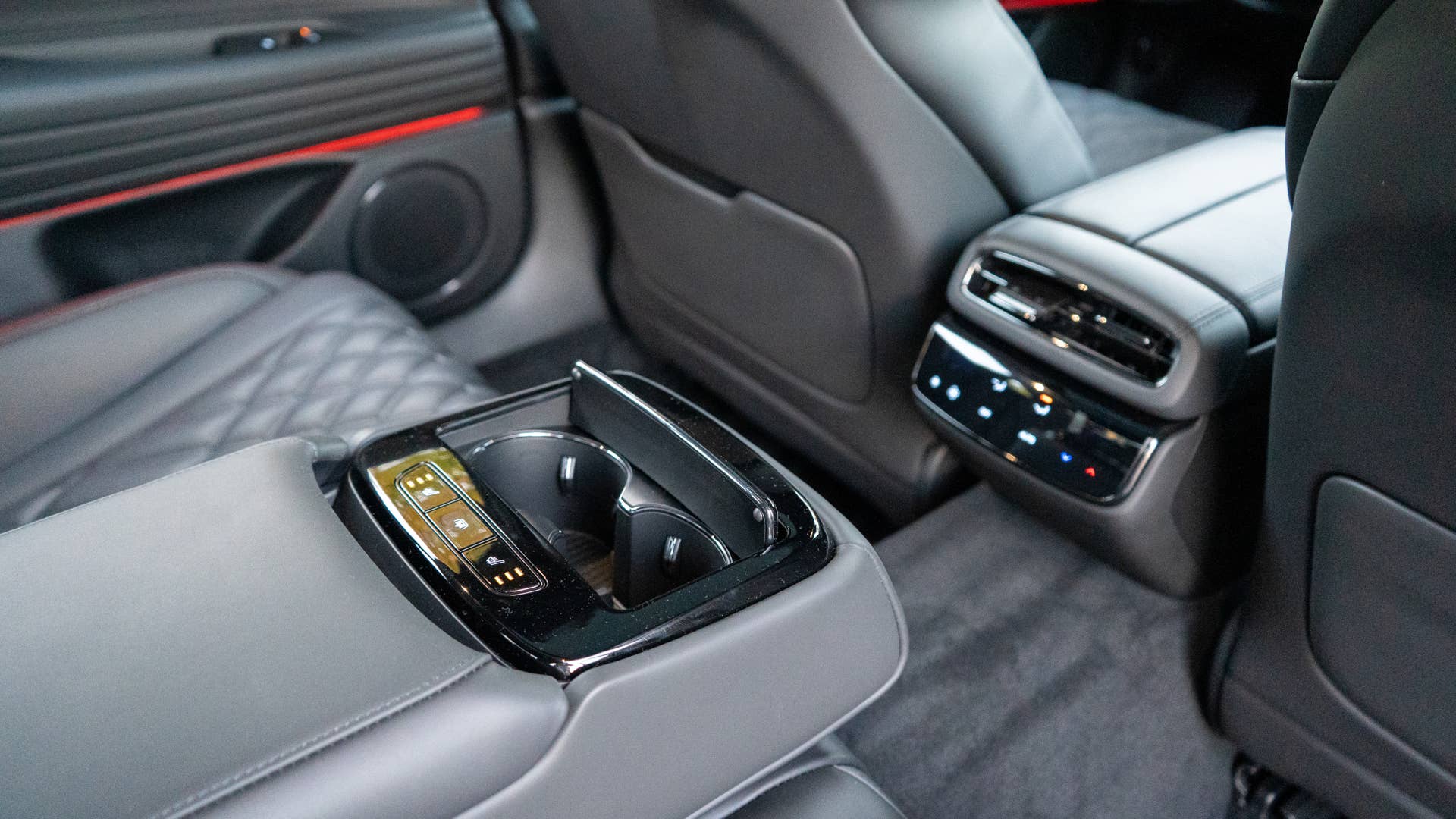
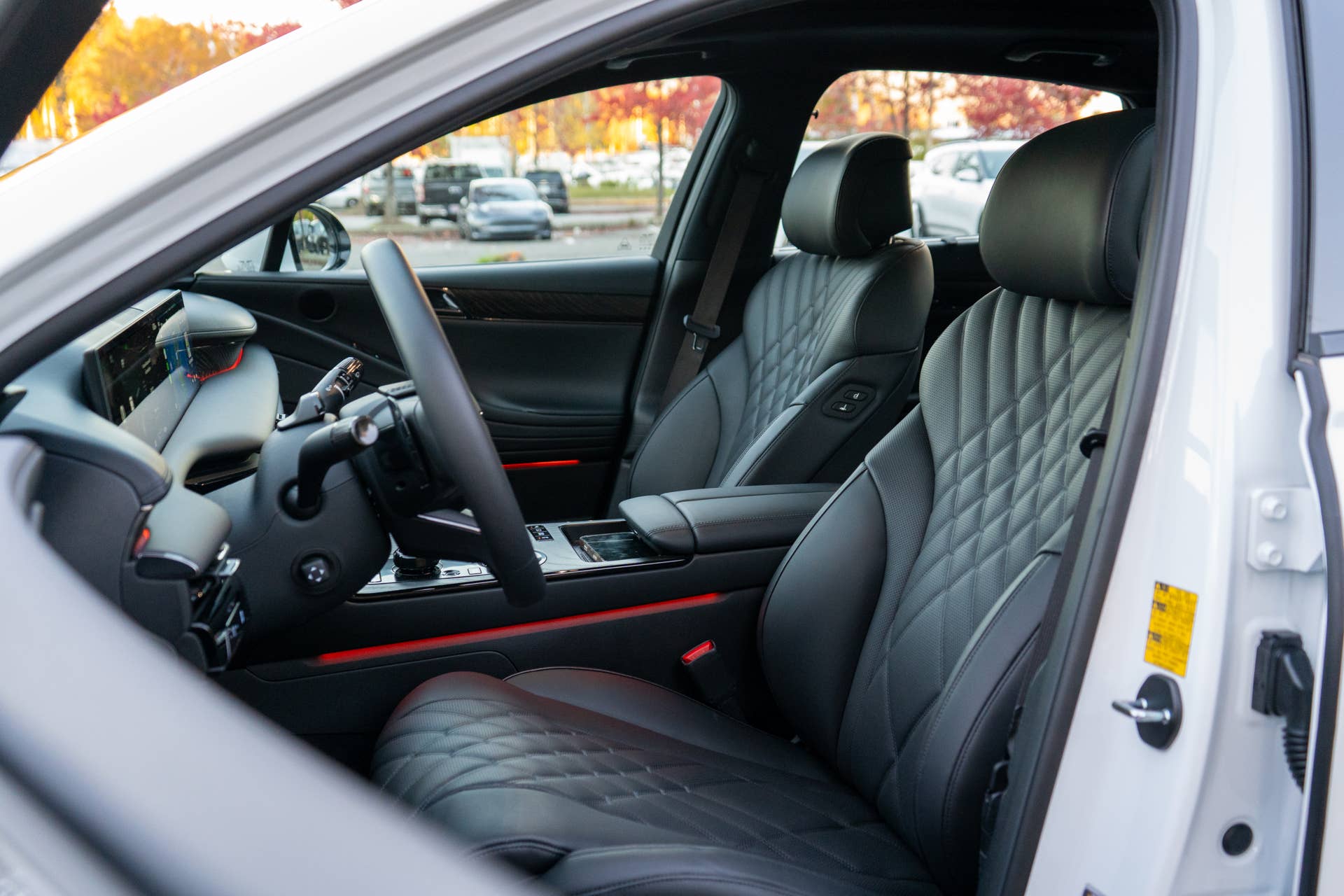
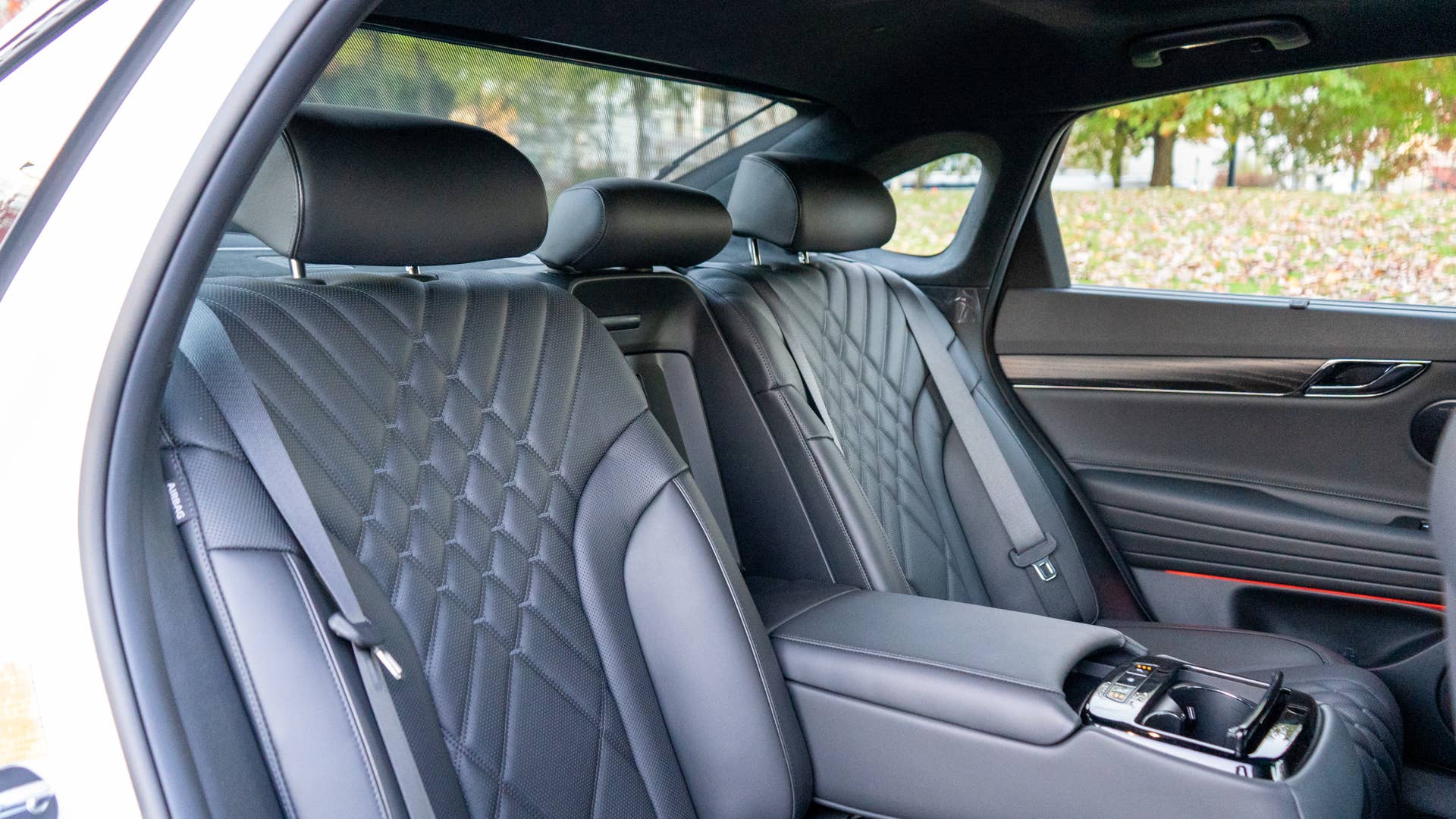
The G80’s cabin backs up my Goldilocks claims with the most substance. Black Nappa leather, patterned stitching, and black ash wood give the Prestige Black a moody, atmospheric feel rather than a dimly-lit, dull one. Variations in grain, sheen, and texture add subtle depth to the dark palette, while the controls and touchpoints reinforce the same sense of care I appreciated in its driving manners. The low driving position and outward visibility also add to the appeal, and I could enjoy the scenery along the Sea-to-Sky while feeling comfortably sheltered from the journey’s less pleasant elements. For its 2027 model year, the G80 Prestige Black also adds a heated front-center console armrest, giving its Mercedes-outdoing ambitions even more teeth than before.
2027 Genesis G80 Prestige Black

Cole Attisha

2027 Genesis G80 Prestige Black

Cole Attisha

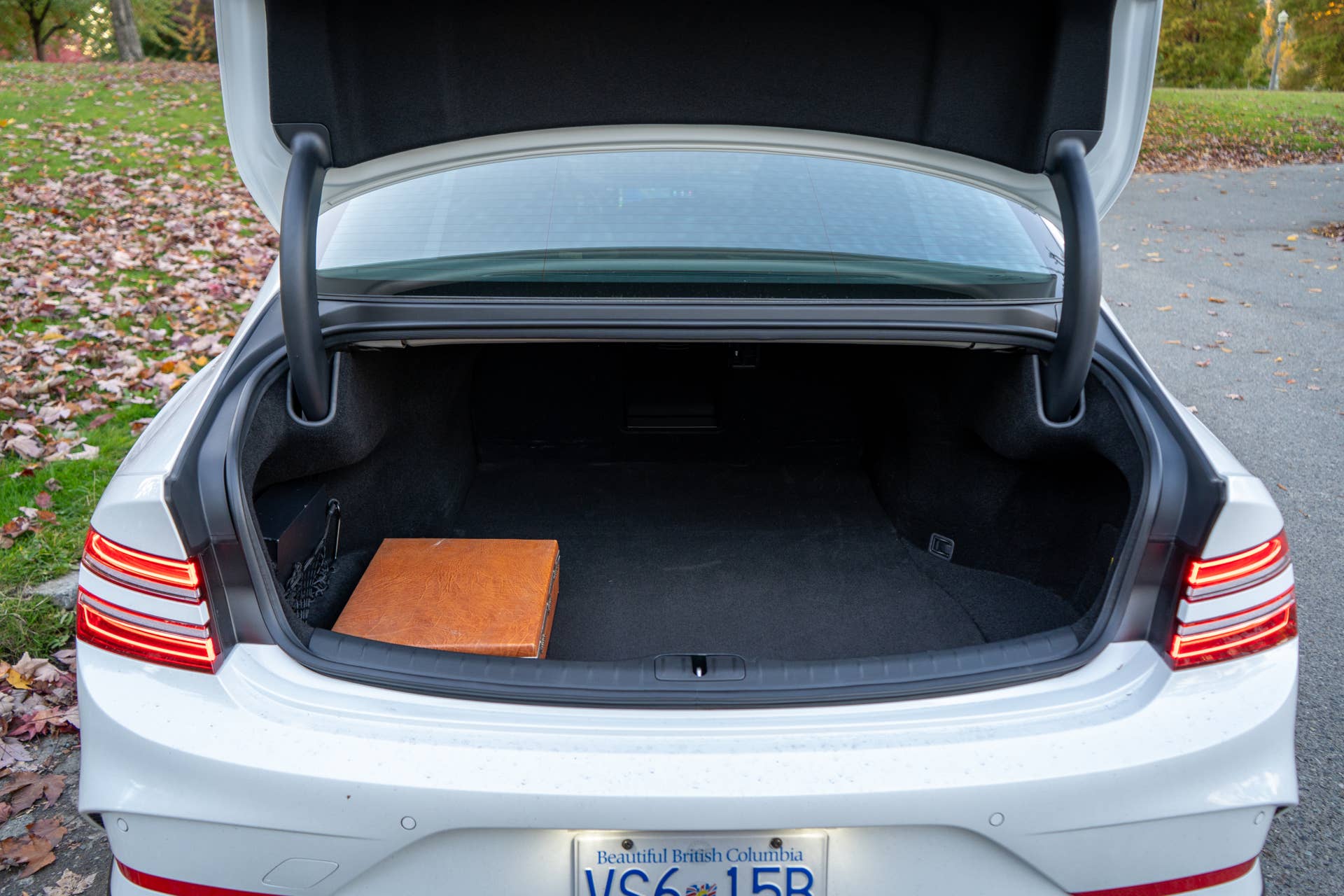
As for practicality, the G80’s 42.2 inches of front legroom and 38.7 inches of rear legroom both exceed the BMW 5 Series, Mercedes-Benz E-Class, and Audi A6, giving its almost-flagship ambitions some practical substance. Luggage receives a less generous allocation of space, though: its 13.1-cubic-foot trunk is smaller than the BMW’s and Audi’s, although slightly larger than the Mercedes’. My only real disappointment inside the cabin was the driver’s Ergo Motion seat, advertised in some material as a massage seat but not quite one to full effect. Its adjustments to support and posture never delivered a substantial massage experience, and the front passenger gets no equivalent function. The G90’s more comprehensive massage features really make the omission stand out. It’s a first-world complaint, certainly, but in a top-spec luxury sedan, buyers pay for these small indulgences. At least it features soft-closing doors. Very swish.
2027 Genesis G80 Prestige Black

Cole Attisha

Value: A Premium Price With Substance To Match — 9.0/10

At $80,150 before freight, or $81,695 delivered, the U.S. Prestige Black has graduated beyond the easy “cheaper than the Germans” argument, and I think that’s for the best. You no longer buy a Genesis because it offers the same for less; now you buy a Genesis because it offers more for the same. The six-cylinder Audi A6, BMW 540i xDrive, and Mercedes-Benz E 450 4MATIC start at $64,900, $67,700, and $73,700, respectively, before freight, but those numbers don’t reflect fully equipped models, whereas the G80’s figure does. Equipment makes the comparison much more interesting. The G80 includes Nappa leather, B&O audio, a head-up display, and Road Preview adaptive suspension. Mercedes charges $2,990 for Nappa, $3,400 for Pinnacle trim, and $3,200 for AIRMATIC; those options alone push the E 450 past the Genesis’ starting price, not to mention the many other add-ons you can choose. BMW’s $2,500 Driving Assistance Professional and $1,350 Luxury Seating packages also narrow the gap. Nevertheless, an A6 advertised with Executive and Driver Assistance packages at a $76,065 MSRP shows that Genesis doesn’t automatically win on price, but it’s at least upfront about offering a top-end luxury experience without cash-grabbing on the order sheet for features most people automatically expect in a vehicle of this caliber.

Running costs might temper all that enthusiasm a bit, though. The G80’s 18-mpg combined rating trails the 540i’s 28 mpg by a long way, costing approximately $1,190 more annually at 15,000 miles and an assumed $4 per gallon. And, yeah, filling it up at the end of the week made my wallet wince. On the bright side, U.S. buyers receive three years/36,000 miles of maintenance and a ten-year/100,000-mile original-owner powertrain warranty; Canadian scheduled maintenance runs five years/100,000 km. Ultimately, I still think the Prestige Black’s $1,000 premium over the 3.5T Sport Prestige feels reasonable for the added finishes I appreciated every day, and even if the four-cylinder G80 is a far more sensible money-saving alternative, I’d still opt for this V6’s richness and the Black’s presentation if I ever found myself in a Genesis showroom with an order book in my hands.
2027 Genesis G80 Prestige Black

Cole Attisha

Overall Verdict: Genesis’ Goldilocks Luxury Sedan — 9.4/10

To loosely paraphrase Ryosuke Takahashi from Initial D, “The key to success isn’t power, it’s balance.” It seems Genesis’ development team has been brushing up on its anime, then. And it would have to, wouldn’t it? After all, the Genesis G80 had to pick things up from where the Lexus GS and Infiniti Q70 left off. It began as little more than an Asian-brand alternative to a European delicacy (the executive saloon, that is), but as its Japanese rivals bowed out of the longstanding segment altogether, it leaned even further into its own individuality. It stopped attempting to recreate a simulacrum of a distinctly Western experience from an Eastern perspective, and instead learned to celebrate its uniqueness through style, feel, and carefully curated nods to historical inspirations.

That keen sense of balance makes the G80 my Goldilocks Genesis: even more special than the lovable GV70, indulgent enough not to miss the exquisite G90’s added grandeur too much, and rewarding enough to make the long way home feel like time well spent. Its thirst, and perhaps its underwhelming massage function if I’m being picky, leave room for improvement, but neither overshadowed how much I enjoyed the whole experience. It all brings me back to the W211. What I cherish so much about cars like that is how satisfying they make the not-so-sexy business of simply getting around. The G80 gives me that feeling, along with a style and personality I appreciate just as much.

Autoblog aims to feature only the best products and services. If you buy something via one of our links, we may earn a commission.
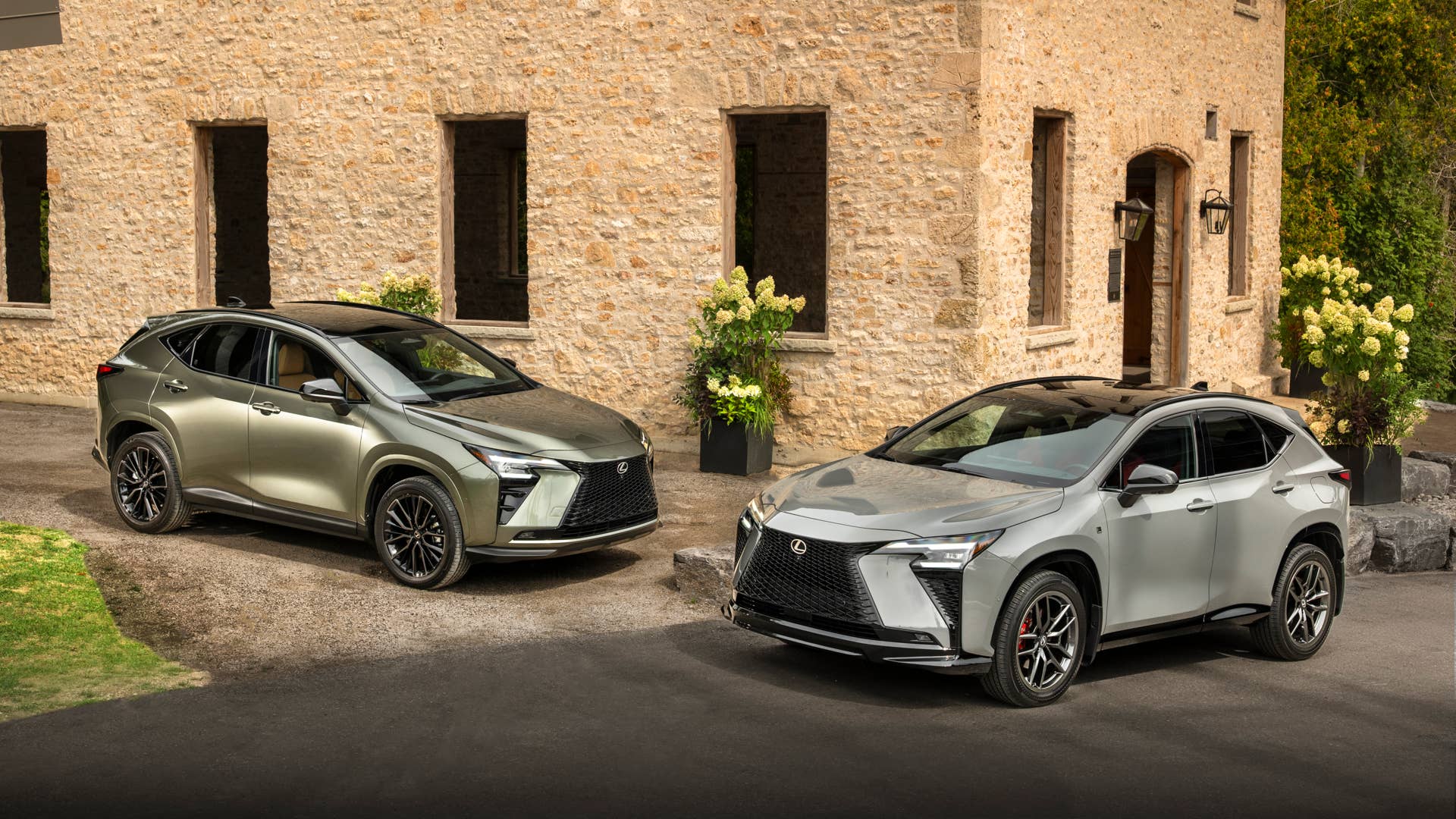
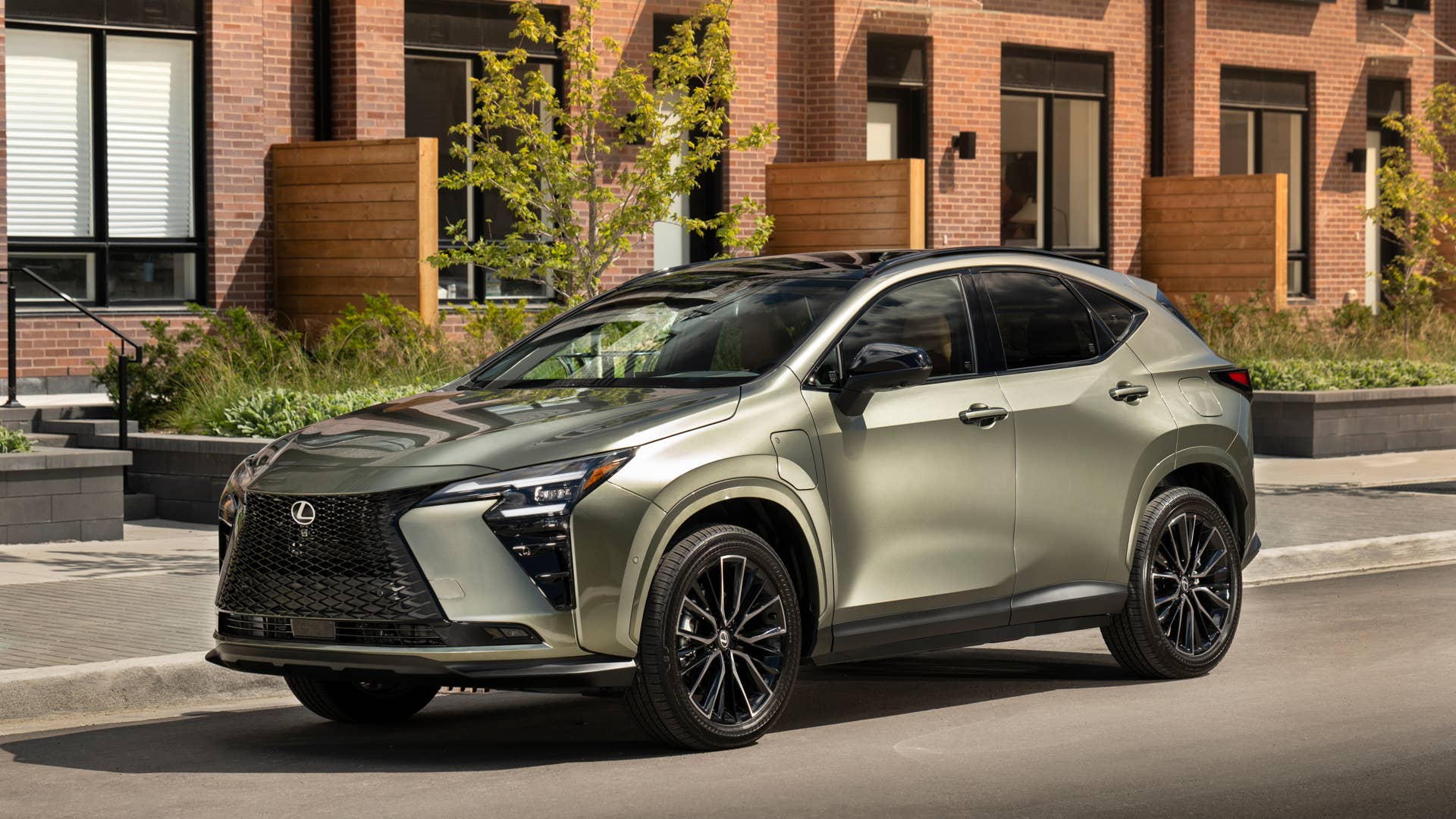
2027 Lexus NX First Drive Review: 40 MPG Without Sacrificing Luxury

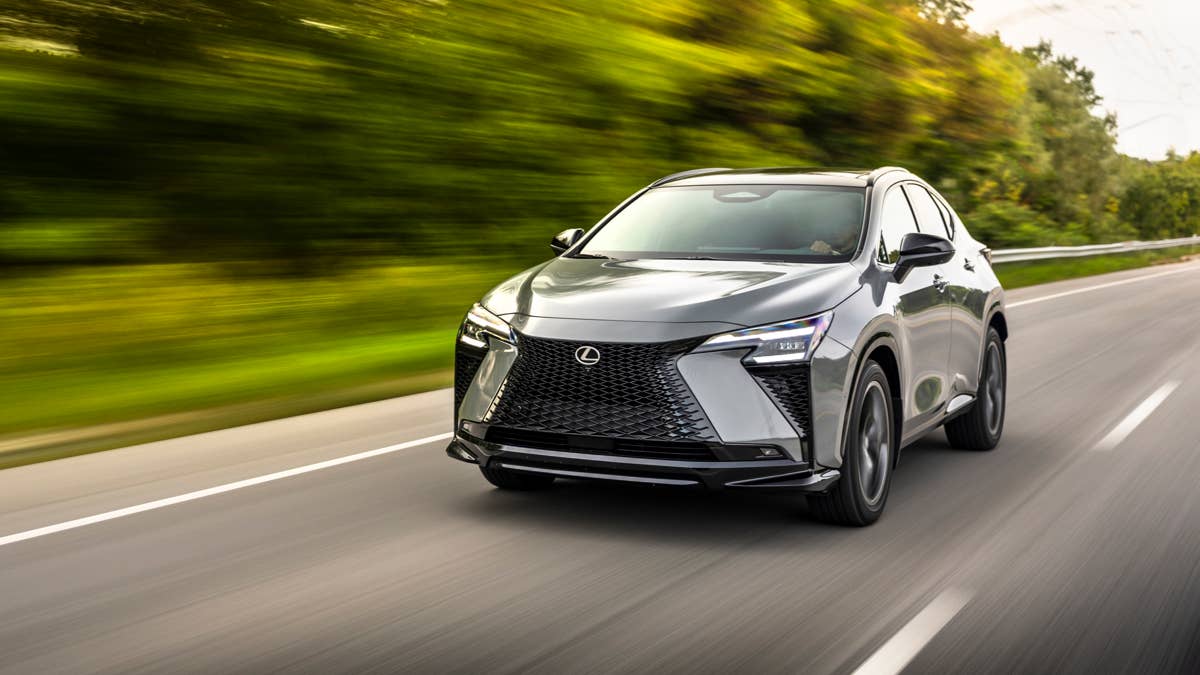
I don’t know how this is possible, but the Lexus NX is the only small luxury crossover in America that comes with a standard hybrid powertrain. Sure, there are a few hybrid options from companies like Mercedes-Benz and Volvo, but those exist at a higher price point, especially without the $7,500 federal tax credit that once made them more affordable. Lexus owns this market all to itself, and the Japanese luxury brand is capitalizing.

Lexus

View the 3 images of this gallery on the original article

The 2027 Lexus NX arrives as a “new generation,” although it doesn’t look dissimilar to the outgoing model. Like the Toyota RAV4, the NX is only available as a hybrid now, further emphasizing what made this model stand out over its competitors historically. This may not be the most drastic update in a model’s history, but thanks to its strong efficiency, the Lexus NX didn’t need a drastic overhaul to be worth your consideration.

So What’s New?

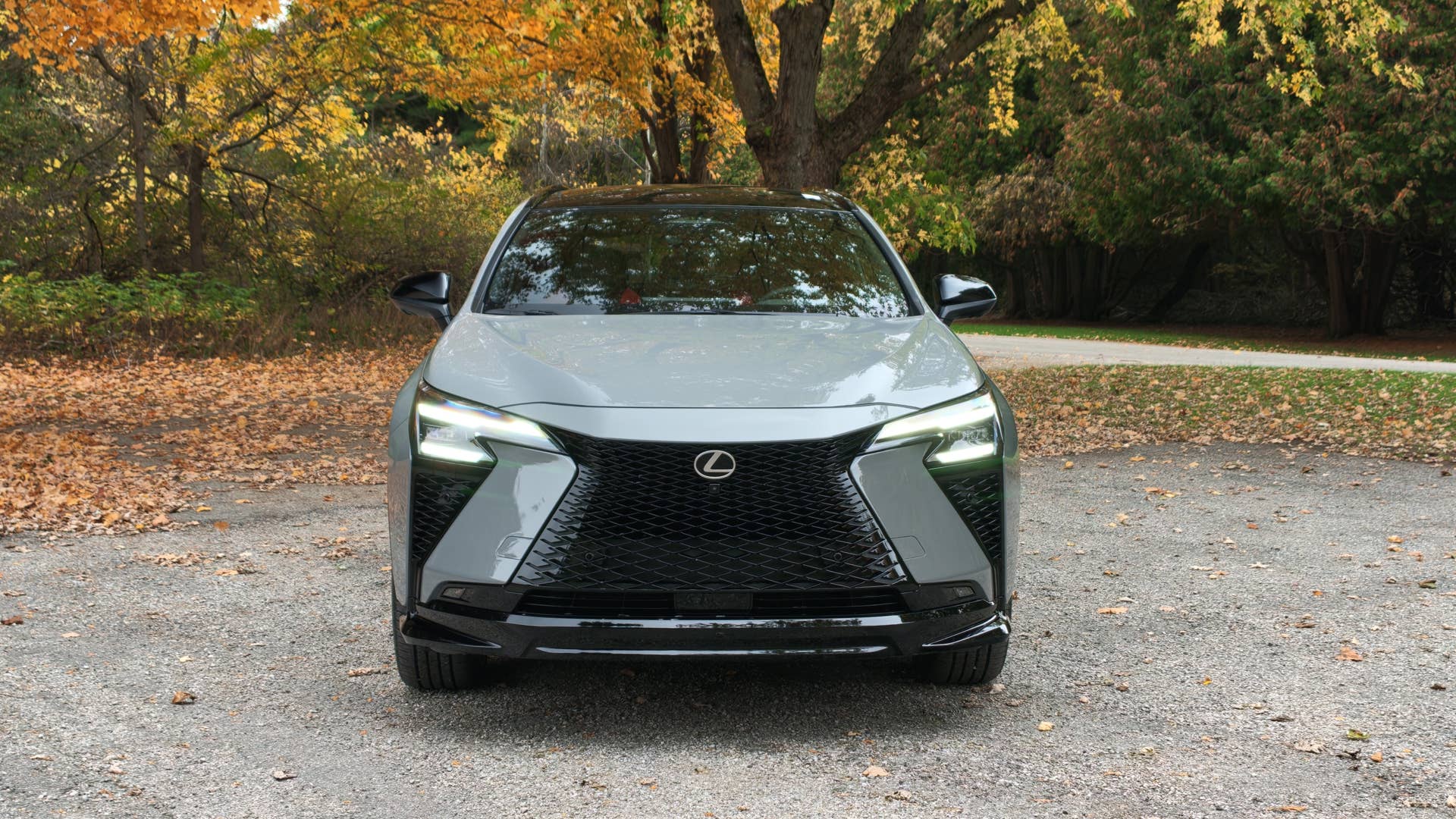
Looking at the new NX side-by-side with the previous car, it’s easy to scratch your head and ask if this is truly a “next generation” vehicle. Whether you call it a facelift or an all-new model, Lexus says only two panels carry over from the last NX. There’s a revised front fascia that looks reminiscent of the electric RZ with a deeper spindle grille and a more prominent brow that reminds me of the current RZ. At the back, double L taillights now include an illuminated Lexus logo that glows in red.

Lexus

View the 3 images of this gallery on the original article

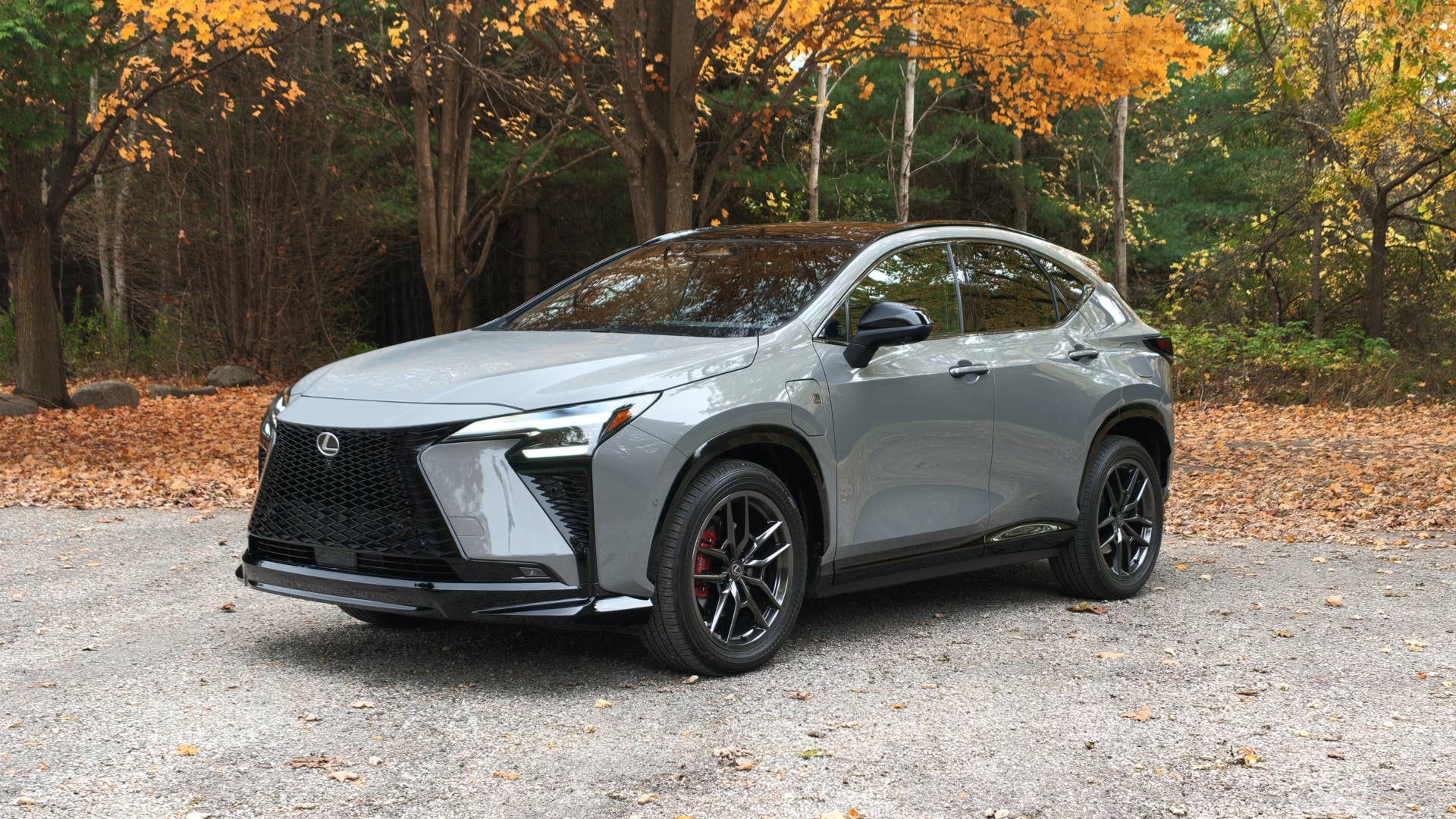
Buyers can choose from nine exterior colors, including a new Shaded Ivy that replaces Nori Green and Incognito, an F Sport-exclusive flat gray that first appeared on the IS 500. The F Sport also gets different bodywork, 20-inch wheels, and red brake calipers. Though it doesn’t look too different on the outside, Lexus adamantly claims the 2027 NX rides on a new platform to accommodate its next-generation hybrid system.

Jared Levenson/Autoblog

View the 3 images of this gallery on the original article

All-In On Hybrids

Toyota decided to sell the Camry and RAV4 exclusively as hybrids in their current forms, and Lexus has now done the same with the NX. The 2.4-liter turbocharged four-cylinder engine is gone, and I won’t miss it much; the hybrid system was the number one reason why I recommended the previous NX so strongly. The NX 350h rolls out with a similar 2.5-liter four-cylinder engine paired with an electric motor. It now delivers 244 horsepower, up from the previous 236. Front-wheel-drive is standard with available all-wheel-drive featuring a rear electric motor.

Jared Levenson/Autoblog

View the 3 images of this gallery on the original article

Fuel economy in the NX 350h is class-leading, rated at 44/35/40 mpg (city/highway/combined) with FWD, and only dropping to 42/34/38 with AWD (41/34/38in F SPORT guise). The NX’s gas-only competitors typically average mid-to-high 20s, and even the plug-in hybrid competitors fail to average over 30 mpg when running on gasoline.

Speaking of PHEVs, the NX 450h+ returns, now sporting 324 hp, up from the outgoing 304. Lexus increased the battery size from 18.1 to 22.7 kWh, meaning it can now go up to 45 miles on a single charge, up from 37 miles in the outgoing model. Charging is now done via a Tesla-style NACS connector with standard DC charging capability. Owners can now recharge in as little as 35 minutes on-the-go or just 2.5 hours at home. Fuel economy is slightly lower than the 350h, but still excellent at 39/35/37 mpg (city/highway/combined) or 38/34/36 as an F Sport.

A Next-Gen Interior

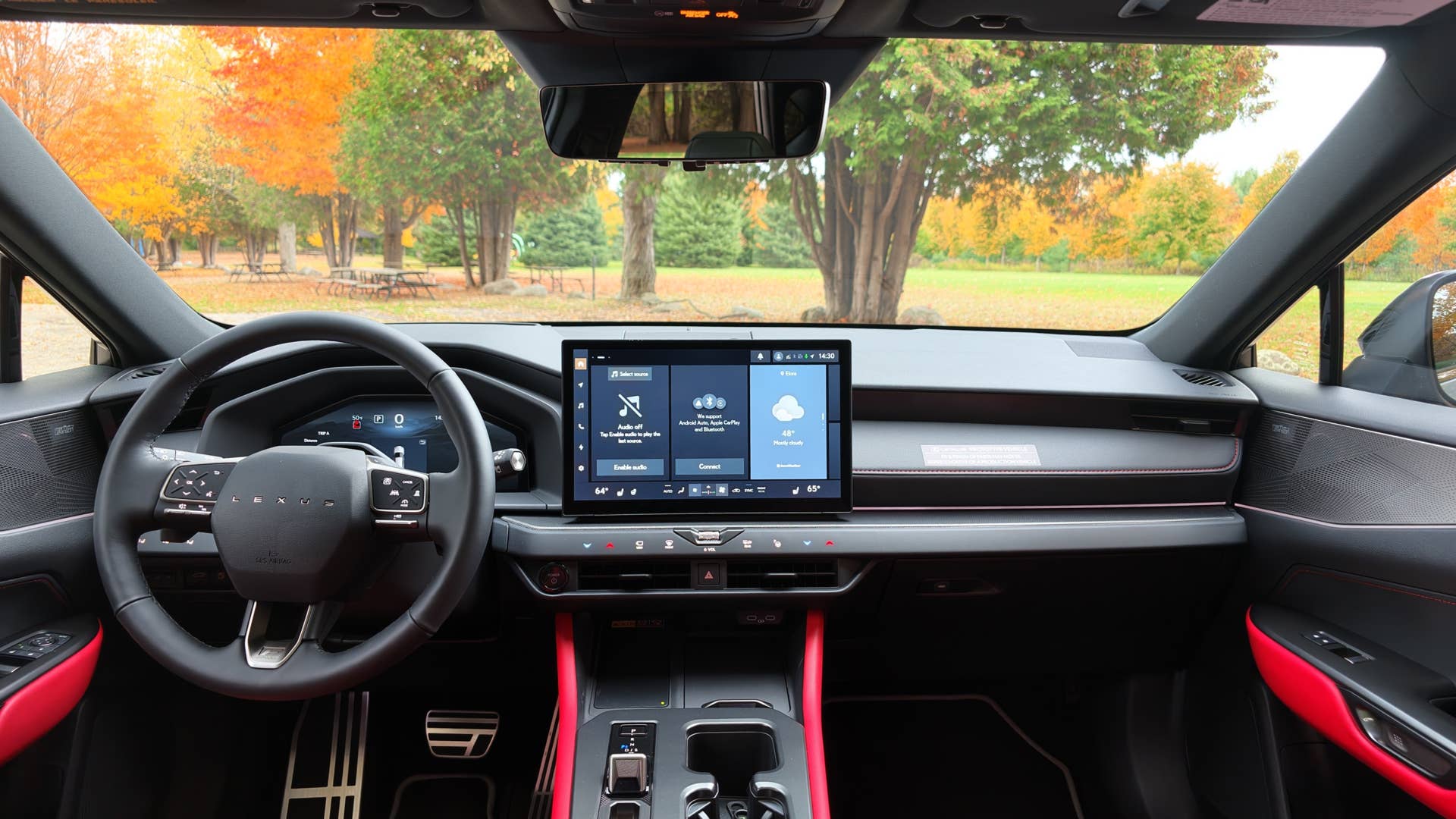
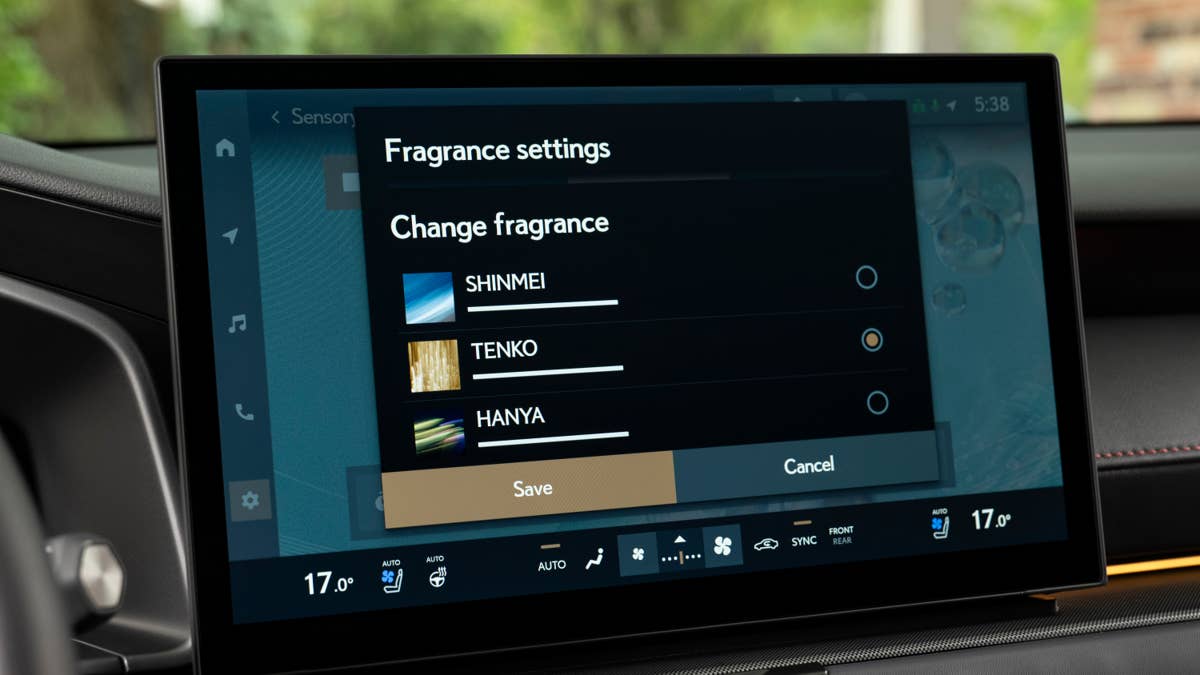
This 2027 update brings the NX up-to-speed with the Toyota RAV4 and Lexus ES thanks to a standard 14-inch touchscreen powered by the latest Lexus interface. It brings in previously-seen features like a built-in dash camera and some new ones like an available Sensory Concierge, which sprays fragrances from an area on the dash. This interior layout is remarkably similar to the one in the ES, forgoing the previous NX’s knobs in favor of touch-capacitive buttons.

Jared Levenson/Autoblog

View the 3 images of this gallery on the original article

While I don’t agree with every decision Lexus made inside the cabin, this update feels remarkably more modern and upmarket than the outgoing NX. Ambient lighting elevates the ambiance at night, and can combine with the fragrances to deliver a relaxing experience. I especially love the new three-spoke steering wheel, which is perfectly sized and reminds me of an old school IS 300.

Lexus

View the 3 images of this gallery on the original article

Comfortable Efficiency

Lexus made several refinements to the suspension, steering, accelerator, and braking systems. These changes all culminate in a pleasant driving experience that is comfortable and decently enjoyable. The ride is comfortable, even in the F Sport trim with its adaptive variable suspension, and the cabin remains pretty quiet even at highway speeds. Enthusiastic drivers may not love the feel of the hybrid system’s CVT-like planetary gearset, but all others will find it remarkably smooth and quiet when it isn’t asked for full-throttle acceleration.

Lexus

View the 3 images of this gallery on the original article

I recorded a 0-60 time of 6.92 seconds in the NX 350h F Sport, falling a bit shy of Lexus’ 6.7-second estimate for the AWD model but nearly matching the FWD model’s 6.9 second claim. The NX 450h+ delivered more impressive acceleration, besting its 5.7-second estimate by hitting 60 mph in just 5.32 seconds. That’s slightly quicker than the 5.43-second run I recorded in the RAV4 GR Sport and not far off the 5.22-second time set by the Genesis GV70 with its twin-turbo V6. Even in electric-only mode, the NX PHEV posted an impressive 8.66-second run to 60. That’s quicker than a BMW M5 or McLaren Atura will do the sprint in their electric modes.

Still Unmatched

Lexus won’t have any trouble keeping its second-best-selling vehicle popular. In fact, it will need all the production capability possible from its Canadian and Japanese factories to keep up with demand. The 2027 NX will arrive at dealers in late 2026, sporting four trim levels for each of the hybrid powertrains: Premium, Premium+, Luxury, and F Sport.

Jared Levenson/Autoblog

View the 3 images of this gallery on the original article

No pricing is available yet, but I expect it to remain relatively close to the outgoing model. Lexus has crammed in standard features, like heated and ventilated front seats, meaning you no longer have to feel like you missed out not spending up for the higher trims. Some features like a panoramic glass roof and heated rear seats are only available if you spend a bit more, but the base Premium trim seems like it will be the best value of the bunch.

I’m excited to continue recommending the NX as the best luxury option for buyers who want to save money on gas, but aren’t quite ready to buy an EV. It still baffles me that no competitor has tried to copy the NX’s formula, delivering over 40 mpg in an affordable luxury package.

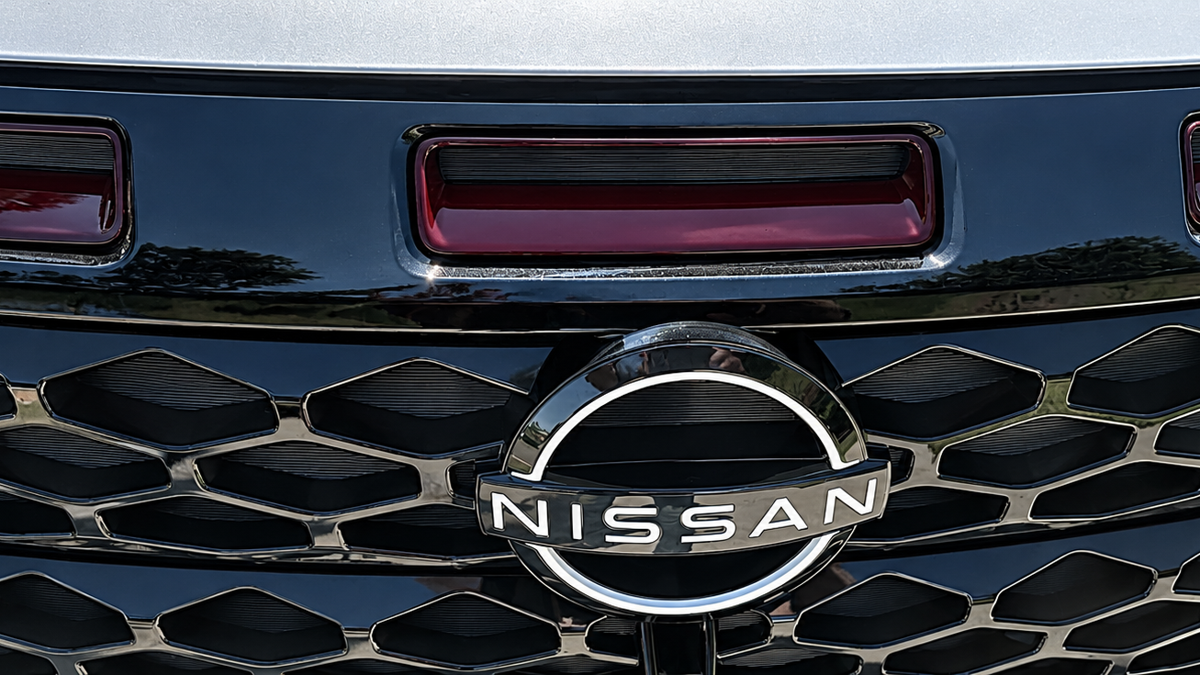
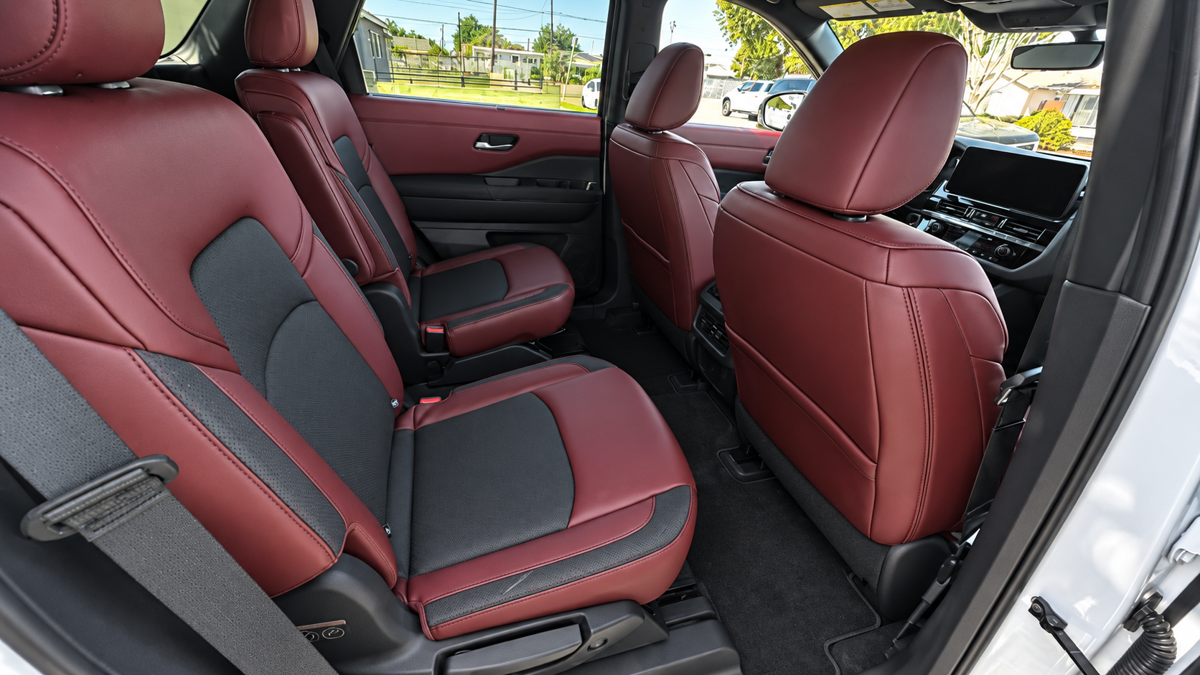
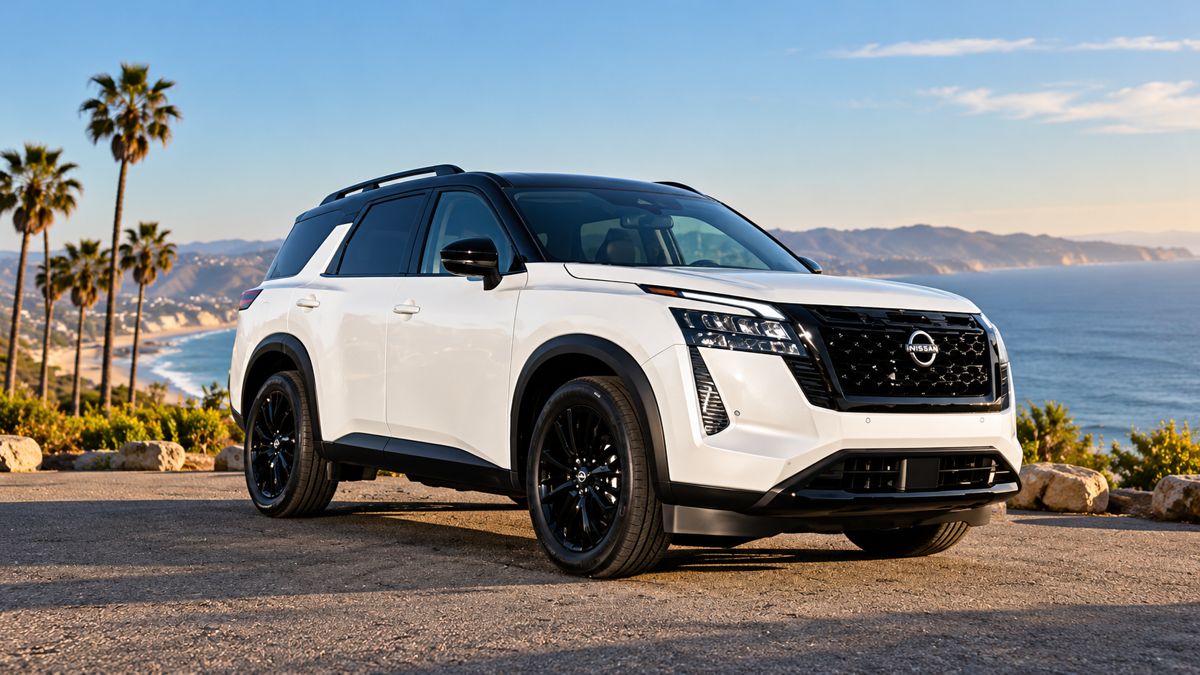
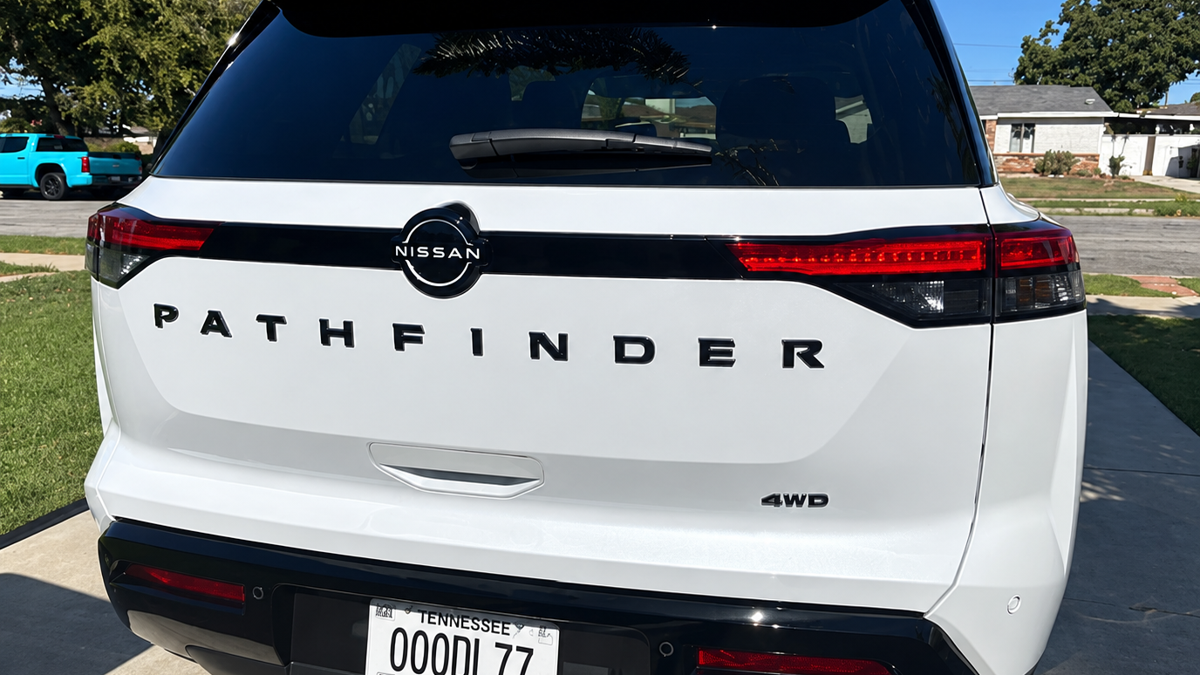
2027 Nissan Pathfinder Heritage Edition: Burgundy Is Back, and So Are the Memories

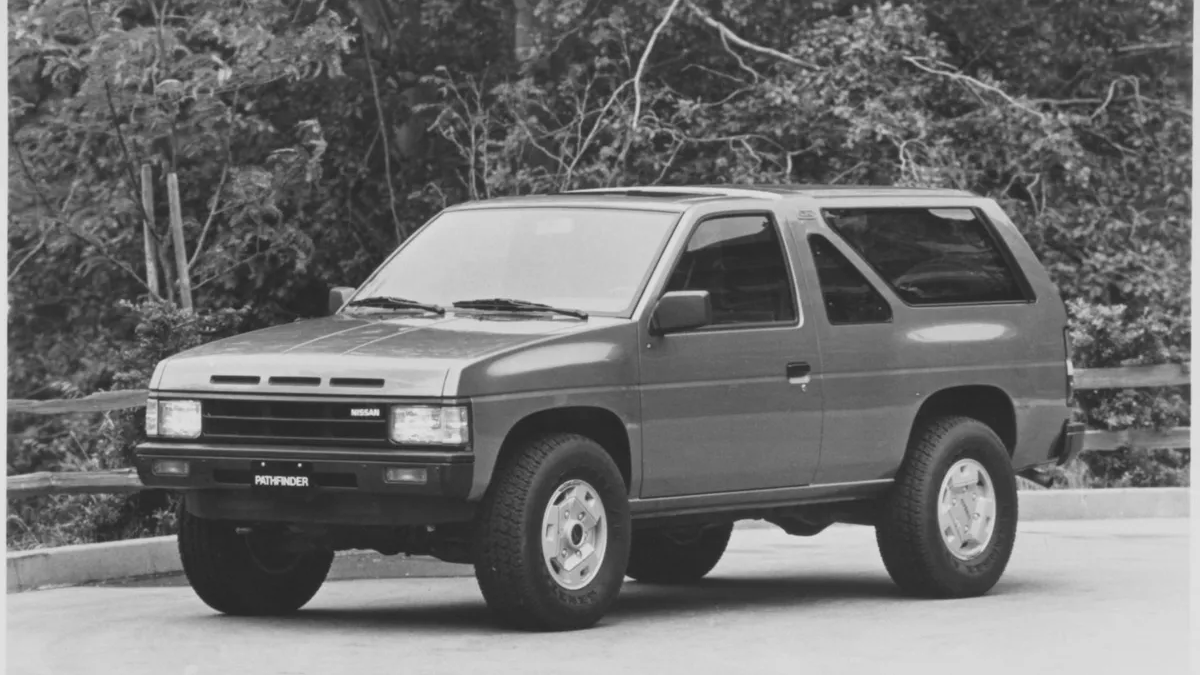
When I was in high school, I remember seeing a radical-looking SUV driving around Southern California. It was the first-generation Nissan Pathfinder, and it was one of the coolest things on the road. It looked like nothing else, with its distinctive shape, two-door body and an attitude that suggested it actually wanted to leave the pavement. It belonged to a new wave of SUVs that combined relatively affordable pricing with serious off-road capability. Naturally, I wanted one. Naturally, my budget had other ideas.

Nissan

View the 2 images of this gallery on the original article

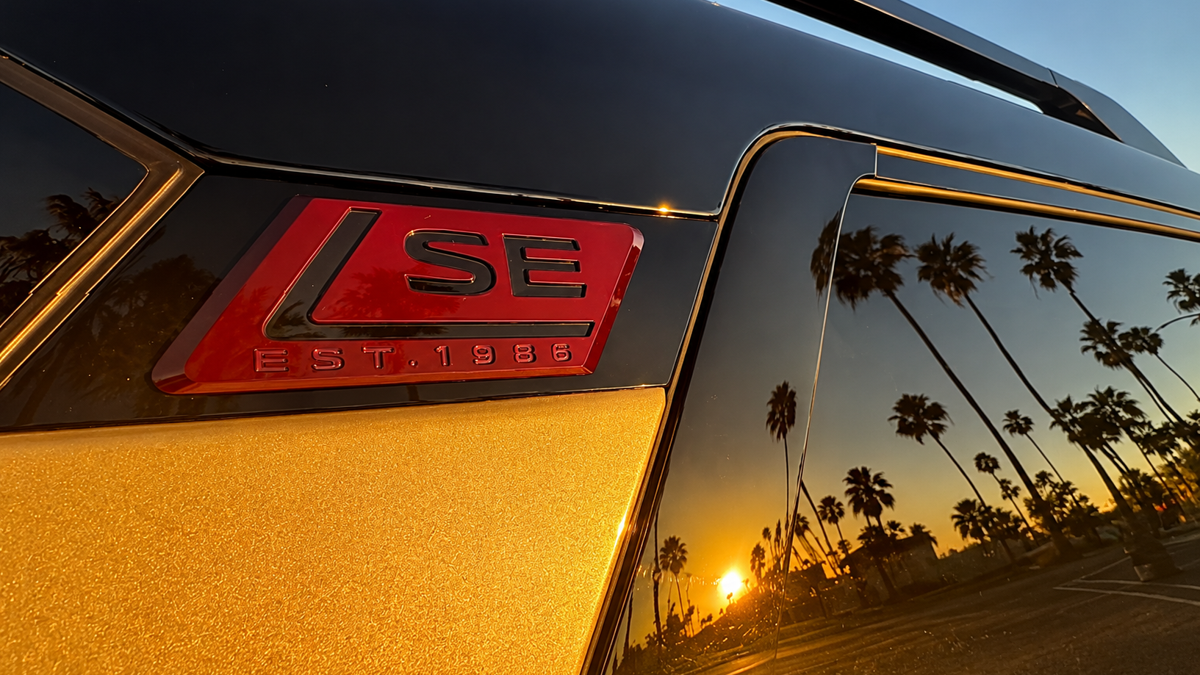
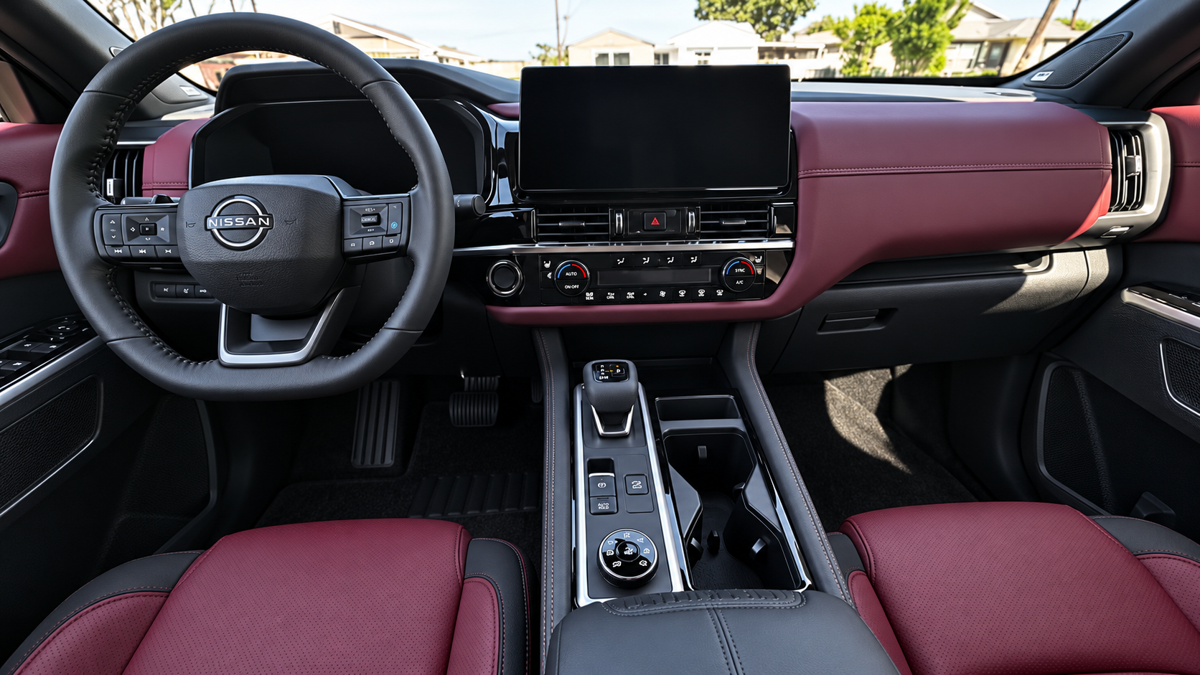
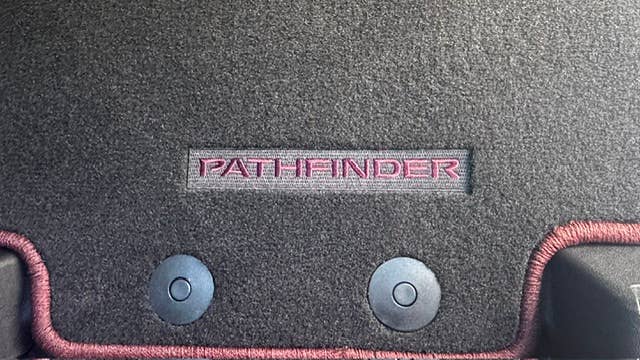
Five generations later, the Pathfinder is reaching its 40th anniversary, and Nissan is celebrating with a heritage-inspired edition that borrows some personality from the original. The most appealing throwback, at least to me, is the available burgundy upholstery and two-tone interior. Yes, an actual interior color. In a world where choosing upholstery often means deciding between black, slightly different black, and something your children will immediately stain, I approve.

View the 1 images of this gallery on the original article

What makes me laugh is how much larger today’s Pathfinder is than that original two-door. Park them together, and the old one might look like something the new one brought along for its kids to drive. That’s where SUVs have gone over the past four decades. Fortunately, the modern Pathfinder offers enough utility and comfort to justify much of that growth.

Powertrain and performance

Underneath the anniversary treatment is a familiar powertrain, and that’s a good thing. The 3.5-liter naturally aspirated V6 produces 284 horsepower and 259 pound-feet of torque and is paired with a nine-speed automatic transmission. There’s no tiny turbocharged engine trying to convince you it has six cylinders, and no continuously variable transmission droning through the proceedings. It’s a straightforward combination that suits a substantial family SUV.

The nine-speed automatic is well matched to the engine, and there’s plenty of power for everyday driving. It won’t rearrange your internal organs when you accelerate, but it doesn’t need to. The point is moving people, luggage and whatever recreational equipment the family has decided is essential this week. I would expect fuel economy around the low-20-mpg range, with roughly 22 mpg serving as a reasonable expectation for this configuration. My encounter was brief, so that is an expectation rather than the result of a full fuel-economy test.

Related: Honda Pilot 4WD vs. AWD: What the i-VTM4 System Really Does

Available Intelligent 4WD brings seven drive modes, giving drivers settings for different surfaces and conditions. Properly equipped Pathfinders can tow up to 6,000 pounds, although that maximum depends on configuration. The standard rating across the current lineup starts at 3,500 pounds, so buyers planning to pull a trailer should check their vehicle’s equipment and rating. The anniversary treatment doesn’t automatically mean every example has maximum towing capability.

View the 2 images of this gallery on the original article

Exterior and interior design

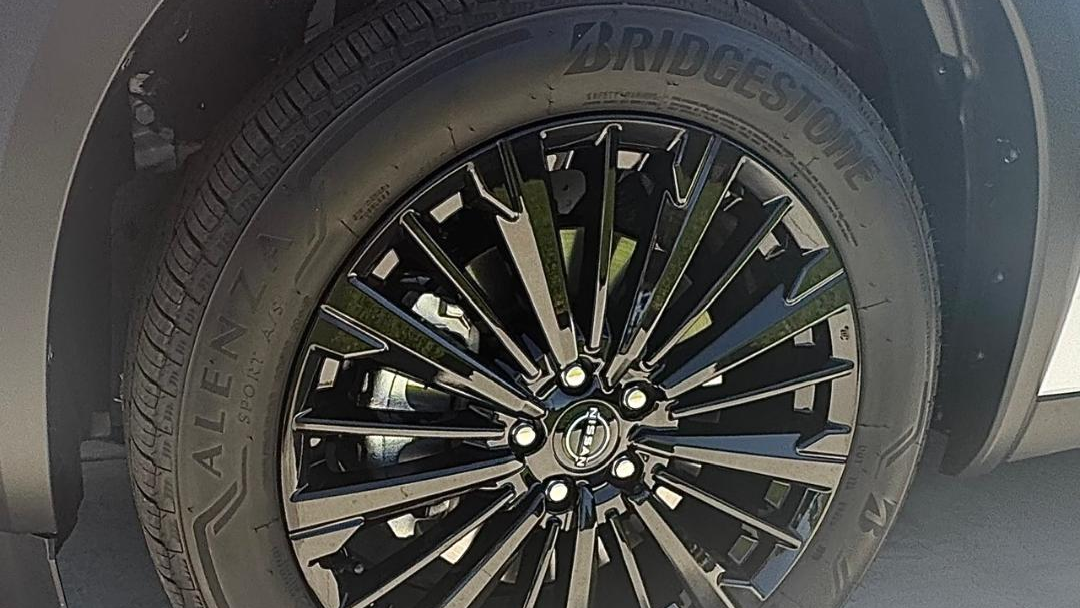
Nissan hasn’t attempted to turn the current Pathfinder into a replica of the original. There are black 20-inch wheels and distinctive styling details, but the basic shape remains that of a modern three-row SUV. Some enthusiasts will want more retro bodywork, and I understand that. The old Pathfinder had a wonderfully recognizable silhouette. Still, there’s something to be said for incorporating a little history without making the whole vehicle look like a costume.

Inside is where the connection works best. The burgundy upholstery recalls an era when automakers weren’t afraid of cabin colors that could also describe a wine list… or my favorite newscaster. Combined with the two-tone treatment, it gives the Pathfinder a warmer, more distinctive atmosphere. It doesn’t transform the vehicle mechanically, but it does make it feel special when you open the door. For an anniversary edition, that counts.

More importantly, this is a lovely place to spend time. After my brief encounter, I felt the interior helped narrow the gap between the Pathfinder and the Infiniti QX60. I’m not suggesting that different upholstery turns a Nissan into an Infiniti, but the presentation gives this version a credible place near the more upscale end of the mainstream segment. Nissan is clearly willing to dress for dinner, even if it still plans to tow the boat in the morning.

View the 3 images of this gallery on the original article

Technology and family practicality

The supplied anniversary information lists a standard 12.3-inch touchscreen with wireless Apple CarPlay and Android Auto, multiple USB-C charging ports and available premium Bose audio. That’s the appropriate collection of conveniences for a family vehicle today. Apparently, a road trip now requires enough charging connections to support a small newsroom. I remember when keeping passengers entertained involved a cassette tape, a window and being told we would get there when we got there.

Nissan’s LATCH AND GLIDE second-row seating remains one of the Pathfinder’s more thoughtful features. It helps provide third-row access with a compatible child seat installed, reducing the gymnastics involved in getting everyone aboard. The supplied information also lists standard Safety Shield 360 and Intelligent Forward Collision Warning. Those systems add useful assistance, but the seating arrangement is the kind of feature parents may appreciate several times before they even leave the driveway.

Driving the Pathfinder Heritage

It drives just like the other Pathfinders I’ve recently driven, which is exactly what I expected. There’s ample V6 power, the transmission gets along well with the engine, and the handling is reassuring for a vehicle with this much family responsibility. Nothing about the anniversary presentation suggests a fundamentally different chassis underneath, and my brief drive didn’t reveal one.

Related: Toyota Vs Subaru Owner Satisfaction: It’s Not Even Close

My favorite Pathfinder remains the Rock Creek. Its more adventurous personality better matches my interests, and I appreciate that Nissan offers a version aimed at people who want to venture beyond paved parking lots. This Heritage version takes a different approach. It adds character and a more inviting cabin to a familiar package, and it succeeds at making an everyday family SUV feel a little less everyday.

Final thoughts

Expect to see this anniversary Pathfinder at dealerships soon, although final pricing will be important in determining its value. A distinctive interior and some historical connection are appealing, but they still need to come with a sensible window sticker.

I like this direction. The Pathfinder has become larger, more comfortable and considerably more family-oriented than the SUV that caught my attention in high school. This edition acknowledges that history while offering the towing ability, technology and versatility buyers expect today.

I still wish Nissan would give us something as simple and off-road-focused as those earlier SUVs. I hear there may be more adventure coming, but I’ll wait for something concrete before getting carried away.

Popcorn is in hand.

Related: Towing a Pebble Flow With a Rivian R1S: The Future of Electric Towing?

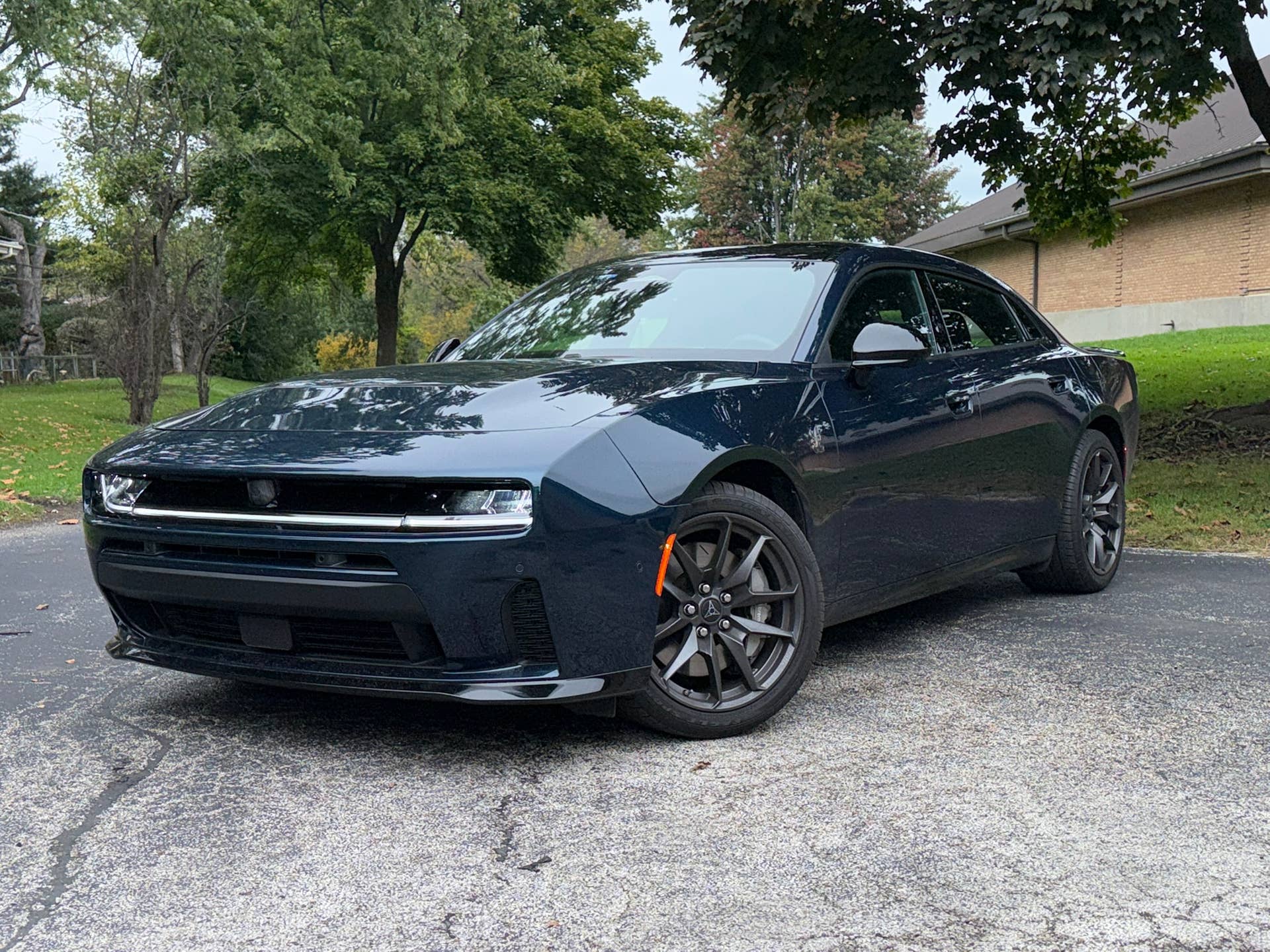
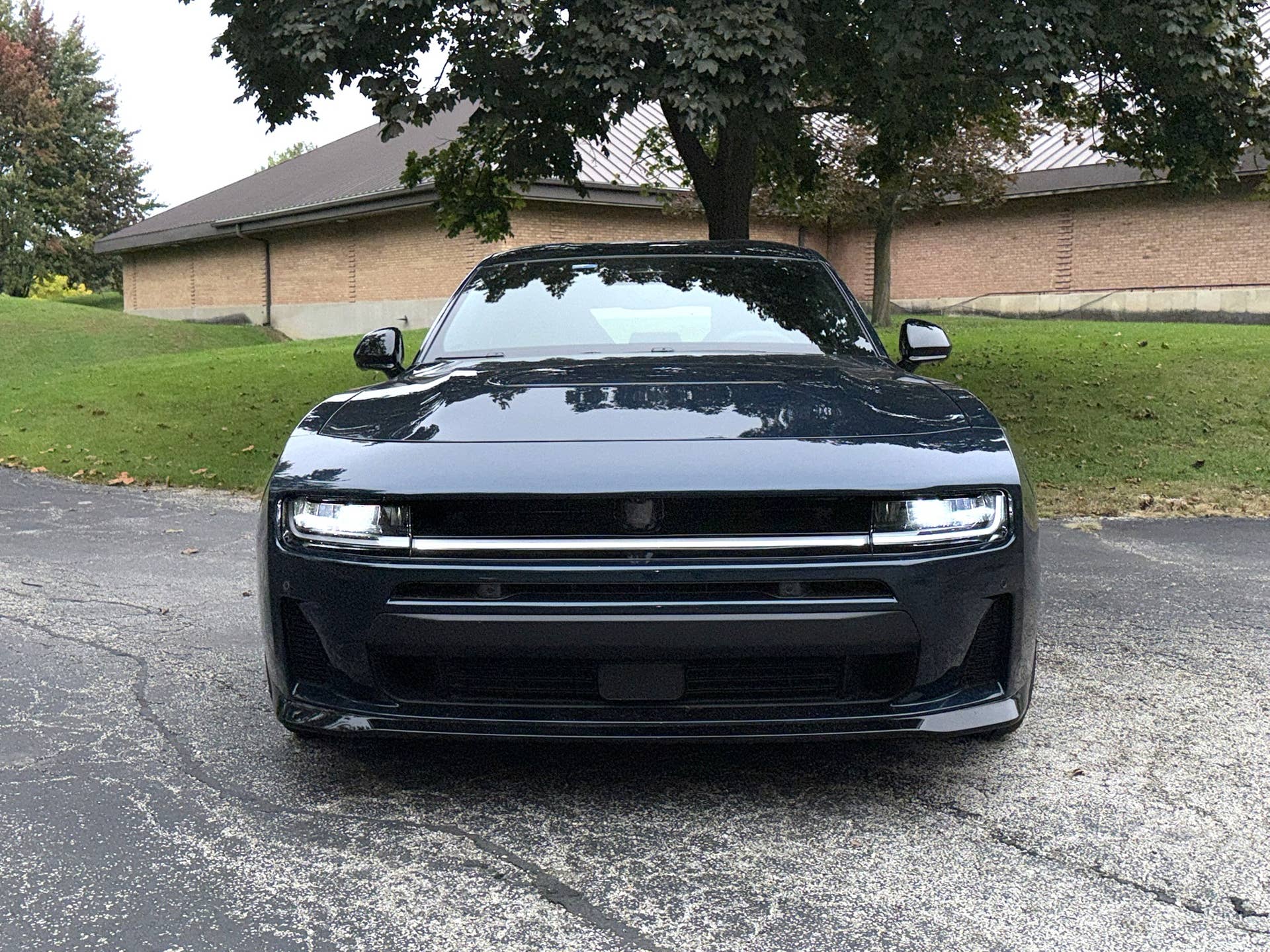
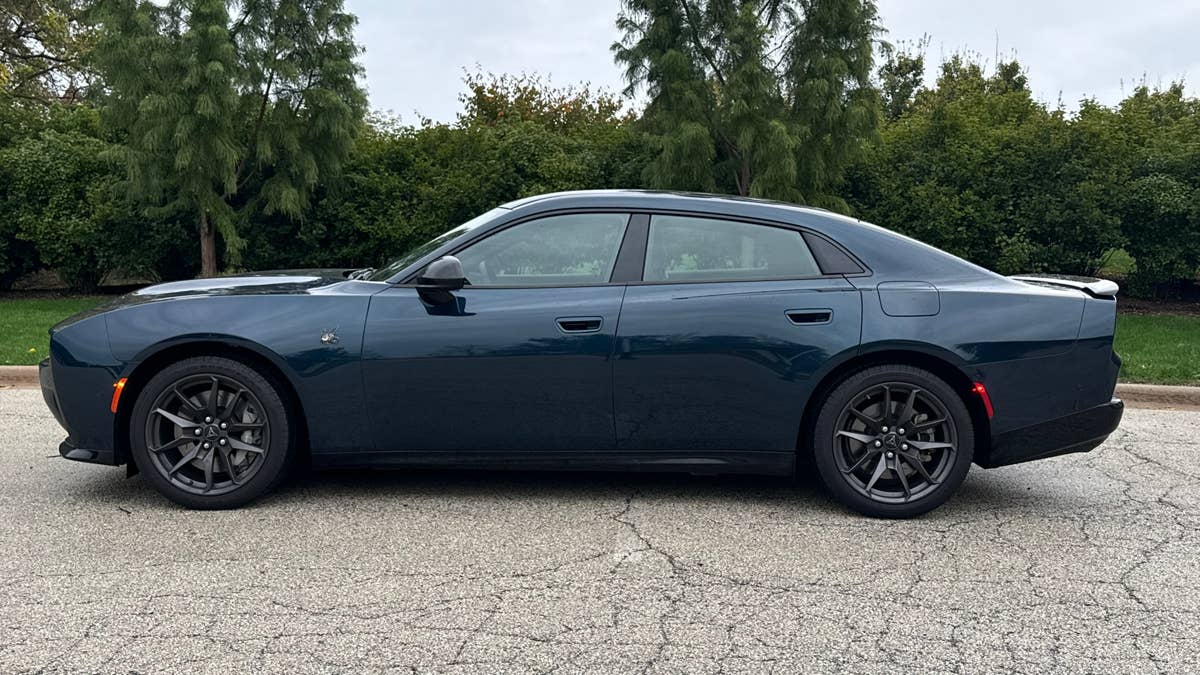
I Drove the 2026 Dodge Charger Scat Pack Plus. When Six Cylinder, All-Wheel Drive Muscle is Pretty Persuasive

Six of One, Half a Dozen of the Other

Dodge’s intention of reinventing the muscle car for the electric era has, so far, been an abysmal failure. It seems the Challenger Daytona EV was largely undesirable to V8 loyalists who actually want to hear real engine noises and feel the car’s connection to the road, despite the fact that the electric version could launch to 60 mph in as little as 3.3 seconds. Dodge has since shoehorned its twin turbo six-cylinder Hurricane engine into its redesigned Charger to temporarily appease the faithful.

Amos Kwon

I was deeply curious how satisfying the powertrain would be, as well as how convincing a completely redesigned Charger would look and feel. My tester was a 2026 Charger Scat Pack Plus with the Sixpack high-output version of the 3.0-liter twin-turbo inline-six mated to an 8-speed automatic transmission routing power to all four wheels. That equates to 550 hp and 531 lb-ft of torque. My tester’s base price was $56,995. Including options and the $1,995 destination charge, the total price came to $68,320.

Exterior and Interior Styling – 9/10

Amos Kwon

It was smart for Dodge not to completely change the look of the Charger. It’s inspired by the model from the late ’60s and early ’70s but retains the general body shape from the last generation. The exterior dimensions, however, are vastly different. The 2026 Charger has grown by over 8 inches in length, nearly 5 inches in width, and almost 2 inches in height. The full width LED lighting that joins the headlights, the creased front fenders, and the huge hood bulge give the front end menacing muscle car presence. The body crease that extends from the front door to the tail adds character.

Amos Kwon

View the 4 images of this gallery on the original article

There’s no question that the Charger is long, and it’s hard to ignore from the profile view, but its muscular quarter panels help mitigate that length. Details like the hood bulge, tasteful decklid spoiler, stunning full-width lighting elements, and the illuminated Fratzog logos make the car look both unique and properly retro. The car has real presence without screaming, and its overall design is a bit more elegant than the last Charger.

Stellantis

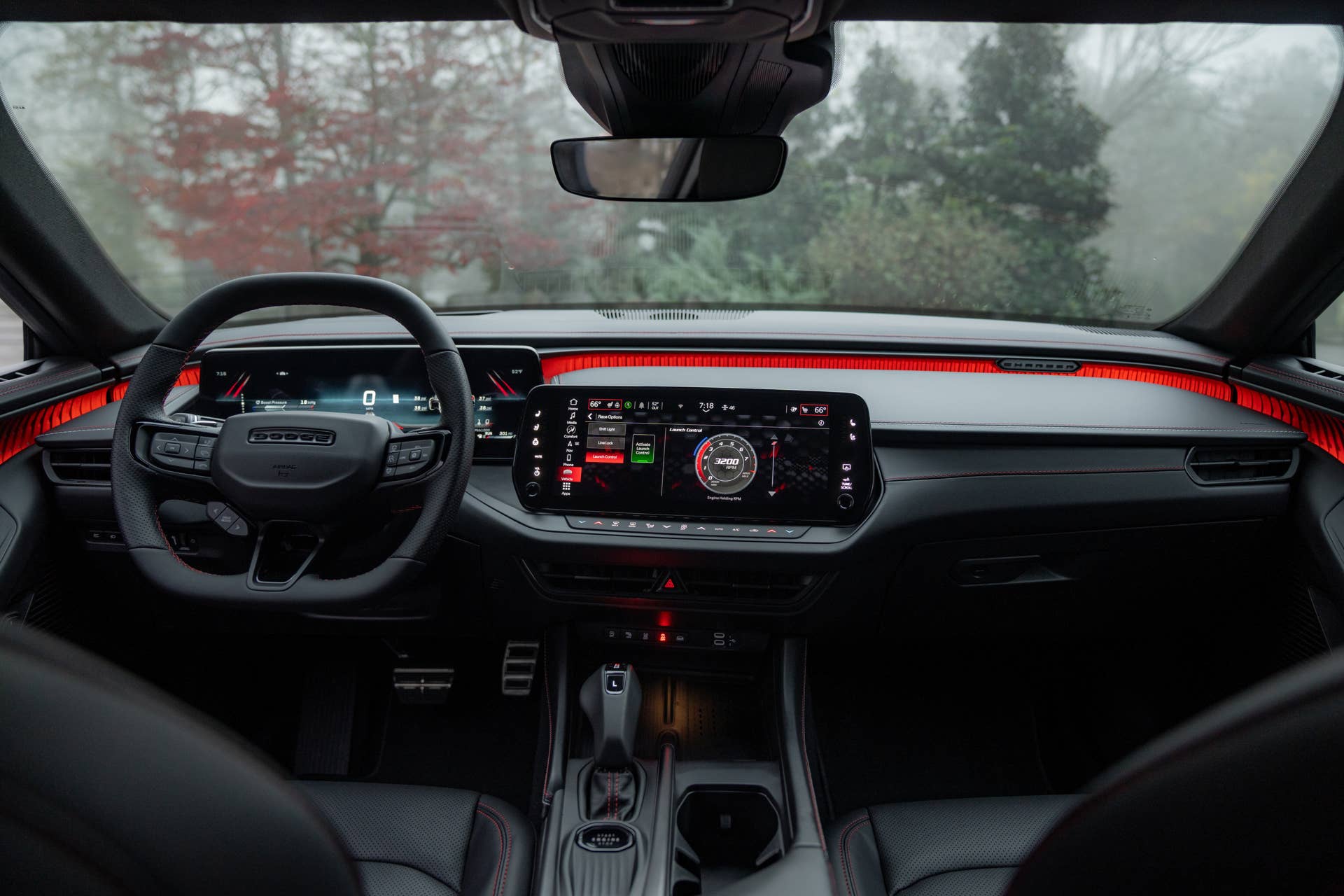
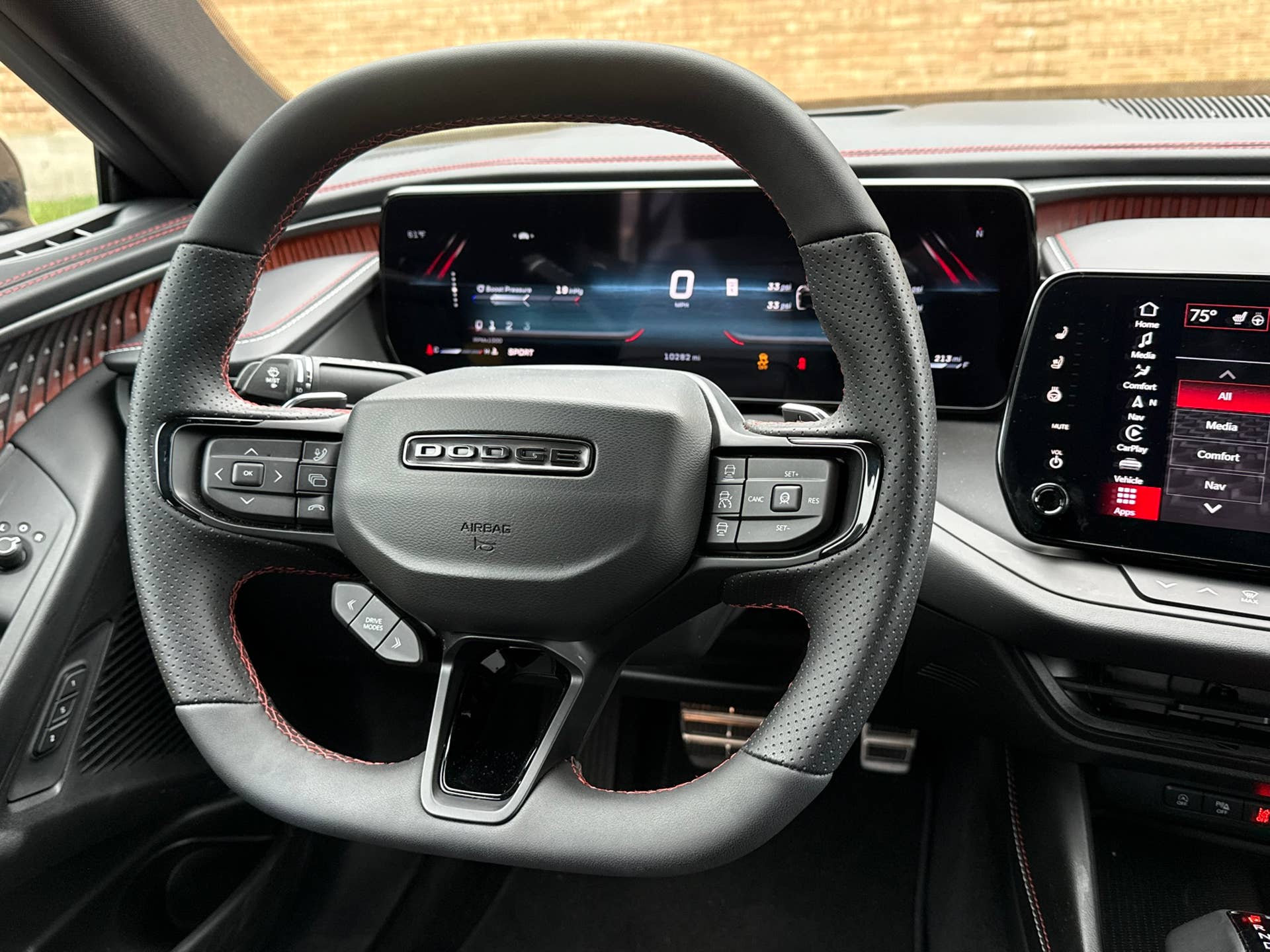
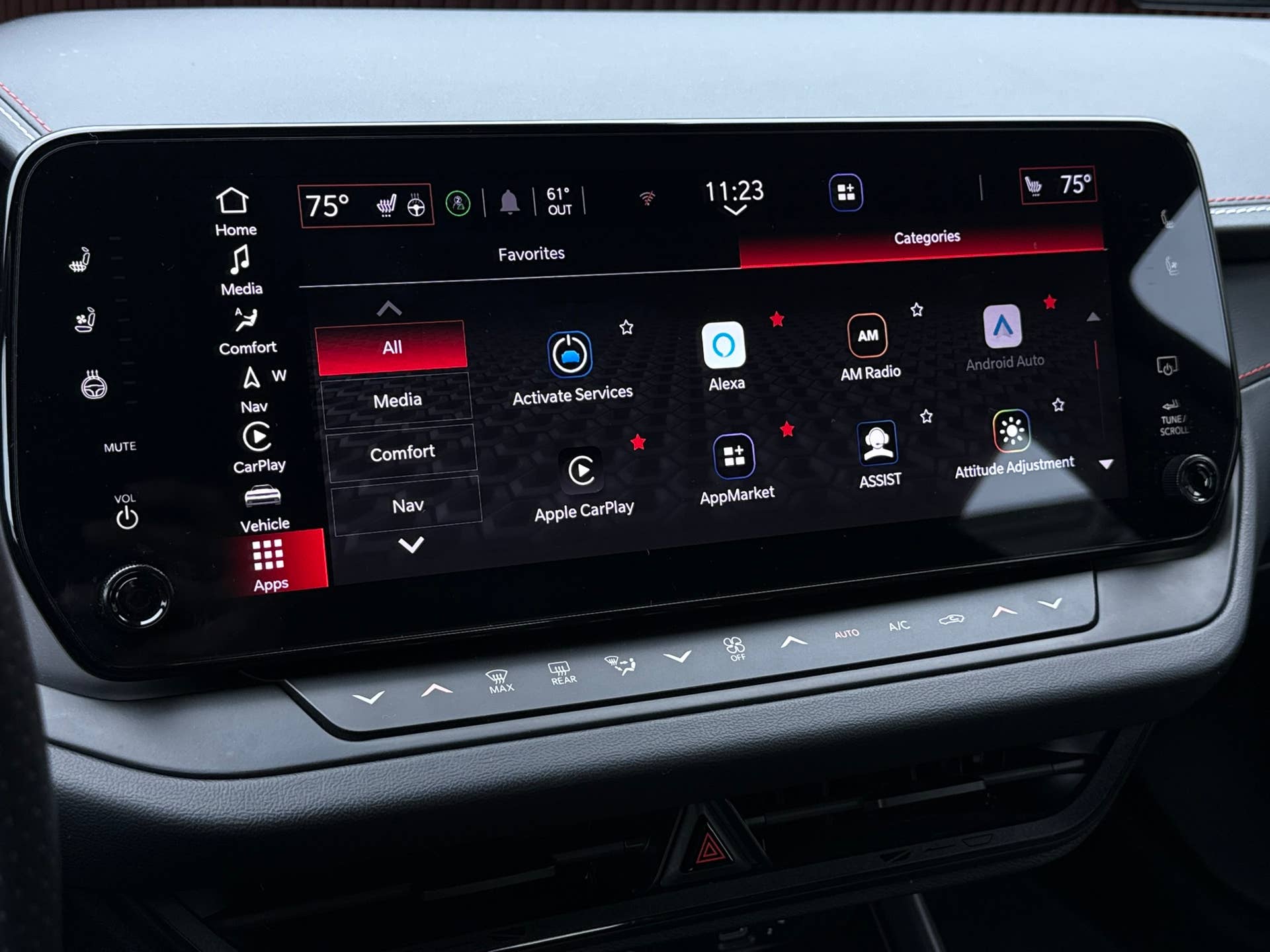
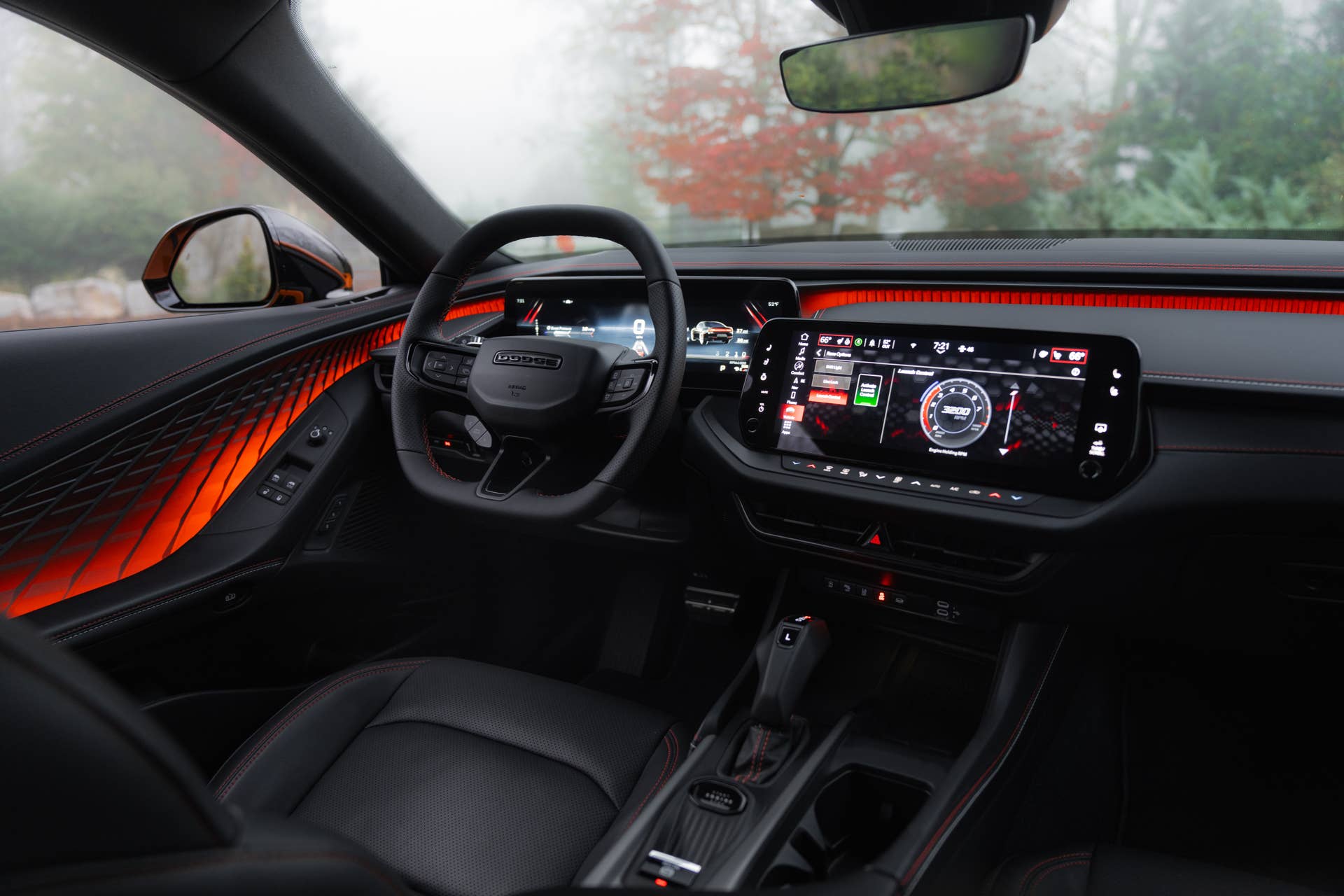
Even more than the exterior, the redesigned Charger receives a much-needed modernized cabin. Despite the preponderance of dark plastic, most everything is very well done and appropriate for a new generation of Charger. The broad, layered dashboard incorporates two large screens, which look better separated than the typical single frame setup that’s prevalent these days. The three-spoke squircle steering wheel is sporty and not overdone. I especially love the waterfall/grid trim that wraps around the dash and door. It uses sconce-like ambient illumination that’s configurable, and it looks especially stunning at night.

Amos Kwon

View the 4 images of this gallery on the original article

There is a lot of dark plastic inside, but it manages to be well made and doesn’t feel cheap. The almost total absence of piano black in the cabin should be applauded. The red stitching on the seats, dash, door, and steering wheel look great. There’s even some white stitching peppered in on the dash and door. The cabin is finally where it needed to be after the much bulkier and far less attractive version found in the last Charger.

Infotainment & Technology – 8.75/10

Amos Kwon

The Charger gets its tech right. It doesn’t overwhelm the cabin with a huge single frame number and doesn’t relegate climate and audio controls to the screen. The system isn’t massive like other vehicles, and it’s nice to have a setup that looks more driver focused due to the separation of the optional 16″ digital instrument cluster and the 12.3″ touchscreen. The UConnect 5’s vertical menu bar on the left is clean, but spacing is tight. It’s also easy to hit the wrong function at night because the physical audio knobs that flank the touchscreen aren’t illuminated.

Stellantis

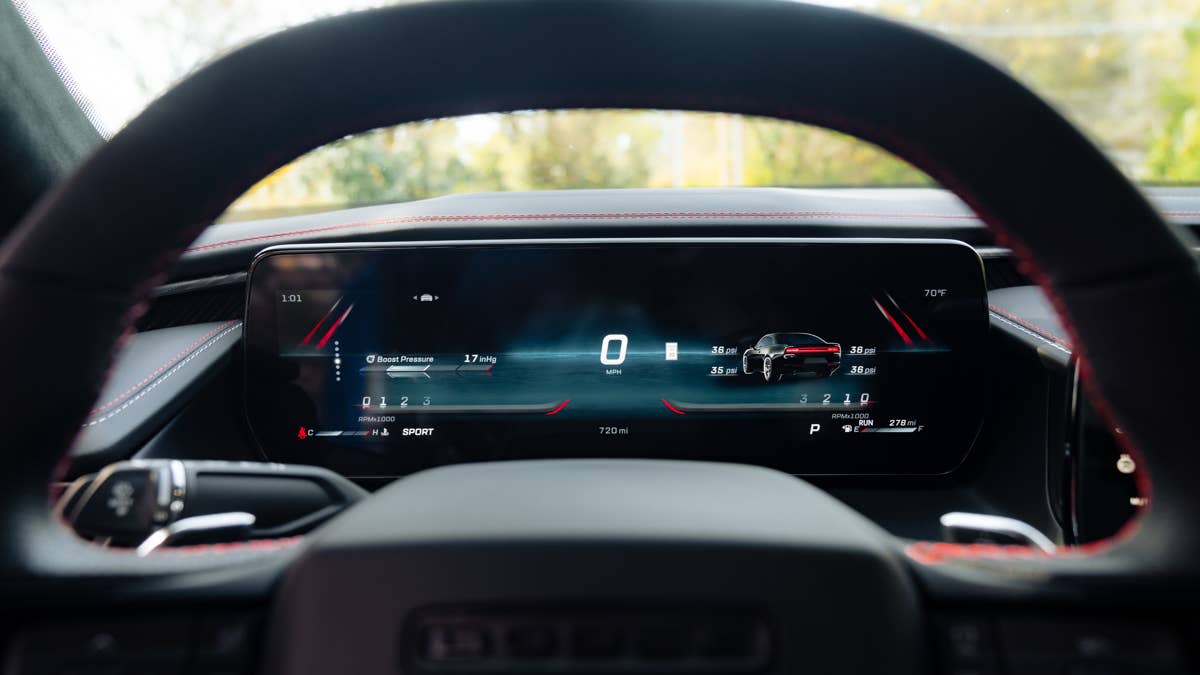
The larger upgraded 16″ instrument display is vivid and configurable. It’s easy to read and tossing up the data you want is quick using the steering wheel controls. There’s also a large wireless charging deck that had no problem connecting to my iPhone, even with a very thick case over it. Not every wireless charger I’ve come across has been able to do that.

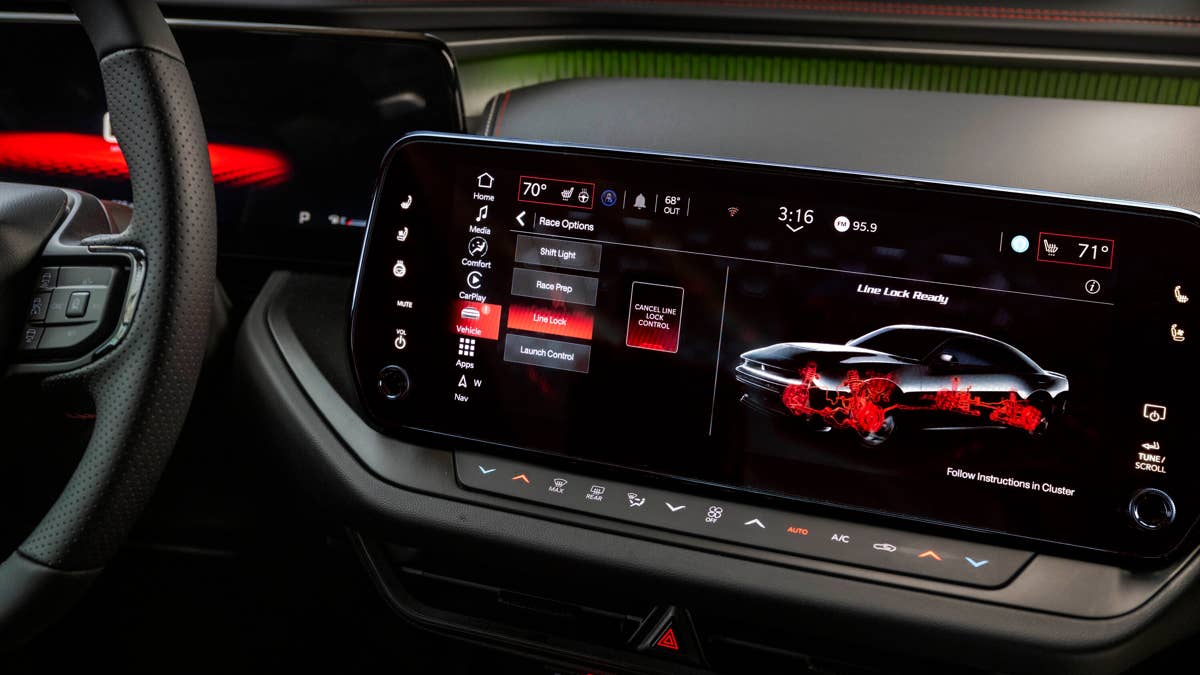
Other tech-focused features that came with the optional Customer Preferred Package included Performance Pages for track days, head-up display, surround-view camera, traffic sign information, integrated voice command. Standard safety features included Adaptive Cruise Control w/ Stop & Go, Active Driving Assist, and Full-Speed Forward Collision Warning Plus. The Line Lock feature comes with the High Output engine, allowing the Charger Scat Pack Plus to perform tire-smoking burnouts. Finally, the Charger Scat Pack Plus comes standard with a 9-speaker Alpine premium audio system with subwoofer.

Comfort, Space, and Usability – 9/10

Stellantis

The interior is quite comfortable, especially with the optional $1,150 Highback Performance Seat upgrade. The backrests are broad, and the cushioning and bolstering are just right. It took some time for me to get into the right seating position, but once that was achieved, visiblity was, for the most part, very good. The rearview mirror, however, is situated far too low and for someone my height (6′), the mirror was situated halfway down the windshield, (even with the cushion moved to its lowest positiong.

Touch points are properly soft, and the cabin feels airy compared to the nearly claustrophia-inducing interior of the last charger. Much of the bulk of the center console and center stack have been greatly reduced. The shift knob is interesting. Mimicking a mechanical shifter, this one is rather long and bulky. It responds well and feels good in the hand, but it also covers the phone charger when it’s in the Park position.

Amos Kwon

View the 4 images of this gallery on the original article

The Charger’s electronic door handles take some getting used to. Lexus has done this on some of their vehicles, but they come with a pull feature located on the same surface as the button. The Charger’s fail safe physical door handle is situated lower along the front upper edge of the door pocket above the cupholder section. I’m not sure why Dodge didn’t just give it a standard door handle.

The rear outboard seats are excellent, and even the middle position isn’t terrible. 37.2 inches of rear legroom means that tall adults have space. The sloping roofline doesn’t cut in too much and provides 36.9 inches of headroom. That’s but a smidge less than the current Honda Accord. In terms of cargo space, the liftback design allows for 22.8 cubic feet of cargo space behind the rear seats and 38 cubic feet with the rear seats folded down. Even with the seats up, that number eclipses every conventional sedan out there.

Driving Experience – 8.75/10

Amos Kwon

The 2026 Dodge Charger Scat Pack Plus’s upgraded engine trades Hemi thunder for twin-turbo punch, and its high-output 3.0-liter inline-six doesn’t feel or sound like much of a compromise. It’s properly loud (even in Auto drive mode) and powerful wth 550 horsepower and 531 lb-ft of torque. Getting on the gas doesn’t deliver immediate thrust, but once it gets going, the Charger delivers smooth and authoritative acceleration via all four wheels, a boon for Windy City winter drivers.

Stellantis

The Charger Scat Pack Plus Sixpack will do the 0-60 sprint in just 3.9 seconds. That’s Hemi-engine quick, despite the substantial weight increase. Handling is predictable and not unwieldy, though. The transmission isn’t super-quick to downshift, making it feel less lively under spirited driving. Grip and balance are good; the steering has good effort with pleasing feedback, but the Charger handling can’t escape its heft and size. Initial brake bite is a little soft, but it’s progressive and predictable after that.

Final Verdict – 8.9/10

The important thing to remember here is that the gas Charger muscle car is back. It may be down two cylinders, but it doesn’t have to make any excuses for it. The high output Hurricane engine is muscle-car goodness, and it delivers the sound and the fury. The Charger Scat Pack Plus is properly powerful, boisterous, and entertaining to drive. We’re just glad that Stellantis/Dodge admitted its mistake in eliminating gas from its Challenger. It’s also roomier, more user-friendly, and more comfortable. The all-wheel drive traction makes this a muscle car that can do family duties in winter, and that makes it even more attactive.

Daily Driving a 2026 Toyota Tundra TRD Pro in L.A. Traffic

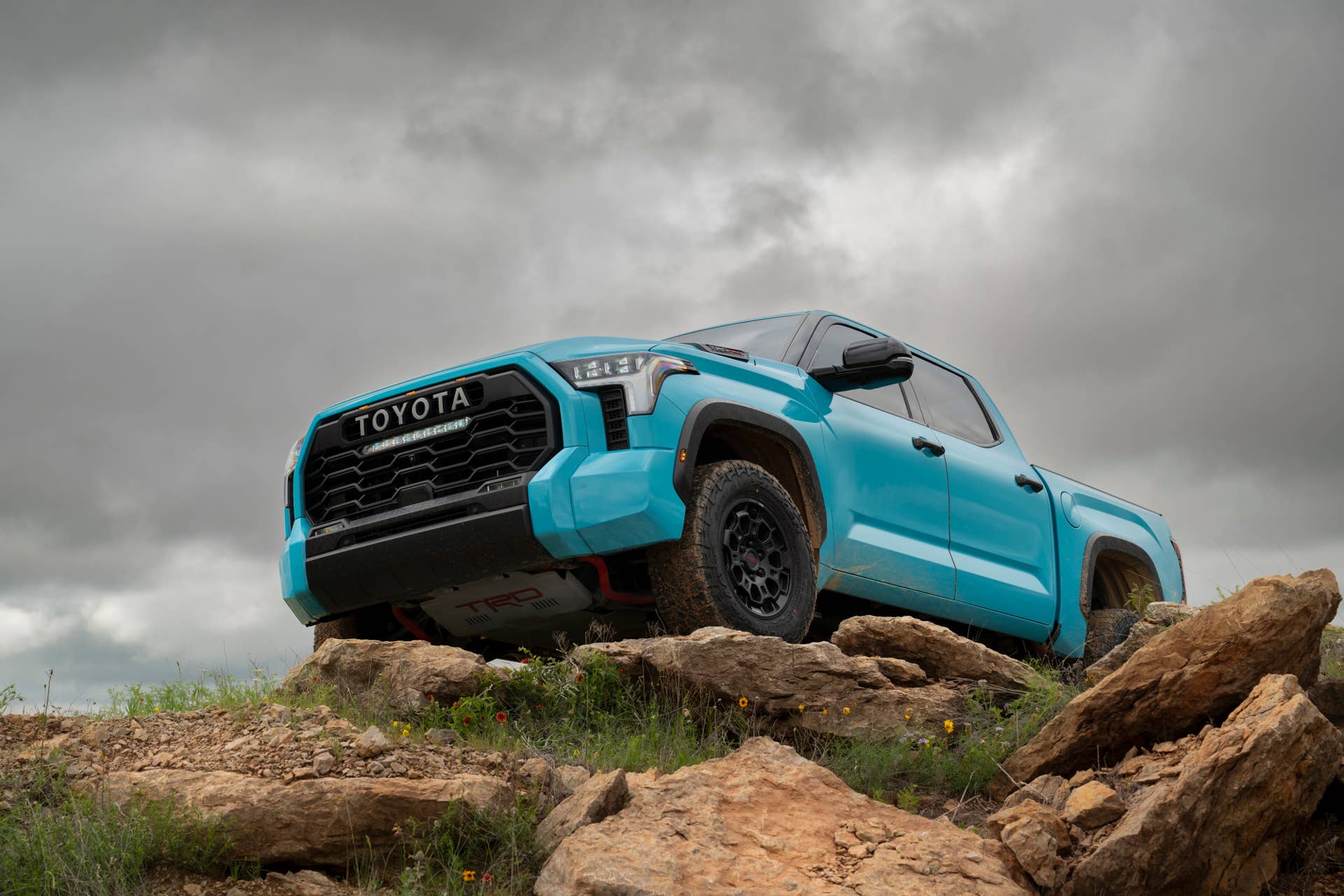
I fully admit to being a slow convert to the modern Toyota Tundra. I was a dyed-in-the-wool V8 lover, and the previous truck’s reputation for durability gave me plenty of reasons to remain stubborn. When engine recalls began affecting certain twin-turbo V6 Tundras, plenty of smug V8 enthusiasts took a victory lap. Unfortunately for my own smugness, that was about the time I started appreciating the newer truck’s power, capability and driving manners.

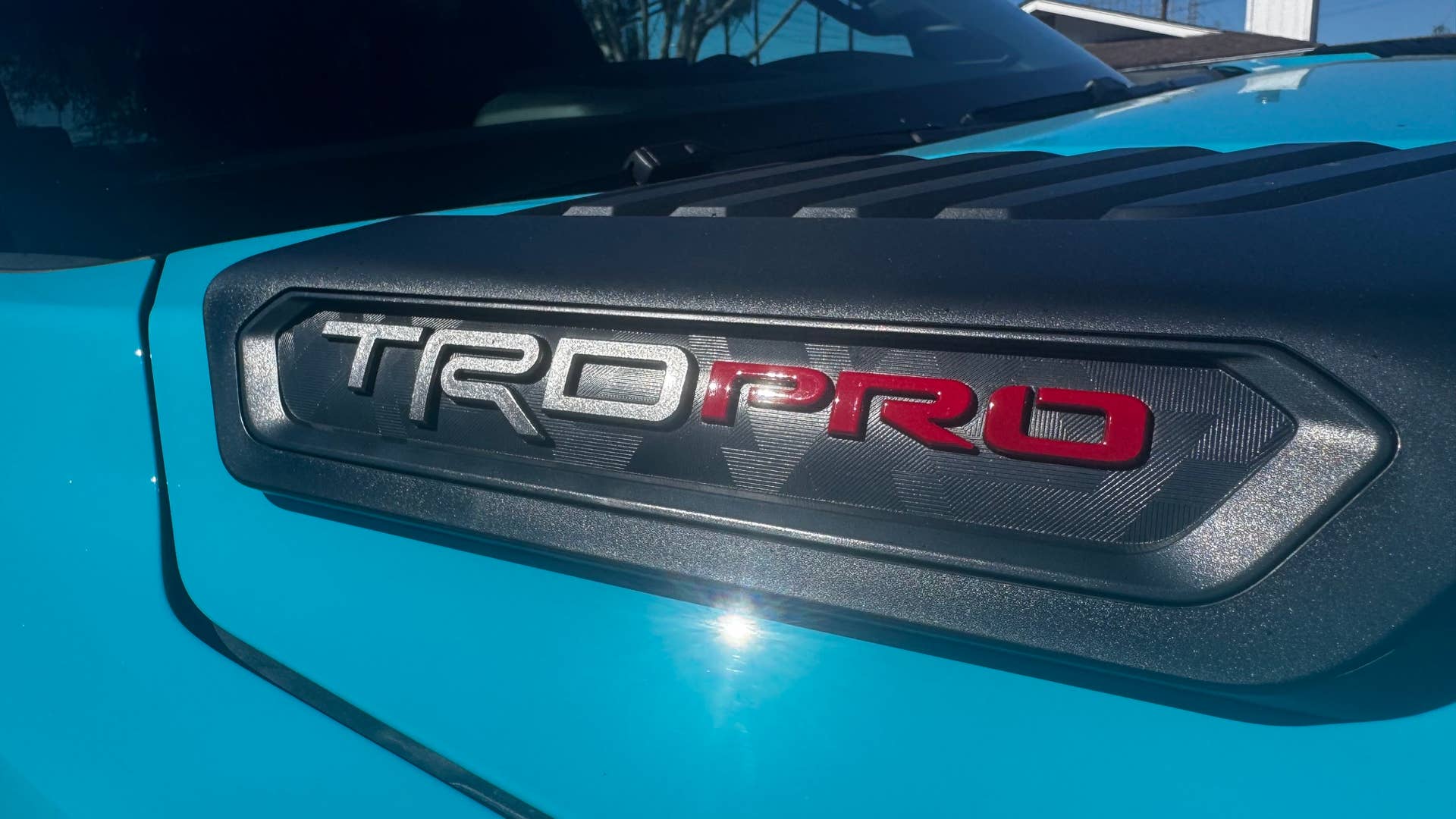
Recently, I had the opportunity to use a 2026 Toyota Tundra TRD Pro as my daily driver in Los Angeles. That’s the equivalent of driving a hippopotamus in a world of capybaras. It’s big, remarkably athletic and surprisingly comfortable. Toyota has refined this truck since my earliest encounters with the i-FORCE MAX powertrain, and the results are impressive. There are still things I would change, but this particular hippo has learned some excellent moves.

Toyota

View the 1 images of this gallery on the original article

Powertrain and performance

The TRD Pro comes standard with Toyota’s i-FORCE MAX hybrid system, combining a twin-turbocharged V6 with an electric motor positioned between the engine and ten-speed automatic transmission. The V6 displaces 3,445 cubic centimeters, commonly described as 3.4 liters, although Toyota has also marketed it as a 3.5-liter engine. Combined output is 437 horsepower and 583 pound-feet of torque.

That’s a lot of shove, and the electric motor helps provide immediate response while the turbos get to work. Put your foot down, and this substantial pickup moves with considerably more enthusiasm than its size suggests. It’s stupid fast for something that can carry your family, tow a trailer and transport enough landscaping material to ruin an entire weekend.

Maximum towing capacity is approximately 11,175 pounds, while maximum payload is around 1,600 pounds. The towing number is useful, but payload deserves attention. Passengers, cargo, accessories and trailer tongue weight all count toward that allowance. A powerful engine doesn’t give you permission to ignore the sticker on the doorjamb.

The 32.2-gallon fuel tank helps with driving range, although this is a performance-oriented full-size pickup rather than a Prius with a bed. Toyota lists fuel economy at 18 mpg city and 20 highway. I averaged closer to 17 mpg. Considering the truck’s size, tires and my occasional inability to leave the accelerator alone, that didn’t surprise me.

View the 2 images of this gallery on the original article

Driving a TRD Pro through Los Angeles

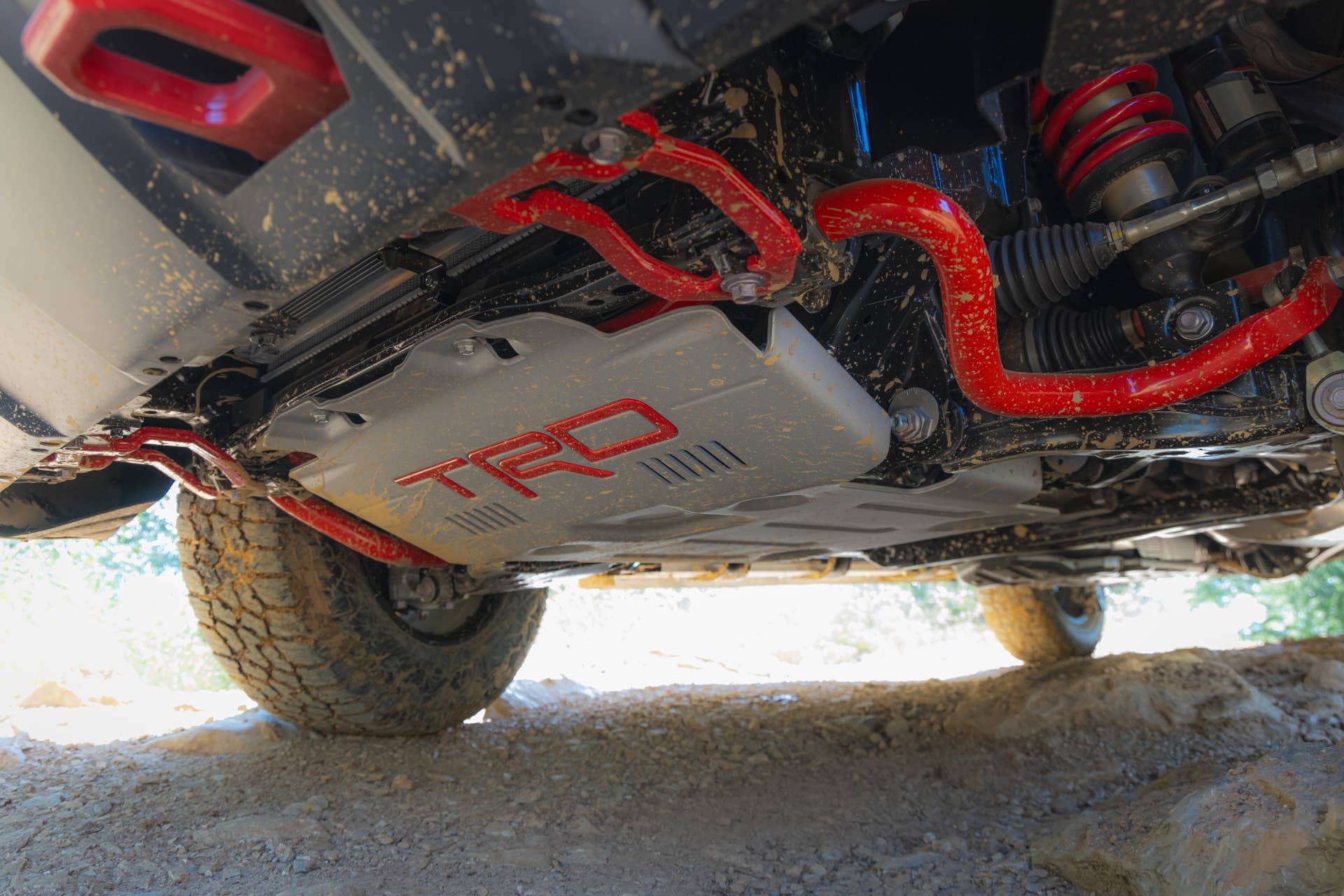
What makes this truck compelling is its balance between ride comfort and body control. The TRD Pro has a 1.1-inch front suspension lift, so it doesn’t feel dramatically taller than a regular Tundra. Its 2.5-inch FOX internal-bypass shocks, including rear piggyback reservoirs, help absorb broken pavement and the everyday obstacles Los Angeles generously provides.

The 18-inch matte-black BBS forged-aluminum wheels look excellent, and the approximately 33-inch Falken Wildpeak all-terrain tires are a sensible choice. Personally, I would like 35s, partly for capability and partly because I apparently haven’t finished being twelve. Still, larger tires bring compromises, and the factory setup works well on the street.

The truck settles into a comfortable rhythm when you ease off the accelerator. It feels composed, handles its mass respectably and takes the sting out of rough roads. I still prefer the overall driving character of the Ram RHO, but the Toyota has become a more persuasive daily companion than I initially expected.

There is also some artificial engine sound in the mix. It gives the V6 a burly soundtrack, but I’m aware that some of the performance is coming from the speakers. I appreciate the enthusiasm. I just prefer my exhaust notes to come from the exhaust.

Toyota

View the 3 images of this gallery on the original article

Off-road hardware and the competition

The TRD Pro includes four-wheel drive, an electronically locking rear differential and dedicated trail technology, including Multi-Terrain Select and Crawl Control. The suspension and tires give it meaningful capability beyond the appearance package, even though my time with this particular truck focused on daily driving.

The Ford F-150 Raptor and Ram RHO are obvious vehicles to consider, but they aren’t its only rivals. Chevrolet’s Silverado ZR2 and GMC’s Sierra AT4X also belong in the conversation. Forced induction isn’t what defines an off-road pickup; the chassis, tires, traction systems and intended use matter considerably more.

Related: Ford’s $30,000 Fathom Electric Truck Is Taking Names, Not Orders

The Toyota doesn’t duplicate the long-travel, high-speed desert-running mission of a Raptor or RHO. Its appeal is the compromise: substantial off-road equipment combined with everyday comfort and conventional pickup usefulness. For buyers whose adventures involve trails rather than treating every weekend like a qualifying session, that makes sense.

View the 3 images of this gallery on the original article

Exterior and interior design

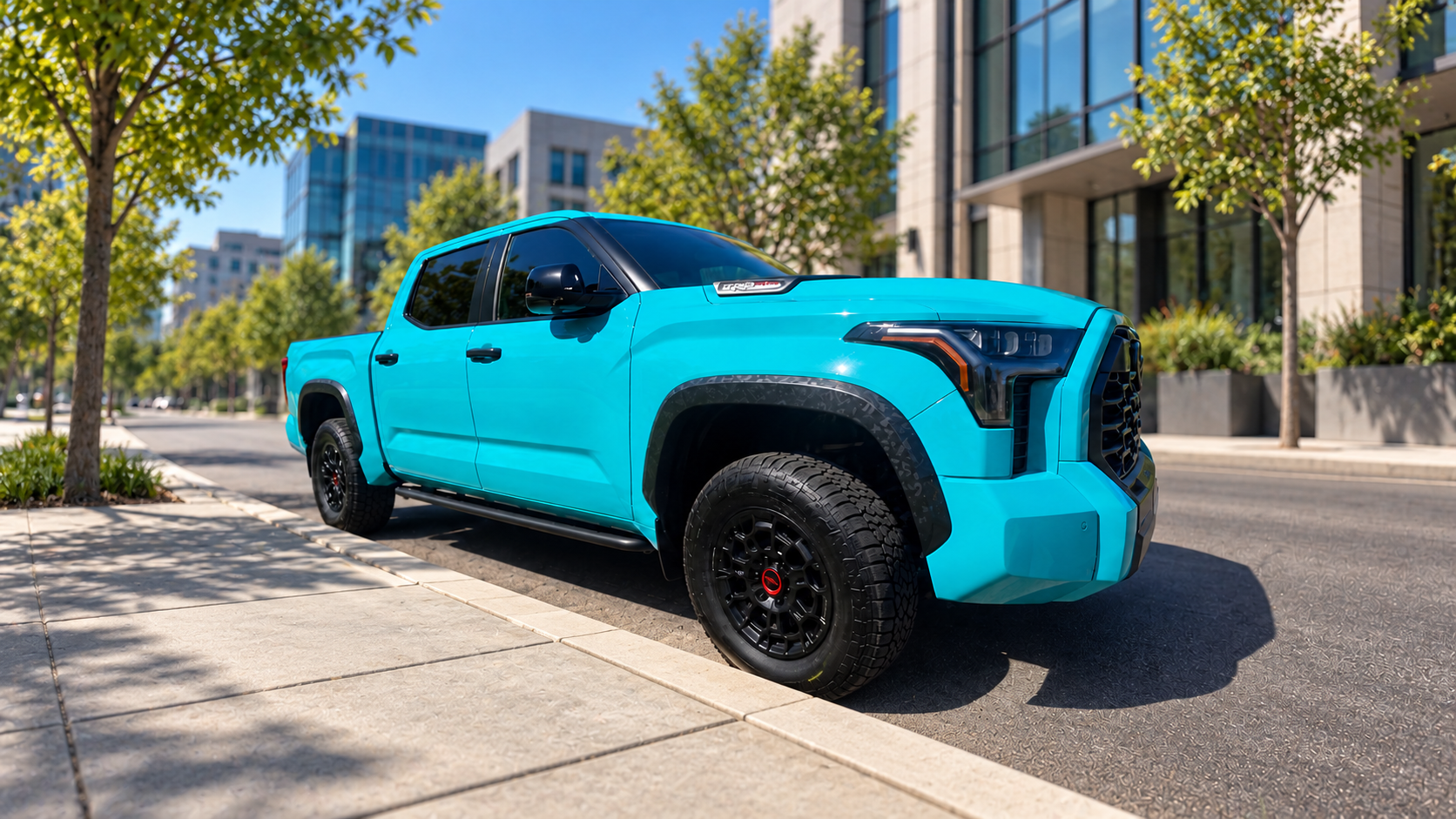
My tester wore Wave Maker, the TRD Pro-exclusive blue offered across several Toyota models for 2026. It’s a fantastic color, and I suspect you could identify the truck from low Earth orbit. Against the Tundra’s squared-off bodywork, black trim and heritage-inspired TOYOTA grille, it gives this enormous pickup a surprisingly playful personality.

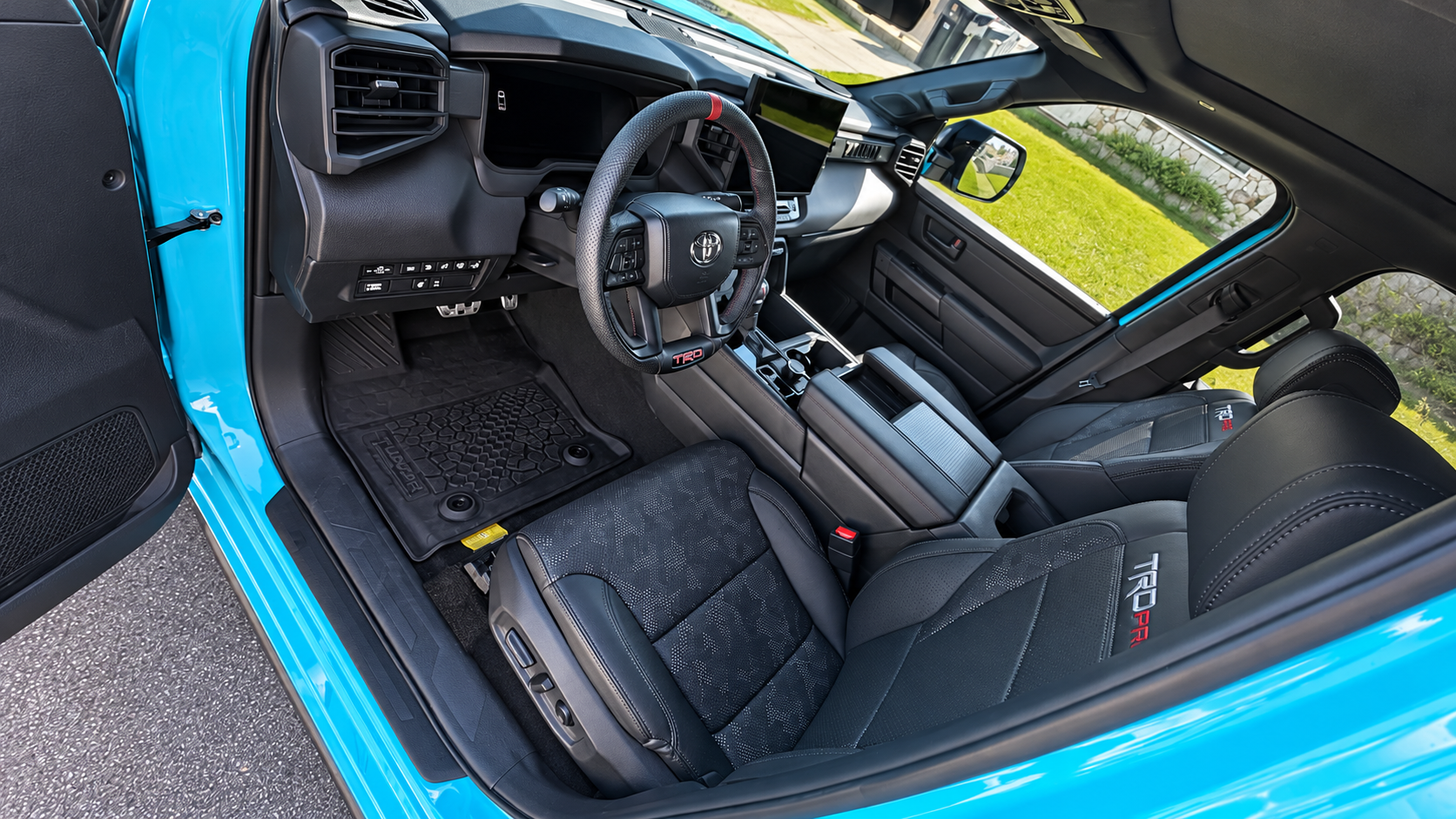
Inside, a 14-inch central touchscreen and 12.3-inch digital instrument cluster provide plenty of information. I’m still not entirely sold on Toyota’s multimedia interface, and I would prefer more physical shortcuts for certain functions. Fortunately, the large volume knob and substantial climate controls remain easy to operate.

View the 3 images of this gallery on the original article

The integrated grille-mounted LED light bar has its own switch and operates with the high beams under the appropriate conditions. It’s useful equipment, although learning its operating requirements takes a moment. The rest of the cabin is generally straightforward, with comfortable seating and ample room for passengers.

Some people have complained about a firm spot in the seat cushion. My large American backside did not register a formal objection. That’s hardly a laboratory finding, but it counts for something.

Toyota

Final thoughts

Toyota’s engine recalls remain relevant to any discussion of this generation’s Tundra. Certain earlier non-hybrid trucks have been recalled over machining debris that could cause bearing damage and engine failure. Toyota has described manufacturing changes and an improved bearing, but a pleasant week with a newer hybrid truck cannot establish long-term reliability. I can appreciate how this Tundra drives without declaring the entire issue ancient history.

Related: Rivian Vs. Tesla Safety: Crash Tests Reveal a Surprising Divide

The 2026 TRD Pro starts at $72,565 before delivery, taxes and extras. Add equipment and accessories, and the total can move toward or beyond $80,000. I wouldn’t call that cheap, and it doesn’t automatically undercut every rival. Still, the standard hybrid powertrain, suspension hardware and comfortable cabin make a credible case for the money.

Most owners will drive these trucks daily and venture off-road occasionally. For that balance, the Tundra TRD Pro is an excellent fit. I still miss the old V8, but this truck has made it considerably harder to complain about its replacement.

The hippo has won me over. Now I just need a parking space large enough to accommodate it.

Related: Toyota GR Corolla vs. Subaru WRX: Which Rally-Inspired AWD Machine Deserves Your Money?

Toyota GR Corolla vs. Subaru WRX: Which Rally-Inspired AWD Machine Deserves Your Money?

You don’t have to be a rally enthusiast to love the 2026 Subaru WRX or Toyota GR Corolla, but it probably helps. Both are brawny, turbocharged machines with advanced all-wheel-drive systems and available manual transmissions. Thank goodness. They also retain enough everyday practicality to handle commuting, groceries and the occasional passenger who would prefer that you stop demonstrating the cornering grip.

Carvana

View the 2 images of this gallery on the original article

Their muscular bodywork suggests an overdose of testosterone, and neither is shy about its intentions. Yet these are very different interpretations of the affordable performance car. The WRX has matured into a surprisingly accommodating sports sedan. The GR Corolla behaves like an angry little hatchback that has been told recess is canceled.

Both approaches have merit. Your preference may depend on how much excitement you want during the drive home and how much your back is willing to tolerate.

View the 2 images of this gallery on the original article

Powertrains and performance

The WRX uses a 2.4-liter direct-injected, turbocharged flat-four engine producing 271 horsepower and 258 pound-feet of torque. Subaru’s familiar boxer layout places the cylinders horizontally opposite one another, and standard Symmetrical All-Wheel Drive supplies the traction. It’s a generous amount of performance for a sedan that starts at $32,495 before destination and fees. That price makes it the clear entry-level value leader in this comparison.

A six-speed manual is standard on most trims, while Subaru’s Performance Transmission is available on the Limited and standard on the GT. Despite the sporty name and simulated shifts, it remains a CVT. I’m not generally a fan of those transmissions, but this one does a convincing job of responding to enthusiastic driving. The manual provides more involvement, although its shift action can feel a little ropey.

Acceleration lands around the mid-five-second range to 60 mph, depending on configuration and testing conditions. Fuel economy is rated at up to 19 mpg city and 26 highway with the manual, versus 18 city and 25 highway with the CVT. Neither is a fuel-sipping economy car anymore, but those figures are manageable for an AWD performance machine.

Subaru

View the 2 images of this gallery on the original article

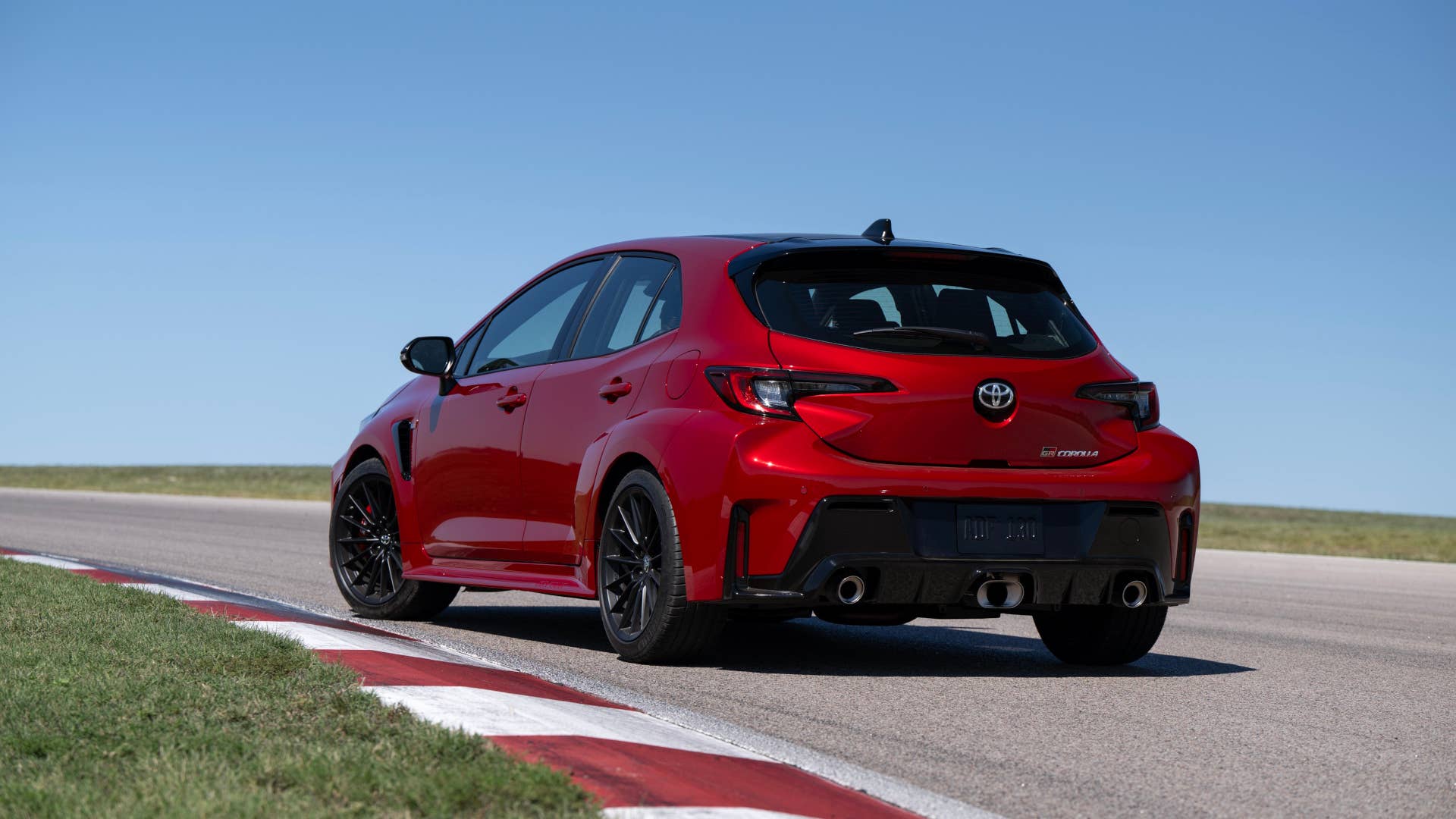
The GR Corolla takes a different route. Its 1.6-liter turbocharged inline-three produces 300 horsepower and 295 pound-feet of torque. That’s 29 more horsepower and 37 additional pound-feet from an engine with one fewer cylinder. It sounds slightly ridiculous on paper. In person, the angry little engine makes a persuasive argument for the arrangement.

Toyota offers a six-speed manual with automatic rev matching or an eight-speed conventional automatic. Both work with the GR-FOUR AWD system and standard front and rear Torsen limited-slip differentials. That hardware is a major part of the Toyota’s appeal, giving it more than a power advantage to justify its higher price.

Normal mode uses a 60:40 front-to-rear torque distribution, Gravel selects 50:50, and Track mode can vary distribution from 60:40 to 30:70 according to driver inputs and conditions. You aren’t simply locking it into rear-wheel drive by turning a dial, but the system provides useful flexibility when deploying the power.

The GR Corolla’s acceleration falls around the five-second neighborhood, with transmission and testing conditions affecting the result. Fuel economy favors the Toyota, with published estimates of 21 mpg city and 28 highway for the manual, or 19 city and 27 highway for the automatic.

Toyota

View the 2 images of this gallery on the original article

Driving both

I have friends who own modern manual-transmission WRXs and a cousin who had a CVT-equipped example. Both setups work well for commuting. Older WRXs could feel rough around the edges, but the current car is considerably more civilized. At an ordinary pace, it’s mild-mannered enough that you could almost forget what the hood scoop is suggesting.

Start accelerating harder, and the personality changes. The engine becomes more insistent, the chassis responds, and the car reminds you that Subaru hasn’t completely misplaced its rally interests. What impresses me is how well it balances that enthusiasm with everyday comfort. It feels more adult than earlier examples without becoming dull.

Related: Aston Martin Vantage S Roadster vs. Mercedes-Maybach SL 680: Posh, Potent and Worlds Apart

I would like more steering feedback. It’s accurate enough, but the communication could be better. Still, the overall ride-and-handling combination is excellent. In terms of its more polished demeanor, I can understand comparing it with a Volkswagen Golf R, even though the body styles differ.

The Toyota is a different experience entirely. It’s loud, brash and constantly reminds you that it would rather be doing something interesting. You can’t fully dial out its sporting intentions, and that’s true with either transmission. It’s always tugging at the leash.

For this audience, that roughness is part of the attraction. The GR Corolla recalls what made hot hatches special: a practical shape wrapped around a car that rewards involvement. It changes direction eagerly and makes an ordinary corner feel like an opportunity. The WRX is entertaining; the Toyota seems personally offended when you aren’t entertaining yourself.

View the 4 images of this gallery on the original article

Interior, technology and practicality

The Subaru gives passengers more room and provides the more comfortable overall environment. If you regularly carry adults in the back seat, that matters. If you have a stiff back or a bladder that has become unusually interested in road surfaces, the WRX is probably the friendlier companion.

The Toyota counters with a hatchback opening that makes loading bulky items easier. That flexibility doesn’t automatically mean more passenger comfort, though. I appreciate its utility, but I wouldn’t confuse the GR Corolla with the more relaxed commuter in this pairing.

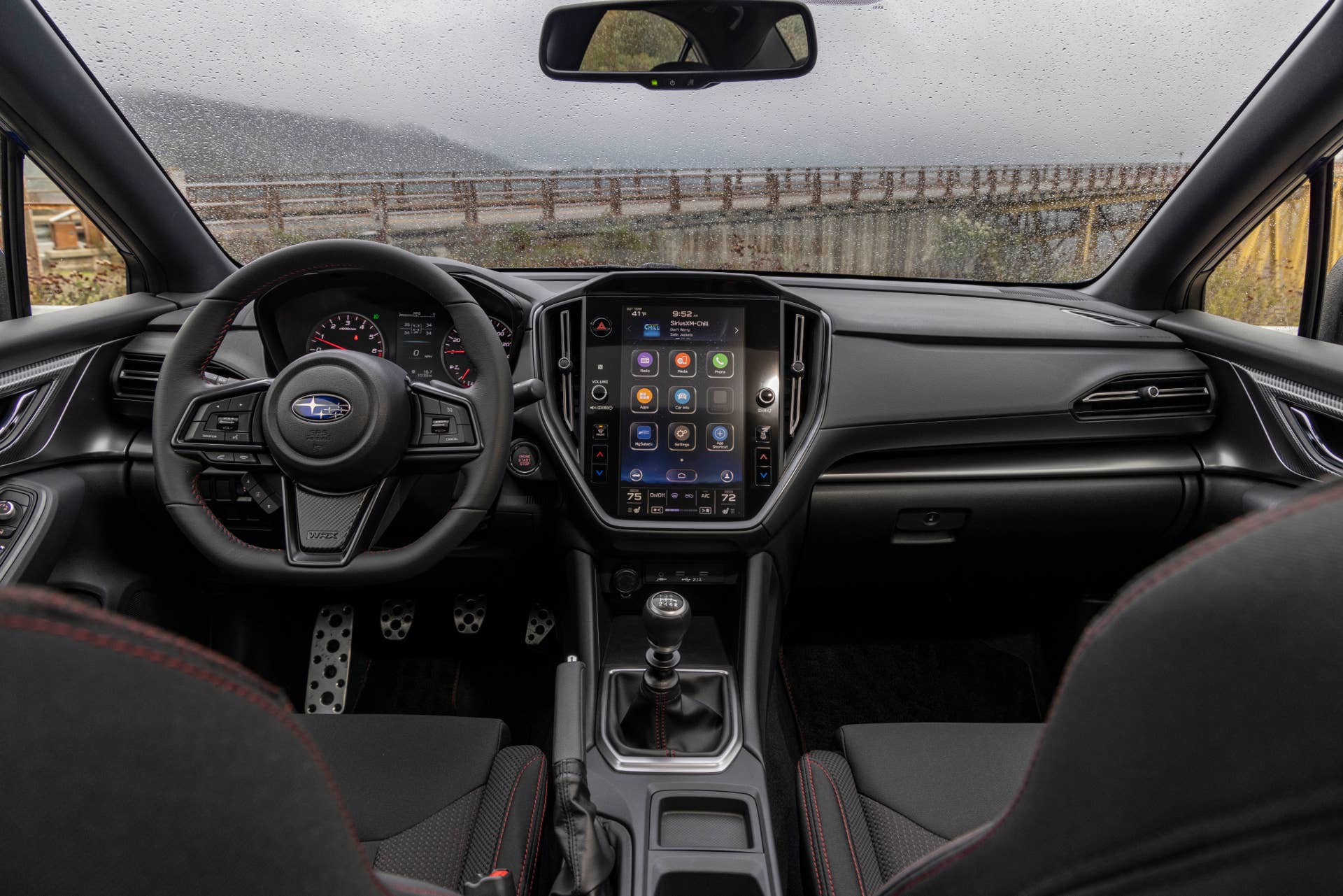
Subaru’s 2026 lineup includes an 11.6-inch touchscreen with wireless Apple CarPlay and Android Auto. Toyota pairs an 8-inch multimedia touchscreen with a 12.3-inch digital instrument cluster and wireless smartphone connectivity. Both offer modern driver assistance, so choosing a manual doesn’t mean abandoning the conveniences buyers now expect.

Toyota

View the 2 images of this gallery on the original article

Final thoughts

The WRX’s $32,495 base MSRP is compelling, although destination takes the delivered starting price above $33,000. The performance-focused tS starts at $44,995 before destination and adds STI-tuned electronically adjustable dampers, Brembo brakes and Recaro seats. It’s a serious upgrade in chassis equipment, rather than an excuse to add another badge.

Toyota currently lists the manual GR Corolla from $40,520 before delivery, with the automatic starting at $42,520. The specialized GRMN Corolla reaches $64,360 before delivery, putting it in a very different financial conversation. That limited-production model deserves its own evaluation rather than being treated as a typical GR Corolla purchase.

Related: 3 Cars That Were Too Good For Their Own Good

For value, comfort and everyday versatility, I would steer most buyers toward the WRX. For the person who prioritizes driving entertainment and wants something that feels special every time it starts, the GR Corolla makes a stronger emotional argument.

They are road cars with rally-inspired character, and both can turn a mundane commute into something worth anticipating. We’re lucky they’re still being built.

I’d take the little animal. My back may wish for my (much) younger self.

Related: BMW X5 Vs. Audi Q7 Sales: It’s Not Even Close

I Drove The 2026 Ford Bronco Sport Big Bend: Here’s My Honest Review Of Ford’s Baby Bronco For Everyday Adventures

You may not recall it so vividly, but what now feels like a painful eternity ago, the Ford Escape wasn’t the soft, generic-looking, lozenge-shaped crossover we know today. Through its first two generations, Ford marketed the Escape as a rugged, boxy SUV that could tackle “everywhere from urban fast lane to rugged backcountry,” and as early as 2005, you could even get it with hybrid power. The Escape was a real success for Ford, but for the 2013 model year, the automaker merged the Escape and the European-market Kuga, giving the traditionally American-shaped SUV a more rounded, foreign-import look. The bold decision paid off initially, and the model began selling better than ever. That was, however, until 2020, when the far-less-rugged Escape’s sales began to slip to levels lower than the model’s first two generations had normally seen.

That very same year, Ford debuted the Bronco Sport. Advertised as but a bite-sized taste of the real-deal Bronco, keener eyes may have noticed that, despite the clever branding, Ford was effectively selling the original-recipe Escape alongside the new-and-improved, European-inspired variant under the “Bronco Sport” guise, only with modernized equipment and powertrains. Shortly thereafter, Bronco Sport sales began to outpace Escape sales, leading Ford to eventually discontinue the longstanding nameplate altogether in late 2025. Whether it comes down to the automaker’s clever marketing strategy that piggybacks plenty of hype from the actual Bronco, or to buyers’ tastes for crossovers increasingly shifting toward older-school rugged authenticity, there was no denying Ford hit the nail on the head here from a product planning perspective before I had even stepped into the driver’s seat.

When Ford handed me the keys to the 2026 Bronco Sport Big Bend for a week, my task, then, seemed pretty simple: determine how well the Bronco Sport lives up to its old-school Ford Escape spirituality, how much “Bronco” disappears with the added “Sport” qualifier, how well it still stacks up as a contemporary, well-rounded crossover for the modern audience despite all of its retro appeal, and, plainly, how much I enjoyed driving and spending time with it. In the end, the Bronco Sport checked a lot of boxes and genuinely impressed me, but it still had a few drawbacks worth considering.

2026 Ford Bronco Sport Big Bend

Cole Attisha

2026 Ford Bronco Sport Big Bend

Specification

Engine

1.5-liter turbocharged three-cylinder EcoBoost

Horsepower

180 hp

Torque

200 lb-ft

Transmission

Eight-speed automatic

Drivetrain

Standard 4×4

Seating

Five

Cargo capacity

32.5 cu. ft. behind rear seats; 65.2 cu. ft. with rear seats folded

Maximum towing

2,200 lbs. with Class II Trailer Tow Package

Infotainment

13.2-inch SYNC 4 touchscreen; wireless Apple CarPlay and Android Auto

Exterior color

Carbonized Grey

Interior

Bronze Fire premium trim

Wheels

17-inch Sinister Bronze-painted aluminum

Main packages

Black Diamond Off-Road; Bronze + Black Diamond; Convenience

U.S. starting MSRP

$31,845, excluding destination and taxes

Canadian base price on tester’s sticker

C$39,245, excluding delivery and options

Canadian price as tested

C$50,665, including delivery and package credit; before sales tax

Published U.S. EPA fuel economy

25 city / 30 highway / 27 combined mpg

Canadian sticker fuel consumption

9.3 city / 7.8 highway / 8.6 combined L/100 km

I tested the Canadian-market 2026 Ford Bronco Sport Big Bend for a week in western British Columbia, covering under 1,000 kilometers in fair weather with some occasional light rain, across city driving, highway jaunts, winding coastal roads, and light trail driving.

Thinking about selling your car? Get an instant cash offer online now. Click here to get started.

2026 Ford Bronco Sport Big Bend

Cole Attisha

Powertrain And Driving: Zippy On The Highway, Grippy On The Trail — 8.5/10

The 2026 Bronco Sport offers two powertrains: a 1.5-liter EcoBoost inline-three, or a 2.0-liter EcoBoost inline-four. This one had the former, and despite seeming like the relatively gutless base engine option on paper—not to mention comically low on cylinder count—it was surprisingly fun to drive. Because almost everything else in its segment packs a four-cylinder punch, the Sport’s boosted three-cylinder has its own distinctive character, with a raspy engine note further aided by audible, whooshy turbo noises. Pair that with the fact that the Bronco Sport skips the segment-standard CVT for a more conventional 8-speed automatic, and stepping on the throttle becomes quite an enjoyable experience for a vehicle that plays in the same sandbox as the Nissan Rogue and the Subaru Forester.

With up to 180 horsepower and 200 lb-ft of torque on tap, the Bronco Sport not only makes many of its other non-hybrid rivals feel slouchy by comparison, but it can also trade that zippiness for calm, quiet smoothness at the turn of a dial. Sifting through the various G.O.A.T. (Goes Over Any Terrain) modes can be a hassle, but choosing the right setting for the conditions can make a palpable difference. Whereas Sport mode makes it feel tighter and more responsive on coastal highways and mountain roads, Eco mode can just as easily take the wind out of its proverbial sails in the city, offering a soft, relaxed experience that favors higher gears and leans more on the turbocharger for thrust. Slippery and Off-Road modes are also included, letting drivers change the SUV’s personality on the fly to suit the many types of driving the Bronco Sport is built to handle. During the week I had it, I averaged 11.0 L/100 km after a pretty even mix of city and highway driving, with a brief bit of light trail driving. That’s roughly 21.4 mpg in U.S. fuel economy terms, which, in my opinion, is merely adequate for something this size, this rugged, and this fun to drive.

My only real concern regarding the powertrain is its long-term durability, or potential lack thereof. Although the 1.5-liter EcoBoost engine’s main camshaft timing is chain-driven, Ford drives the oil pump with an oil-bathed wet belt, treating it as a component designed to last the vehicle’s “lifetime” rather than be routinely maintained. My concern is that if anything goes wrong with the oil pump down the line, repairing it would be incredibly time- and labor-intensive. That said, after more research and digging through forum posts, owners generally report solid durability from these motors, though its 1.0-liter ancestor was not as well regarded. So while the wet belt is worth keeping in mind if you plan to own one long term, it doesn’t seem worth breaking a deal over. As for driving dynamics, the Bronco Sport impressed in most ways, except for ride quality, which is quite firm and can be a bit rough on the spine over harsh pavement, but it’s a predictable trade-off for its more-capable-than-most adventure-readiness.

2026 Ford Bronco Sport Big Bend

Cole Attisha

Technology: All You Need, No Added Fluff — 9.0/10

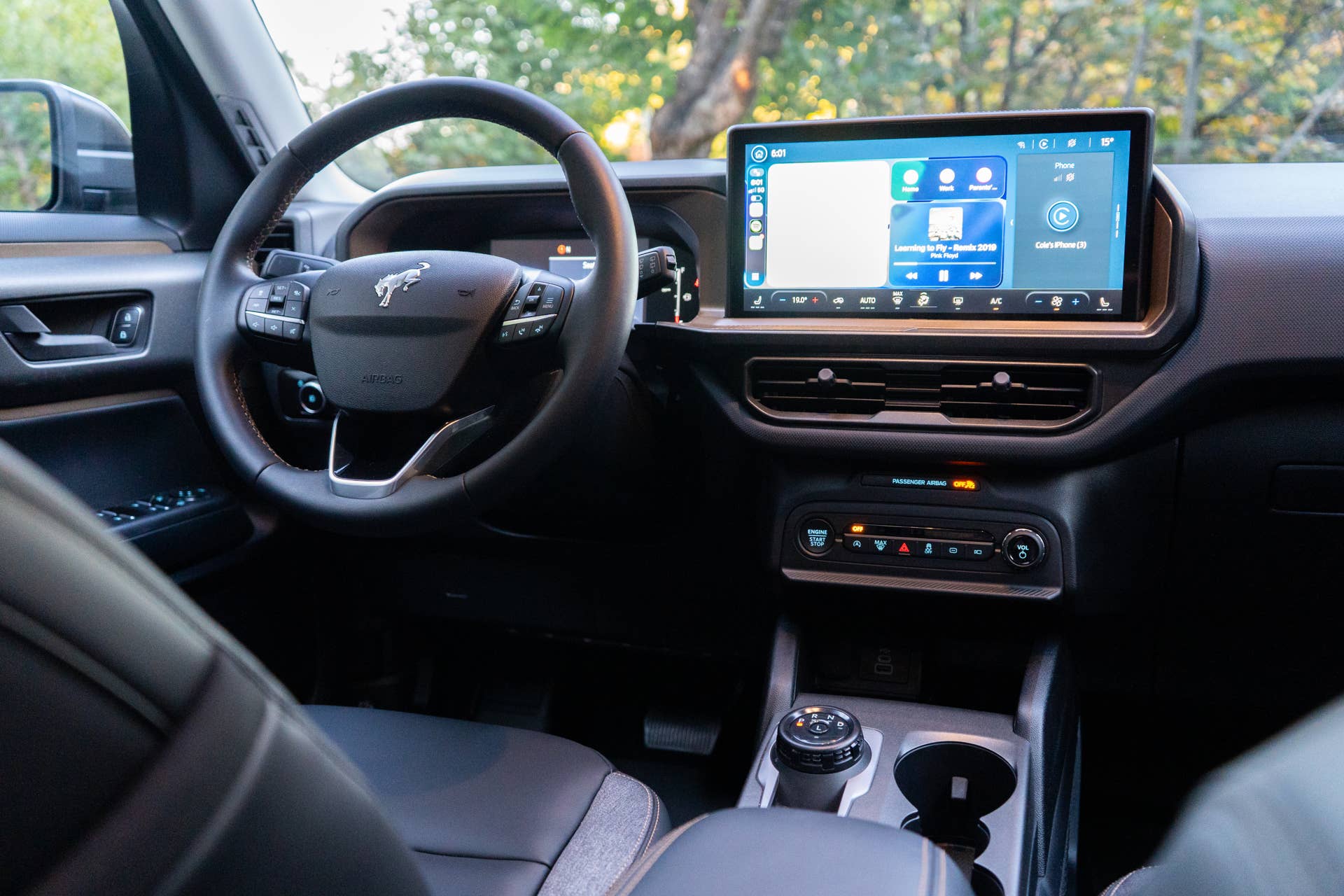
Although the Bronco Sport falls into the modern trap of cramming too many controls into one giant screen, I still appreciated how easy the software was to navigate. Everything loads quickly, common commands sit permanently at the bottom of the screen, and some physical buttons still exist on the center console and steering wheel. Despite the large screen, the Bronco Sport’s tech experience still feels as though it fades into the background—in the best way possible. Most of it disappears around the experience, so you can stay present as you trudge through muddy trails, meander through picturesque mountain passes, or navigate dreadful city traffic on a rainy autumn evening. There’s not much more to say about the Bronco Sport’s tech than that it does its job properly: wireless Apple CarPlay is seamless, adjustable drive modes are well calibrated and tangibly shape the SUV’s dynamic personality, and its active safety systems aren’t overly sensitive, yet are still dependable when needed.

Shopping for a new car? Click here to get a great deal on your next vehicle. Powered by Carvana: no-haggle pricing, 100% online.

2026 Ford Bronco Sport Big Bend

Cole Attisha

Exterior Styling: Hitting The Right Note — 9.5/10

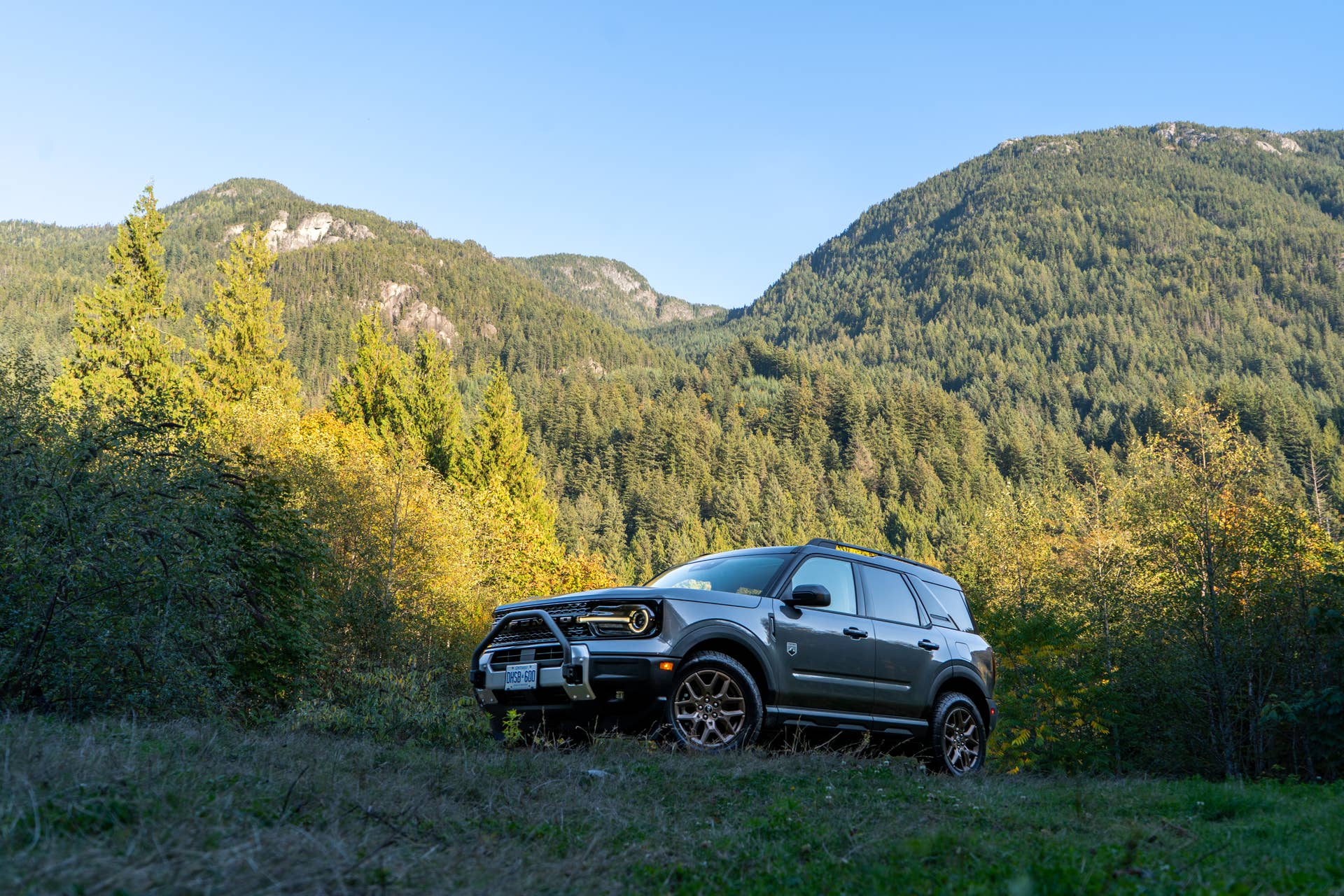
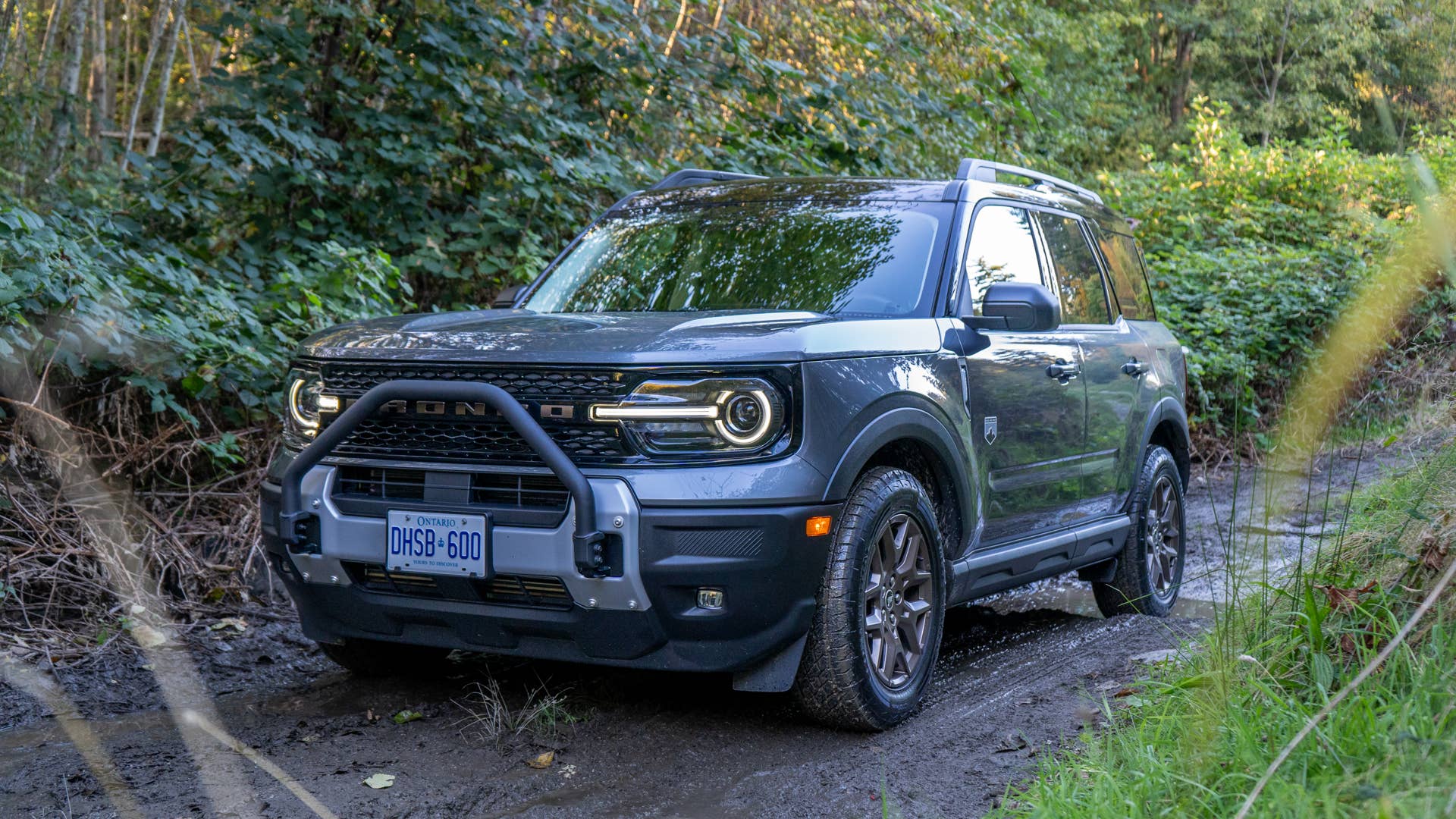
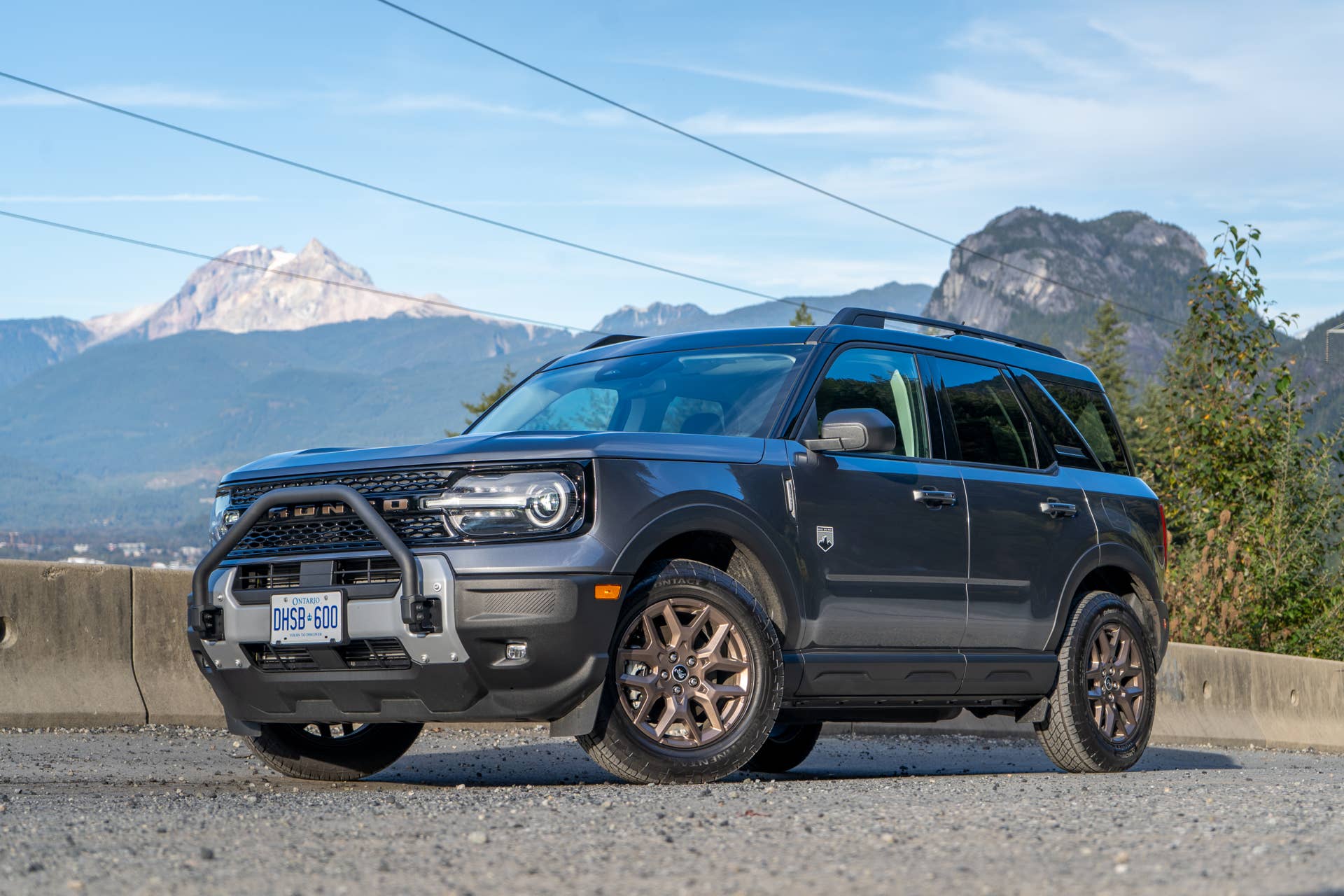
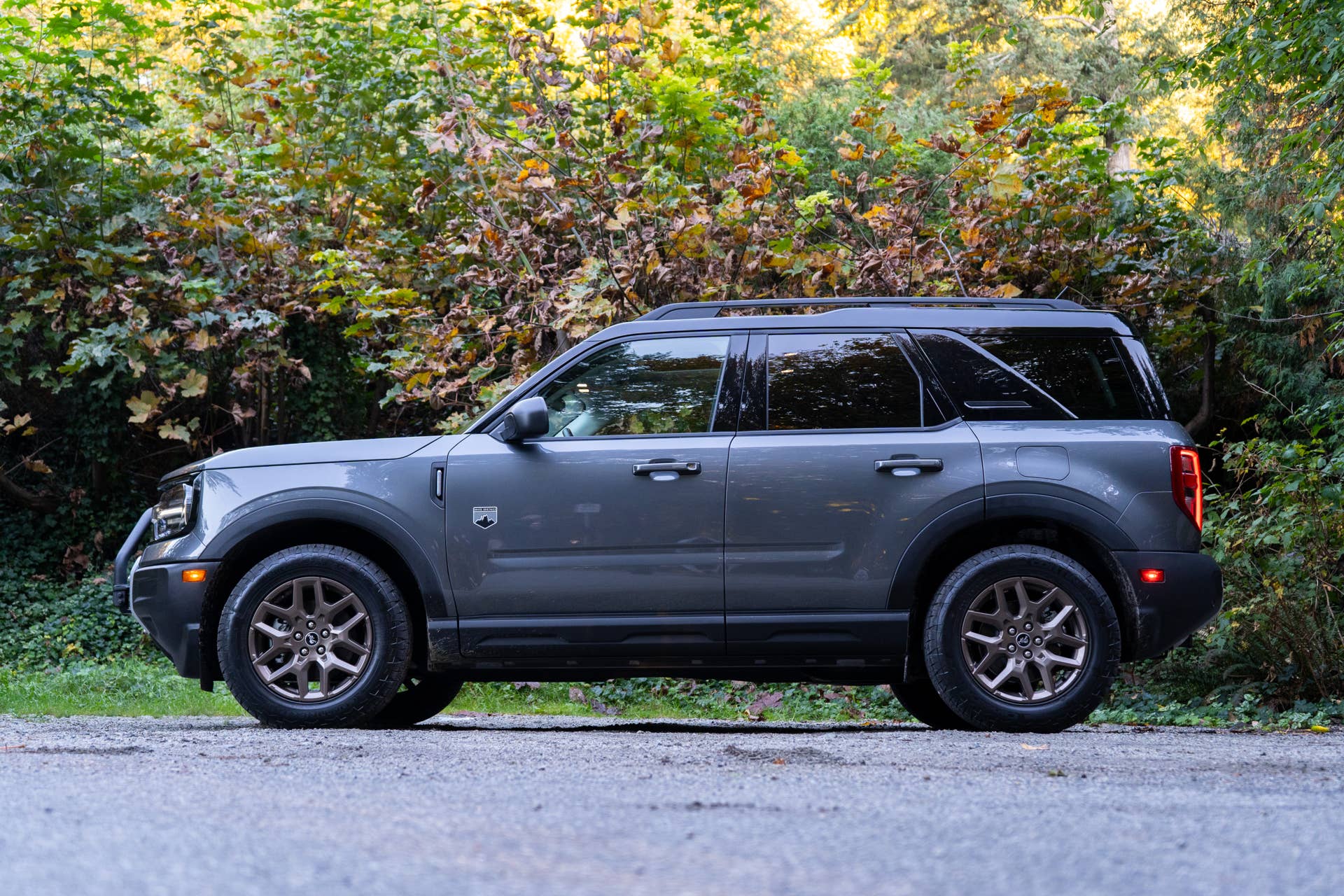
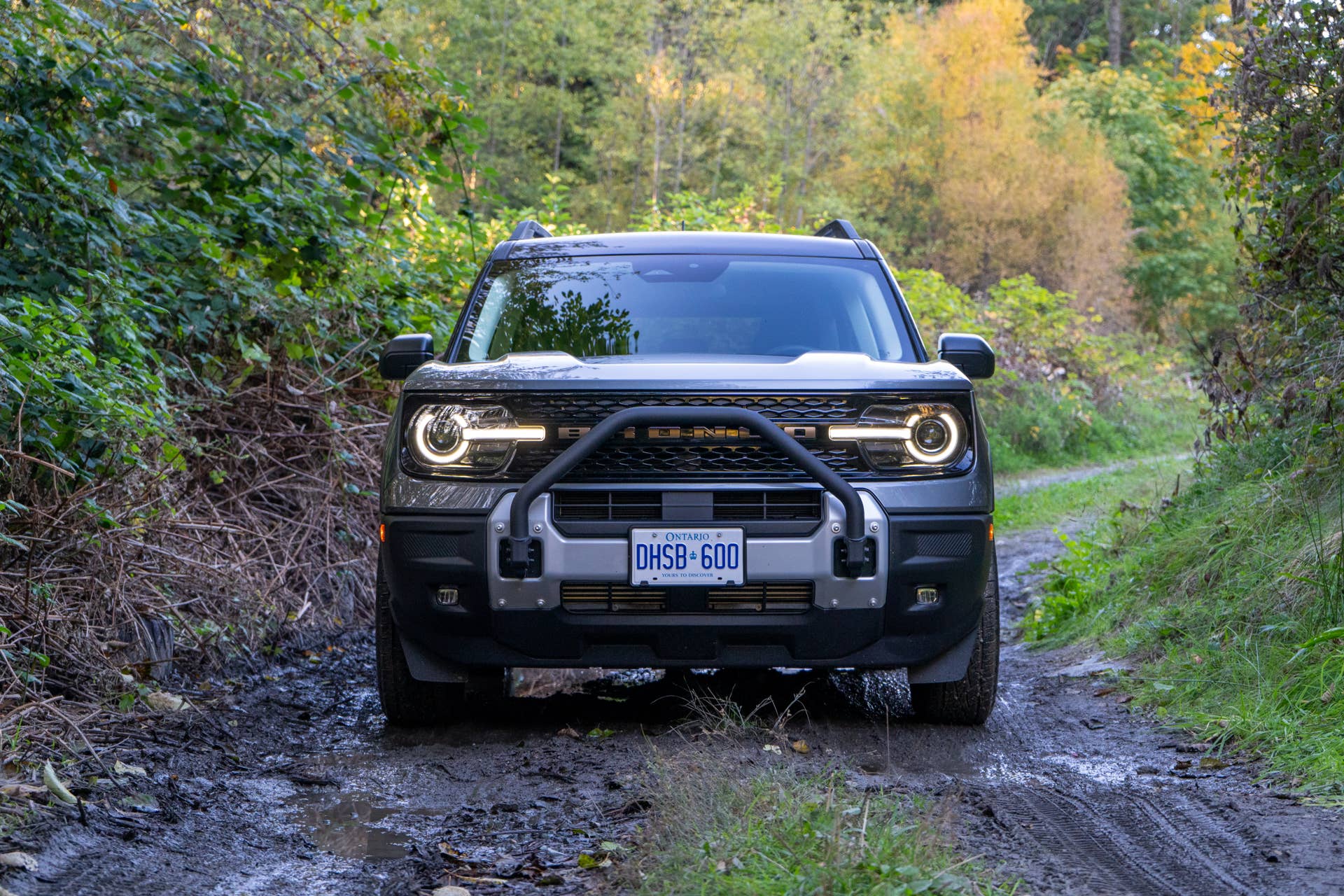
The Bronco Sport’s styling isn’t for everyone. Some find it a bit too stubby and old-school, and others can’t get past the fact that it tries too hard to look like the “real Bronco,” despite not actually being one by virtue of its unibody underpinnings and transversely mounted powertrain. Me, though? I think Ford nailed it, and its sales figures prove I’m not alone. Perhaps I’m a bit biased—after all, I own a Series 1 Land Rover Discovery, so I couldn’t help but appreciate all the subtle details the Bronco Sport borrows from the iconic British marque. Beyond the squared proportions, the Bronco Sport adds a raised rear roof for stadium-style rear seating without sacrificing headroom, a raised window behind the C-pillar for added stylistic emphasis, and roof rails that visually connect both sections. Add a frame-mounted bull bar, as my tester did, and although it doesn’t protect the headlights like the one on my own Disco, it underlines the SUV’s rugged intentions in dramatic fashion.

2026 Ford Bronco Sport Big Bend

Cole Attisha

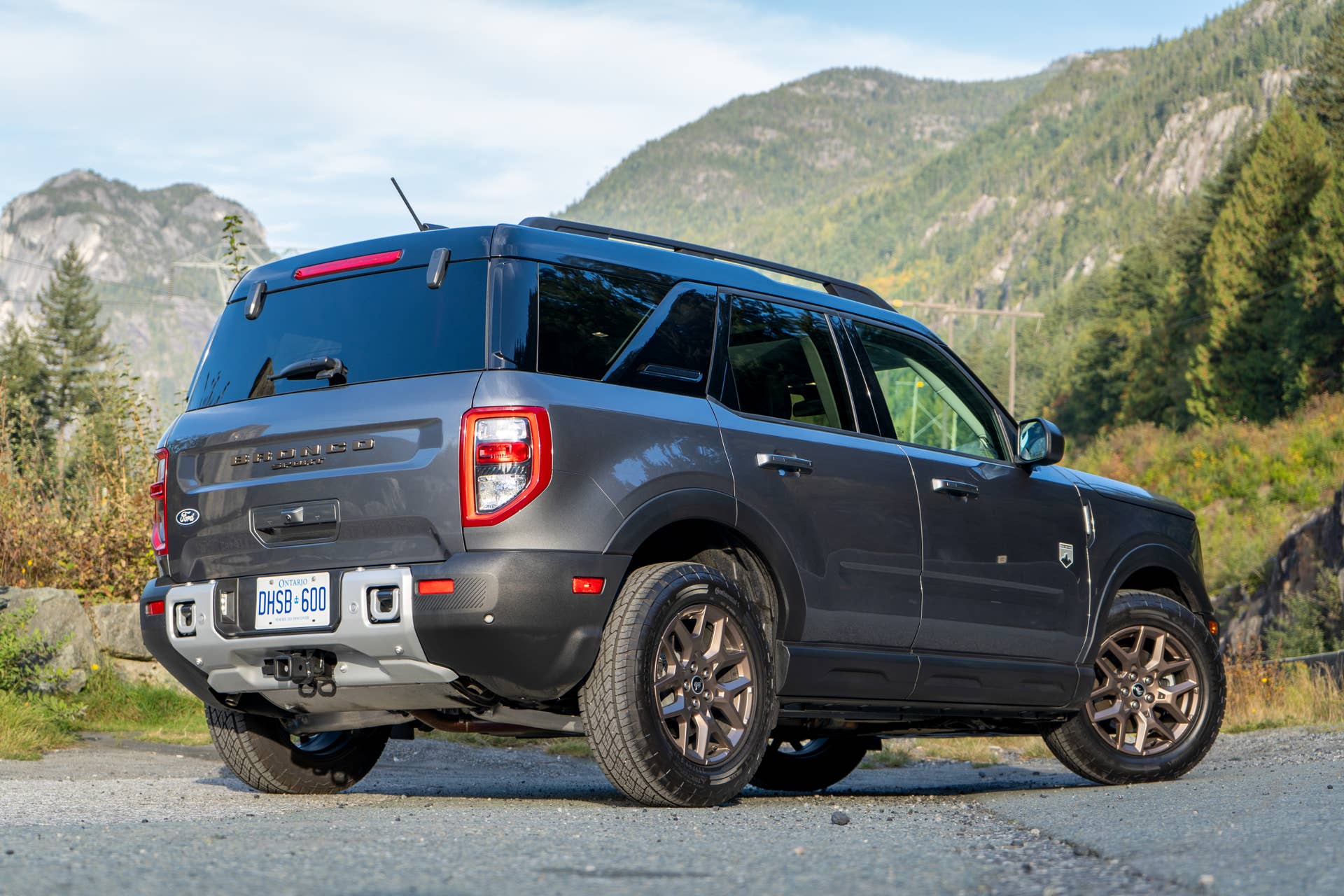
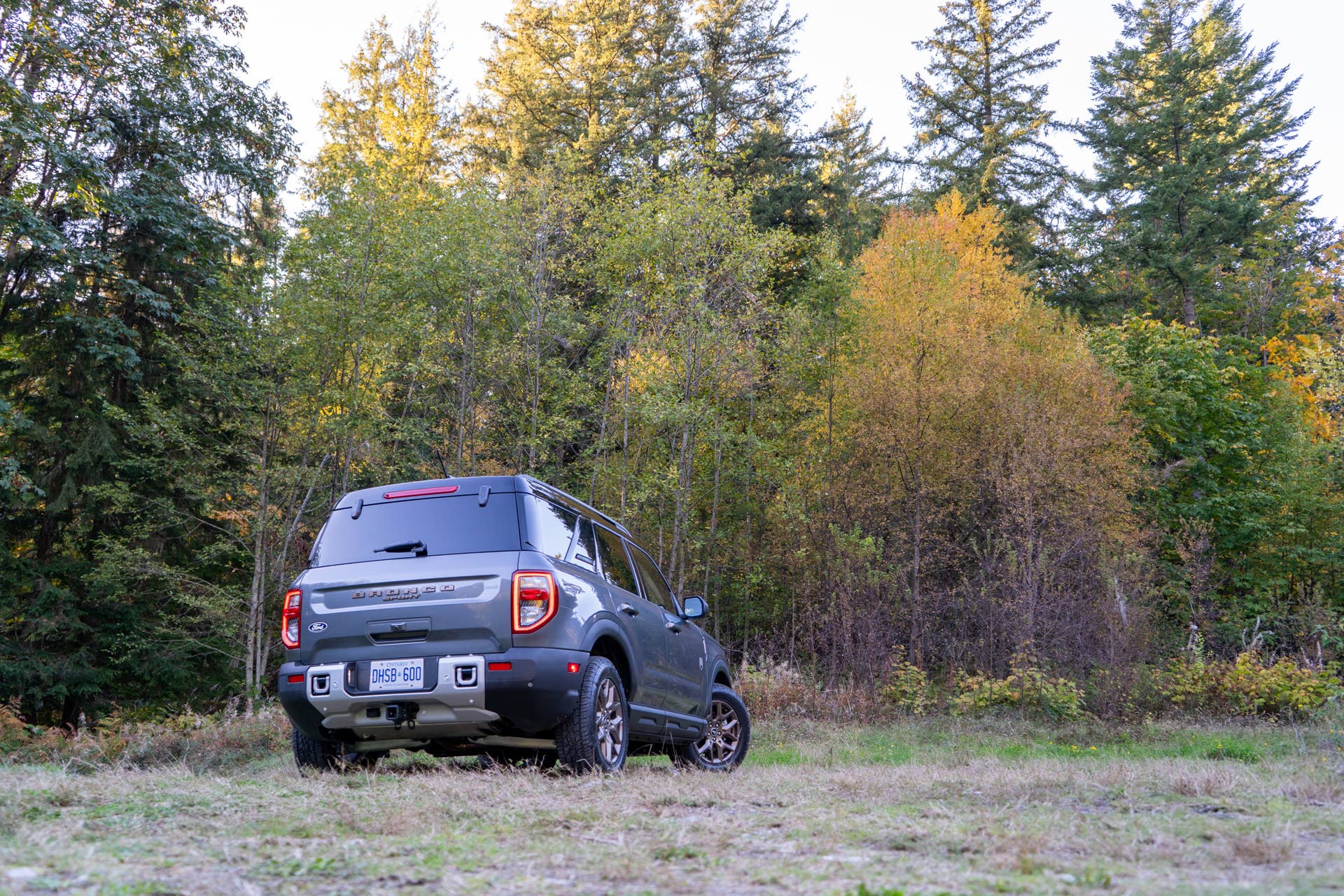
Meaty metal tow hooks sell the adventure-ready look from the rear, and my tester’s “Bronze+Black Diamond Package” adds even more depth to the design. The Sport does an excellent job of toeing the line between Land Rover-inspired styling and staying true to its own Escape and Bronco heritage, and so I don’t really have any complaints about its exterior design other than that it doesn’t look nearly as striking as the actual Bronco, so although it’s entirely by design, the Bronco Sport can’t help but live in the full-fat Bronco’s shadow, both spiritually and visually.

2026 Ford Bronco Sport Big Bend

Cole Attisha

2026 Ford Bronco Sport Big Bend

Cole Attisha

Interior And Practicality: Short But Tall — 8.5/10

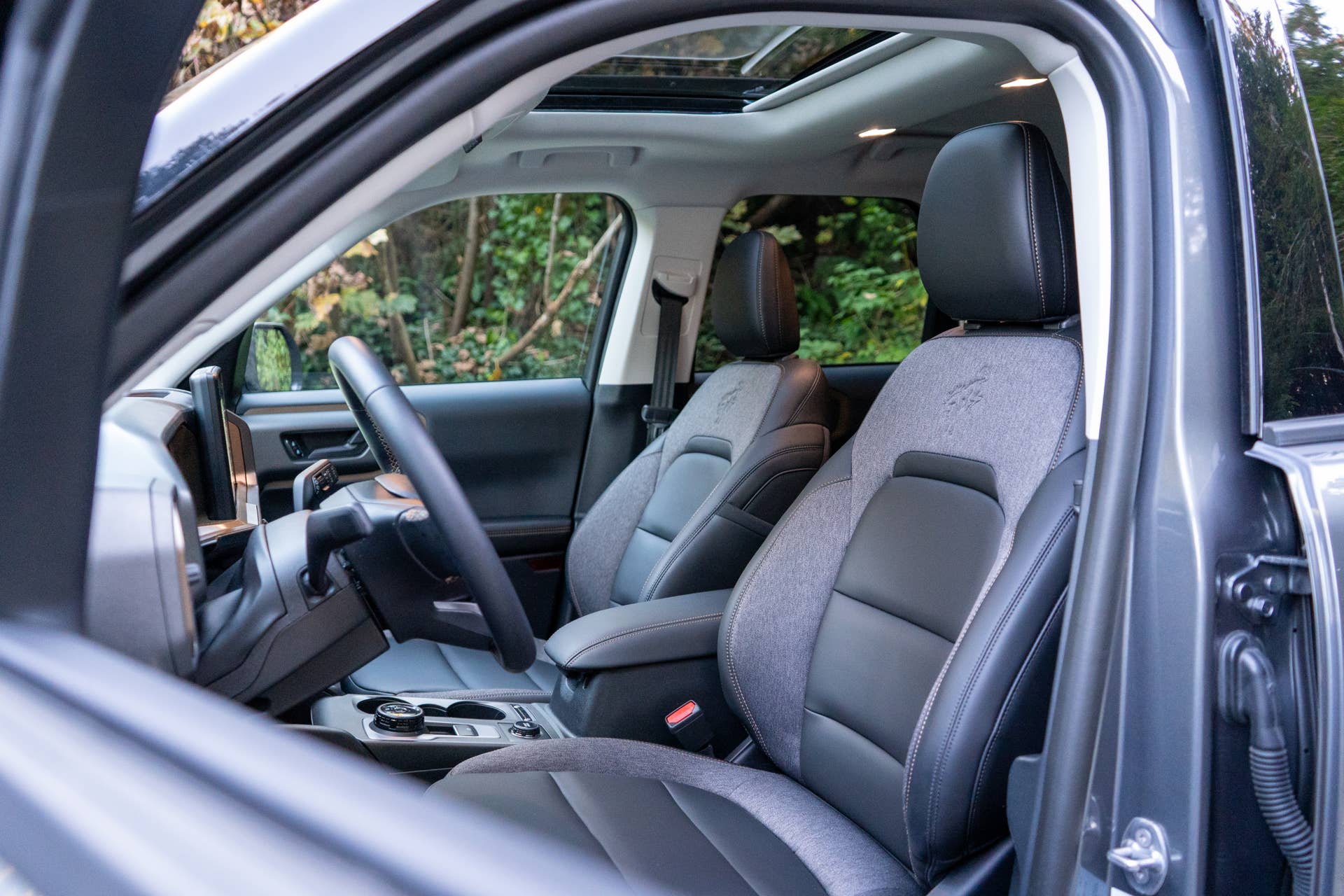
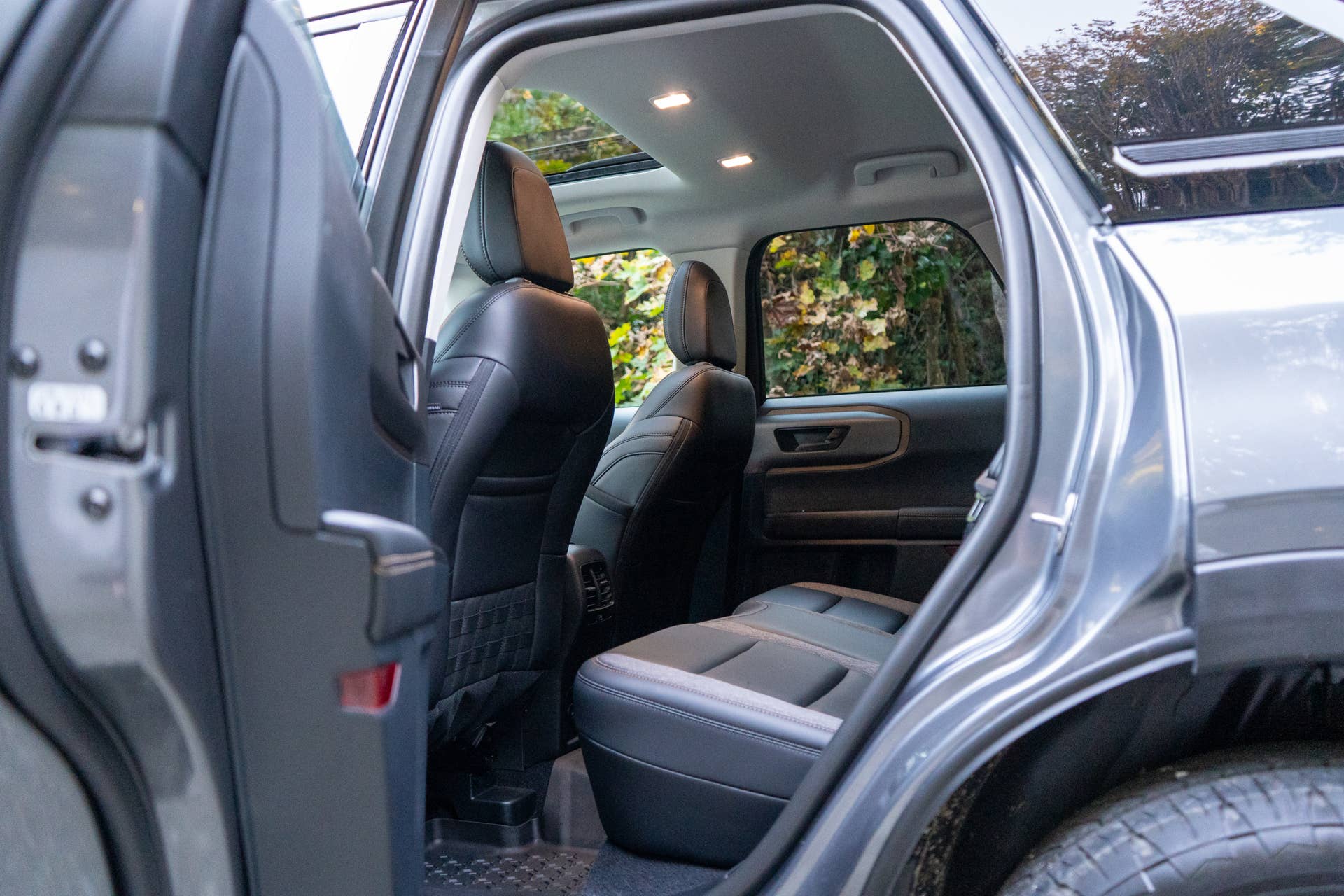
The Bronco Sport’s Land Rover-inspired exterior styling is even more impactful inside, where its raised rear roof allows for stadium-style rear seating, which, in my case, means less motion-sickness suffering as a rear occupant. Although its tall body offers plenty of headroom, the Bronco Sport still feels a bit cramped inside. That’s largely because many rivals, including the Toyota RAV4, Honda CR-V, and Chevrolet Equinox, have longer wheelbases, so the Ford’s rear legroom feels pretty tight by comparison. Even the Subaru Forester, which actually has a shorter wheelbase than the Bronco Sport, still offers better rear legroom.

Cabin And Cargo Measurements

2026 Bronco Sport Big Bend

Headroom, front / rear—with moonroof

39.1 / 41.7 inches

Legroom, front / rear

42.4 / 36.9 inches

Shoulder room, front / rear

57.3 / 55.6 inches

Passenger volume—with moonroof

102.3 cu. ft.

Cargo capacity, rear seats upright

32.5 cu. ft.

Cargo capacity, rear seats folded

65.2 cu. ft.

2026 Ford Bronco Sport Big Bend

Cole Attisha

2026 Ford Bronco Sport Big Bend

Cole Attisha

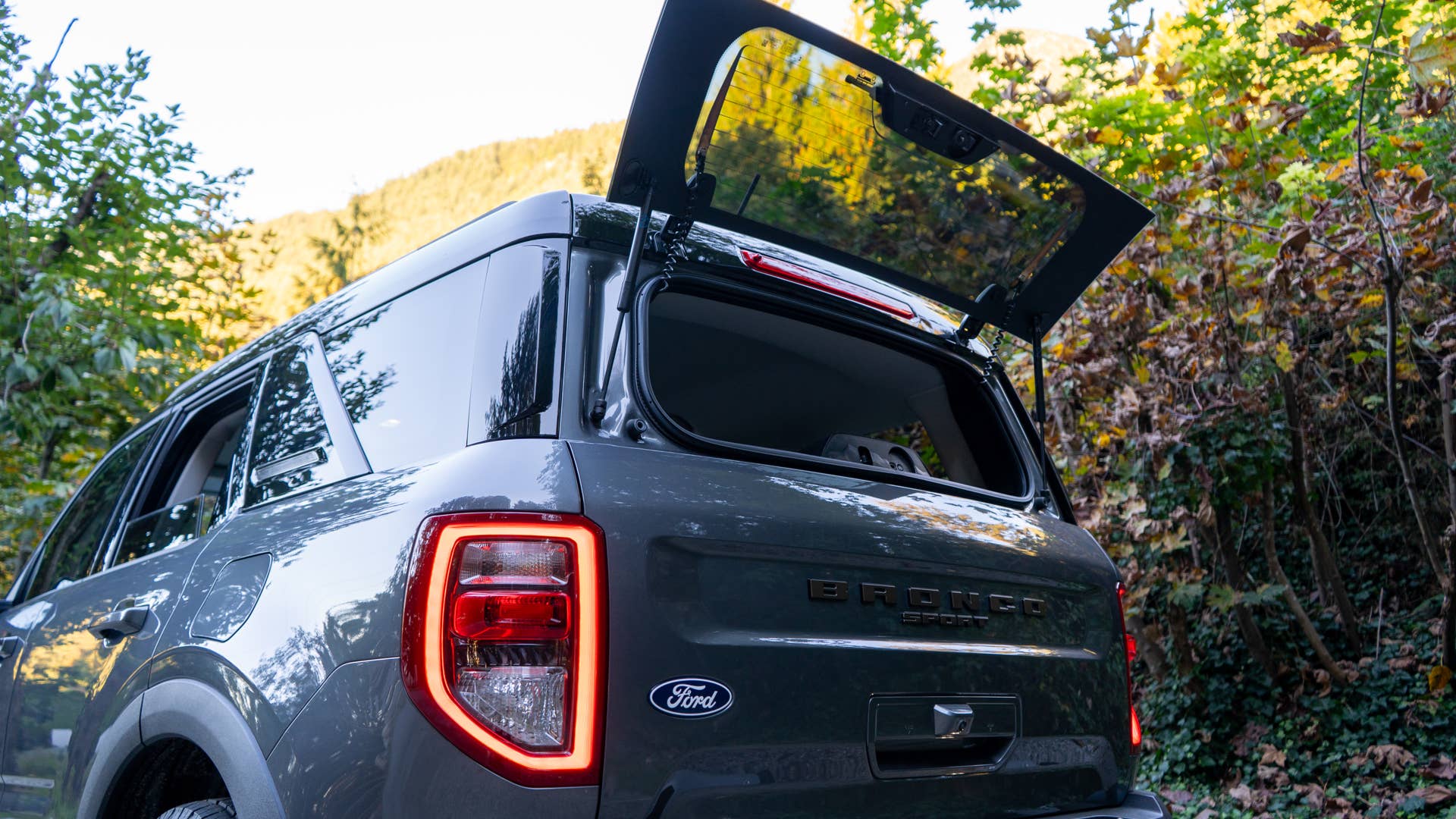
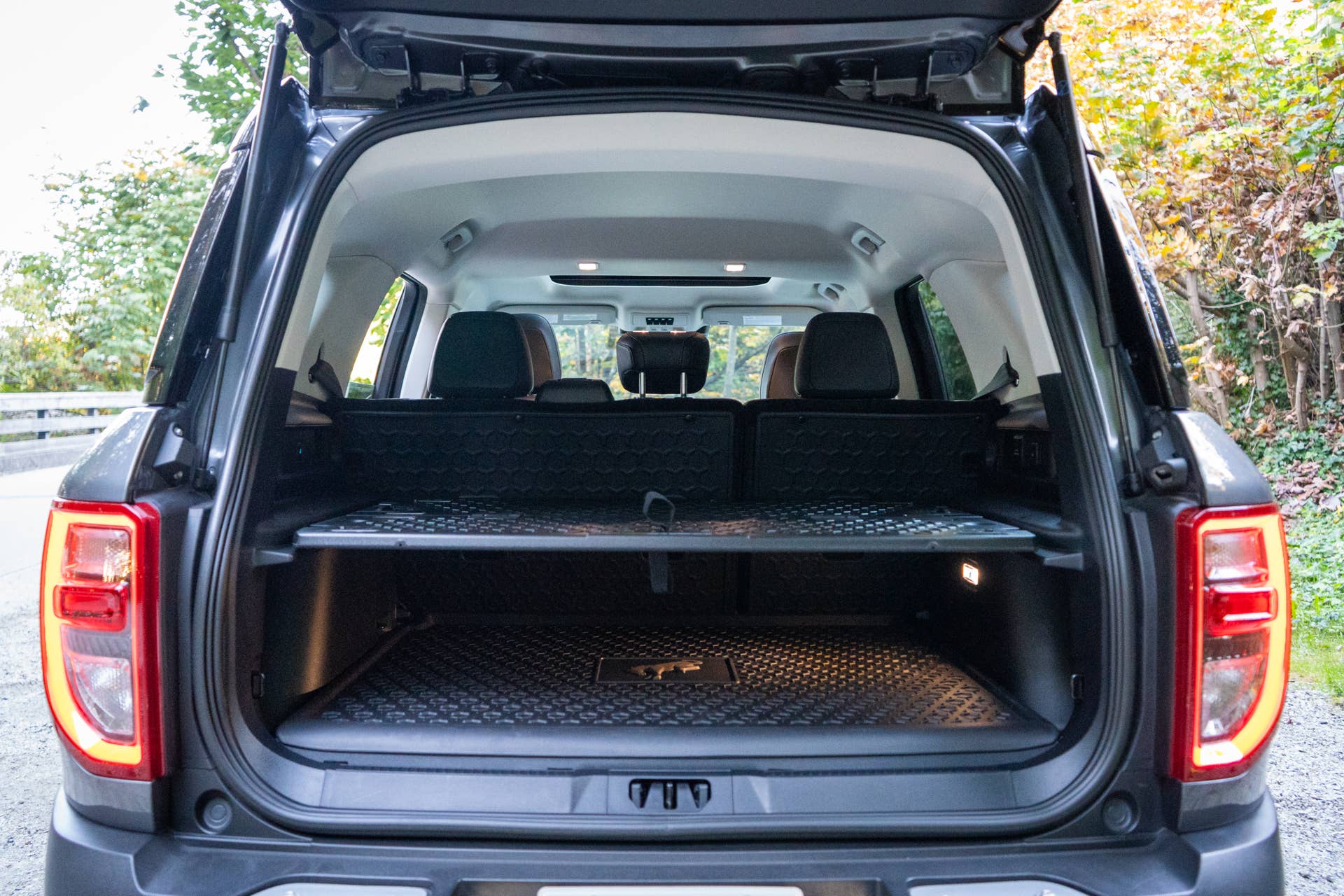
The same goes for cargo capacity: height over length. The Bronco Sport’s trunk is tall, but its horizontal depth falls short of key rivals like the RAV4 and Equinox, making it more difficult to fit longer items like golf clubs and skis. What sets the Bronco Sport apart from almost all of its rivals, though, is its openable rear window hatch—a feature previously found on first- and second-generation Escapes, but disappeared when the model went full Euro—which not only allows for easier tailgate access in tight spaces, but also a layered and partially hidden storage stacking solution with the help of a foldable shelf in the trunk. In some cases, this glass hatch might actually make up for the Bronco Sport’s lack of horizontal depth and then some. Depending on your climate tolerance, you can easily load surfboards, skis, and snowboards diagonally into the trunk, with their tips hanging out of the open glass for transport.

2026 Ford Bronco Sport Big Bend

Cole Attisha

Value: Good Value, Provided You Choose Carefully — 8.5/10

The Bronco Sport Big Bend starts at $31,845 in the U.S., before destination, and includes four-wheel drive. That gives it a head start against the $35,600 Equinox Activ AWD, $36,995 Forester Wilderness, and $39,900 RAV4 Woodland Hybrid, all quoted on the same basis. However, the value competition tightens quickly as you tick more boxes on the options list. My Canadian-market tester reached C$50,665 including delivery, with Black Diamond and the additional Bronze treatment accounting for C$4,610 after the package credit. That’s roughly $35,600 American dollars, placing it in immediate Equinox Activ territory.

2026 Model

Starting MSRP

EPA Combined MPG

Rear Legroom

Cargo: Seats Up / Folded

Bronco Sport Big Bend 4×4

$31,845

27

36.9 in.

32.5 / 65.2 cu. ft.

Forester Wilderness AWD

$36,995

26

39.4 in.

27.5 / 69.1 cu. ft.

RAV4 Woodland Hybrid AWD

$39,900

38

37.8 in.

37.8 / 70.4 cu. ft.

Equinox Activ AWD

$35,600

26

39.9 in.

29.8 / 63.5 cu. ft.

The spatial comparison is a bit more nuanced than the Ford’s stubby body suggests. Both the Subaru and Chevrolet provide more rear legroom, but the Bronco Sport actually offers more overall cargo volume than the Equinox with the rear seats upright or folded. The Forester has less cargo volume behind its rear seats, yet more with them lowered. Its 9.3 inches of ground clearance and 3,500-pound towing rating also give buyers tangible reasons to spend more than the appropriately equipped Big Bend, which has 7.8 inches of ground clearance and a 2,200-pound tow limit.

The Toyota poses the strongest challenge on running costs. Its hybrid powertrain delivers 236 horsepower and an EPA-rated 38 mpg combined, against the Ford’s 27 mpg. At 15,000 miles annually and an assumed $4 per gallon, that difference works out to roughly $640 in yearly fuel savings. The Woodland also provides more rear legroom and cargo capacity. My own 21.4-mpg average makes the Bronco Sport’s missing hybrid option harder to overlook, especially since the original Escape offered one more than 20 years ago, and its platform mate, the Maverick, now offers one paired with all-wheel-drive. Nevertheless, the Big Bend makes a convincing case with a carefully chosen specification. Its character, useful equipment, and enjoyable driving experience recover much of what made the original Escape appealing. Just make sure the optional equipment earns its cost through actual use.

2026 Ford Bronco Sport Big Bend

Cole Attisha

Overall Verdict: A Return To Form Under A New Name — 8.8/10

After a week with the Bronco Sport, I’m convinced Ford remembered what made the original Escape so appealing and brought it back, albeit with updated nomenclature. The Big Bend trim combines rugged personality, useful everyday practicality, and an unexpectedly entertaining powertrain in a compact SUV that I actually looked forward to driving. Its appeal runs deeper than some nostalgic styling and a familiar badge on its nose, but it isn’t flawless. The ride can be harsh, rear passengers don’t have much room to stretch out, and my fuel consumption was hardly something to celebrate. Still, its distinctive styling, uncomplicated technology, and clever details make those shortcomings easier to forgive than they would be in something more generic-feeling.

2026 Ford Bronco Sport Big Bend

Cole Attisha

What I’d like most is the Maverick’s hybrid AWD powertrain as an option. A hybrid could lower fuel bills and make city driving more relaxed while keeping the all-weather traction buyers expect, and the Maverick’s powertrain avoids wet belts. Considering the original Escape offered hybrid power more than two decades ago, that feels like the obvious next step toward perfecting the recipe. For me, this is about the closest thing to a modern Honda Element, what the Land Rover Discovery Sport should have been, and a masterful return to form for the Escape. Ford has made a compact SUV that feels like it knows what it wants to be. Apparently, it just wants a different name.

Autoblog aims to feature only the best products and services. If you buy something via one of our links, we may earn a commission.
2027 Mercedes-Benz CLA 250+ vs. 2026 Lexus ES 350e: I Drove Both Luxury Electric Sedans—Here’s My Honest Review

When their first photographs appeared, neither car convinced my inner automotive enthusiast, let alone the emotional side of my brain. The new Mercedes-Benz CLA looked like it was trying a bit too hard to advertise its technological ambitions, while the redesigned Lexus ES seemed to have traded its familiar elegance for something more peculiar. At NWAPA’s Drive Revolution event in Vancouver, Washington, seeing both in person reshaped those impressions, and driving them back-to-back revealed a more interesting distinction.

Both electric sedans felt most natural when driven smoothly, but the Lexus’s controls, ride, and cabin encouraged that approach more consistently. The Mercedes still seemed eager to appeal to someone younger and sportier, even though its most convincing quality was how pleasantly it settled into a relaxed cruise. My time with each vehicle was brief, and the comparison, of course, reflects that context. The models’ specifications nevertheless create a useful buying dilemma: my CLA 250+ and ES 350e Luxury were priced just $1,010 apart.

2027 Mercedes-Benz CLA 250+

Cole Attisha

U.S. specification

2027 Mercedes-Benz CLA 250+ Electric

2026 Lexus ES 350e Luxury

Starting price, including destination

$49,300

$48,895 (Premium); $57,295 (Luxury)

Price as equipped, including destination

$64,780

$63,770, estimated

Tested configuration

Pinnacle; AMG Line Plus with Night Package

Luxury with Executive Package

Power / driven wheels

268 hp / rear-wheel drive

221 hp / front-wheel drive

Battery capacity

85 kWh usable

74.7 kWh listed

Manufacturer-estimated 0–60 mph

6.6 seconds

7.4 seconds

EPA range on supplied vehicle labels

317 miles

292 miles

Combined EPA efficiency

109 MPGe

121 MPGe

Maximum DC charging / estimated 10–80% time

320 kW / 22 minutes

150 kW / 28 minutes

Tested wheels

19-inch AMG

21-inch aluminum

Roof

Fixed panoramic glass with SKY CONTROL

Power-opening sunroof

All prices include destination and are in U.S. dollars. Starting prices use published U.S. pricing; the Lexus’s as-equipped price is the event sheet’s “estimate.” Charging times are manufacturer estimates under suitable conditions; battery figures use each manufacturer’s stated basis.

Thinking about selling your car? Get an instant cash offer online now. Click here to get started.

2027 Mercedes-Benz CLA 250+

Cole Attisha

2027 Mercedes-Benz CLA 250+

Cole Attisha

2027 Mercedes-Benz CLA 250+

Cole Attisha

Exterior Design: Both Look Better in Person

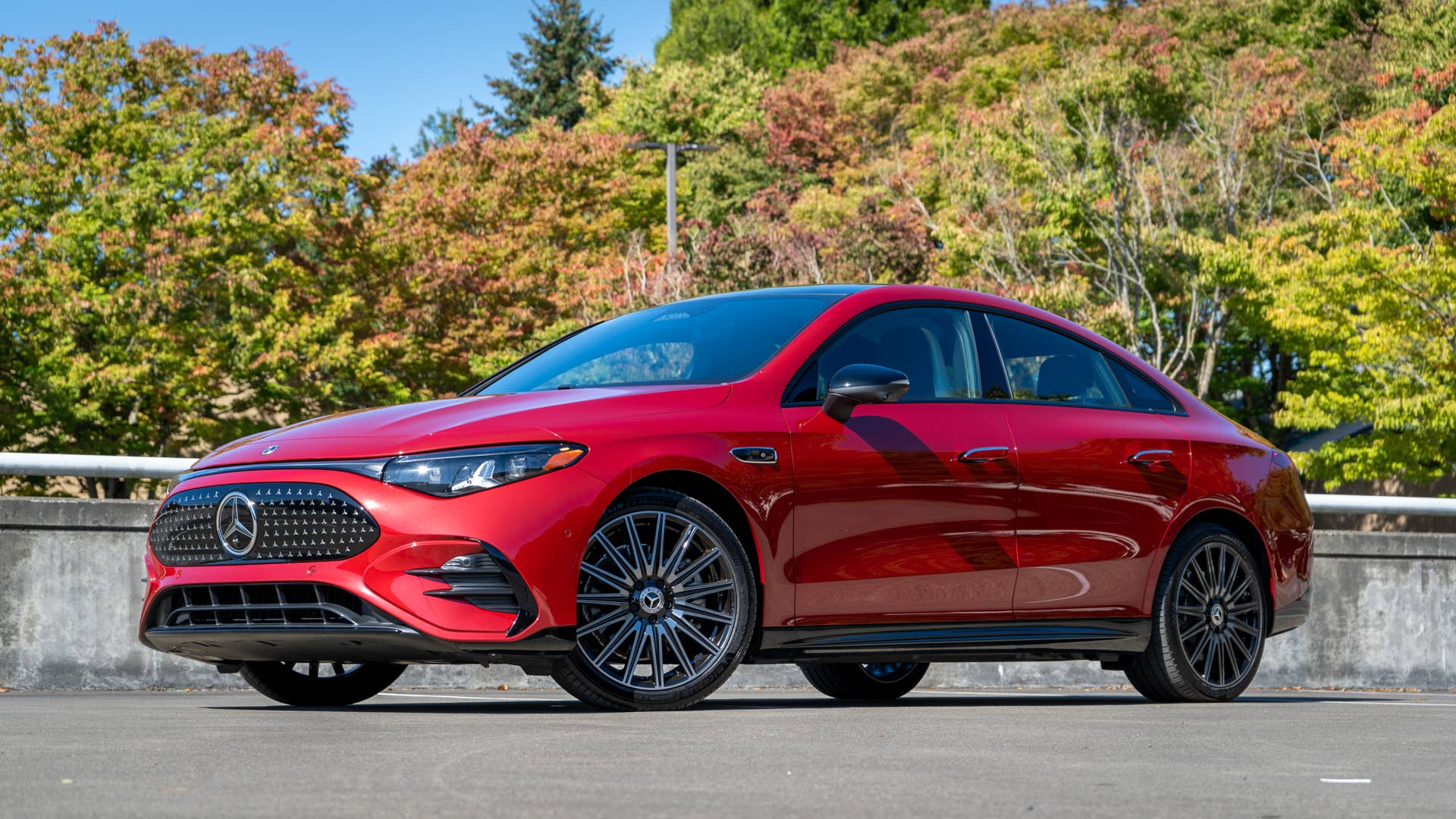
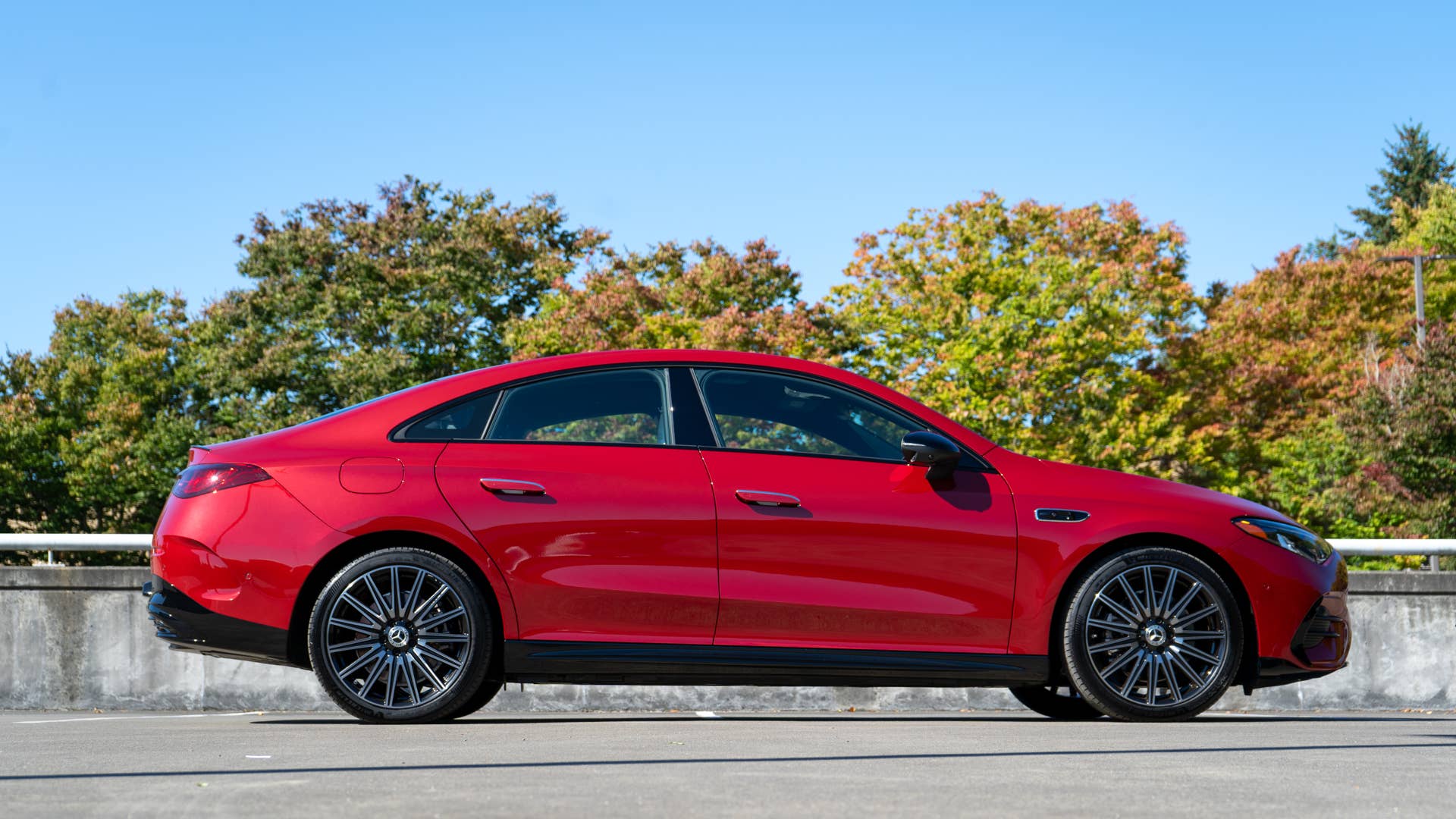
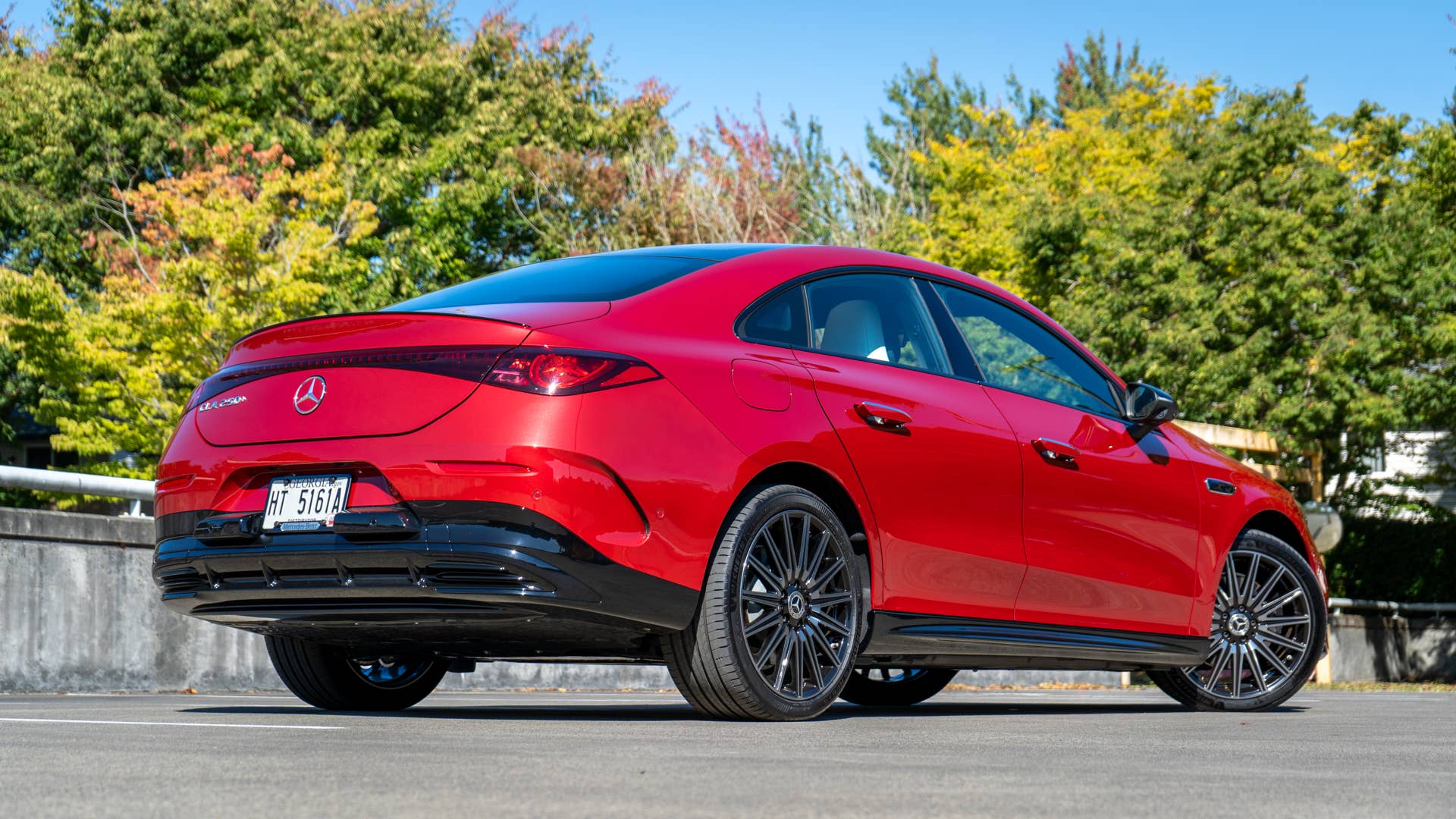
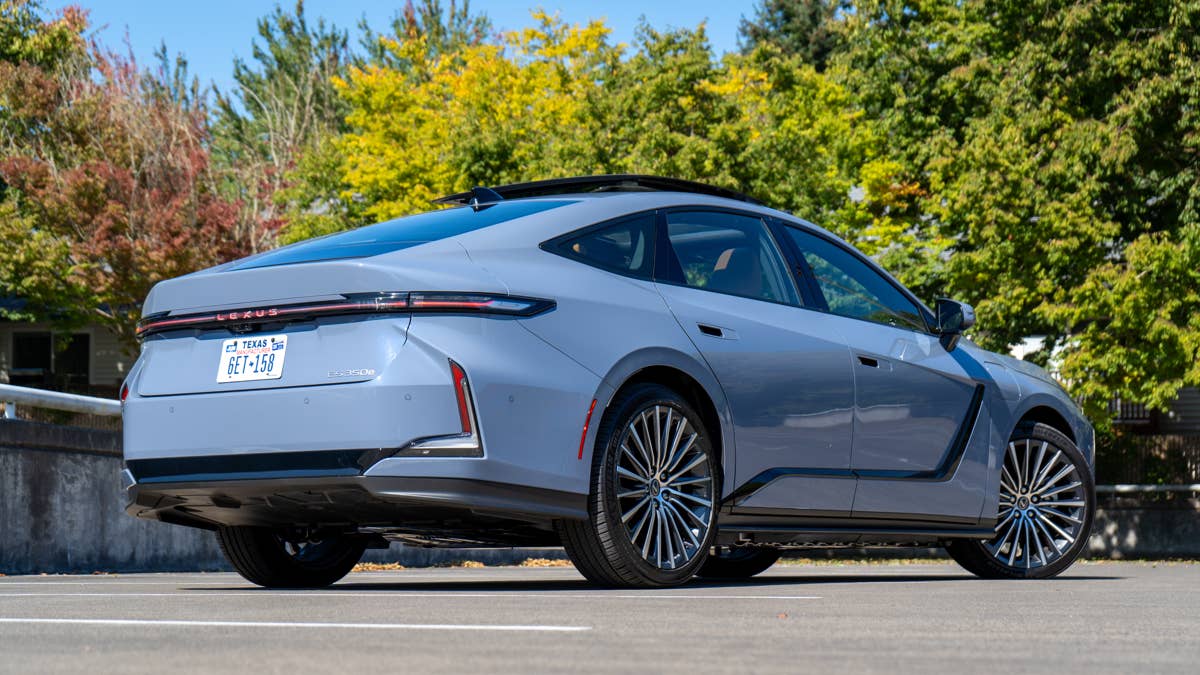
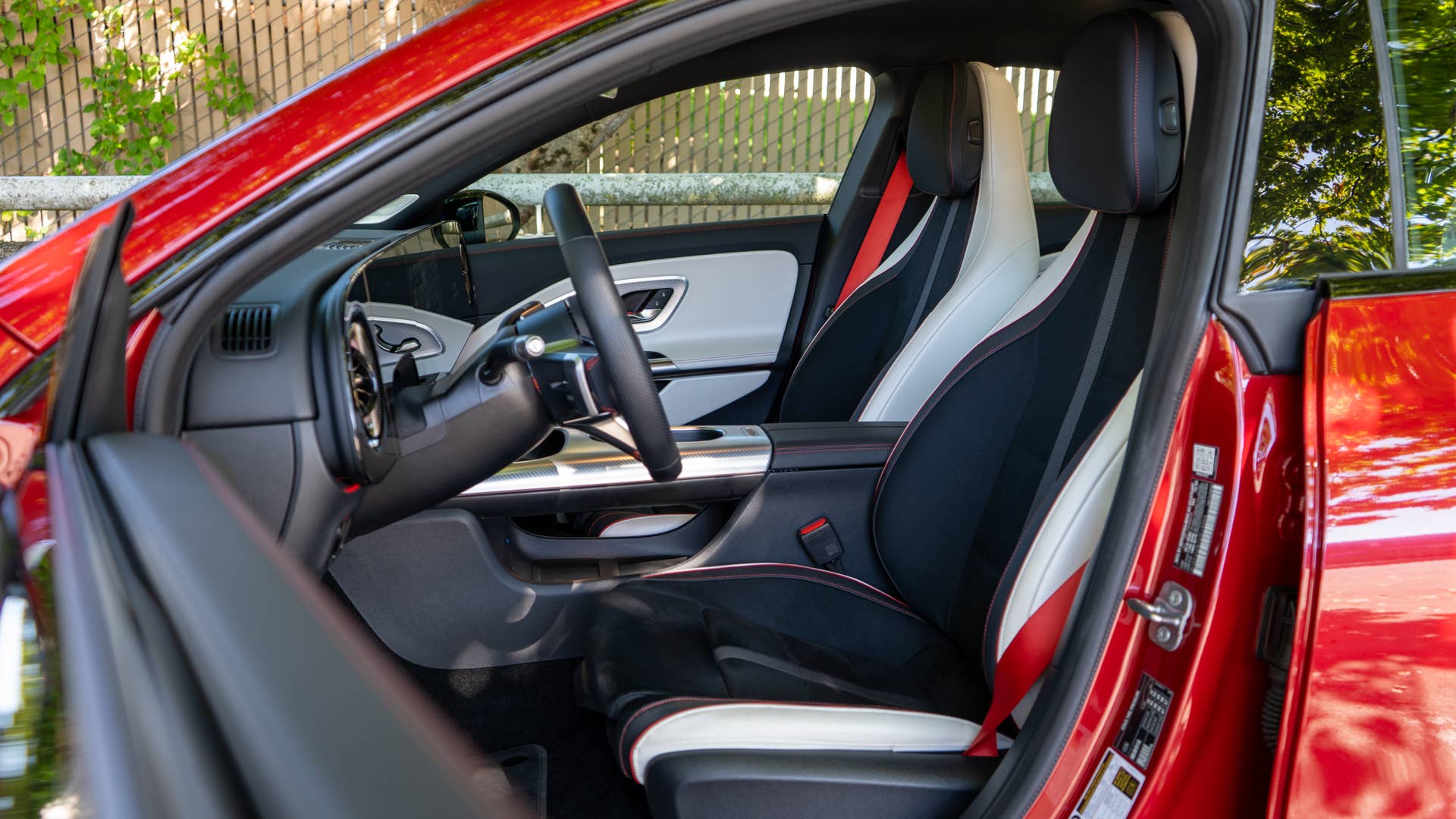
The Mercedes’ MANUFAKTUR Patagonia Red Metallic paint, intricate AMG wheels, and contrasting black details gave it considerably more presence than I expected. Its shape looked more cohesive in person than on a screen, though some of the styling still felt a little self-conscious. The guppy-nose front end still takes some getting used to, and the overall form factor still feels a bit too reminiscent of the bulbous EQS, but my general takeaway was that it didn’t look as offensive as I had initially thought. The Lexus, though, changed my opinion much more drastically once I saw it in metal.

2026 Lexus ES 350e

Cole Attisha

2026 Lexus ES 350e

Cole Attisha

2026 Lexus ES 350e

Cole Attisha

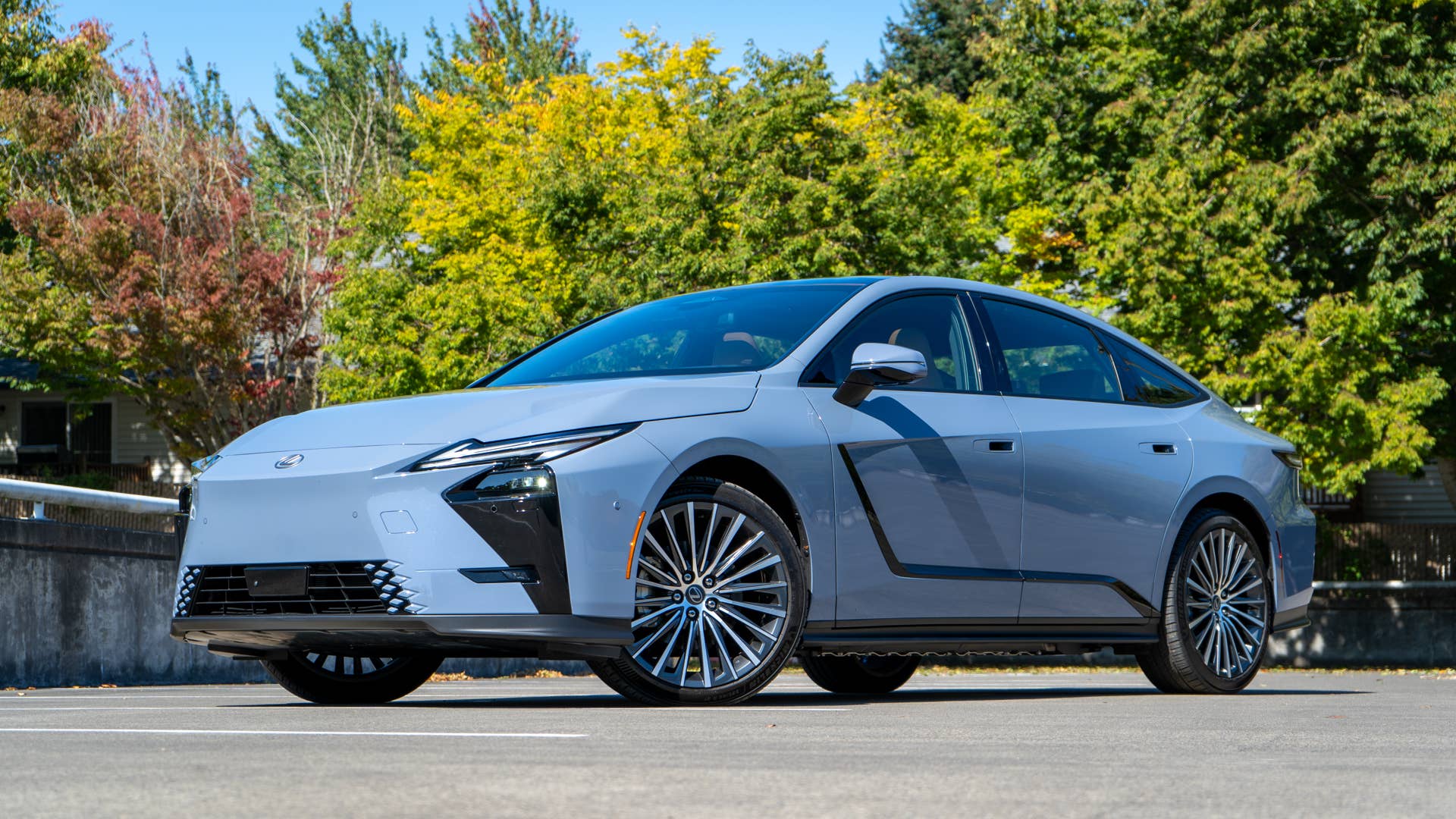
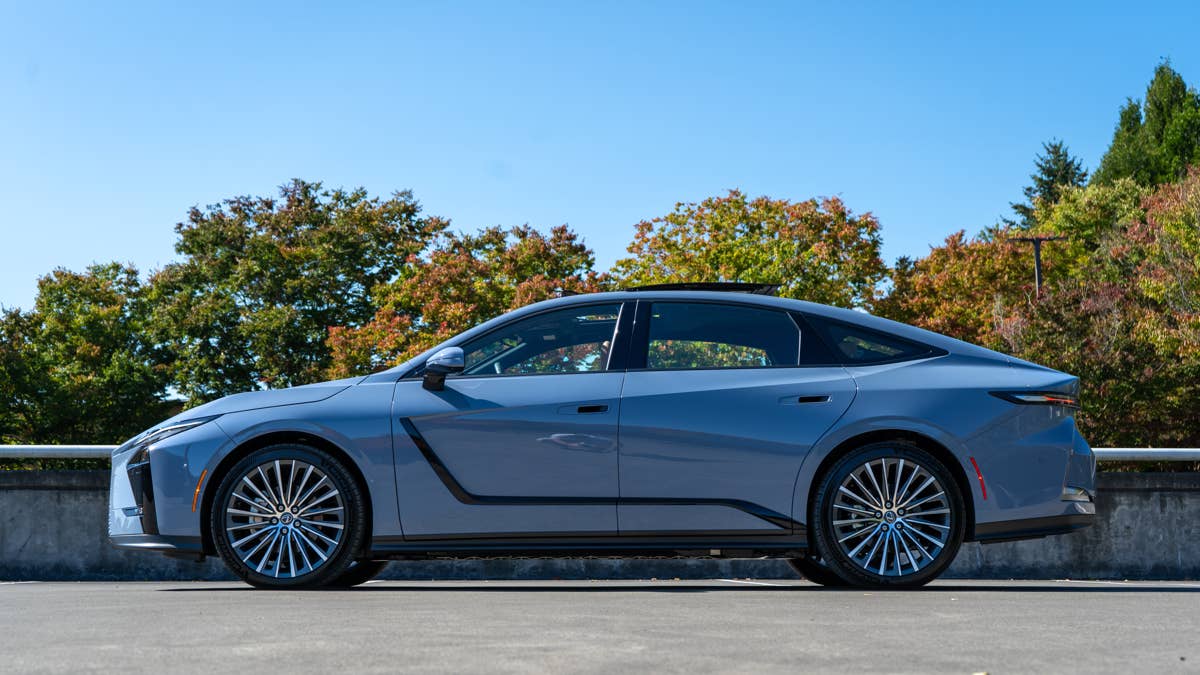
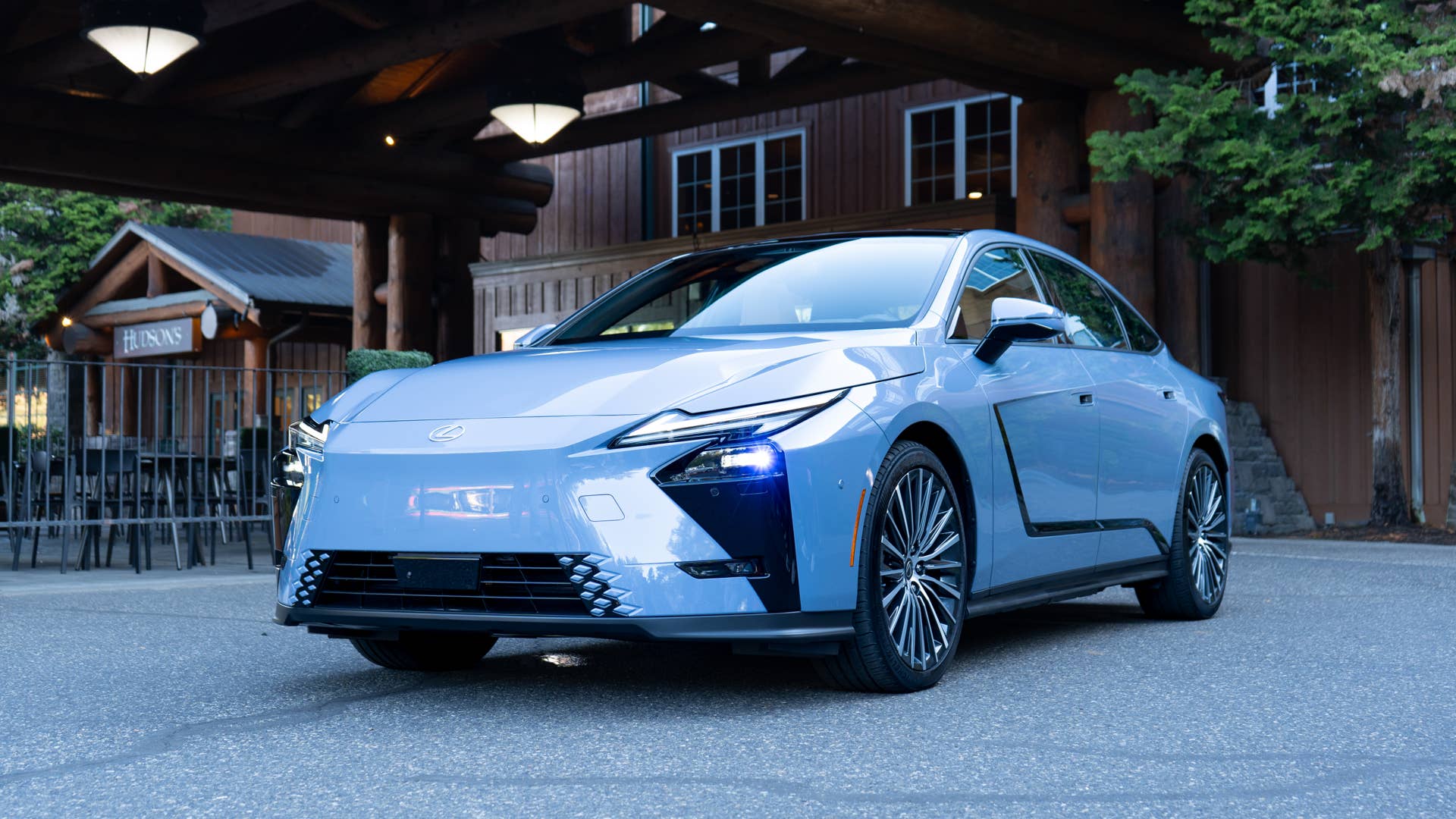
Perhaps I have an old soul, but the Lexus won me over differently than the CLA. While I felt less sour about the Benz after seeing it in person, I grew quite fond of the ES’s appearance on closer inspection. Wavelength paint and the large multi-spoke wheels suited its sweeping proportions brilliantly, helping the unusual details feel part of a broader design and instantly making the outgoing-generation ES look a decade older. I initially doubted both cars’ appearances, but the ES made the stronger case for changing my mind. Those wheels, though, despite how striking they look, also come with a real-world caveat. Lexus quotes 307 miles with its standard 19-inch wheels, but 292 miles with the 21-inch set fitted here. They may have improved my opinion of the design, but at the cost of a slight range drop.

Shopping for a new car? Click here to get a great deal on your next vehicle. Powered by Carvana: no-haggle pricing, 100% online.

2027 Mercedes-Benz CLA 250+

Cole Attisha

2027 Mercedes-Benz CLA 250+

Cole Attisha

2027 Mercedes-Benz CLA 250+

Cole Attisha

Interior: The Mercedes Aims For Younger Athleticism; The Lexus Modernizes Familiar Serenity

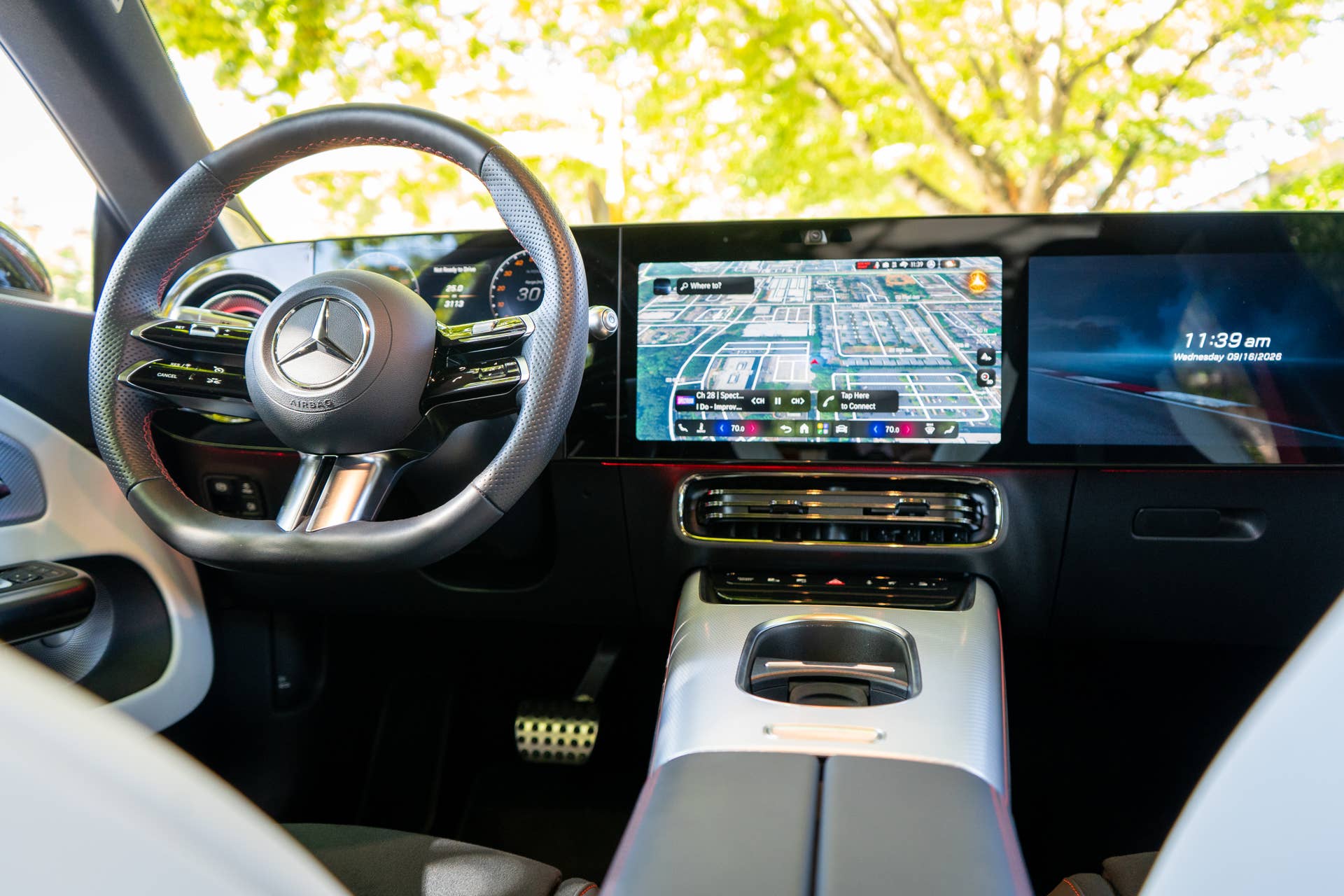
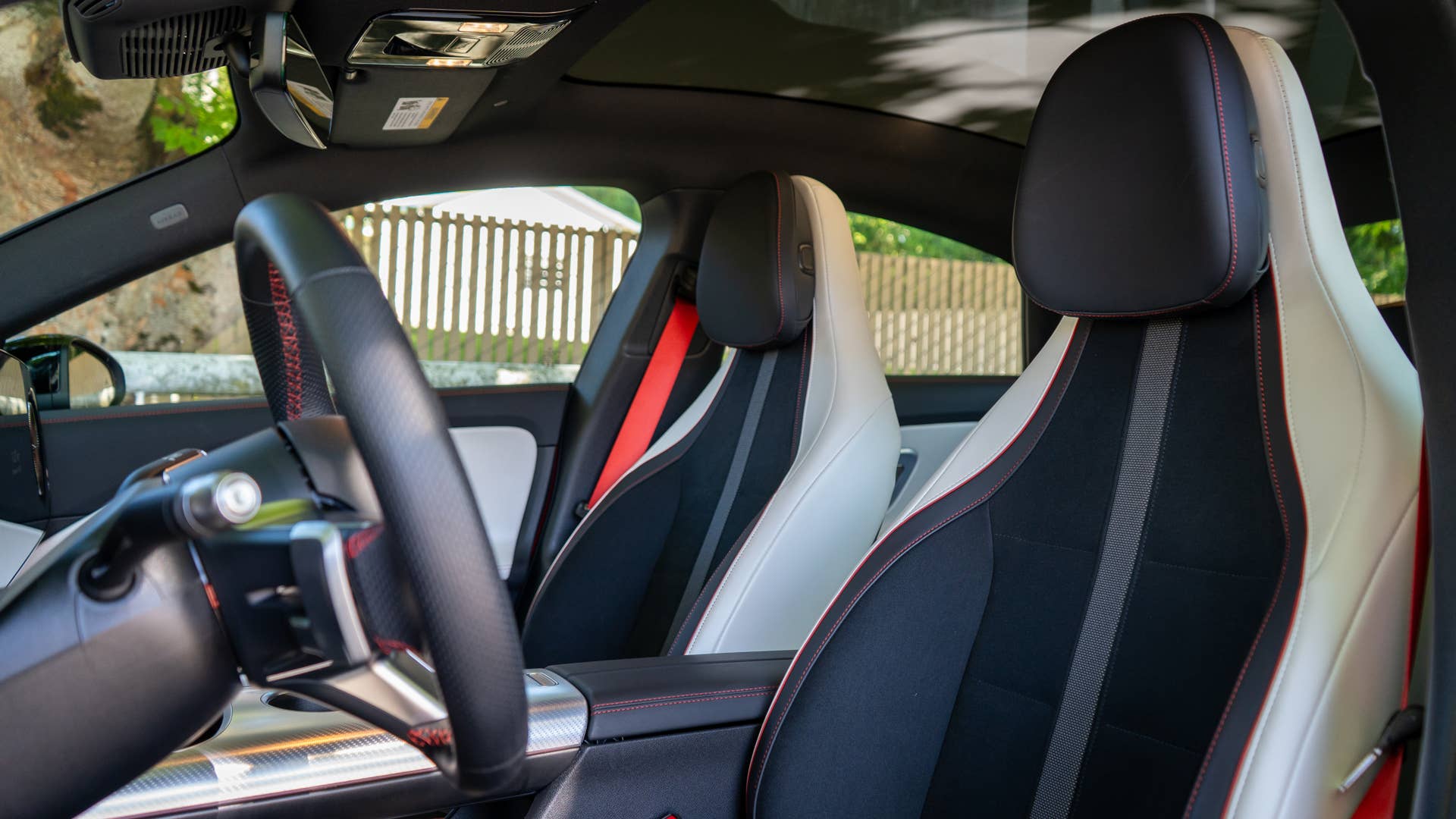
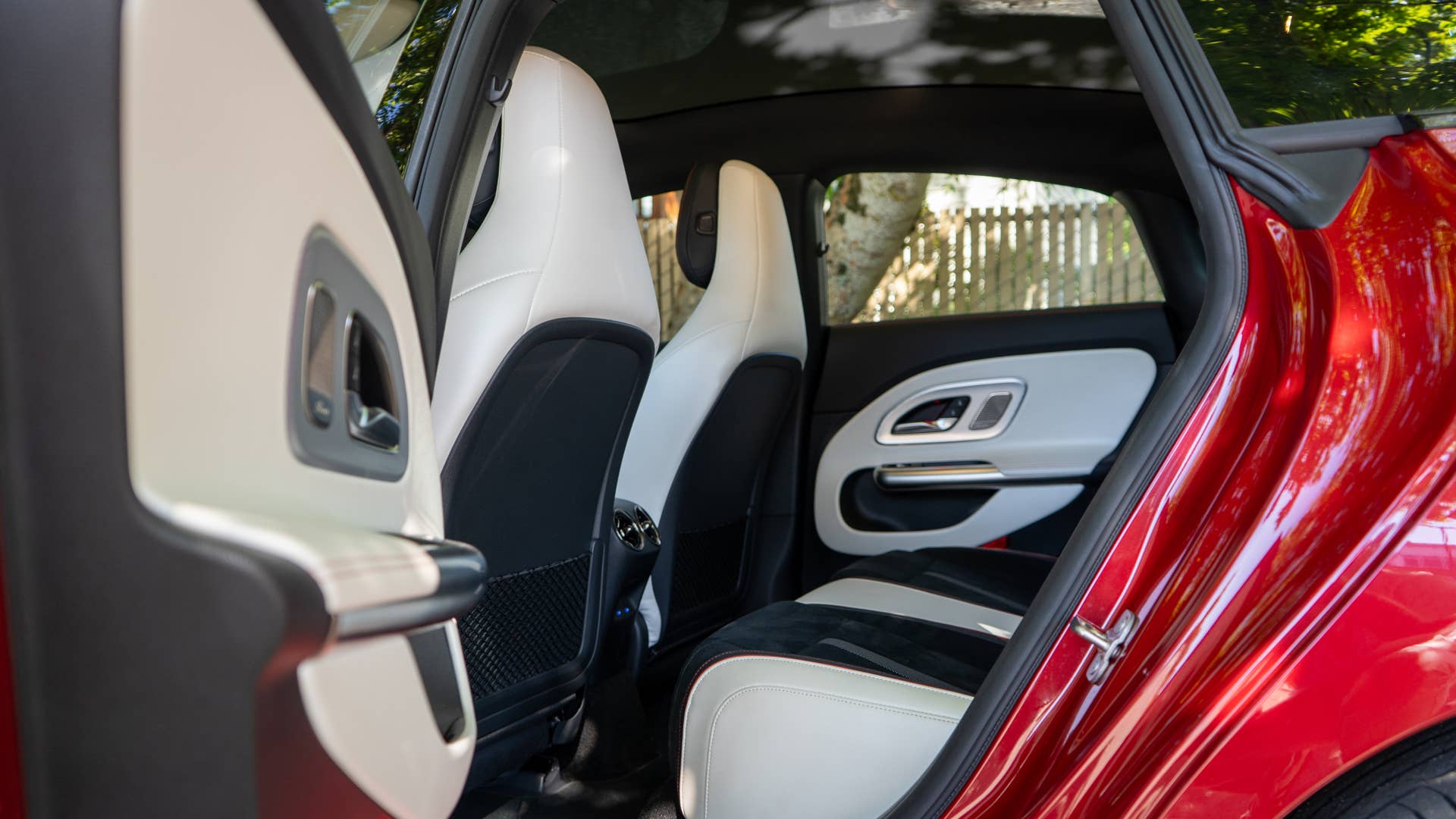
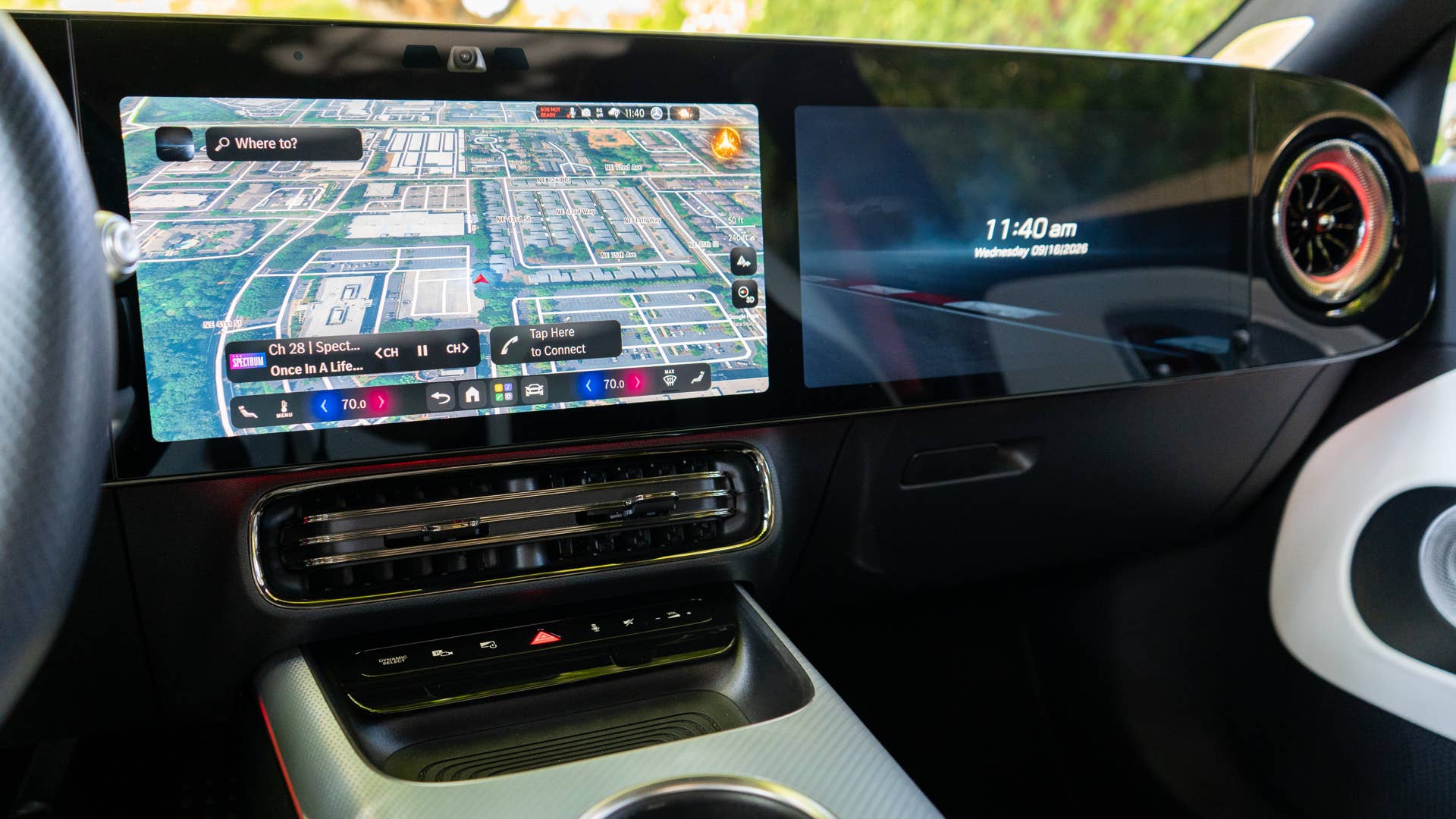
The CLA’s interior also appeared quite striking in person. Its layered materials, contrasting colors, and sculpted details gave it an eccentric character that made the cabin feel younger and more athletic, and its Burmester sound system stood out, delivering a sound experience that feels two classes above. However, the expanse of screens across the dashboard made the cabin feel a bit overstimulating, and it felt like a slightly lazy design choice in a cabin that’s otherwise quite intricately layered. My Pinnacle-equipped car included a passenger display, and I struggled to see how often that extra screen would improve an ordinary journey. Plenty was worth admiring, but plenty also competed for my attention.

2026 Lexus ES 350e

Cole Attisha

2026 Lexus ES 350e

Cole Attisha

2026 Lexus ES 350e

Cole Attisha

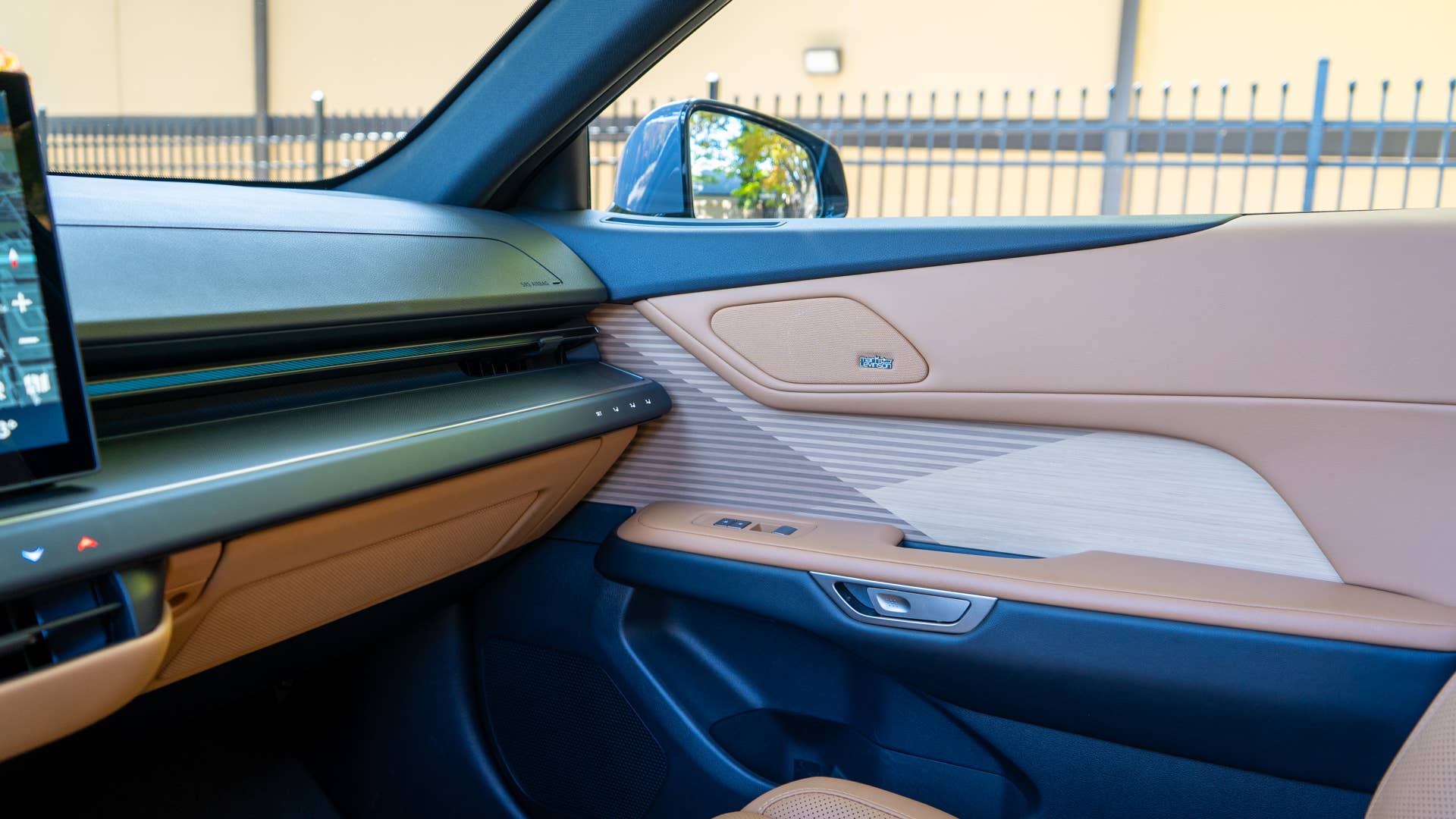
The Lexus traded some immediate drama for a much calmer atmosphere. Its screens took up substantial space, yet they felt less like they dominated the dashboard, leaving room for more sculpted depth. Physical buttons and familiar controls cut the learning curve the CLA’s tech-heavy cabin introduces, but the difference went beyond visual restraint. Patterned bamboo accents were exquisite to look at and to the touch, while the soft-textured Mark Levinson speaker covers and subtle metal details added even more depth to the cabin’s finely-applied upholstery. Its own fantastic sound system complemented an environment that felt confidence-inspiring and prestigious.

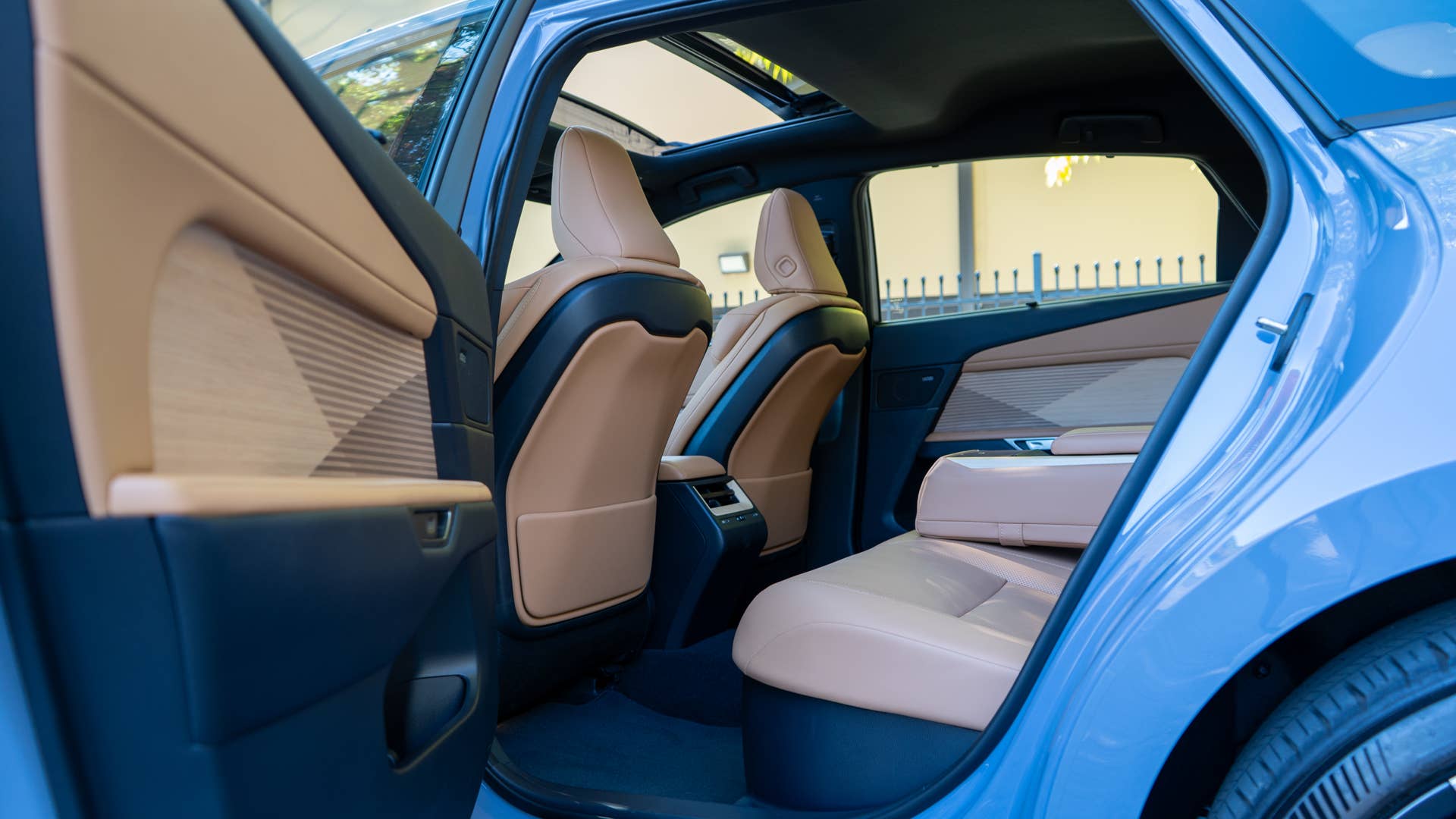
My ES tester also came with the $3,635 Executive Package, adding rear-seat adjustments, heating, ventilation, massage, and a passenger-side ottoman, extending the emphasis on comfort into the rearward cabin. Additionally, although Mercedes’s $1,050 SKY CONTROL option lets the fixed panoramic glass switch between transparent and opaque in selectable zones, I particularly appreciated that the Lexus’s sunroof could actually be opened, and its power-operated visor blocked out the glare of sunlight more effectively than the CLA’s overly complex system.

2026 Lexus ES 350e

Cole Attisha

Driving: Comfort Works Better When the Controls Agree

The Lexus leans into being what I’d affectionately call a “comfy old geezer car,” even with its edgy, contemporary look. Its priorities were clear: a comfortable ride, a quieter cabin, and controls that made smooth progress feel natural. It absorbed bumps better than the Mercedes and kept tire noise out better, despite its larger wheels. Lexus makes EV driving feel uncomplicated, and isn’t afraid to admit that comfort and ambiance take precedence over performance and tech.

2027 Mercedes-Benz CLA 250+

Cole Attisha

The CLA’s priorities felt a bit less obvious to me. Power arrived more gradually than I expected, lacking some of the immediate response I ordinarily find in an EV. That could appeal to someone who finds abrupt electric acceleration unpleasant, yet its throttle calibration, steering response, and sensitive braking still seemed to anticipate more aggressive inputs than its relaxed driving character encouraged, and the steering also lacked the precision I wanted when trying to drive more enthusiastically. Driven gently, the CLA became more convincing, but the Lexus made that same style of driving easier to achieve.

Road noise further complicated the Mercedes’s luxury credentials. The sound its tires made was more noticeable than I expected, and even more apparent than in the Subaru Trailseeker, Toyota bZ Woodland, and Toyota C-HR I drove at the same event shortly beforehand. Even over minor bumps, this CLA’s dashboard produced a high-pitched squeak; a quirk which I don’t often associate with high-quality fit and finish. Sport mode’s synthetic acceleration sounds did little to improve matters; the noises were strange and abstract to me, without a convincing character that made the car any more enjoyable. The Mercedes does offer one-pedal driving, though, a highly valuable EV convenience the Lexus, for some reason, lacks. The ES’s familiar two-pedal approach suits its easy-to-use character, but the lack of one-pedal driving in any modern EV feels like an egregious omission that could turn away far too many potential buyers who are already familiar with the nuances of EV driving.

2027 Mercedes-Benz CLA 250+

Cole Attisha

Range and Charging: The Mercedes Has an Edge

The Mercedes still has a much stronger technical argument than those cabin and driving criticisms might suggest. It offers more power, quicker acceleration, a larger battery, and a significantly higher maximum DC charging rate. Mercedes advertises up to 374 miles for the CLA 250+, but the official window sticker on the unit I tested claimed a 317-mile EPA-estimated range. Compared with the Lexus’s EPA-estimated 292-mile range, that gives the tested Mercedes a mere 25-mile advantage, and the Lexus also carries the higher combined MPGe rating.

Charging remains a meaningful strength for the Mercedes. Its published 10–80% estimate is 22 minutes, compared with 28 minutes for the Lexus. That may not sound like much, but imagine spending an extra six minutes at the gas station each time you fill up, and suddenly that added convenience doesn’t seem so trivial. Consider the 320-kW and 150-kW peak ratings alongside those charging-time estimates. To be clear, though, those are published figures; range and charging performance warrant a longer test than these event drives provided, and they’ll vary heavily with conditions and driving style. But for someone who regularly travels long distances, those advantages deserve serious weight.

2026 Lexus ES 350e

Cole Attisha

Value and Verdict: Lexus For Ease Of Mind, Mercedes For Tech Savviness

At almost identical as-equipped prices, I admittedly preferred the Lexus. Its appeal came from the way its attributes worked together: the softer ride, quieter cabin, more natural controls, attractive materials, and calmer presentation all supported the same idea of luxury. Despite earning my vote for the Best Battery Electric Vehicle (BEV) category at Drive Revolution, more NWAPA journalists ultimately voted in favor of the Mercedes-Benz for the award, which not only took home that trophy, but also tied with the Lucid Gravity Grand Touring for second place overall at the event, with the Genesis GV60 Magma placing first, against a field of combustion-powered, hybrid-powered, and other battery-powered entrants. So even if I’d personally take the Lexus here, I can’t as easily say there’s a definitive winner between these two surprisingly compelling electric luxury sedans in terms of what I would actually recommend.

The Mercedes’ extra performance and charging capability provide strong reasons to choose it over the Lexus. Buyers who enjoy its more extravagant interior and youthful styling may also find those qualities worth the compromises I noticed. The CLA offers a unique definition of attainable luxury in the electrified modern era, but for me, a luxury sedan should make everyday driving feel easier, calmer, and more special, and the ES did that more convincingly during these drives. Both cars improved on my first impressions in person, but the Lexus followed through more consistently once I started driving and stuck with me most after I handed back the keys.

Autoblog aims to feature only the best products and services. If you buy something via one of our links, we may earn a commission.
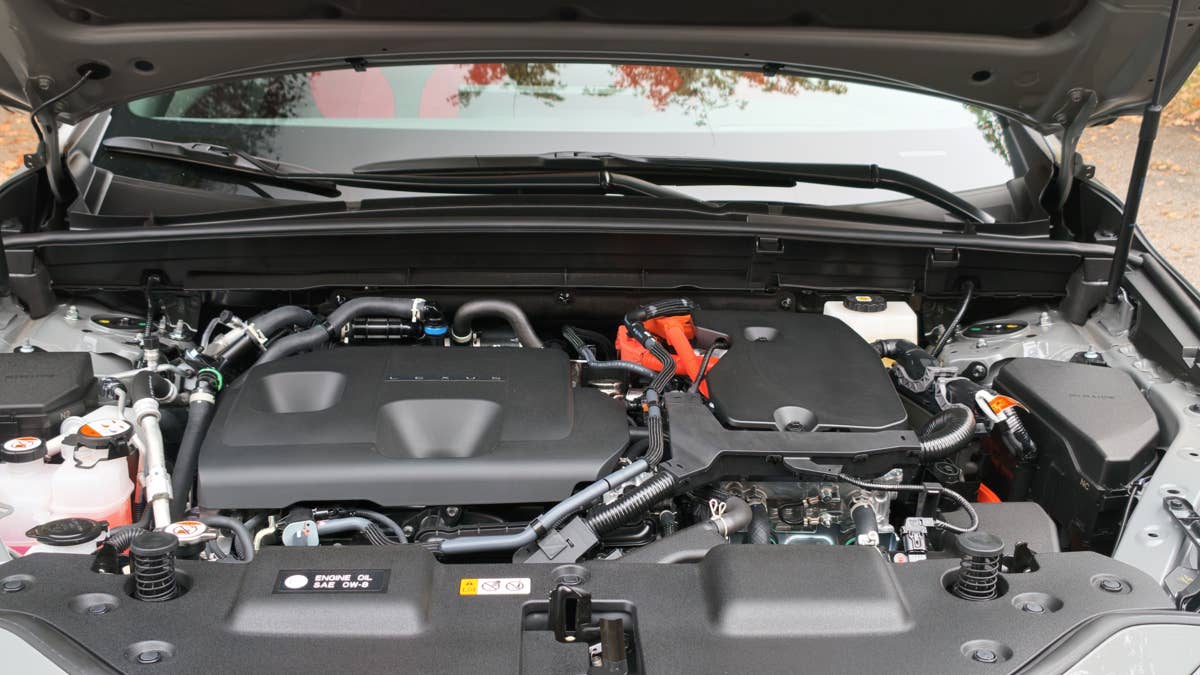
Aston Martin Vantage S Roadster vs. Mercedes-Maybach SL 680: Posh, Potent and Worlds Apart

I absolutely love my job, especially when it involves driving something as overindulgent as the Mercedes-Maybach SL 680 Monogram Series, followed by an Aston Martin Vantage S Roadster. These cars have more in common than you might expect, including related V8 engines and prices that occupy the same expensive neighborhood. Their personalities, however, are completely different. One wants to entertain the driver. The other wants everyone at the restaurant to know who just arrived.

I doubt many buyers will cross-shop them, but both cater to people who want exceptional performance, open-air luxury and a vehicle the valet will keep out front. They simply approach those goals differently.

View the 2 images of this gallery on the original article

Powertrains and performance

Both use 4.0-liter twin-turbocharged V8s with Mercedes-AMG roots, although their tuning and drivetrains produce distinctly different experiences. The Maybach delivers 577 horsepower and 590 pound-feet of torque through a nine-speed automatic and fully variable 4MATIC+ all-wheel drive. Mercedes estimates 0–60 mph in 4.0 seconds and electronically limits top speed to 161 mph. Its published curb weight is 4,409 pounds. That’s a substantial amount of rolling indulgence.

The Vantage S Roadster produces 670 horsepower and the same 590 pound-feet of torque, but sends power to the rear wheels through a rear-mounted ZF eight-speed automatic. Aston Martin quotes 0–60 mph in 3.4 seconds and a 202-mph maximum speed. An electronic rear differential, adaptive dampers and wide Michelin Pilot Sport S 5 tires help turn that enthusiasm into something usable.

View the 2 images of this gallery on the original article

Those mechanical differences become obvious immediately. The Maybach feels substantial, and that is part of its appeal. It wafts along the highway with the confidence of something that expects traffic to accommodate it. Call upon the AWD system in a corner, and it delivers reassuring traction, but the car’s mass remains apparent. It handles well; it simply prefers a flowing road to one that constantly changes its mind.

The Aston Martin feels more eager. Its steering, power delivery and chassis encourage involvement, and the engine sounds suitably enthusiastic about the assignment. It’s aimed at the sports-car crowd, including buyers considering Porsche and Ferrari, rather than someone whose main requirement is arriving without disturbing their hairstyle.

View the 4 images of this gallery on the original article

Exterior and interior design

Aston Martin has been on fire with its styling, and the Vantage S Roadster is beautiful from practically every angle. The aggressive grille, sculpted body, and purposeful rear treatment match its intent. It looks fast sitting still, and it looks even better with the roof down.

Who doesn’t appreciate something beautiful that’s topless? In terms of cars, people.

Its Z-fold roof opens or closes in just 6.8 seconds and can operate at speeds up to 31 mph. That is exceptionally quick, and useful when the weather decides your open-air afternoon needs a surprise ending.

The Maybach makes a louder visual statement despite being the quieter car to drive. I like its Mercedes-Benz star hood ornament, but there is no shortage of Maybach identification elsewhere. The patterned acoustic soft top and available monogrammed hood look like they belong in the same showroom as an exceptionally expensive designer handbag.

Some people will find that endearing. Others will wonder whether the car has a sponsorship deal with itself.

The illuminated grille, rose-gold headlight accents and Crystal White Nappa leather reinforce the theme. Inside, nearly every surface seems wrapped in something lovely to touch, and the seats are magnificent. It feels indulgent because it is indulgent. The suspension’s active hydraulic roll stabilization and standard rear-wheel steering add useful engineering beneath all that ornamentation.
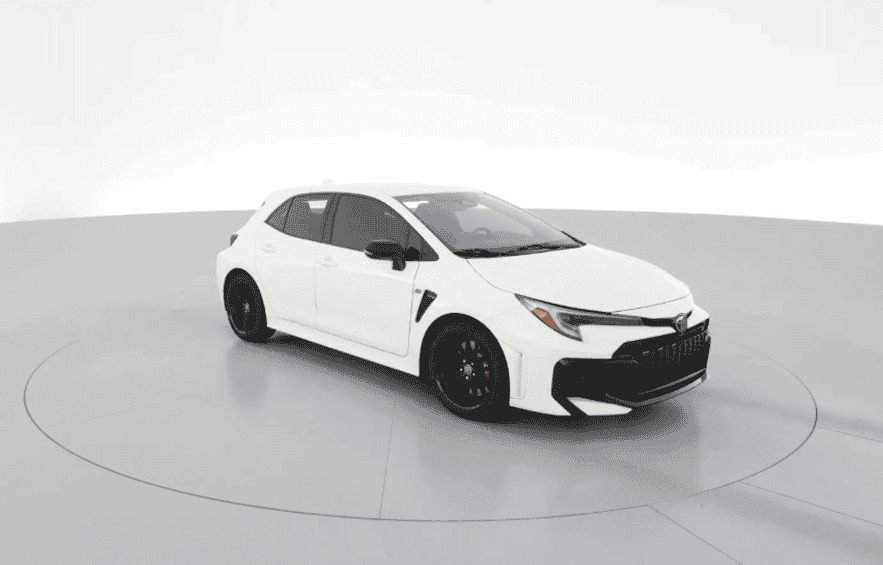
The Aston’s cabin is more restrained and more focused on the driver. Its interior design has finally caught up with the exterior, with attractive materials and controls that feel appropriate for the price. The seats are supportive, although they don’t deliver the Maybach’s pampering. That suits the car’s priorities, even if my large American frame occasionally appreciates a little extra cushioning.

View the 4 images of this gallery on the original article

Technology: lovely until it needs a reboot

The Maybach’s MBUX system combines a digital instrument display with a portrait-oriented central touchscreen. I found parts of the interface clunky, but I appreciate the electrically adjustable screen angle. Reducing glare with the roof down is a practical feature in a car otherwise packed with decorative flourishes.

The Aston uses a 10.25-inch touchscreen and retains useful physical controls. Apple CarPlay Ultra extends its integration into the driver display, making it more ambitious than simply putting phone apps on the center screen.

Related: Porsche Really Doesn’t Want You to Buy a Manual 911

Unfortunately, my experience included glitches and a system issue on the highway that required me to pull over safely and restart the vehicle. It went into limp mode. I can’t determine from that incident whether the fault originated with CarPlay or the car’s software, but I can tell you it interrupted an otherwise excellent drive.

At this price, “have you tried turning it off and back on?” should not be part of the ownership fantasy.

View the 2 images of this gallery on the original article

Pricing and personality

Neither car is remotely inexpensive. The Maybach starts in the mid-$220,000 range, while the Aston occupies roughly quarter-million-dollar territory before personalization. Options can move either substantially higher, particularly when buyers begin exploring bespoke paint, leather and trim.
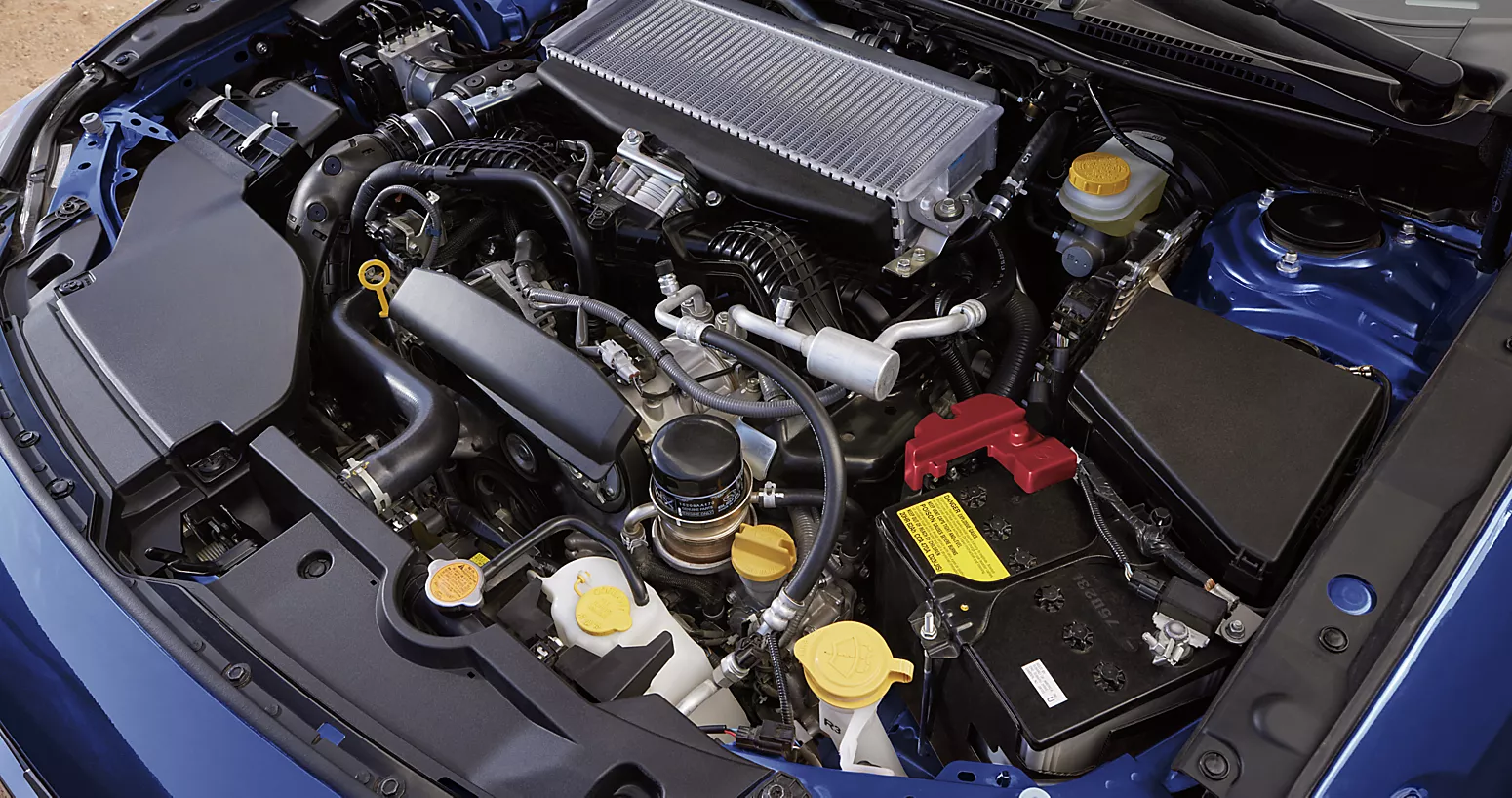
Still, the prices make more sense when you consider the audience. These are emotional purchases. The Maybach is built to make its occupants feel pampered and conspicuous. The Aston is built to make the driver seek a longer route home.

View the 4 images of this gallery on the original article

Final thoughts

I usually prefer reviewing vehicles people can realistically afford. Still, occasionally getting to drive machines like these feels like a holiday, and I’m grateful for it. Both cars are remarkably indulgent and an utter joy to drive in their own right.

Both make an entrance. Both have extraordinary engines, distinctive designs and enough presence to earn prime valet parking. The Maybach was a huge hit when I brought it to Beverly Hills, where it looked entirely comfortable among people who consider designer luggage an everyday necessity.

Related: 2028 Mercedes-Benz GLA-Class In The Metal: See The Revamped Crossover From Every Angle

My choice is the Aston Martin. Despite the software interruption, it delivered more entertainment and a style of luxury that suits me. The Maybach would be ideal for someone who values comfort and ceremony above sharper handling.
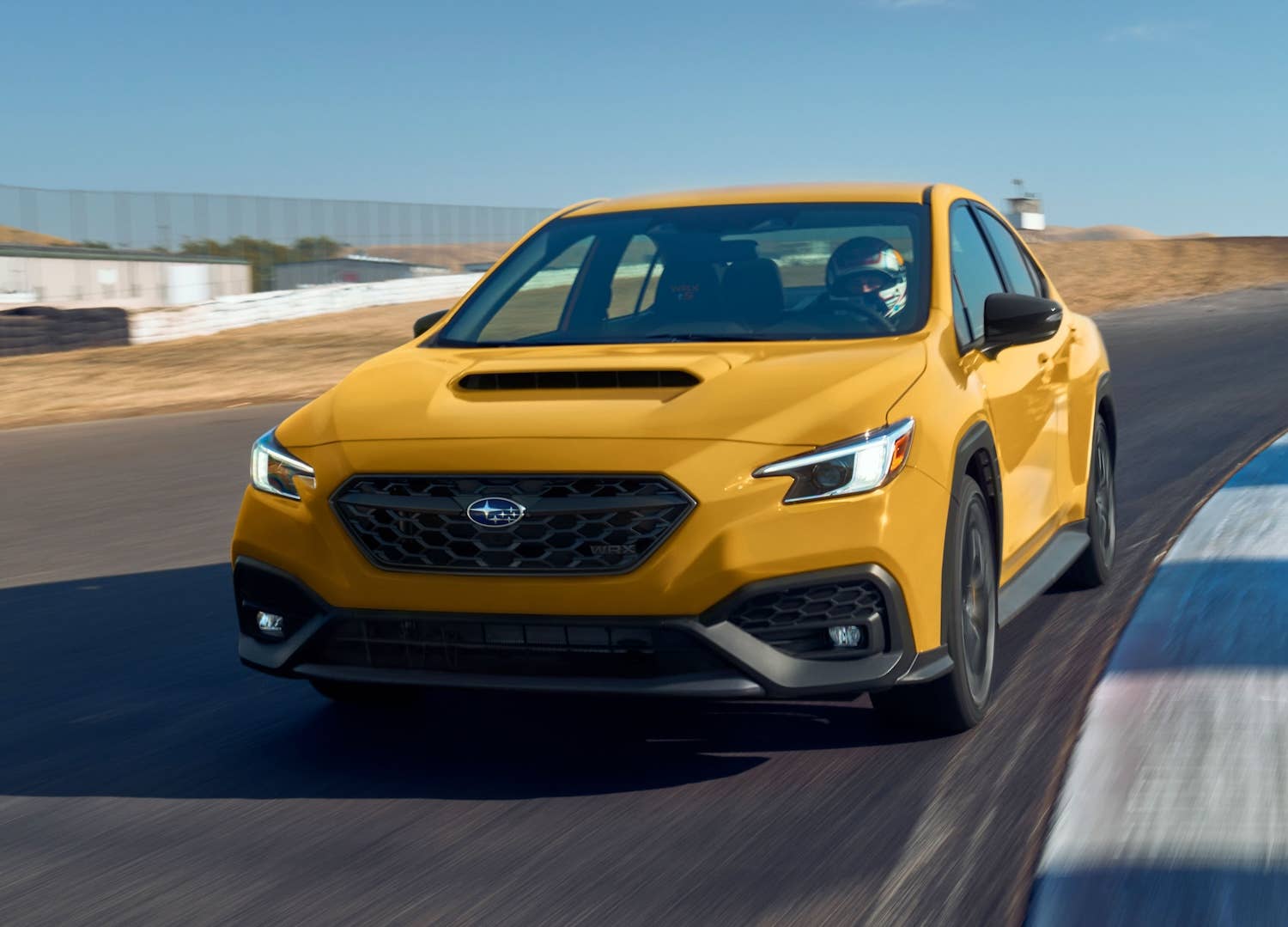
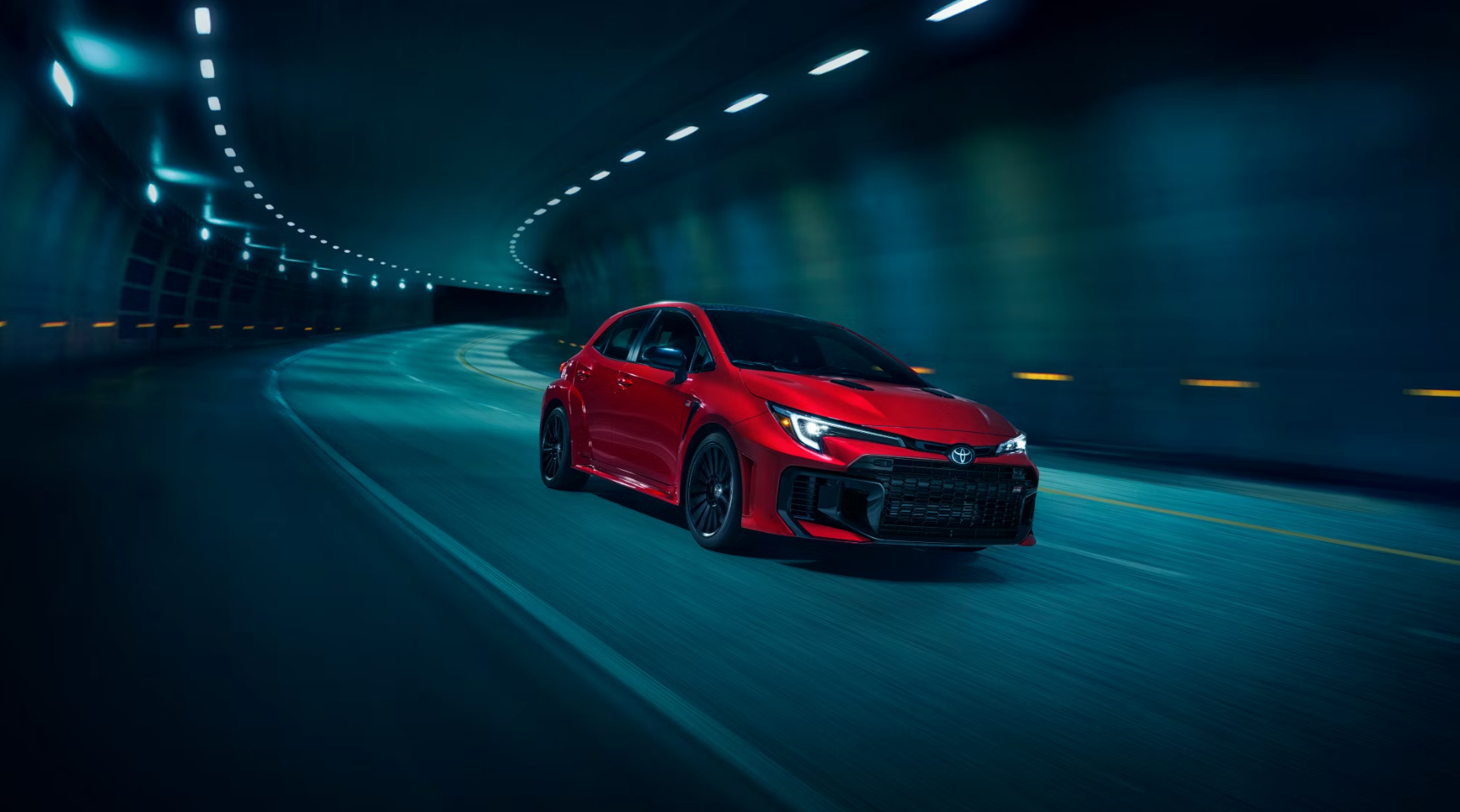
They both make you feel special. I prefer feeling special on the way to the restaurant rather than when I arrive.

Related: Lucid Air vs. Lucid Gravity: Sleek Sedan or Family Spaceship?

Lucid Air vs. Lucid Gravity: Sleek Sedan or Family Spaceship?

To me, Lucid is a baffling company. On one side, you have remarkable engineering, innovative powertrains and vehicles that can make established luxury brands look a little complacent. On the other, you have a sales approach that doesn’t always make sense to me. Regardless, its two vehicle lines, the Air sedan and Gravity SUV, are outstanding options for someone who wants a luxurious EV that manages to be sleek and somewhat understated. They look expensive without looking as though they desperately need you to notice.

Cars & Bids

View the 2 images of this gallery on the original article

The Air is a spacious electric sedan, while the Gravity offers five seats or an optional third row. The SUV also has adjustable air suspension and some capability beyond pavement, which broadens its appeal considerably. After driving both back-to-back, I understand why someone would fall for the Air. But for me, the Gravity’s combination of performance, space and everyday usefulness makes the choice surprisingly easy.

Powertrains and performance

The Air lineup begins with the Pure, priced from $70,900 before destination, taxes and options. Its single motor drives the rear wheels and produces 430 horsepower, with a manufacturer-estimated 0–60 mph time of 4.5 seconds. The $79,900 Touring adds dual-motor all-wheel drive, 620 horsepower and a 3.4-second sprint. That’s already more than enough performance for a commuter, unless your commute involves qualifying.

The Air Grand Touring starts at $114,900 and delivers 819 horsepower, AWD and a 3.0-second run to 60 mph. For the current 2027 lineup, Lucid projects maximum ranges of 420 miles for the Pure, 431 for the Touring and 512 for the Grand Touring, generally with 19-inch wheels. Those are manufacturer projections for 2027; wheel choice, weather and your right foot will influence what you actually achieve.

2023 Lucid Air Touring

Cars & Bids

The Gravity starts at $79,900 for the Touring. It has two motors, standard AWD, 560 horsepower and an estimated 4.0-second run to 60 mph. The $98,900 Grand Touring raises output to 828 horsepower and trims that sprint to 3.4 seconds. Maximum EPA-estimated range is 337 miles for the Touring and 450 miles for the Grand Touring, specifically in five-seat configurations with 20-inch front and 21-inch rear wheels. Add larger wheels or change the seating configuration, and you should check the corresponding range figure.

Those numbers can overshadow how these vehicles actually drive. Both are smooth, quiet and remarkably composed. I found their steering more responsive than what I’ve experienced in several Tesla models, and the Air’s grip is impressive. It encourages you to stretch its legs and enjoy a corner without constantly reminding you that you’re moving a substantial battery pack around.

The Gravity is no slouch, either. Despite its higher stance and family duties, it feels surprisingly light on its toes. I suspect plenty of buyers will prefer it simply because climbing in and out is easier. The Air sat low enough at my house that I had to arrange my pockets and belongings before lowering myself into it.

Some valuables require careful packaging. You get my point.

Copart

View the 3 images of this gallery on the original article

Technical information: charging is where things get interesting

The Gravity Grand Touring uses a 123-kWh battery, while the Touring has an 89-kWh pack. The Grand Touring’s 926-volt electrical architecture supports charging at up to approximately 400 kW on suitable high-voltage equipment. Lucid says it can add 200 miles of range in under 11 minutes under the specified conditions. The Touring’s corresponding claim is 200 miles in about 15 minutes. These are miles-added estimates under favorable conditions, rather than promises that every charging stop will finish before your coffee cools.

The clever part is how the Gravity works with lower-voltage chargers. Lucid uses the rear motor’s drive electronics to boost charging voltage, allowing its high-voltage battery to accept power efficiently from 500-volt equipment. The company quotes sustained charging speeds of up to 225 kW on compatible chargers using that architecture, including Tesla V3 Superchargers. The Gravity also has a native NACS charging port. This is useful engineering that can improve a trip, rather than another feature buried three menus deep.

The Air can charge rapidly at suitable CCS equipment, but its Tesla Supercharger access deserves attention. Lucid’s published NACS-to-CCS adapter arrangement allows charging at up to 50 kW. Having access to a charger and taking full advantage of its output are different things. If your regular road trip relies heavily on Tesla stations, the Gravity has a meaningful advantage.

Cars & Bids

View the 3 images of this gallery on the original article

Exterior, interior and everyday usefulness

I like Lucid’s design restraint. The Air is elegant, while the Gravity manages to look distinctive without pretending it’s a military transport. Neither feels obligated to announce that the future has arrived by assaulting your eyeballs.

The Gravity’s packaging is especially impressive. Average-size adults can use the third row, and Lucid quotes more than 21 cubic feet of cargo space behind it. With the rear seating folded, the seven-passenger version provides more than 111 cubic feet of total usable cargo space; the five-seat version offers up to 120 cubic feet. The sliding second row adds flexibility, and the available Towing Package brings a quoted capacity of up to 6,000 pounds, subject to configuration and loading.

Its adjustable air suspension also makes it more adaptable than the sedan. The available Dynamic Handling Package adds rear-wheel steering and a three-chamber air suspension, helping the SUV maneuver and manage its considerable mass. I appreciate the ability to venture beyond pavement, although the Gravity’s strongest argument remains its combination of road manners and utility.

Related: I Drove the VW ID.7 Tourer: It Shows What America Is Missing

Both cabins are loaded with screens. The Air uses a 34-inch curved Glass Cockpit, while the Gravity has a 34-inch curved 6K OLED display and a separate, horizontally oriented Pilot Panel. An available augmented-reality head-up display puts information closer to the driver’s line of sight.

There’s a tremendous amount of technology to absorb. The current lineup includes DreamDrive 2 Premium driver assistance, with additional capabilities depending on equipment. I appreciate the assistance, but the driver still has to supply judgment. Having several hundred horsepower and an impressive computer does not automatically make you an impressive driver.

For somebody who still occasionally counts on his fingers despite being over five decades old, the experience can feel like stepping into a computer. Fortunately, it’s a soothing computer with comfortable seats and, depending on the configuration, a very persuasive massage function.

Lucid

View the 4 images of this gallery on the original article

The top trims get wonderfully ridiculous

The Air Sapphire occupies another performance universe. At $249,000, it offers three motors, 1,234 horsepower and a claimed 0–60 mph time of 1.89 seconds. Its twin rear motors provide torque vectoring, while standard carbon-ceramic brakes help contain the enthusiasm. The current 2027 projected range is still 427 miles. That’s an extraordinary combination of speed and endurance, even if the purchase price requires considerably more fingers than I possess.

The Gravity GT-S starts at $125,900 and produces 1,070 horsepower, with an estimated 3.1-second sprint to 60 mph. It includes the Dynamic Handling Package and retains seating for up to seven. Lucid projects 373 miles of range. It’s the version for someone who wants family utility but apparently feels 828 horsepower leaves too much room for personal growth.

Cars & Bids

View the 2 images of this gallery on the original article

Final thoughts

Comparing these vehicles with Tesla is understandable, but it isn’t the whole story. Tesla now says the Model S and Model X are no longer in production, and Lucid deserves to be judged on its own engineering, luxury and driving character.

For me, the Gravity wins. I like its space, easier access, versatility and ability to explore beyond the pavement. The Air is the more elegant sedan, and its range is compelling, but the Gravity fits more of what I want from one vehicle.

Related: 2026 Toyota C-HR Review: The Small SUV Finally Gets the Power It Deserves

My admiration doesn’t make either affordable, nor does a satisfying test drive establish long-term reliability. I also want Lucid’s technology to reach more buyers. The company has announced a midsize platform with a planned starting price below $50,000, which could help address that concern if it delivers.

Lucid clearly knows how to build something fast, capable, and technically fascinating. Now I’d like more people to be able to buy one without first arranging a meeting with their banker and possibly a therapist.

Related: Towing a Pebble Flow With a Rivian R1S: The Future of Electric Towing?