
2027 Hyundai Palisade XRT Pro Review: Finally, Some Dirt Backing Up the Badge

Hyundai invited us into the Ozarks to find out whether the Palisade XRT Pro could do more than look adventurous outside a sporting-goods store. Considering where the XRT badge started, that was a fair question. Earlier versions leaned heavily on dark trim, rugged styling, and the suggestion that their owners occasionally purchased hiking boots. Actual off-road improvements were less convincing. The 2027 Hyundai Palisade XRT Pro changes that equation with useful mechanical hardware, better tires, and enough trail capability to earn some dirt.
View the 1 images of this gallery on the original article

More importantly, Hyundai managed this without ruining what makes the Palisade appealing in the first place. It remains a comfortable, well-equipped, three-row family crossover. Now, when the pavement ends, there’s a little more substance behind the swagger.
What makes the XRT Pro different?

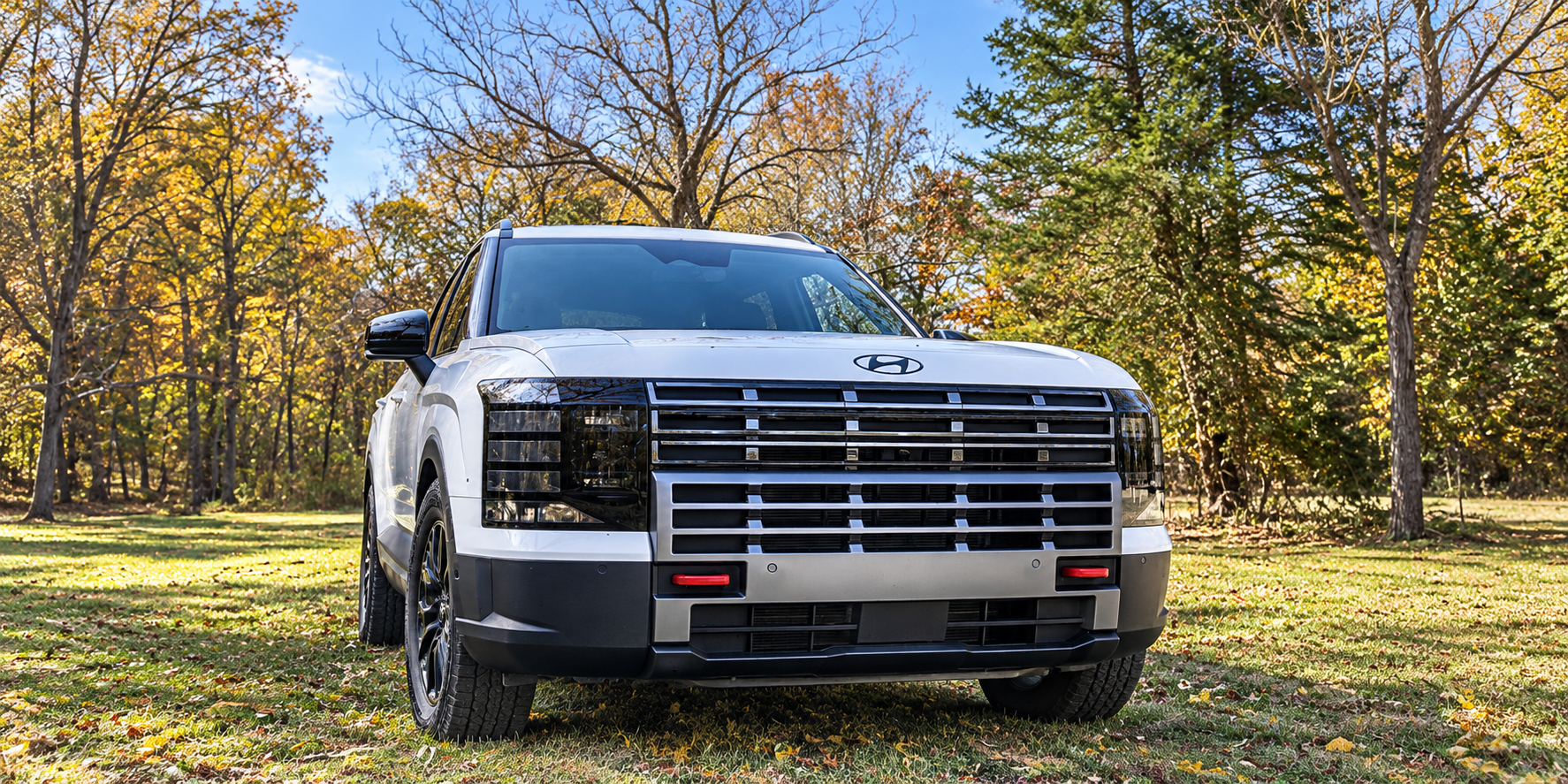
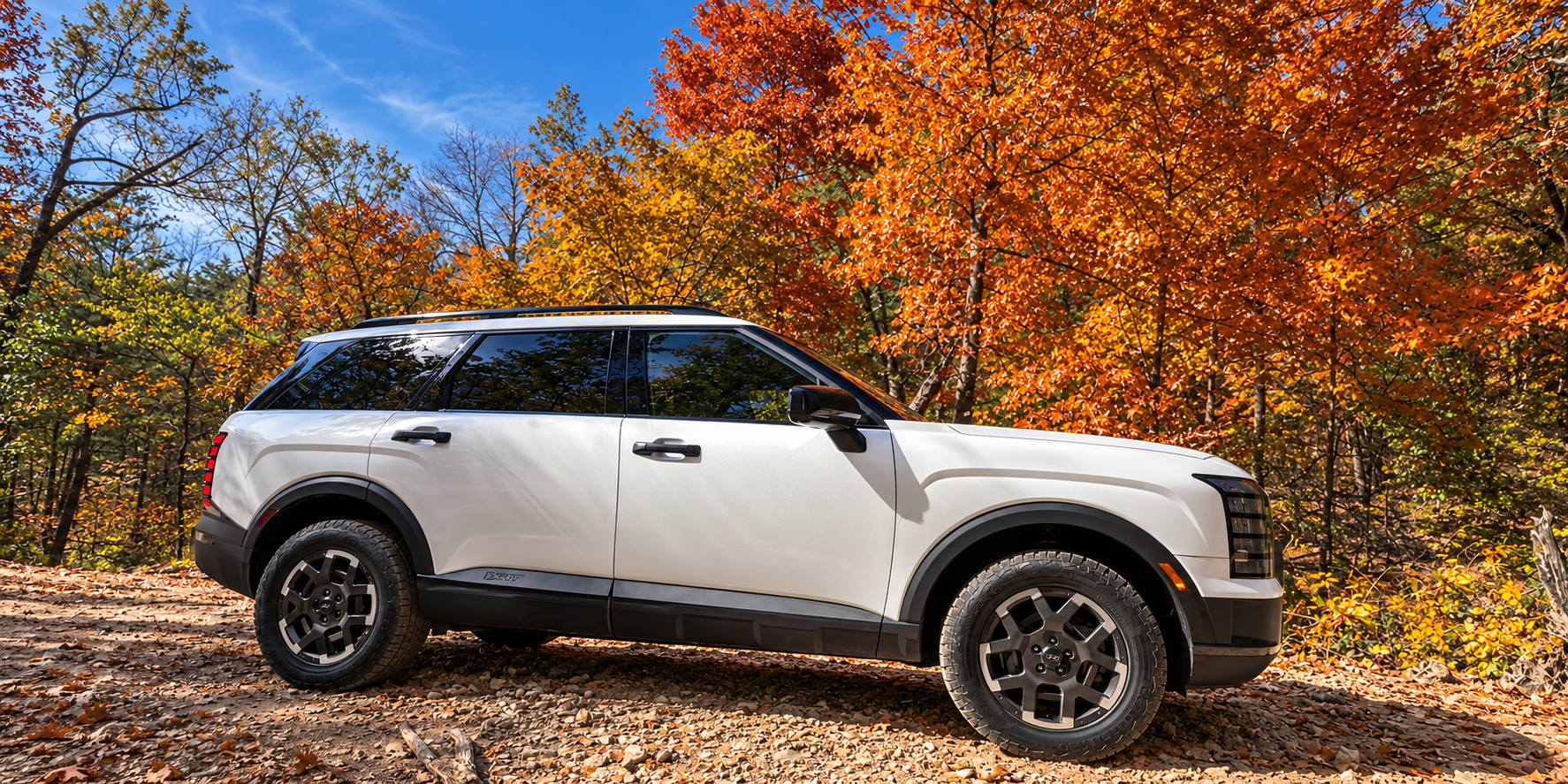
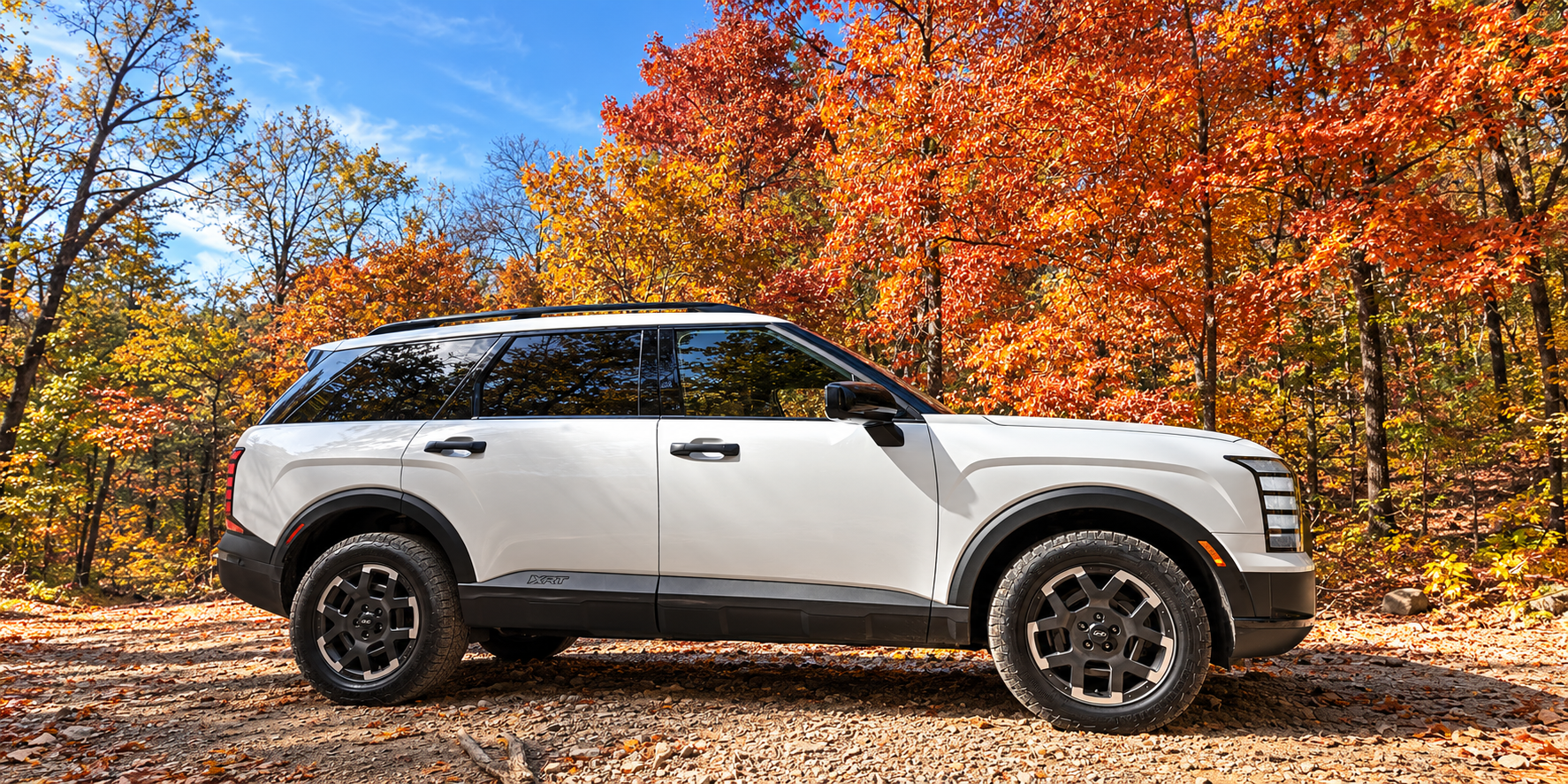
The important changes start underneath. The XRT Pro gets standard HTRAC all-wheel drive, an electronically controlled rear limited-slip differential, and an extra inch of ground clearance, bringing the total to 8.4 inches. Its 18-inch dark-finish alloy wheels wear 255/60R18 Continental all-terrain tires, giving it more useful rubber for loose surfaces than a typical street-oriented family hauler.

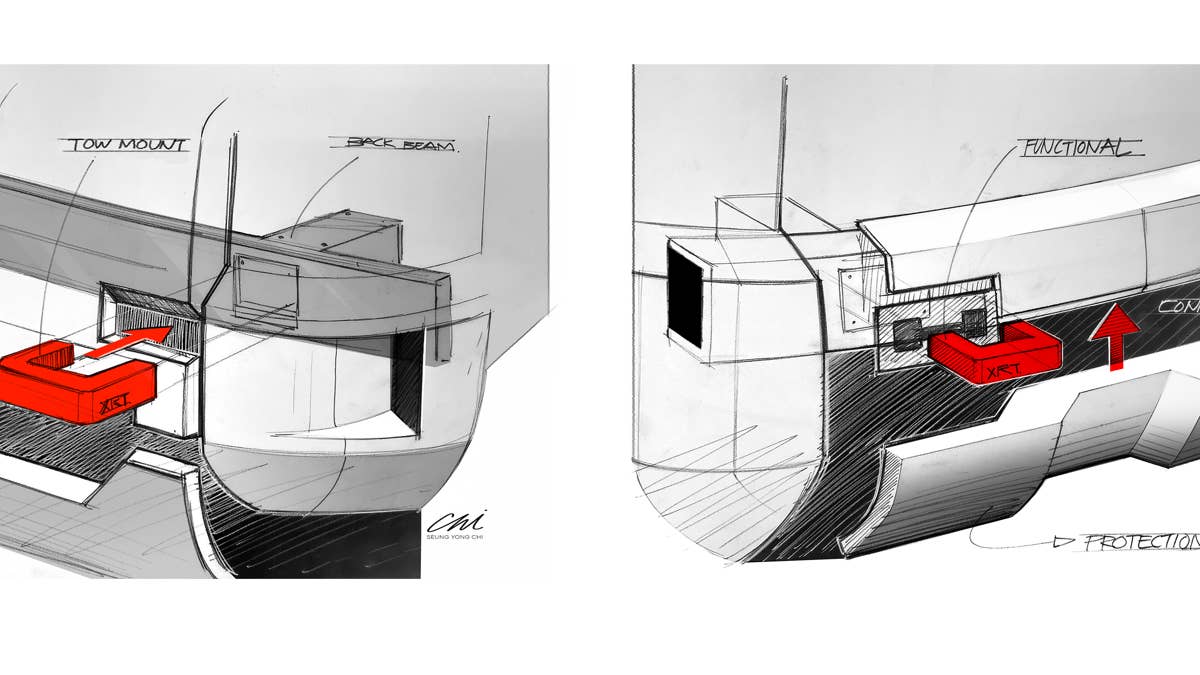
Reworked bumpers contribute to a 20.5-degree approach angle, an 18.3-degree breakover angle, and a 22.4-degree departure angle. Those numbers won’t frighten a dedicated rock crawler, but they matter when approaching a steep climb or dropping into a rut. Functional Canyon-Red recovery hooks are fitted front and rear, while Mud, Sand, and Snow terrain settings tailor the drivetrain’s response. Downhill Brake Control takes some of the workload out of descending steep sections.
ND Adlen

The rear differential deserves particular attention. Its electronically controlled clutch mechanism limits the difference in wheel speed across the rear axle, helping the tire with traction continue working when the other loses purchase. It isn’t a traditional selectable locking differential, but it provides a meaningful advantage over relying entirely on brake-based traction control.

That distinction became considerably more interesting once we reached the trail.

Powertrain and performance

Under the hood is a naturally aspirated 3.5-liter V6 producing 287 horsepower and 260 pound-feet of torque, paired with an eight-speed automatic. This is the U.S. XRT Pro’s powertrain, even though other Palisade trims offer a hybrid alternative. Maximum towing capacity is 5,000 pounds when properly equipped, and the XRT Pro includes a factory hitch and Tow mode.

Related: Genesis GV70 vs. Maserati Grecale: Sensible Luxury Meets Italian Temptation

The V6 is smooth, predictable, and perfectly agreeable during normal driving. It also has a substantial SUV to move. With roughly 5,000 pounds in the equation, acceleration feels adequate rather than enthusiastic. It doesn’t embarrass itself, but a little more torque would be welcome when climbing, passing, or carrying a full load of people and their belongings. EPA estimates 16 mpg city, 22 mpg highway, and 19 mpg combined. That’s mediocre.

On the trail, however, the engine’s measured delivery works in its favor. It’s easy to feed in power without getting an abrupt response. There are situations where exciting throttle behavior is desirable. Picking your way over an obstacle with passengers aboard generally isn’t one of them.
View the 1 images of this gallery on the original article

Off-road in the Ozarks

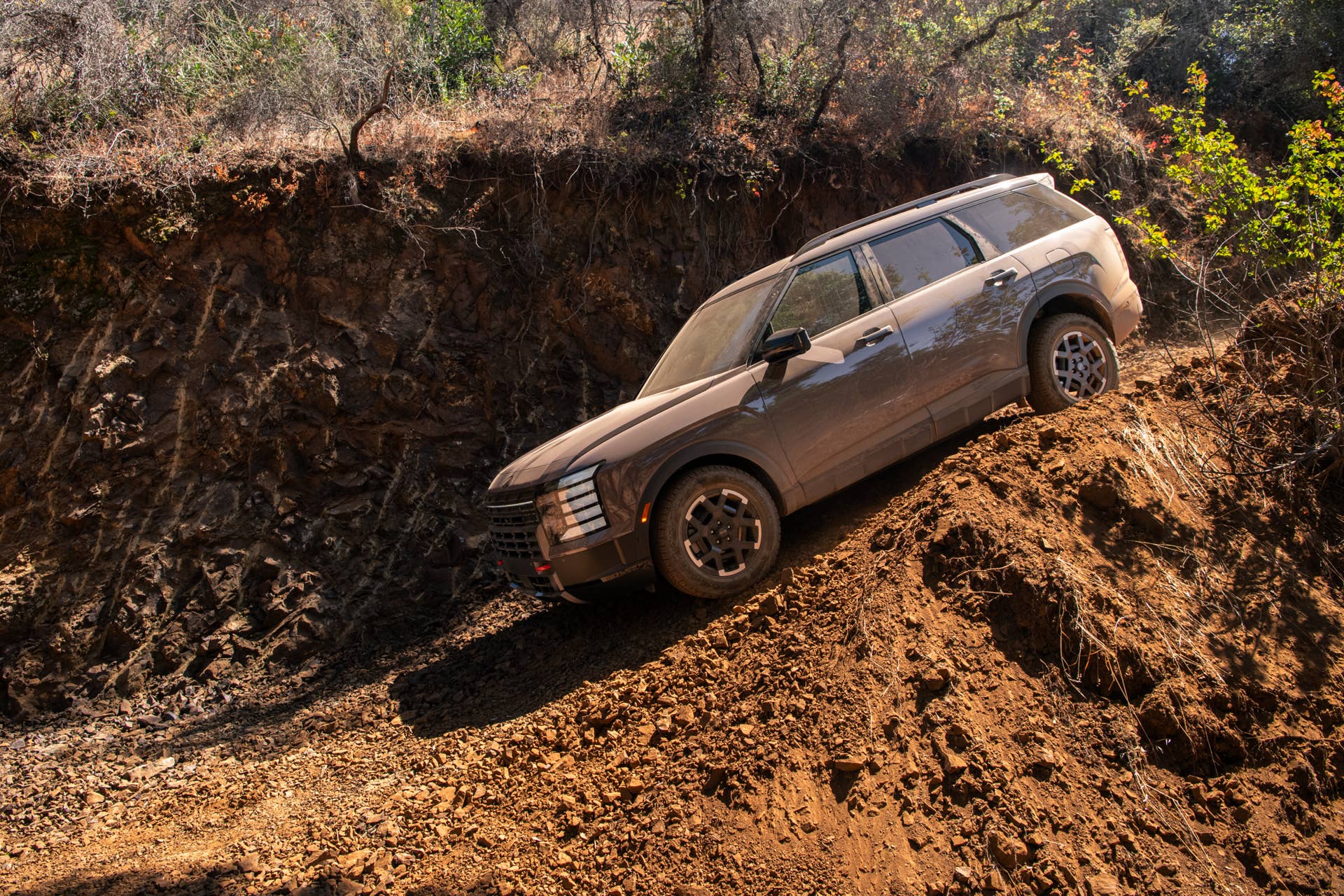
The Ozarks gave us a useful opportunity to exercise the tires, differential, and extra clearance. Hyundai’s route included uneven climbs, loose dirt, and off-camber sections that put the suspension and traction systems to work. This was an organized manufacturer event, so I wouldn’t treat it as proof that the Palisade can conquer every trail. Still, the obstacles revealed considerably more than another scenic gravel-road drive would have.

The Continental tires found purchase on loose surfaces without excessive wheelspin, and the rear differential helped the Palisade keep moving when the terrain unloaded individual wheels. In cross-axle situations, including moments with two wheels hanging, the drivetrain sorted out the available traction with surprisingly little fuss.

Related: Is a $54,000 Subaru Ascent Onyx Edition Touring Worth the Money? Here are Three Better Choices

I deliberately stopped on certain climbs to remove momentum from the equation. That’s an effective way to expose a vehicle that has been getting by on a running start and optimism. The Hyundai pulled away and continued climbing without the drama I expected. Smooth throttle application mattered, but the hardware was clearly doing its job.

Its limitations are equally clear. This is a long, heavy family crossover with modest clearance and an 18.3-degree breakover angle. You need to choose your line, watch the underside, and respect how much vehicle follows behind the front wheels. I would welcome more substantial underbody protection before repeatedly tackling rougher trails.

Think hiking boots strapped to a hippopotamus. Surprisingly effective, provided you give it room.
Living with it on pavement

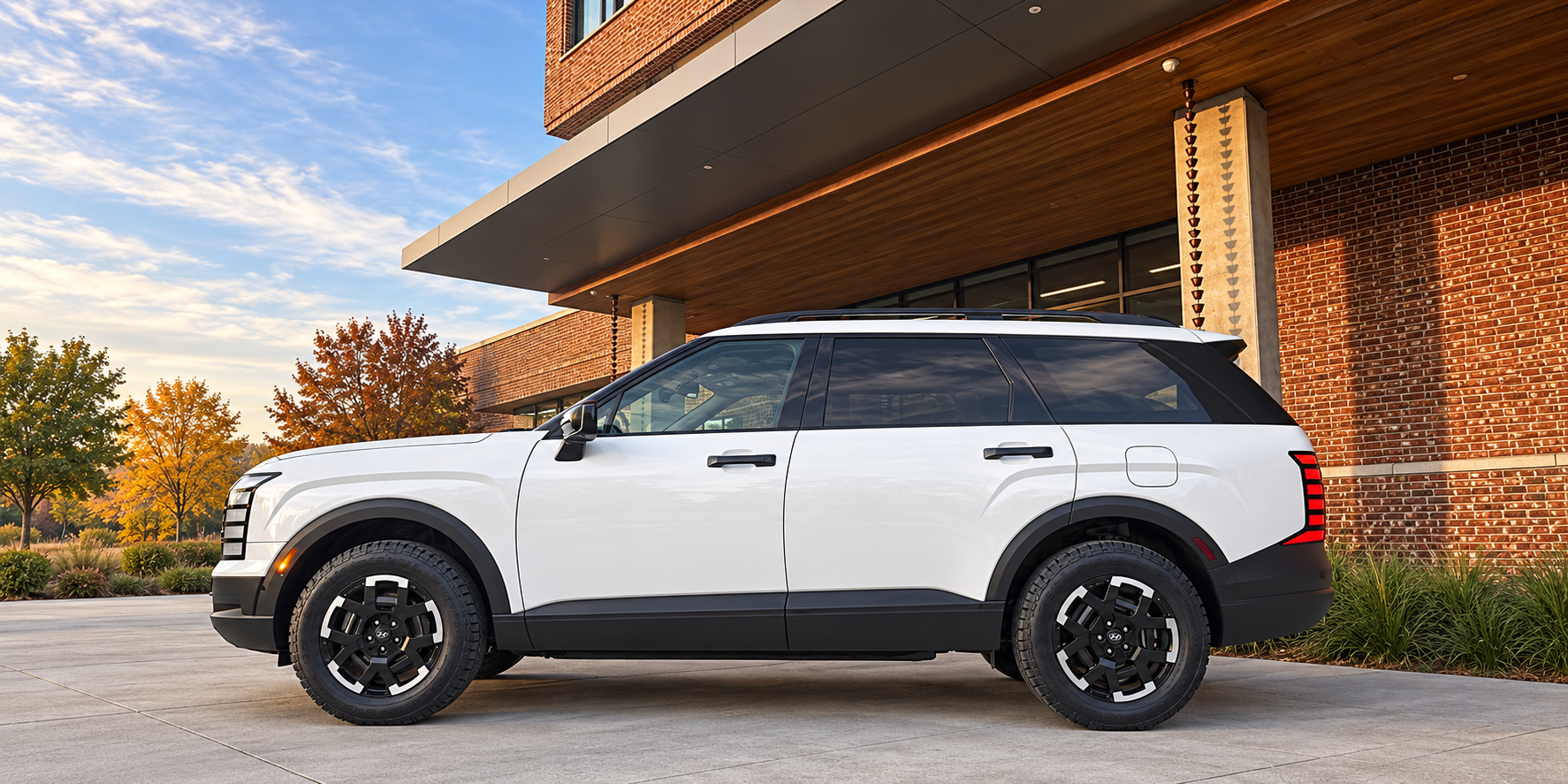
Fortunately, those boots don’t ruin the commute. The all-terrain tires introduce a little more road noise, but the difference becomes difficult to notice with the stereo playing. I didn’t find an irritating vibration or a harshness penalty that would make me regret the off-road package Monday morning.

The ride remains comfortable, and the cabin is relatively serene over longer distances. Handling is deliberate rather than playful, which is reasonable for something this large. The XRT Pro doesn’t suddenly become a sports SUV because the badge acquired another word. Parking still requires attention, although the camera systems help.

That balance is its strongest argument. Most owners will spend far more time transporting family members than lifting wheels in the Ozarks. Hyundai preserved the daily comfort while giving them a more capable escape route.
View the 3 images of this gallery on the original article

Exterior and interior design

The unique bumpers, dark trim, red recovery hooks, and taller stance give the XRT Pro a convincing appearance. I find it handsome, although a little more tire would better match its visual ambition. I’m pleased Hyundai used 18-inch wheels rather than enormous rims wearing rubber bands.

Inside, the predominantly black treatment hides some of the Palisade’s attractive shapes. The dashboard has an appealing sweep, and the cabin feels thoughtfully designed, but I would appreciate more color contrast.

Related: 2027 Kia Telluride Hybrid vs. 2026 Hyundai Palisade Hybrid: I Drove Both To See Which Three-Row SUV I’d Buy

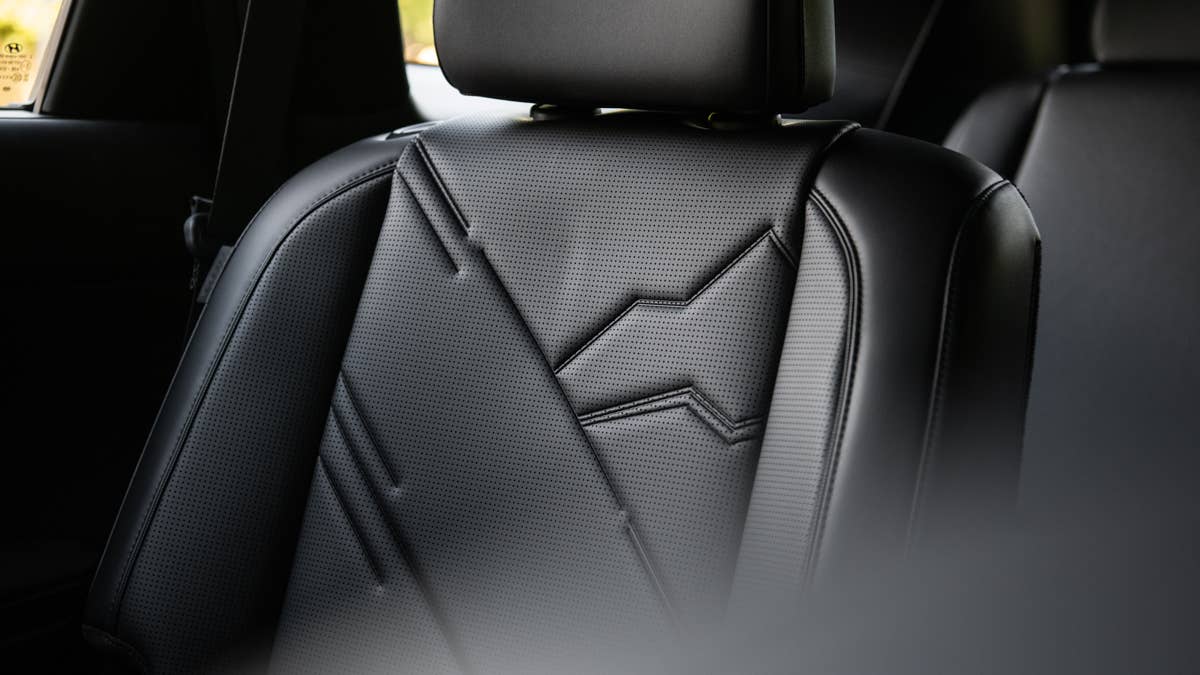
Seven-passenger seating includes second-row captain’s chairs. Standard equipment brings H-Tex leatherette upholstery, heated and ventilated front seats, a heated steering wheel, a 14-speaker Bose system, and a 115-volt outlet. A 12.3-inch touchscreen pairs with a matching digital instrument display.

More relevant to this test, the off-road display provides pitch, roll, compass, and elevation information. The surround-view camera’s forward ground view also helps when the hood obscures what lies immediately ahead. Those are useful tools when placing a large vehicle on uneven terrain.
Final thoughts

The Palisade XRT Pro belongs alongside the Honda Pilot TrailSport, Nissan Pathfinder Rock Creek, Chevrolet Traverse Z71, and Kia Telluride X-Pro. Each aims to combine family utility with greater trail confidence, and Hyundai now has a credible contender.

At roughly $51,000, depending on current pricing and destination charges, the XRT Pro offers a compelling package. I’d still like more clearance, stronger protection underneath, and additional power. Nevertheless, it handled our Ozarks obstacles with composure and remained an excellent road companion afterward.

Hyundai finally gave the badge something useful to do. Getting it dirty feels appropriate.

Related: The 2026 Volvo XC90 PHEV is a Commuting Star, But It’s Pricey
I Drove BMW’s All-New X5, iX5 and 7 Series. Here’s What Stood Out

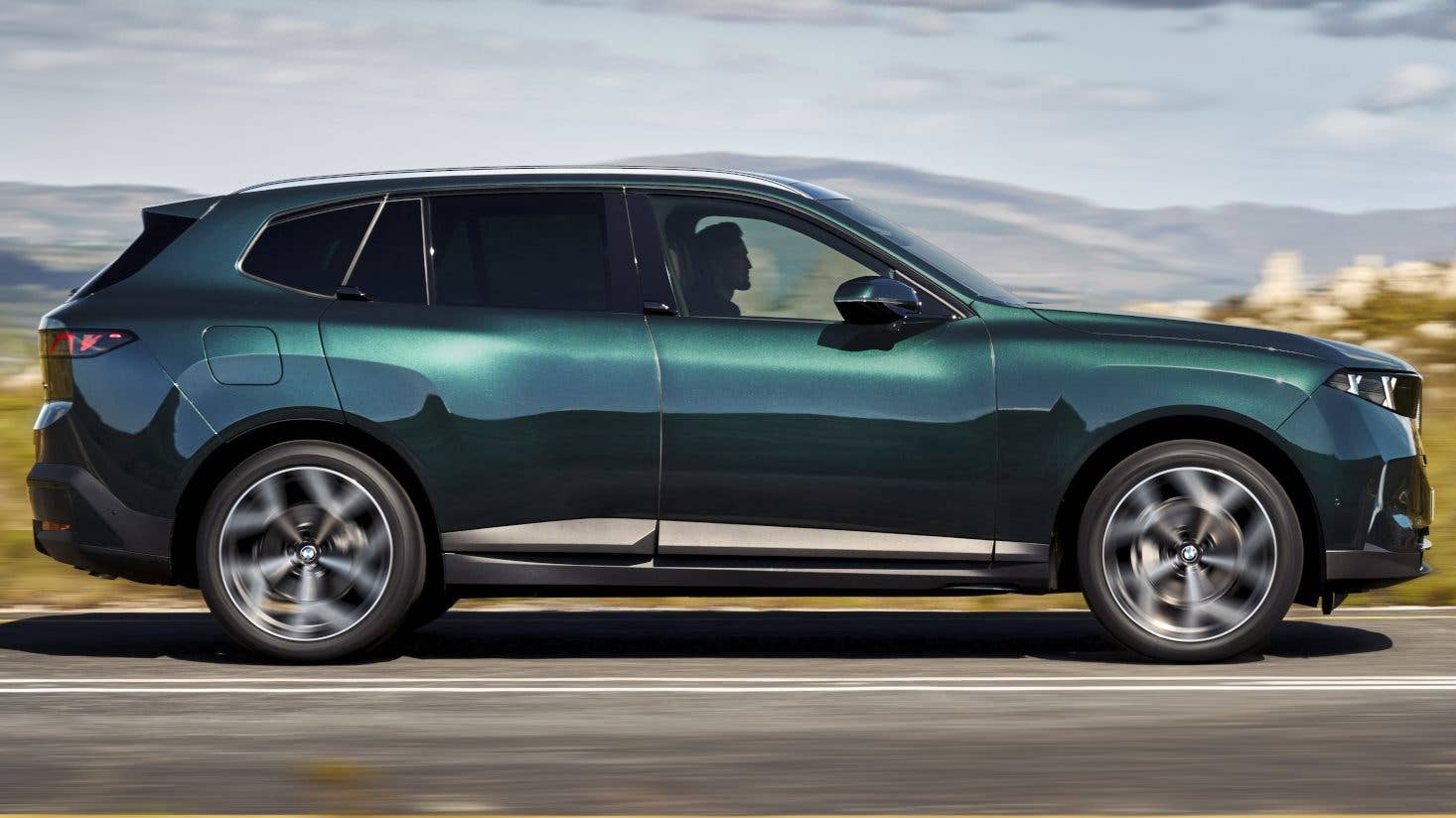
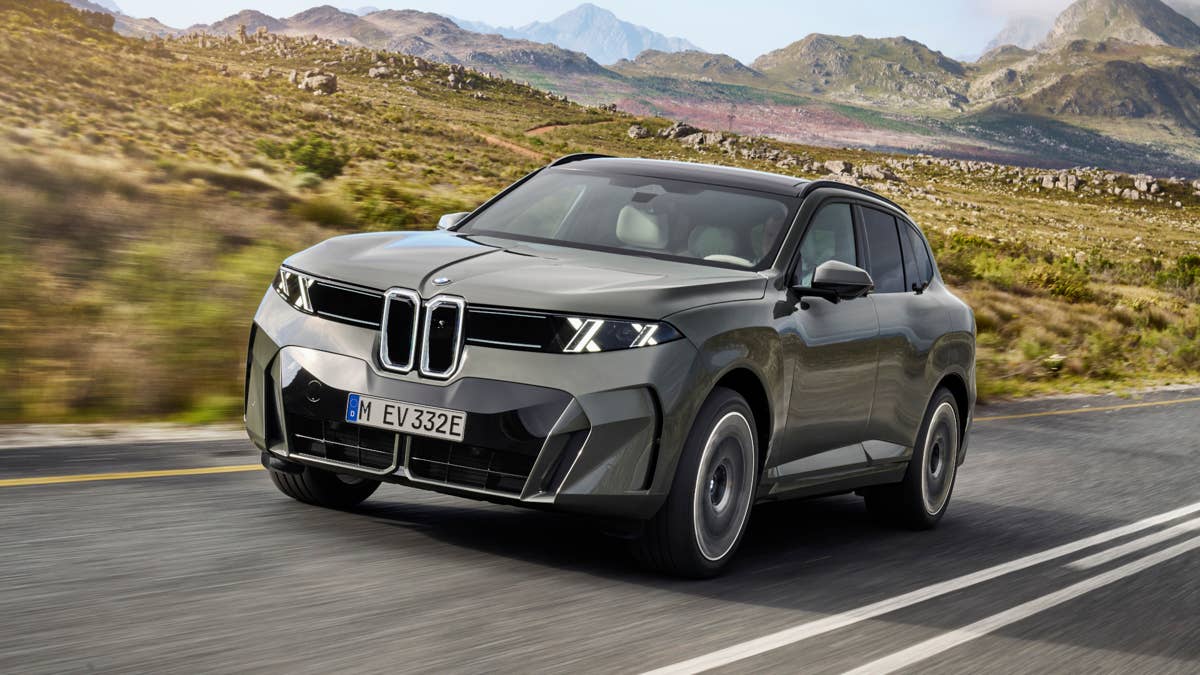
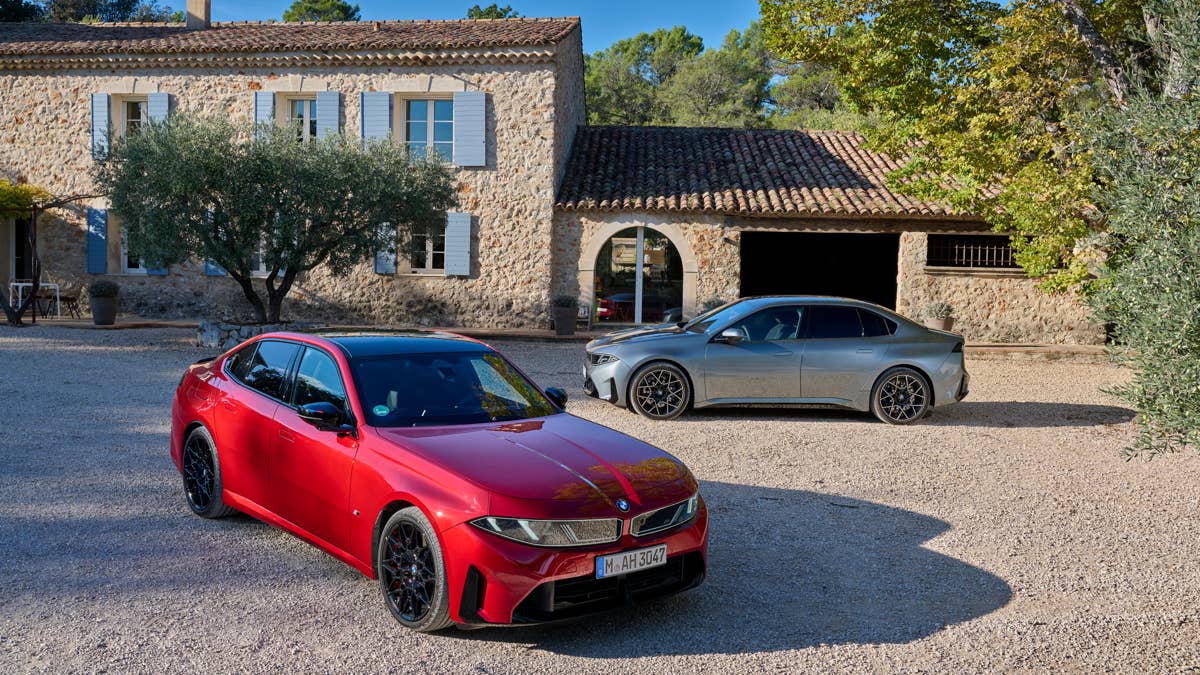
The fifth-generation 2027 BMW X5, its first all-electric sibling, the iX5, and the heavily reworked 7 Series all wear the brand’s Neue Klasse design and new tech. I drove them across Southern California on highways, back roads and city streets. I drove four: the X5 40 xDrive, the iX5 60 xDrive, the 740 and the i7 60 xDrive. Three of them were sporty and engaging. The fourth reminded me that physics still applies to luxury flagships.

The X5 Is Still the One to Beat

The X5 is BMW’s bread and butter, and the new one drives like it knows it. The X5 40 xDrive uses a 3.0-liter turbocharged inline-six with a 48-volt mild-hybrid system, good for 394 horsepower and 428 lb-ft of torque. That’s up 19 hp and 45 lb-ft over the outgoing model, and BMW quotes 0-60 mph in 5.1 seconds.

2027 G65 BMW X5 with black Interior

BMW USA

On the road it’s sporty and engaging in a way many midsize luxury SUVs aren’t. It’s planted on the highway, eager on back roads and very smooth around town. Standard adaptive suspension and near 50:50 weight distribution do a lot of the work.

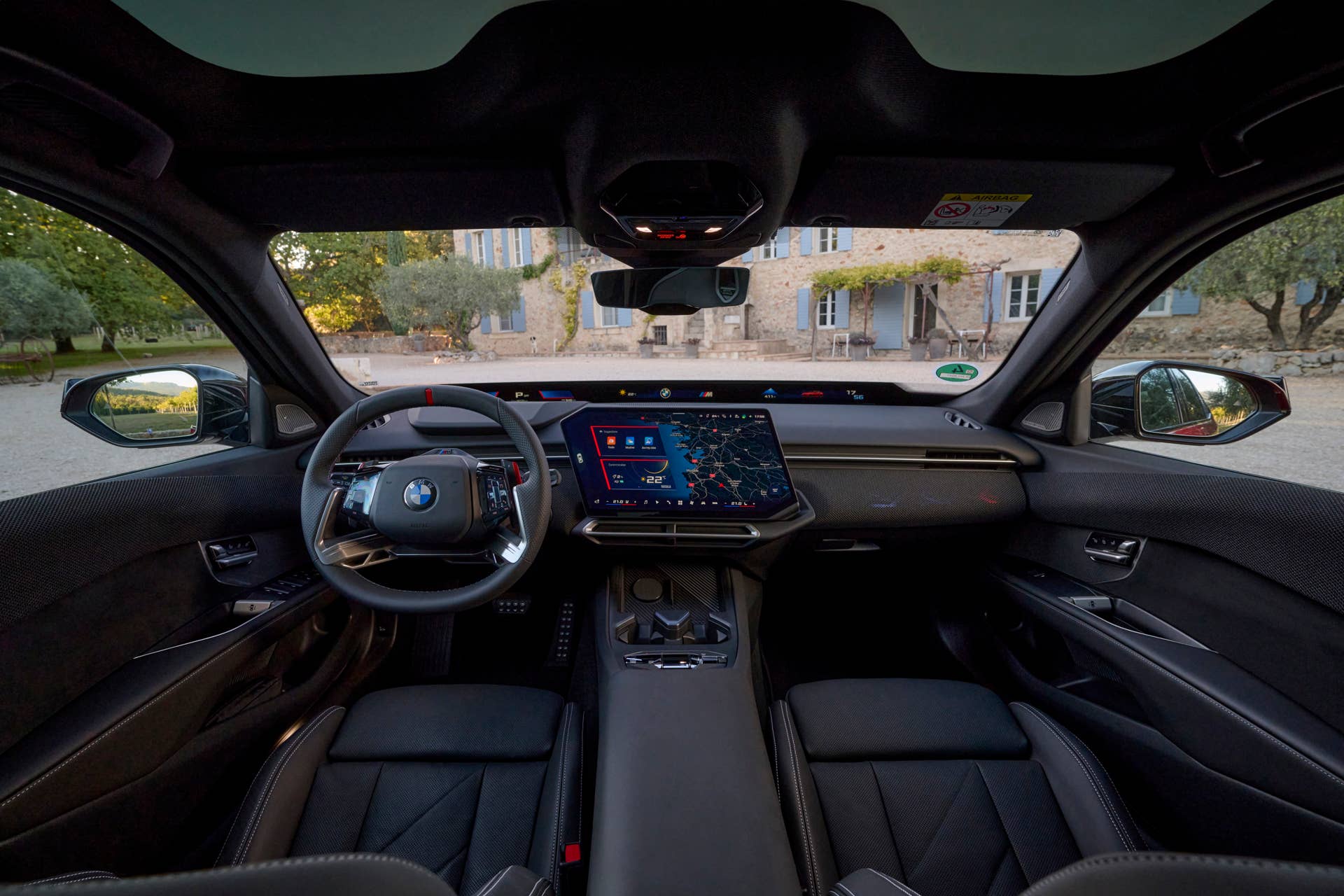
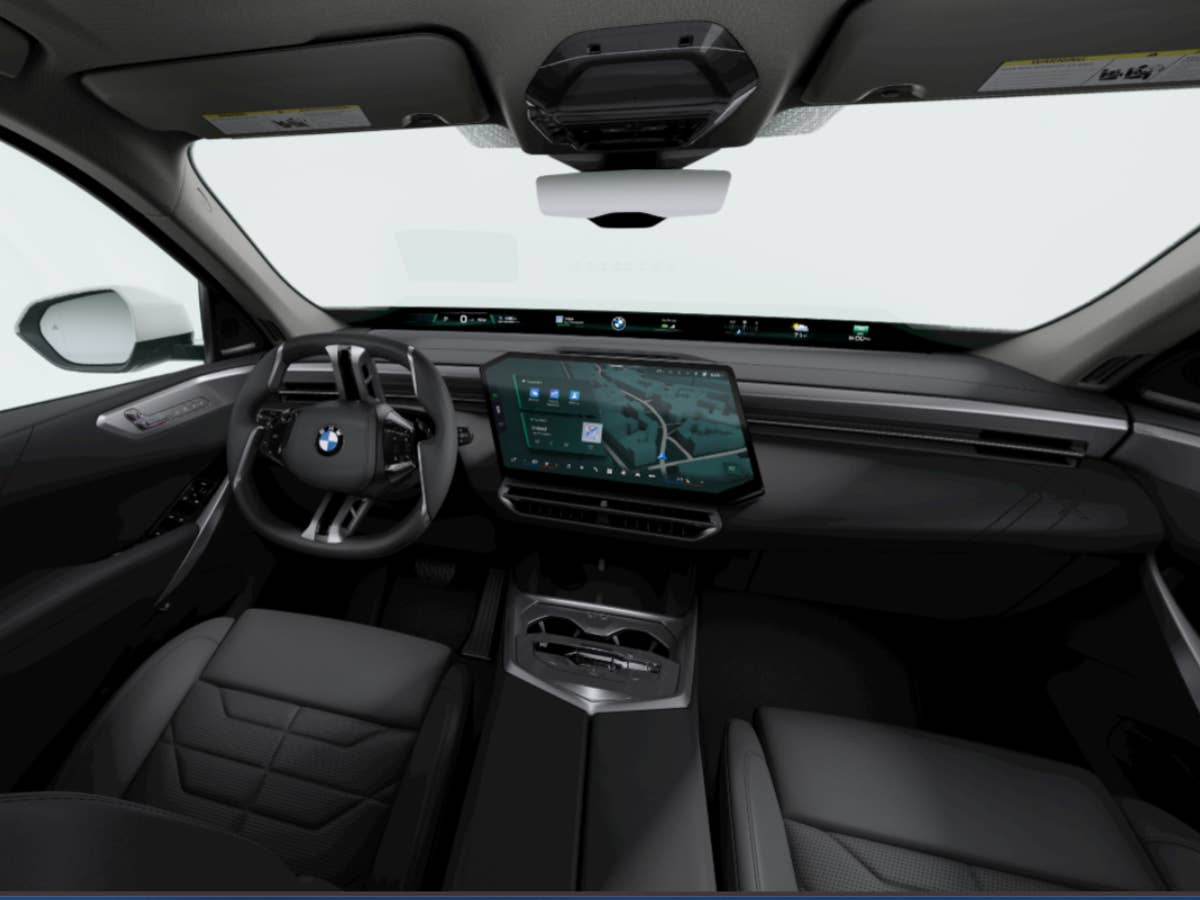
The cabin is the bigger leap. The wheelbase grows 2.4 inches and rear legroom grows nearly 3 inches. The dash pairs a 17.9-inch touchscreen with BMW’s new Panoramic iDrive display, which is projected across the base of the windshield. I love it. Key info sits right in your sightline, and it makes the old twin-screen layout feel dated instantly.
2027 BMW X5

BMW

The iX5 Makes the Case for Going Electric

The iX5 60 xDrive is the first fully electric X5, and it doesn’t drive like a science project. Dual motors make roughly 575 hp and 593 lb-ft, and its 144-kWh usable battery is the largest BMW has ever fitted. BMW estimates up to 435 miles of range.
Like the gas X5, it’s sporty, engaging and very smooth. It shares the same cabin and the same projected display, so moving between the two feels seamless. The 800-volt system supports DC fast charging at up to 460 kW, with 10% to 80% in about 22 minutes under ideal conditions, and a NACS port means Tesla Superchargers are on the table. It starts at $81,250.

BMW

The 740 Is the Balanced Flagship

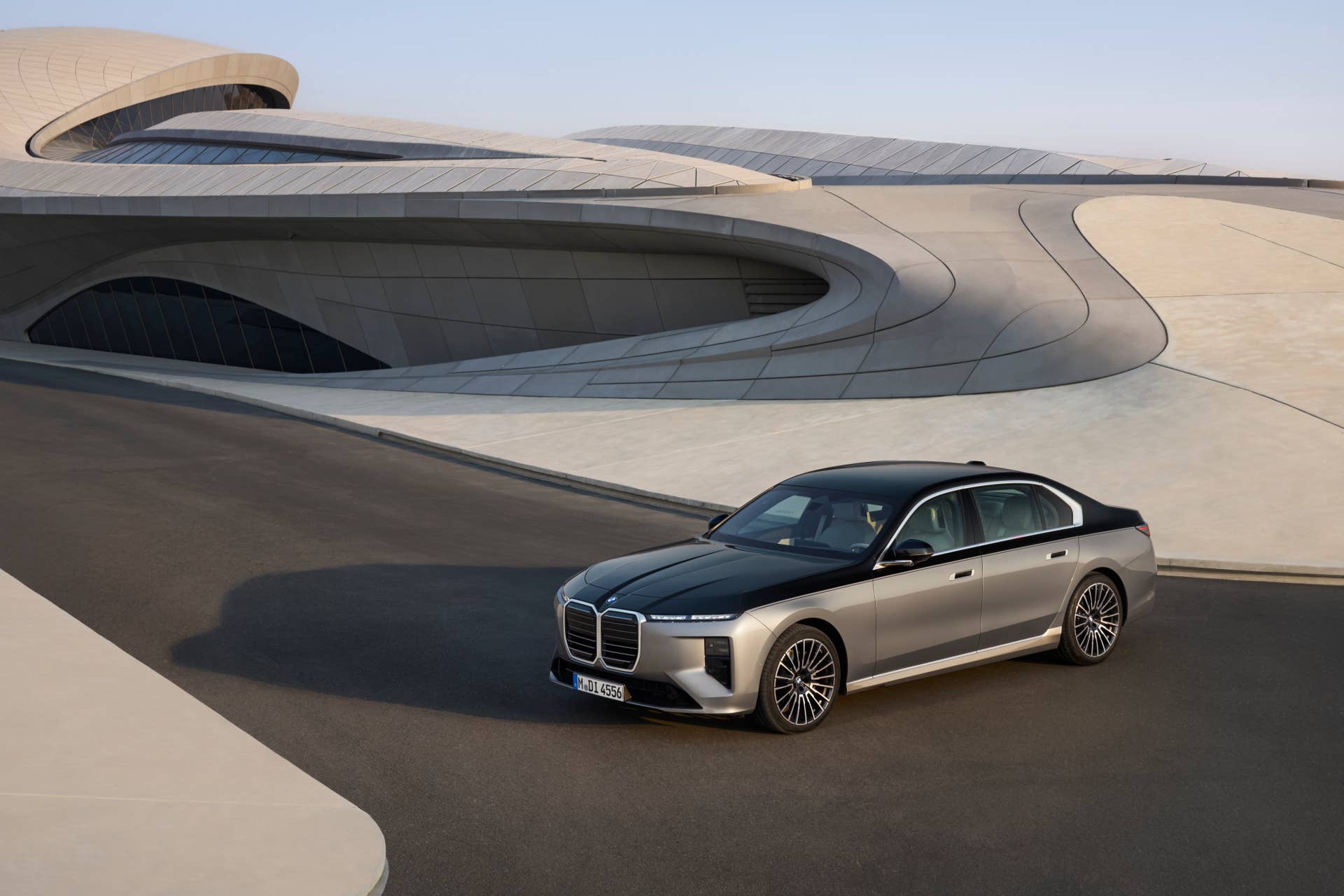
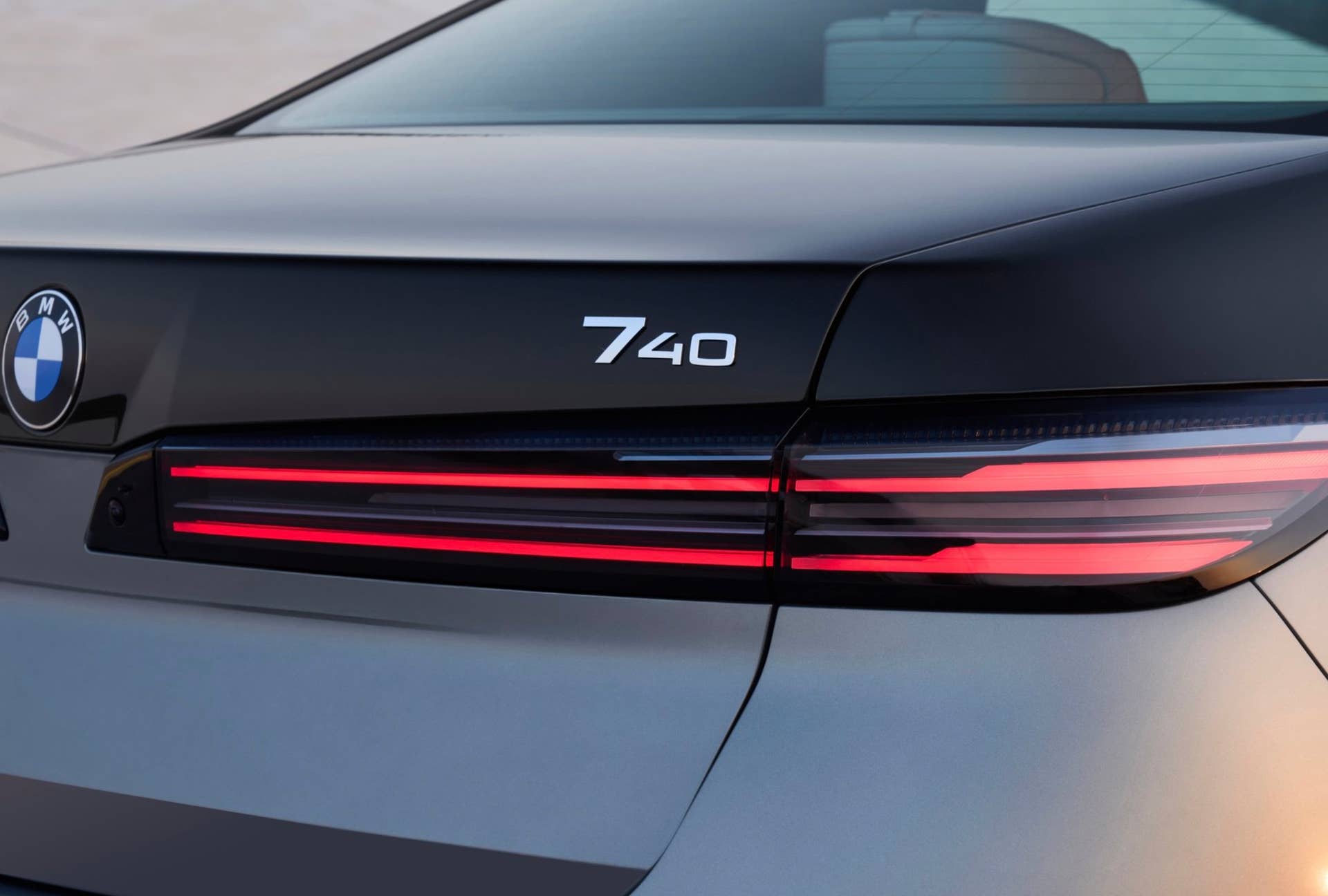
The refreshed 7 Series gets a flatter, cleaner face, a nearly all-new interior and the same panoramic display. The iDrive knob is gone, and climate controls now live on the 17.9-inch screen. Rear passengers can still get the 31-inch 8K theater screen. The 740 uses a 394-hp inline-six and starts at $101,350. It’s quiet, polished and smooth, yet it still feels composed and willing when the road bends. Of the two 7 Series models I drove, it’s the better-balanced car.

2027 BMW 7 Series 740

BMW

The i7 60 Feels Its Weight

The i7 60 xDrive is the outlier. On paper it’s impressive: 536 hp, a larger 112.5-kWh battery, up to 350 miles of estimated range and 250-kW charging. It’s also lovely inside and very smooth on the highway. But it’s heavy, and you feel it. The mass is obvious under braking, and in corners it carries its weight in a way the 740 simply doesn’t. It’s the least engaging of the four by a clear margin, and at $126,250 that’s worth knowing before you sign.

The Verdict

BMW’s new era starts on strong footing. The X5 remains a benchmark midsize luxury SUV, the iX5 is a convincing electric version of it, and the 740 delivers flagship comfort without feeling like a barge. The panoramic display is the star across all of them. Just know that if you choose the i7 60, you’ll feel every pound.

2027 BMW 3 Series First Drive Review: The Biggest Shake-Up Yet

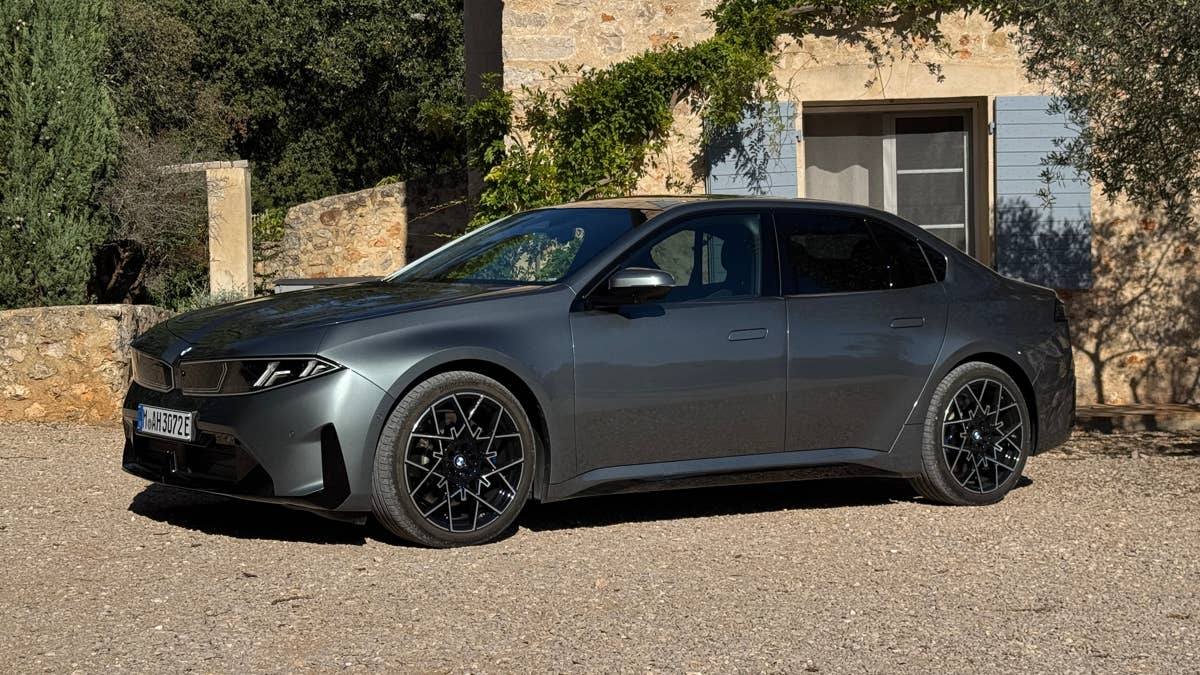
It’s a big deal when BMW releases a new 3 Series, but the new eighth-generation car delivers the biggest shake-up in the model’s history. This is even bigger than when the E90 generation got a V8 engine in the M3. For the first time ever, BMW will offer two distinct vehicles that both fall under the “3 Series” model lineup.

You may remember the i3 as a small city car with a gasoline range extender, but this new model is completely fresh. The 2027 i3 rides on BMW’s latest Neue Klasse architecture, which includes 800-volt technology that delivers incredibly fast charge times and outstanding range. Don’t worry, there is still a gas model, sold with either a turbocharged four-cylinder or six-cylinder engine.

BMW

View the 3 images of this gallery on the original article

I had a chance to sample the M350 xDrive, the sportiest gas-powered 3 Series, and the i3 50 xDrive, the only electric model that will be available at launch. Both offer a different flavor of BMW’s best-selling compact sedan, but which one should you consider?

One 3 Series, Two Different Cars

Though the 3 Series and i3 look similar on the outside, they are different underneath. The i3 gets BMW’s Neue Klasse platform but the 3 Series uses an updated version of the previous model’s CLAR architecture. If you view them from the side, you can tell the i3 is 0.2 inches shorter but the wheelbase is 1.5 inches longer. That increased wheelbase gives the i3 shorter overhangs and a shorter dash-to-axle ratio, which look more proportional in my opinion. The i3 is also 0.6 inches wider and an inch taller with some other minor differences like the charge door location.

Jared Levenson/Autoblog

View the 3 images of this gallery on the original article

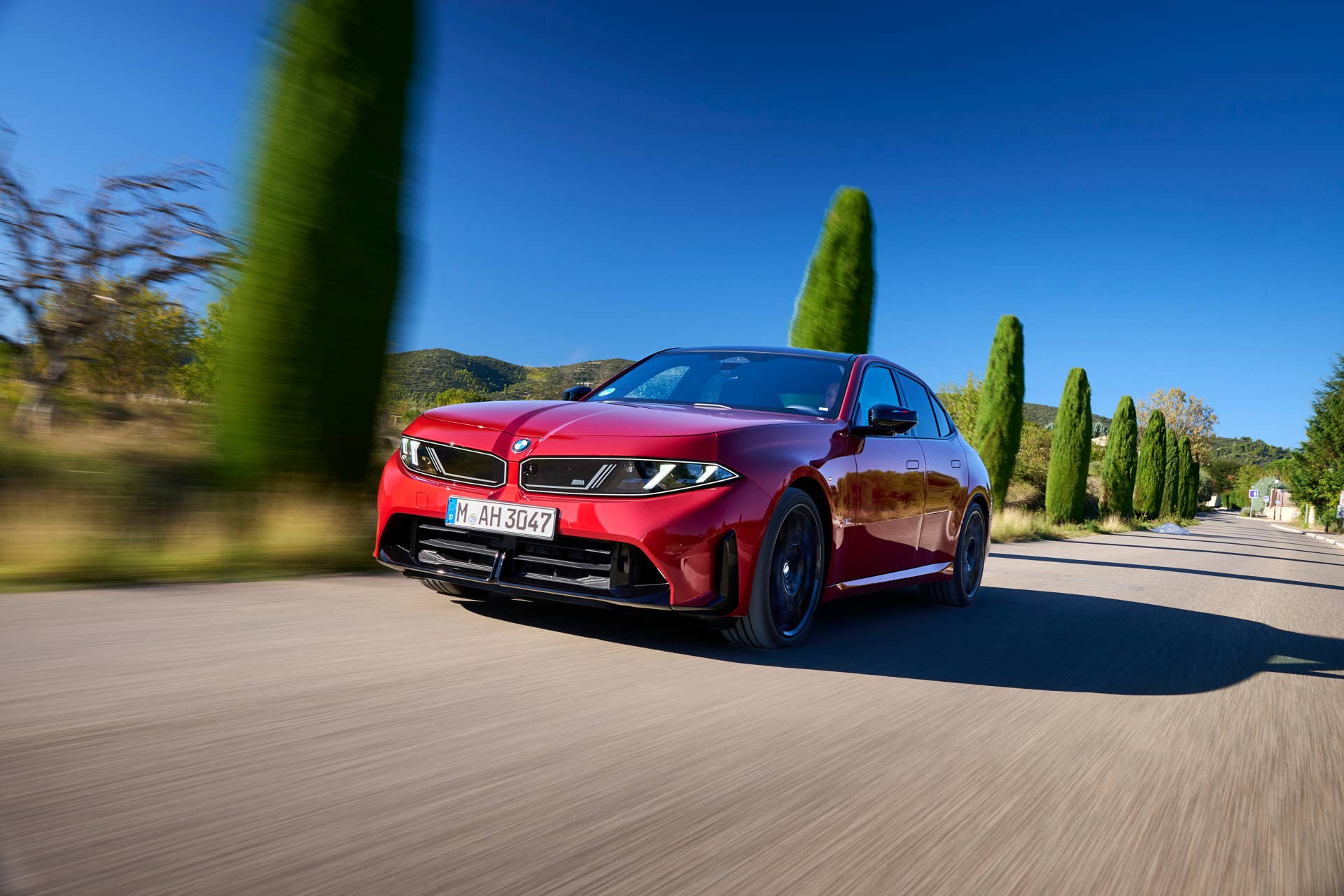
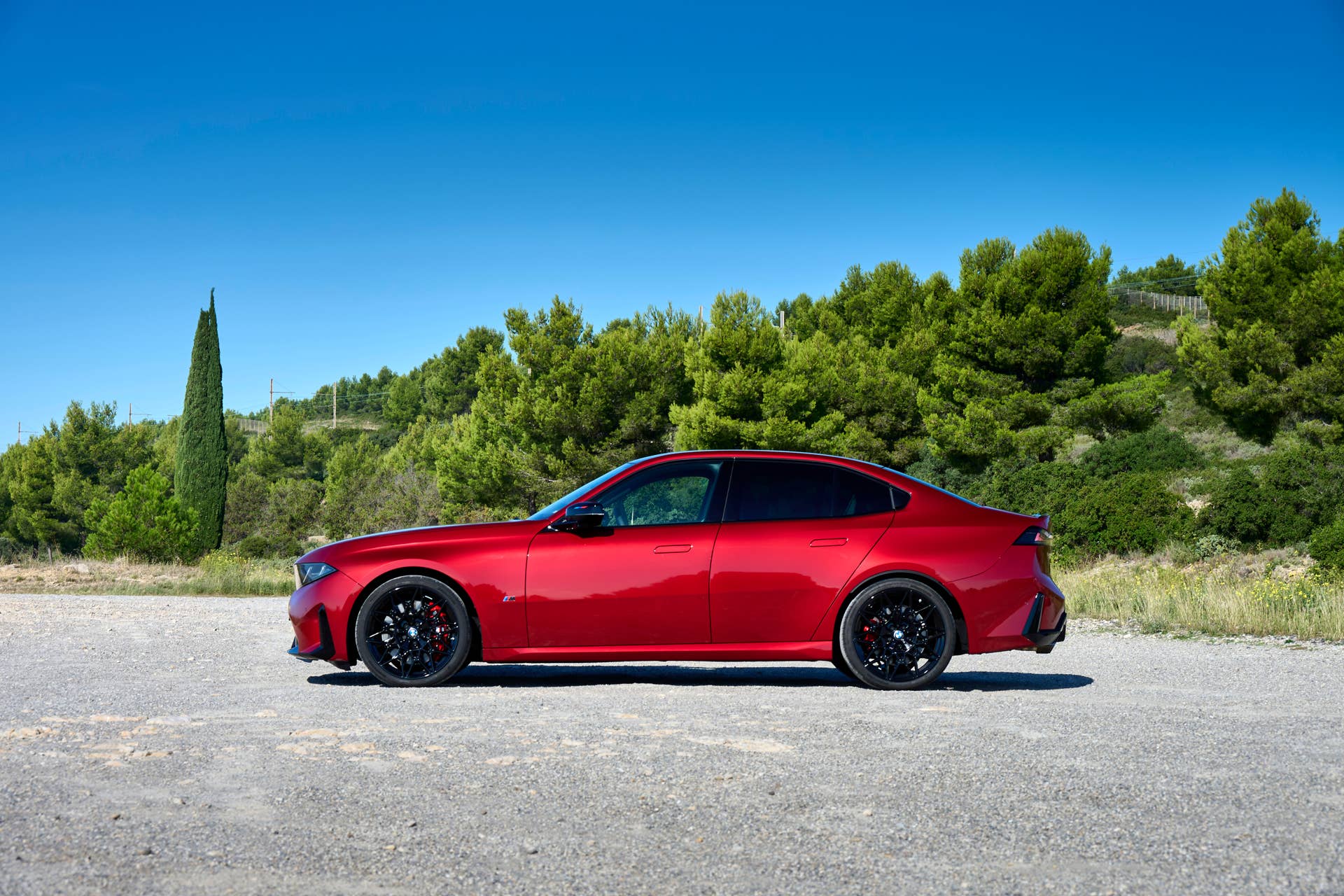
I’ve seen all the comparisons online, “it looks like a Pontiac Firebird” or some other car from the past, but in my personal opinion, nothing else quite looks like this in person. The front end design looks just like the Neue Klasse Concept, and the available Iconic Glow package makes it look even cooler at night. The M350 comes with available yellow daytime running lights, like the outgoing M3 CS, and the same lights will be available on the upcoming i3 M60.

The M350 Is An M3 Lite

BMW will offer a base 330 model (with or without xDrive) for buyers who can make due with a 2.0-liter turbo-four making 255 horsepower and 295 lb-ft of torque. I only had a chance to drive the M350, which uses BMW’s excellent 3.0-liter turbo inline-six. The output has been increased over the M340, now delivering 437 hp and 428 lb-ft of torque. That’s more than the F80 M3, which needed two turbos to spit out 425 hp and 406 lb-ft of torque. 0-60 mph in the new car is dispatched in just 3.9 seconds (3.6 with a rollout).

BMW M350 xDrive – Fire Red Metallic

BMW

View the 3 images of this gallery on the original article

Thanks to its standard M Adaptive Dampers, the M350 rides nicely despite being the sporty 3 Series. Buyers who like the idea of an M3 but can’t stand its harsh suspension for daily driving will love how this M Performance model feels. Though it lacks the sharp edge of a true M car, it gets pretty close. The M350 is composed on a back road, especially thanks to the grip from its standard all-wheel-drive system. There is an option called Drift Moment to deactivate the front axle and go full rear-wheel-drive, but it’s coming later via a software update.

The i3 Is A Long Distance Cruiser

Driving the i3 back-to-back with the M350 reveals how electric cars can feel quicker than their ICE counterparts even if the numbers show otherwise. The i3 50 produces 463 hp 476 lb-ft from its dual electric motors, good for a 4.5-second 0-60 mph time. That’s a bit behind the M350, but when you are zipping through traffic, the i3 would easily keep up with its gas sibling.

On the back roads, the i3’s softer suspension allows far more body roll. If you want an electric canyon carver, it’s best to wait for the i3 M60 with its standard M Adaptive Suspension. I didn’t get to test the i3 50 with its available adaptive dampers, but BMW says they will be tuned more for comfort than the M Performance model.

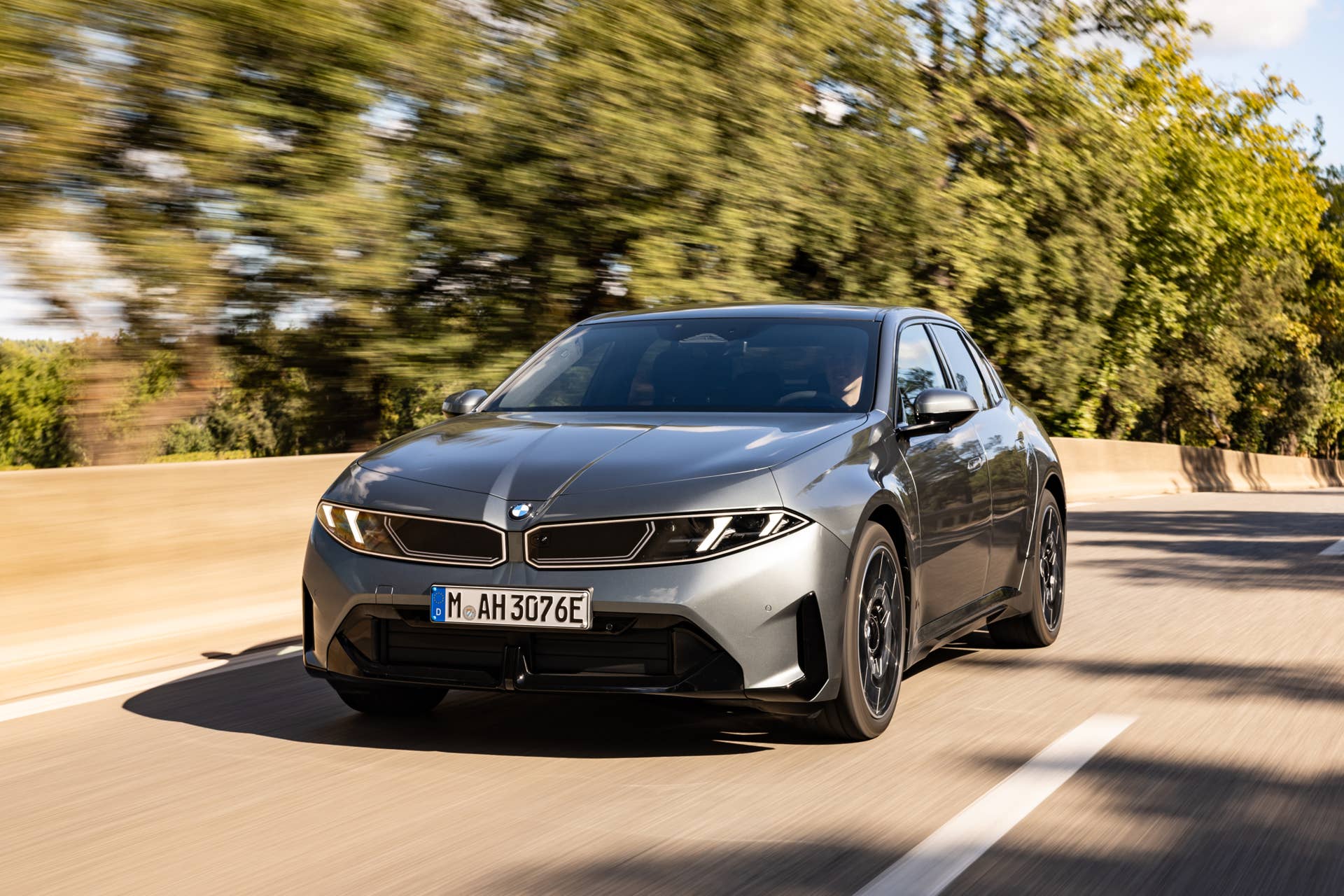
BMW i3 50 xDrive

BMW

View the 3 images of this gallery on the original article

Though it isn’t an “M3 Lite” like the M350, the i3 is great in other ways. For example, the i3 features a 108.2 kWh battery that enables up to 468 miles of driving range, besting the Lucid Air Pure and matching the Cadillac Escalade IQ with half the battery capacity. There are no more excuses to say an electric car doesn’t go far enough because the i3 should meet or exceed M350’s driving range and go nearly the same distance as the 330 before needing a recharge.

You can’t even complain about charge times either, thanks to the i3’s rapid 400-kW charge speeds. On a 400-kW charger, BMW says it can add 208 miles in 10 minutes to get you back on the road in the time it takes to make a bathroom stop. Add in some great hands-free driving technology, and the i3 instantly becomes one of the best long-distance EVs you can buy.

Controversial But Cool Interior

Of the complaints I have seen about the new 3 Series, the digs at the interior are the only ones I see that have some real validity. Every 3 Series brings BMW’s latest iDrive with Operating System X. It lives on a large 17.9-inch touchscreen that controls nearly everything. Even the air vents, which are now electronically controlled, require interaction with a screen. BMW did include plenty of shortcuts and there is an AI-powered voice command that can quickly dispatch tasks like changing the climate control, but what was wrong with just adjusting a vent?

BMW M350 xDrive – Fire Red Metallic

BMW

View the 3 images of this gallery on the original article

Of all the questionable interior choices BMW made, I think the Panoramic Vision Display is arguably the best one. Unlike Cadillac and Lincoln, which put a giant screen on the dash, BMW’s setup is projected from the dash onto the windshield. It seems daunting to use at first, but once you learn where the customization menu lives, it’s easy to configure it to your liking. BMW overwhelms you with choices for widgets, ranging from weather information to car data like the steering angle, tire pressure, trip information, and more. If the car measures it, you can display it on the Panoramic Vision.

Which One Should You Buy?

BMW priced the 2027 3 Series just above the outgoing 2026 model, which makes sense given how much tech comes standard. You will pay $51,250 for the base 330 or $53,250 for the 330 xDrive. There is a large premium for the M350 xDrive, which starts at $67,250. Though it doesn’t come with the M Sport package standard, the i3 50 xDrive seems like the best value of the bunch, priced at $62,850 (all prices include destination).

BMW M350 xDrive – Fire Red Metallic

BMW

View the 3 images of this gallery on the original article

Though I didn’t get to drive it, the 330 should remain the volume player for buyers who want to replace their 3 Series with the lowest possible monthly payment. The M350 builds upon the already great M340, giving you a more comfortable M3 that’s easier to live with. The i3 is the wild card, proving that electric cars can deliver thrilling performance for the same price as a gas car, now with range and charging speeds that should silence the critics. If it were my money, the i3 is the one I’d put in my driveway.

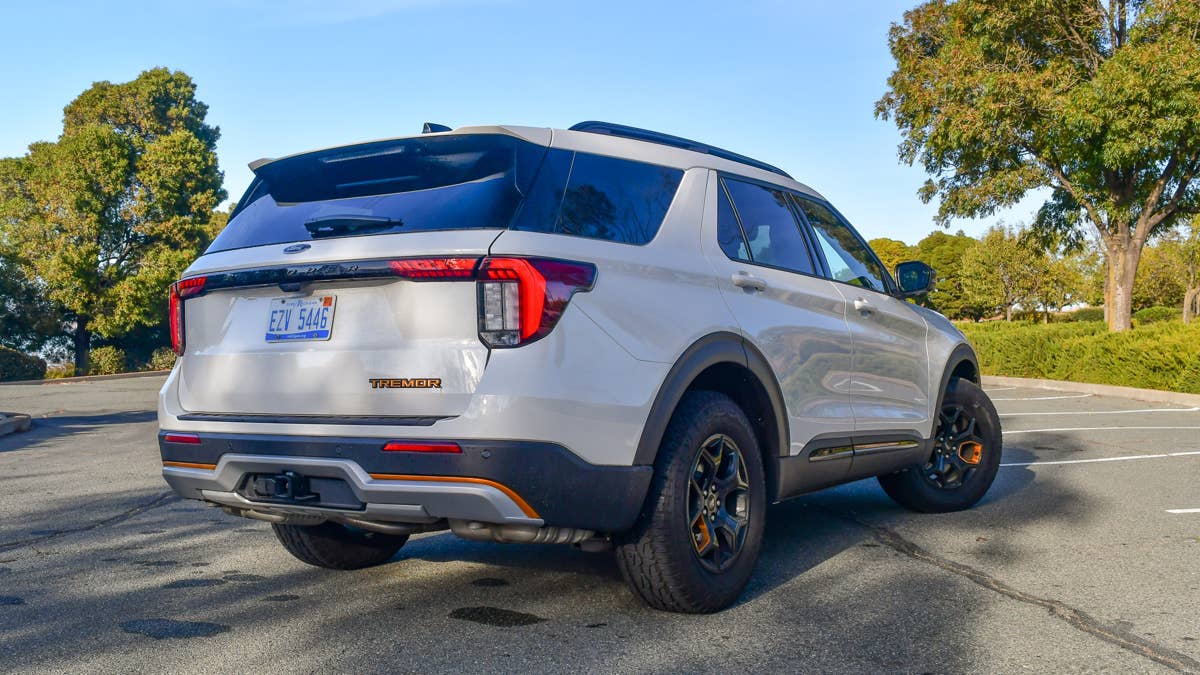
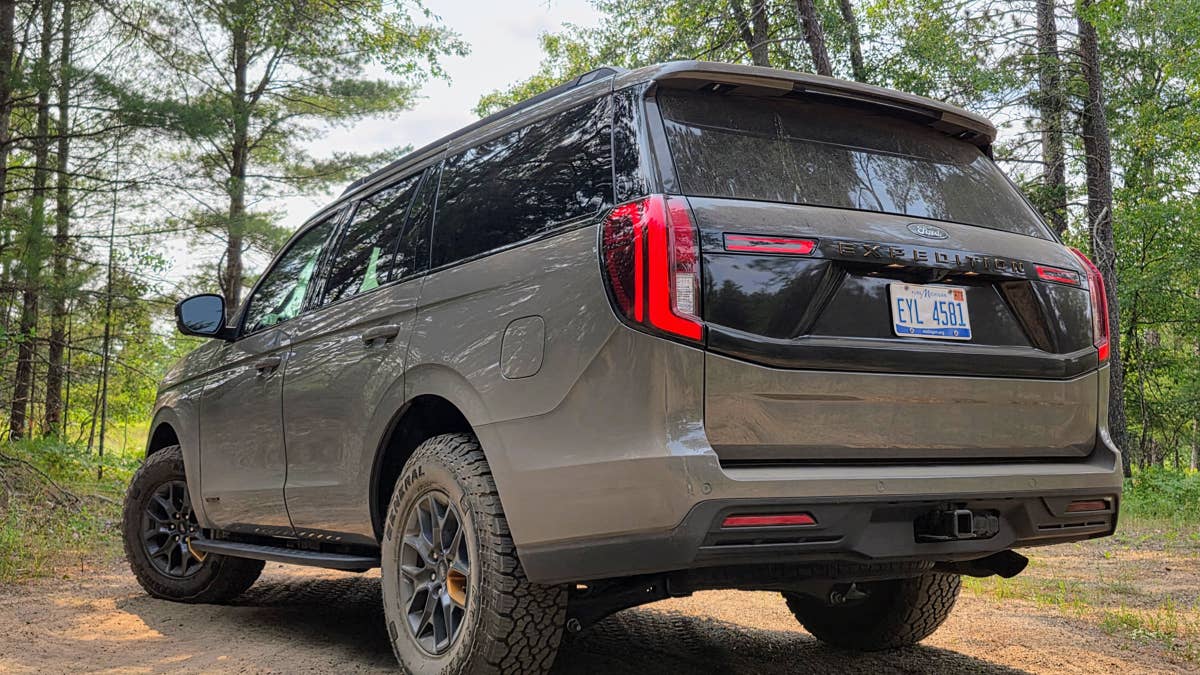
Which Tremor SUV is Best: The Ford Explorer or the Expedition?

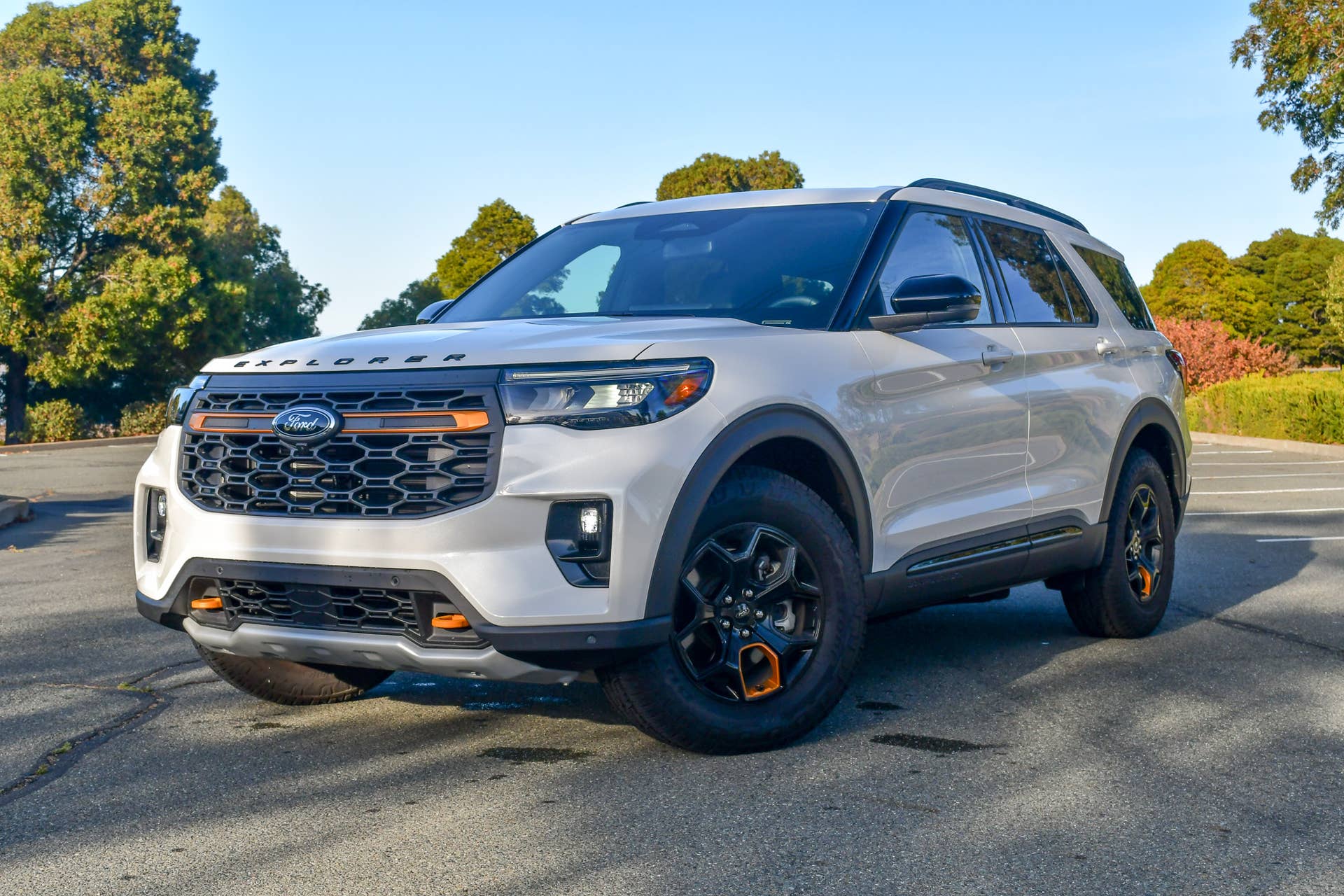
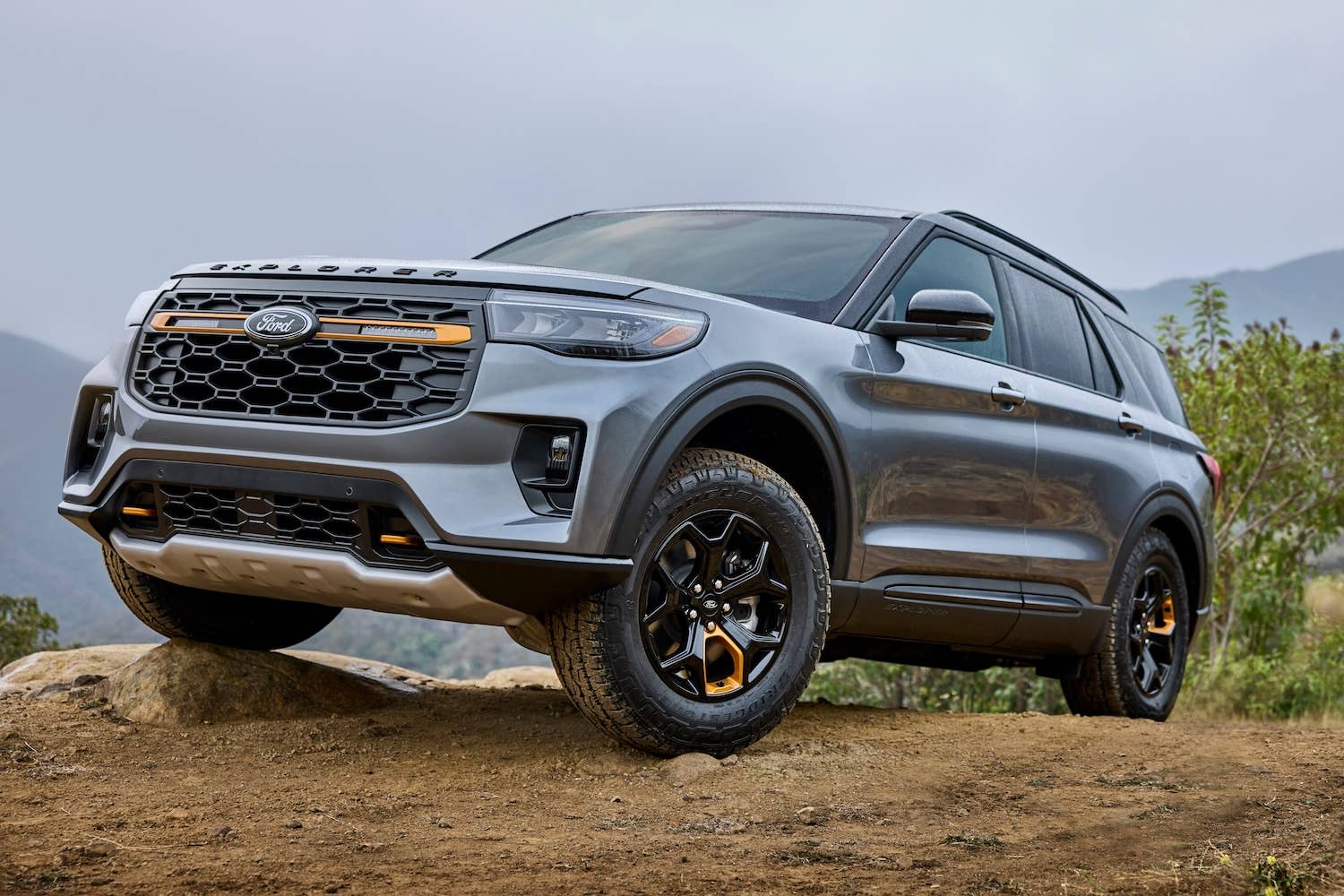
The Tremor badge wasn’t always a badge of honor for dust, dirt, and rock crawls. Back when Ford first rolled out the Tremor nameplate on the F-150, it was a street-performance sport truck with a short bed, lowered stance, and Lobo-esque looks. Over the last several years, Ford’s reinvented the Tremor name into a dedicated off-road trim, and the 2026 Explorer is the latest recruit to join the ranks.   

Kristen Brown

Putting these two SUVs side-by-side highlights Ford’s adventurous 3-row SUV strategy. The Expedition has long been a traditional family hauler, offering a third row since its inception in the late 1990s. The Explorer, meanwhile, started its life as a two-row adventure rig in 1991 before evolving into the dedicated three-row midsize crossover we know today.   

2026 Ford Expedition Tremor

Kyle Edward

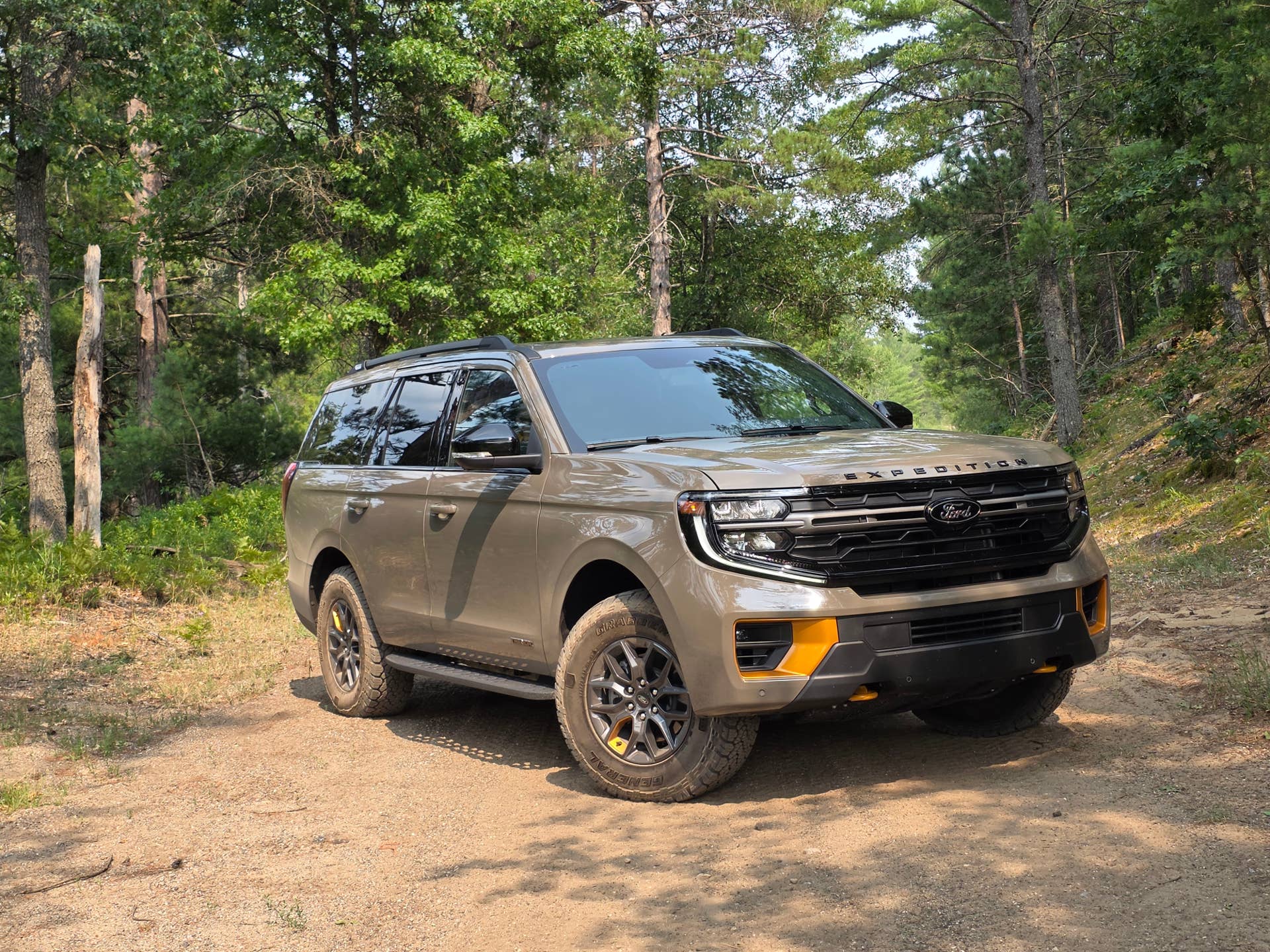
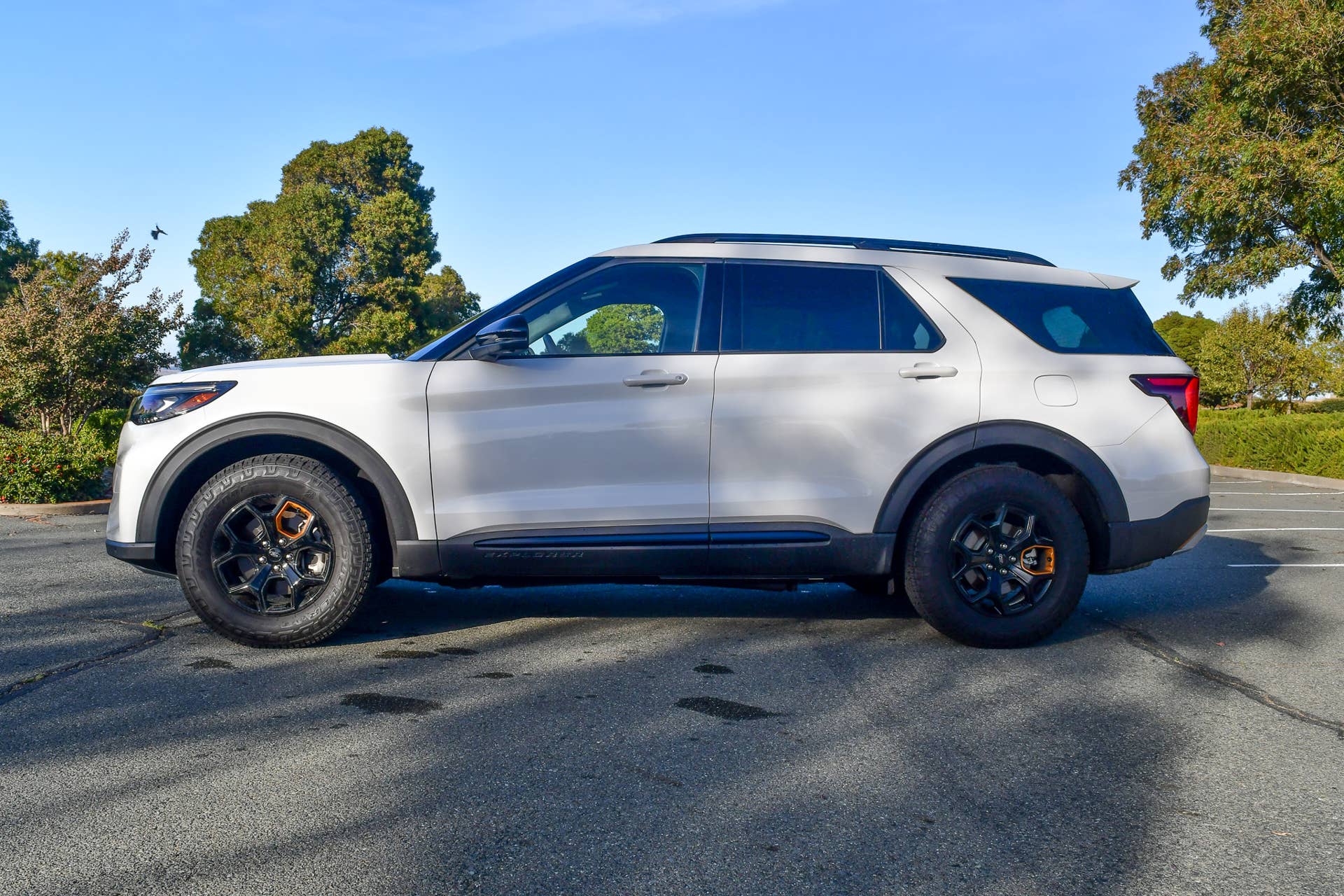
Now, both wear the Tremor badge. In typical Ford fashion, that means purposeful mechanical upgrades: heavy-duty metal underbody skid plates, a factory suspension lift, chunky all-terrain tires, signature amber/orange exterior styling accents, and Trail Turn Assist to tuck in tight off-road maneuvers. So, is one better than the other? Well, that depends entirely on what you expect out of your family SUV. After driving both, here’s how they compare.

Related: Road Ethos Launches: The New Automotive Lifestyle Site You Should Read

What do you get for the price?

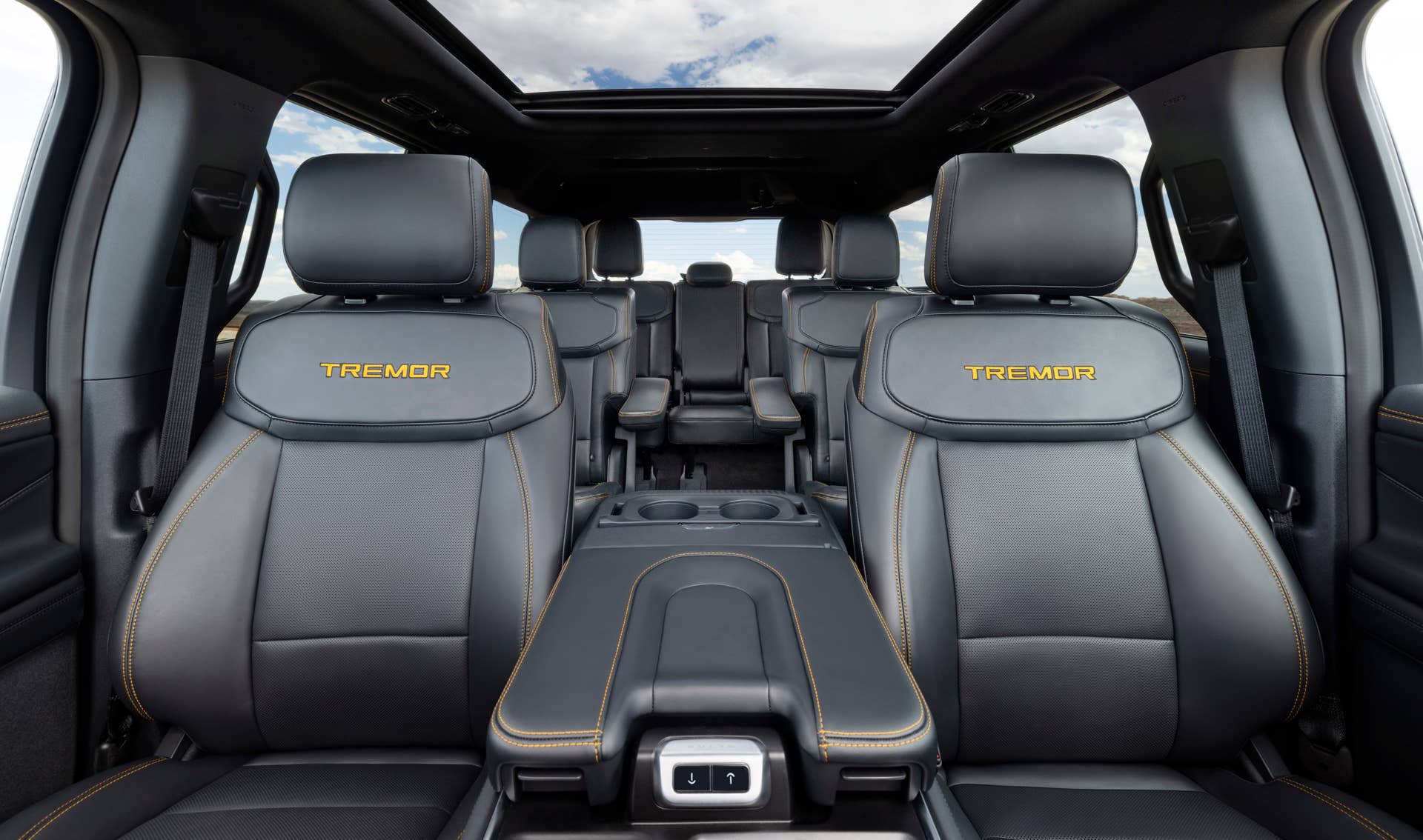
The 2026 Explorer Tremor starts at a reasonable base MSRP of $48,330. Even when you load it up with the Star White paint ($795), the keypad ($455), the Connectivity package ($745), a spare tire ($400), and the loaded Ultimate Package ($11,505)—which adds massaging front seats, a panoramic sunroof, and a Bang & Olufsen sound system—the bottom line comes to $64,225 after destination.  

Kristen Brown

The Expedition, understandably, is more expensive. The Tremor, interestingly enough, is technically a step above the Platinum but one tick below the King Ranch, so it starts at $81,700. Unlike the Platinum or King Ranch, you don’t have as many add-ons or optional packages like the black roof, nearly $800 paint color options, or ultimate packages. You can pay for BlueCruise or the $890 Driver’s Package, which adds the premium sound system and wireless phone chargers, but you’d be hard-pressed to see one over $90,000. Still very expensive for something intended to go off-road, though.

What does all that cash get you in the Expedition? Brute utility: a massive 9,000 to 9,600-pound towing capacity, an aircraft hangar worth of cargo space, and an adult-friendly third row. If your family regularly tows a heavy boat, a camper, or a horse trailer into the backcountry, the Expedition is arguably the best choice of the two. But if you don’t tow heavy loads, that close-to-six-figure price tag turns it into an “elite-only” proposition—especially when modern minivans offer similar passenger volume and cargo practicality for half the cost (minivans only wish they had a 9,000-lb tow rating, though).   

2026 Ford Expedition Tremor

Kyle Edward

The Explorer Tremor is a fantastic middle ground for active families who refuse to spend too much on a three-row SUV. My only big qualm with the Tremor is that this trim forces you into a six-seater configuration. The lack of a second-row bench option stinks if you need to carry five passengers and keep luggage in back. In the Expedition, you can have a bench in the Tremor, so you can fit up to 8 passengers. But for adventurous families who don’t need heavy towing capability, it puts up a strong argument for your money.

The Explorer is a lot easier to drive

2026 Ford Expedition Tremor

Kyle Edward

The Expedition is massive. At over 18 feet long with an ultra-long wheelbase, outward visibility is tricky, and its sheer bulk dominates suburban streets. The steering radius is wide, and for an SUV cresting $100K, it is downright shocking that Ford didn’t include rear-wheel steering to help maneuver tight drive-thrus and parking lots. The Expedition’s interior technology also presents two ergonomics headaches:   

  • The Steering Wheel: The squarish, awkward wheel uses frustrating touch-and-slide click pads. If your thumb isn’t resting in the exact millimeter-wide sweet spot, inputs don’t register—even when you’re just trying to adjust the steering column.   
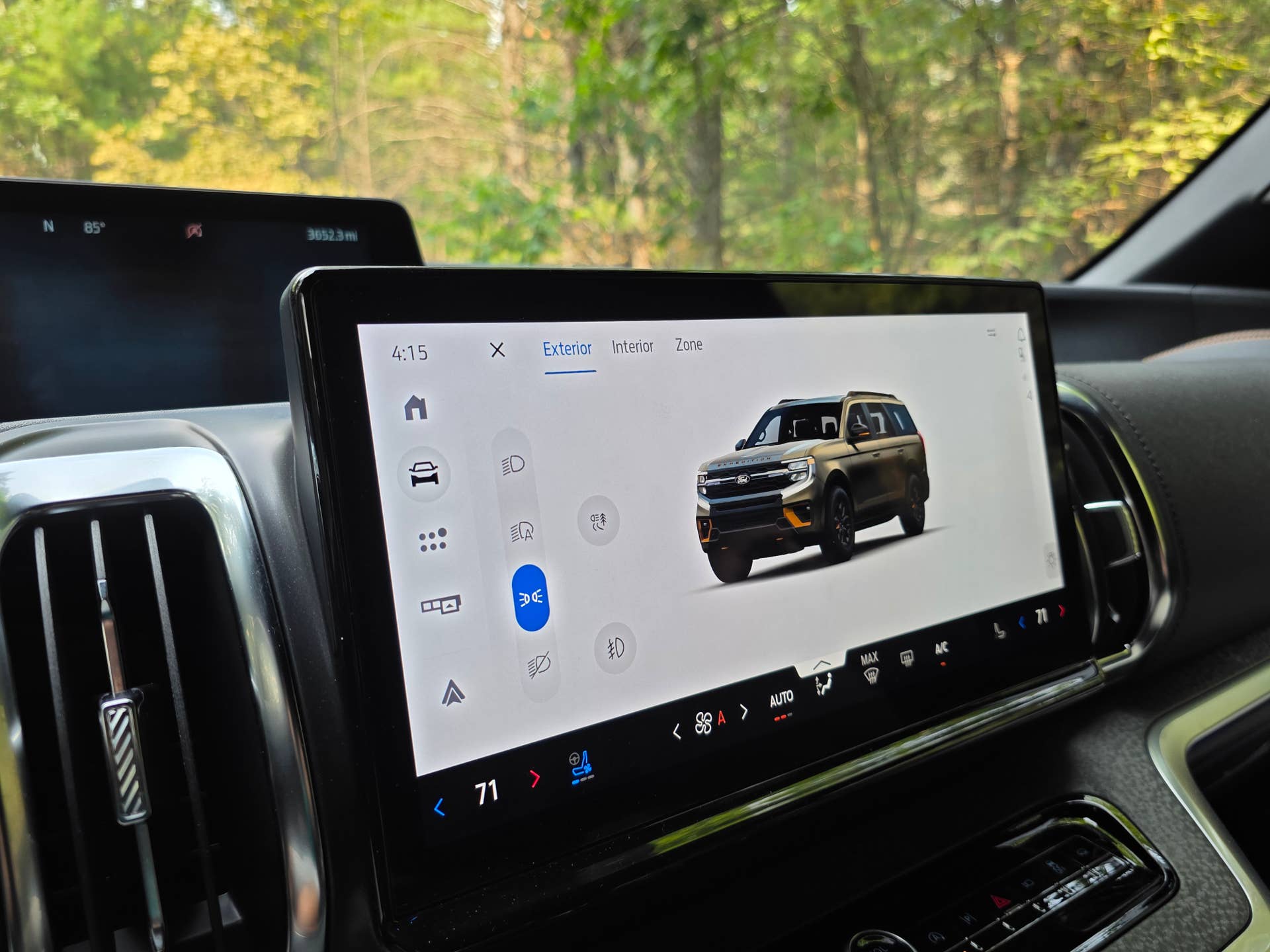
  • Screen Overlap: The 13.2-inch center screen sits directly in front of the sweeping 24-inch panoramic driver display, creating an awkward visual overlap. Running Android Auto or Apple CarPlay duplicates navigation maps right on top of each other, making the digital real estate feel chaotic rather than helpful.   

Chase Bierenkoven

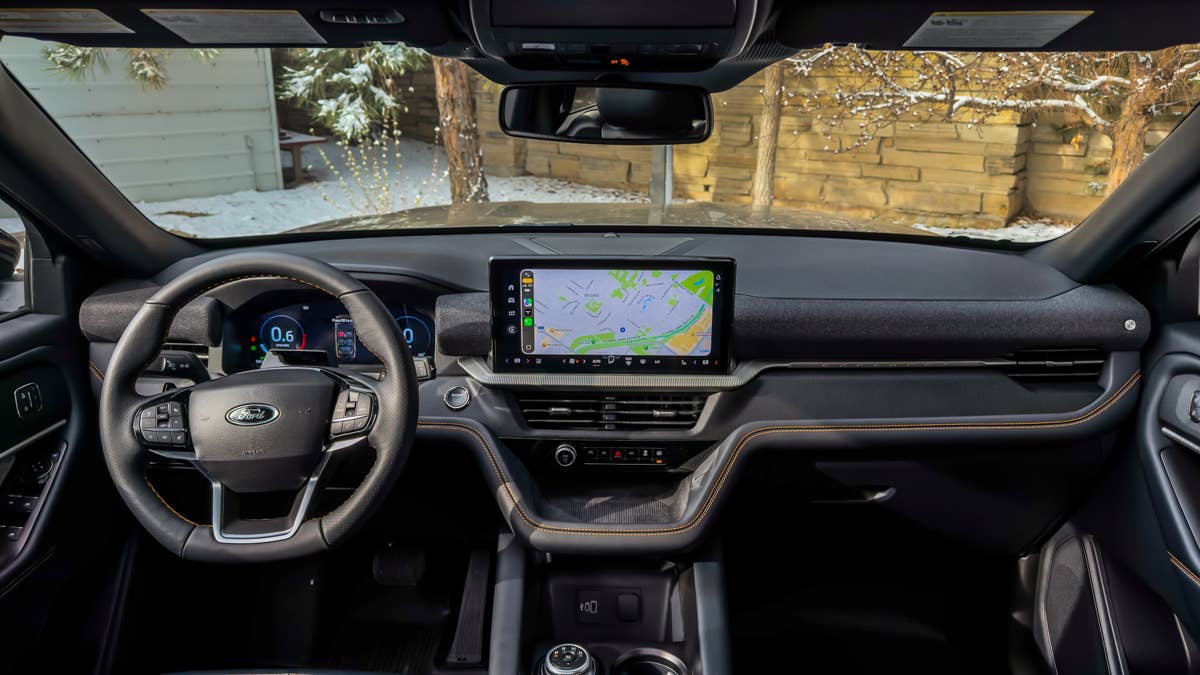
The Explorer’s smaller footprint is infinitely easier to live with daily. Its intuitive 13.2-inch center touchscreen and 12.3-inch gauge cluster work together seamlessly, and native Google integration (complete with Gemini voice assistant) makes on-the-fly navigation stops effortless. It corners with car-like composure, slips into normal parking spots without multi-point turns, and feels right at home in tight traffic. It has a much more natural drive feel compared to the Expedition. You have to get used to driving the Expedition. You don’t have to with the Explorer.

Related: Is the 2026 Ford Explorer Tremor Worth $64K? Here Are My Thoughts After a Week

They’re both capable, but I’d trust the Explorer more off-road

Ford

Both SUVs are built to tackle the wilds, with identical Tremor hardware inclusions:

  • Factory suspension lift with off-road-tuned damping
  • 32- to 33-inch all-terrain tires
  • Heavy-duty steel underbody skid plates guarding engine pans and transfer cases
  • Terrain management drive modes (Trail, Slippery, Tow/Haul)
  • Amber front recovery tow hooks
  • Modified front and rear bumpers for better approach and departure angles
  • Ford’s Trail Turn Assist

Both SUVs have a long wheelbase, but when asphalt turns to washouts, shelf roads, and rutted trails, I’d trust the Explorer far more. Trail Turn Assist is a neat trick—it brakes the inside rear wheel to help swing the SUV around tight switchbacks. But on a narrow shelf road with real drops, nothing can hide the size of the Expedition. There’s simply no getting around the sheer width, length, and weight of that heifer. The Explorer Tremor’s trimmed bumper fascias, tighter track, and responsive unibody dynamics make it significantly more confidence-inspiring between trees and over narrow trail crests.

The third row in the Expedition is better, but is the extra space worth it? Maybe

If third-row passenger room is your top metric, the Expedition takes the crown—you just pay handsomely for it. The Expedition third row is very comfortable and adult-friendly, offering between 36.5 and 43.5 inches of legroom depending on how the sliding second row is configured. Paired with Ford’s clever tilt-and-slide mechanism (which functions even with child safety seats installed), climbing into row three is painless.

Ford

The Explorer’s third row, by contrast, should be advertised as strictly part-time. Offering 32.2 inches of legroom, it is best reserved for kids, teens, or small adults on short trips under 30 minutes. But this is where the six-seater configuration feels cringey, because if you have those third-row seats folded, only two extra butts can comfortably fit in the Explorer. I’ve mentioned it before, but it’s something you could end up feeling the sting of once you drive it off the lot.

The decision, then, comes down to real-world usage:

  • Rare or occasional third-row use: Save tens of thousands of dollars, fold the Explorer’s rearmost seats flat to enjoy 47.6 cubic feet of cargo room, and enjoy the easier drive. Just don’t forget only two extra people can fit in the fairly large Explorer without those third row seats.
  • Frequent or daily third-row hauling: If carrying teens and adults back there is a weekly necessity, look at a lower, non-MAX trim of the Expedition Tremor to dodge the nearly $100K price trap—unless you plan to take a full house off-road.

Related: I Drove the 2026 Ford Expedition Tremor: An Off-Roader That Isn’t Bluffing

Mileage is moderate for both, but worse for the Expedition

Neither of these SUVs are known for exceptional mileage, as they’re both gas-only and turbocharged, but in the Explorer Tremor, opting for the larger 400-hp 3.0-liter twin-turbo V6 only costs you a single MPG compared to the standard 2.3-liter inline-four in almost every category. You get mid-to-high teens in the city and low 20s on the highway, making family road trips more manageable. During my time with it, I averaged about 22.5 MPG combined. Not great, but not terrible, and I had a maximum range of just over 400 miles.

Kristen Brown

The Expedition, by comparison, is unapologetically thirsty. With its 440-hp high-output 3.5-liter twin-turbo engine hauling roughly three tons of steel, real-world combined driving yielded a meager 14.7 MPG. Even with the massive 27-gallon fuel tank delivering a decent highway range of over 500 miles, filling it up with fuel running near $6 a gallon will have you screaming, crying, and probably throwing up at the pump.

All that power clearly comes with great responsibility, so you really have to evaluate how much muscle you truly need to maintain your family’s lifestyle.

Final thoughts

Both vehicles deliver on their rugged, off-road styling promises, but if I had to park one in my driveway, I’d pick the Explorer Tremor. It is substantially easier to drive, far less stressful to park, the technology isn’t as frustrating as the Expedition’s, and it’s more confidence-inspiring when navigating off-road terrain. While losing out on a second-row bench seat is a real pain point for families needing maximum versatility, the Explorer gives you 85% of the Expedition’s trail hardware and family utility at nearly half the price tag of a loaded Expedition Tremor. For most outdoor-loving families, the Explorer checks every box. 

I Drove The 2026 Ram 1500 Black Express Hurricane: Here’s My Honest Review Of Ram’s Blacked-Out, Twin-Turbo Muscle Truck

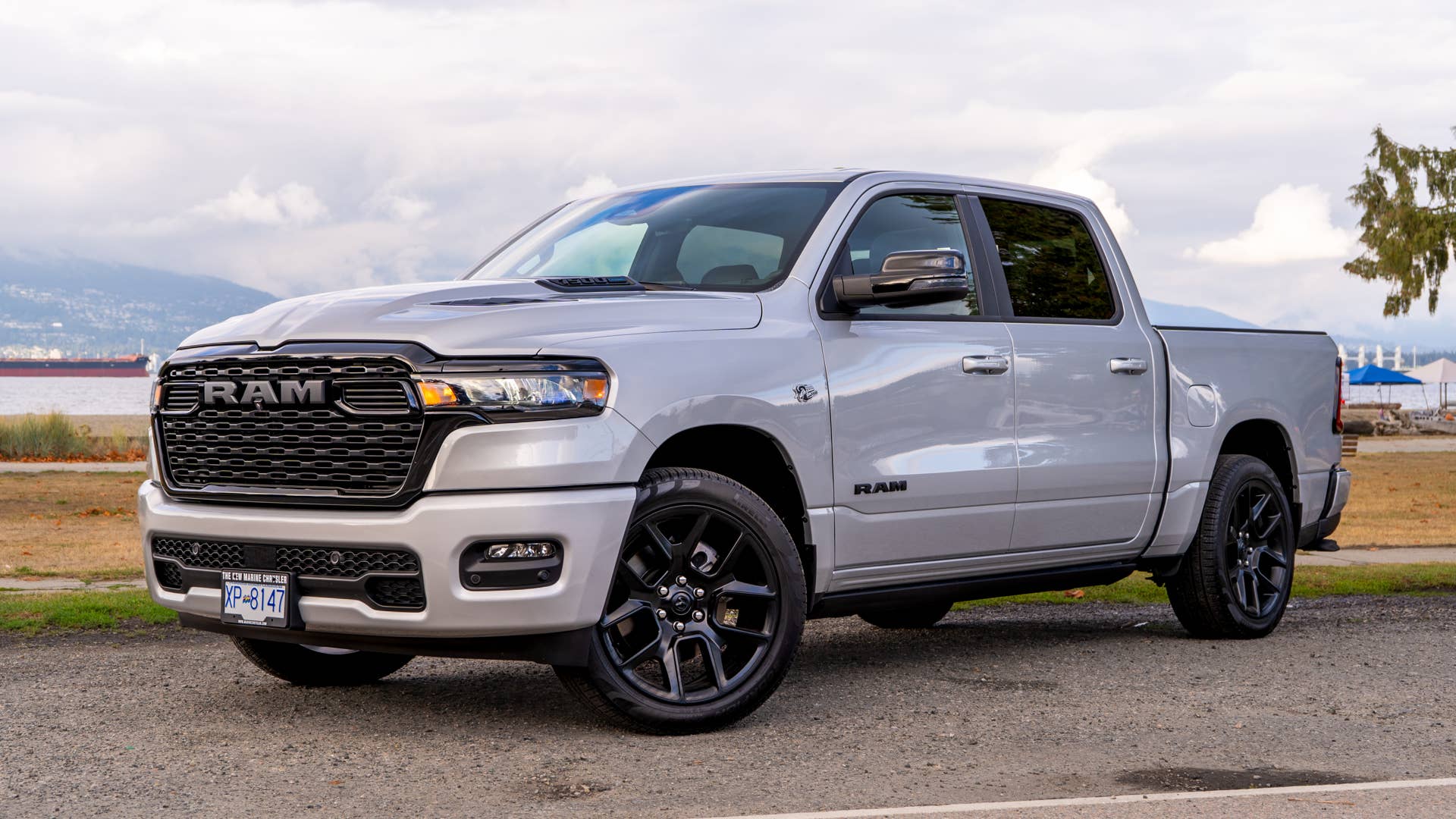
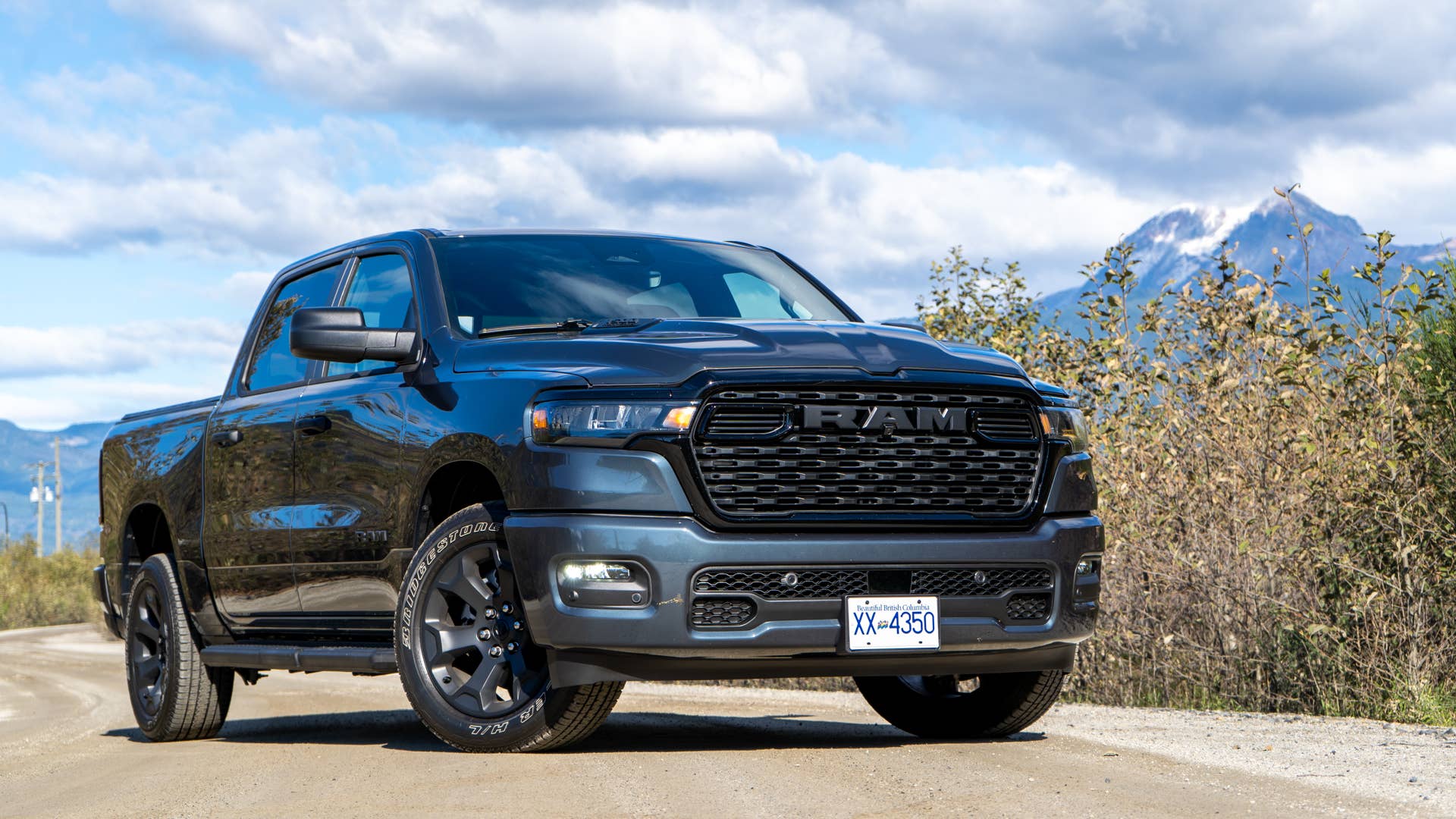
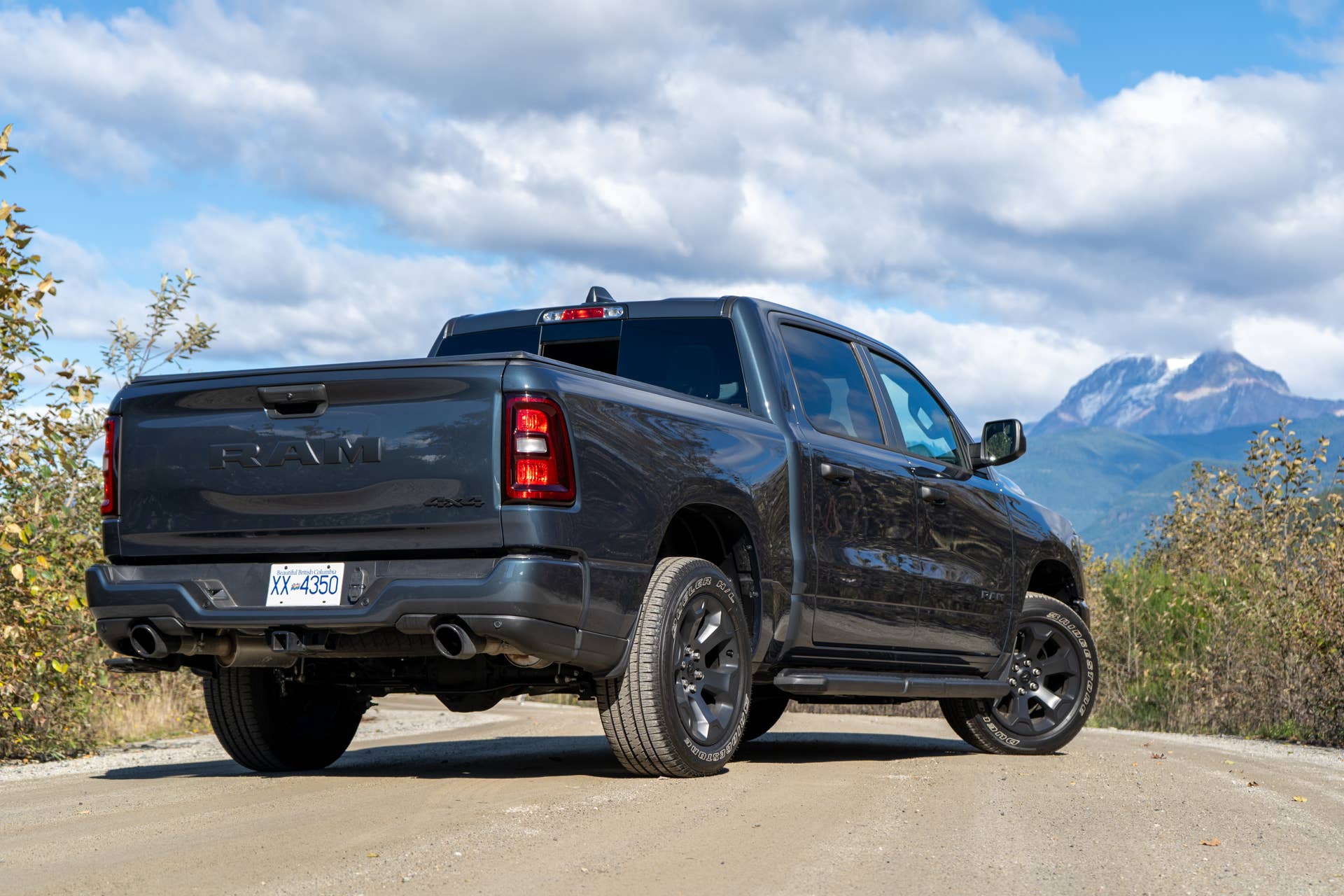
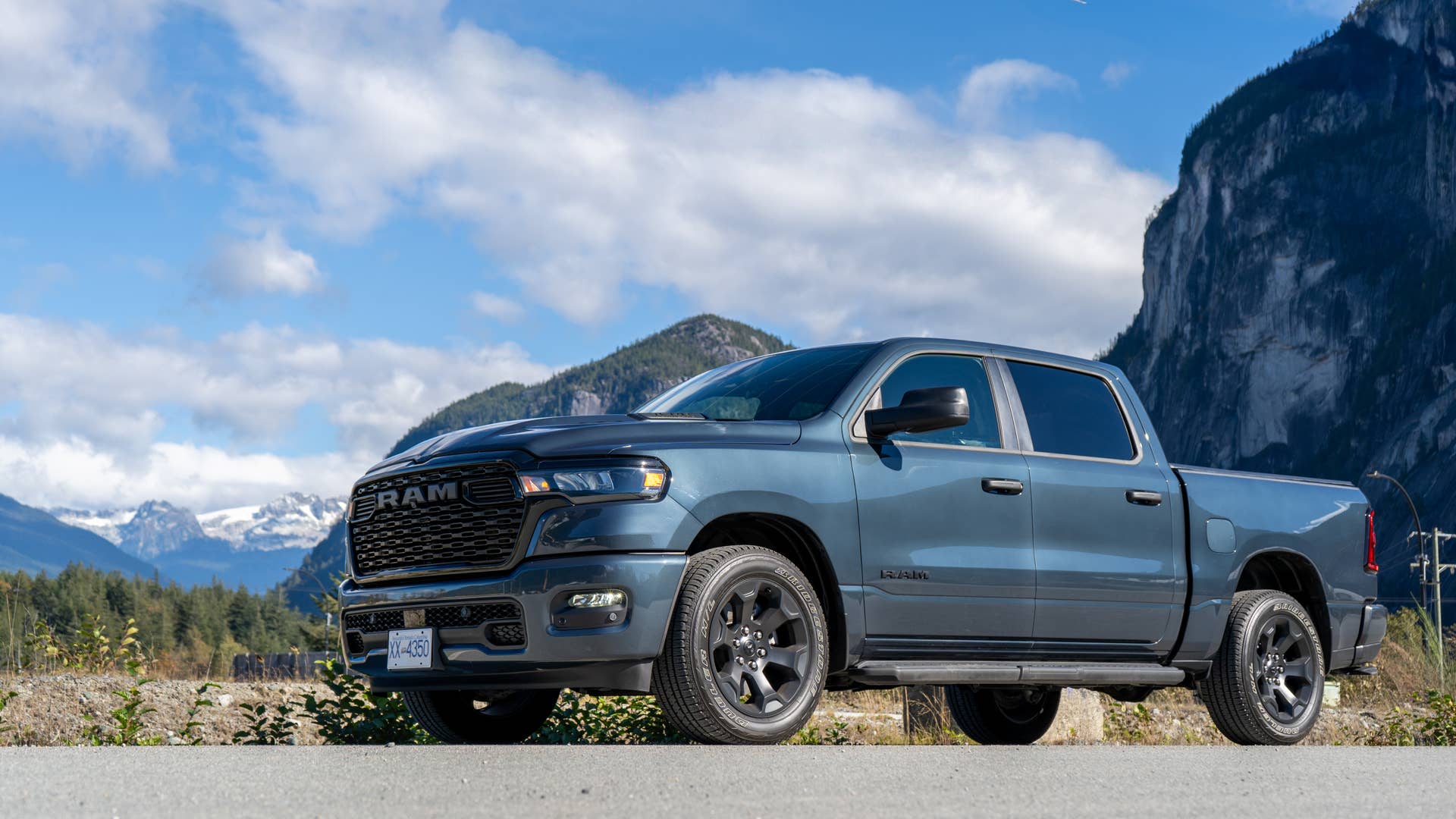
The Hemi-powered Ram 1500 I drove earlier this year encouraged a thoroughly unnecessary amount of enthusiastic acceleration. Its V8 sounded fantastic, responded immediately, and turned everyday pickup journeys into something I actively looked forward to doing. The 2026 Ram 1500 Black Express Hurricane was happier taking the drama out of the same everyday duties. After a week in Vancouver, B.C., I found its twin-turbo inline-six quieter, smoother, and more businesslike. It still delivers plenty of muscle, but it doesn’t insist that every drive has to be an opportunity to draw attention to itself. Ultimately, choosing between Ram’s Hurricane and Hemi comes down to the kind of truck you want.

2026 Ram 1500 Black Express Hurricane

Cole Attisha

Specification

3.0-liter Hurricane (standard output)

5.7-liter Hemi V8

Induction

Twin-turbocharged

Naturally aspirated

Horsepower

420 hp

395 hp

Torque

469 lb-ft

410 lb-ft

Transmission

Eight-speed automatic

Eight-speed automatic

Maximum 4×4 towing*

11,370 lbs.

9,590 lbs.

Towing figures are Ram’s maximum 4×4 ratings; individual truck ratings vary with configuration.

Thinking about selling your car? Get an instant cash offer online now. Click here to get started.

2026 RAM 1500 Hemi

Cole Attisha

The Hemi Likes To Party. The Hurricane Means Business.

The Hurricane’s extra 25 horsepower and 59 lb-ft look persuasive on paper. From the driver’s seat, I wouldn’t call the difference in outright pace dramatic. What stood out was how differently the engines delivered their power. The Hemi responds almost immediately, while the Hurricane takes a second for the turbos to spool, then delivers a robust wall of torque. Once boost arrives, it feels muscular, but the initial lag makes it less satisfying when you plant it.

After that, its composure is the main attraction. Power arrives smoothly, the engine stays much quieter, and highway driving feels pleasantly relaxed. During ordinary commuting, I appreciated that silky delivery more than I missed the V8’s soundtrack. While the Hemi encourages me to drive it like a muscle car, the Hurricane seems perfectly content to simply get me where I need to go as calmly as possible. Both approaches have real appeal, depending on your personal preference, but that’s precisely what makes me appreciate having the option to choose. The eight-speed automatic works similarly well in both trucks, leaving throttle response, refinement, and sound to define their different personalities.

Shopping for a new car? Click here to get a great deal on your next vehicle. Powered by Carvana: no-haggle pricing, 100% online.

2026 Ram 1500 Black Express Hurricane

Cole Attisha

A Simpler Ram Still Rides Like A Ram

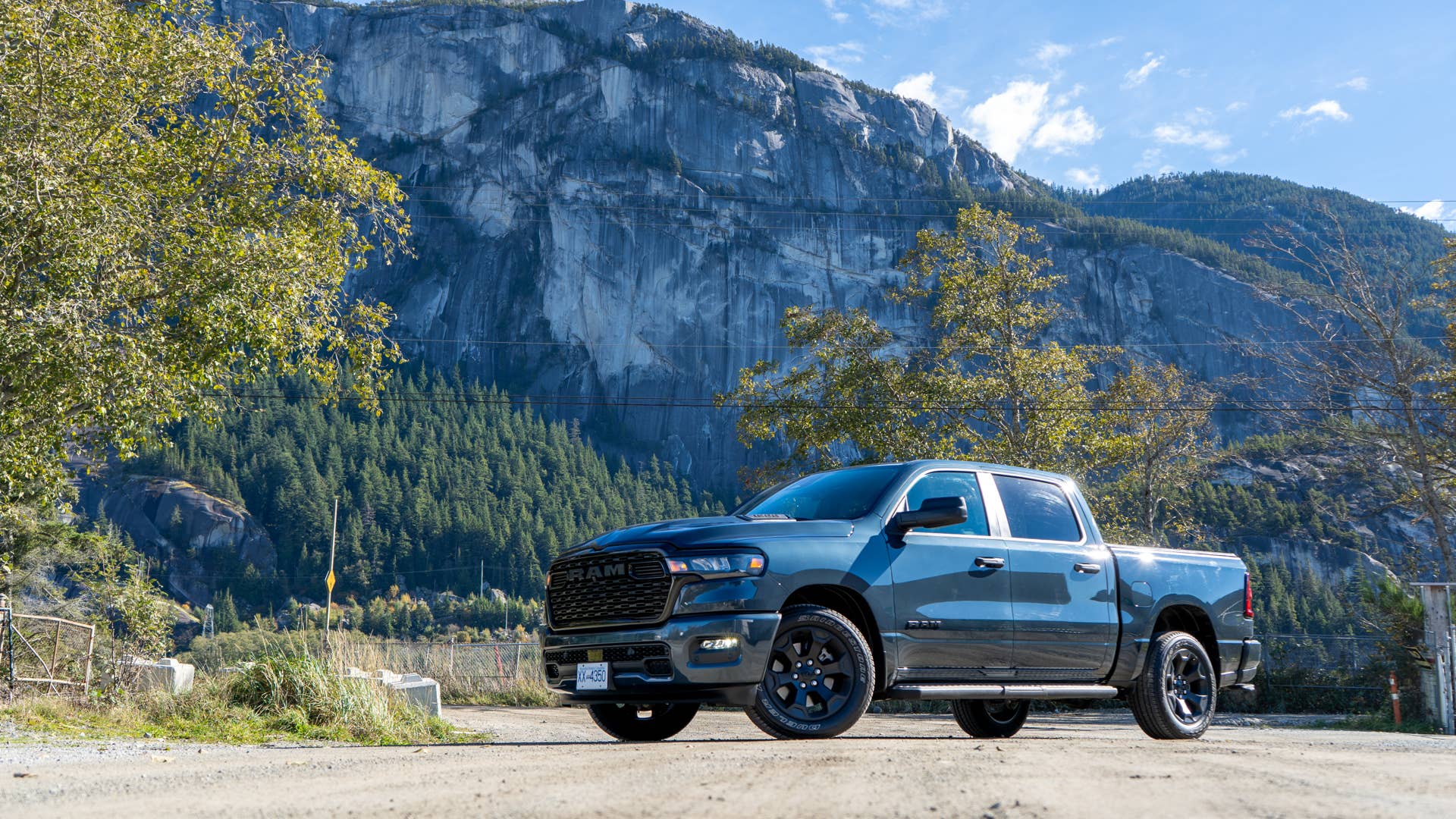
My Hurricane-powered tester was a Canadian-market Black Express Crew Cab. Canada markets Black Express as a named version, while American buyers can order a Black Express package on the Express. That said, the Hurricane-versus-Hemi choice extends well beyond this particular specification. The sport hood, dark grille, dark wheels, and side steps give it the muscle-truck stance its name promises, and the styling has attitude even when the engine keeps its opinions to itself.

2026 Ram 1500 Black Express Hurricane

Cole Attisha

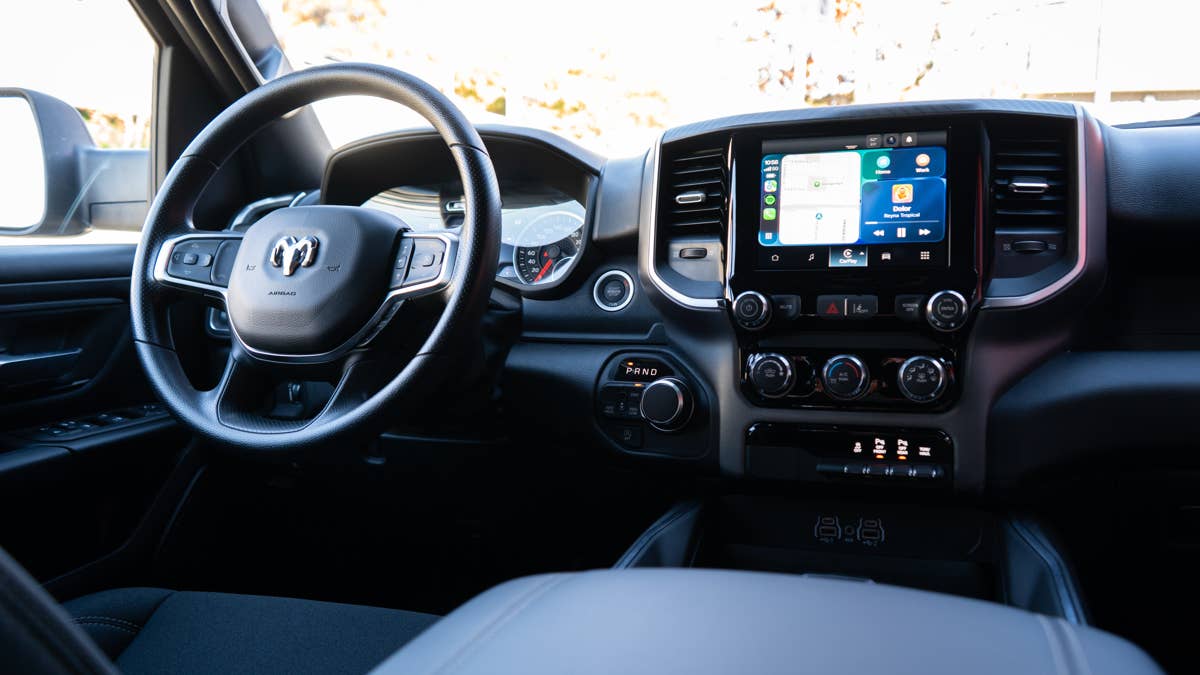
Inside, the simpler equipment felt refreshingly straightforward. It suited the Hurricane’s businesslike character, giving me a Ram that felt ready for everyday duties without turning the cabin into a luxury-SUV techfest. That simplicity, thankfully, still left the truck’s underlying comfort intact. Ride quality remained very similar to the more lavish Hemi-powered Sport Night I had tested. The Black Express was very comfortable, which matters whether you’re commuting or spending hours behind the wheel between jobs, and its quieter engine complements that comfort nicely. I missed the Hemi at times, but certainly not every time I drove.

2026 Ram 1500 Black Express Hurricane

Cole Attisha

The Quiet One Is Still A Heavy Drinker

With the Hurricane, I averaged just 13.2 U.S. mpg during my week, or 17.9 L/100 km, which was worse than the Hemi’s roughly 13.8 mpg (17 L/100 km). These were different weeks, with slightly different journeys, so the figures don’t establish which engine would be more economical on an identical route. They do, however, show that choosing the six-cylinder doesn’t guarantee a small fuel bill. For my use, the Hurricane’s clearest everyday benefits were smoothness, quietness, better torque, and higher max towing capacity. Fuel savings never materialized.

2026 Ram 1500 Black Express Hurricane

Cole Attisha

The Real Verdict: Buy The Engine That Best Suits The Job

If I wanted a straightforward pickup for hauling things, throwing random junk in the bed, and doing occasional work around a larger property, I would lean toward a basic Hurricane-powered Ram like this Black Express. Its calm delivery and comfortable ride suit a truck bought primarily to get the job done. On the other hand, if I wanted one vehicle to serve as a family hauler, a luxury-SUV alternative, a muscle car, and a capable pickup, I would choose the Hemi—especially in something like the Sport Night I previously tested. Its response and soundtrack add enjoyment to duties either engine can handle.

The Hurricane’s refinement could be just as appealing in a luxurious Ram, but I prefer the Hemi in that role because I want the truck to entertain me as well as accommodate me. And, strangely enough, the 5.7-liter V8 is somehow the most economical choice in terms of fuel consumption. After driving both, I understand the difference in appeal more clearly. I’d happily put the Hurricane to work, whereas the Hemi is the one I would keep finding excuses to take out after work.

Autoblog aims to feature only the best products and services. If you buy something via one of our links, we may earn a commission.

I Drove the 2027 Toyota Prius Plug-in Hybrid XSE Premium, and Deserves More Attention in a Hybrid Crossover Heavy World

No Longer the Star of Prime Time

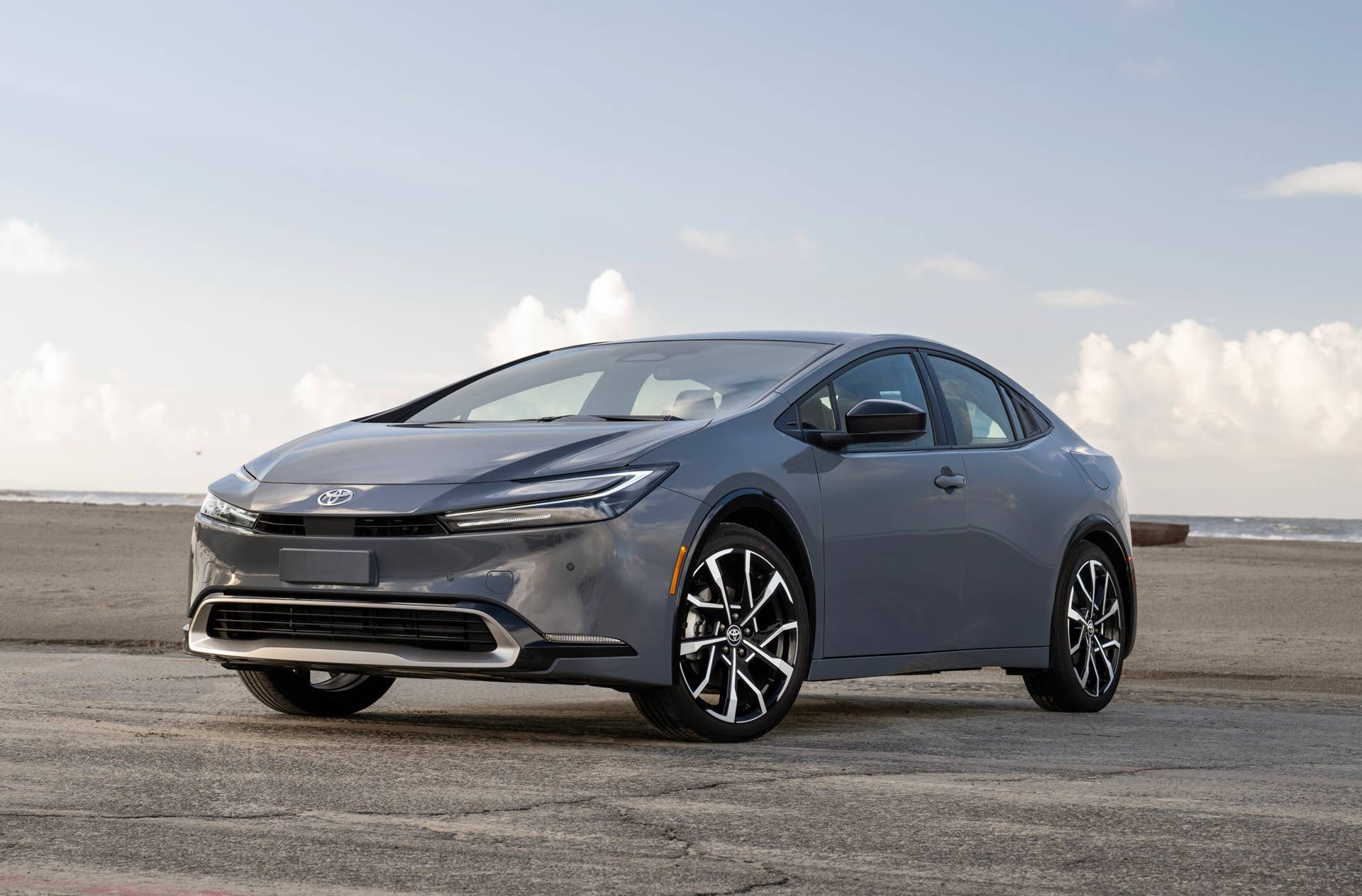
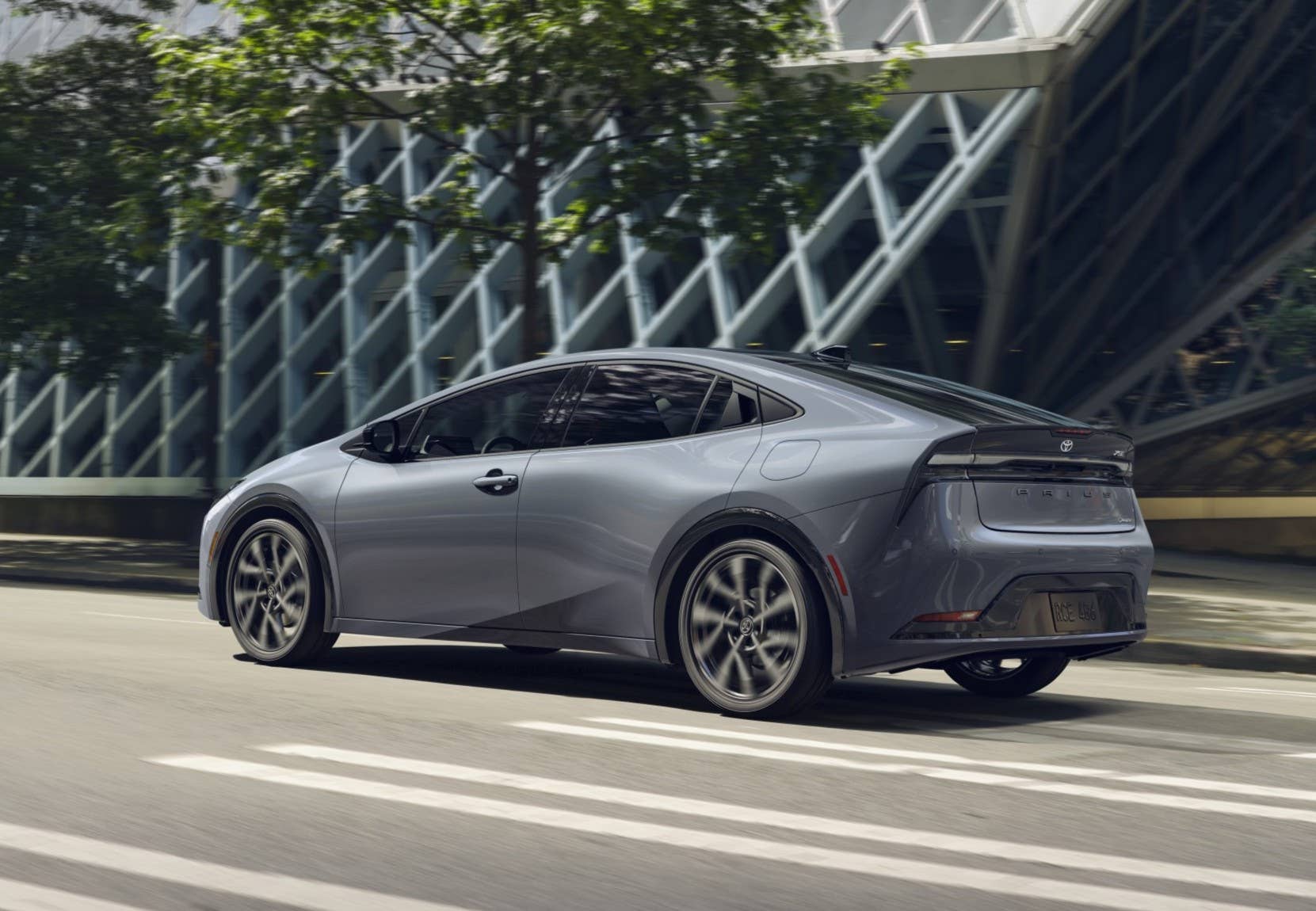
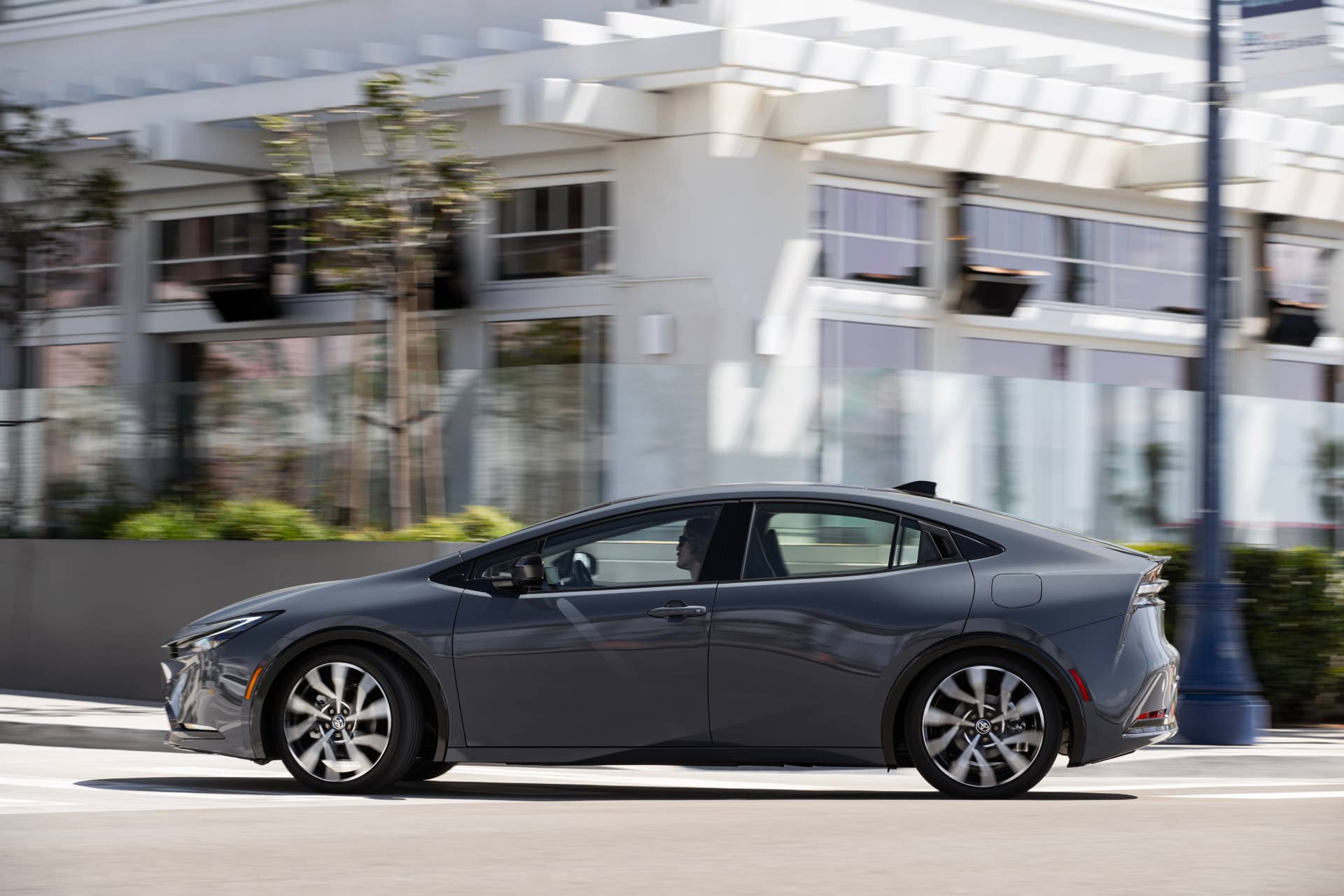
The current Prius has finally became pretty appealing (for more than its efficiency) at a time when buyers want something taller. Its low nose, sweeping roofline, and near-exotic body don’t look like anything else Toyota has in its lineup. It’s no longer weird, goofy-looking, and spacecraft-like. But looking good only gets a practical car so far. The important part is that Toyota backed up the styling with a plug-in powertrain that makes it pretty great to drive.

I got to drive the 2027 XSE Premium with a base price of $40,675. With the $1,295 destination charge and options like the Technology Package, digital rearview mirror, heated rear seats, and a solar charging roof, the total price was $44,215. Largely unchanged for 2027, except for dual automatic climate control, the Prius Plug-in Hybrid remains one of the most pleasant compact hybrids you can buy today, except that not many are flocking to the Prius anymore when the new RAV4 is hybrid only. The 2027

Style – 9/10

Toyota

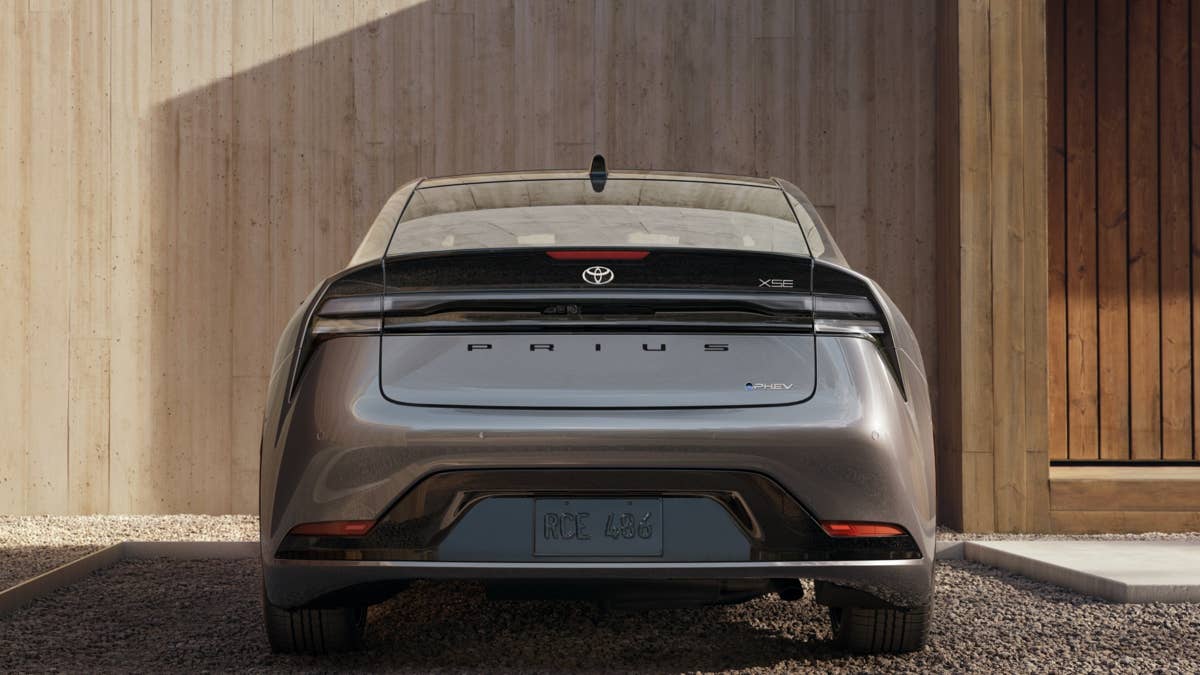
I don’t miss the old Prius styling. The only way I would’ve owned one would be if I could wear a disguise. Maybe round eyeglasses, a big yarn hat, and a tie-dyed shirt with Greta Thunberg’s face on it. No need to go incognito with the current Prius because it looks like a chiseled sporty car. Its design is a great reason to consider the car, and not just because it’s a fuel miser.

Toyota

The XSE Premium wears 19-inch alloy wheels and includes a fixed glass roof with optional solar cells. But there’s a range trade-off with the fancier equipment: this trim delivers an EPA-estimated 39 miles of electric driving, compared with 44 miles for the SE. That might not seem like much for most folks, but those want to squeeze out every last mile should go with lower trims, sacrificing some creature comforts and looks in the process.

Toyota

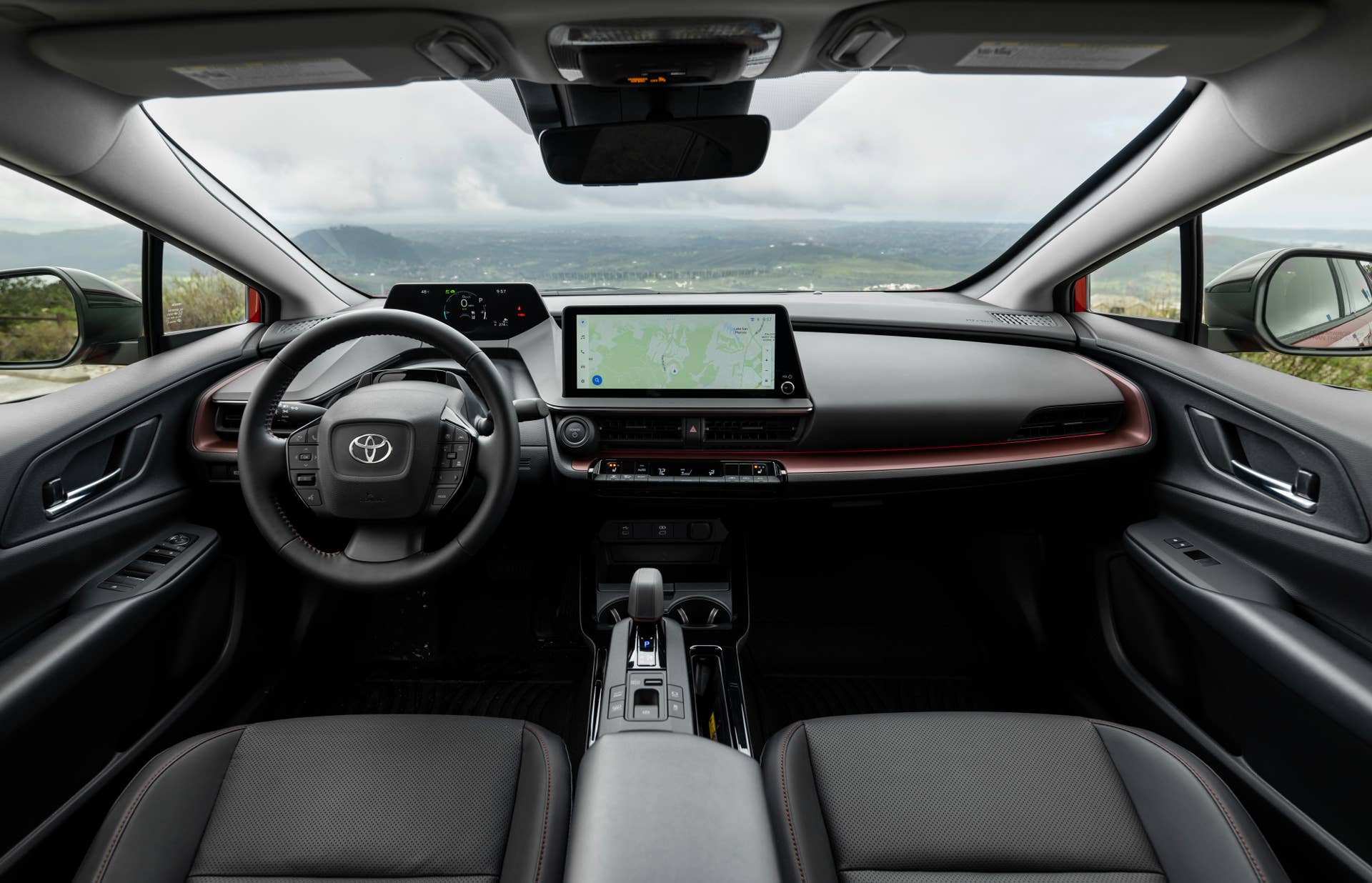
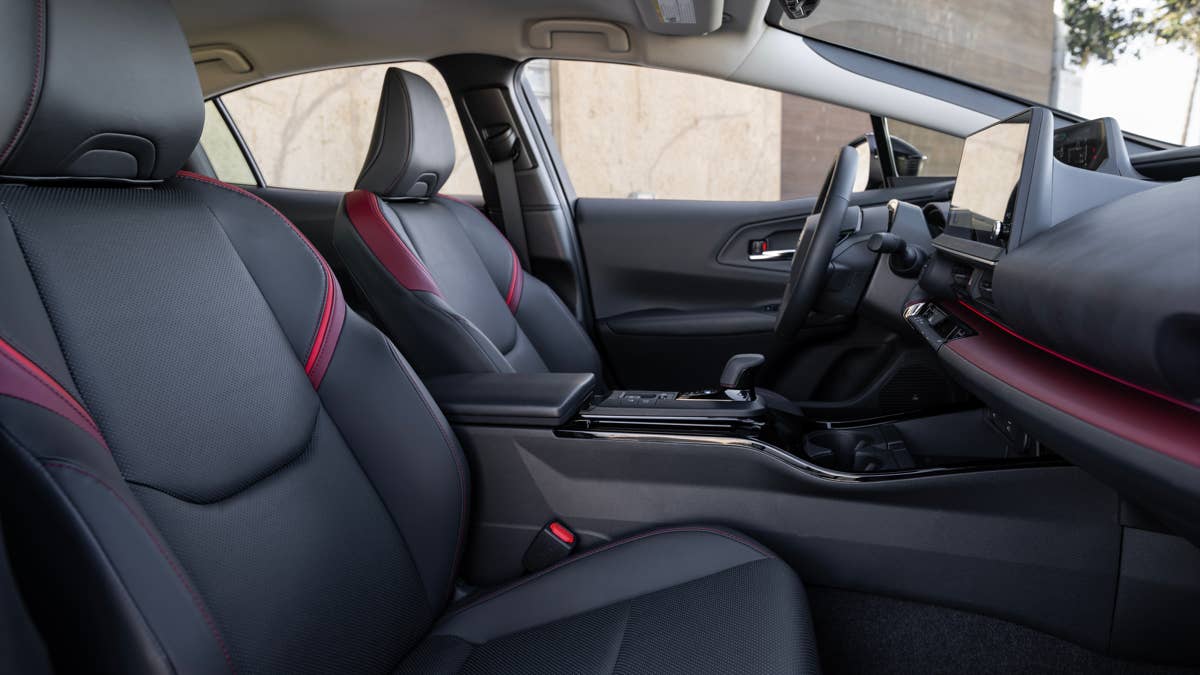
Inside, the dashboard and center console are far more conventional than the spacecraft cabin from the last generation. It’s cleaner, more pleasant, and absolutely easier to live with. Still, the relatively plain door panels and restrained detailing don’t generate the same enthusiasm as the bodywork. When it comes to controls, the Prius Plug-in is pretty good, definitely easier to use than the last one. It seems designed for function not just for the sake of a unique appearance. I’m actually surprised Toyota put a more conventional electronic shift knob here, so different from the blue lollipop version sticking out of the center stack on the old Prius. That one is not missed.

Toyota

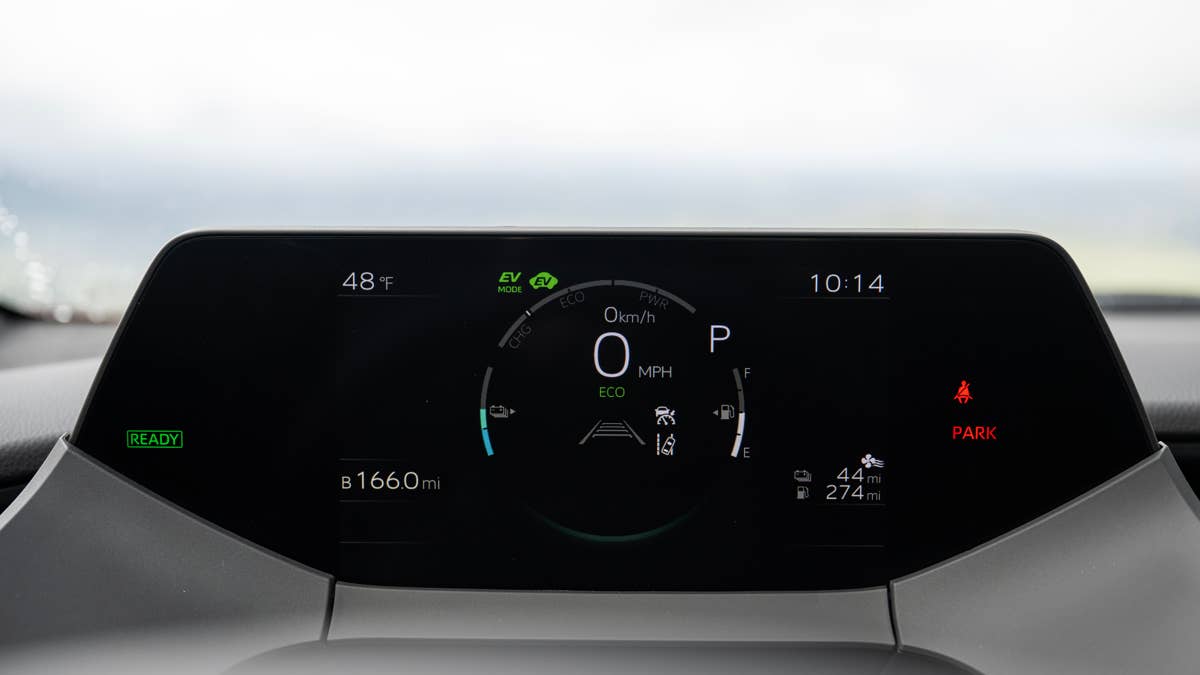
The combo gauge cluster/head-up display setup takes some getting used to, as does the very thick steering wheel hub. Due to my height and desired seating and wheel position, I ended up peering through the steering wheel to look at the gauges, and that worked fine. It just takes time to figure out what works best for you. It’s not a sexy look, nor is it particularly fancy. The info is simple, and you can configure what data you’d like thrown up on the display.

Driving Experience – 9/10

Toyota

The new Prius is, by far, the best driving Prius ever made. It doesn’t sacrifice efficiency but bumps up the horsepower significantly. Prius Plug-in Hybrid combines a 2.0-liter four-cylinder with electric motor-generators for 220 combined horsepower. Toyota quotes a 6.6-second run to 60 mph. Yes, a quick Prius. Who could’ve imagined this from the model that made hypermiling a sport.

Toyota

What stood out in my drive of the Nightshade version last year was how readily the powertrain handled normal traffic. Electric operation is quiet and responsive, particularly around town, and the transition into hybrid operation was completely unobtrusive. It’s actually quite fun to drive because the steering is quick, the handling is nimble, and the car feels sporty. Hard acceleration can be noisy and since the PHEV doesn’t get AWD, the front tires sometimes struggled to put the power down.

Once you deplete the impressive 40-mile all-electric range of this trim level (the SE gets 44 miels), the Prius PHEV XSE premium operates as a hybrid rated at 48 mpg combined. I allowed the battery to tap out, and I drove it mostly in Sport mode, attaining 45.3 mpg for an impressive run over several days.

Comfort and Usability – 8/10

Toyota

The Prius’s cabin is significantly better in terms of look and feel, but it is on the small side. Older Priuses had a massive green house. The new one does not. My 6′ frame fit just fine in the accomodating front seats. Despite the dramatic windshield angle, I found the seating comfortable and supportive. The XSE Premium adds heated and ventilated SofTex-trimmed front seats and driver-seat memory. The faux leather is pretty convincing, and it doesn’t give up much to real leather.

Toyota

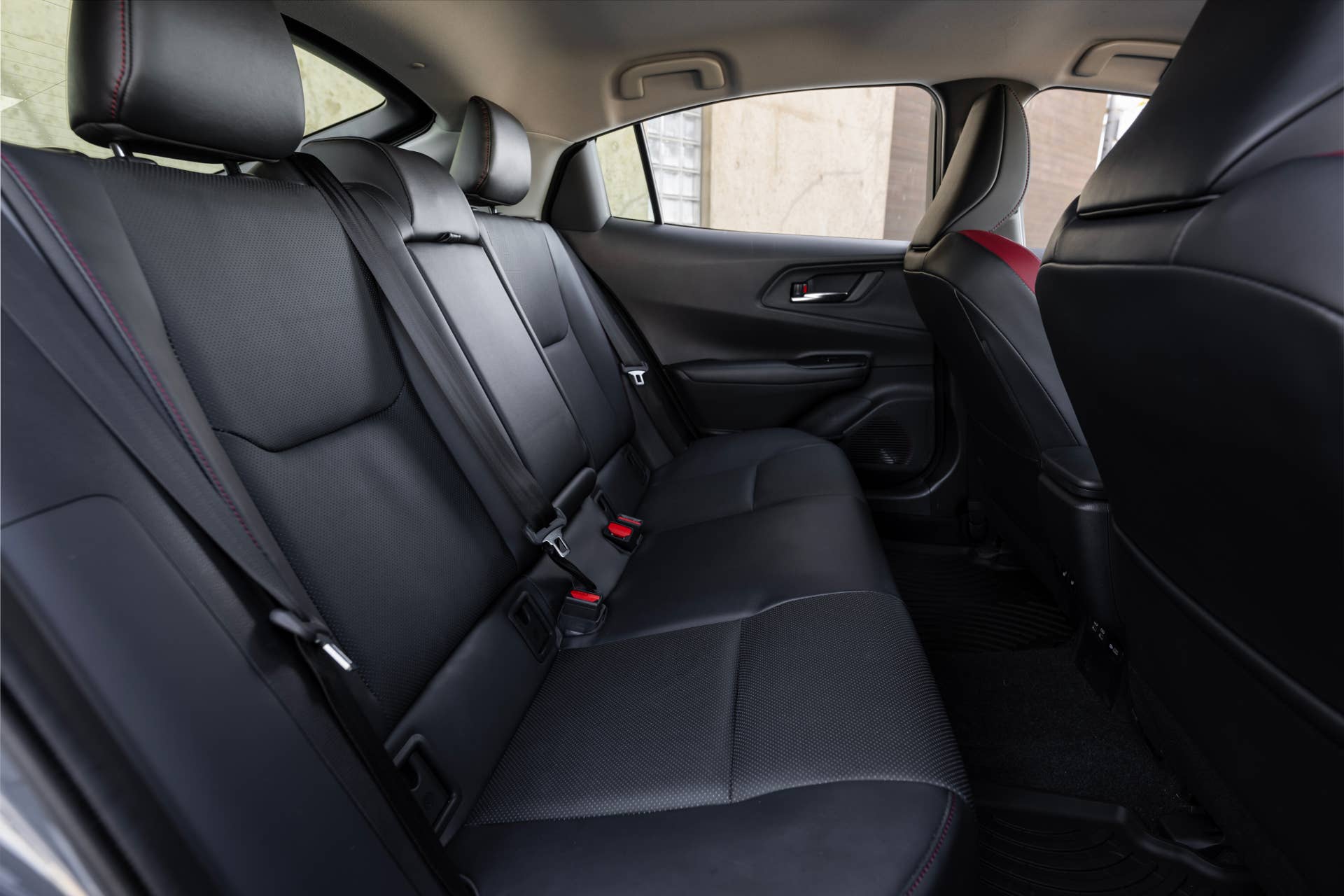
This is no car for a a big family. Legroom in back was fine for my three kids, but adults won’t want to spend much time in the back due to the sloping roofline. The 34.8 inches of rear legroom can feel tight, despite the comfort level of the back seats. The middle psoitiong has pronounced backrest bulge due to the fold-down armrest, but at least the floor bulge is slight. The Prius Prime doesn’t have big side or rear glass, so the feeling can be cosseting if you’re prone to motion sickness. Be gentle on whoever’s in back.

Toyota

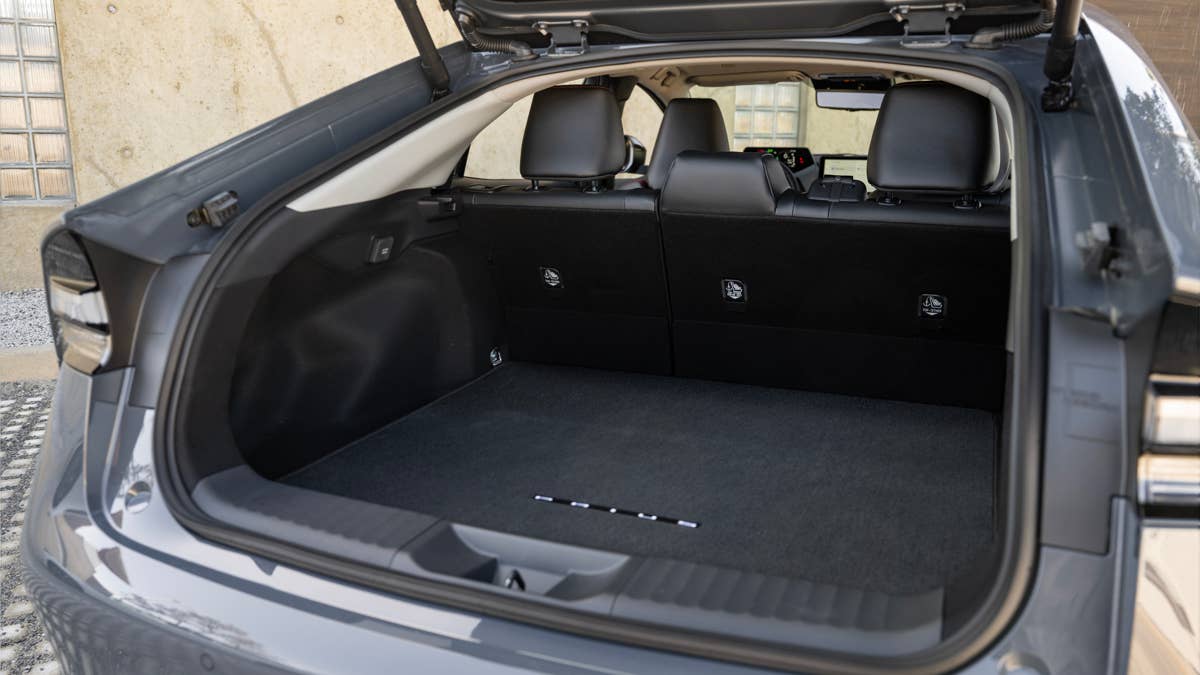
Hatchback practicality also deserves attention. The large rear opening is pretty capacious and very easy to access, and the XSE Premium includes a power liftback. Really tall items are going to be a challenge due to the severly sloped rear glass, but the cargo hold is long and wide. 20.3 cubic feet is more than many family sedans, and if you fold the seats down, you get 26.7 cubes.

Final Verdict – 8.6/10

The Prius Plug-in Hybrid deserves more attention because it offers a compelling middle ground: useful electric-only driving, efficient hybrid operation for longer trips, and a surprising level of performance that its predecessors lacked. Its back seat space and instrument-display ergonomics don’t make it a slam dunk recommendation, but neither cancels the Prius’s real appeal. Many buyers don’t need everything a crossover offers. If you can charge regularly, don’t routinely carry tall rear passengers, and want a car with some actual visual sportiness, the Prius belongs on the shopping list.

I Drove the 2027 Subaru Ascent Onyx Edition Touring, and It’s Barely Good Enough

Ascent, Descending

The Subaru Ascent sells in far fewer numbers than its very successful stablemates, the Forester, Crosstrek, and Outback. In its debut year, 2019, the Ascent sold almost 90,000 units. Last year, it was about half that. If this steep drop sounds surprising, you can’t blame it on the Ascents lack of essential features. The Subaru Ascent still offers things families want: standard all-wheel drive, comfortable accommodations, useful towing capability, and excellent safety features.

The problem is that those qualities aren’t enough to set it apart now. Numerous three-row SUVs have hit the scene since the Acent took the stage. The Kia Telluride and the Hyundai Palisade emerged in 2020 and have already undergone a full redesign this year. The Toyota Grand Highlander debuted in 2023, and it’s crushing the Ascent in sales.

For 2027, Subaru’s largest SUV receives minor updates that don’t amount to much. It gets USB-C ports for rows two and three, which the tech-hungry kids will love. Aside from that, there’s a new paint color, Deepwater Blue Pearl, which was the color of my tester. My Onyx Edition Touring’s base price was $51,995. With the premium paint ($395) and the destination charge ($1,495), the total came to $53,885.

Its Looks Disappear Into the Background

Subaru

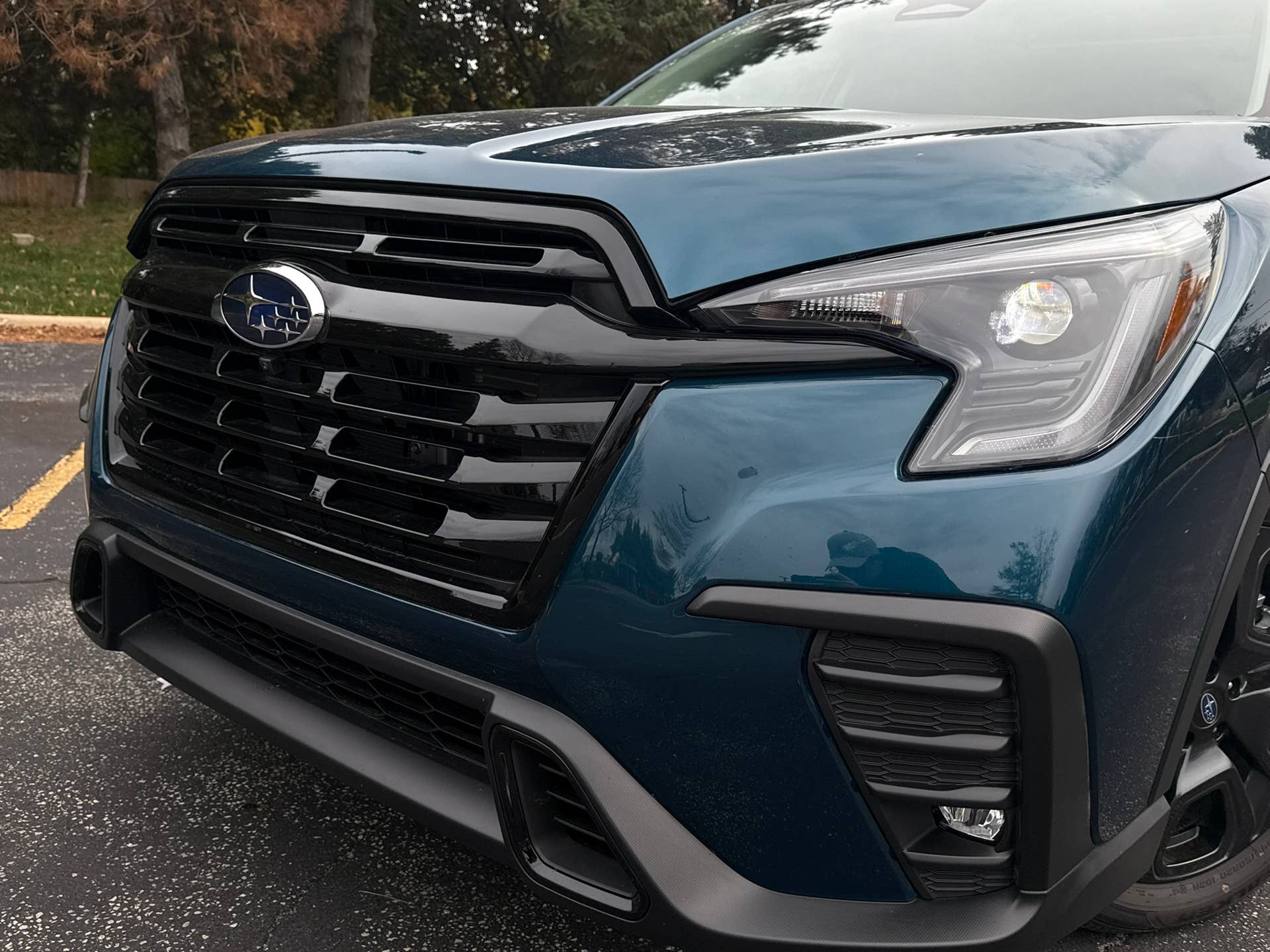
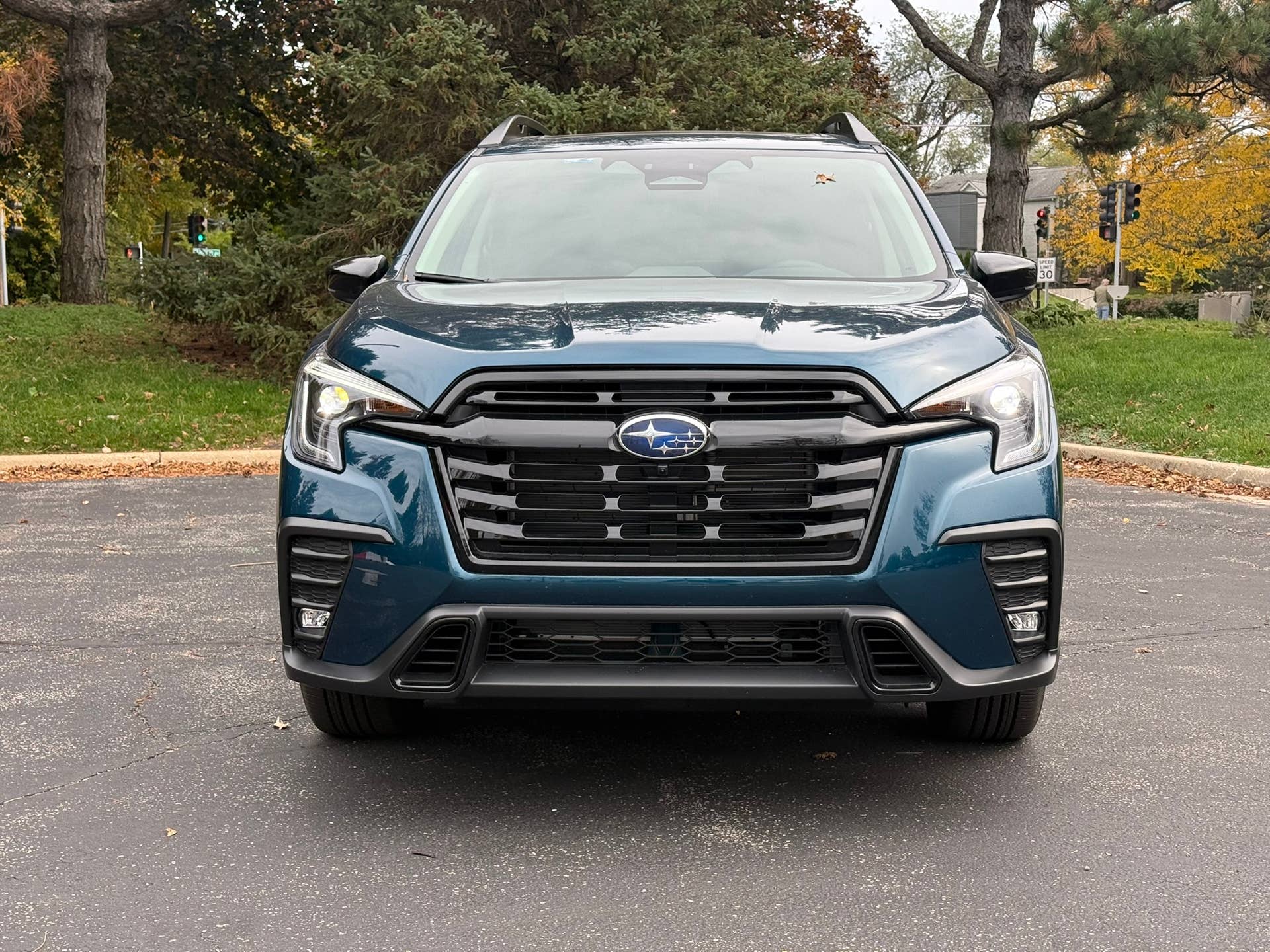
The Ascent won’t turn any heads, that’s for sure. It’s anonymous shape is mated with a an overly busy front end. Itreceived a refresh in 2023, giving it revised front and rear fascias. The Onyx treatment arrived the year before the refresh and has remained in the trim line. It has merged with the top Touring trim to become the Onyx Edition Touring. Are you still with me?

View the 4 images of this gallery on the original article

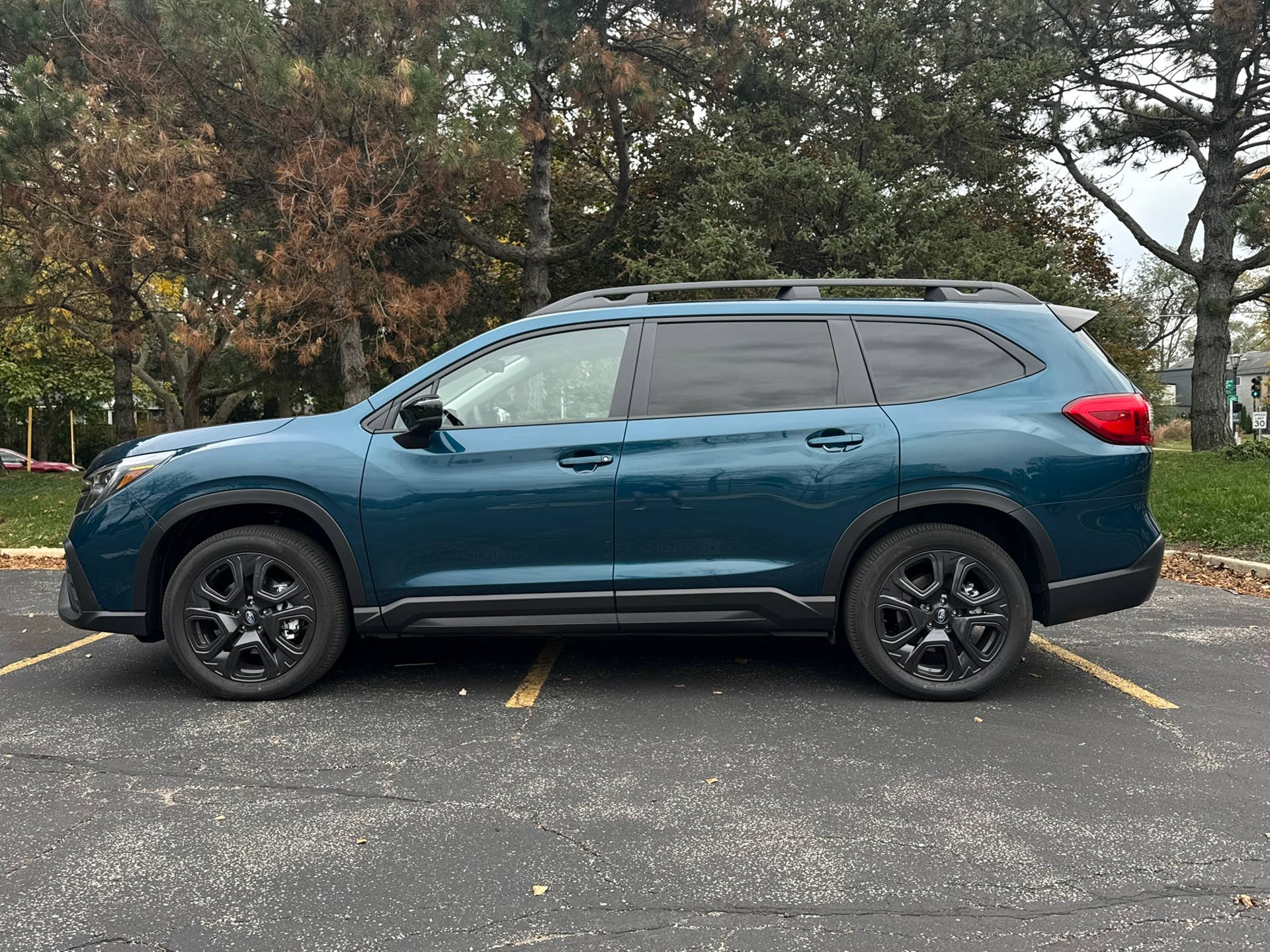
The Onyx gives the Ascent a bolder and more sinister look. Darker treatments are popular on crossovers and SUVS now, and the Ascent gets black-finished 20-inch wheels, a gloss-black grille, dark window trim, and additional black exterior accents. Even with the darker touches, the Ascent doesn’t look distinct when bolder choices like the Kia Telluride exist.

Kristen Brown

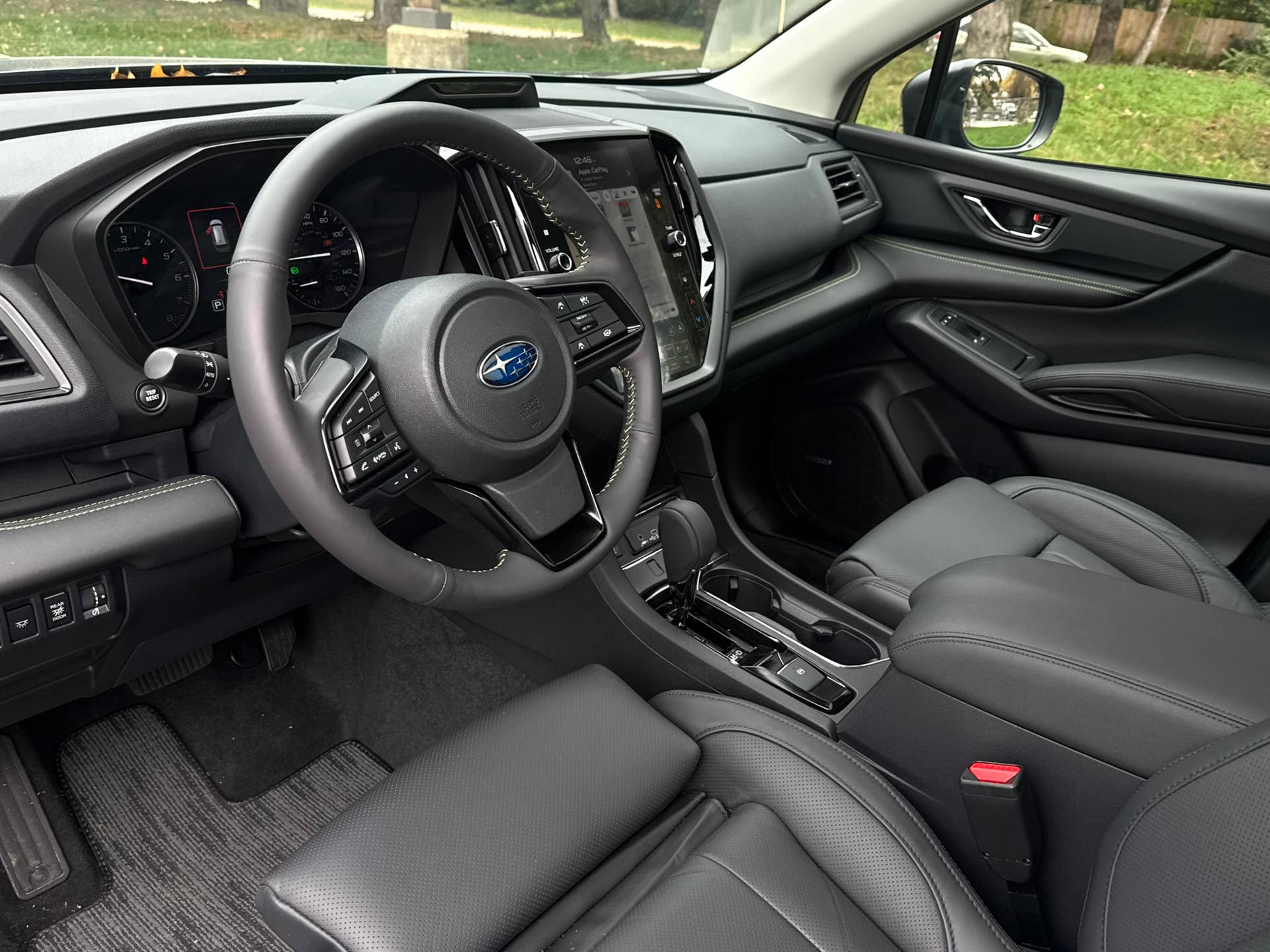
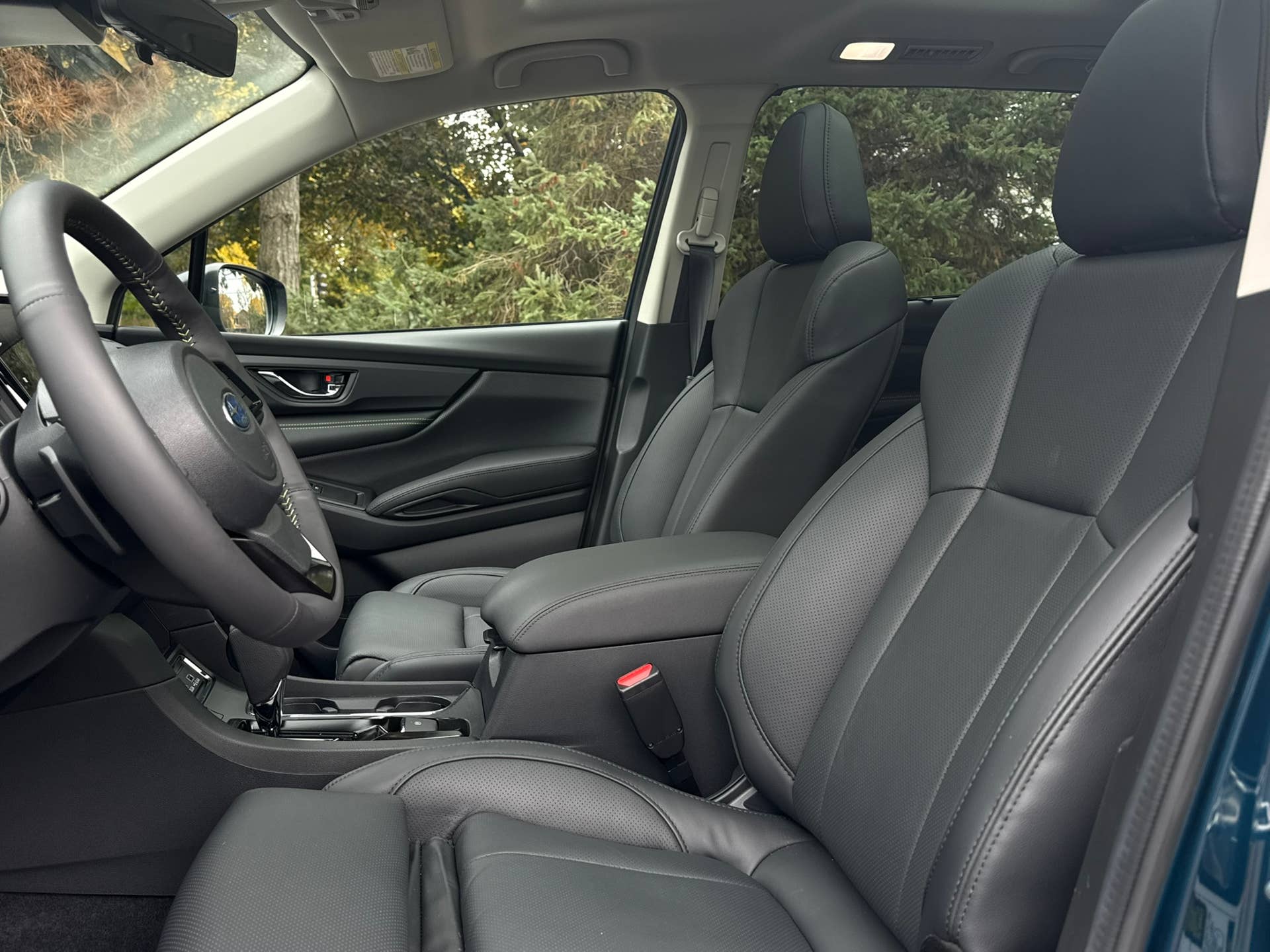
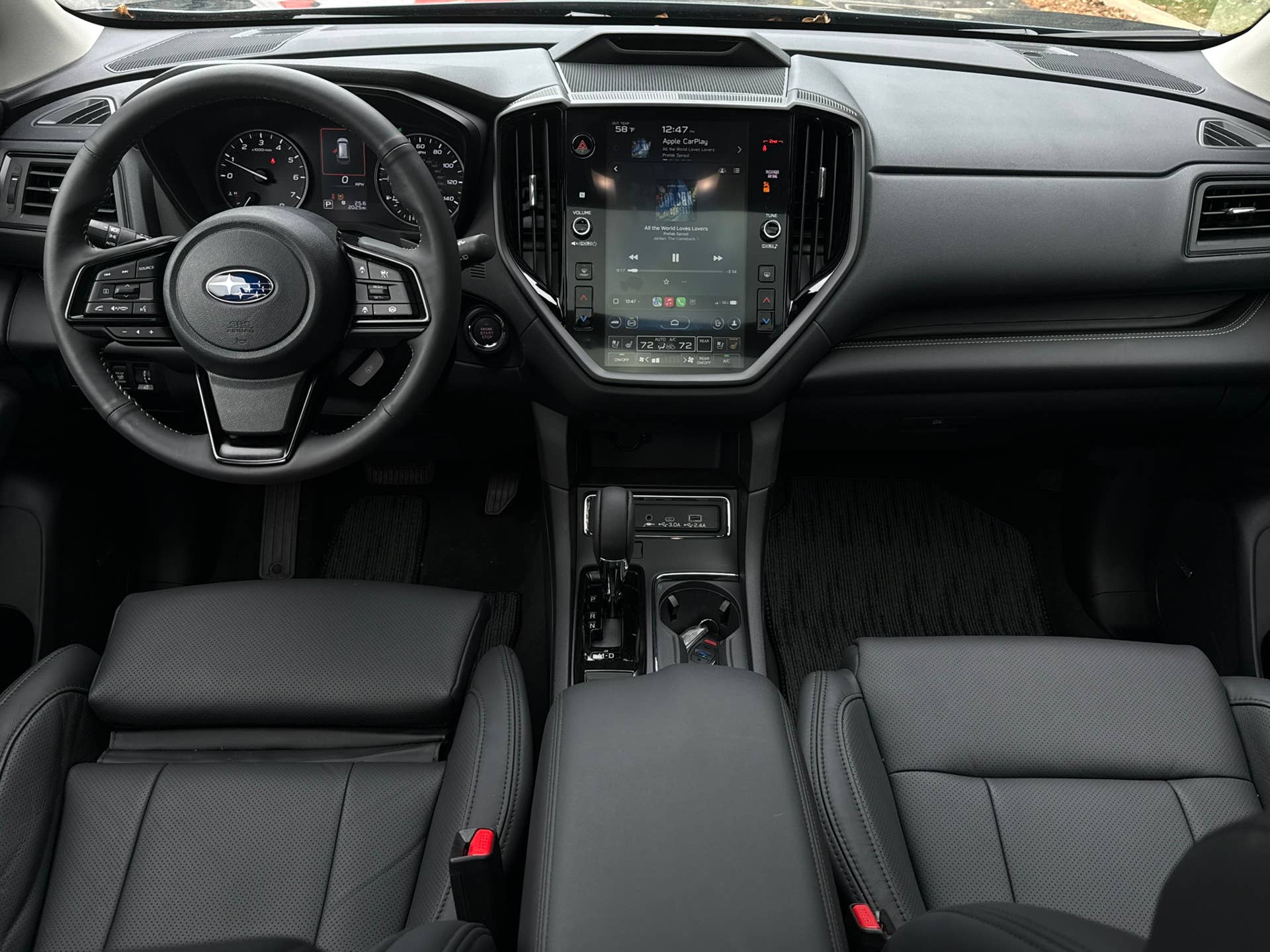
The leather is good, and the seats are comfortable in the first two rows. Still, leather and equipment can only do so much when the dashboard architecture and overall presentation feel dated. The Ascent’s interior is starting to show its age with the bulky dash and dark plastics. The premium materials in the Onyx improve the experience but don’t really drive up the overall look and feel all that much.

View the 4 images of this gallery on the original article

Contact points are appropriately soft, and the plastics are of good quality. It’s just a bit too monochromatic inside, and the seats don’t even get contrast stitching that’s present on the dash and door trim. The small amount of piano black is appreciated, but it’s present on the shifter gate with plenty of divots and creases to house crumbs and schmutz.

The Infotainment is a Drag to Use

Amos Kwon

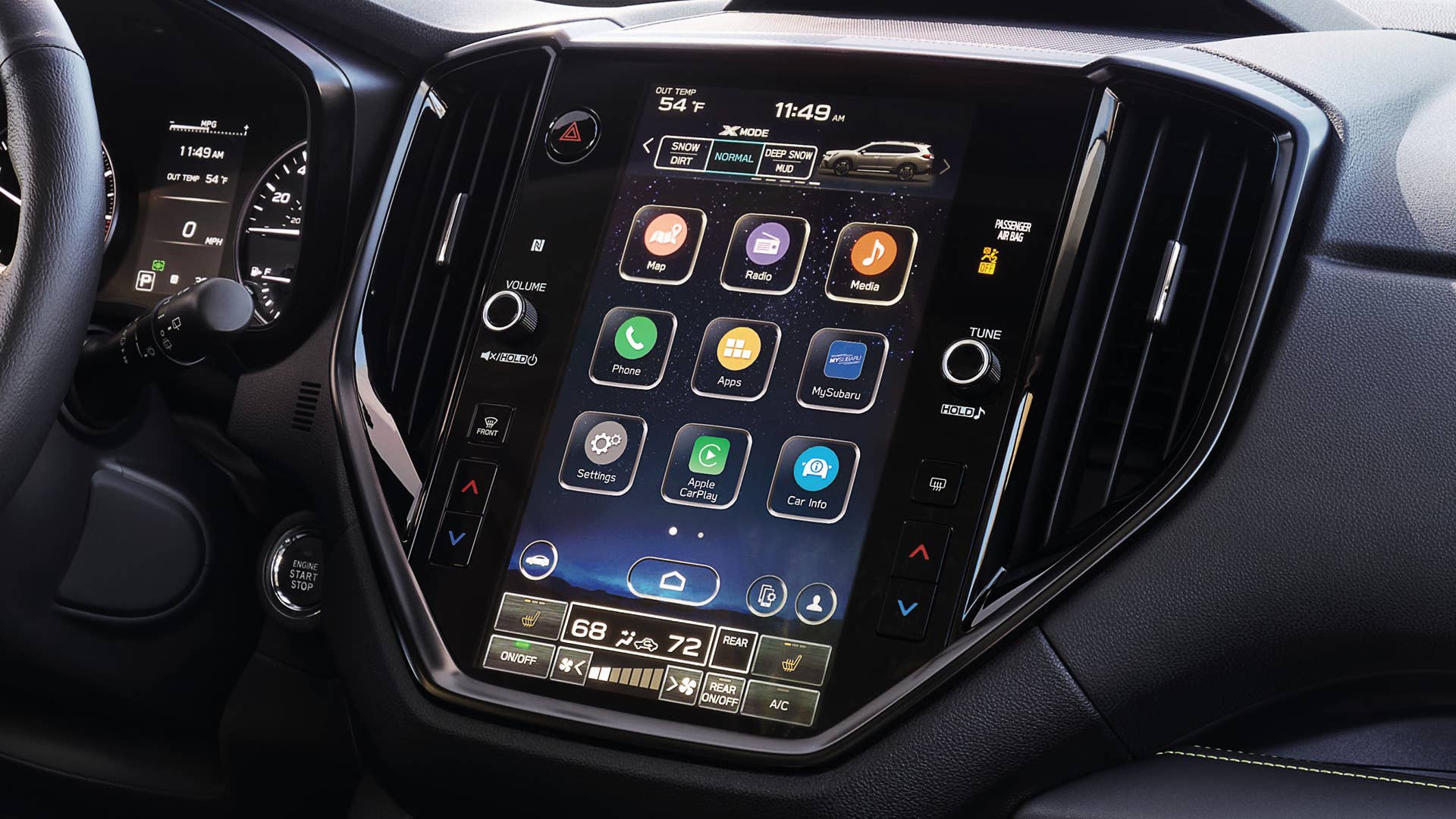
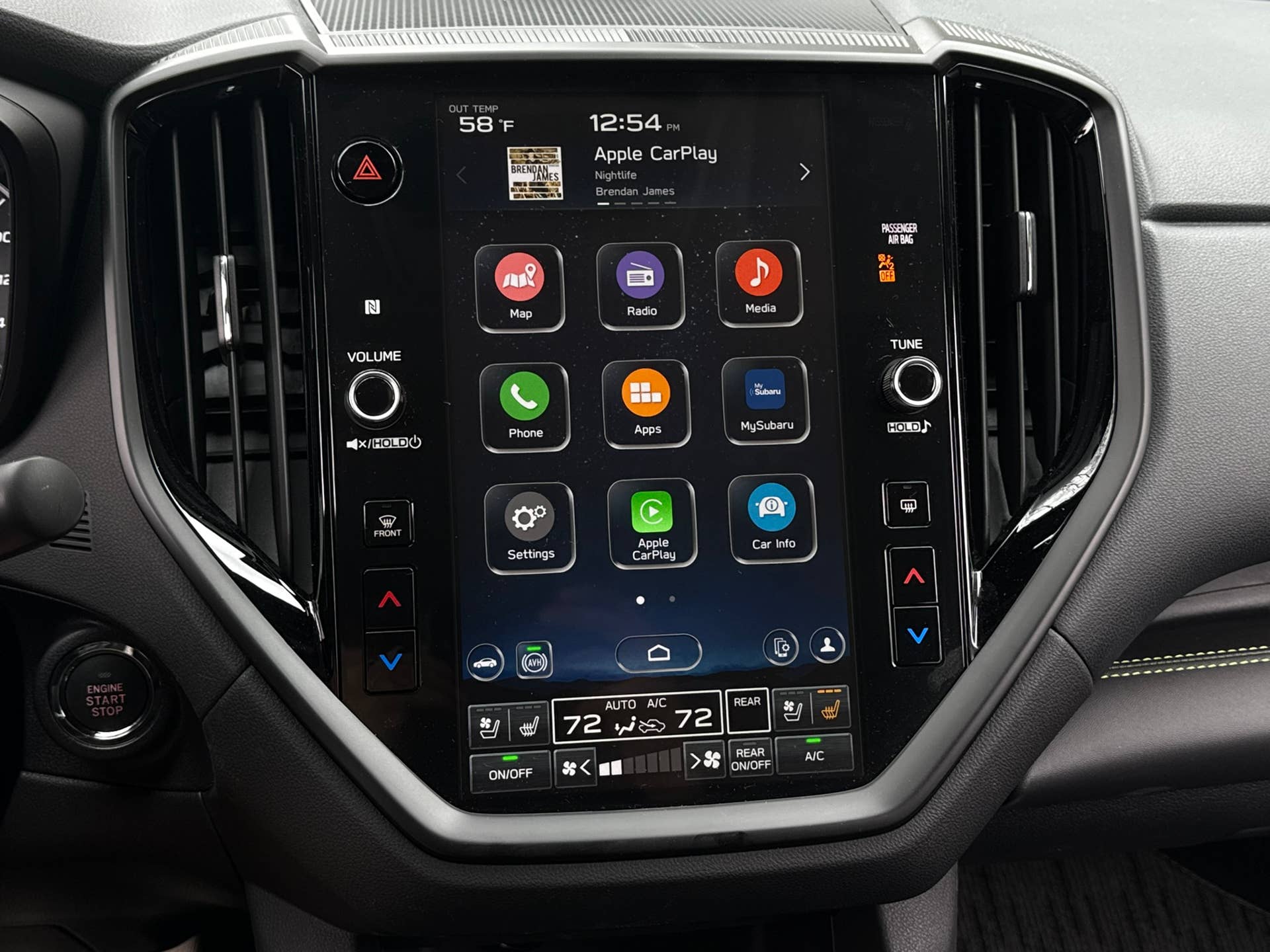
The standard 11.6-inch portrait touchscreen is one of the clearest indications that the Ascent needs more than incremental updates to its interface. To me, it feels like its the Achilles heel of the Ascent. The screen is big, yes, but the operation is so frustrating. It’s laggy on startup, to the point of disbelief, and the climate controls crammed into the bottom portion of the screen requires both patience and dainty fingers.

View the 2 images of this gallery on the original article

Wireless Apple CarPlay and Android Auto cover the essentials, but smartphone integration doesn’t excuse an interface that could be simpler and more intuitive. The oversized icons are ridiculous, but the colors and graphic icons take too much time to decipher while driving. It, along with most of the other Subie models, needs the new Outback’s landscape screen and new interface. The new rear USB-C ports are useful. They’re also the sort of improvement buyers expected a couple of years ago.

The Cabin Comfort is Good But Not Great

Amos Kwon

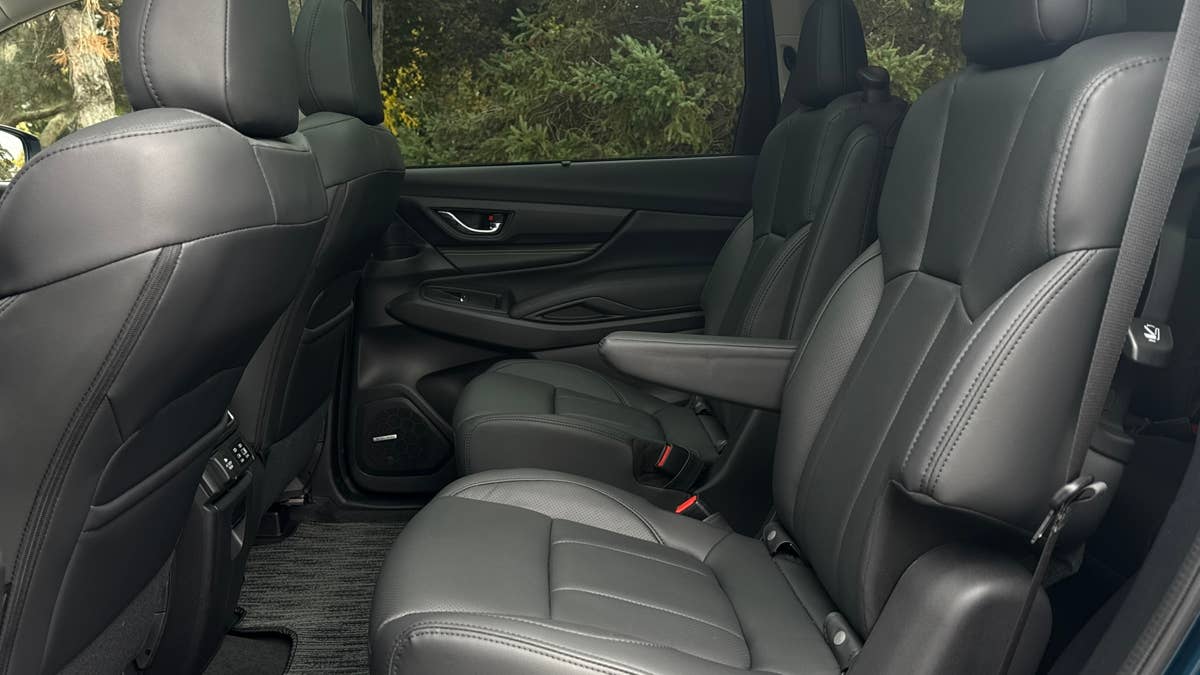
Comfort in the first two rows is pretty solid. The Ascent’s accommodating seats and relaxed character help explain why it continues to appeal to families despite its near nine-year generational life. The Onyx Edition Touring seats seven, with second-row captain’s chairs providing individual seating and access toward the back. 38.6 inches of second row legroom is spacious, and I can easily sit behind myself in comfort. Six footers need not worry.

View the 4 images of this gallery on the original article

The third row is for kids. 31.7 inches of rear legroom. That’s less than both the Toyota Grand Highlander and the Honda Pilot. While it’s not an ancillary row the way the Mitsubishi Outlander’s is, don’t stick adults back there for long. Occasional extra seating is useful, but families who regularly need three rows for long trips should reconsider. I tried sitting back there, and it’s very unfriendly to six-footers. Don’t cram your high school football players in the third row, ever.

Amos Kwon

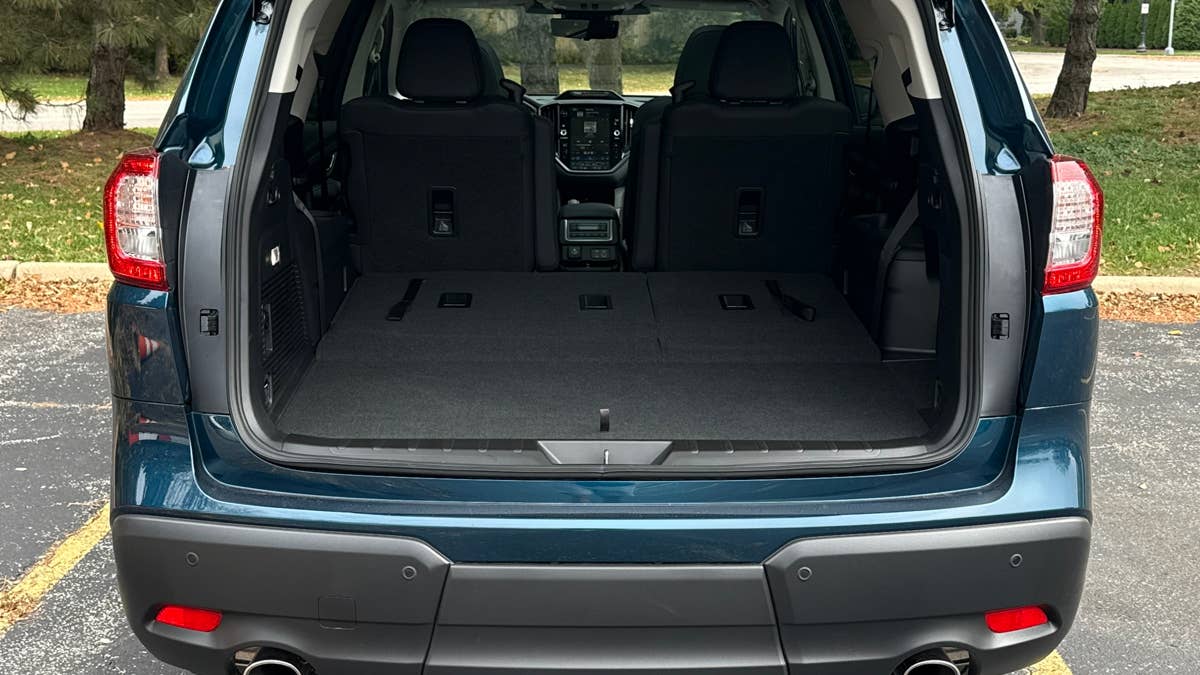
Cargo capacity behind the third row is 17.8 cubic feet. That’s workable for school shuttling and medium-sized trips to the grocery store, but a full passenger load and vacation luggage require planning. Folding second row seats improves versatility, although doing so sacrifices the capacity that prompted many buyers to consider the Ascent initially.

One Engine and It’s Not Exceptional

Amos Kwon

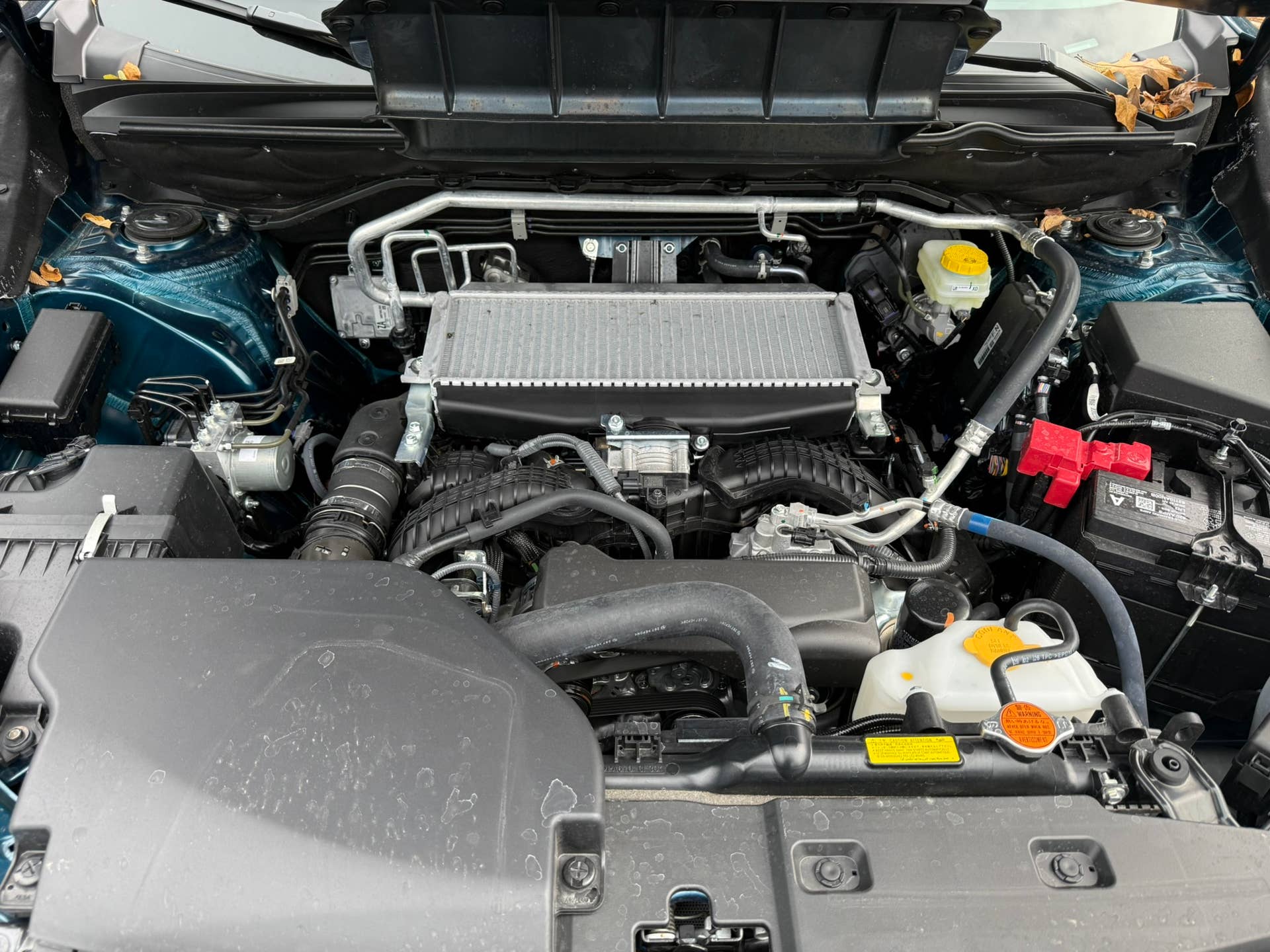
Every Ascent uses a turbocharged 2.4-liter flat-four producing 260 horsepower and 277 lb-ft of torque. A continuously variable transmission and all-wheel drive are standard. The Ascent isn’t slow. 0-60 happens in a little less than 7 seconds, which is decent for a family SUV. It’s the accompanying noise and choppiness that hamstring the driving experience.

Amos Kwon

The flat four’s engine’s sound is grainy, something that doesn’t belong in a flagship SUV. Once you get past the initial lag off the line, the Ascent gets going and provides adequate performance, but it isn’t the same as a polished driving experience. The palpable body roll is signficant, and the front wheels feel overwhelmed when you push it into turns.

At the very least, there should be a hybrid option now that the Forester, Outback, and Crosstrek have it. What a disappointment. The EPA rating is 19 mpg city and 25 mpg highway for the Onyx Edition Touring. Without a hybrid option, the Ascent lacks an alternative for families who want to spend less at the pump and have more full tank range.

Final Verdict

I don’t wholly blame Subaru for the Ascent’s mediocrity. At one point, years ago, it was compeitive, but the rest of the pack hasn’t just caught up, they’v surpassed it in terms of style, efficiency, space, tech, and amenities. Its high time for a redesign and more than one engine choice. It’s unlikely that the brand will redesign it anytime soon with another facelift expected next year. It appears the brand wants to focus on the new three-row electric Getaway.

The 2026 Toyota bZ Is A Perfectly Whelming EV That’s Still Great For Pets

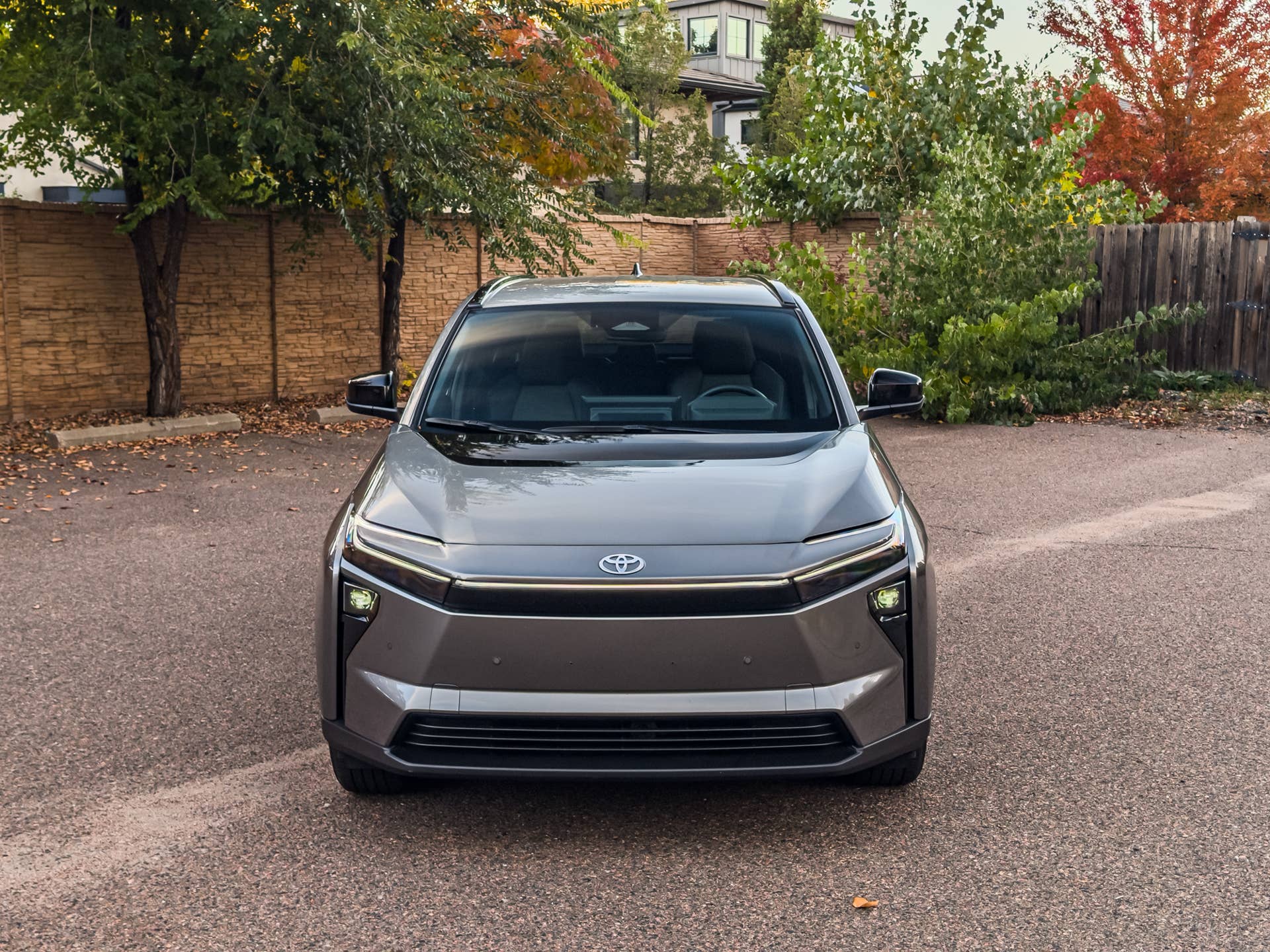
The new Toyota bZ is a heck of a lot better than the old bZ4x. It’s got better range, a more modern charging port and on-board charger, more power, and an updated interior. Really, it’s the EV that the brand should’ve made in the first dang place. It’s still not quite as good as some of the competition, but because it’s a good-sized SUV with an efficient drivetrain and a trunk, it is at least a good choice for those with pets.

As ever, our tester is my 85-pound dog, Beorn. He’s happy to do it, and he works for cheap.

East Of Access: Tall, But Not Too Much So

Chase Bierenkoven

View the 2 images of this gallery on the original article

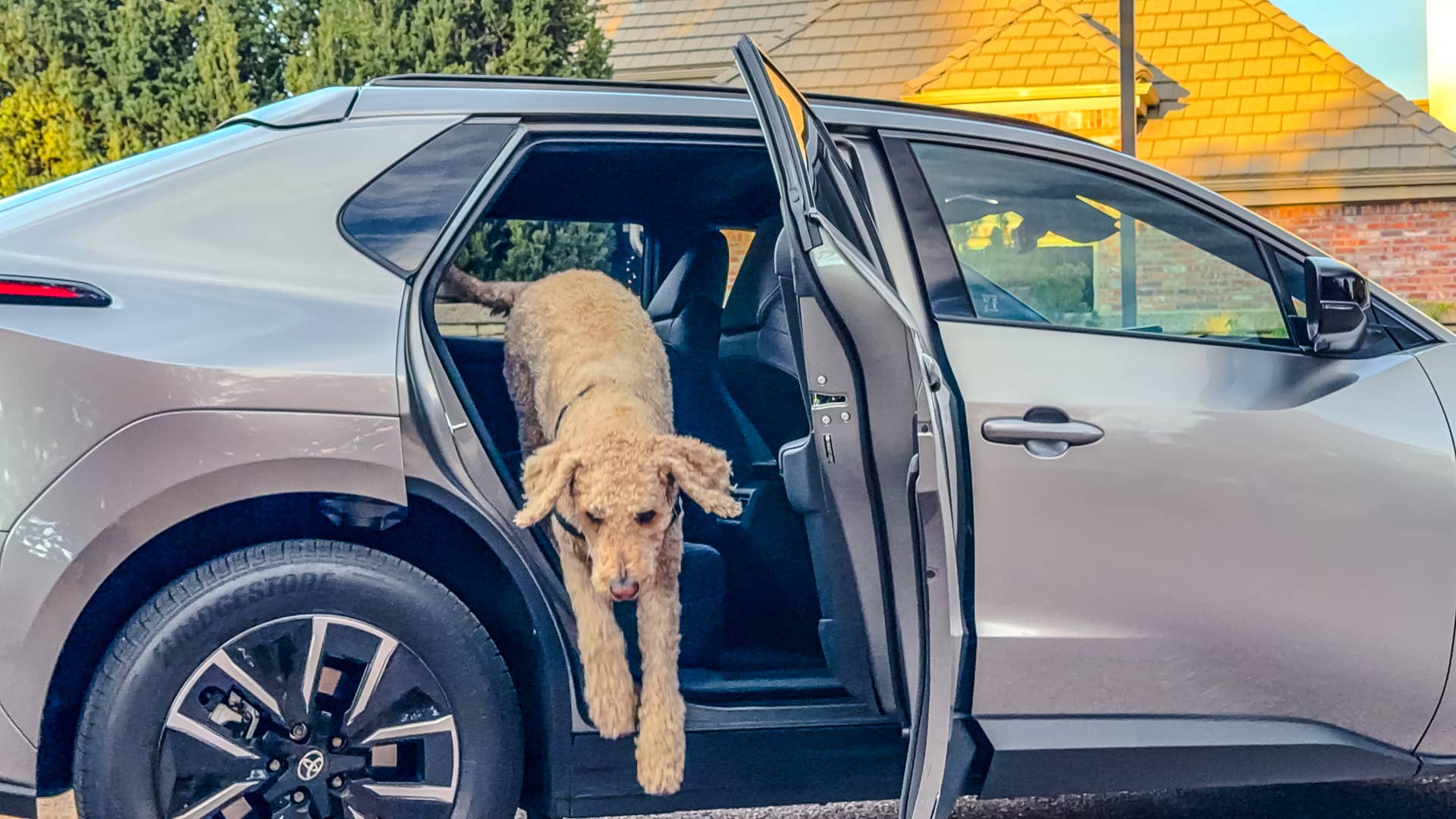
Beorn didn’t have much trouble getting into the bZ. That’s mostly down to two things: a wide door opening and the bZ’s relatively low ride height. When I do these tests, sometimes I can see him twist his body mid-jump to get through a gap, but not here. The path in and out is clear, but your smaller dog likely won’t be making the three-foot hop up to the seat. Getting out is similarly easy, and the wide opening and shorter doors mean you can get your pet out even in a crowded parking lot with cars on either side of you.

Interior Space: It’s An SUV

Chase Bierenkoven

View the 3 images of this gallery on the original article

Due to its steeply raked roofline, you probably won’t be fitting most dogs in the trunk. That’s not where the airbags are anyway. The rear passenger compartment, just as it does for people, offers plenty of space for pets. The bench seat is wide and spacious enough that even large dogs will fit, and there’s plenty of space for them to sit upright, lean out the window, or hang out. The seats also tilt and fold separately, giving you some options for carrying pets and long cargo simultaneously.

Materials: Rugged Enough

A good sampling of the materials you’ll find in the new Toyota bZ.

Chase Bierenkoven

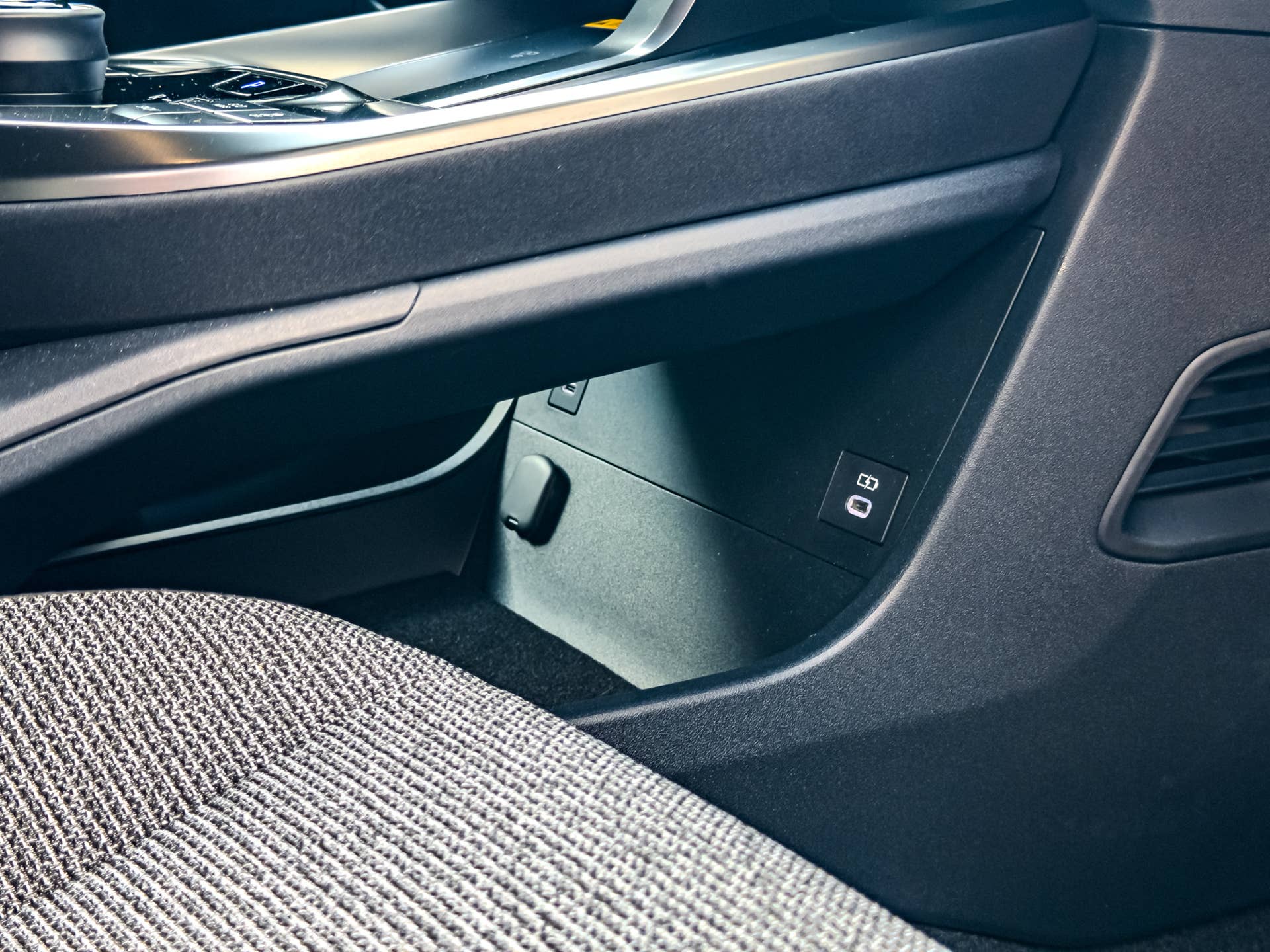
The bZ’s materials quality feels pretty sturdy. The seat inserts are cloth, with some pleather accents. Both should be pretty easy to keep clean. I clean all of these cars once the dog has been in them, so I ought to know. The armrest might stand up to some, well, standing, too. Though trim and upholstery shift somewhat as you move up or down the SUV’s trim ladder, they all seem to be pretty durable. Regardless, it’s probably worth investing in a seat cover anyways. Those, unlike whole seats, are at least washable.

Verdict: Plenty Of Room For A Dog Or Two

Chase Bierenkoven

The Toyota bZ doesn’t do much to set itself apart at a human level. It’s an electrified box that has made some big changes to become a much better one, but its capability and practicality remain largely unchanged. The SUV has plenty of room for people and pets alike, its slightly smaller cargo area notwithstanding. Though that loses about 10 cubic feet over an equivalent RAV4, it’s still more than enough car to transport your pets in, even if there are better electrified options on the market.