I know there’s a lot of preconceived notions surrounding Chinese vehicles in the States. It’s become a heavily politicized issue, especially over the last six or so years. To drive one on the road, though, is a very different story. As they still haven’t made it to the American market (yet), that required a trip abroad.
Geely flew out dozens of journalists for a trip to the Paris Motor Show, but what mattered most to me was time in the cars. One of its brands, Zeekr, looks to compete with the luxury icons we do get in the States, like BMW, Audi, and Porsche, and its 7GT is intended to beat them at their own game. The 600+ horsepower station wagon should compete with the Germans, and the brand let me loose on a closed course to find out if it can.
My time with the 7GT consisted of two separate days: a day to drive around Paris and its suburbs and a day on a closed, autocross-like course. Under the station wagon body sits a pair of electric motors, one at each axle, making a combined 630 horsepower and 523 pound-feet of torque. It’s good for a very EV-like 3.3-second 0-60 run. Like most EVs, it’s also very heavy, coming in at a whopping 5,300 pounds. This formula poses the same challenges to Zeekr as it does to anyone else making a fast EV.
Evidently, with that kind of heft, the biggest challenge in engineering a car like this is hiding that mass. Did Geely/Zeekr pull it off? Mostly. Pesky thing about physics: they apply to everyone. I was impressed the 7GT didn’t understeer terribly in tight corners, even with its tires starting to wear down after a day of journalists whipping it as hard as they could. You feel the mass, but guess what? A Taycan CrossTurismo feels fat too.
The next challenge is to make the car feel good to drive, given the usual clichés that apply to sports cars (feel, passion, soul, etc.) are largely tied to the car’s engine. Did they do it? Kinda. I don’t even remember what the fake sounds were, but there were some when you put your foot down. I do remember the steering being very numb, like most EVs, and the brakes feeling a touch odd because of their regenerative braking system, which doesn’t blend cleanly with your own inputs.
However, the chassis is maybe the best part of this car. It’s responsive, and what sensations I was robbed of by the drive-by-wire steering were given back through the seat. I could feel yaw in the car, and I could tell when the tires were pushed near the limit of adhesion. This is a tough thing to get right, and I’ve got to hand it to Zeekr, the 7GT does at least this as well as the Germans.
Power in an EV is easy to nail, and the 7GT has plenty. The acceleration is immediate, rapid, and neck-breaking. You could make a fella nauseous pretty quickly with one of these. Like most EVs, the 7GT’s on-road manners are excellent. It’s quiet, comfy, and a litany of cameras makes it easy to navigate even Paris’ tiny, clogged streets and parking garages. The sports car fades into the background, and the luxury car comes out.
Range And Charging: 10/10
The big draw a lot of these Chinese automakers have, at least in my eyes, is big range and fast charging. The 7GT is no different. The European WLTP test cycle says the 7GT’s AWD model is good for a strong 346 miles, while the rear-drive models can manage an impressive 322 or 407 miles depending on battery choice. Battery sizes rise with trim: base models get a 75kWh LFP (lithium-iron-phosphate) battery while Long Range rear-wheel drive and Privilege all-wheel drive cars come fitted with a 100kWh NMC (nickel-manganese-cobalt) battery.
Charging is equally impressive. The 7GT’s 800-volt architecture will charge up to 480 kilowatts, enough to charge from 10 to 80 percent in some 15 minutes.
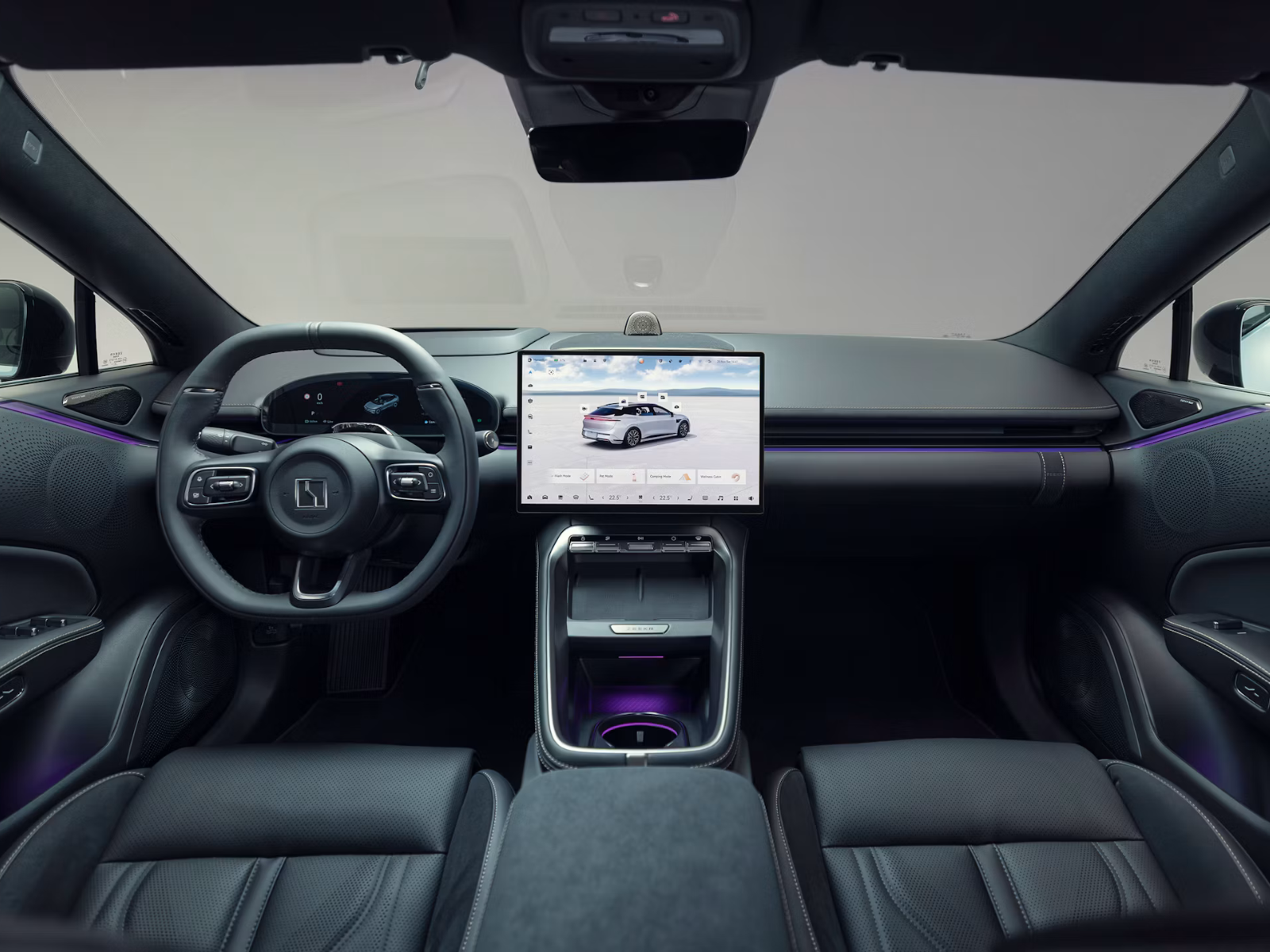
I believe the 7GT’s interior is really pretty nice given its price point. But its minimalist layout makes actually living with the thing pretty annoying. Even Geely’s own engineer turned off the litany of safety bells, beeps, and bongs on our test drive. It took a lot of menu diving to do it, too. That’s sort of the theme with changing the car’s settings, and even the steering wheel height and mirrors must be adjusted via the screen. It’s all cost-cutting, really.
The rest is commensurate with the EV’s pricing (more on this below). It feels sort of like a Tesla Model 3 inside, with a low dash, nice leather and suede touches, and some comfy, supportive seats. The wagon layout means big, comfy back seats and a trunk to match. Once again, the wagon is undefeated if you want one fast, practical car.
Verdict: 7/10
Geely
Blindfold someone, put them in a German equivalent, and then put them in the Zeekr, and I think most people would be hard-pressed to tell the difference. Truthfully, only when you push the car does the difference emerge. There’s a sharpness to something like a Model 3 or a BMW i5 that isn’t here. The steering is probably the biggest problem in this equation. I really thought the Zeekr’s chassis held up well both on the road and on the autocross course.
The other big argument for something like this is the money, which is a huge unknown given the brand isn’t even present in the US. For now, what I can give you is some pricing from Germany. Helpful, I know. In Germany, the 7GT’s RWD trim starts at €47,990 (around 53,548), while the Privilege Launch Edition AWD starts at €59,490 (around $66,379). Whether those numbers hold up if Zeekr or Geely make it to the US depends on the politicians.
If you’ve ever found yourself behind the wheel of an Acura Integra on a great road, then you likely possess a deep understanding of why the brand carries such a coveted reputation for offering an incredibly pure, incredibly balanced, and incredibly emotional driving experience; beyond its reputation for durability, that is. Since the ADX shares much of its underlying architecture with the contemporary Integra—a car that, by nearly all accounts, carries that tradition forward tremendously—I wanted to know whether it, too, could live up to the brand’s promises, albeit through a more practical, all-weather package. After spending a week with one, I had my answer, and it wasn’t quite what I expected.
The ADX also has a far less romantic job than delivering exhilaration behind the wheel: it has to convince someone shopping for their first luxury vehicle that spending more than they would on a well-equipped, and perhaps even larger, mainstream crossover is worth it. For that buyer, its appeal must extend to the daily commute, the passenger seats, and all the errands between those great roads. To do that, it needs a quieter cabin, more thoughtful materials, and the comfort and composure to justify the extra expense. My A-Spec tester, with its 19-inch wheels, sportier styling, and ventilated front seats, was an appealing place to start—but it would have to do more than just look the part to convince me it’s worth the extra dough over, say, a Honda HR-V.
Ultimately, the ADX impressed me more than it discouraged me, and it quickly subverted my expectations that it might be no more substantial than most other run-of-the-mill, CVT-equipped crossovers. Its sharp handling won me over on my favorite driving roads, its surprisingly roomy cabin squashed my concerns that it might be too cramped, and its price tag doesn’t feel offensive. But that doesn’t mean it has no room for improvement.
2026 Acura ADX A-Spec
Cole Attisha
2026 Acura ADX A-Spec Specifications
Specification
2026 Acura ADX A-Spec
Engine
1.5-liter turbocharged four-cylinder
Horsepower
190 hp at 6,000 rpm
Torque
179 lb-ft at 1,700–5,000 rpm
Transmission
Continuously variable automatic with paddle shifters
Powertrain & Driving Dynamics: 8.5/10 — Acura’s Smallest SUV Still Has a Reputation to Uphold
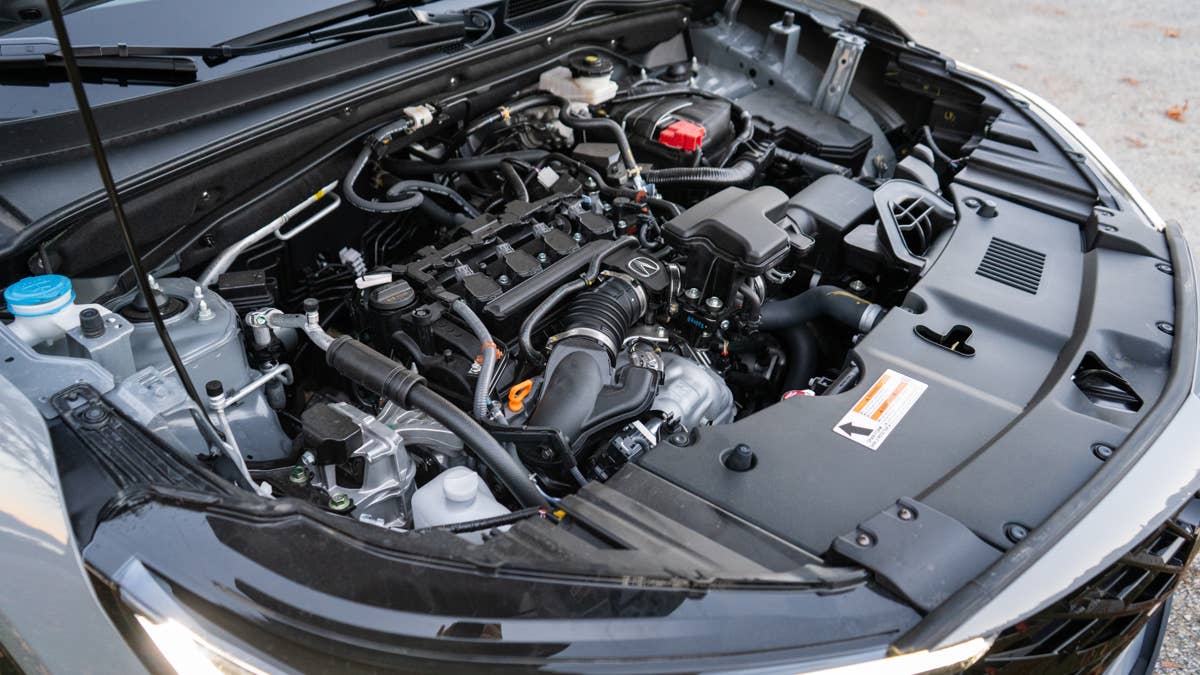
With fewer than 200 horsepower and a CVT, one might reasonably expect this crossover to feel a bit, well, lackluster when it comes time to live up to its “A-Spec” promises. But it does, after all, share many underpinnings with the Integra, which, in A-Spec guise, also uses the same turbocharged 1.5-liter four-cylinder powertrain. Unlike far too many SUVs which share platforms with traditional cars, the Integra’s character hasn’t gotten lost in translation, at least not entirely. The ADX, even on winter-rated Yokohama tires, as my tester was, handles with satisfying composure; its steering needle-sharp, its suspension planted yet unpunishing, and its engine plenty peppy for its size. My only real complaint is the lack of immediate, off-the-line power—mash the throttle at a stoplight, and nothing really happens. At speed, though, there’s enough surplus power to make overtaking and highway merges relatively seamless, and in Sport mode, it’s more than enough to have fun.
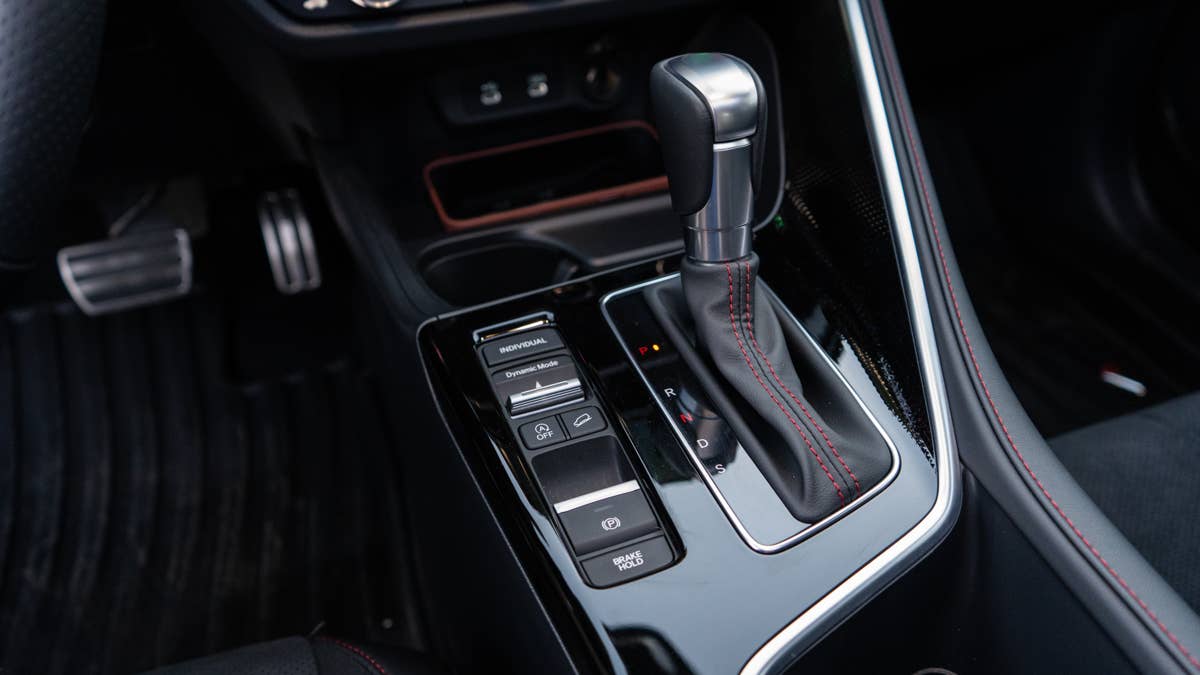
Though the Integra’s wonderful six-speed manual is unfortunately absent from the ADX’s option sheet, the available all-wheel drive adds an extra layer of control in all sorts of weather, and a rainy, nighttime drive up British Columbia’s twisty, coastal Sea-to-Sky Highway demonstrated just how valuable that extra grip can be. Ultimately, I settled on Individual as my preferred drive mode—a customized setting—with Engine and Engine Sound set to comfort, and steering set to Sport to keep it as firm and responsive as possible at all times. I felt that mode best suited the SUV’s character—comfortable and controlled when you want it to be, and just cheeky enough when the road calls for a bit of added spirit.
Although the ADX is rated at 27 mpg combined with all-wheel drive, I averaged just 21 mpg during my week with it. That included plenty of city traffic, some highway driving, and a rainy jaunt up the coast. Of course, I didn’t spend my time actively trying to maximize fuel economy; instead, I hoped to discover the kind of efficiency the ADX could produce when driven more naturally. Given that a few spirited drives were mixed in there, and a couple of quick acceleration tests, it still may not be the most impressive economy figure, and it could certainly benefit from an optional hybrid powertrain at the very least, but it wasn’t overly disappointing for a small SUV with this much dynamic character.
2026 Acura ADX A-Spec
Cole Attisha
Technology: 8.0/10 — Does Luxury Have to Come With a Learning Curve?
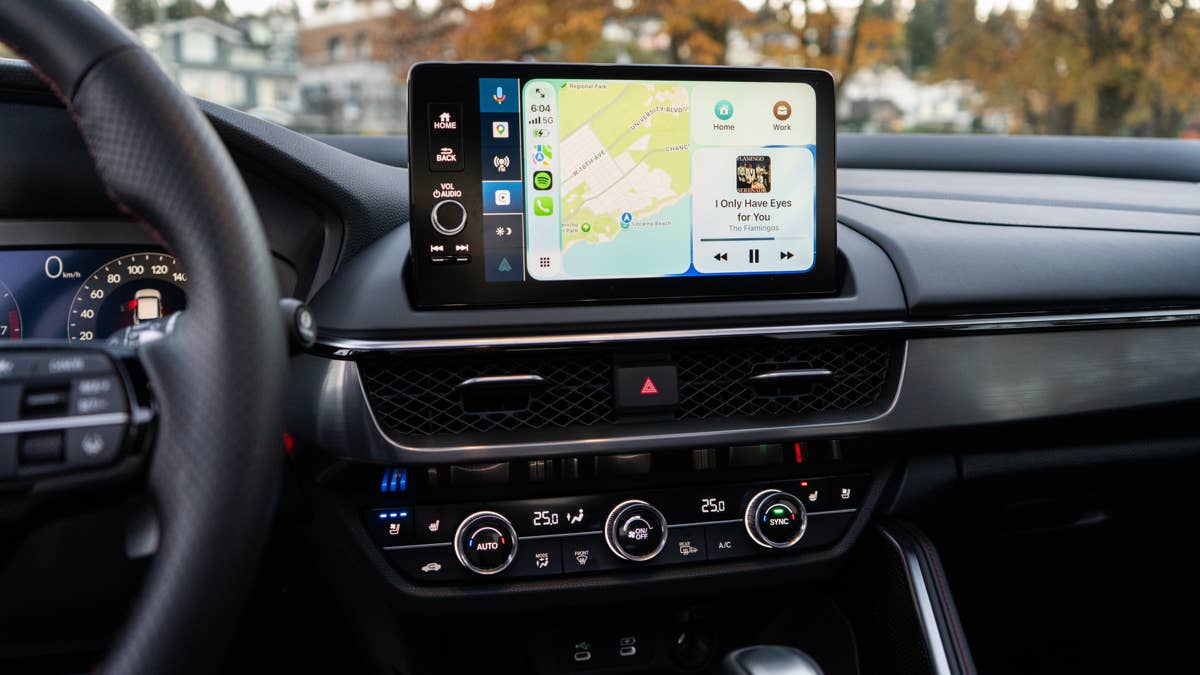
The ADX takes a relatively restrained approach to technology, pairing a nine-inch touchscreen with a 10.2-inch digital instrument cluster. Like me, the center screen won’t impress anyone with its size, but wireless Apple CarPlay, wireless Android Auto, and a wireless charging pad cover the connectivity essentials. The A-Spec also includes an eight-speaker audio system and a useful suite of AcuraWatch driver-assistance features, including adaptive cruise control with low-speed follow, lane-keeping assistance, and blind-spot monitoring. I think that all gives buyers a reasonably comprehensive starting point.
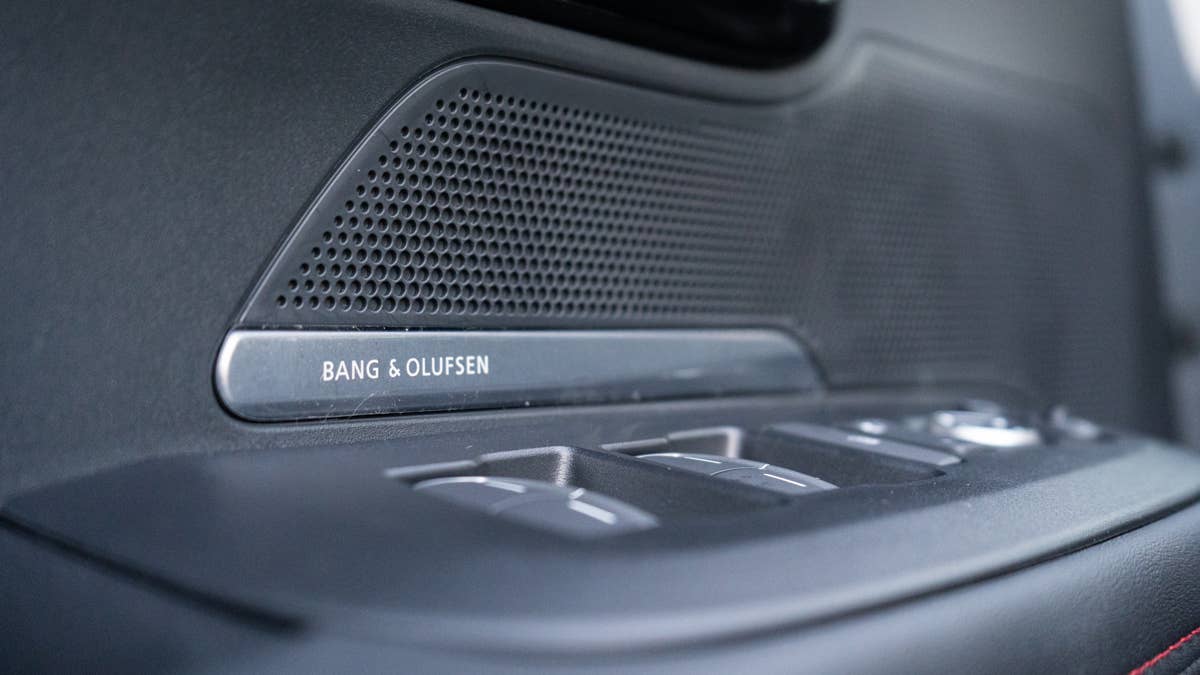
The more desirable luxury features, however, require another step up the ladder. In the U.S., Google built-in, the excellent 15-speaker Bang & Olufsen system, and a surround-view camera are reserved for the A-Spec with Advance Package. The regular A-Spec therefore sits in a more awkward spot: its tech covers everyday needs just fine, but several amenities that could help it stand out from a well-equipped mainstream crossover are locked behind more expensive packages.
2026 Acura ADX A-Spec
Cole Attisha
Exterior Design: 8.5/10 — The Youngest Acura Deserves to Be Taken Seriously
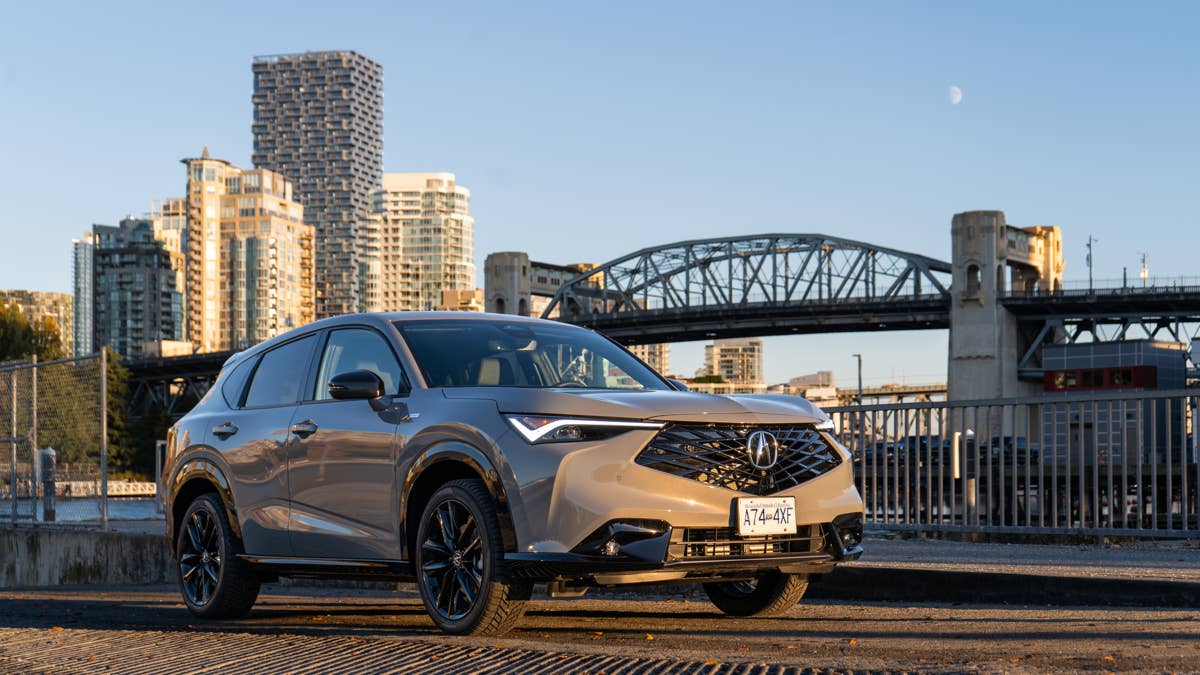
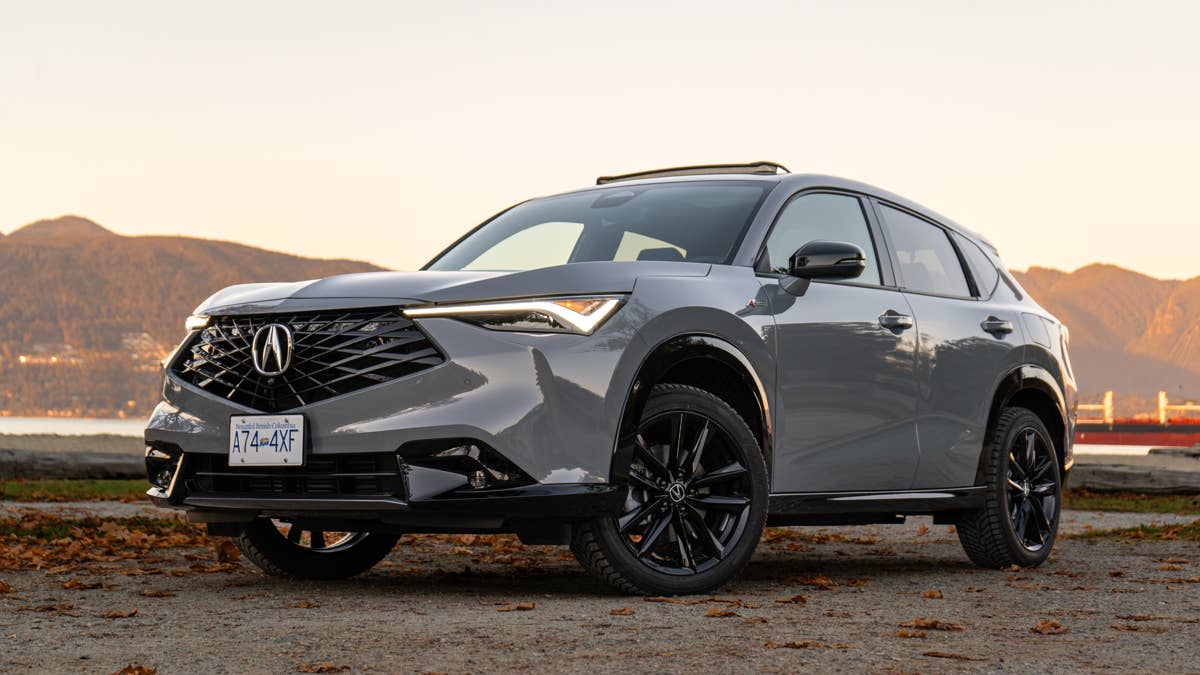
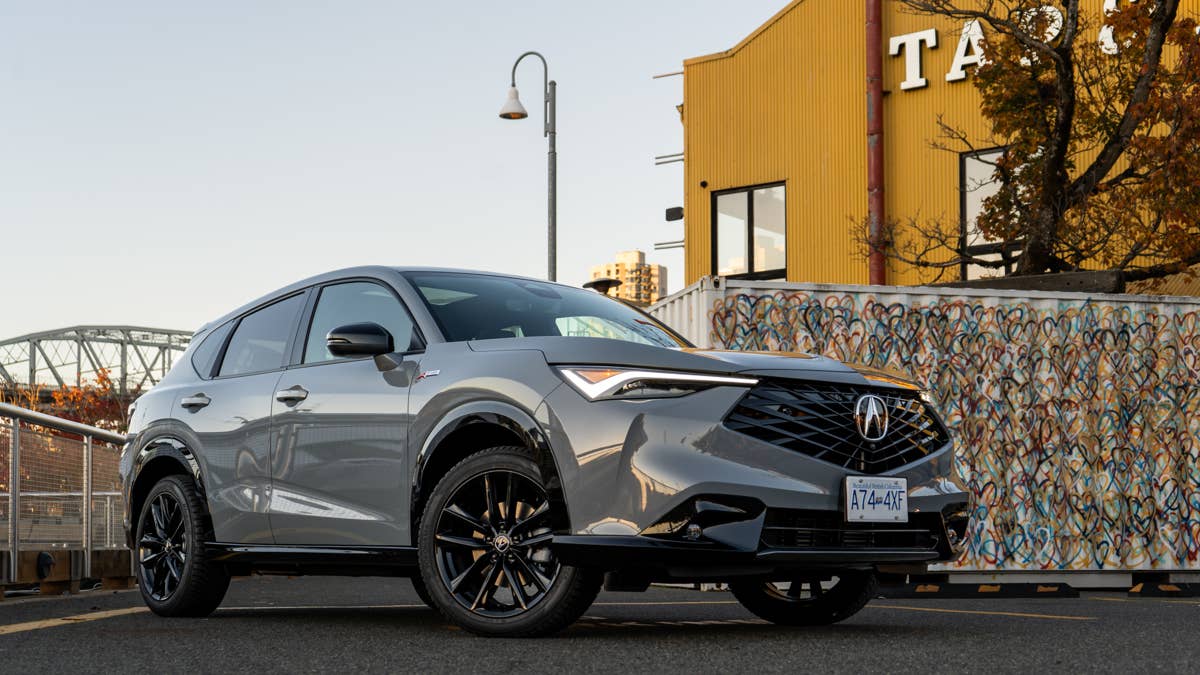
Start at the nose, and the Integra resemblance is plain to see. The pentagonal mesh grille, sharply drawn LED lighting, and angular bumper detailing translate Acura’s familiar styling language onto a taller front end without diluting its assertiveness. The A-Spec’s low-mounted fog lights and dark lower trim reinforce its athleticism, giving the ADX a more confident look than its modest dimensions might otherwise suggest, and its strong shoulder line and pronounced rear wheel arches add distinctive definition. It shares the Integra’s muscular surfacing, but the taller roof and gloss-black body cladding make the ADX appear unmistakably more rugged. My A-Spec tester’s black 19-inch wheels and gloss-black mirror caps help sharpen the presentation, pulling it far enough from its Honda HR-V roots to give it a character of its own, even if the overall shape remains familiar. I found it all surprisingly stylish, especially in person, and the dark detailing certainly adds a sense of aggression.
2026 Acura ADX A-Spec
Cole Attisha
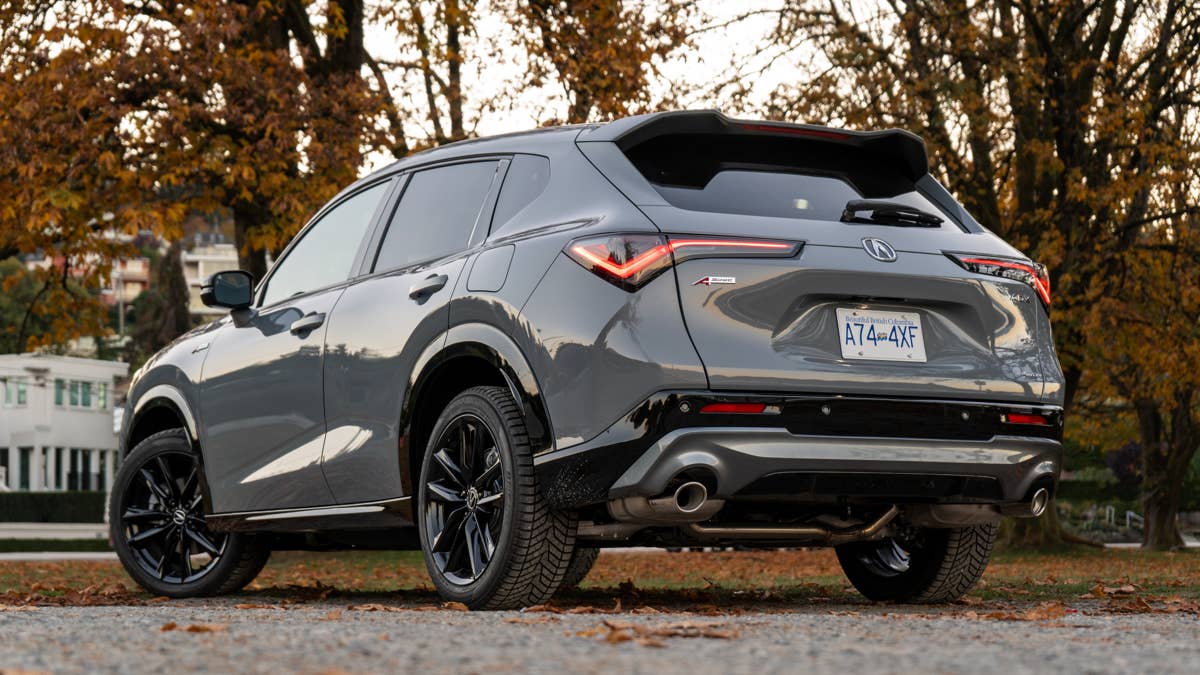
Around the back, the roof spoiler, angular LED taillights, and widely spaced round exhaust finishers complete the walkaround with another clear statement of sporting intent. The heavily sculpted rear bumper continues the theme established at the front. I like the consistency, but I can also understand someone finding the collection of creases, pointed lighting graphics, and dark trim a little too insistent. The ADX suits my preference for something sporty and distinctive; buyers seeking a softer, more understated expression of luxury might find it rather confrontational.
2026 Acura ADX A-Spec
Cole Attisha
2026 Acura ADX A-Spec
Cole Attisha
Interior Design & Quality: 8.0/10 — The Badge Got Me Through the Door. Now Impress Me.
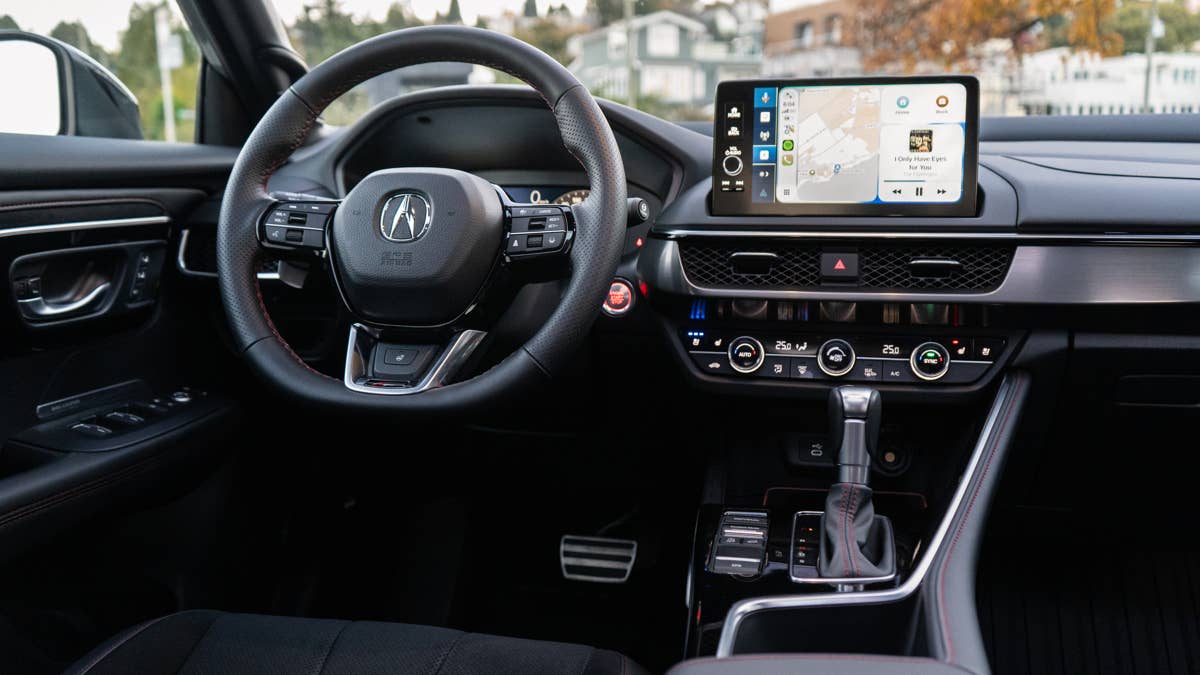
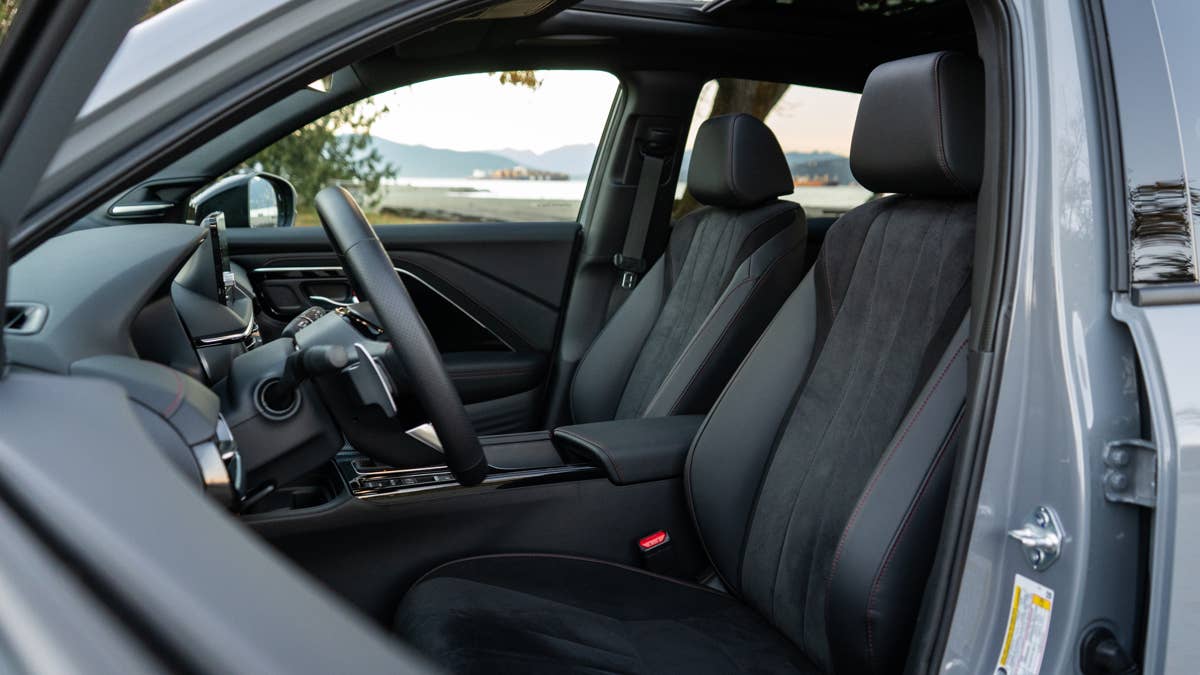
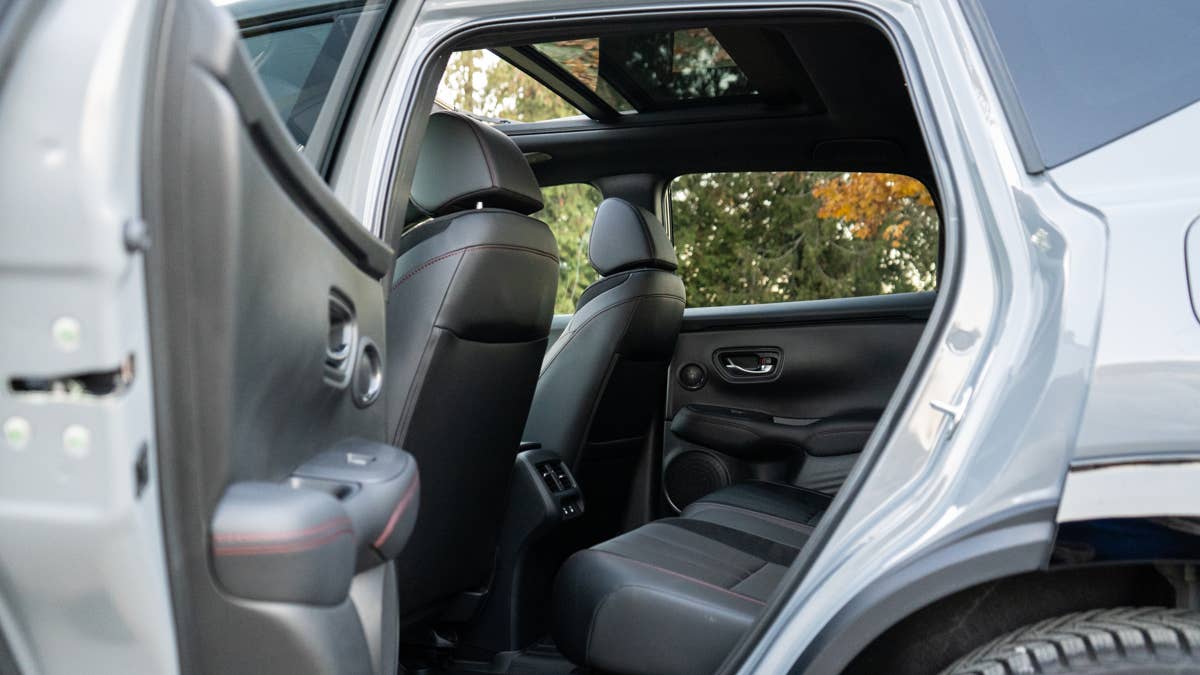
The ADX’s cabin feels as well-assembled and comfortable as you’d expect from an Acura, though, for better or worse, its presentation is somewhat dated. The conventional gear lever is uncomplicated and familiar, but alongside the relatively small nine-inch touchscreen, it makes the interior feel much older than this recently introduced SUV ought to. The images show my Canadian-market Platinum Elite A-Spec tester, which combines Ultrasuede and leatherette upholstery; the suede is on the front seats, but it was oddly skipped on the rear bench. The corresponding U.S. A-Spec Advance, however, uses leather-trimmed seats. My tester also included heated and ventilated front seats, plus a 12-way power driver’s seat with lumbar adjustment.
2026 Acura ADX A-Spec
Cole Attisha
2026 Acura ADX A-Spec
Cole Attisha
Measurement
ADX Platinum Elite A-Spec
CX-30 Turbo AWD
Front legroom
41.9 inches
41.7 inches
Rear legroom
37.7 inches
36.3 inches
Rear headroom
36.8 inches
38.3 inches
Cargo, seats up / folded
23.2 / 53.9 cu. ft.
20.2 / 45.2 cu. ft.
Published manufacturer measurements.
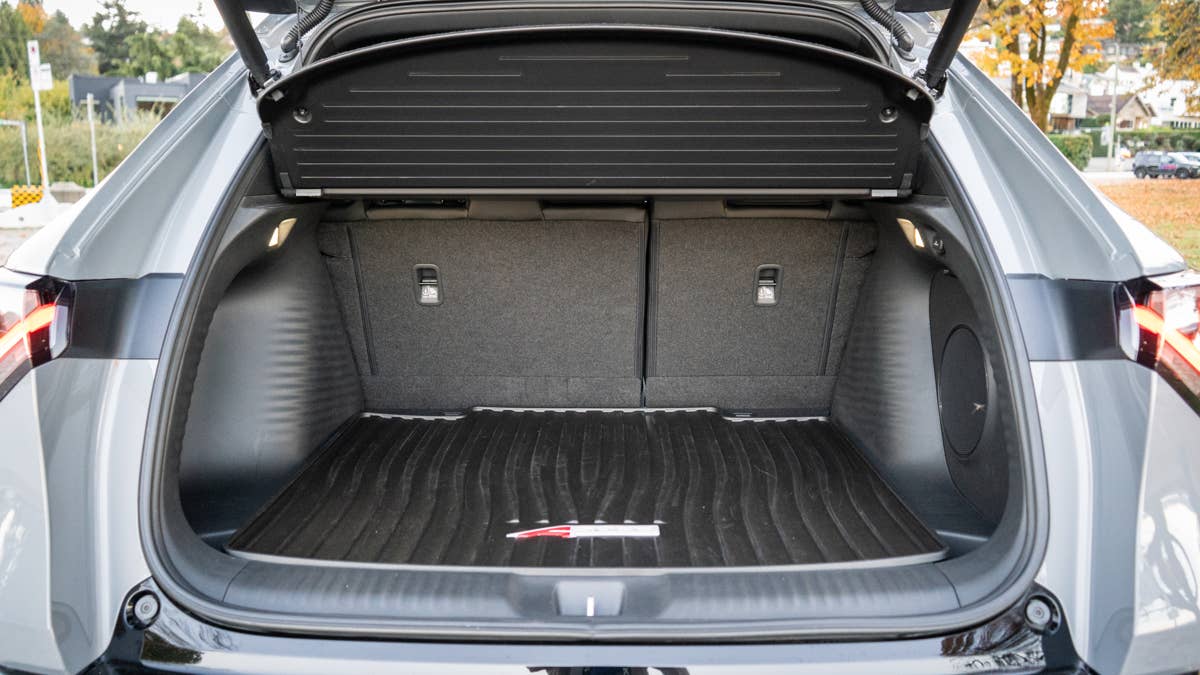
The cabin measurements above show a slight practicality advantage over the Mazda CX-30 Turbo AWD, though the Mazda has better rear headroom. Door pockets, a 60/40-folding rear bench, and a power tailgate help further support everyday cargo carrying, and the extra overall luggage space strengthens its case over the Mazda, although the thick rear pillars somewhat restrict the ADX’s outward visibility. Ultimately, I appreciated the Acura’s retention of plentiful physical buttons and controls, and its small screen and traditional shifter never bothered me, whereas egregiously large screens and contrived shift dials and stalks sometimes do. The ADX’s cabin might feel somewhat dated, but everything just works.
2026 Acura ADX A-Spec
Cole Attisha
Pricing & Value: 8.0/10 — How Much Is Admission to Acura Worth?
U.S. pricing starts at $35,000, plus $1,550 destination. A regular A-Spec AWD costs $41,750 delivered; the A-Spec Advance AWD, closest to my Canadian Platinum Elite A-Spec tester, reaches $45,950 before options and taxes. The $4,200 upgrade adds B&O audio, Google Built-In, surround-view cameras, and additional seat adjustment. Canadian models combine Ultrasuede and leatherette; the U.S. Advance gets leather trim. At $33,300 delivered, a Honda HR-V EX-L AWD would save you $12,650. That said, the Acura’s turbocharged engine, well-calibrated handling, richer cabin, and flashier styling help justify the premium. Even the CVT’s simulated paddle shifts were surprisingly engaging, and those driving qualities don’t require the top trim.
Mazda’s $39,495 CX-30 Turbo Premium Plus offers more power for less money, and represents a serious alternative to the ADX. Meanwhile, a base RDX costs $46,650—just $700 above the loaded ADX—but it lacks many of the amenities you’d find in such an ADX. That still doesn’t automatically make the RDX the better purchase—my sister, for example, is someone who actively prefers a smaller SUV and would gladly give up the extra space for the extra equipment. I’d recommend the ADX to anyone with similar priorities: manageable size, style, comfort, and enjoyable handling. The regular A-Spec offers stronger value unless you really want the Advance’s extra equipment.
2026 Acura ADX A-Spec
Cole Attisha
The Real Verdict: 8.2/10 — More Acura Than I Expected
For me, the ADX’s most convincing luxury feature is how well it drives. Its sharp steering, composed suspension, and surprisingly engaging paddle shifts gave me reasons to enjoy it that extended beyond its badge or equipment list. Add a comfortable, useful cabin and distinctive styling, and the result feels perfectly worthy of the Acura name. I’d still welcome some improvements. The hesitation from a standstill takes some enthusiasm out of the engine, and my achieved fuel economy leaves room for a more efficient powertrain. The cabin’s presentation could also use some modernization, provided Acura preserves the straightforward controls that make it so agreeable to operate.
Nevertheless, I came away appreciating the ADX as a vehicle someone might deliberately choose over a larger SUV, even if they could afford one. For someone like my sister, who values manageable dimensions, comfort, and style, its size is part of the appeal. I could see myself owning one, and I’d recommend it to a city buyer who wants those qualities without giving up enjoyable handling. I’d start with the regular A-Spec for the best value, and only spring for the extra packages if I really couldn’t live without them.
Autoblog aims to feature only the best products and services. If you buy something via one of our links, we may earn a commission.
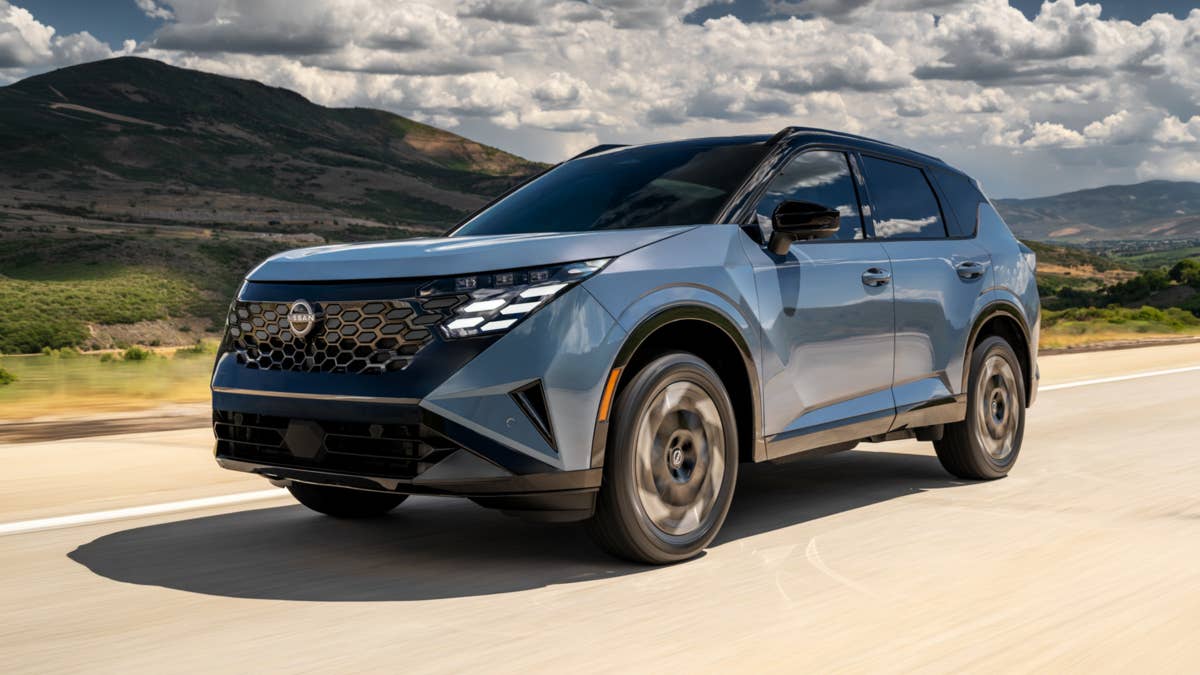
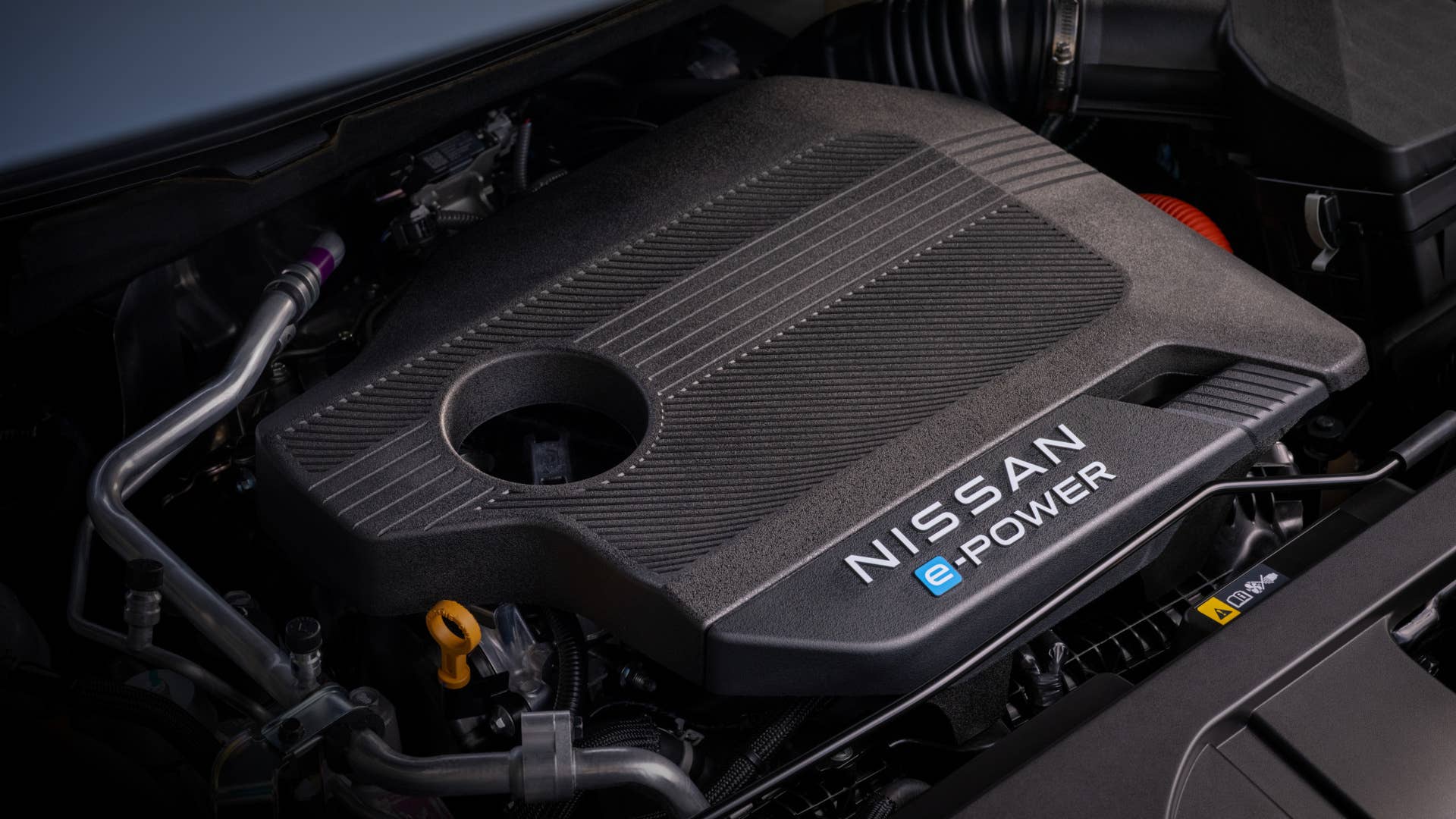
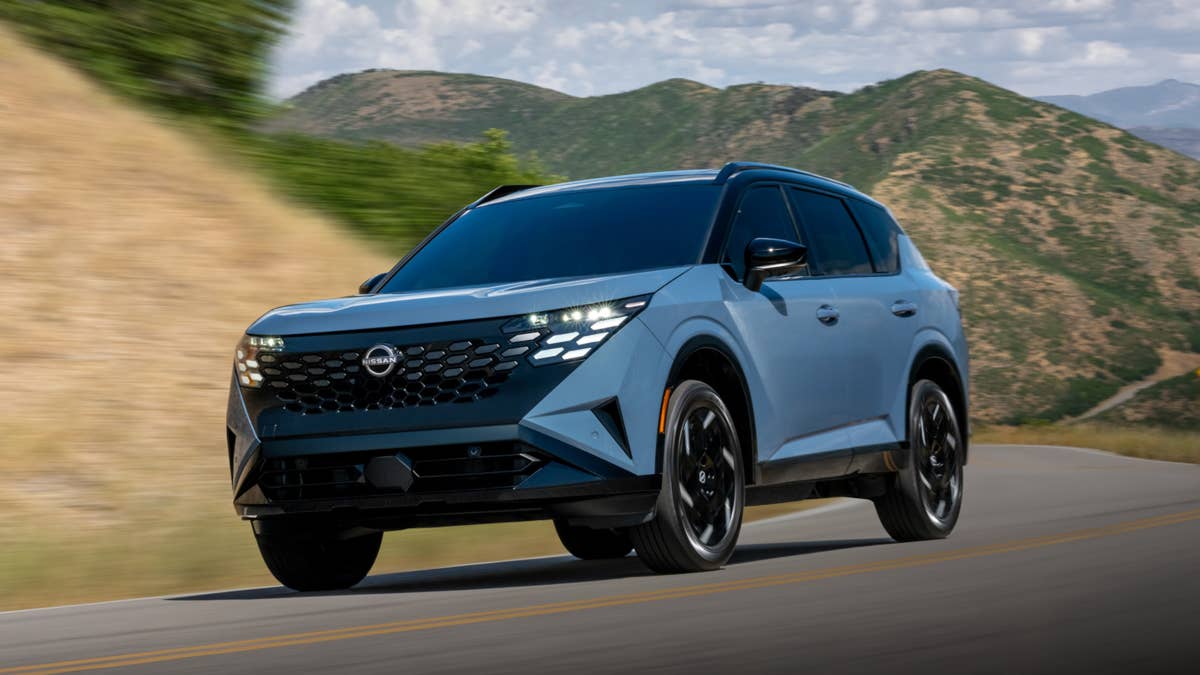
If you live somewhere outside the United States, Nissan’s e-Power system is old news. This “revolutionary” new powertrain actually debuted a decade ago in markets like Japan, but it’s just making its way to North America in the 2027 Nissan Rogue Hybrid. e-Power is radically different from a traditional hybrid like a Honda CR-V or Toyota RAV4.
Instead of using a combination of the gasoline engine with assistance from electric motors to drive the wheels, the Rogue Hybrid only uses electric motors mounted at each axle. The gas engine isn’t connected to the wheels in any capacity, and only acts to keep a small battery charged up to power the car. This is known as a series hybrid, rather than a traditional parallel hybrid. The engine and motors work in series rather than in parallel, theoretically creating an experience that feels more like an electric vehicle. Does it actually work? Autoblog flew to Santa Barbara, California to find out.
An EV With No Plug
The 2027 Rogue includes a 1.5-liter turbocharged three-cylinder engine under the hood, but it has no relation to the VC-Turbo engine under the hood of the outgoing generation despite sharing the same displacement and cylinder count. This tiny engine only produces 148 horsepower and 171 lb-ft of torque, but remember, the three-cylinder never directly drives the wheels, so its output isn’t important.
Drive comes from a front electric motor delivering 202 hp and a rear one rated at 134 hp; combined they produce 225 hp. Nissan says the Rogue Hybrid can hit 60 mph in around 6.4 seconds, though I didn’t have a chance to verify that claim due to inclement weather.
SV and Platinum trims are rated at 41/35/37 mpg city/highway/combined while the SR gets one additional mile per gallon on the highway/combined thanks to some aero wheels. Those numbers trail behind the segment-leading RAV4 Hybrid but are competitive with other models in this class. I personally observed only 30 mpg during a day of driving in Santa Barbara, but I’d like to get the Rogue back home to see if Florida’s flatter roads improve fuel economy. With a full tank, the Rogue Hybrid should go over 500 miles between fill-ups.
Does It Really Feel Like An EV?
From the moment you put the Rogue Hybrid into drive and start moving, you can immediately tell it is unlike other hybrids. Unlike a parallel hybrid with an eCVT or a geared transmission, the e-Power system doesn’t drive the wheels with the engine, so it doesn’t have to rev high and create a lot of noise. Acceleration is smooth and linear—like an EV—and the engine feels like it’s far away in the background not being asked to stress itself. Even at full throttle, you can barely hear the three-cylinder engine, and ambient noise almost completely drowns it out at highway speeds.
The Rogue Hybrid also brings in one pedal driving (called e-Pedal), a much-loved EV feature. When you lift off the throttle, the car can come to a full stop without any interaction with the brake pedal. Alternatively, Nissan also integrated a smooth stop function when using the brakes, which brings the car more gently down to zero mph without rocking the occupants. This is truly the smoothest and quietest hybrid experience on the market right now.
A Nice Interior With Some Compromise
The outgoing Rogue was among the most premium options in the compact crossover segment with an available quilted semi-aniline leather interior on the top Platinum trim. Unfortunately, this new version only comes with quilted leatherette, even on the top model. Nissan stepped up the cabin in other ways, including available 64-color ambient lighting, a standard Qi2 wireless phone charger (dual chargers optional), and available ventilated front seats.
The technology is improved with standard dual 12.3-inch displays or optional 14.3-inch screens with built-in Google. Upgrading to the Platinum adds a 10-speaker Bose audio system that sounds quite nice; it also rolls in a 360-degree camera and head-up display.
Along with the slight drop in material quality, the new Rogue is also smaller inside than its predecessor. Rear legroom drops by 2.3 inches and overall cargo volume is down 3.4 cubic feet.
Nissan Cracks The Code
Nissan has priced the 2027 Rogue Hybrid well above the 2027 Rogue gas model, which will continue to be sold alongside it until the next-generation 2028 Rogue arrives sporting these changes in a non-hybrid variant. The base SV AWD trim starts at $37,065 with destination; for comparison, the SV AWD gas model costs $33,665 and there is a base S FWD model costing as little as $31,265 for budget-conscious buyers.
The top Platinum trim rings in at $45,065, which is just above a comparable 2026 Toyota RAV4 Limited ($44,895). Though the Rogue has lost its value proposition, it has gained another selling point: smoothness and refinement. This new e-Power system is far quieter and more cohesive than any existing hybrid powertrain sold in America. That alone makes it worth cross-shopping with the most popular options in its segment.
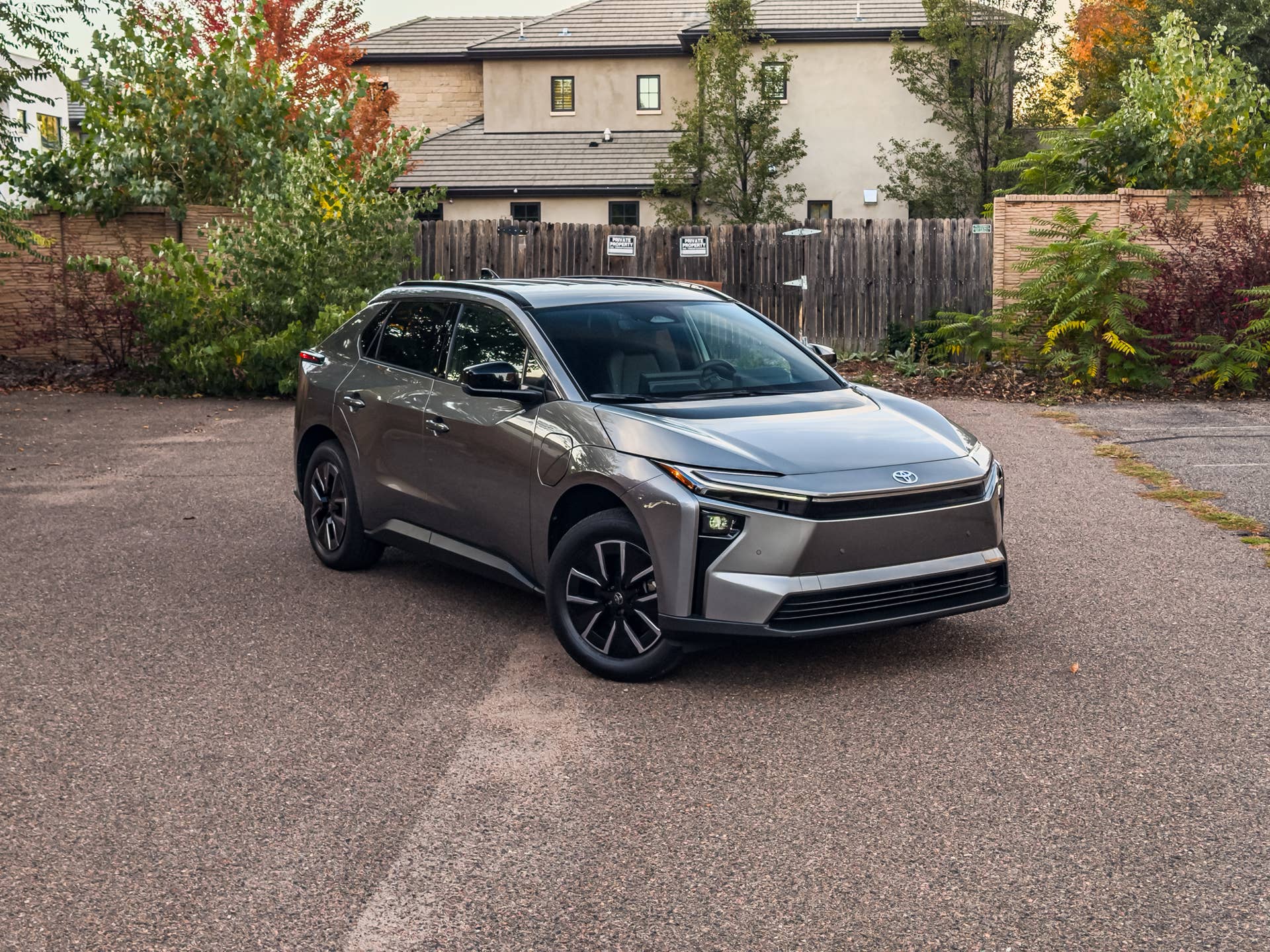
Probably the most important change to the new 2026 Toyota bZ is that it’s name sucks about 50 percent less, with the brand having dropped the silly “bZ4x” name its previous EV used. The model was and still is a badge-engineered project shared with Subaru, which does use normal names for its EV. Marketing is everything.
Other changes, in reality, are more substantive and make the EV, dare I say, competetive, for once. More range, better power, and greater effiencency coupled with a new charging port make for one of the better EV offerings on this end of the market.
This bZ is the fastest of the bunch, the dual-motor all-wheel drive model with 338 horsepower. There are now two front-drive models as well. The base model makes just 168 horses, while the middling XLE Plus and Limited models make a healthy 221 horsepower. It’s not much, but it’s enough to make a car this size feel pretty zippy.
The full-fat AWD ones, though, are downright fast. It’ll hit 60 mph in some 4.5 seconds, and I even got the traction control light on while merging at full throttle. There’s plenty of power here, even if the rest of the driving experience is pretty whelming. The steering is poor, and the ride isn’t terrible, but it’s not composed either. Still, the speed is enough to make this feel exciting.
Range And Charging: 8/10
The Toyota’s updates mean that the SUV is now a much more efficient package. Base XLE models do poor, though, with 236 miles on a charge, but XLE Plus models will handle an impressive 314 miles on a charge. This AWD XLE is rated for 288 miles on a charge, which felt like plenty to me.
Chase Bierenkoven
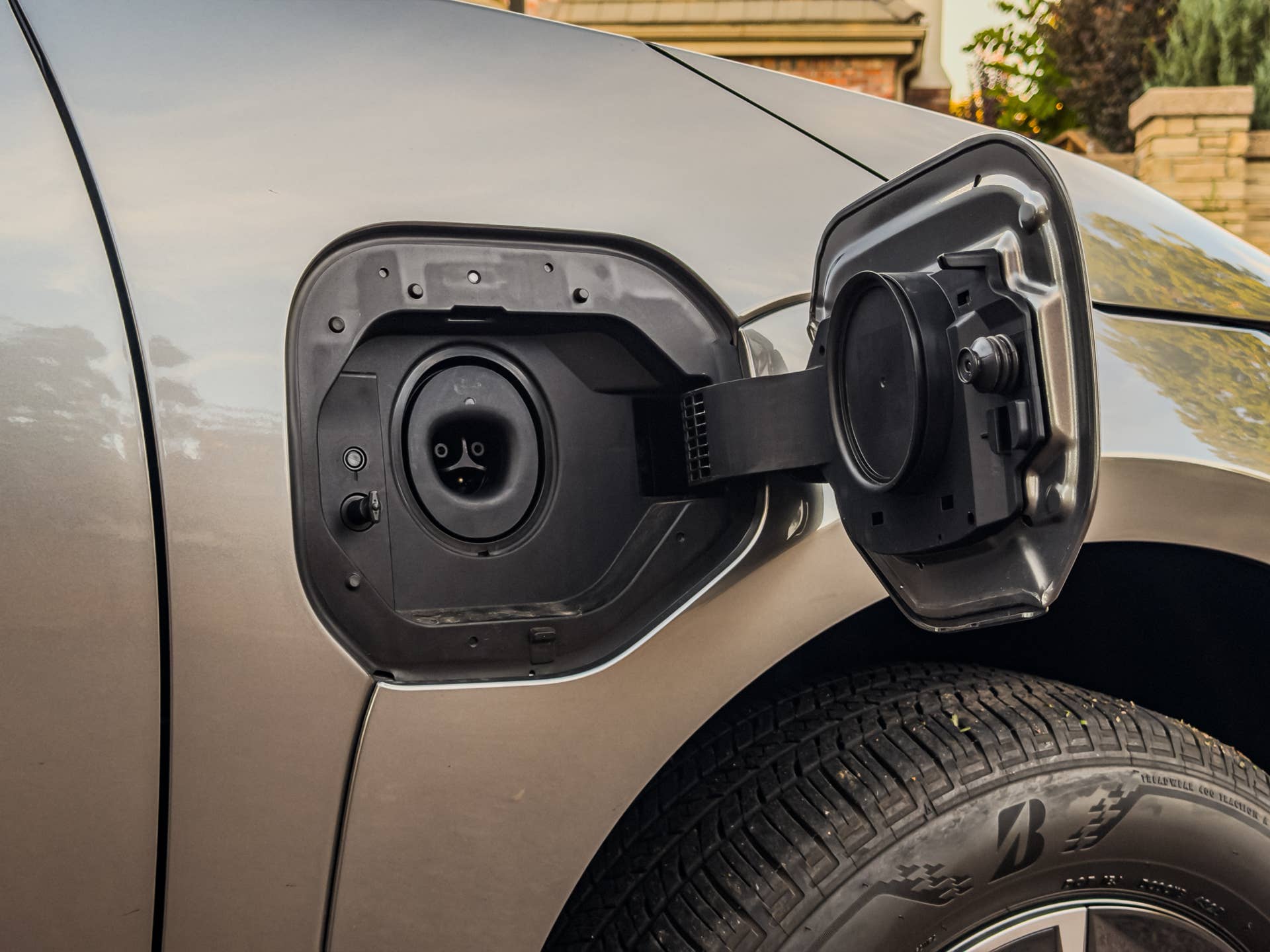
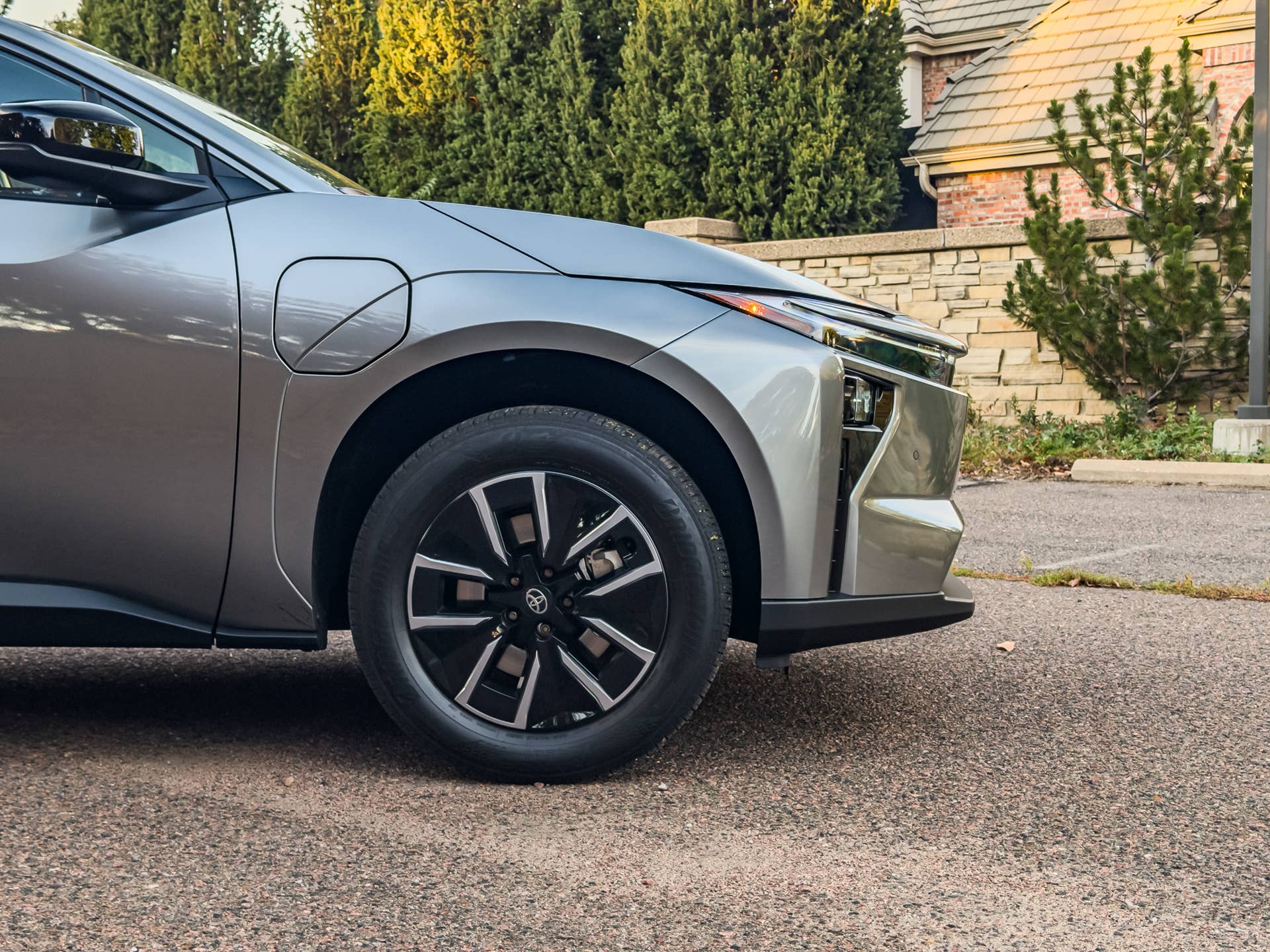
The new NACS port replaces the old CCS, but an adapter is included. Toyota quotes a solid 30-minute 10 to 80 percent charge time, but I think most owners will appreciate the updated AC on-board charger, which now charges at up to 11 kilowatts, much reducing at-home charge times.
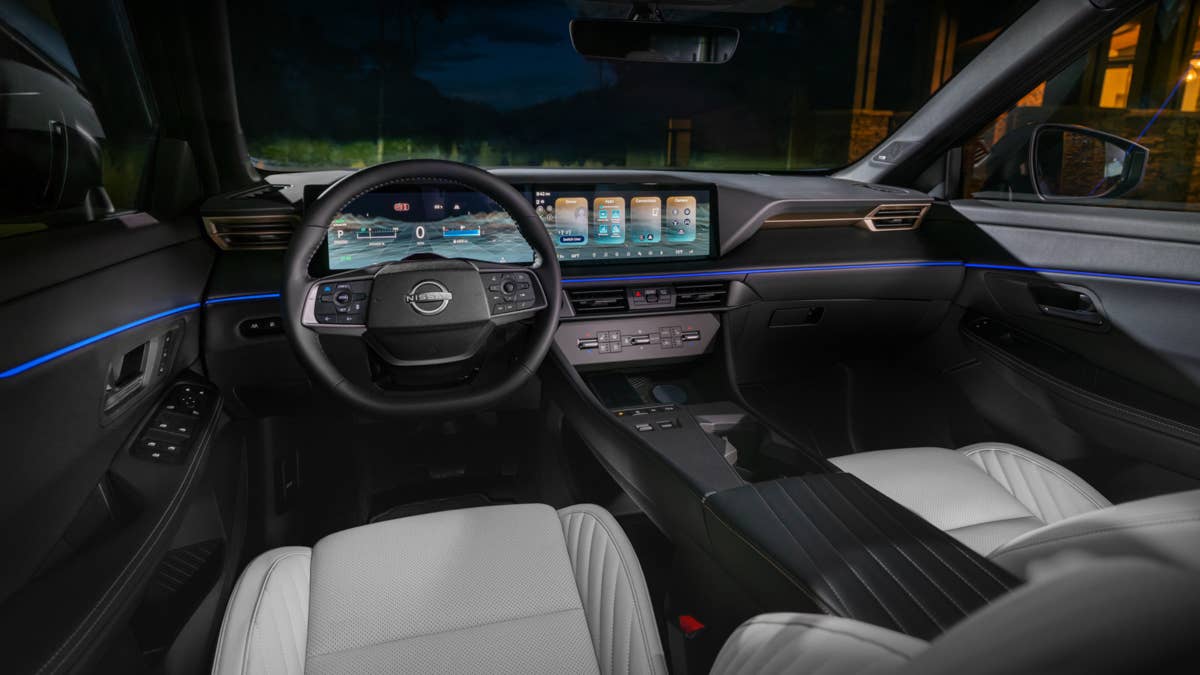
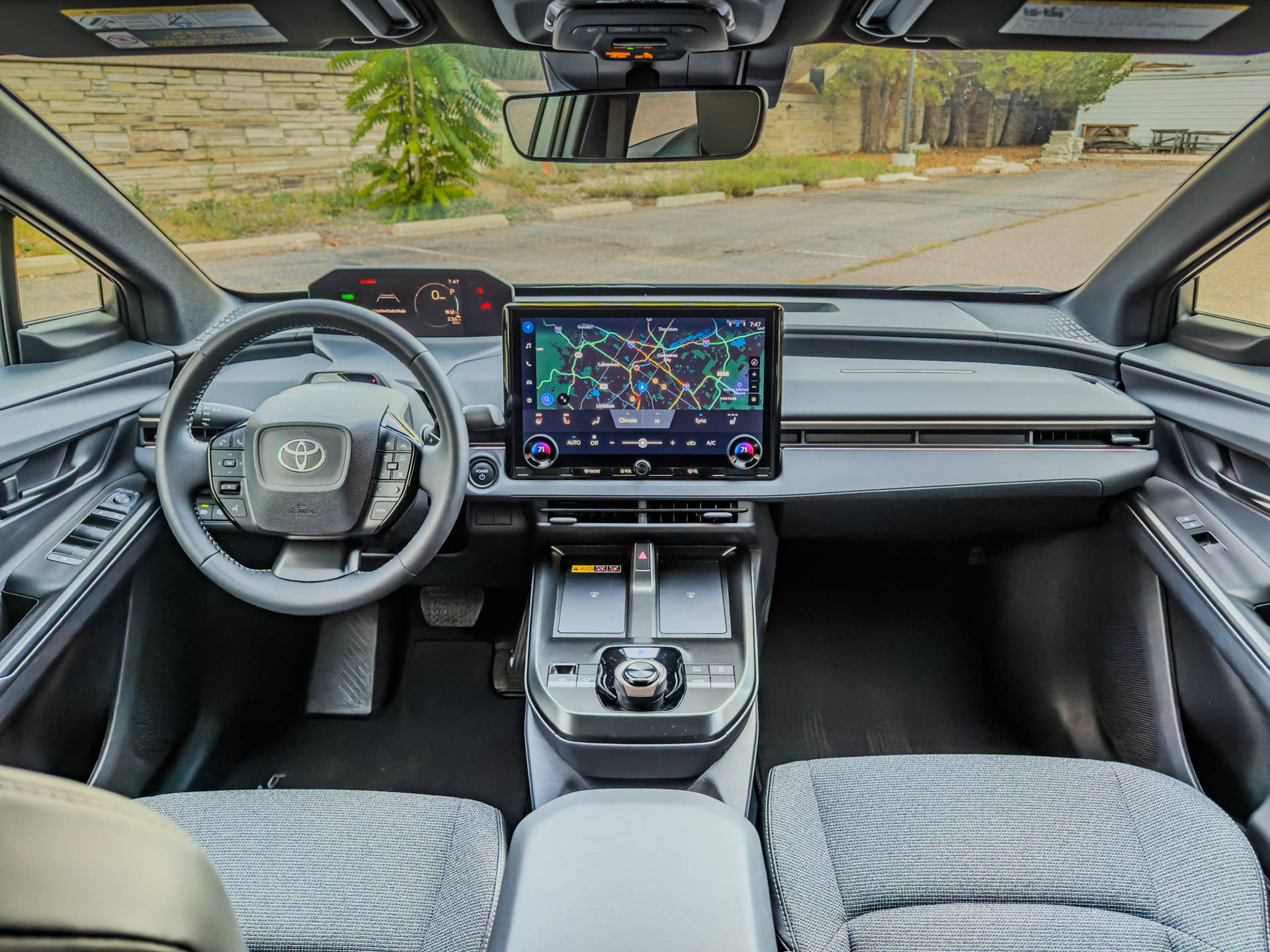
The bZ’s interior is also updated, featuring a huge 14-inch center screen, but it doesn’t entirely fix the old model’s biggest problems: a wonky driving position and a difficult-to-see dash. The wheel is always in the way of the dash, and you’re constantly compromising the driving position to get around this. Space, though, is plentiful, at least for occupants. The low dash helps it feel airy inside, and the back seats offer good headroom. However, the SUV’s cargo capacity of 28 cubic feet suffers due to the raked roof, making it a full 10 cubes smaller than a RAV4’s.
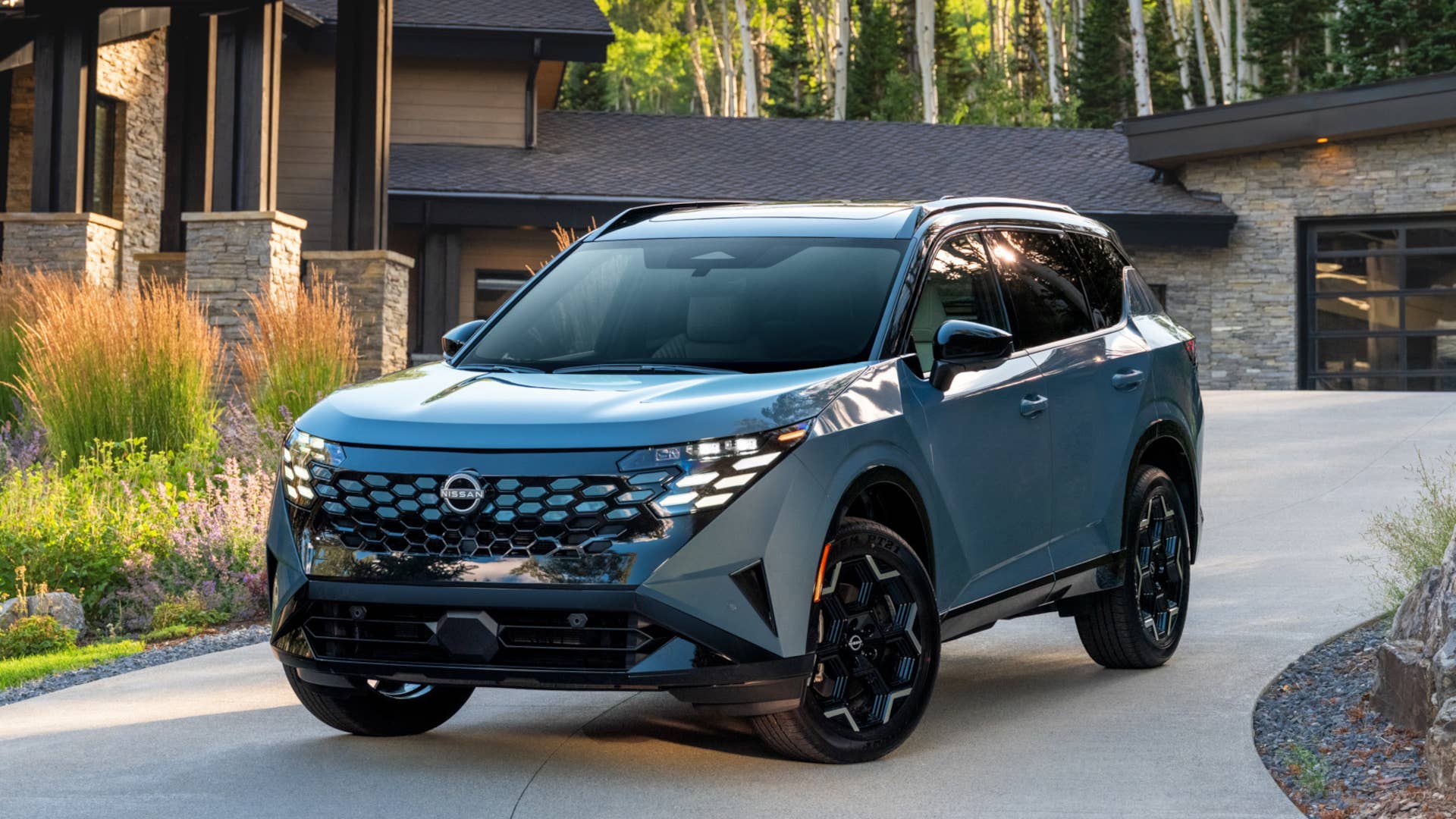
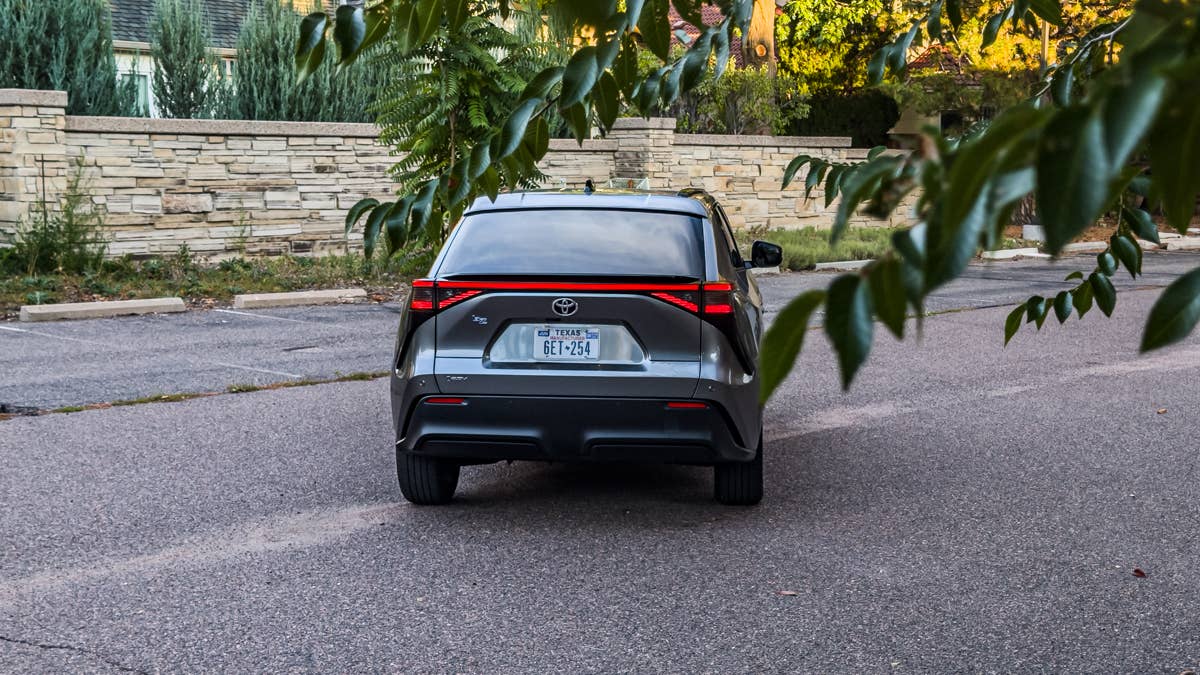
I think this design is the definition of “Automaker’s New EV That Has Just Been Updated.” I’ve seen this faceless shape with dual light bars a million times. It feels a bit tired, played out, and altogether uninspired. It’s just a $50,000 electric box on wheels. I feel nothing when looking at this car other than an appreciacion for its inoffesneiveness.
Pricing And Value: 6/10
Chase Bierenkoven
The 2026 Toyota bZ starts at $36,495 and runs up to $44,895. That’s pretty close to on-par with rivals like the Ioniq 5 and cheaper than the $41,000 Tesla Model Y. I’d be dissappointed with a base model, though, so I can’t say that this is an all-around value buy for cash-strapped EV-hungty consumers. Upper trims feel more competetive though, but on personal preference I like the look and feel of the Ioniq 5 more.
Verdict: 7/10
Chase Bierenkoven
I think the Toyota bZ is fantastic, especially in contrast to what it once was. I really loathed that version of the car, and this feels like a breath of fresh air and a big step in the right direction. Frankly, it’s a good car beaten by a better one. I’d rather drive the Hyundai Ioniq 5 every day thanks to its more inspired handling, greater range and power, and funky design.
The Ford Explorer debuted in 1991 to help attract families to a more adventurous lifestyle. The Bronco of the time was great, but it didn’t offer a lot to those with or who wanted kids. The Explorer, then, took what made the Bronco so enticing, stretched the wheelbase a tad, gave rear passengers a bit more space, and threw in a bigger trunk. This way, campers, hikers, skiers, and others could enjoy the 4WD capabilities and off-road looks of the Bronco, but with a smoother ride, more space, and marginally better mileage.
Kristen Brown
Today’s Explorer, ironically, is still that agent for the modern Bronco. I was lucky enough to test the Bronco Outer Banks right before the Explorer Tremor, and while my husband and I adored the Bronco as off-roaders, I looked at how comfortable my kids were in the second row. How much space I had in the rear. The better mileage, even with more horsepower. The quieter ride. But what I didn’t give up was off-road readiness and a tough look. Funnily enough, even when it was fully loaded, it was less expensive than the Bronco, too. Is it worth it for families, though? Here are my thoughts after putting my kids in one.
Here’s where it gets really interesting: the base MSRP is $48,330. Which is pretty fair in my book. The standard features (discussed below) are reasonable, the third row is usable for teens, kids, and smaller adults, and it comes with off-road-focused goodies. But my tester came with $14,200 in options, and when the destination and delivery fee is factored in, the cost rose to $64,225.
Kristen Brown
Here’s what brought the price up so high:
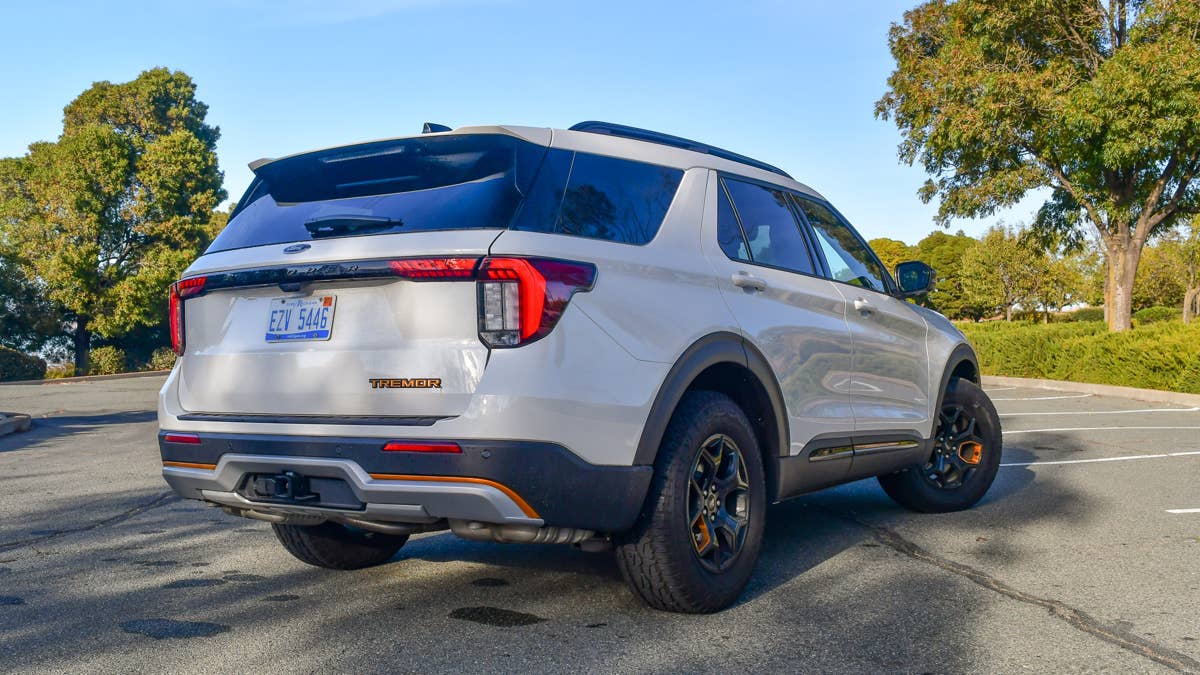
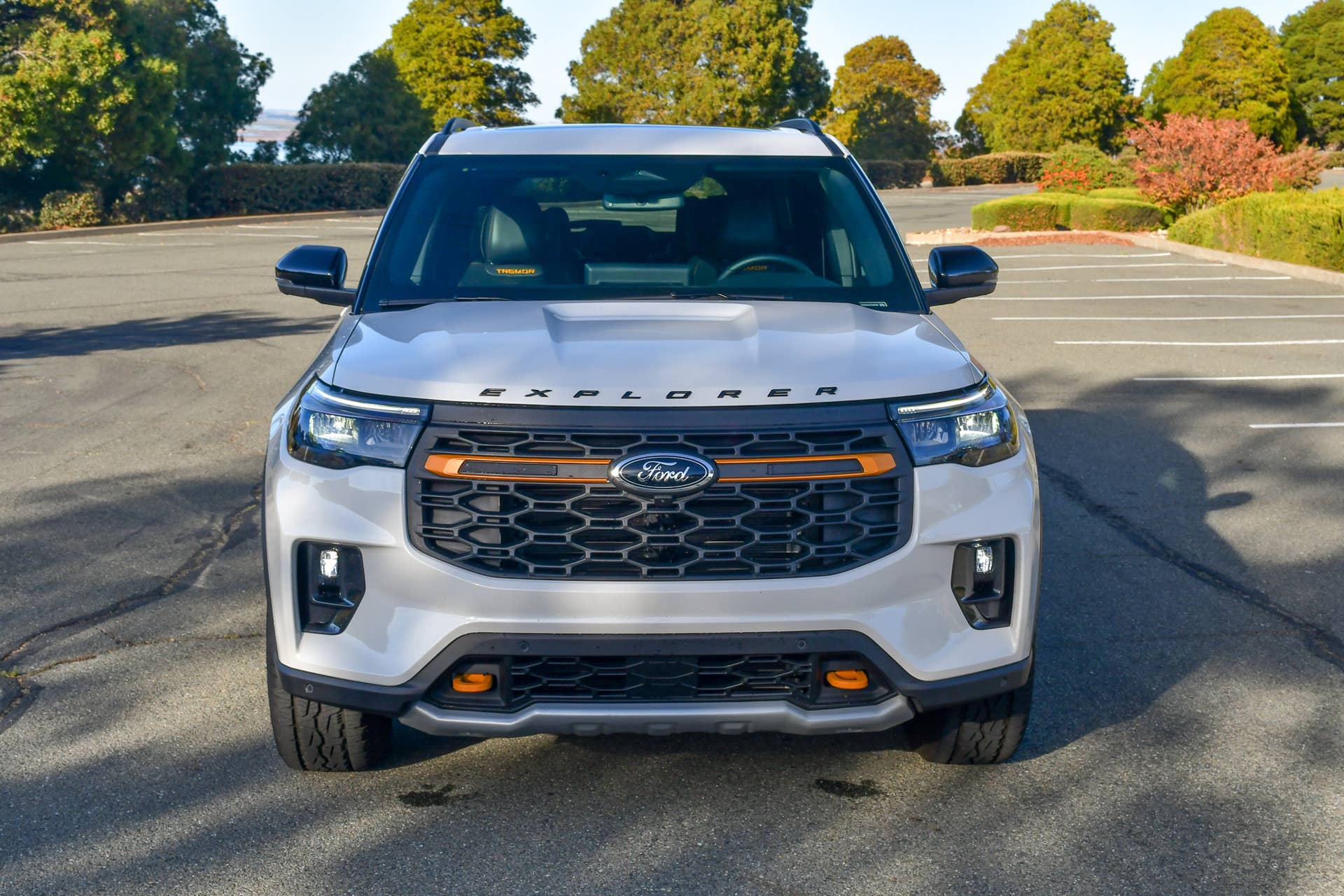
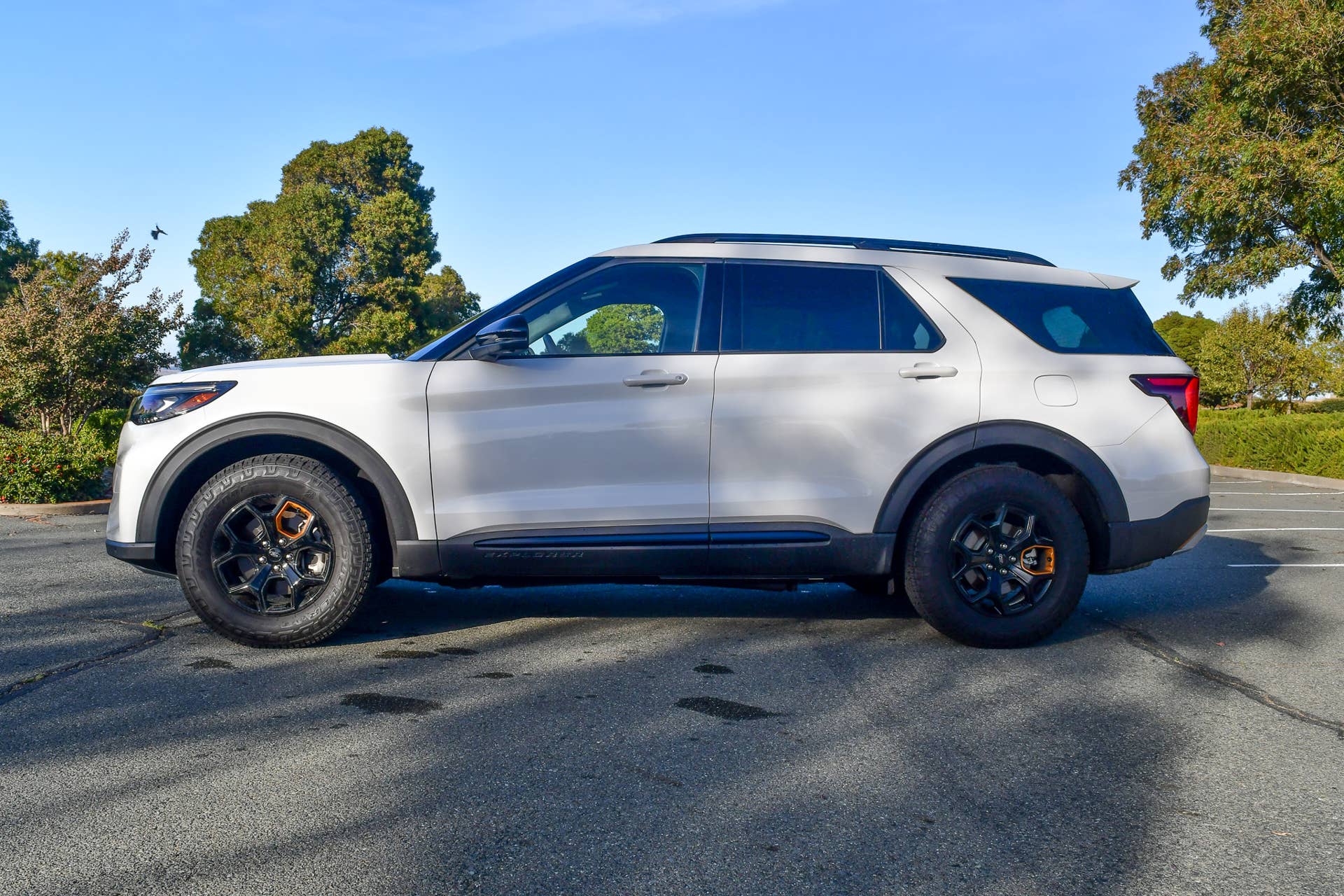
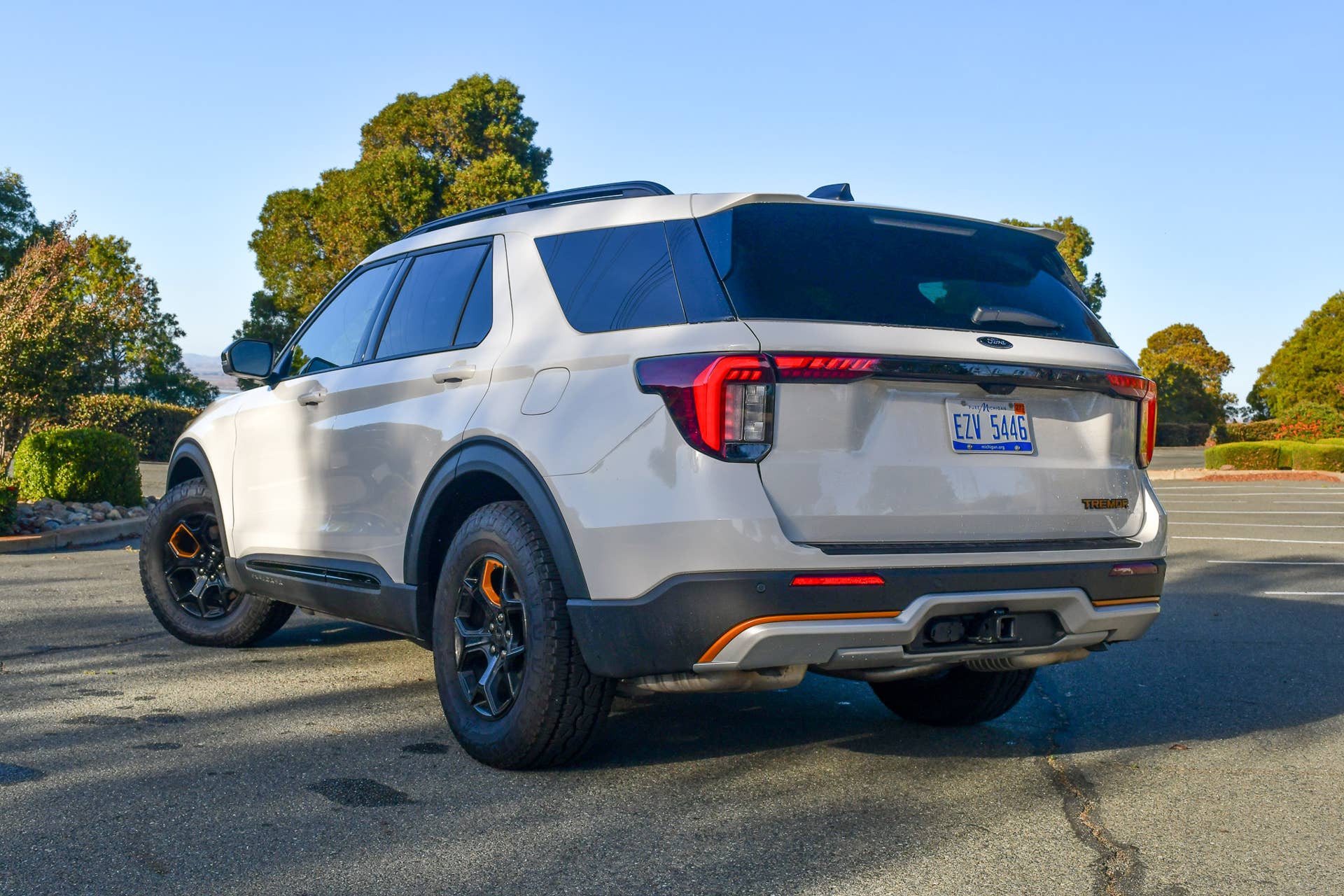
Star White Met Tri-Coat Exterior Paint ($795): A gorgeous, sparkly white color that looks quite nice against the blacked-out exterior bits and bronze-gold Tremor accenting.
Keyless Entry Keypad ($455): That funky little number pad on the driver’s door that brought me back to my dad’s 1991 Explorer.
Ultimate Package ($11,505): Adds the dual sunroof and power shade, Bang & Olufsen soundsystem, ambient lighting, multi-contour front seats (non-negotiable—they massage you for gosh sakes), auto-dimming rear mirror, memory seat functions for the driver’s seat, power-folding third row seats
Spare Tire Kit ($400): Yeah. We’re being charged extra to have a spare tire now. What a time to be alive.
Connectivity Package 1-Year ($745): WiFi & 5G Hotspot connectivity, connected Google Maps, Google Assistant, Streaming connectivity, Zoom capability
At the base MSRP of $48,330, it competes with the $50,590 Honda Pilot TrailSport, the $47,290 Kia Telluride X-Line EX, the $50,170 Hyundai Palisade XRT Pro, and the $45,090 Nissan Pathfinder Rock Creek. With what you get for the price, and how luxurious it feels at that price point, it definitely puts up a valiant fight.
Now for the off-road-specific Tremor stuff
Unlike front-wheel-drive-based competitors (like the Telluride or Pilot) that rely on transverse slip-and-grip AWD setups, the Explorer Tremor is built on a longitudinal, rear-wheel-drive-biased platform with standard Intelligent 4WD. By default, power delivery strongly favors the rear axle, improving off-the-line traction, steering response, and towing stability. The 4WD (which is really more like AWD, if we’re being honest) is centered around the company’s Active Torque Transfer feature, which uses real-time sensors in the electronic transfer case to monitor wheel speed, throttle angle, steering input, and lateral yaw to seamlessly shuffle torque between the front and rear axles before tire slippage even begins.
Kristen Brown
Digging a bit deeper, I learned that the “4WD” Tremor doesn’t have any locking differentials, but it does use a limited-slip differential—which sets the stage for the company’s Trail Turn Assist, which tightens the Explorer’s turning radius by locking the inside wheel. Here are the other cool features that come with the Tremor package:
Factory Lift & Suspension Upgrades: The Explorer Tremor comes with a 1-inch factory lift, taller all-terrain tires, and “off-road-tuned” suspension
Specialized Drive Modes: The Tremor comes with several terrain modes to choose from, like Trail/Off-Road, Slippery, Tow/Haul, Normal, Eco, and Sport. Each one slightly changes the engine and transmission shifting maps.
Hill Descent Control: Standard feature that acts as a low-speed off-road cruise control; drivers set a crawl speed using the steering wheel buttons, and the vehicle automatically modulates braking down steep, loose declines so the driver can focus entirely on steering.
Different Front Fascia: The taller ride height combined with trimmed front and rear bumper fascias significantly improves approach and departure angles, allowing the vehicle to clear washouts, logs, and steep ditch crossings without dragging bodywork.
Metal Underbody Protection: The Explorer Tremor features heavy-duty steel skid/deflector plates protecting vital underbody hardware—including the radiator/front fascia, engine oil pan, transmission, and transfer case—against sharp rocks and hidden stumps.
Tow Hooks: Integrated dual front recovery hooks finished in Tremor-signature orange/amber, anchored directly to the vehicle’s frame structure for winching or kinetic-rope vehicle recoveries.
Trail Cameras & Washers: When Trail/Off-Road mode is toggled, the on-board cameras in the grille, side mirrors (tire view), and 360–degree viewing camera turn into an off-road camera setup. Plus, it comes with a camera washer like old Land Rovers used to.
You have more than one engine to choose from (choose the bigger one)
Ford is one of the few companies that allow buyers to pick their engine, and on the Tremor, you get to choose from two: either a 2.3-liter turbocharged inline 4, or a 3.0-liter twin-turbocharged V6. The former produces a lesser but still respectable 300 HP and 310 lb-ft of torque, while the latter churns up 400 HP and 415 lb-ft of torque. As a mid-sized SUV dancing on the edge of being full-sized, having those 100 extra ponies really, truly made a difference for the overall driving experience. While you get less mileage (seriously, only one mile per gallon less than the inline four in all categories except for the highway), the extra horsepower makes it so much more fun to drive. And it sounds nice, too.
Kristen Brown
Funnily enough, either engine will give you the same towing rating of 5,000 lbs. And for the Tremor, it doesn’t cost extra. So, trust me on this one: get the bigger engine. The balance of power is better, and there’s more oomph for passing slow trucks. The inline four is nice, but if it doesn’t cost extra or cost you many miles per gallon, just do it. It’d be like choosing a Grande instead of a Venti if you were using your birthday coupon. Don’t be that guy.
The interior dynamics and technology are nearly perfect
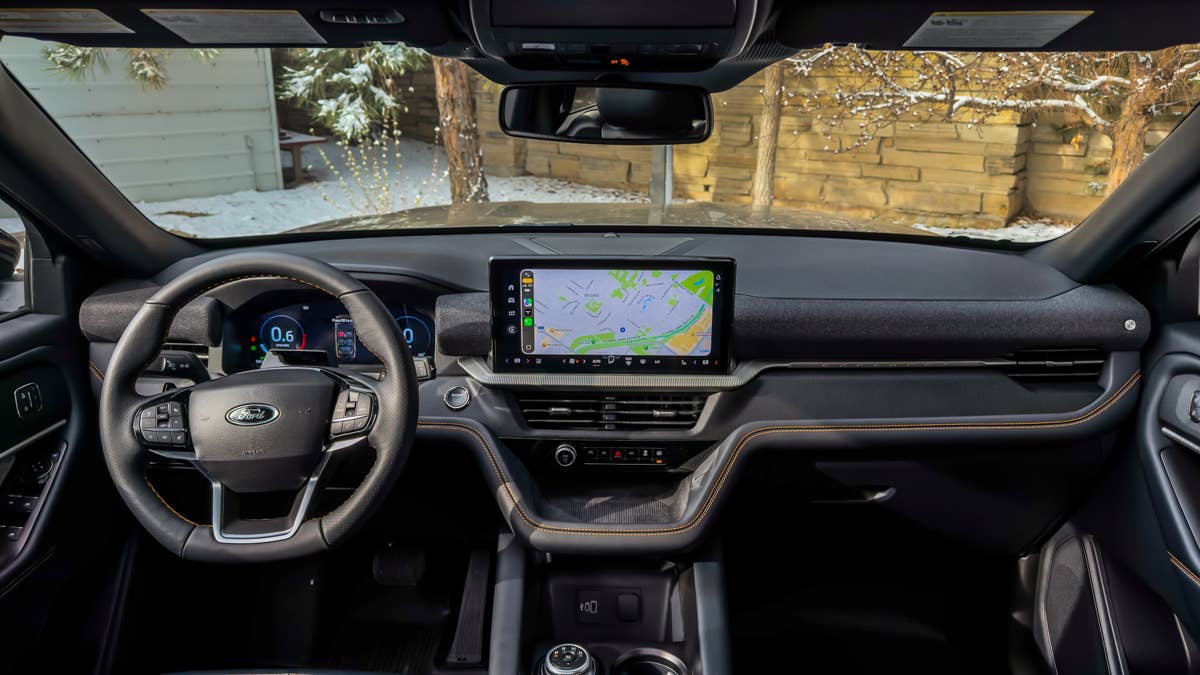
I’d previously tested the Platinum 4WD version and liked it, save for the cheesy-looking chrome on the grille. The interior layout is obviously going to be the same, but the Tremor’s interior looks and feels like the inside of a luxury cabin in Aspen. There are contrasting colors and textures, customizable ambient lighting, and two high-resolution and customizable screens: a 13.2-inch touchscreen for the multimedia center and a 12.3-inch digital gauge cluster behind the steering wheel. Google is built-in, so you don’t need a tethered smartphone to use Maps, and you can use Google’s Gemini voice assistant to make adjustments to the media or navigation, too. I love this feature. I asked it, “Hey Gemini, are there any Dutch Bros on my way home on this route?” And one was added to my route immediately. It was awesome.
Chase Bierenkoven
Android Auto and Apple CarPlay are included (wireless, of course), and I especially liked that the Explorer was built with a special compartment to keep your phone so you’re not tempted to mess with it while you’re driving—even though you technically can while using BlueCruise. While parked, the main touchscreen has YouTube and Prime Video pre-installed, and because the Google Play Store is included, you can download other streaming apps, like Netflix if you really wanted to. I never use it, but it’s nice to know it’s there if you want to use it.
Then there’s BlueCruise. My husband was its biggest fan, because it did all of the monotonous driving in our region’s infamous traffic for him. While driving to the San Francisco airport, he enjoyed feeling the Explorer change lanes for him, maintain the perfect distance behind the car in front of him, keep him steady in his lane, and even do the stopping and going for him. The one thing both he and I noticed was that it wasn’t the best at seeing cars as they slowly merged in front—so you can’t really take your eyes off the wheel. But we’re hoping that’ll be fixed in an update.
The second row seats are the best in the house, but seating is limited
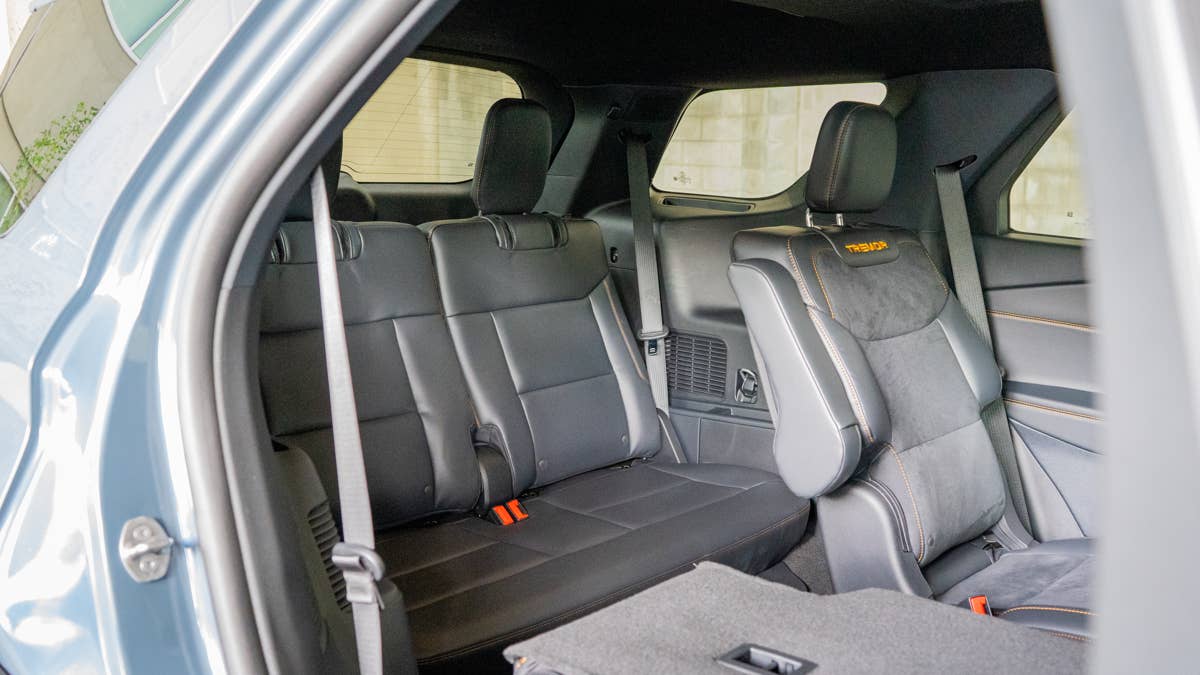
This is the one big Bummer that came with the Tremor trim: you can only get it as a six-seater. So, two captain’s chairs in the second row, and only two in the third. Which kind of bites, because why would I spend almost $50K on an SUV that can only fit one additional person more than a Subaru Forester could? To seat more than seven, you have to downgrade to the Active trim. My husband and I only have two kids, so they were perfectly happy in the second row captain’s chairs. But if we wanted to sit more than two other people in our large, 3-row SUV, we wouldn’t be able to. Our daughters couldn’t enjoy the standard heated seats back there, but they did love the large, tall windows, the dual sunroof that stretched all the way back to the third row, and the abundance of legroom (39.0 inches, to be exact).
Chase Bierenkoven
Since we’re on the subject of the second row, I was very impressed with the standard features and accommodations back there. The second-row passengers had access to their own climate control panel, USB-C charging ports, their own cupholder, and a dedicated ceiling-mounted A/C vent for each seat. If they needed one, each passenger had access to their own coat hook and fold-down armrest, too. I was a bit amazed the Tremor didn’t come with built-in sunshades, but the windows were tinted to be so dark from the factory it didn’t really matter.
The third row should be a part-time feature
The third row isn’t a place where most people would volunteer to be, that’s for sure. With 32.2 inches of legroom, it’s pretty tight back there. My husband and I fit both fit back there, but it definitely wouldn’t be a place we’d want to be if we had to sit back there for longer than, say, 30 minutes. The outward visibility is surprisingly good, and you have everything you need—like a USB-C charging port on each side, a cupholder, and an A/C vent in the ceiling—but it’s better suited for teens, kids, or smaller adults. And hopefully for a short amount of time.
2026 Ford Explorer Tremor 4WD
Cole Attisha
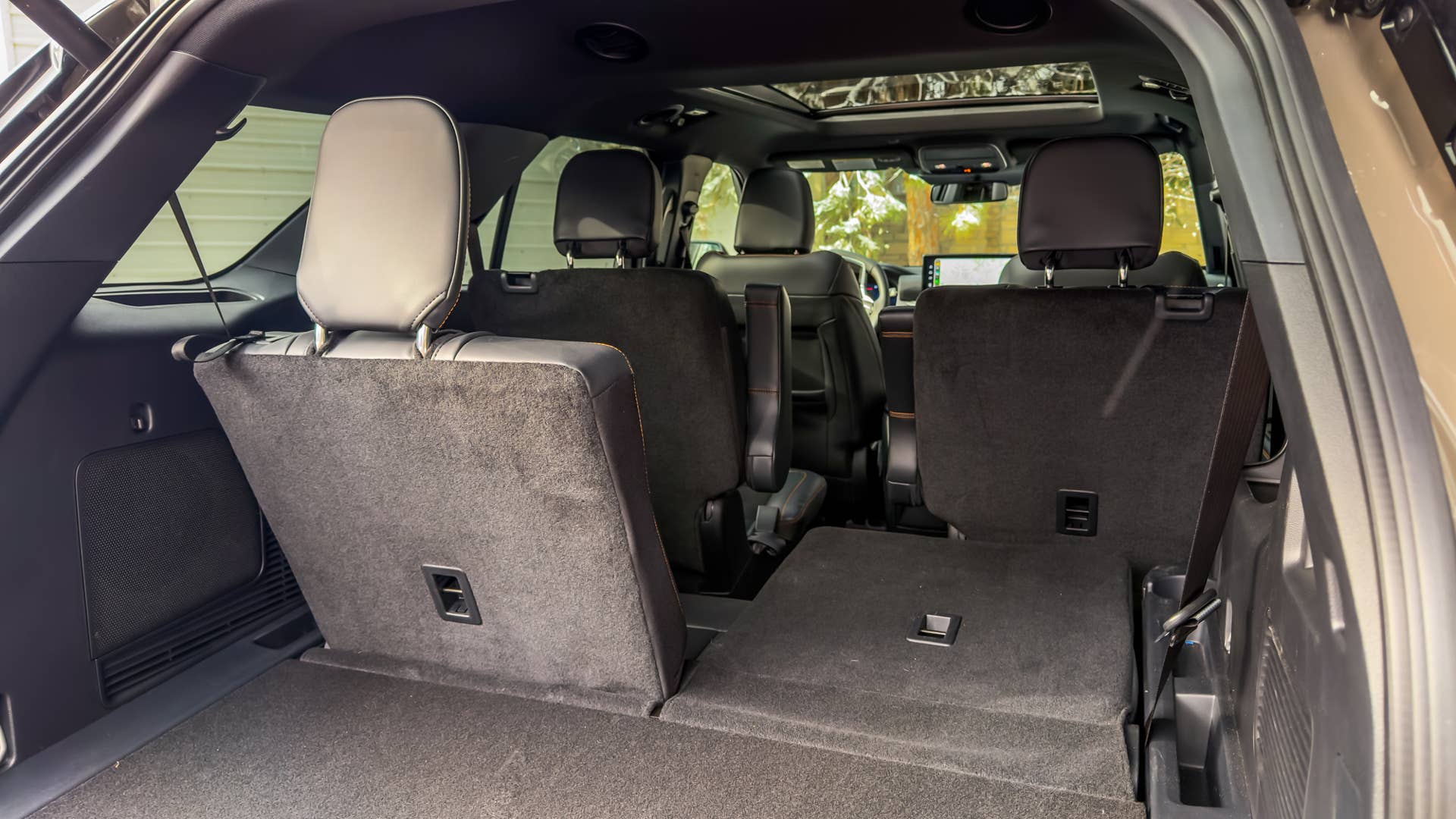
Thankfully, they do fold flat, so if you’re not using them, you can do that and unlock 47.6 cubic feet of cargo space. With the third row up, that shrinks to 18.2 cubic feet. With all seats folded, you get 87.8 cubic feet of space.
It’s not a Bronco, and that’s okay—it’s literally designed not to be. But it is a great alternative if you’re an off-road-loving family looking for a bit more space and passenger comforts. The Explorer Tremor, I feel, was a long time coming, and I’m very excited it’s here. When my husband and I move back to an area that sees regular snowfall, we’ll be looking seriously at the Tremor.
Ever since it landed in 2020, the Kia Telluride has rendered itself as the American suburban sweet spot. It neatly bridged the chasm between minivan surrender and full-size truck-based monoliths like the Cadillac Escalade or GMC Yukon. It gave growing families reasonable passenger utility wrapped in sharp proportions without demanding commercial-grade parking skills. For 2027, Kia introduced the hybrid powertrain first seen in the redesigned Hyundai Palisade: a 2.5-liter turbocharged four-cylinder paired with dual electric motors producing a stout 329 horsepower and 339 lb-ft of torque.
2027 Kia Telluride HEV X-Line SX-Prestige AWD
Cole Attisha
It resolves the thirst of the retired naturally aspirated V6 while delivering close to 31 mpg combined and plenty of options for buyers, ranging from luxury-adjacent to off-road-focused, to something in between. But when you step up to the flagship trim and tack on factory accessories, the window sticker quickly swells to $61,180. It sounds compelling on paper, but is it really worth breaking the $60k barrier after $2,045 in add-ons and destination charges? Yes, but with a pretty big asterisk at the end.
The model my family and I tested was the range-topping X-Line SX-Prestige AWD, which carries a base MSRP of $57,590 before options. Standard equipment at this flagship level leaves virtually nothing on the table. A handful of terrain modes, a 6-speed automatic transmission, and an automatic self-leveling rear suspension that keeps the ride composed even when carrying a heavy cargo load make this trim feel like an all-inclusive vacation instead of like you’re staying in a Motel 6, where you had to pay extra for a non-smoking room.
2027 Kia Telluride HEV X-Line SX-Prestige AWD
Cole Attisha
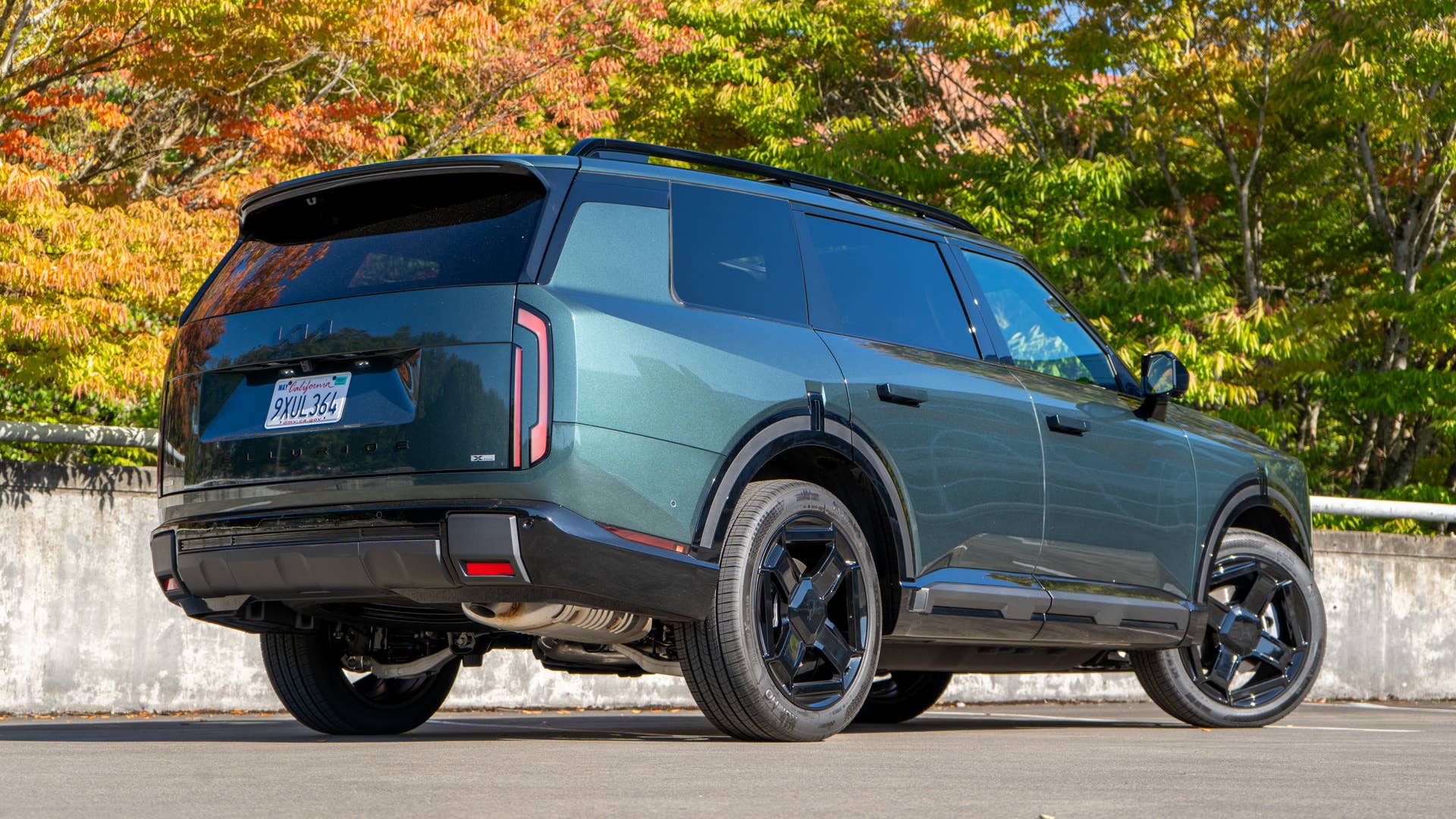
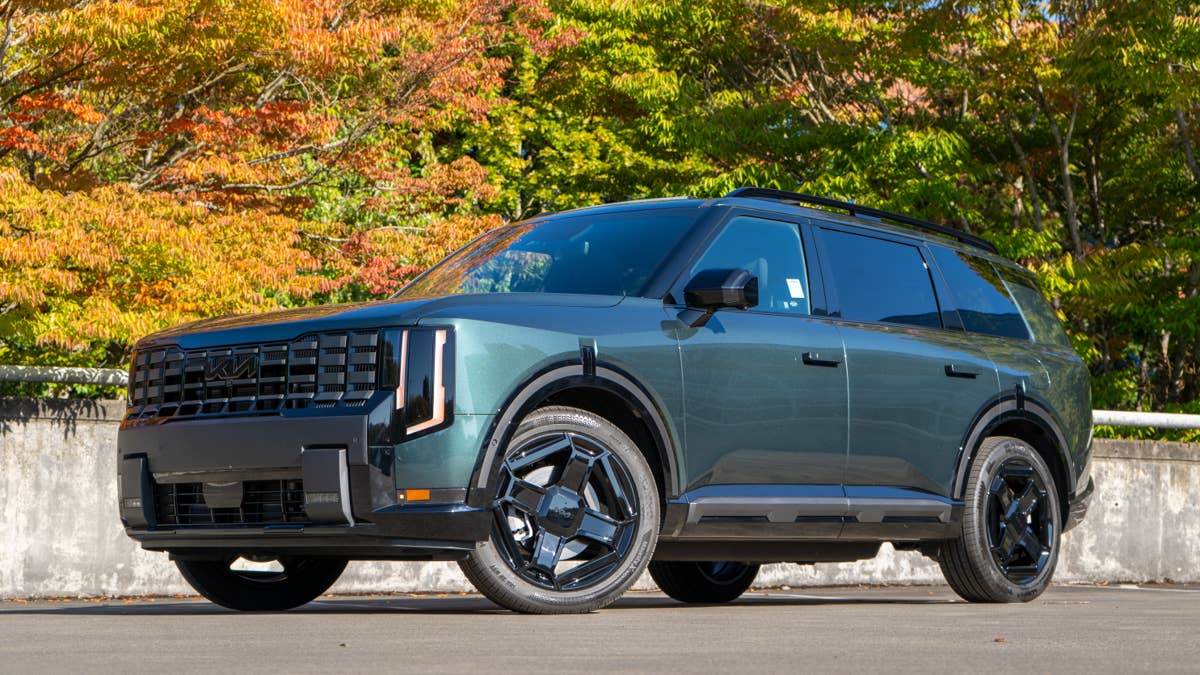
Inside, the cabin mimics luxury-class appointments with a curved panoramic display featuring dual 12.3-inch screens, a head-up display, dual wireless smartphone chargers, a Meridian premium audio setup, and a fancy-feeling synthetic leather upholstery. Both the front seats and second-row captain’s chairs are heated and ventilated, the driver gets an Ergo Motion seat with power bolsters, and the steering wheel is both heated and power-adjustable. The exterior is equipped with rugged X-Line styling cues, 21-inch gloss black alloy wheels, dual sunroofs, and LED projector fog lights, while safety is handled by Kia’s comprehensive active suite, including Highway Driving Assist 2, Safe Exit Assist, a digital rearview mirror, and Remote Smart Parking Assist. After factoring in $2,045 worth of factory-installed paint and lifestyle accessories, the MSRP rises to $59,635. Adding the mandatory $1,545 inland freight and handling destination charge brings the total Monroney sticker price to $61,180.
Kristen Brown
Here’s what else was included in the price:
Black Jade Green Exterior Paint ($495): Replaces the standard exterior palette with an upscale, deep metallic green finish that contrasts cleanly against the dark X-Line trim.
Towing Package ($625): Installs a factory-engineered tow hitch receiver that leverages the hybrid powertrain’s 339 lb-ft of torque for hauling small trailers, campers, or hitch-mounted bike racks.
All-Season Floor Liners ($255): Deeply channeled, high-walled rubber floor mats engineered to catch dirt, mud, snow, and drink spills from kids. They worked extremely well with my toddlers, that’s for sure.
Carpeted Floor Mats ($250): A full set of traditional woven carpet floor mats for drivers who prefer a plush cabin look over all-weather rubber.
Cargo Cover ($200): A retractable privacy screen designed to keep luggage, grocery bags, and valuables hidden from view in the rear hatch.
Carpet Cargo Mat w/ Seatback Protection ($155): Extends heavy-duty protection over the cargo load floor and up the third-row seatbacks to guard the upholstery when loading flat cargo.
Cargo Net ($65): A flexible mesh envelope net anchored at the rear liftgate to keep loose groceries and sports gear from rolling around the trunk
What does it compare to? Not much (at least not yet)
As far as AWD hybrid 3-row SUVs go, the market hasn’t made much room. Therefore, aside from the Hyundai Palisade hybrid—its industry twin—the only other competitor is the Toyota Grand Highlander. When cross-shopping the Palisade, buyers are looking at two sides of the same mechanical coin. Both vehicles share the same electrified foundation—a 2.5-liter turbocharged four-cylinder paired with dual electric motors producing 329 horsepower and 339 lb-ft of torque through a traditional six-speed automatic transmission. Where they diverge is in packaging, pricing strategy, and design philosophy. Hyundai positions the Palisade Hybrid with an entry trim starting in the mid-$40k bracket, catering to a posh, urban, lounge-like aesthetic with rounded, polished proportions and available executive touches. Kia, by contrast, restricts the Telluride Hybrid exclusively to higher-tier trims starting at the mid-level EX ($46,490) and culminates in the ruggedized X-Line SX-Prestige ($57,590 base), demanding a higher price point while serving families drawn to outdoorsy, trail-ready utility.
2027 Kia Telluride X-Pro SX-Prestige
Kyle Edward - Autoblog
Turning to the Toyota Grand Highlander, the comparison hinges on powertrain performance and budget. Toyota’s base hybrid setup starts in the mid-$40,000 range and delivers stellar fuel economy, but it sacrifices brisk acceleration and muscle under heavy passenger loads. Matching the Telluride Hybrid’s athletic 329-horsepower output requires stepping up to Toyota’s flagship Hybrid MAX powertrain, where a 2.4-liter turbocharged setup delivers 362 horsepower and 400 lb-ft of torque. However, that performance jump quickly pushes the Grand Highlander MAX Limited and Platinum trims into the $56,000 to $63,000 range. While the Grand Highlander MAX delivers effortless passing power and offers an available adult-friendly eight-passenger bench configuration, its interior design leans noticeably utilitarian and conservative compared to its Korean rivals.
2027 Kia Telluride HEV X-Line SX-Prestige AWD
Cole Attisha
Ultimately, this landscape leaves the Kia Telluride Hybrid in a pretty sweet position. If you want a family hauler that eschews the typical anonymous crossover silhouette in favor of quirky, boxy styling, an adventurous attitude, and a playful personality—without sacrificing the long-haul efficiency of a modern hybrid—the Telluride makes an exceptionally compelling case.
In a market where the average new vehicle transaction price regularly hovers around $50,000, paying $61,180 for a fully loaded, 329-horsepower, 31-mpg 3-row crossover is a pretty strong value. You aren’t just paying for badges or styling gimmicks here. You get tangible, high-end content. Standard heated and ventilated second-row captain’s chairs—along with the ability to equip heated seats all the way back into the third row via option packages—are luxury packaging rarely seen south of $75,000. Add in the self-leveling rear suspension that keeps the chassis planted when hauling a full cabin of kids and gear, and it outclasses competitors that wallow under load.
Throw in Kia’s industry-leading 10-year/100,000-mile limited powertrain and battery warranty (along with 5-year/60,000-mile bumper-to-bumper coverage), and the initial investment delivers long-term financial peace of mind. If you are looking for a spacious, fuel-efficient 3-row crossover that doesn’t compromise on comfort, styling, or passing power, the 2027 Telluride Hybrid earns every penny of its sticker price.
The Kia Telluride has been a family-focused SUV since its inception back in 2020. It was built to be a luxury-leaning, big but not-too-big, yet spacious option for families that didn’t want a minivan, but not something as gargantuan or expensive as a Chevy Suburban or GMC Yukon. For once, Americans had a “happy medium” choice. Because it sat perfectly in the middle, it sold, and sold well—and so far, it’s the only model Kia’s designed, engineered, and built for the American market. So, obviously Kia’s R&D did their job, and did it well.
2027 Kia Telluride HEV X-Line SX-Prestige AWD
Cole Attisha
For 2027, Kia implemented the hybrid drive and powertrain that was introduced on the redesigned 2026 Hyundai Palisade—a 2.5-liter turbocharged four-cylinder that, when combined with the two electric motors, puts out 329 horsepower and 339 lb-ft of torque. So, not only do you get close to 30 MPG with all-wheel drive, but the power balance is much nicer than that old V6 Kia basically beat to death. The redesign also brought more space, more utility, and a truly unique look. Here’s what else parents should keep in mind.
By now, we know that the Hyundai Palisade and Kia Telluride are industry twins. Even though they share the same platform and powertrain, Kia’s approach to marketing the Telluride hybrid is… Interesting. On the homepage, the first words you see are, “Turbo-Hybrid,” not just “Hybrid.” Right away, we’re getting images of the Telluride with an alpine lake in the background, with messaging about “637 miles of total driving range,” and 329 horsepower. So, they’re trying to attract the folks that want something both practical and fun.
2027 Kia Telluride HEV X-Line SX-Prestige AWD
Cole Attisha
Therefore, even though the Palisade is much more posh and polished, the Kia Telluride is more expensive. There are five trims of the hybrid version, starting with the EX, a mid-level trim—completely separate from the Palisade hybrid’s much more bare-bones base trim. Here are the trims and their base MSRP, before destination fees:
EX ($46,490): The mid-level entry trim. Kia describes it as “refined” with “daily comfort.” Front-wheel drive is standard, unless you want to pay extra for all-wheel drive—but you still get all the fancy safety features, convenience features, and comfort features. The only thing you really don’t get standard is a heated steering wheel. You still get heated seats in the front, heated side mirrors, and an acoustic windshield at that price, though. Pretty impressive.
SX ($51,490): This one’s marketed as “advanced with modern tech and interior,” as it comes with the dual sunroofs (the EX only has a single sunroof), blind spot and 360-degree surround view monitor to help with parking, the memory seat function, and the premium sound system.
X-Line SX ($54,490): This is where the Telluride starts to lean more into the “off-road” image. The different front bumper, the tow hooks, the blacked-out body cladding and side skirts, raised roof rails, all-wheel drive is standard, and then you get a terrain mode selector, with a heavier focus on interior technology.
SX Prestige ($56,590): This is the off-road-focused, but luxury-adjacent trim. The second row gets built-in heaters in the seats, HomeLink, a heads-up display, and the Digital Key 2.0 feature.
X-Line SX Prestige ($57,590): This is the highest trim level, with every fancy bell and whistle Kia has available, with all of the off-road features, too. Unlike the Hyundai Palisade, the highest-level trim is the company’s most capable while also being the fanciest, with a synthetic leather upholstery that also happens to be water-resistant and remote parking assist. This was the model I tested, and with optional packages, it totaled to $61,180.
You don’t get a bench seat option for the hybrid model
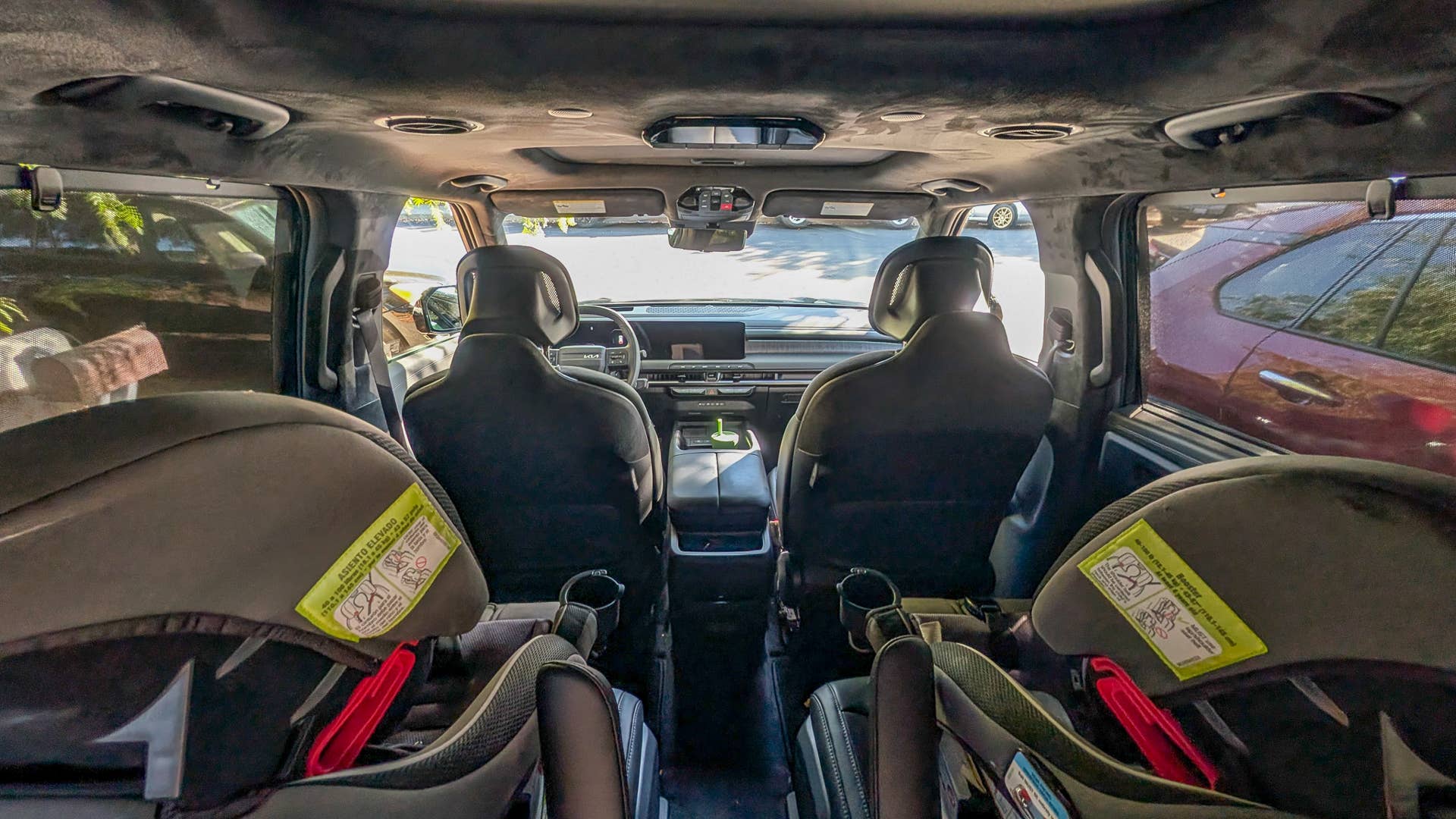
One of the first things I look into with 3-row SUVs is the availability (or lack thereof) of a bench seat for the second row. In the Kia Telluride hybrid’s case, no trim level offers a bench seat because the hybrid is considered the higher-end, fancier model compared to the gas-only model. If you want a bench seat, you have to get the gas-only model. For me, the lack of a bench option means you’re limited to seven seats instead of 8, but… That’s more than five, so I guess I should pick my battles a little better. I have two kids, both of whom are in car seats—so they take up the entire second row. If we do need to move another adult, they’re banned to the rear seat.
Kristen Brown
Though you could put them in the rearmost seats, as all three seats in the rear have top tether anchors, and the outboard seats have lower LATCH anchors, you could put them in the third row if you wanted to—you would just have to secure the kid in the middle with the seatbelt and top tether.
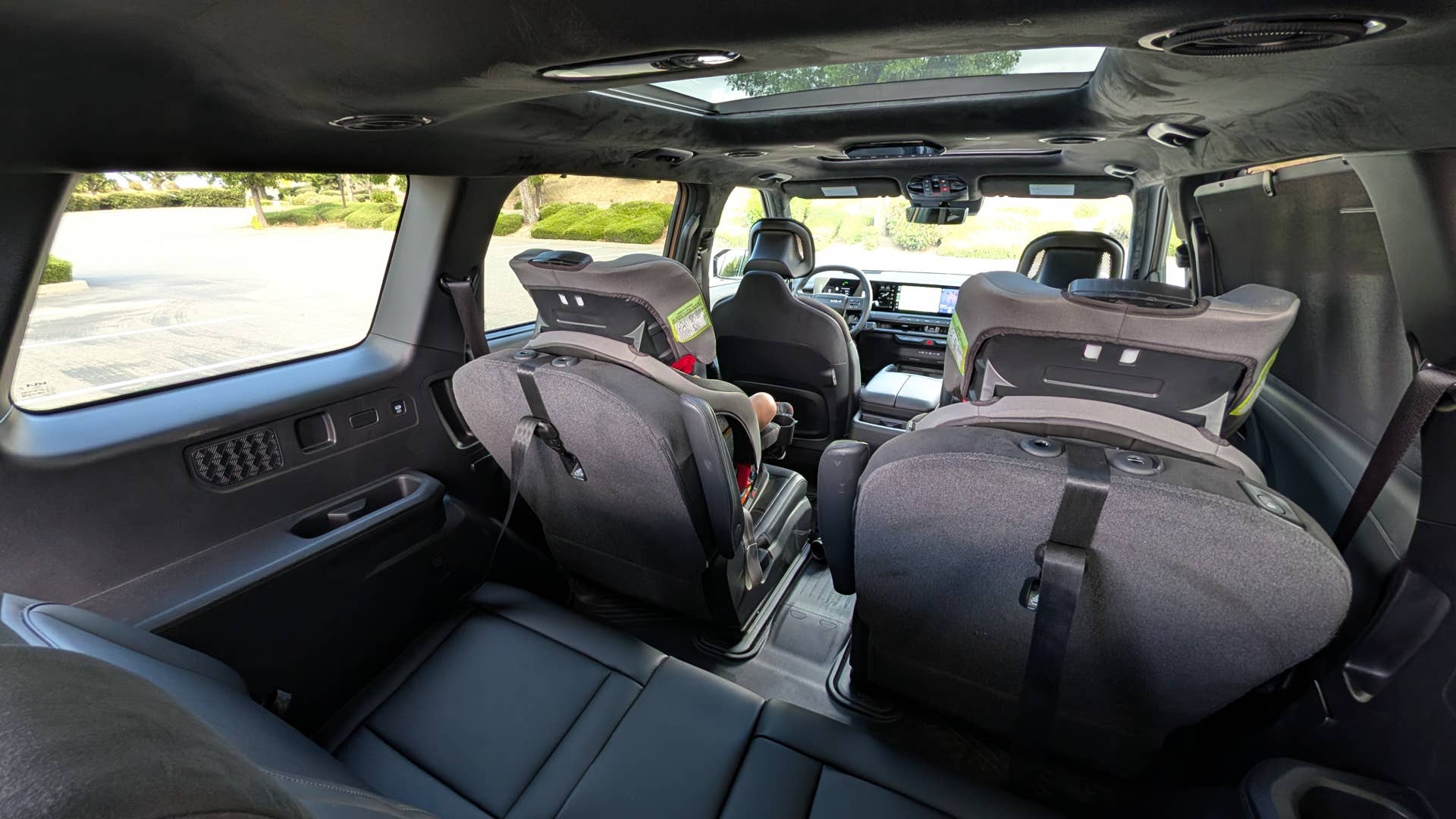
The third row of the Kia Telluride, both the gas-only and hybrid model, has a very sizable third row. The standard legroom figure of the third row is 32.1 inches of legroom, which is more than enough for adults and lanky teens. And it can be expanded if needed, as the second row seats can scoot forward. The visibility is excellent, thanks to the dual-sunroofs (only in the higher trims, which are worth the investment if the third row is going to be used full-time), large porthole windows on each side—that are thankfully tinted—and everyone gets their own cupholders, ceiling-mounted A/C vents, and a dedicated USB-C charging port. So, no one’s feeling left out or like they’re the least favorite if they’re sitting back there.
The third row of the 2027 Kia Telluride
Kristen Brown
If you live in a cold climate, the second and third row seats can be configured with heaters if you go for the optional Executive Package on the higher SX-Prestige and X-Line SX Prestige trims. This is a nice option for families since no minivan has that option.
Mileage, obviously, is a very attractive feature
Obviously a big factor is whether or not you go with front- or all-wheel drive, but mileage in the hybrid is notably better. With front-wheel drive, the Telluride hybrid is rated for up to 36 MPG on the highway and 35 MPG combined, while the all-wheel drive version is rated up to 32 MPG on the highway and 31 MPG combined. The gas-only version, by comparison, achieves up to 26 MPG on the highway with FWD, and 24 MPG on the highway with AWD. Combined, either configuration ranges between 18–22 MPG.
2027 Kia Telluride HEV X-Line SX-Prestige AWD
Cole Attisha
In today’s economy, getting between 11 and 13 miles per gallon more is a huge win. Especially if you do a lot of commuting or city driving, since you benefit from the hybrid battery’s EV mode at slower speeds or at stops. And, because of the increased mileage, you can go a lot further before you start dreading the pumps. Kia’s very obnoxious about advertising that the hybrid has a maximum driving range of 637 miles with FWD. Which is quite a jump from the gas-only’s maximum range of 418 miles with FWD, and 380 miles with AWD.
The interior is simple yet effective, and the technology is easy
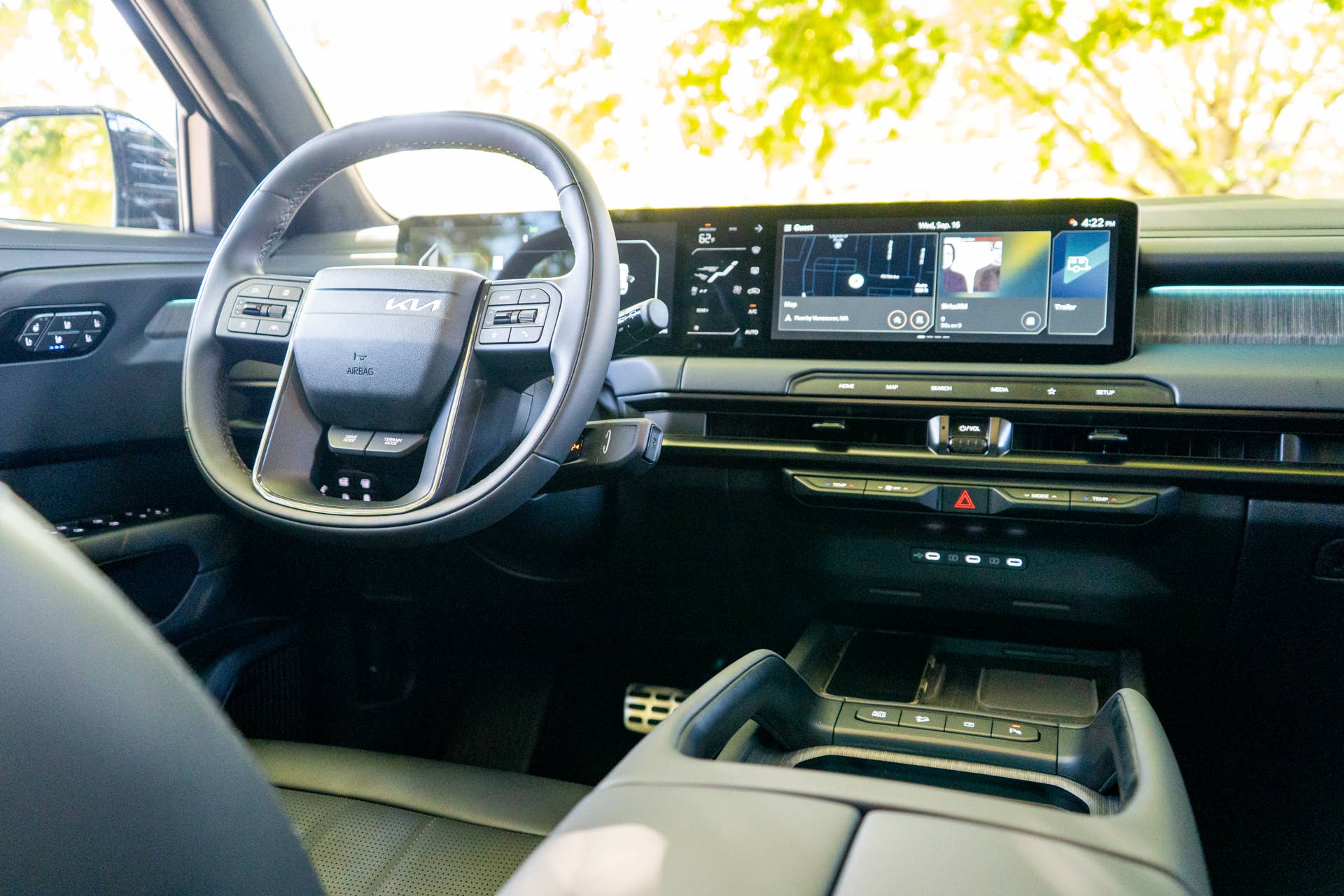
This is where you could tell the Kia Telluride Hybrid was a product made by people with families. Aside from the dual 12-inch screen setup that stretches across the dashboard, starting from the driver’s door to the center console, the first thing I noticed was the adjustable cup holders in the center console. You can have them “out” to hold your usual cup of coffee, energy drink, or standard water bottle. Or you can push them in and have them “stowed” to make room for your larger 32 oz water bottle, sunglasses case, purse, wallet, or whatever else you need to have in a grabbable vicinity. The center console pocket is deep and easy to access, and there’s a passthrough underneath the cupholders that I regularly used for my purse to keep it out of anyone’s footwell. The pockets in all four doors were large enough to hold water bottles, so I’d say there are technically four cupholders up front. For parents (or a beverage goblin like myself), the more cupholders the better. Especially up front.
Kristen Brown
Mine had an all-black interior layout with black synthetic leather, but you can get it in a few different colors: tan and white, dark blue and light brown (gorgeous), and if you get the Executive Package, you can unlock Blackberry & Sand Beige—which is an almost-purple and tan setup. Any color other than black makes the Telluride hybrid feel so much more expensive than $61K (sorry not sorry).
I have always been a fan of Kia’s native software, because it feels very much like a PC in the Mac vs. PC argument in the sense that everything is customizable, any setting you’ll ever need is where you think it’d be, the layout and menu surfing makes sense, and the UX is fantastic. It’s responsive, too—I never felt like I had to “dig” through other menus to find the setting I needed. My trim also had the premium sound system, which in my opinion is a non-negotiable.
The Kia Telluride Hybrid’s driver assistance tech feels unmatched for the price
Kia’s definitely making a name for itself as far as driver assistance technology is concerned. The all-new Telluride SX Prestige Hybrid feels like an all-inclusive package here, because it truly comes with everything: Kia’s highway driving assist 2 (HDA2) tech, which will do the low-speed following, stopping, going, and lane keep while you’re stuck in traffic. It also comes with lane change assist, which can be toggled to automatic or on-demand (meaning you have to toggle your blinker to activate it), and more. It’s also packed with the usual, like adaptive cruise control, automatic emergency braking in the front and rear, cross traffic alert and auto braking, that fancy feature where you can make the car roll forward or backward with your key fob if someone’s parked too close to you, and remote start.
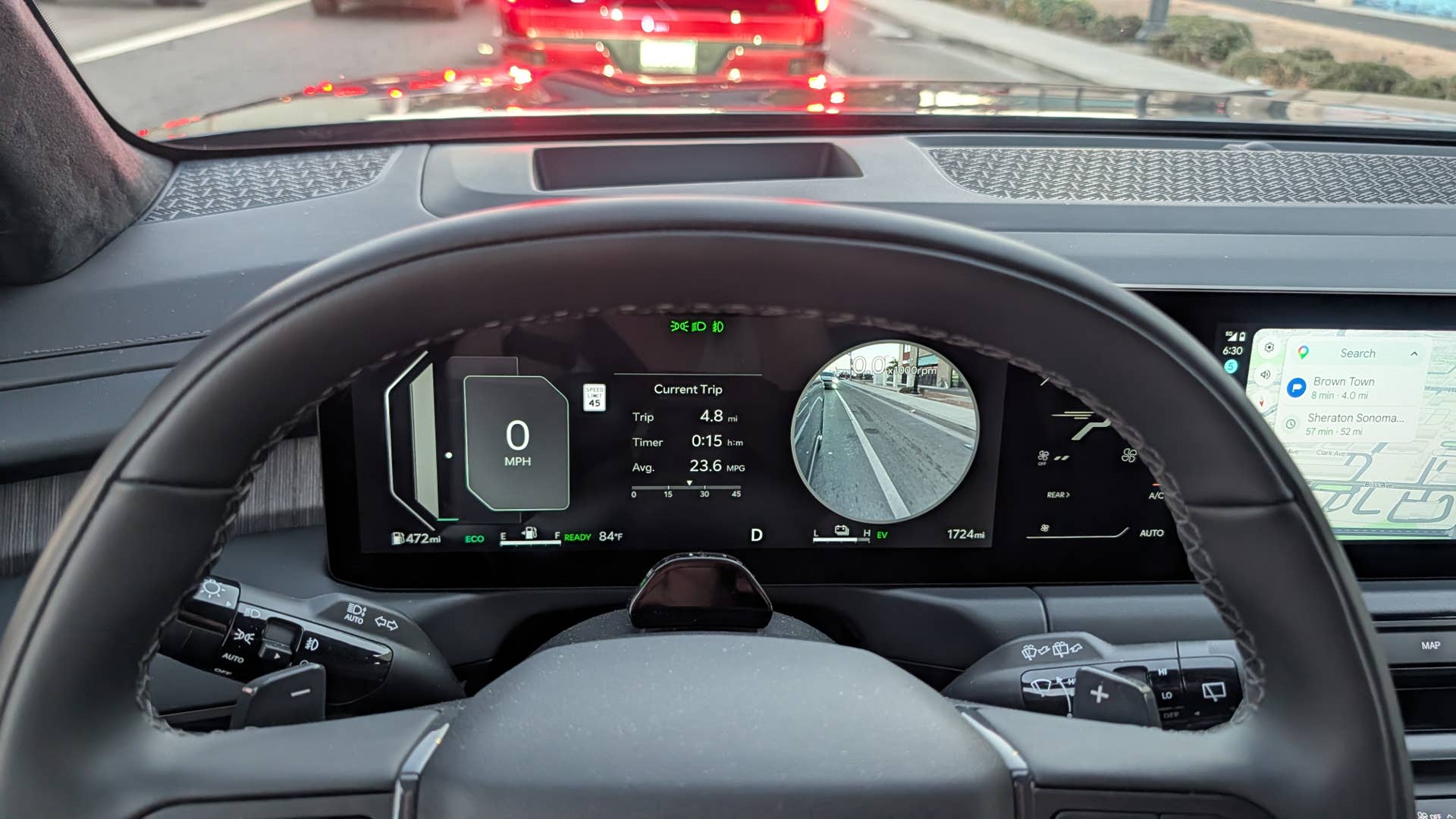
The driver display of the 2027 Kia Telluride HEV, highlighting the blind spot camera
Kristen Brown
My favorite feature, especially with kids, is the safe exit alert, which is standard on all Telluride hybrid models. Using the radar detectors in the rear bumper, it’ll alert the rear passengers to a car approaching from the rear—either on the left or the right side—and will issue an audio warning and illuminate a special light on the door most likely to be affected by the oncoming car. If the car thinks you’ll open the door anyway, the door will lock and won’t unlock until the car is no longer detected. This, obviously, is to keep your kids from opening the rear door and being struck by a car as they’re getting out of the car. So, in case you forgot to activate the child safety lock (which is as easy as pressing a button on the driver’s window switch panel), the Telluride’s got your back. Or whatever other body part is facing the oncoming car.
In the Bay Area, an essential feature is the blind spot collision avoidance system, which will not only warn you that a car is in your blind spot, but will actively steer you away from a car if you start to drift towards it or into the other lane when a car is detected. Which you probably won’t have happen to you anyway, since there’s a camera in each side mirror that will show a live feed of your blind spot when you toggle the associated turn signal—another feature that I wish more manufacturers incorporated into the cars.
The ride is so smooth, my kids fell asleep every time
The only other car I’ve said this about was the Land Rover Range Rover Sport: it’s so smooth and quiet, my kids were lulled to sleep every time they rode in it, even if it was a 10-15 minute drive to the grocery store. The Kia Telluride hybrid doesn’t have electronically adjustable dampers that coincide with the drive modes (Snow, Sand, Mud, Sport, Eco, Normal, and Custom), but the SX, X-Line SX, and X-Line SX Prestige have the company’s hopefully trendsetting self-leveling suspension in the rear. The name kind of gives it away, but what it does is simple: it’s designed to keep the rear end level with the front end. So, if you pack the Telluride hybrid full of kids, gear, dogs, or all three, the rear end will always rise to meet the front end.
2027 Kia Telluride HEV X-Line SX-Prestige AWD
Cole Attisha
Why is that important? It keeps those boxy, futuristic headlights from blinding the people driving in front of you, for one; it keeps the ride quality consistent, and it helps keep it steady at highway speeds. It’s something people don’t really think about, but when you drive a 3-row SUV that doesn’t have that feature, it’s something you learn you’ve taken for granted. Trust me on that one.
Anyway—despite having a fixed suspension setup, the interior sound dampening, larger wheels, and nice all-season tires help keep the interior incredibly quiet. I live in the Bay, so the roads look and feel like they’ve been bombed, but the Kia Telluride hybrid was quiet, smooth, and confident. Plus, I very much appreciated the extra horsepower that comes from the turbocharger and twin electric motors.
Final thoughts: 10/10, would put my family in one again
My husband and I quite liked the Kia Telluride Hybrid. There wasn’t much we didn’t like. For the price, you get nearly everything—a comfy third row, a tech-forward interior, all the comfort and convenience features you could think of to ask for and then some, a cozy and quiet ride, good looks, and great mileage for a reasonable price. There isn’t much that competes with it on those levels, except its industry twin (which I liked just as much). My kids loved it, and my in-laws loved it. My oldest daughter was especially fond of the exterior styling, which she likened to a toy car.
I originally gave it a 9.5, but then I changed my mind because I couldn’t think of a reason to deduct half of a point. It’s nearly perfect. Now, if only I could get my family off of the “Kias are super unreliable” train…
For those who aren’t sports car enthusiasts, I’ll lay out why so many of them like Porsches: they’re simply very good at their job. The job, of course, is being a sports car. But when something becomes the default choice for something, like a Porsche 911, the prices rise, the haters show up, and the whole thing becomes the “boring” or the “obvious” choice.
So, there you go. The Honda Pilot is really just a Porsche 911. It’s maybe the best at its job, everyone has one, and it’s the default choice.
On the level, this is really the only spot to nitpick the Honda. It is tremendously boring to drive. I absolutely loathe the way this thing drives. It is so incredibly uninspired I considered trying to season it with some salt and garlic powder to get rid of the bland taste it left. The transmission is ponderously slow, too, and the fuel economy is abysmal. I managed just 20 mpg combined.
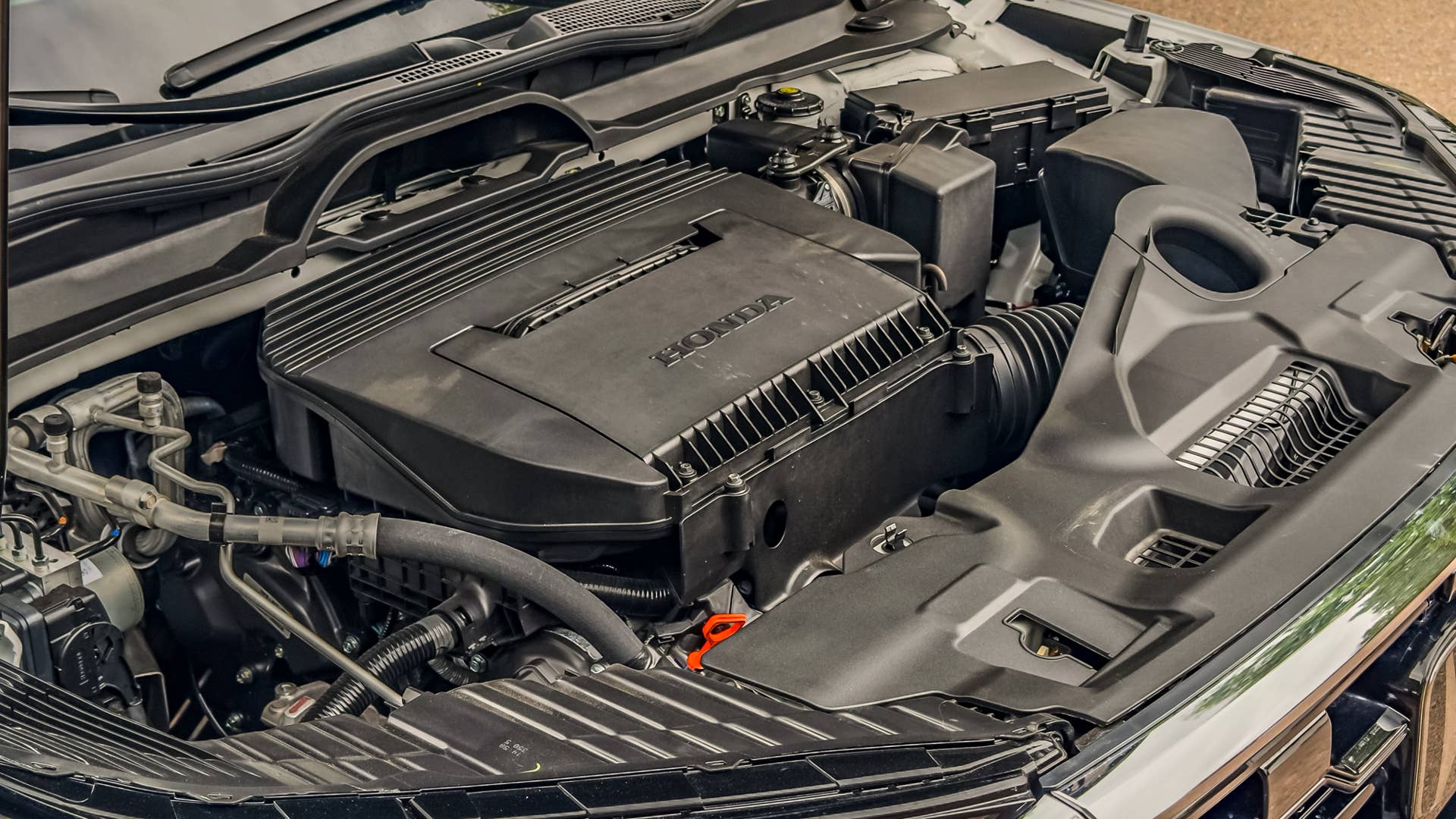
However, it’s also good at going down the road. The Pilot’s ride is incredibly well composed, and the interior is quiet enough that you might just forget you’re driving a gas-powered car while sitting at a light. The big V6 doesn’t make much power, at just 285 horsepower, but it gets the job done.
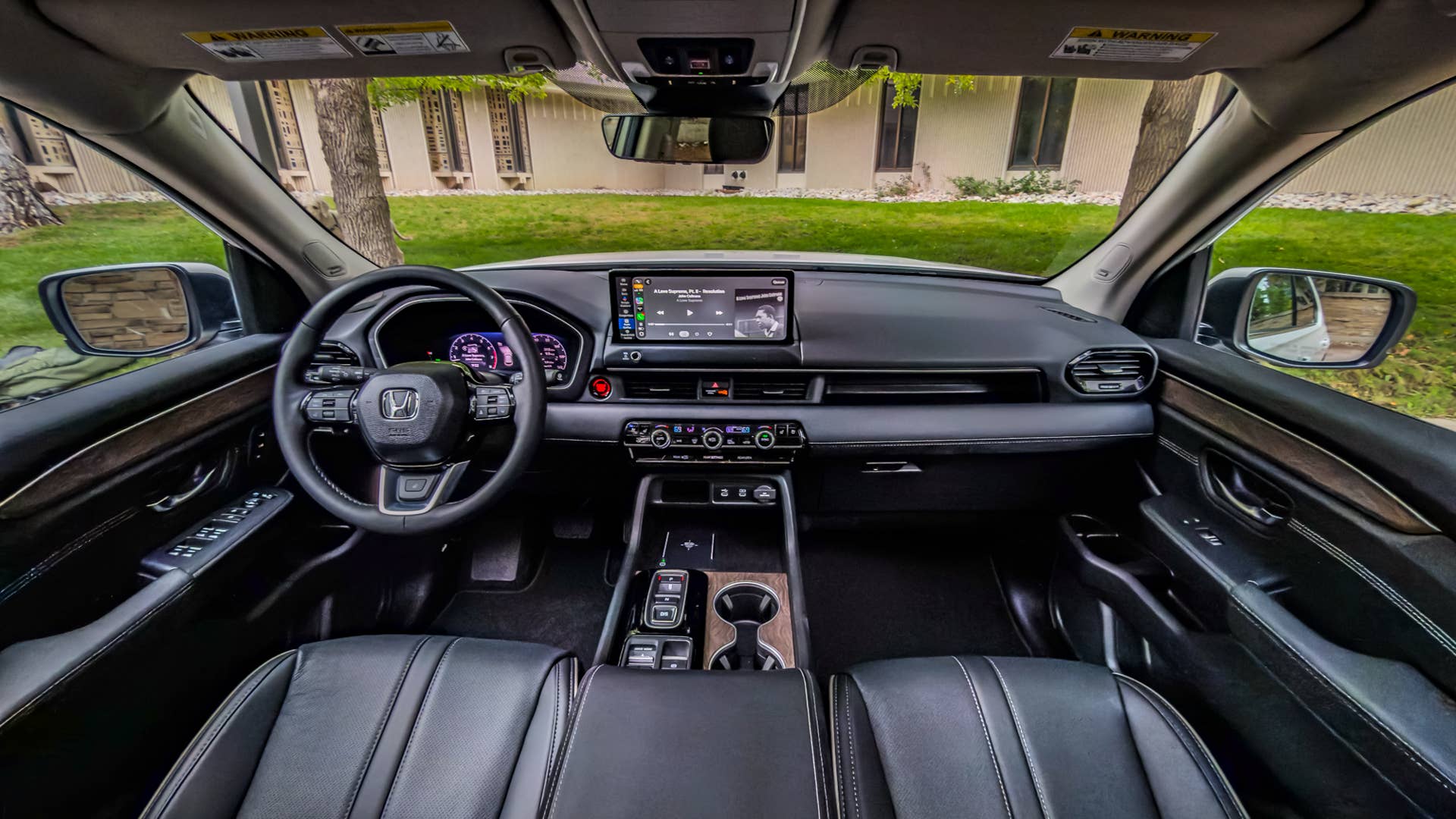
The Pilot’s interior is probably the SUV’s best aspect. Upper trims, like this Elite one, offer leather upholstery. Other luxuries in top trims include heated front and rear seats, a 12-speaker Bose sound system, and a panoramic sunroof. It’s not as plush as some rivals, though.
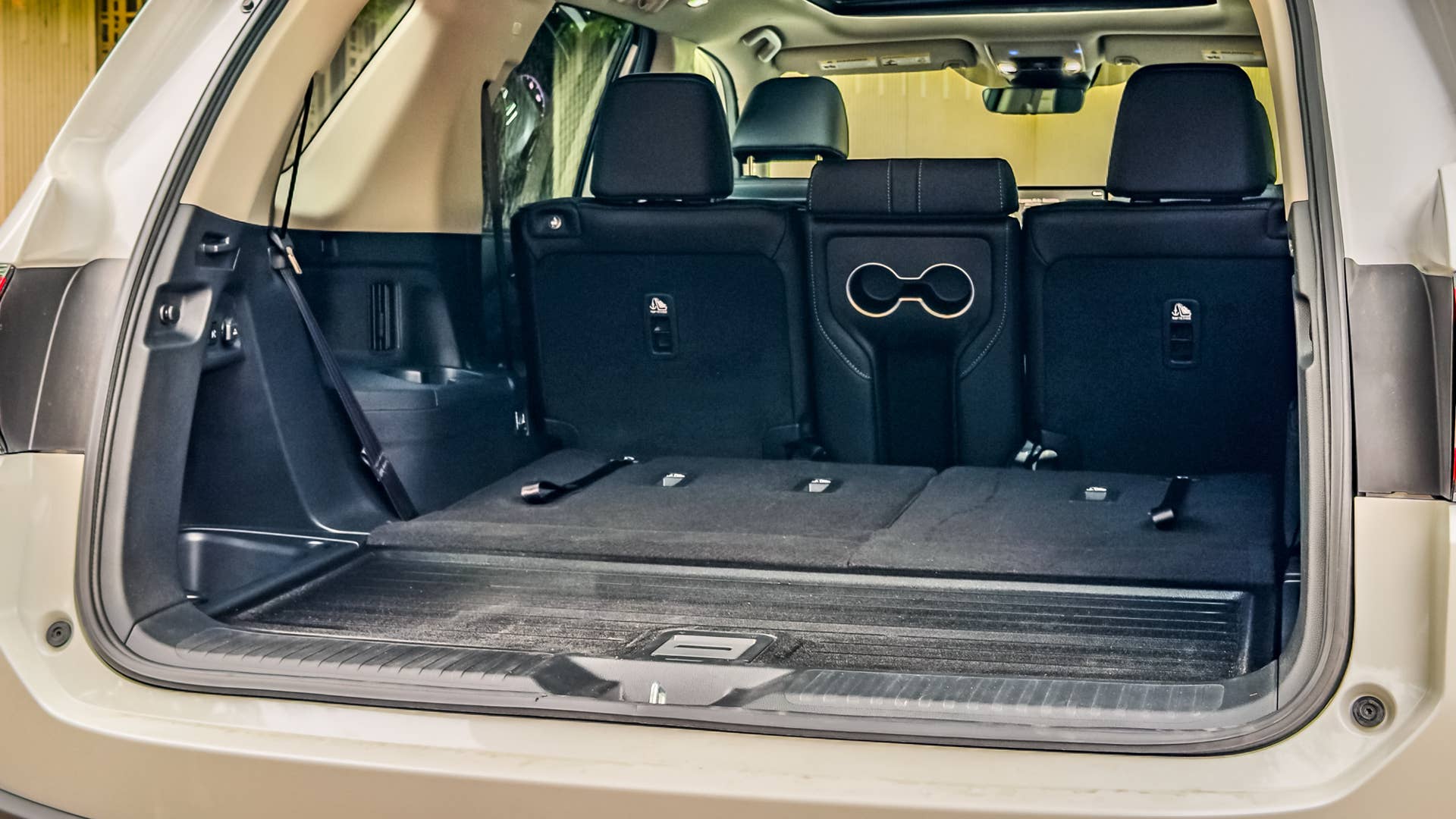
The rear two rows are plenty spacious, and there’s lots of storage for small items. Honda also has a clever stowable middle seat, which means that all Pilots have second-row captain’s chairs, if you want them. In the third row, there’s more than enough room for adults, and the seats fold flat. They’ve even got USB-C ports.
Speaking of tech, that’s new for 2026. A larger 12.3-inch central infotainment touchscreen comes standard and is wonderfully easy to use. There’s lots of buttons, which I like, and it features wireless Apple CarPlay and Android Auto. I do wish the newly standard 10-inch digital dash were a little more modular, though.
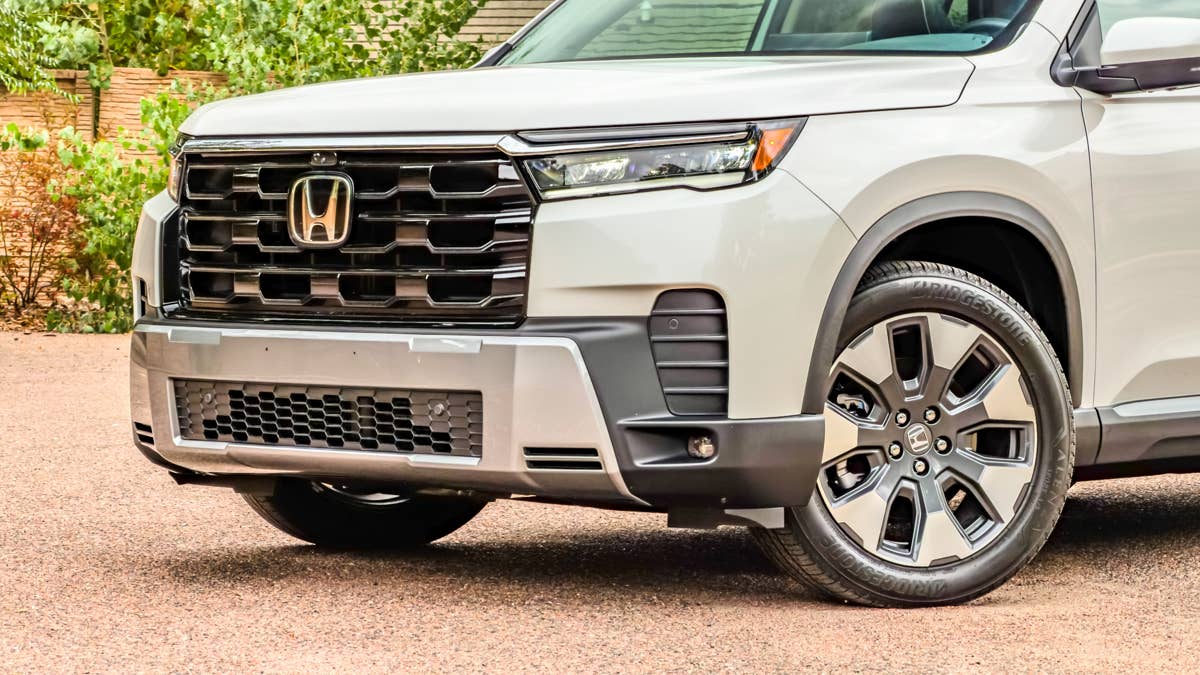
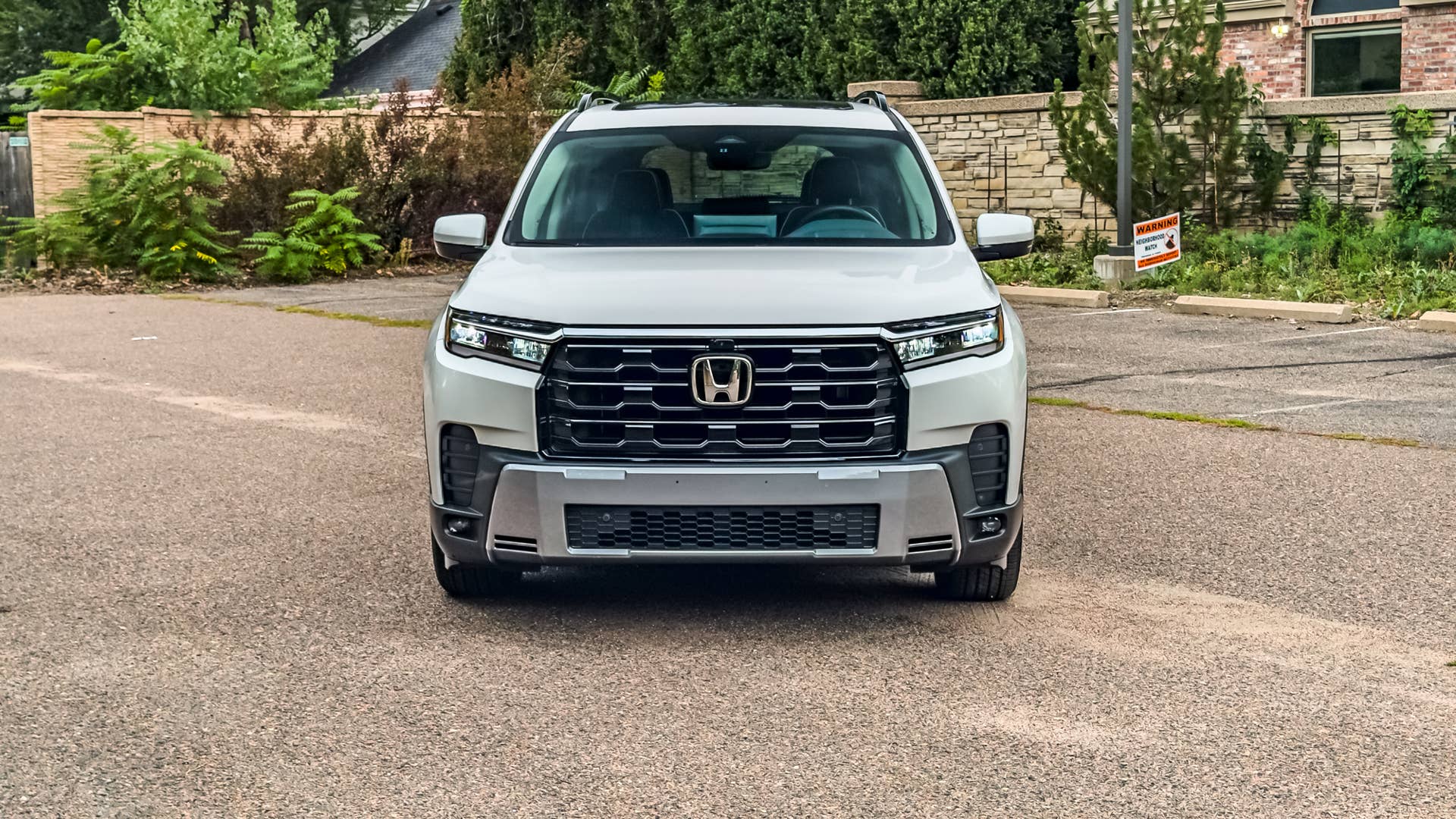
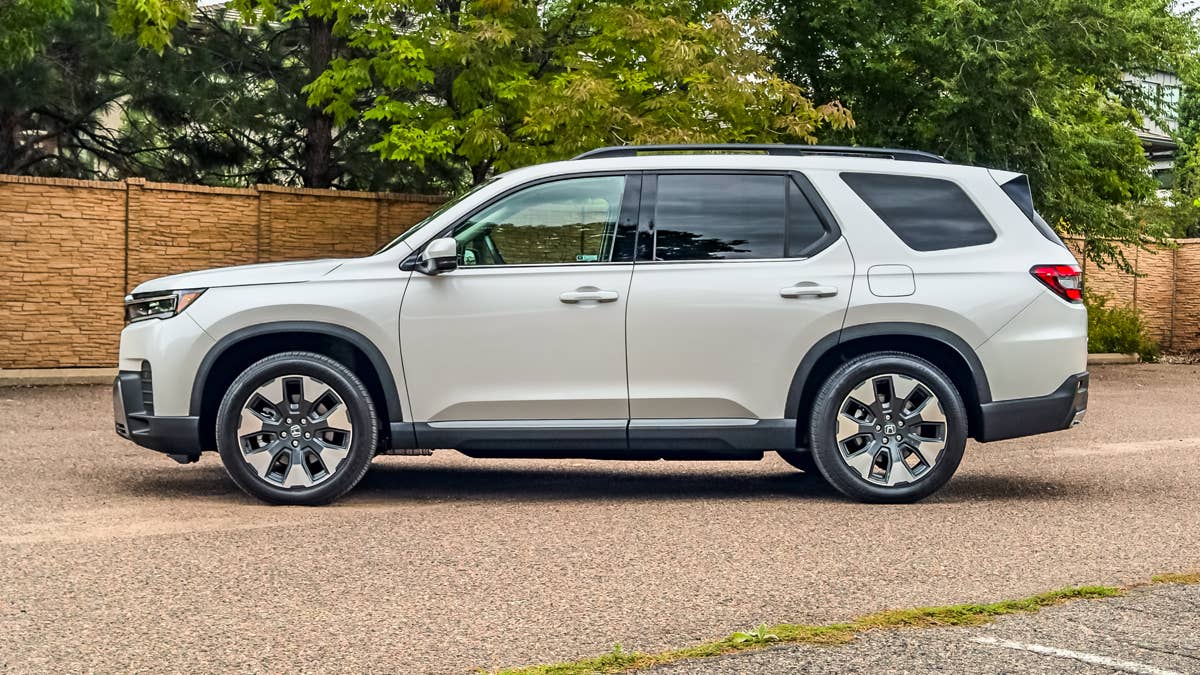
2026 brings the Pilot some new looks. The front bumper now has a bigger grille, with this updated rectangular two-tone element at the lower end of the bumper. All told, it’s pretty uninspiring. The shape is basic, the front end is bland, and there are like two cool colors, of which this is neither. It’s a perfectly inoffensive look for a perfectly inoffensive SUV.
The Pilot isn’t the towing monster something like the Dodge Durango is, but its 5,000-pound capacity is right in step with other rivals, like the Telluride and Grand Highlander. Front-drive models, though, can only pull 3,500 pounds.
Meanwhile, space is one of the Pilot’s biggest advantages. It easily swallows up to a massive 87 cubic feet of cargo with all the seats folded, and a minimum of 19 cubic feet with the third row intact. It’s more than enough room for even large families.
Pricing And Value: 5/10
Chase Bierenkoven
The 2026 Honda Pilot starts at $43,990 and goes up to $56,790. Its MSRP is a good bit higher than rivals from Kia and Hyundai, both of which can be had near $40k, and more than that, the Telluride and the Palisade both offer more luxury at the top end. Still, it’s cheaper than the $44,000 Grand Highlander, though that manages to at least get better fuel economy. While the Pilot isn’t a particularly excellent value, its old-school V6 might give some long-term buyers peace of mind.
Verdict: 6/10
Chase Bierenkoven
I don’t love the Pilot. It didn’t wow me, thanks mostly to its weak powertrain, high prices, and underwhelming driving experience. But it is a damn good box on wheels. Like the 911, it is very good at its job, and it’s no wonder these are so popular. They might not be worth the price premium, but given the acres of space and simple, practical interior, I can very much see why buyers seem to love them so much.