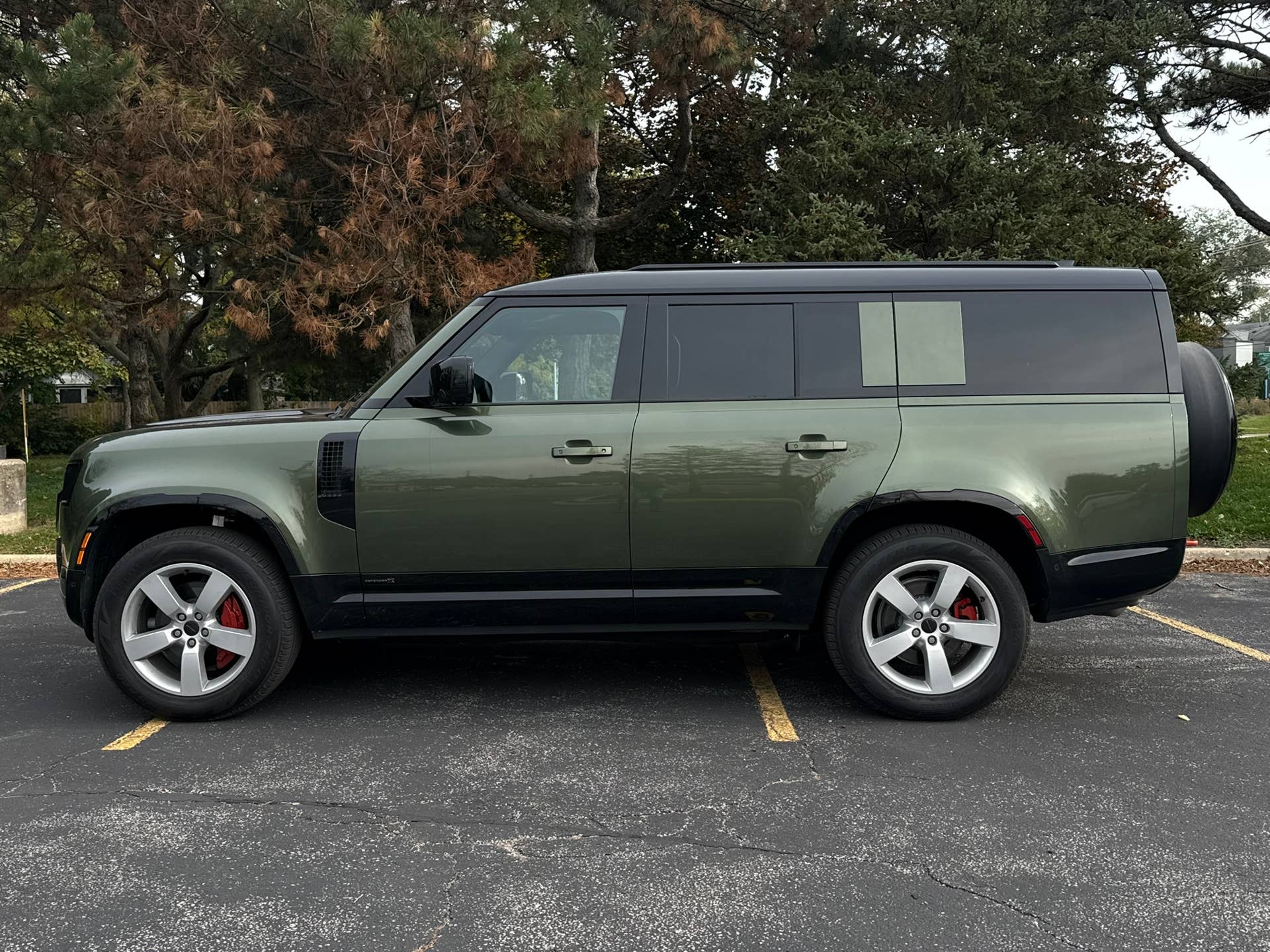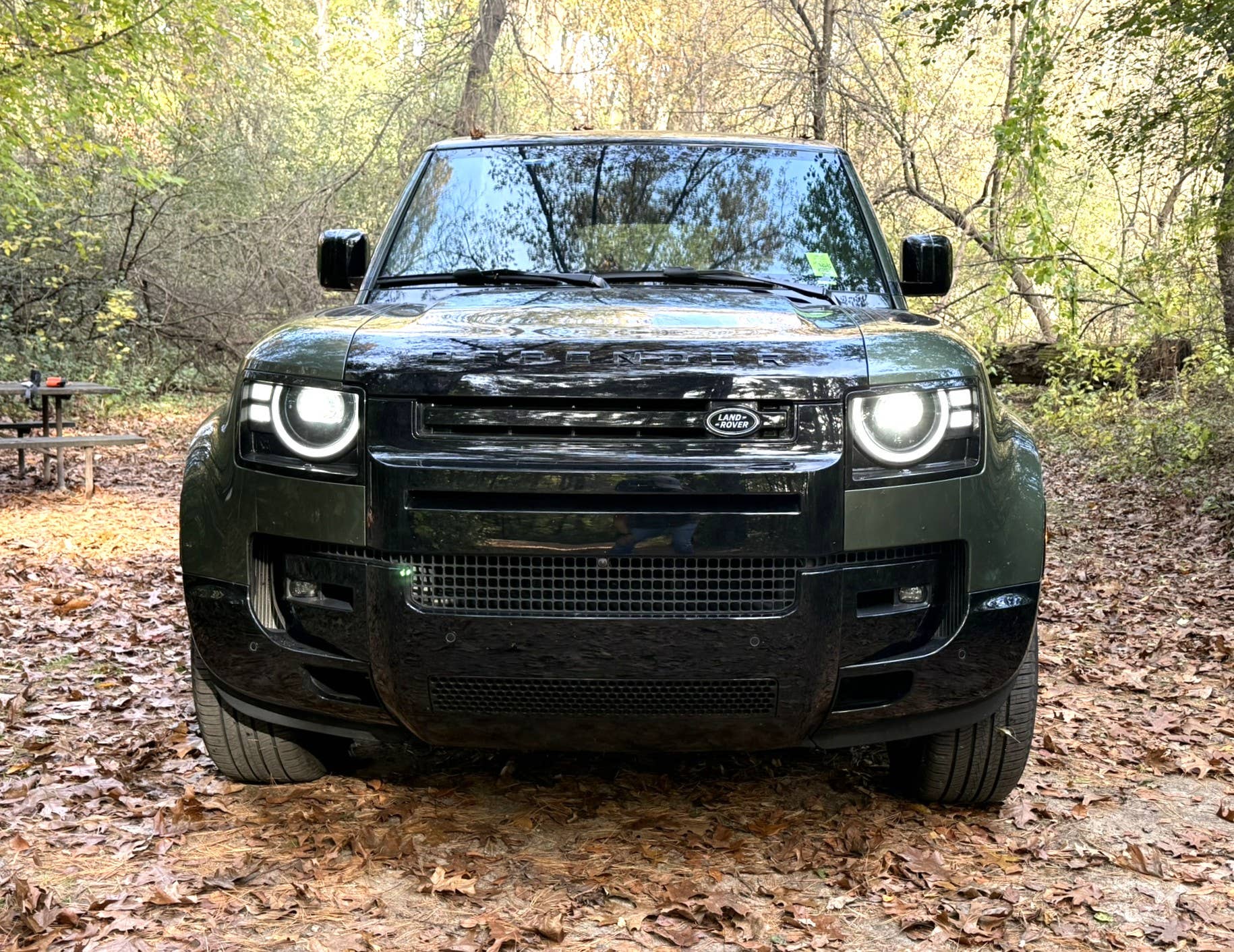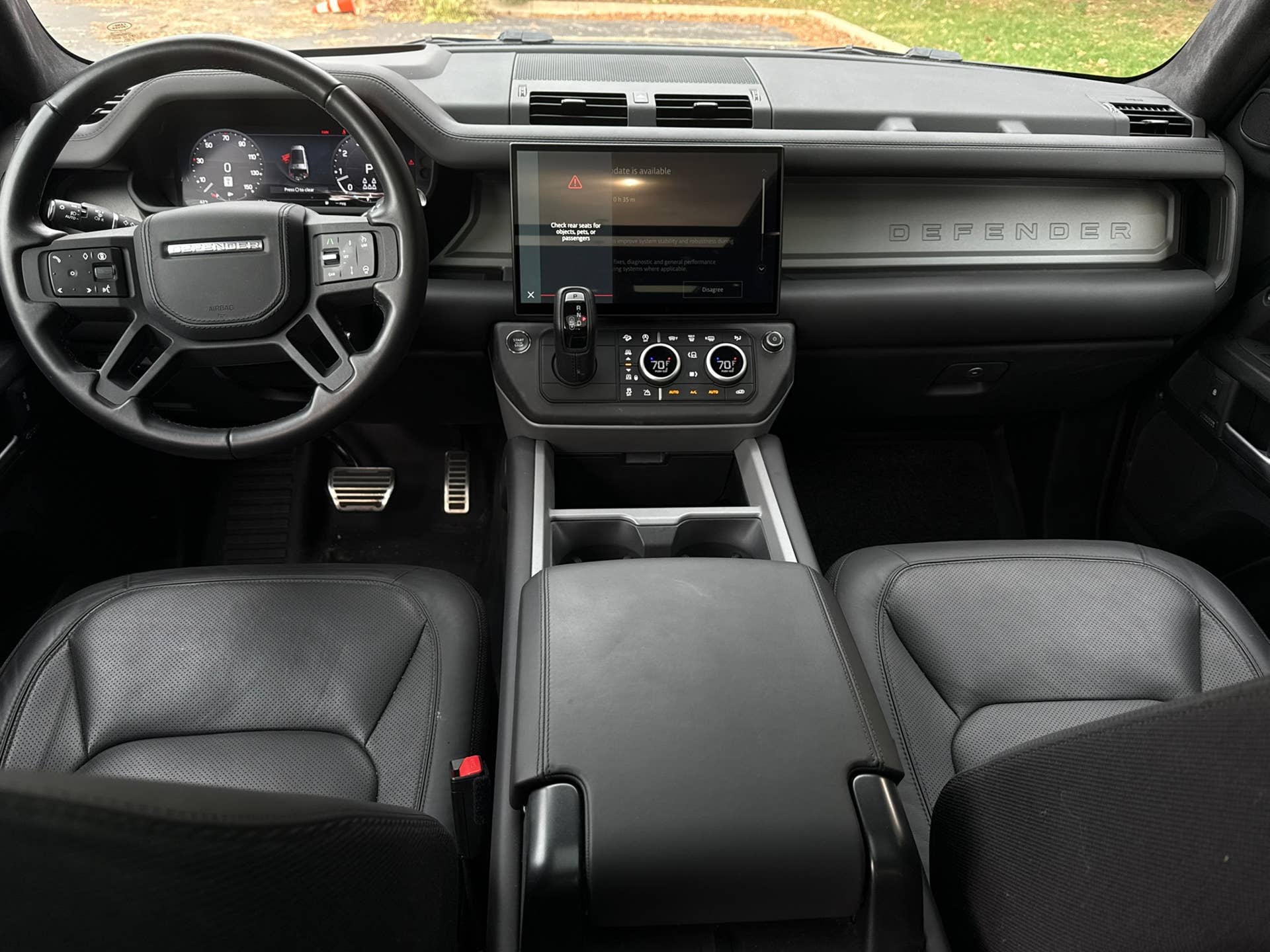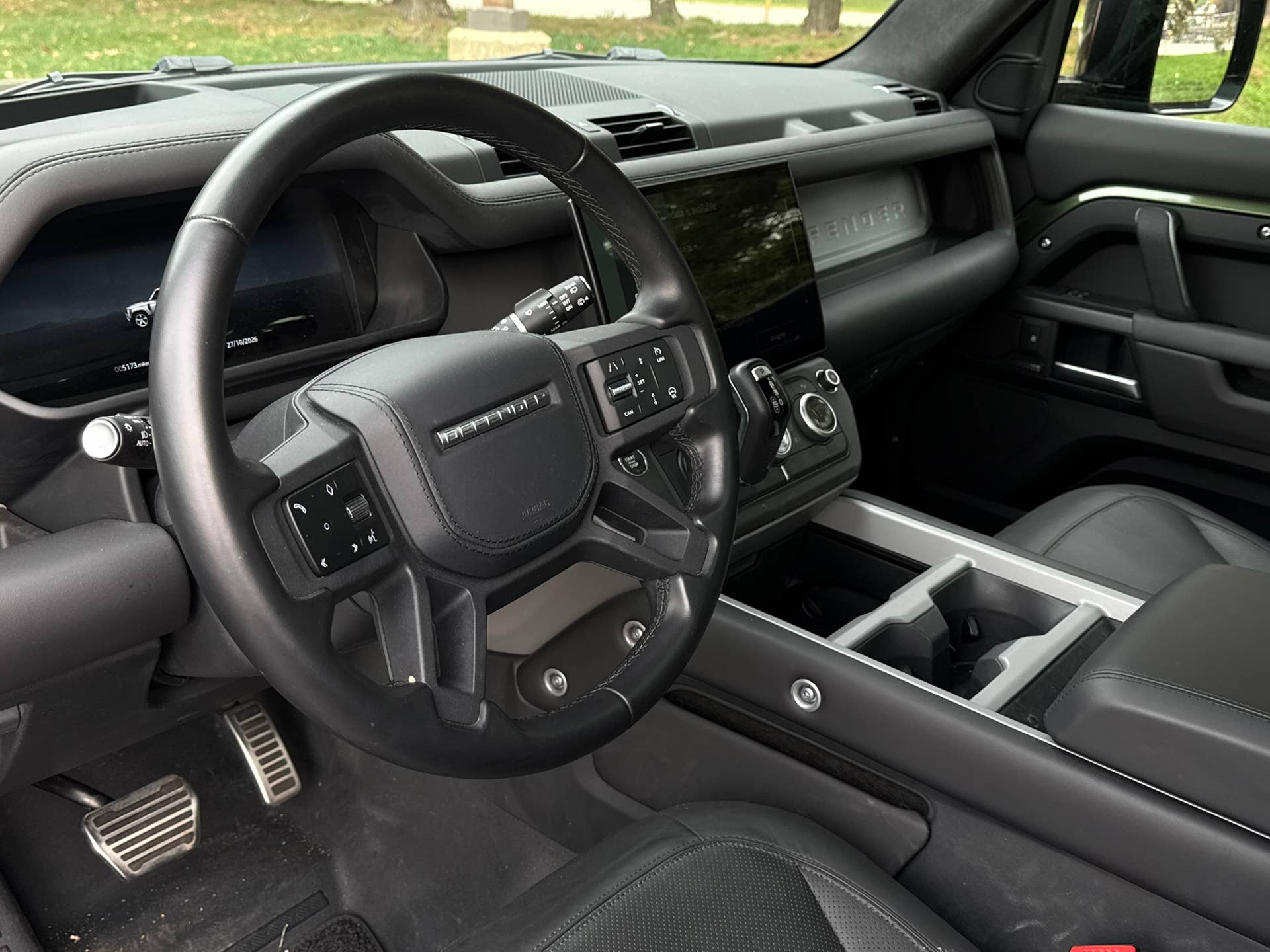

2027 Is The Final Year For The Hyundai Santa Cruz, and The XRT is the One To Get

The compact unibody lifestyle pickup truck segment is pretty small. It has two members: the Ford Maverick and the Hyundai Santa Cruz. The Maverick is selling like gangbusters (more than 123k sold so far this year), but the Santa Cruz has lagged far behind (shy of 15k units this year). The Santa Cruz will disappear from showroomse early next year, to be replaced by a real body-on-frame truck in 2029.
Hyundai

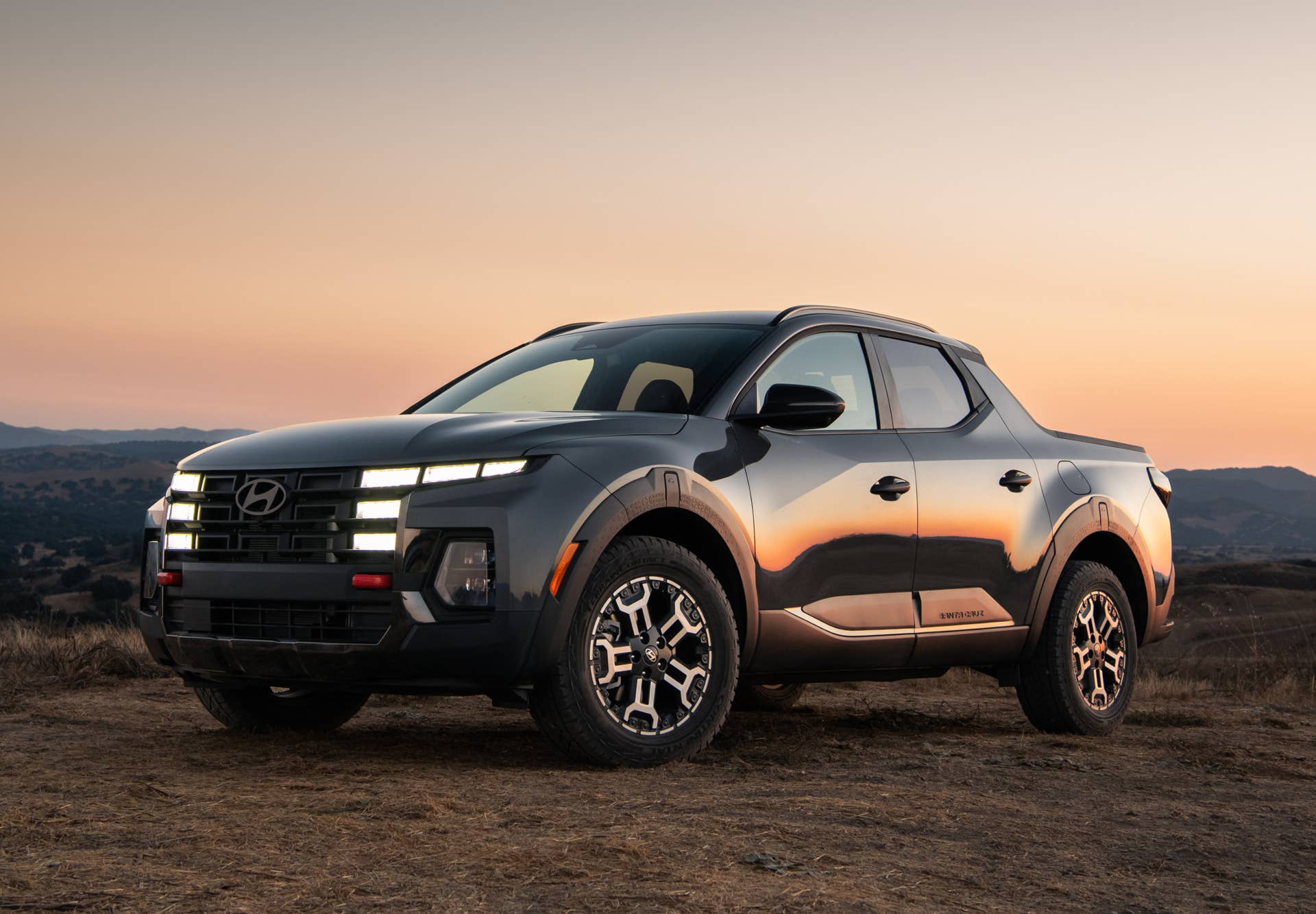
But the current Santa Cruz is worth looking at, despite the fact that it’s slow to move off dealer lots. It’s a truck that can do the everyday without guzzling gas or taking up gobs of space. With compact dimensions, a useful open bed, and crossover-style construction, it offers versatility and a driving experience that’s more like a car.

The top trim XRT is priced at $42,775. Standard equipment highlights include the upgraded 2.5-liter turbocharged four-cylinder engine, all-wheel drive, unique 18″ XRT dark alloy wheels, an XRT grille, automatic LED headlights, LED taillights, heated side mirrors, lockable under bed storage, composite bedliner, dual C-channel adjustable utility track rail and cleat system, remote release tailgate, power tilt/slide moonroof, 12.3″ touchscreen, 12.3″ digital gauge cluster, Bose premium audio, surround view monitor, dual zone automatic climate control, heated leatherette seats, and wireless Apple CarPlay/Android Auto. Including options and the $1,650 freight charge, the total price came to $45,085.

Rugged Enough For Most
Hyundai

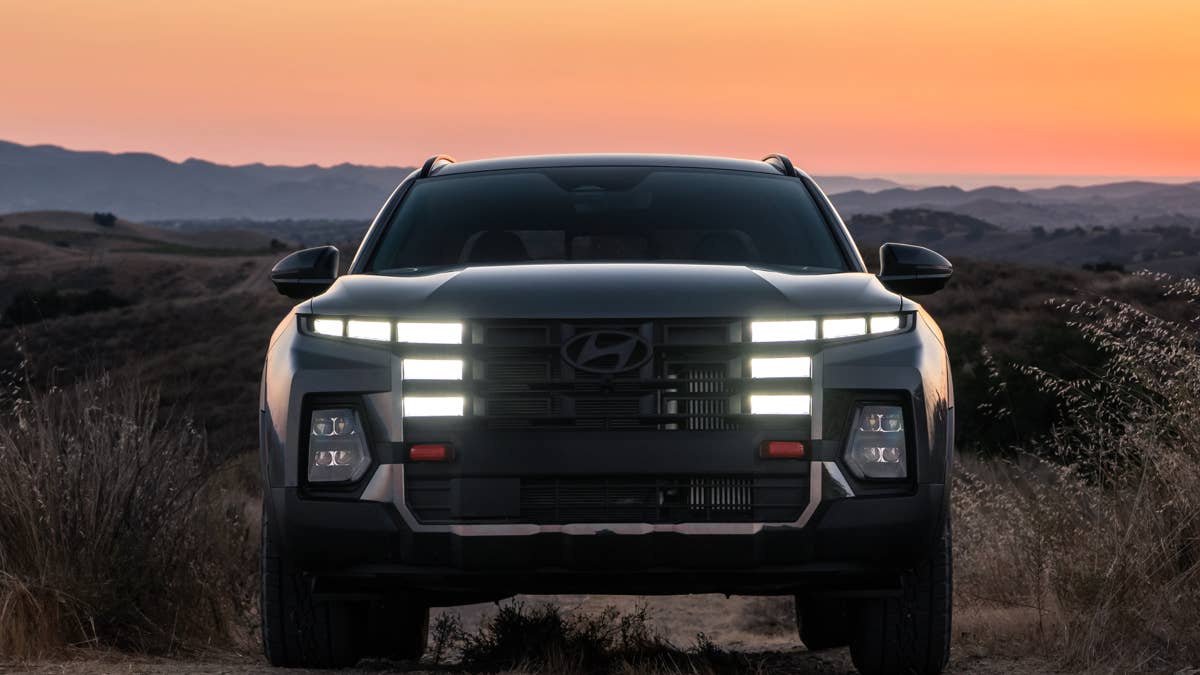
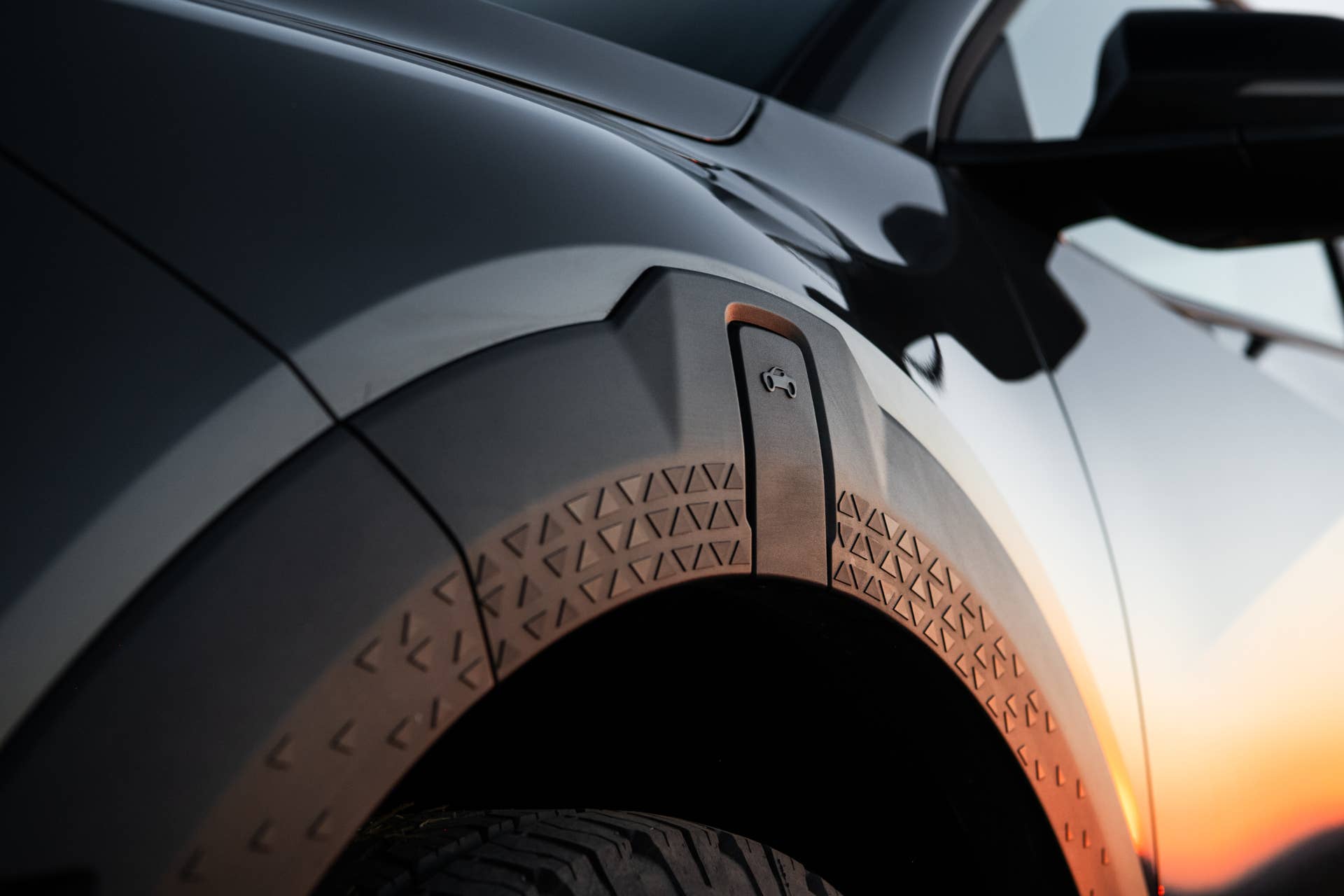
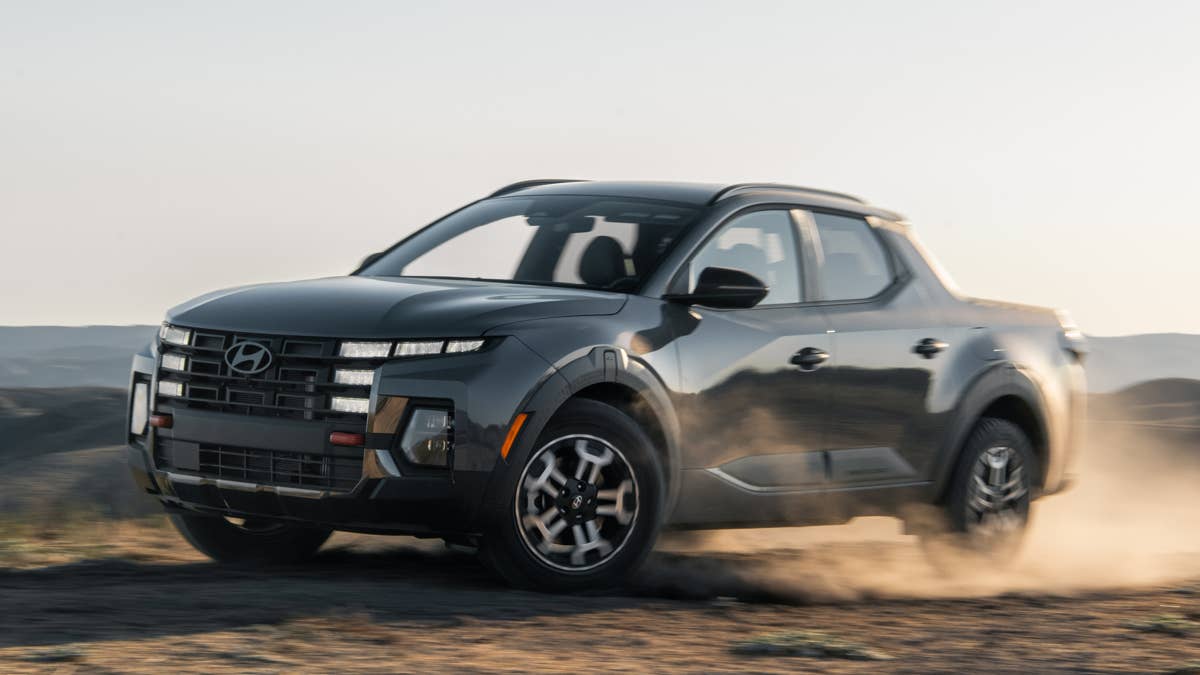
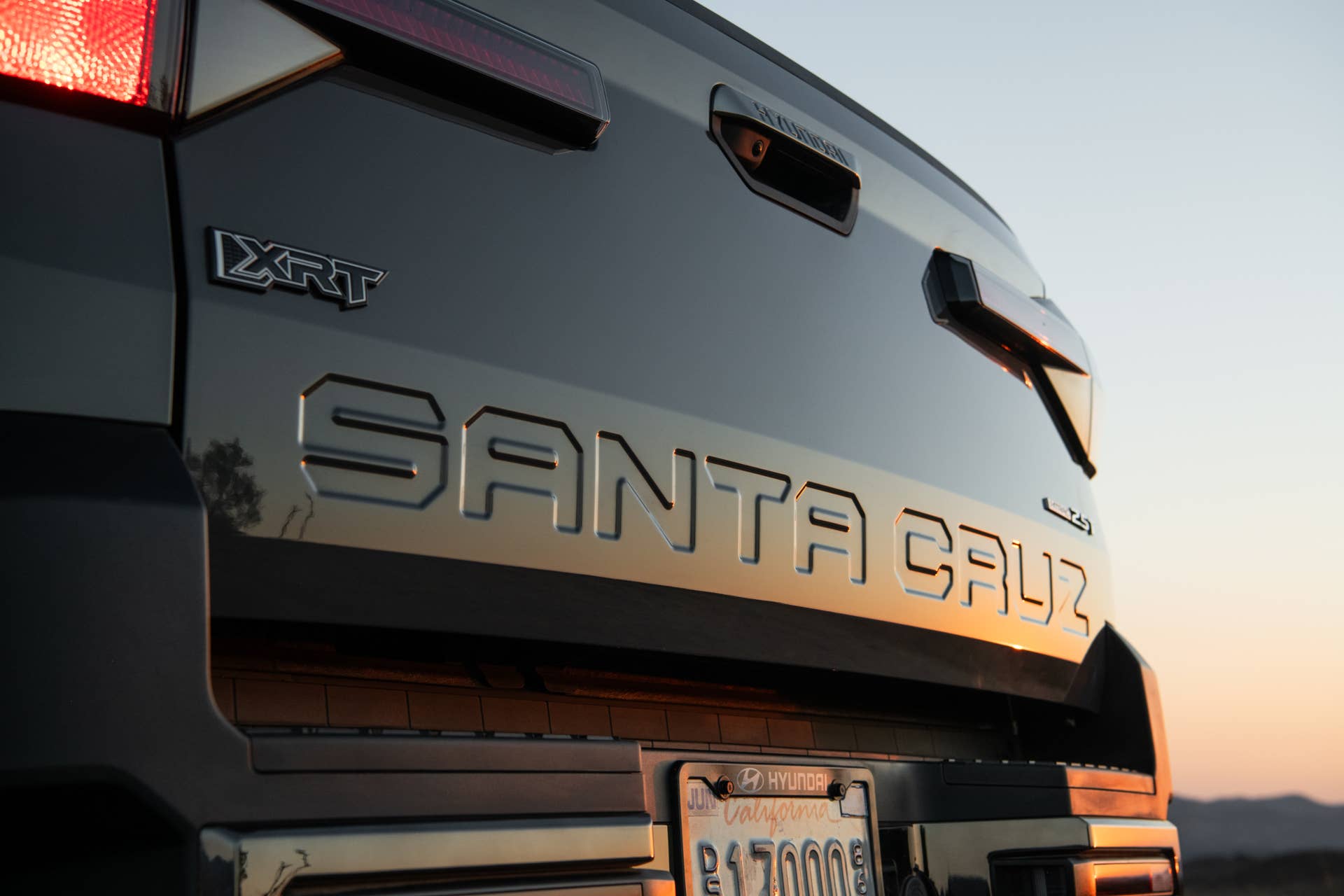
The XRT trim is meant to look like a part-time weekend warrior than its more urbane trim brethren. Its blackned grille, unique 8-inch wheels, all-terrain tires, and front recovery points give it a purposeful appearance that I’ll call “rugged lite”. The textured matte black fender trim with a triangle relief pattern is pretty cool. The little details on the XRT are what make it look more rough and ready than its counterparts, and the added black bits add the right amount of aggression.
Hyundai

Even with the bigger all-terrain tires, the XRT’s ground clearance remains at 8.6 inches, just like the SE and the SEL Activity trim levels. At least the XRT’s 19.9-degree approach angle improves on the standard Santa Cruz’s 16.9 degrees. Not that anyone will do anything resembling serious off-roading with the XRT, but it’s nice to know that it can handle bigger divots and some trail humps without worry. This is a compact crossover-based pickup with added rough-road capability, not a rock-crawling beast.

Thinking about selling your car? Get an instant cash offer online now. Click here to get started.

The Upgraded Engine Delivers
Hyundai

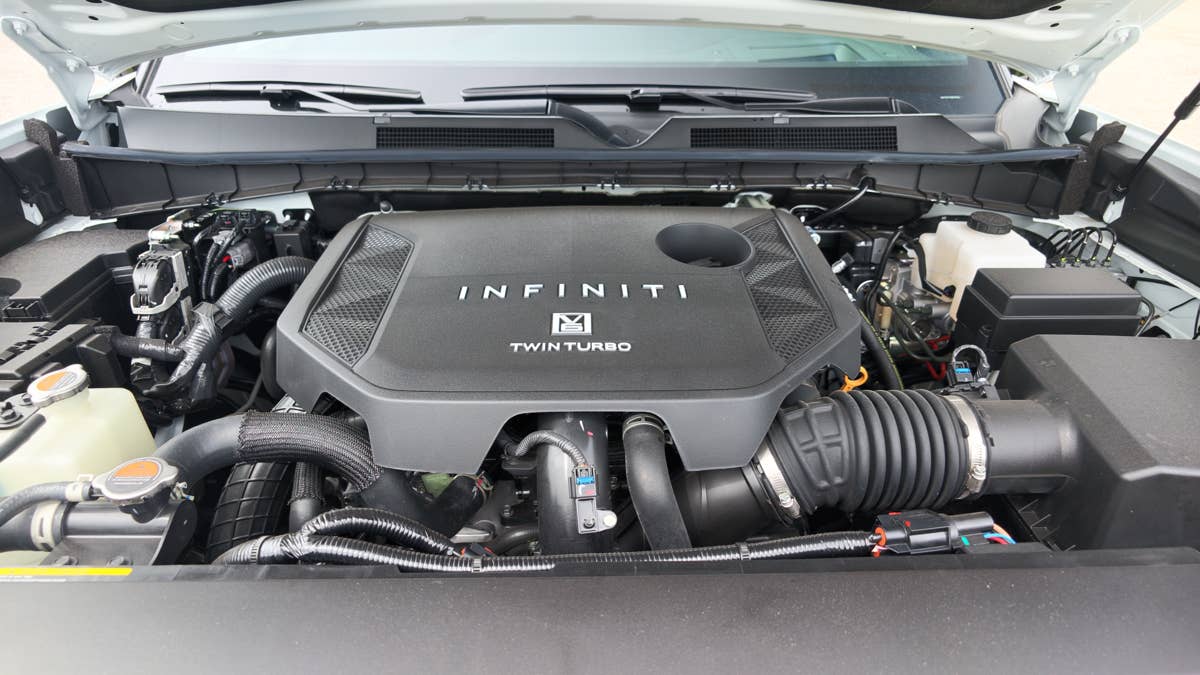
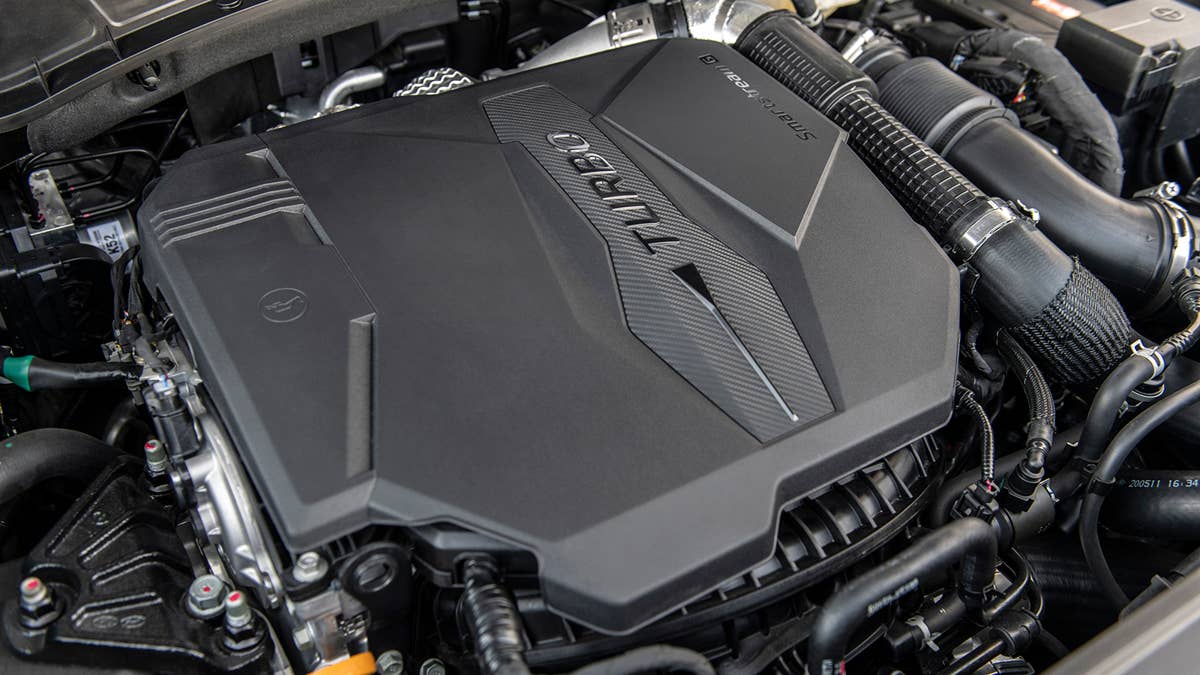
I’ve driven the Santa Cruz with both engines. The 2.5-liter naturally-aspirated four is not the one to go with. Good thing the XRT only comes with the more potent choice. The turbocharged 2.5-liter four-cylinder produces 281 horsepower and 311 lb-ft of torque, compared with 191 horsepower and 181 lb-ft from the naturally aspirated engine in the other two trim levels. It provides for quick launches and capable passing power. It actually makes the Santa Cruz responsive, smooth, and fun to drive. It’ll launch to 60 in six seconds flat.

The reason for the reponsiveness and extra grunt isn’t just the horsepower bump but the peak torque delivery from 1,700 to 4,000 rpm. The base engine hits its lower torque peak at 4,000 rpm. The upgraded engine runs on regular, not premium, gas. Another plus for the Santa Cruz XRT. I enjoyed helming it. The steering is light but accurate, and the XRT feels composed and balanced in the turns. The engine also bumps the 2.5-liter’s 3,500 towing capacity to 5,000 pounds with trailer brakes. That makes the XRT capable of pulling small campers, boats, or trailers.
Hyundai

The transmission is also a plus. The 2027 XRT uses an eight-speed automatic that shifts quickly and doesn’t gear hunt when pushed. Hyundai pairs it with standard HTRAC all-wheel drive and terrain-mode selection with snow, mud, and sand modes. Rather than relying on a mechanical center differential lock, the Santa Cruz XRT’s HTRAC AWD system uses an electronically controlled multi-plate clutch to automatically adjust torque distribution between the front and rear axles. It responds in real time to wheel speed, accelerator position, steering angle, and vehicle rotation measured by yaw sensors.

Fuel economy isn’t great. The Santa Cruz XRT with all-wheel drive is EPA rated at 18 mpg city, 25 highway, and 20 combined. During my drive, some of it spent in Sport mode, averaged 17.6 mpg.

The Interior Shines
Hyundai

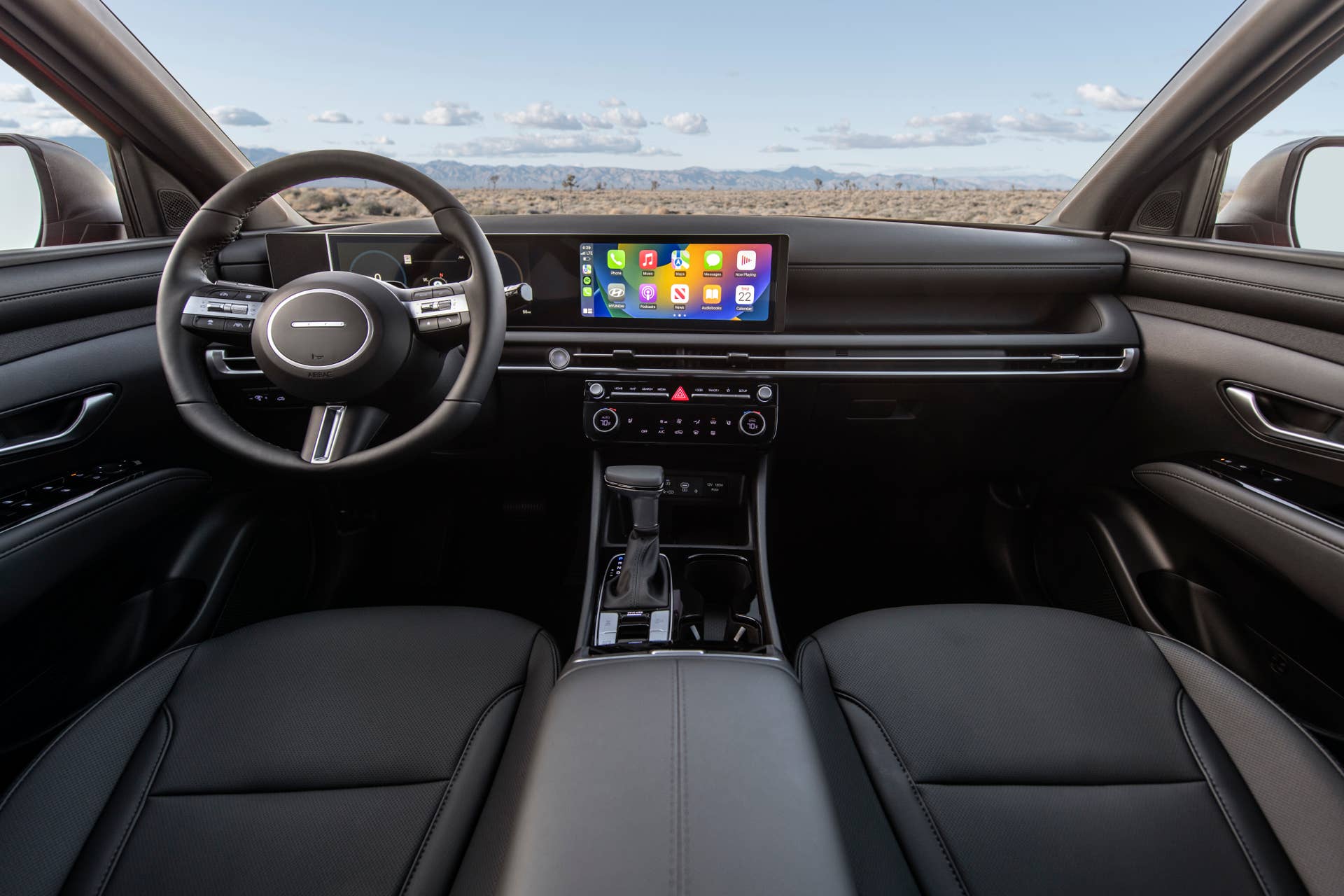
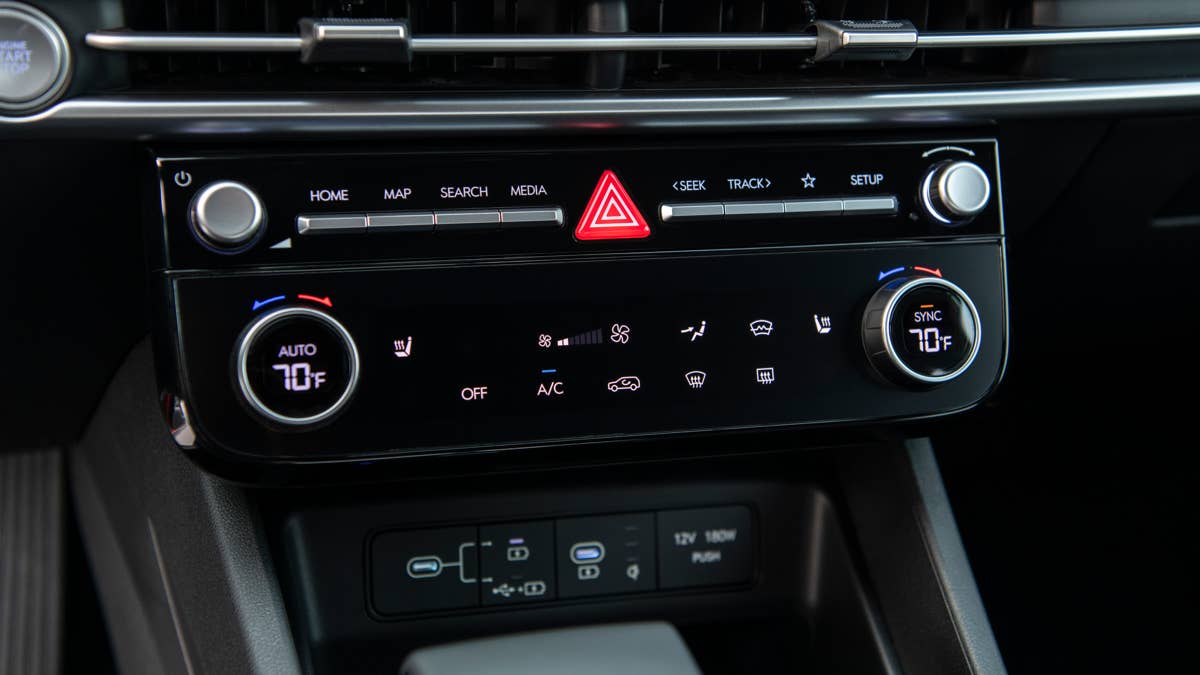
When Hyundai refreshed the Santa Cruz in 2025, it not only made it look more truck-like in the front, but it also revamped the cabin to make it more user-friendly. The biggest changes took the form of a large integrated frame for infotainment and instrumentation, along with improved physical controls. Its linear dash and expansive tech give it more sedan than truck vibes.

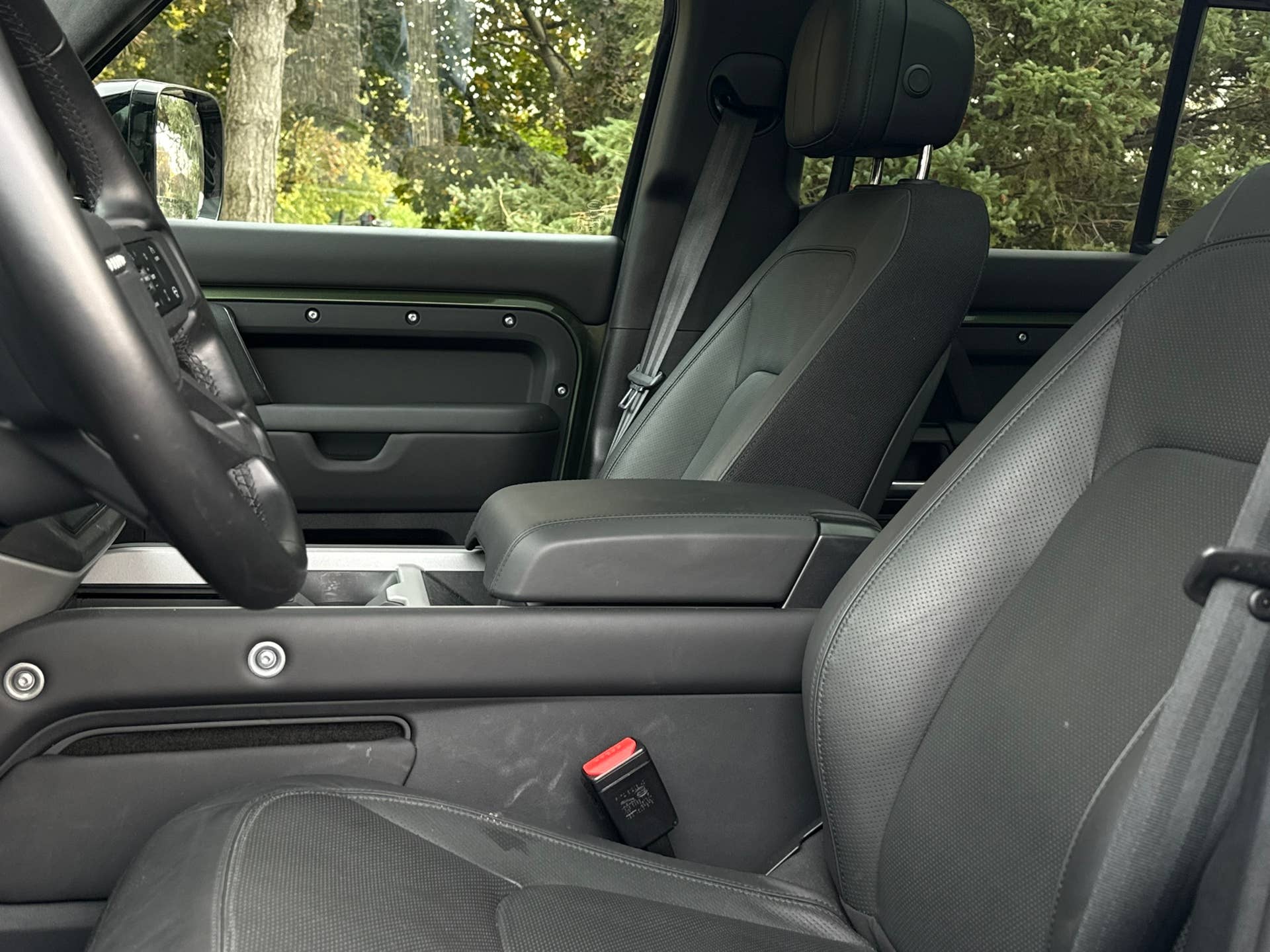
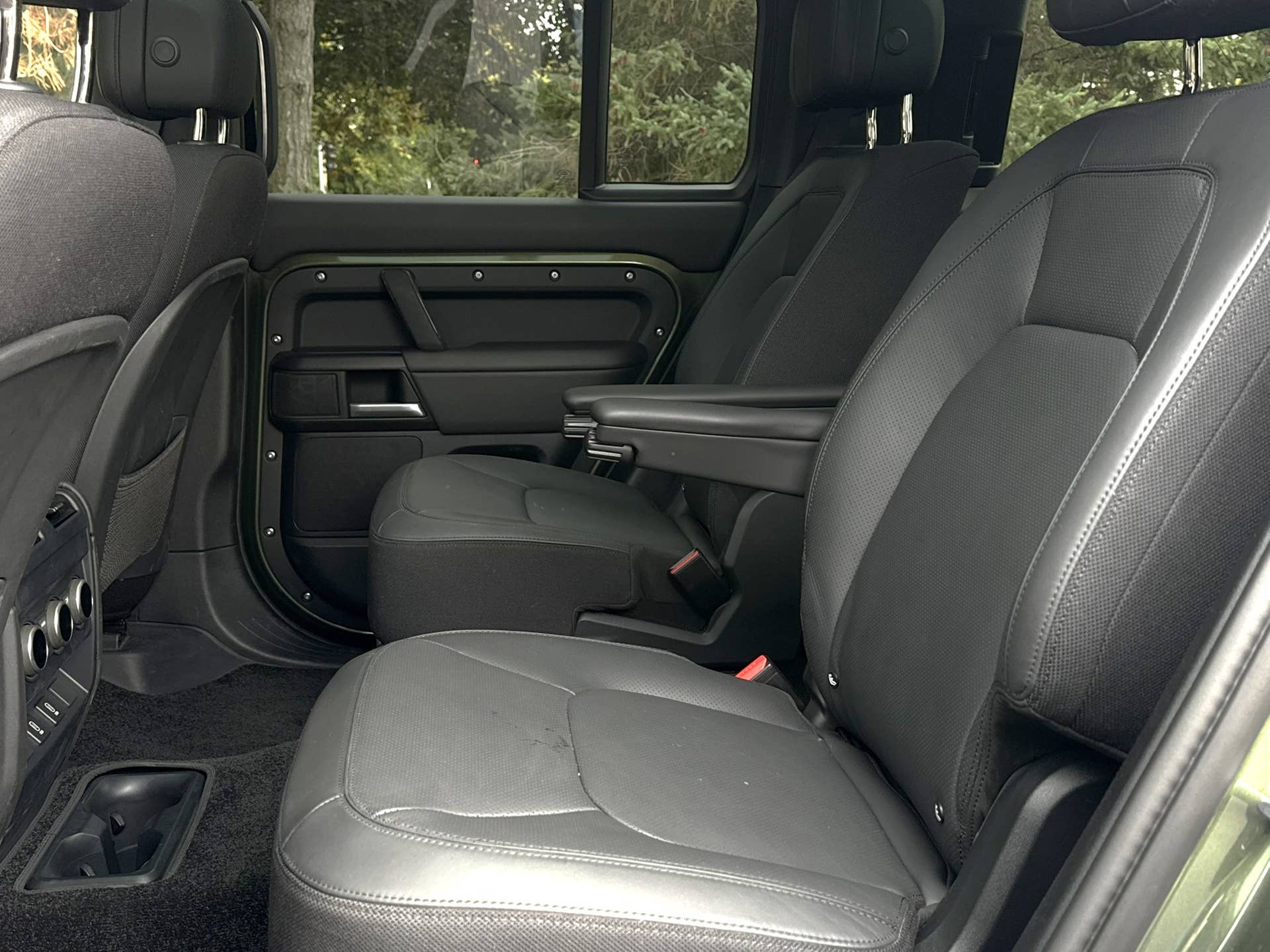
The seating position is excellent, giving great visibility over the hood. The seats are on the firmer side but still quite comfortable. Rear legroom is 36.5 inches. It’s not cavernous inside, but adults can sit in back comfortably as long as front occupants aren’t over six feet tall.
View the 4 images of this gallery on the original article

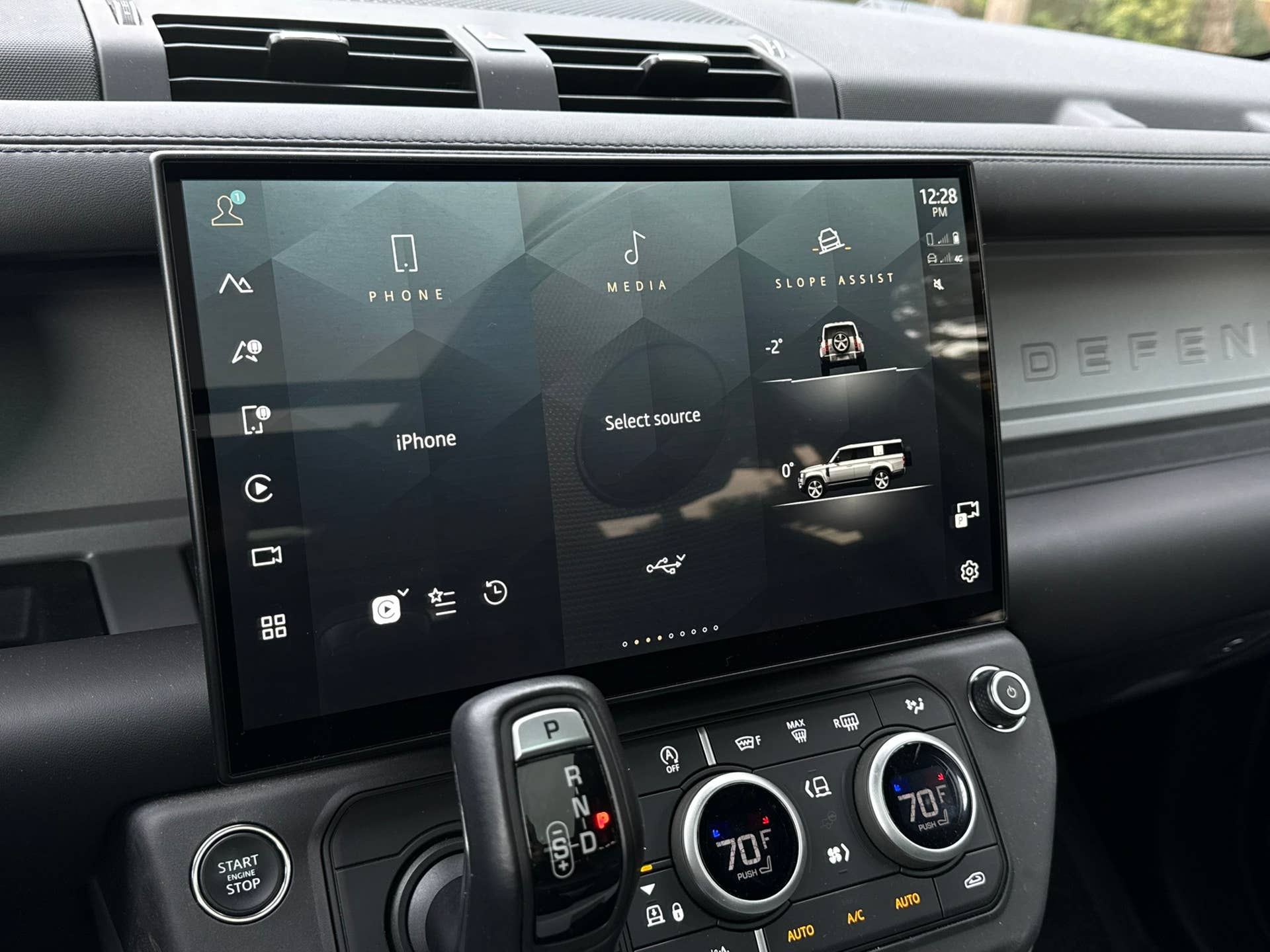
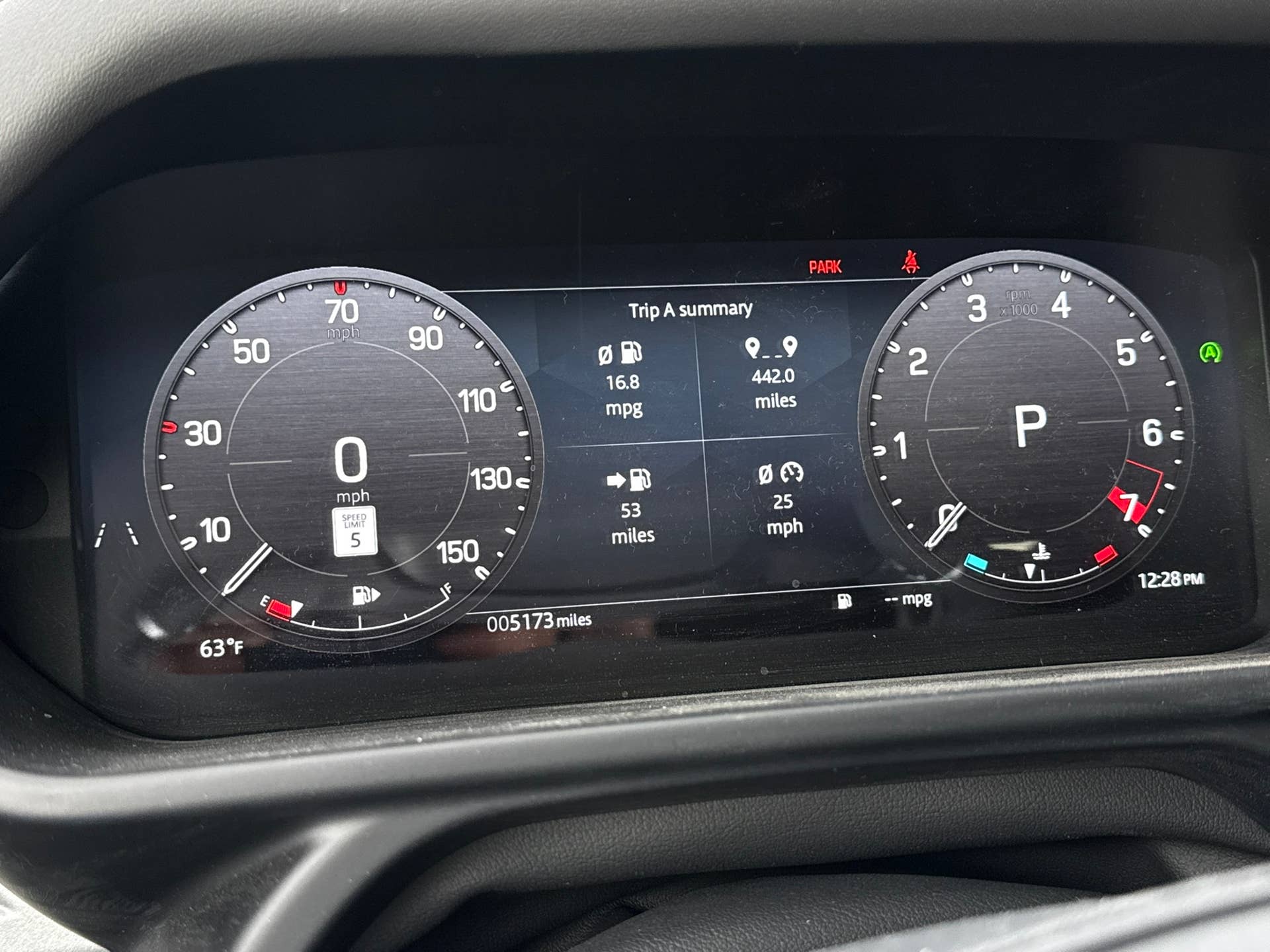
The dashboard pairs a 12.3-inch digital instrument cluster with a 12.3-inch navigation touchscreen. Wireless Apple CarPlay and Android Auto, Bose premium audio, wireless device charging, and front and rear USB-C ports round out a strong technology package that keep the Santa Cruz modern inside.

The XRT includes a surround-view camera system, a blind-spot camera display, adaptive cruise control with stop-and-go capability, and Highway Driving Assist. Its forward collision-avoidance system adds cyclist and junction-turning detection, supplementing the blind-spot warning and rear cross-traffic collision-avoidance assistance.
Hyundai

The Santa Cruz’s bed is short, but it’s still quite useful for everyday items and weekend gear. It measures 52.1 inches long at the floor and 48.4 inches at the upper edge, with 27 cubic feet of total volume. The rail and cleat system is a brilliant add-on for the XRT, providing tie down versatility to keep items secure. The XRT also gets an integrated tonneau cover and a lockable under-bed compartment. This trim level also includes sidewall storage compartments, LED bed lighting, and a 115-volt power outlet. Integrated rear bumper steps help with access.

Final Thoughts

I’m going to miss the Santa Cruz when it goes away next year. The XRT is super-appealing and should work for most folks who don’t haul or tow a lot on a regular basis. The AWD system is more than capable, and the bed works for everyday applications. The XRT is the Santa Cruz to get if you want the model at its most capable and comprehensively equipped. The turbo engine and quick steering make the XRT fun to helm. Gas mileage is medicore, and the price point is admittedly high, but the XRT is version that best delivers on the idea of a compact pickup for someone who does not want a conventional truck.
The 2027 Toyota bZ XLE: It’s a Bargain that Grandpa Loves

It’s rare that automakers hand me the keys to an entry-level model. Most prefer to supply their fully loaded examples, which makes sense. If you’re inviting somebody over to inspect the house, you probably straighten the furniture and hide the laundry. That’s why I was pleased to spend time with a 2027 Toyota bZ XLE rather than the more expensive Limited. Granted, there are only two main trim levels, so perhaps I’m making too much of this. Still, reviewing a reasonably priced vehicle that people might actually buy is one of my favorite parts of the job.

View the 1 images of this gallery on the original article

My test vehicle was the XLE FWD Plus, an important distinction because it combines the less expensive trim with the larger battery. It also attracted an unexpected admirer: an 82-year-old passenger who likes to call himself Grandpa. He isn’t my grandfather, but I wasn’t about to demand identification. Considering that he owns a 2023 Mercedes-Benz S-Class, I expected complaints about the Toyota’s comparatively modest accommodations.

I was completely wrong.

Chase Bierenkoven

Powertrain and performance

First, let’s untangle Toyota’s configurations. The regular XLE FWD uses a 57.7-kWh battery and carries a 236-mile range rating. The XLE FWD Plus moves up to a 74.7-kWh battery and a more powerful front-mounted motor producing 221 horsepower and approximately 198 pound-feet of torque. Its EPA-estimated range is 314 miles, making it the distance champion of the bZ lineup. “Plus” buys you more than another badge to explain at the charging station.

If you want additional muscle, the dual-motor XLE AWD produces 338 horsepower, with an EPA-estimated 288-mile range. That’s a substantial power increase, but the front-drive Plus makes a convincing case for buyers who prioritize range and purchase price over acceleration.

Built on Toyota’s dedicated e-TNGA electric platform, the bZ places its battery beneath the cabin floor. A 112.2-inch wheelbase helps create useful passenger space and contributes to its settled highway character. At roughly 4,200 pounds, depending on configuration, my front-drive example wasn’t lightweight, but it didn’t feel excessively burdened by its batteries either.

Related: Toyota’s New Hybrid System Targets Over 15% Better Fuel Economy

Acceleration is entirely adequate for commuting, merging, and passing. This isn’t a sports car, but it has no difficulty getting out of its own way. Handling was better than I expected, although enthusiastically applying power through a tight corner could make the front tires chirp. There’s enough response to keep it agreeable without pretending that every grocery run is a qualifying session.

The ride is the bigger selling point. It’s composed, comfortable, and well suited to the kind of driving most owners will actually do. Steering-wheel paddles adjust regenerative braking, giving the driver some control over how strongly the vehicle slows when lifting off the accelerator.

Toyota

View the 3 images of this gallery on the original article

Range and charging

The 314-mile rating deserves attention because it makes the XLE FWD Plus considerably easier to recommend than the original bZ4X. The Limited FWD, using the same battery capacity and 221-horsepower output, is rated at 299 miles. Wheel-and-tire selection matters here: the XLE uses 18-inch wheels, while the Limited wears 20s. Equipment and weight also influence efficiency, but upholstery alone isn’t stealing those 15 miles.

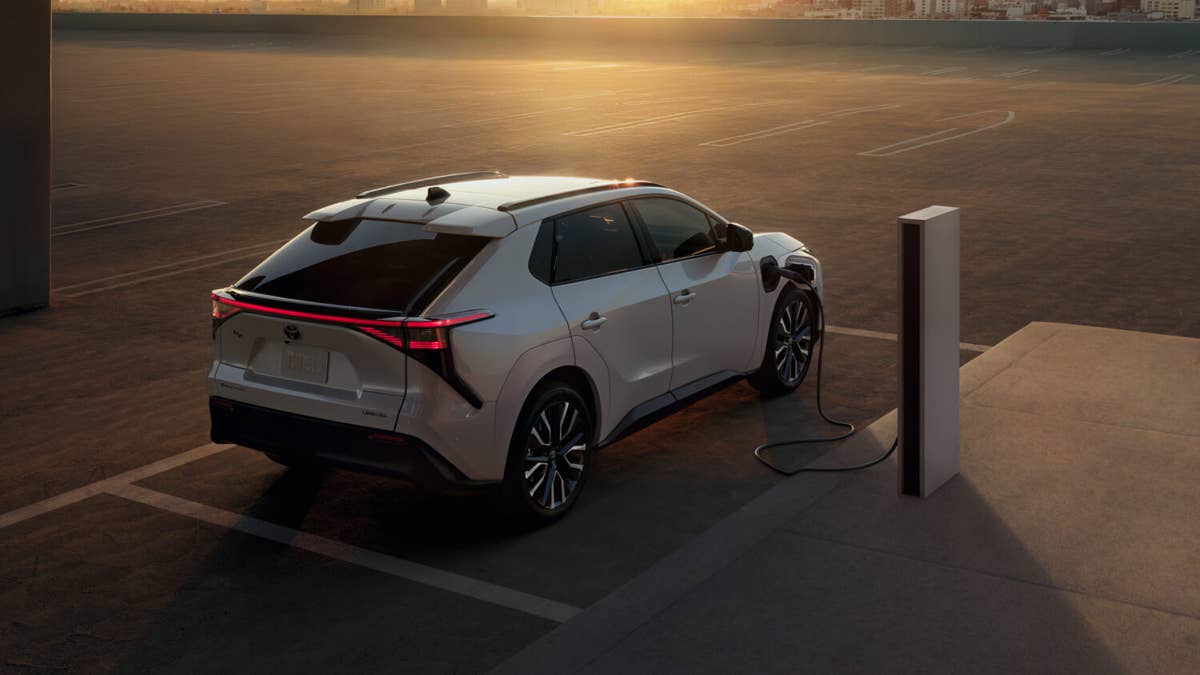
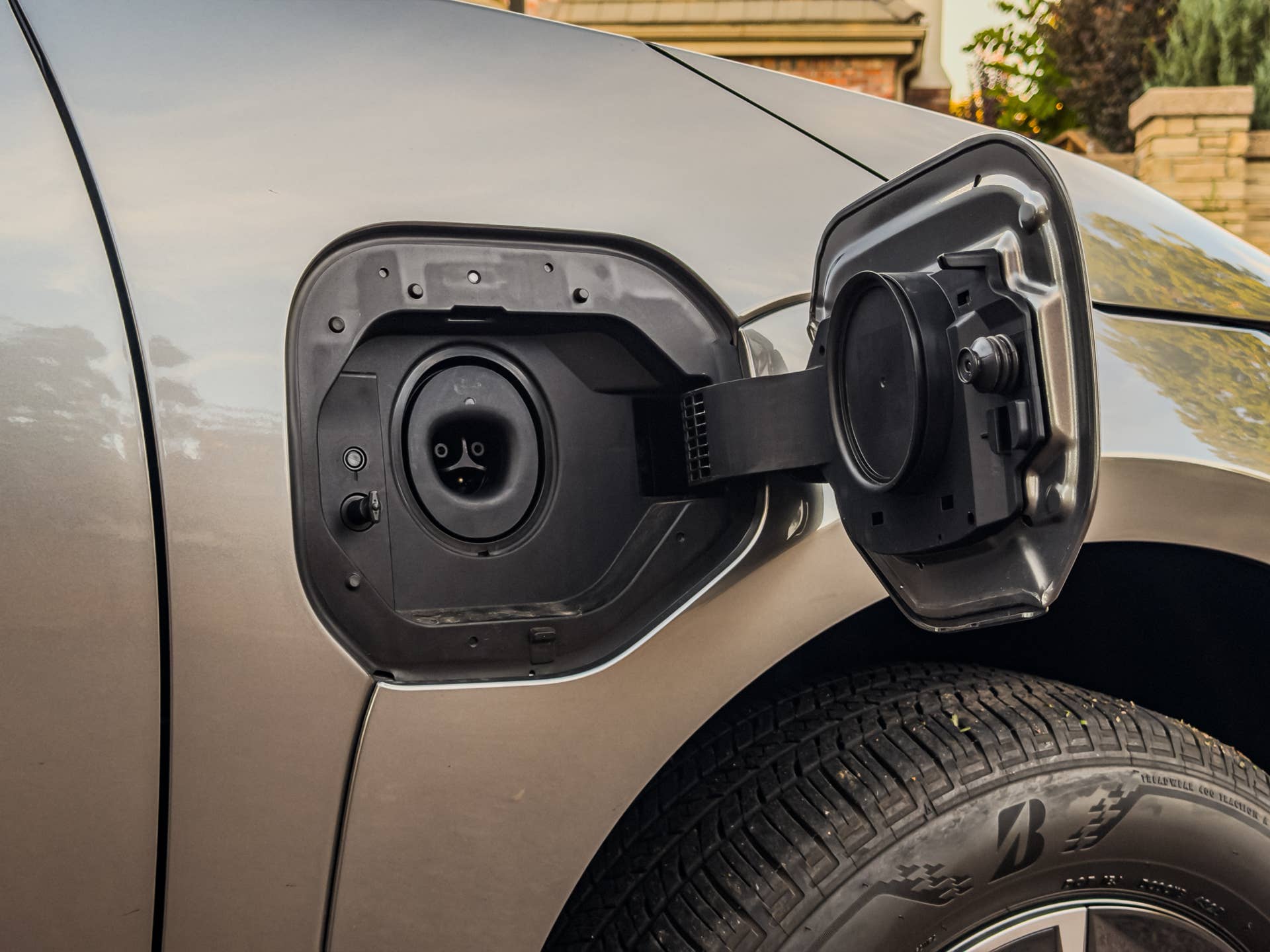
Toyota fits a native NACS charging port, allowing access to compatible Tesla Superchargers. That expands charging options, although it doesn’t mean every Tesla station is available to this vehicle. Battery preconditioning helps bring the pack toward an appropriate temperature before fast charging, an important improvement when conditions are less than ideal.

Related: Is the 2027 Maserati Grancabrio too Italian? Yes, and it’s Magnificient

Toyota estimates a 10–80% DC fast charge in approximately 30 minutes under ideal conditions. The 11-kW onboard AC charger supports Level 2 charging at home or work, subject to the power available from the charging equipment. Toyota also supplies a dual-voltage charging cable.

Those are useful specifications, although the bZ isn’t setting the charging-speed benchmark. For someone who plugs in at home and starts most mornings with a replenished battery, that matters considerably less than it does to a frequent road-tripper.

View the 3 images of this gallery on the original article

Exterior and interior design

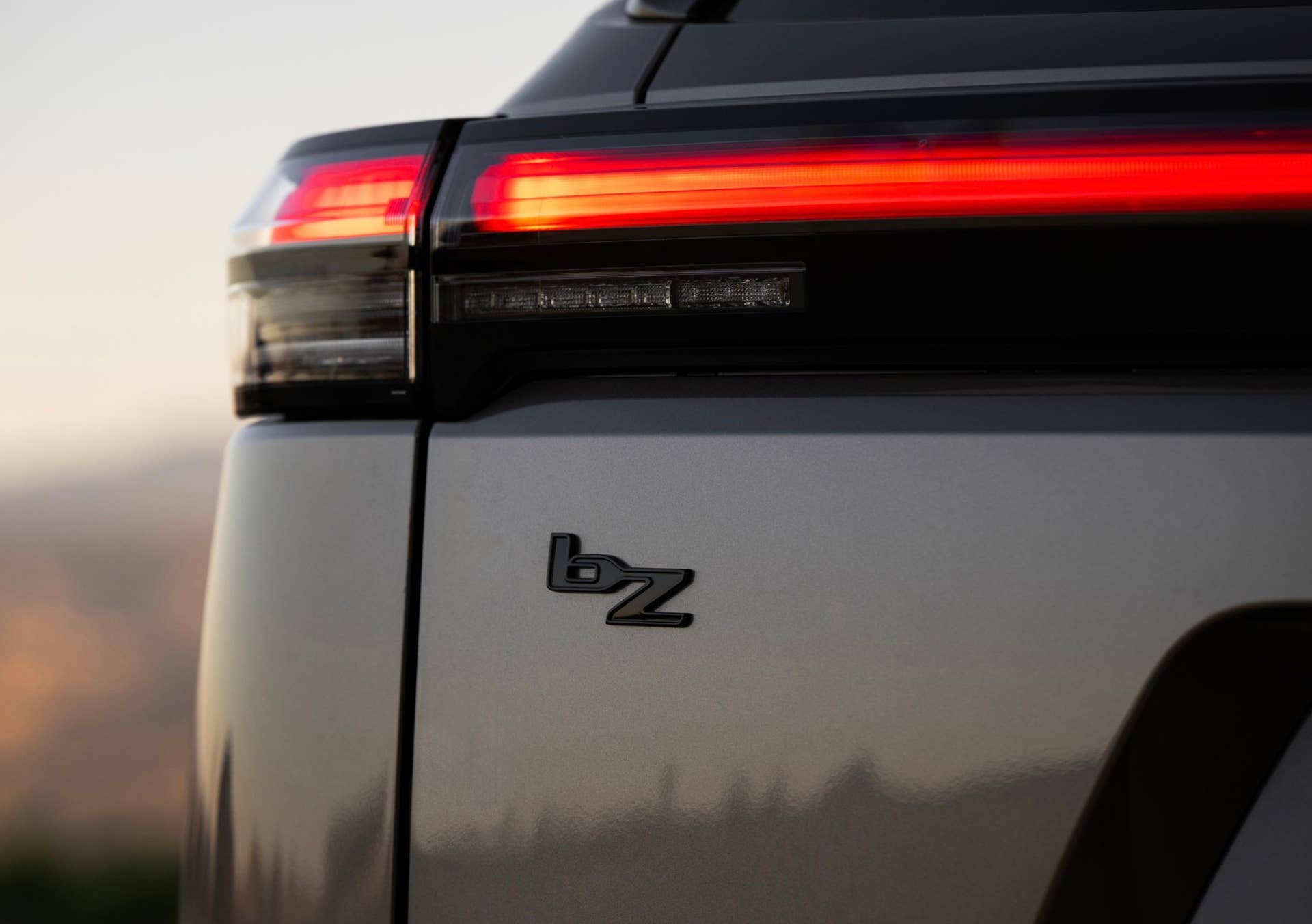
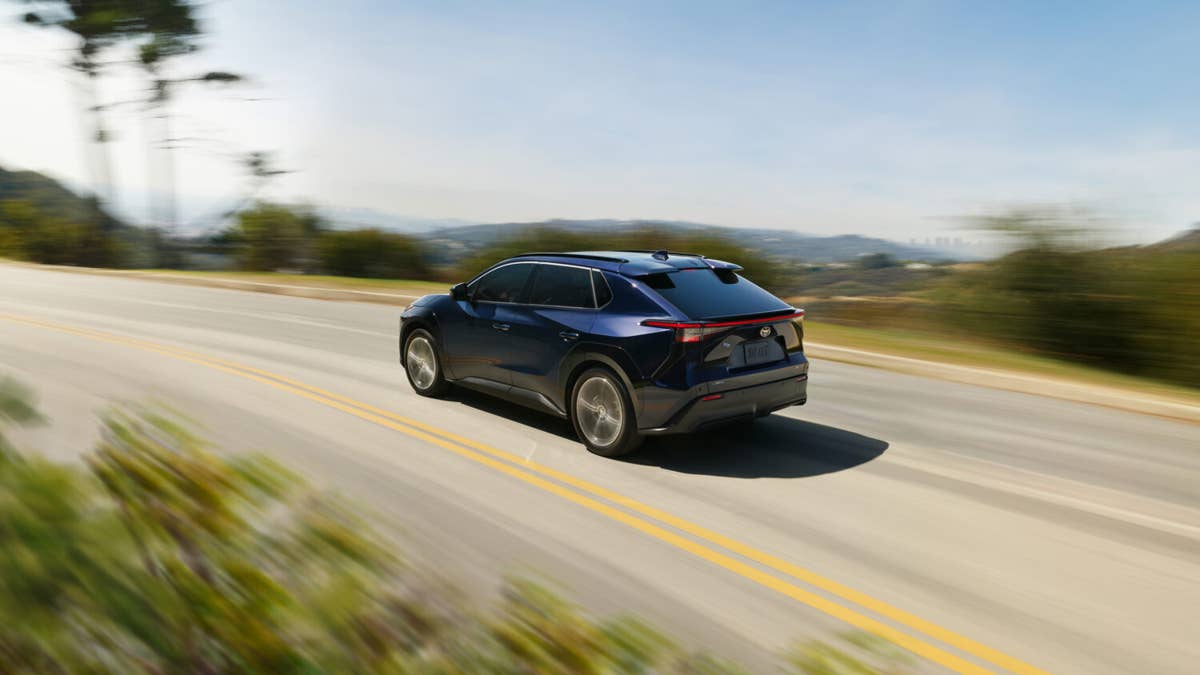
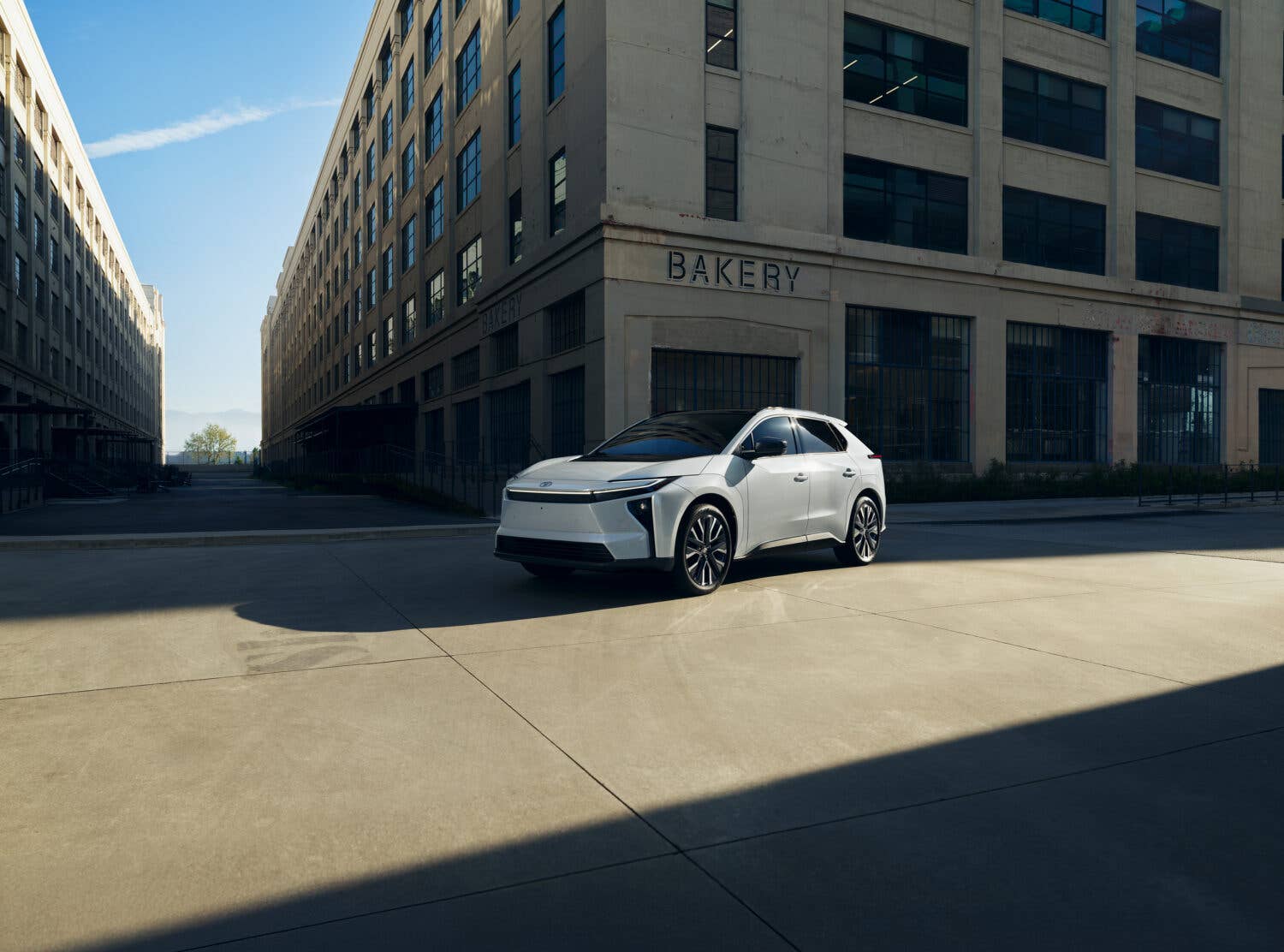
I didn’t hate the original bZ4X’s appearance. The contrasting cladding was a little comical, but at least it had character. The current bZ looks cleaner, with Toyota’s familiar hammerhead front-end treatment and a slimmer lighting signature. The substantial update arrived for 2026, and the 2027 model largely carries it forward.

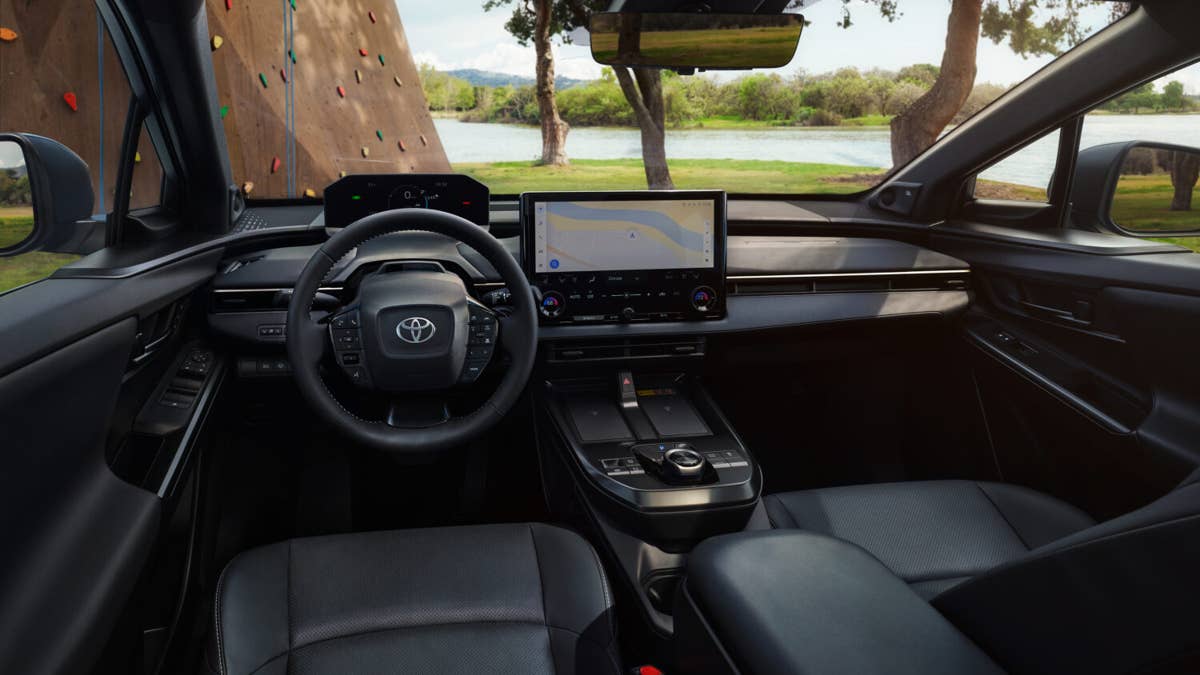
Inside, a standard 14-inch touchscreen supports wireless Apple CarPlay and Android Auto. Ahead of the driver is a separate 7-inch information display mounted high and far forward, near the windshield. It shows speed, charge status, power use, and other driving information. The arrangement takes some adjustment, particularly when finding the right relationship between your seat, steering wheel, and line of sight.

I still prefer more dedicated physical controls, but the cabin doesn’t feel stripped simply because this is an XLE. Heated front seats, a heated steering wheel, dual-zone climate control, two wireless phone chargers, and multiple USB-C ports provide plenty of everyday convenience. The standard audio system has six speakers; the nine-speaker JBL upgrade belongs to the Limited’s options list.

View the 3 images of this gallery on the original article

The XLE’s fabric-and-SofTex seating received surprisingly enthusiastic reviews from my passengers. I found the front seats comfortable, and those seat heaters were appreciated. Rear accommodations were also agreeable in use, although the official 35.3 inches of rear legroom puts “spacious” into perspective. Front legroom measures 42.1 inches.

Cargo capacity is 27.7 cubic feet behind the rear seats, expanding to 56.9 cubic feet with them folded. That’s useful room for luggage and shopping without requiring anybody to climb into an oversized SUV.

Grandpa’s perspective

Grandpa liked that the Toyota felt approachable. He praised its ride, comfort, and apparent value, and the badge carried weight with him. Toyota’s reputation matters to buyers who want reassurance more than a lengthy explanation of software architecture.

He also wondered why he hadn’t heard more about it. That’s a fair question. The bZ’s improvements make it a much stronger proposition, but some shoppers may still associate it with the compromises of the earlier model. Grandpa simply judged the vehicle he was riding in, and liked it enough to consider one as a commuter.

Who am I to argue? The man has an S-Class and still found something to appreciate in fabric seats.

Final thoughts

The 2027 bZ starts at $34,980 for the smaller-battery XLE FWD, before destination. The XLE FWD Plus adds $3,000, bringing its base MSRP to $37,980. That distinction matters: the headline starting price and the 314-mile range belong to different configurations.

For my money, the Plus is the compelling one. It pairs useful range with comfortable accommodations and enough standard equipment to avoid feeling like a punishment for exercising financial restraint. It doesn’t thrill me, but it makes daily driving easy.

Sometimes that’s exactly the assignment. Getting Grandpa’s approval was a bonus.

Related: I Drove The 2026 Land Rover Defender 130 X, and It’s My New Dream SUV For Family and Adventure

I Drove The 2026 Ford Maverick Tremor: Here’s My Honest Review Of Ford’s Small Truck With Big Off-Road Ambitions

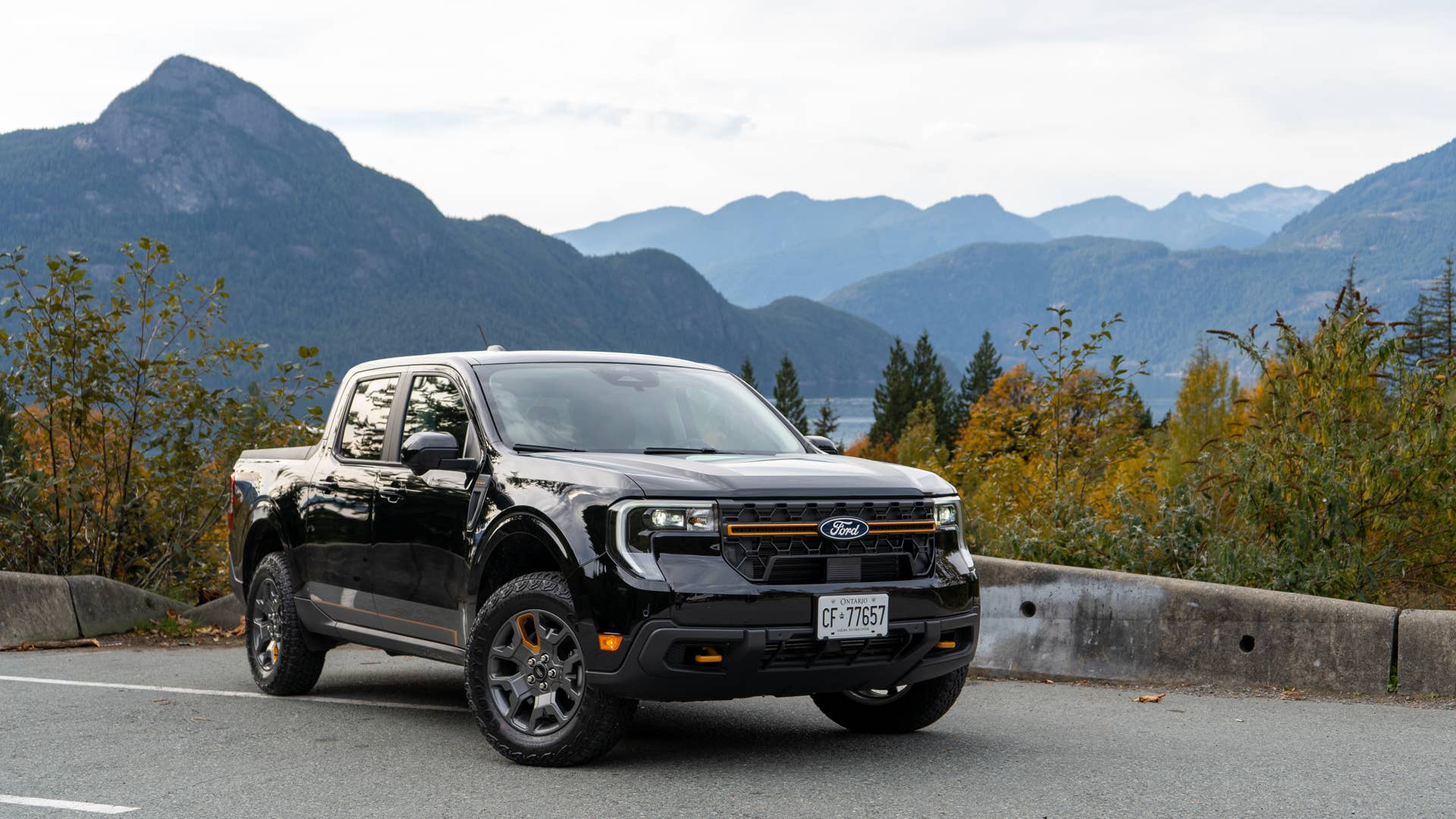
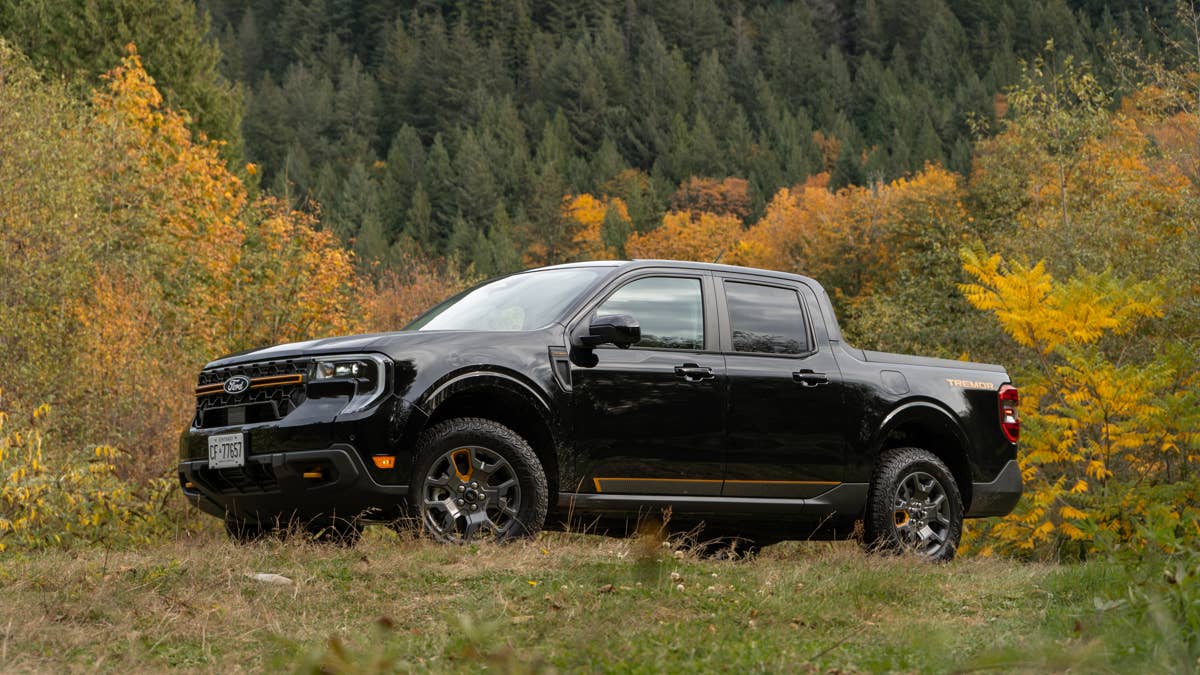
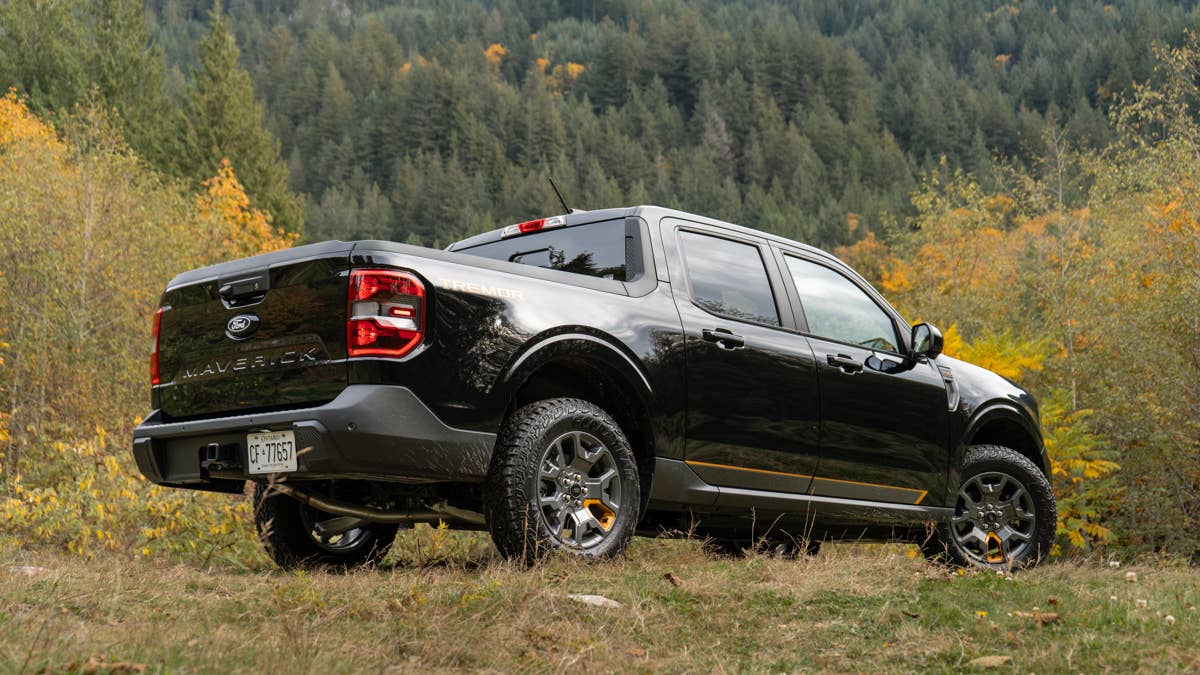
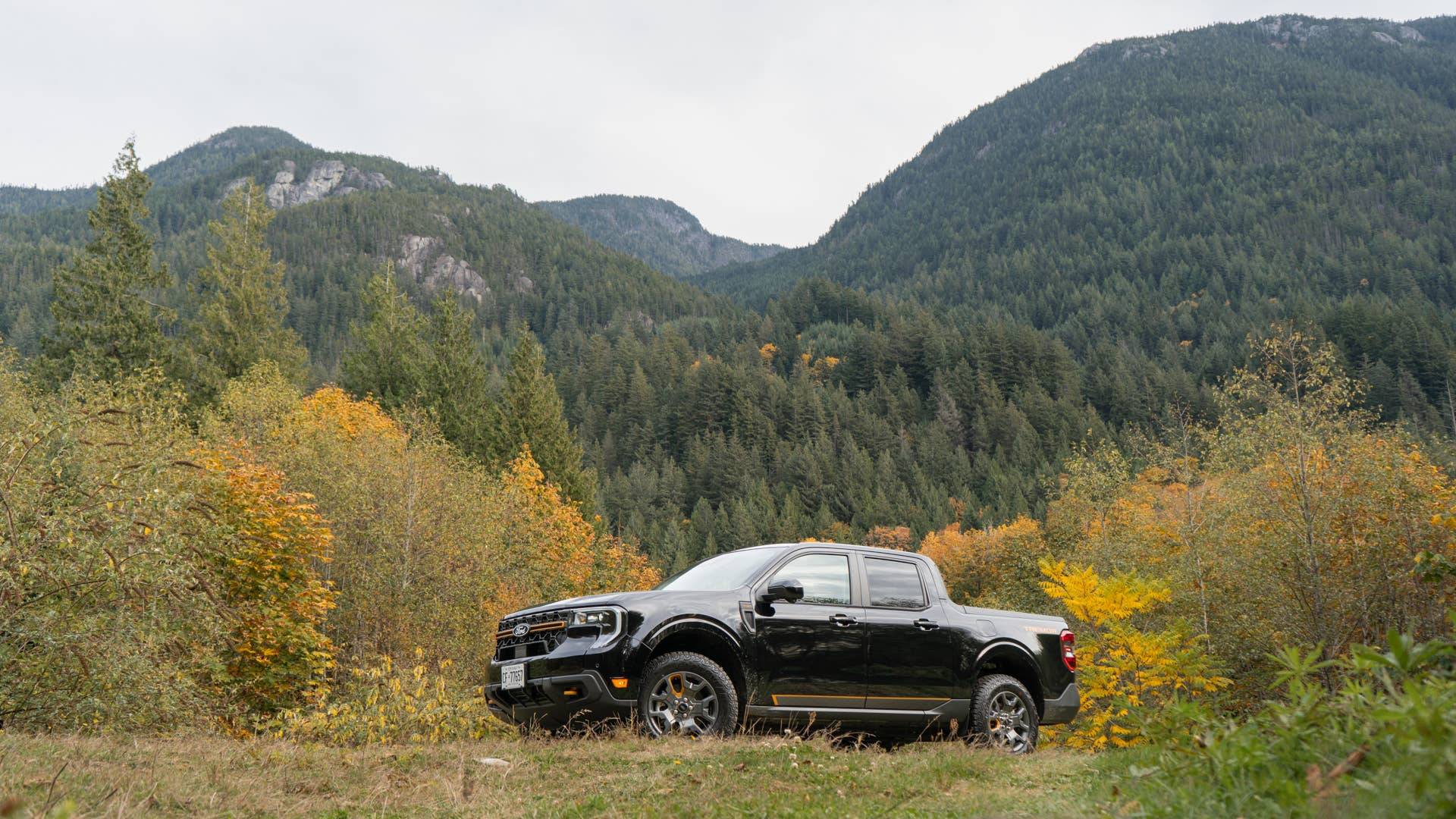
Having driven both the extremely well-rounded Maverick Hybrid, now finally available with all-wheel drive, and the peppy little Maverick Lobo sport truck, and frankly falling head over heels for both, it was time to get my boots a bit dirtier with the adventure-ready, mud-seeking Ford Maverick Tremor. Somewhat akin to Subaru’s “Wilderness” branding in spirit, the Tremor package adds all-terrain tires, extra ground clearance, and a twin-clutch rear drive unit, giving the Maverick more to work with on rough roads and trails, as well as a graphics package that adds a bit more spark to the truck’s otherwise quite sensible looks. I spent a week driving Ford’s latest little off-roader around British Columbia’s Pacific coast to see whether the Tremor’s additions make or break the compact ute, and whether its relatively hefty price tag could be better spent elsewhere.

Choosing the Tremor means choosing the turbocharged 2.0-liter engine, since Ford doesn’t offer a hybrid version here. In return, you get specialized suspension and traction hardware for rougher terrain, but you also trade off towing capability, road noise, handling, and fuel economy. I wanted to see whether those additions are worth it compared with a less expensive, more economical Maverick, and whether the Tremor’s steep price tag justifies itself over a larger, more capable Ranger. Ultimately, by the end of my week with this rugged little truck, my overall opinion of the Maverick remained favorable, but I’m not totally convinced the Tremor is the best way to have one.

2026 Ford Maverick Tremor

Cole Attisha

2026 Ford Maverick Tremor Specifications

Specification

2026 Ford Maverick Tremor

Engine

2.0-liter turbocharged EcoBoost four-cylinder

Horsepower

250 hp at 5,500 rpm

Torque

280 lb-ft at 3,000 rpm

Transmission

Eight-speed automatic

Drivetrain

Advanced 4WD with a twin-clutch rear drive unit

EPA fuel economy

21 city / 27 highway / 23 combined mpg

Observed fuel economy

~19 mpg mixed city/highway

Ground clearance

9.1 inches

Bed length / volume

54.4 inches at the floor / 33.3 cubic feet

Maximum towing capacity

2,000 pounds

Maximum payload

Up to 1,140 pounds

Base curb weight

3,890 pounds

Starting MSRP, U.S.

$40,645 before destination and options

As-tested price

$52,444 CAD including destination and options

U.S. specifications. Power and torque are rated on premium fuel. Payload varies with configuration.

Thinking about selling your car? Get an instant cash offer online now. Click here to get started.

2026 Ford Maverick Tremor

Cole Attisha

Powertrain & Driving Dynamics: 7.5/10 — How Much Truck Do You Really Need?

Like the adrenaline-injected Maverick Lobo, the Tremor’s standard 2.0-liter EcoBoost four-cylinder delivers plenty of exciting turbocharged whooshes and responsive low-end torque; both variants also share that trick twin-clutch rear-drive unit and torque-vectoring capabilities. Whereas the Lobo gets a quick-shifting seven-speed gearbox, the Tremor keeps the eight-speed automatic transmission found throughout the rest of the non-electrified Maverick lineup, offering smoother, more robust shifts. In the higher end of the rev range, that little four-cylinder can produce a coarser note, but since it favors low-end power delivery and heavy boost, you’ll rarely find yourself using the latter half of the available RPMs anyway.

Unlike the Lobo, which handles surprisingly well for something with a pickup bed, the Tremor sacrifices much of its lateral control for greater off-road capability, thanks to its chunky Goodyear all-terrain rubber, raised ride height, and uniquely calibrated suspension. Handling on curvy roads and highways is noticeably worse than on other Maverick trims, and those hefty tires also produce much more road noise. These trade-offs are to be expected in a vehicle that prioritizes off-road use, but keep them in mind if you prefer the Tremor’s rugged looks more than you’ll actually make use of its enhanced all-terrain capability. It’s also thirstier than the typical Maverick, and I averaged just 19 mpg across city, highway, and off-road use.

2026 Ford Maverick Tremor

Cole Attisha

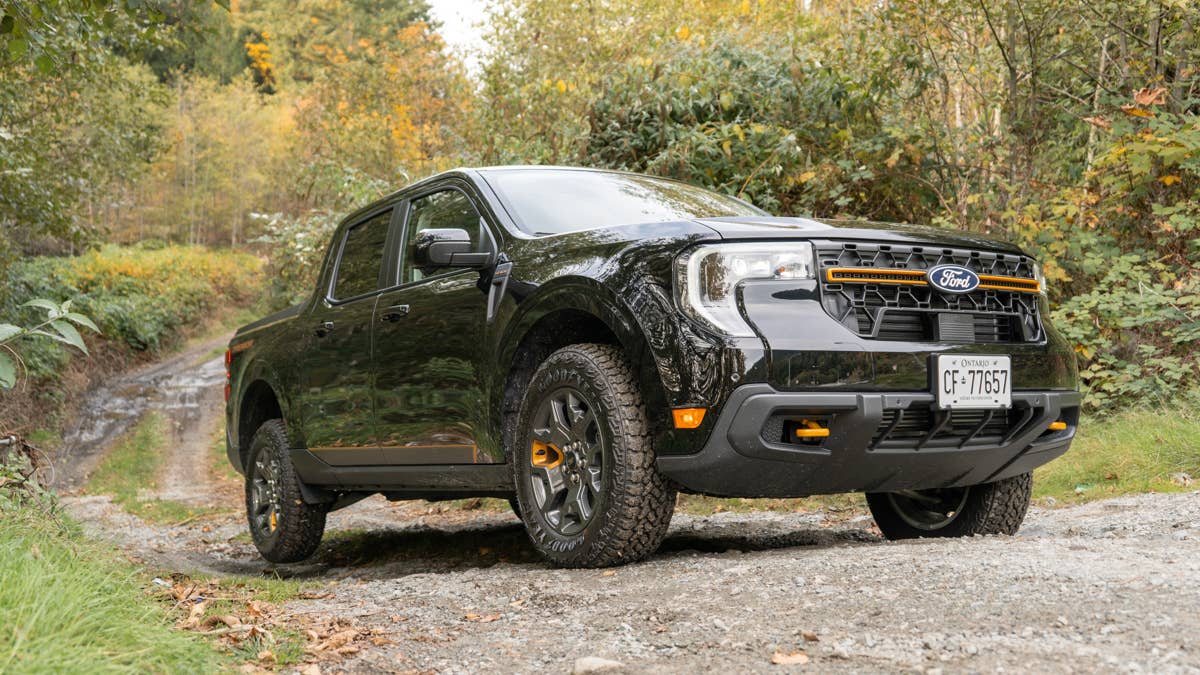
During my brief encounter with a muddy forest access road, the Tremor showed why someone might gladly sacrifice road handling for added trail readiness. Dedicated off-road modes help manage throttle calibration and ease steering sensitivity, while its chunky tires and clever all-wheel-drive system let you trudge through mud, sand, snow, or whatever else nature throws at you, without hesitation. There’s no denying that the Tremor package adds real capability to Ford’s bite-sized pickup truck, but this all still raised one big question in my mind: for even less money, one could just as easily purchase a larger, more capable, body-on-frame Ford Ranger, and if off-road use is the overriding priority, why would anyone opt for the Maverick over one of those? More on that later.

Shopping for a new car? Click here to get a great deal on your next vehicle. Powered by Carvana: no-haggle pricing, 100% online.

2026 Ford Maverick Tremor

Cole Attisha

Technology: 8.0/10 — A New Data Plan, But Bring Your Own Charging Cable

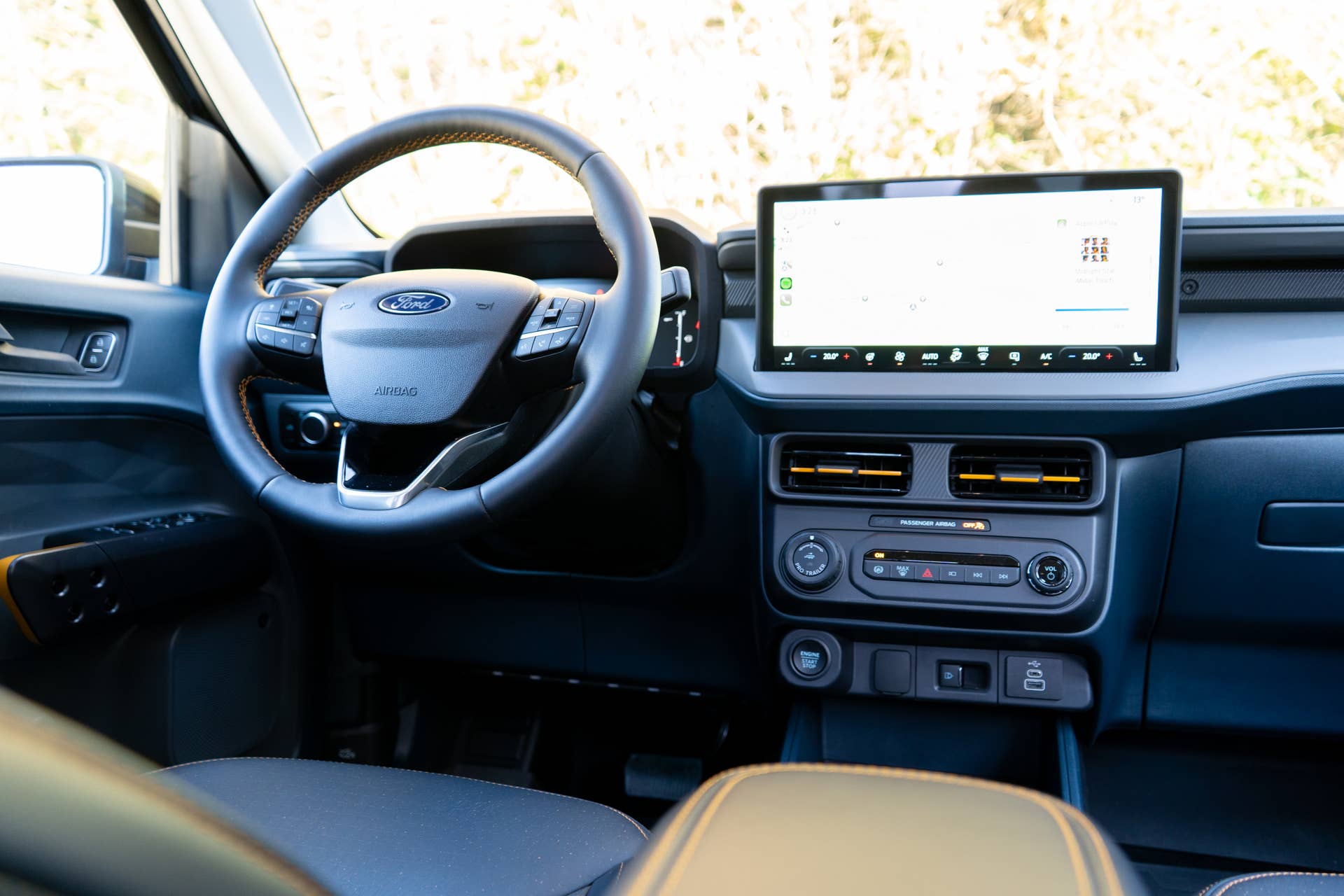
Ford’s biggest tech addition for 2026 is a data plan. The Ford Connectivity Package includes a year of Wi-Fi hotspot data and connected navigation, with a seven-year option available. The 13.2-inch SYNC 4 touchscreen, eight-inch instrument display, and wireless Apple CarPlay and Android Auto arrived with the 2025 refresh. I found the system generally straightforward, and wireless CarPlay worked effectively throughout the week. The B&O sound system was decent, too, making for a reasonably agreeable technology package overall. The drive modes also made palpable differences to the truck’s behavior, giving me useful ways to adjust its responses as conditions changed. Oddly, though, Ford has taken something away: wireless phone charging disappears for 2026. You can connect your phone to the system wirelessly, but you still need a cable to charge it. The Tremor keeps its 360-degree camera and Trail Control with Trail 1-Pedal Drive, though neither is new this year.

2026 Ford Maverick Tremor

Cole Attisha

Exterior Design: 9.0/10 — The Maverick Has Been Raiding Its Big Brother’s Closet

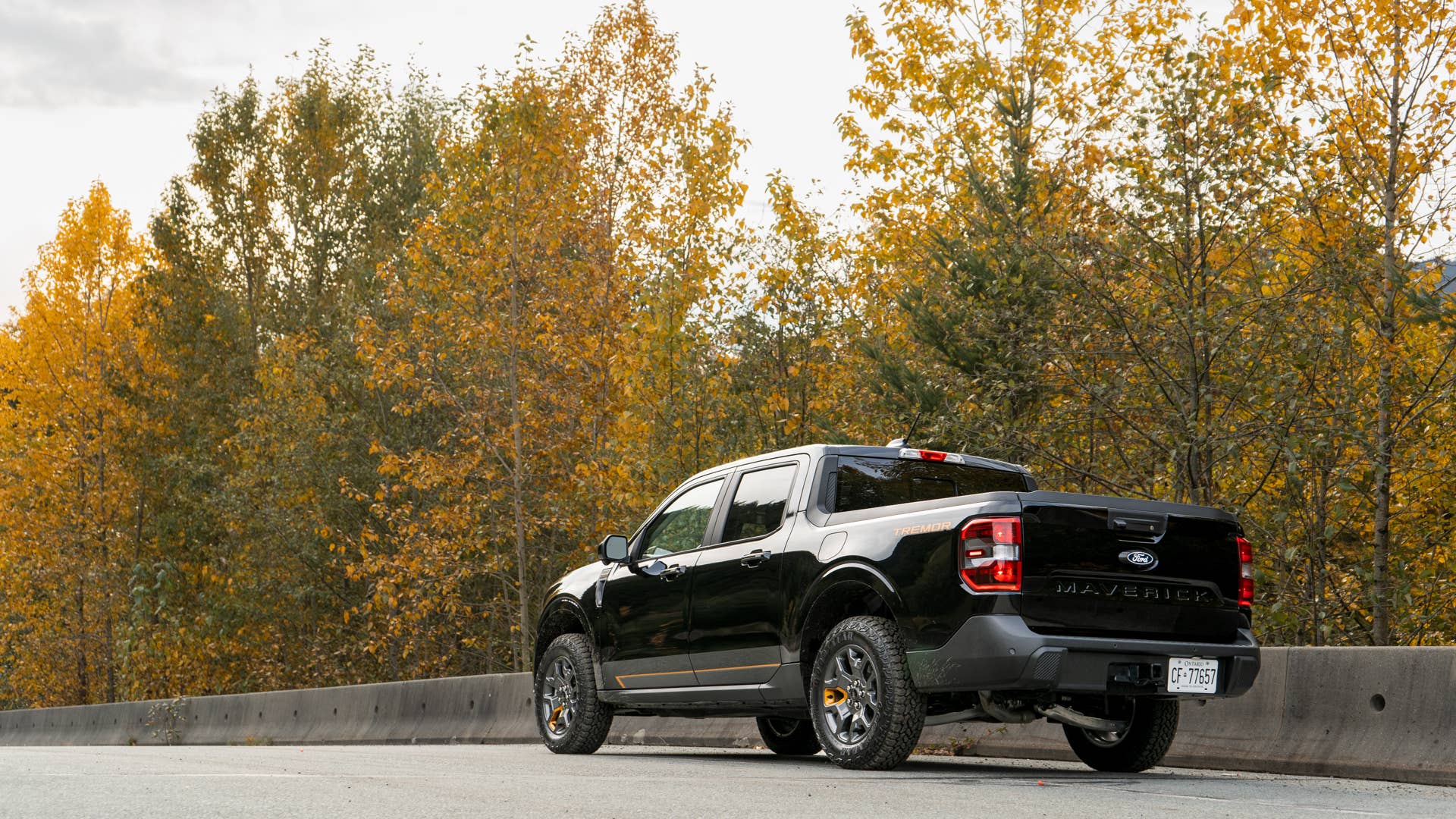
Although I personally prefer the shiny gloss-black, dinner-plate wheels and lowered stance of the Maverick Lobo, the Tremor might be the meanest-looking pick of the litter. The truck’s recent facelift adds newly shaped headlights that freshen the overall look, and the Tremor-specific orange graphics pair well with those meaty all-terrain tires for a convincingly rugged aesthetic. Parked next to a Ranger or an F-150, the Maverick looks no less aggressive, only more compact. This Maverick is certainly no city slicker, even if its proportions might suggest otherwise.

2026 Ford Maverick Tremor

Cole Attisha

Compared with the Hyundai Santa Cruz, the Maverick’s only real rival, the Ford looks unmistakably truckish. While the Santa Cruz looks more like a Hyundai Tucson with part of the rear lobbed off, the Maverick has the boxy, upright shape American buyers tend to associate more fondly with pickup-truck authenticity; myself included. Its design makes no compromises because it shares a CUV platform, whereas the Santa Cruz seems to. Even beyond looks, the Maverick seems to be one of the few domestic models that outweigh its Korean competition, most evident in sales: Ford moves roughly 8.35 Mavericks for every Hyundai Santa Cruz sold in the U.S. Clearly, buyers prefer the boxier shape here.

2026 Ford Maverick Tremor

Cole Attisha

Interior Design & Quality: 7.0 — Does the Cabin Know What This Truck Costs?

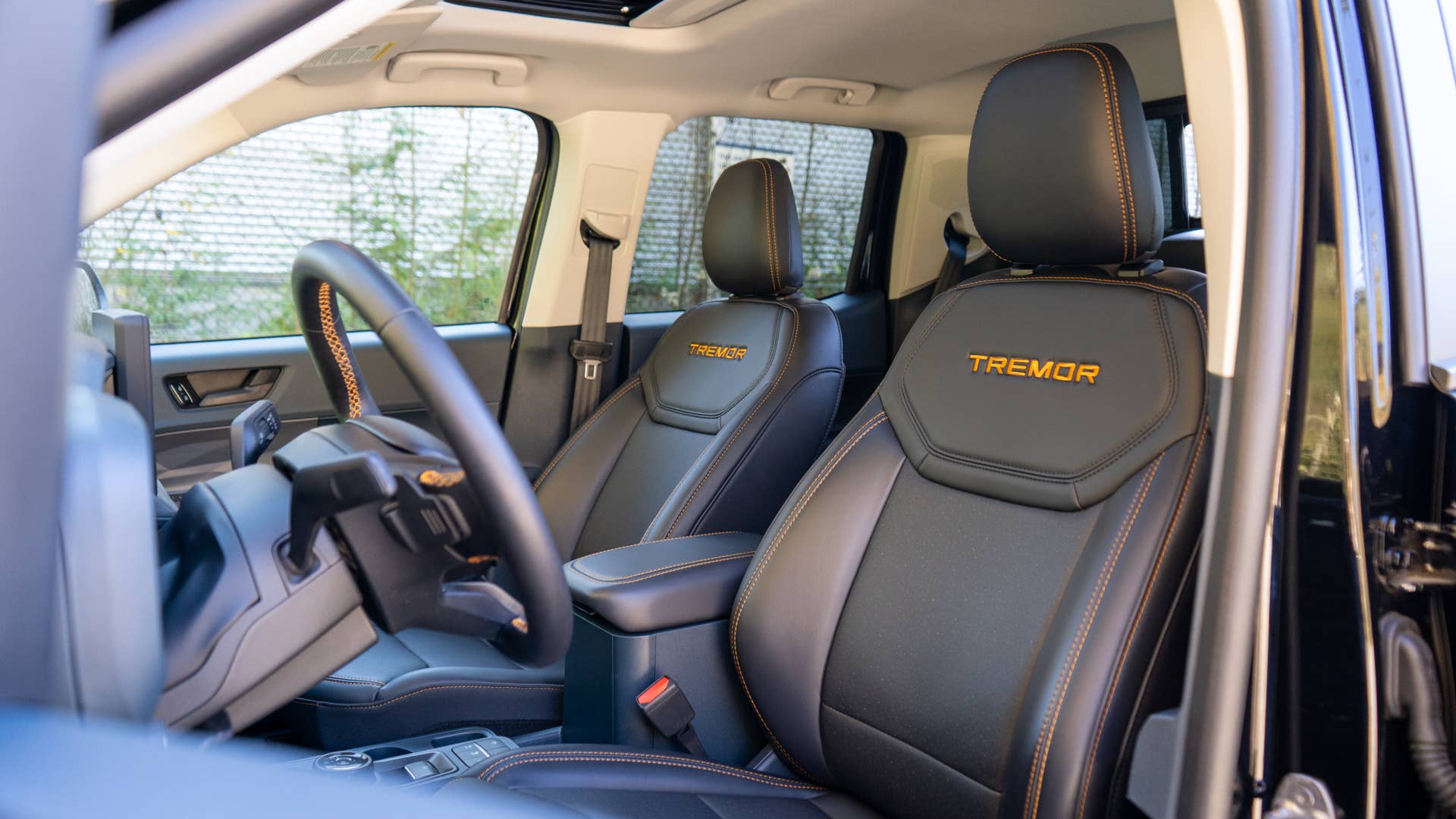
I will gladly accept a simple interior in an affordable pickup, but the Tremor’s price makes the inexpensive materials harder to overlook. The truck’s tall stature delivers impressive headroom, but the cabin still feels cramped, and the upright seating position can become uncomfortable on longer drives. Rear legroom is particularly tight, but the bench is still more accommodating than the sideways jump seats found in some older compact pickups, and proper rear doors make access much easier than backward-opening half-doors.

2026 Ford Maverick Tremor

Cole Attisha

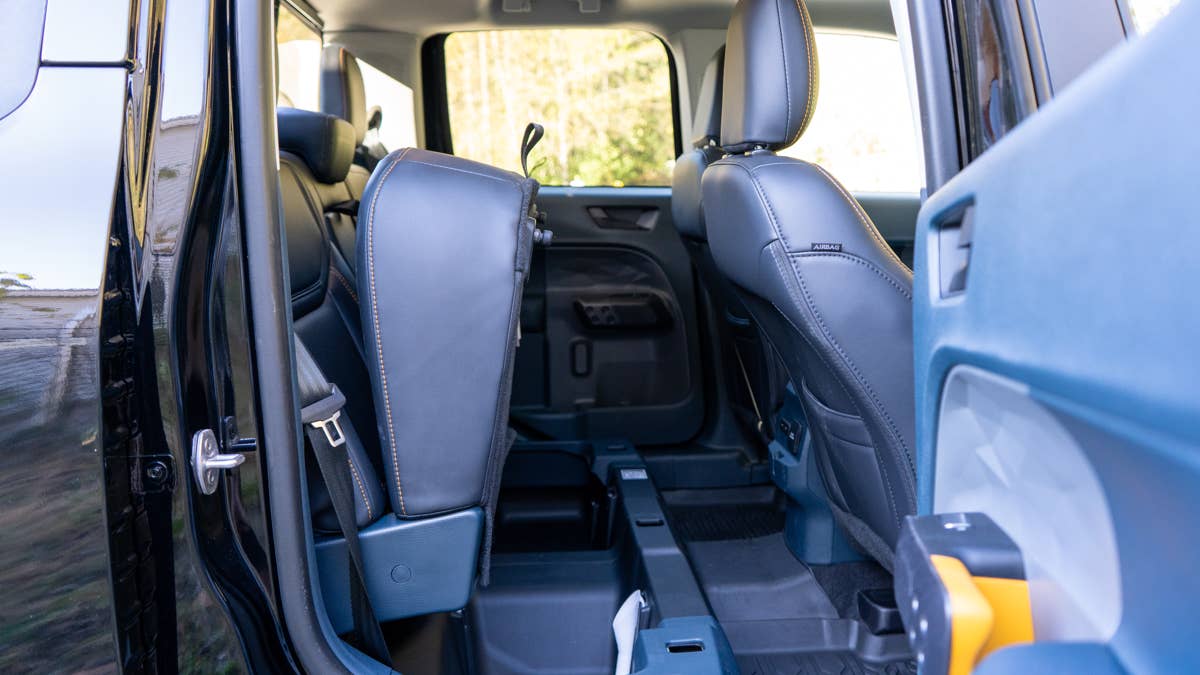
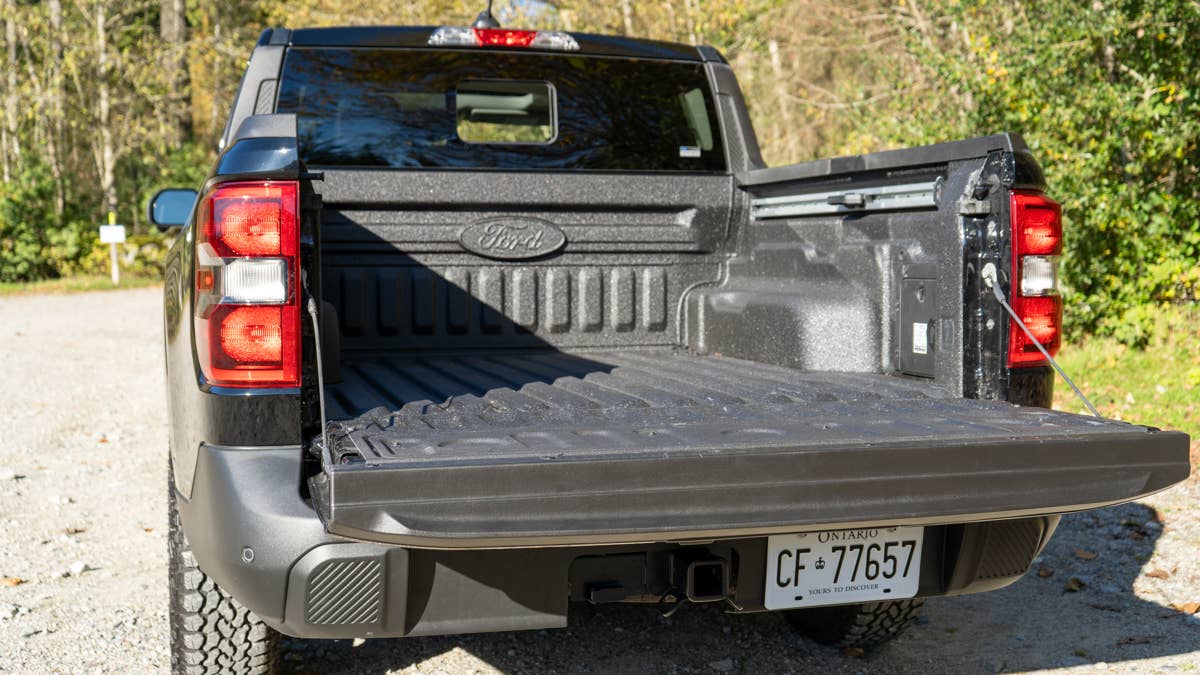
Ford has, at least, been clever with storage. The rear-seat cushion flips up to reveal useful bins and create extra room for belongings inside the cabin. That flexibility is welcome when transporting items that must be sheltered from the weather. The passenger-space compromise also leaves room for a surprisingly useful bed. Its floor measures 54.4 inches against the Hyundai Santa Cruz’s 52.1—a 2.3-inch advantage. Bed volume is 33.3 cubic feet versus 27.0 in the Hyundai, giving the Ford another 6.3 cubic feet edge. So there’s obviously a worthwhile utility advantage here, even if rear passengers might wish Ford had allocated the space differently.

2026 Ford Maverick Tremor

Cole Attisha

Pricing & Value: 6.5/10 — This Little Truck Has Expensive Hobbies

Although the Maverick lineup generally offers solid value, that’s not necessarily true of the trim-topping Tremor. The Santa Cruz XRT costs just $610 more than the Tremor and can tow up to 5,000 pounds when properly equipped, whereas the Tremor is limited to 2,000 pounds and up to 1,140 pounds of payload. Even a Maverick Hybrid AWD can tow 4,000 pounds with the optional 4K Tow Package, so buying the rugged Maverick involves some decidedly practical sacrifices.

Configuration

MSRP with listed packages

Destination

Total

Maverick XLT Hybrid AWD

$32,865

$1,695

$34,560

Maverick Tremor

$40,645

$1,695

$42,340

Hyundai Santa Cruz XRT AWD

$41,350

$1,600

$42,950

Ranger XLT 4×4

$39,575

$1,895

$41,470

Ranger XLT 4×4 with FX4 and Trailer Tow packages

$41,305

$1,895

$43,200

All figures are in U.S. dollars, excluding taxes and additional options.

That brings me back to the Ranger. The mid-range XLT 4×4 starts $1,070 below the Tremor before destination, or $870 below it with delivery included. Add the $1,195 FX4 package and $535 Trailer Tow Package, and it reaches $43,200—only $860 above the Tremor. That buys a body-on-frame truck with low-range gearing, an electronic rear locker, additional underbody protection, a longer 59.6-inch bed, and up to 7,500 pounds of towing capability.

The Tremor does include heated seats, B&O audio, and a 360-degree camera, while that Ranger has cloth seats and fewer comfort features. The Maverick’s compact size also has value in tight parking spaces and on narrow access roads. For regular trail use, though, I would probably start shopping Rangers instead. For mostly road driving, the XLT Hybrid AWD saves $7,780 before further options and makes a more economical daily driver with friendlier road manners. That leaves the Tremor serving a narrow demographic: someone who needs the extra traction hardware, specifically wants the compact footprint, and accepts its reduced work capacity. I get the appeal, but it isn’t where I’d put my own money.

2026 Ford Maverick Tremor

Cole Attisha

The Real Verdict: 7.3/10 — I Still Want a Maverick, but I’d Spend My Money Differently

After a week with the Tremor, I remembered why I fell for the Maverick in the first place. This little pickup has plenty of character, and its useful bed, clever storage, and manageable dimensions make a convincing case for keeping your truck purchase small. The Tremor adds worthwhile traction hardware, an entertaining turbocharged engine, and enough cosmetic toughness to make me glance back after parking it. But choosing this particular Maverick requires accepting several substantial compromises. Noisier tires, less composed handling, and disappointing fuel consumption affect everyday driving, while the cabin’s inexpensive materials are harder to excuse at this price. Its reduced towing capacity also makes the toughest-looking Maverick a less useful truck for some buyers.

For my money, an all-wheel-drive Maverick Hybrid still seems like the most appealing daily companion. If regular trail use were a priority, I’d give a Ranger XLT 4×4 with the FX4 package a serious look before signing up for the Tremor. So there’s really only one reason to choose this truck: you insist upon the Maverick’s compact dimensions and will actually use its added off-road capability often. For that buyer, the Tremor has a real purpose, but otherwise, it feels a bit superficial. I’d happily recommend the Maverick to almost anyone; I’d just need to know more about their weekends before I’d recommend the Tremor.

Autoblog aims to feature only the best products and services. If you buy something via one of our links, we may earn a commission.

I Drove the 2027 Toyota Crown Signia and It’s a Family Car That Shouldn’t Be Overlooked

A Crowning Achievement

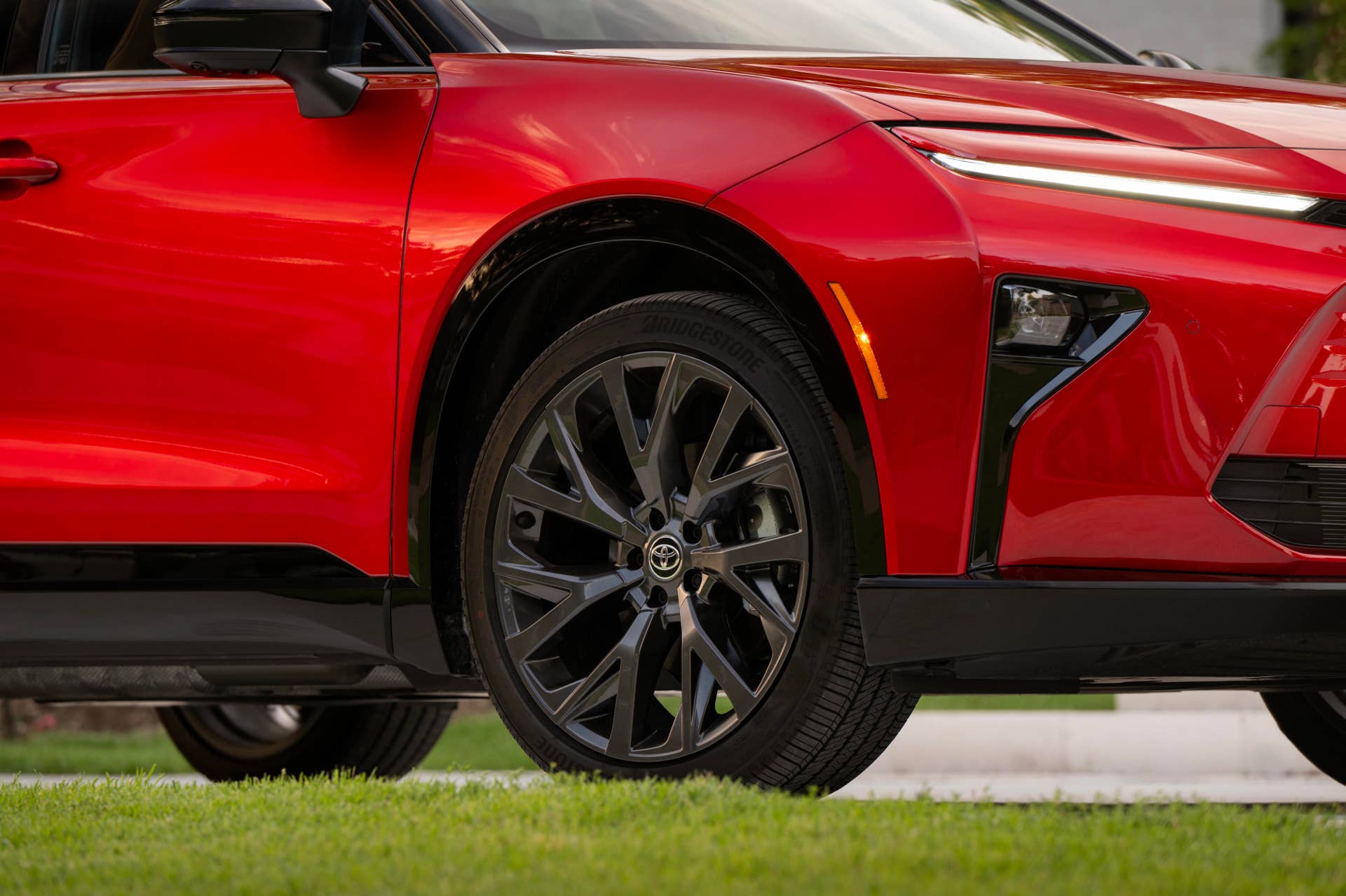
Conventional car wisdom says a family crossover has to be big, but in real life, that’s not always the case. Sometimes, it’s about making city driving unencumbered, saving on fuel costs, and simplifying the user experience. Yet it also has to be able to cosset two to three kids and be practical enough to swallow groceries and gear without needing to be cavernous.

Toyota

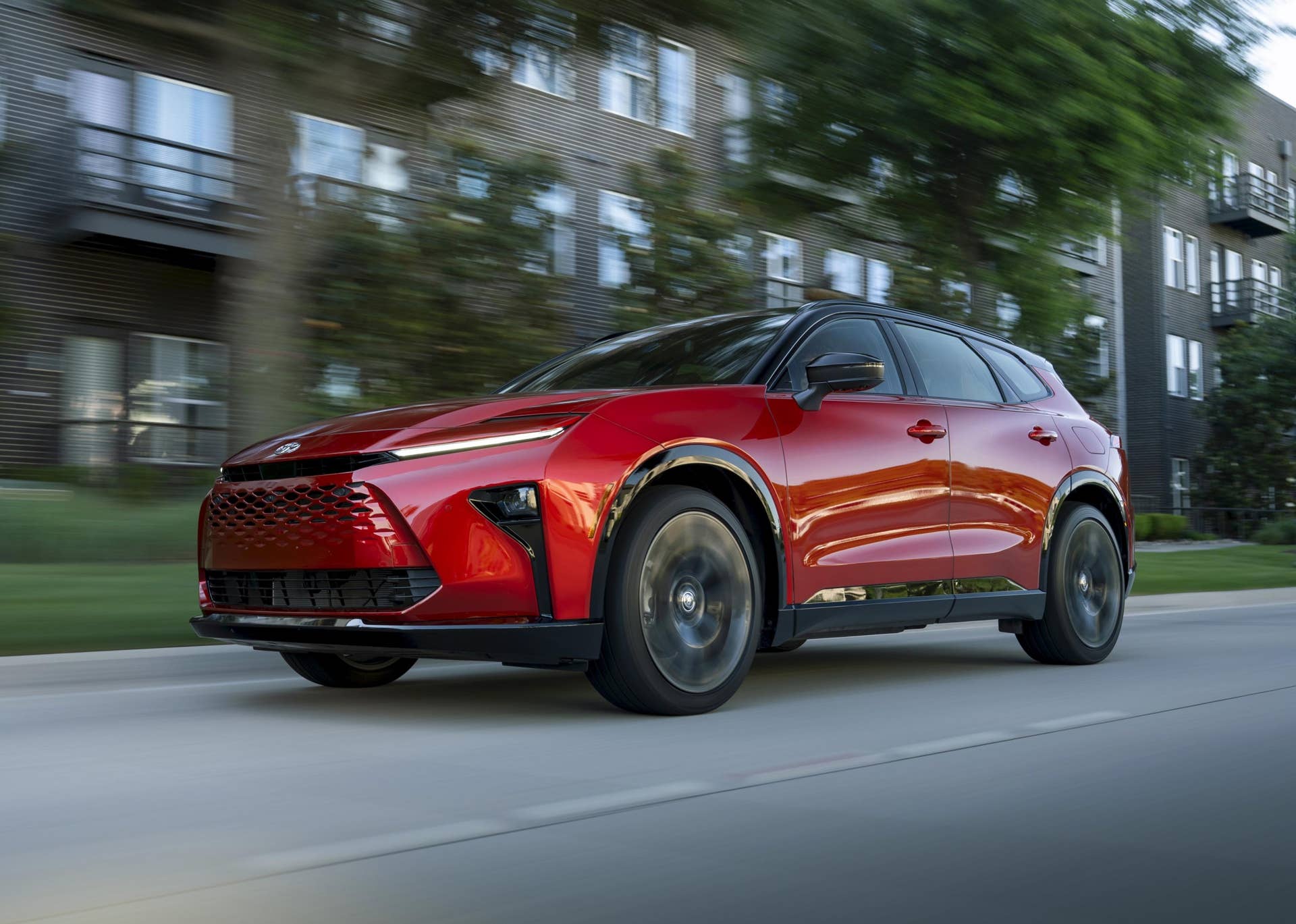
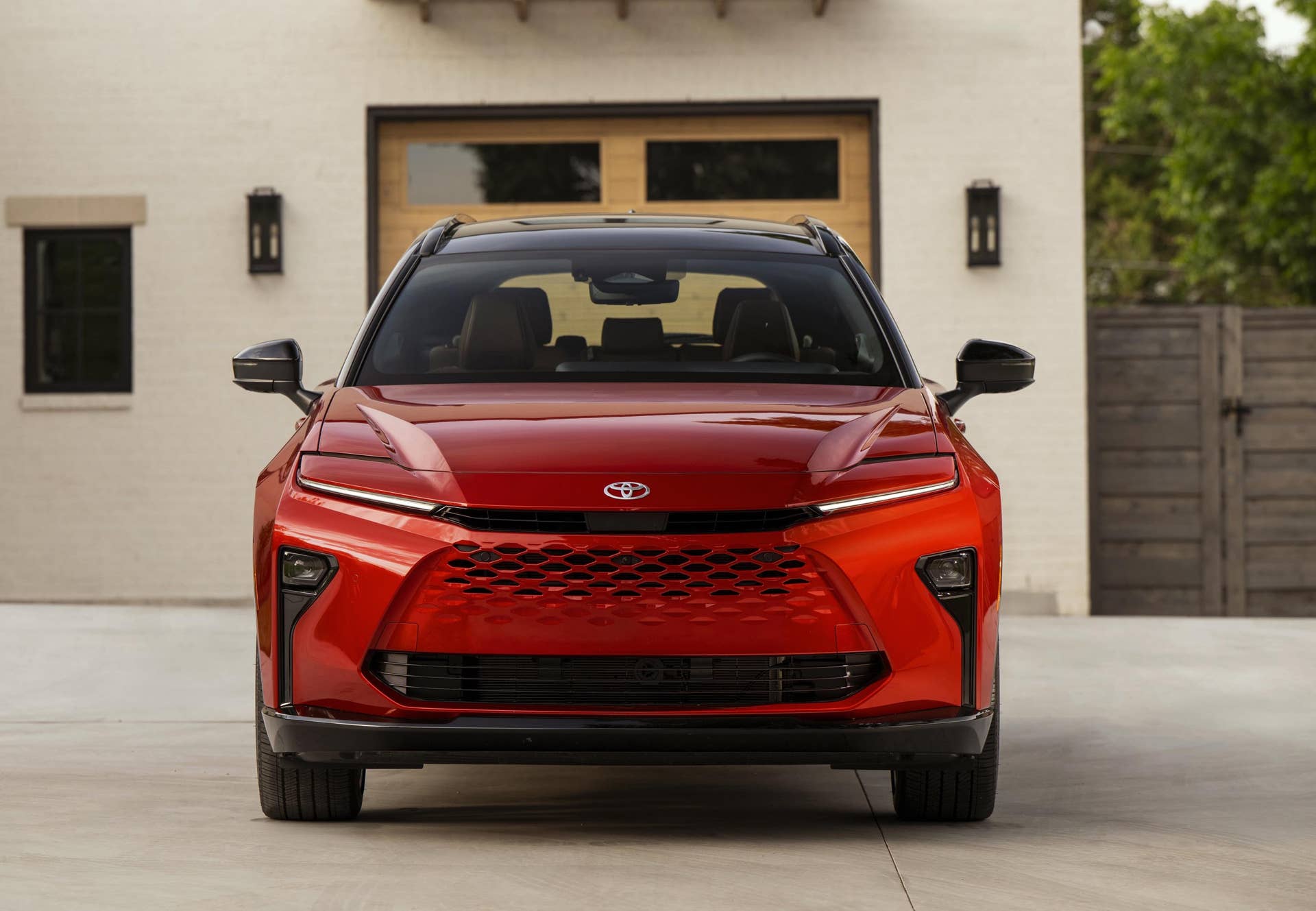
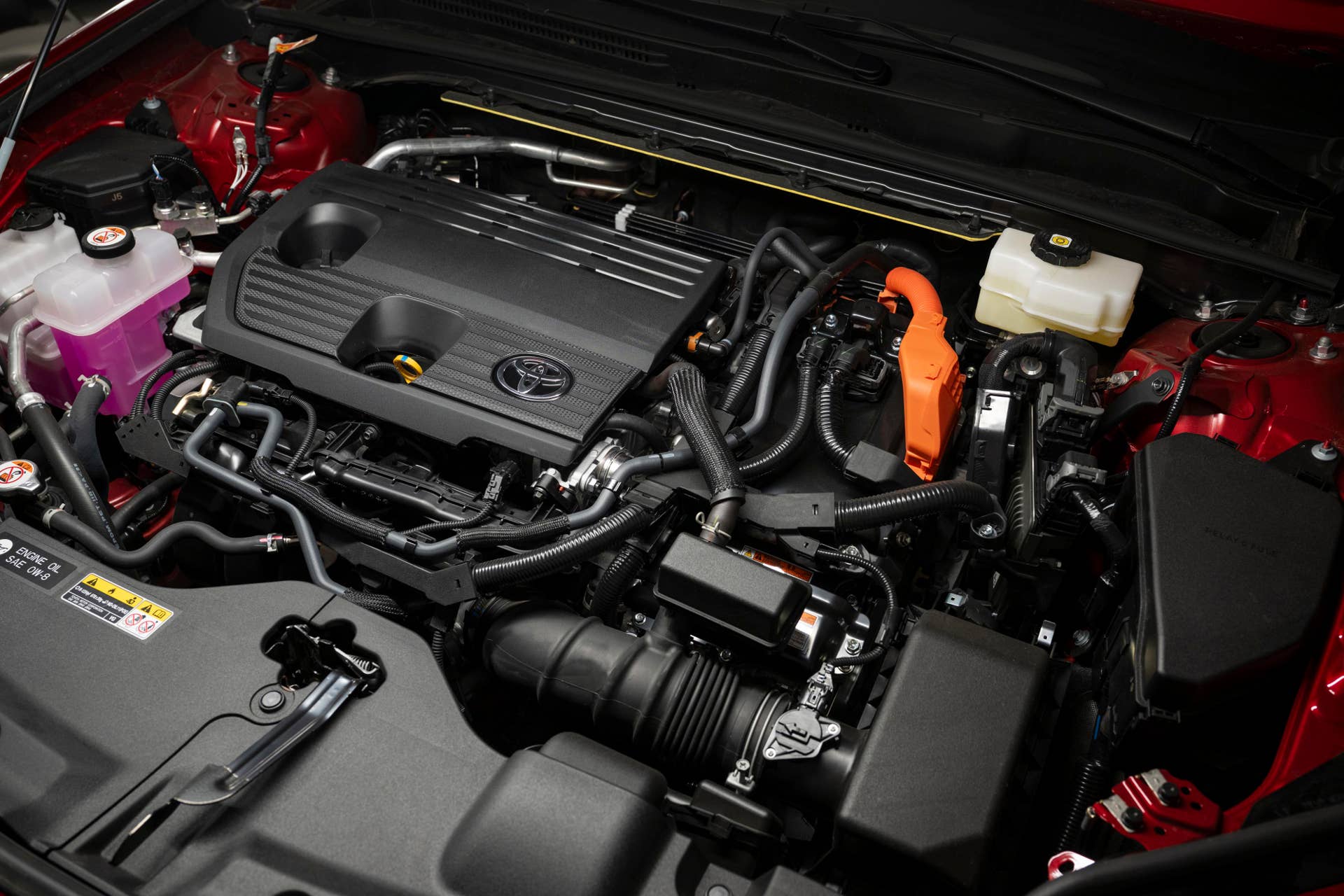
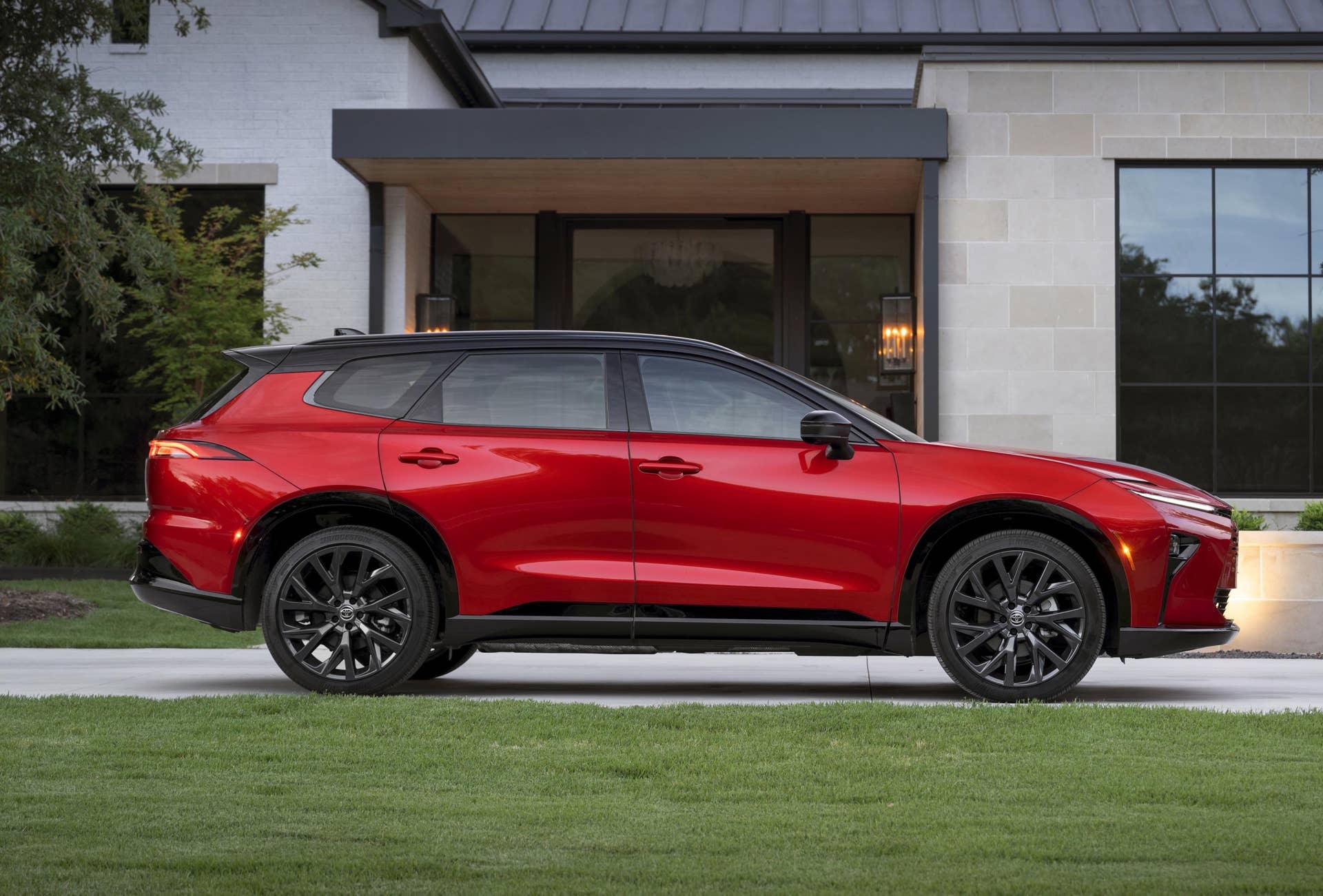
That’s the appeal of the 2027 Toyota Crown Signia. My time in the 2027 Toyota Crown Limited proved that the biggest isn’t always the best. It combines a comfortable cabin and useful cargo area with a hybrid powertrain and standard all-wheel drive. It’s certainly not the quickest, flashiest, or the roomiest, but it still has a lot to offer. The Limited’s base price is $51,555. After adding special Finish Line Red exterior paint with a contrasting black roof and the $1,595 destination charge, the total price comes to $53,725.

Exterior & Interior Styling – 9/10

Toyota

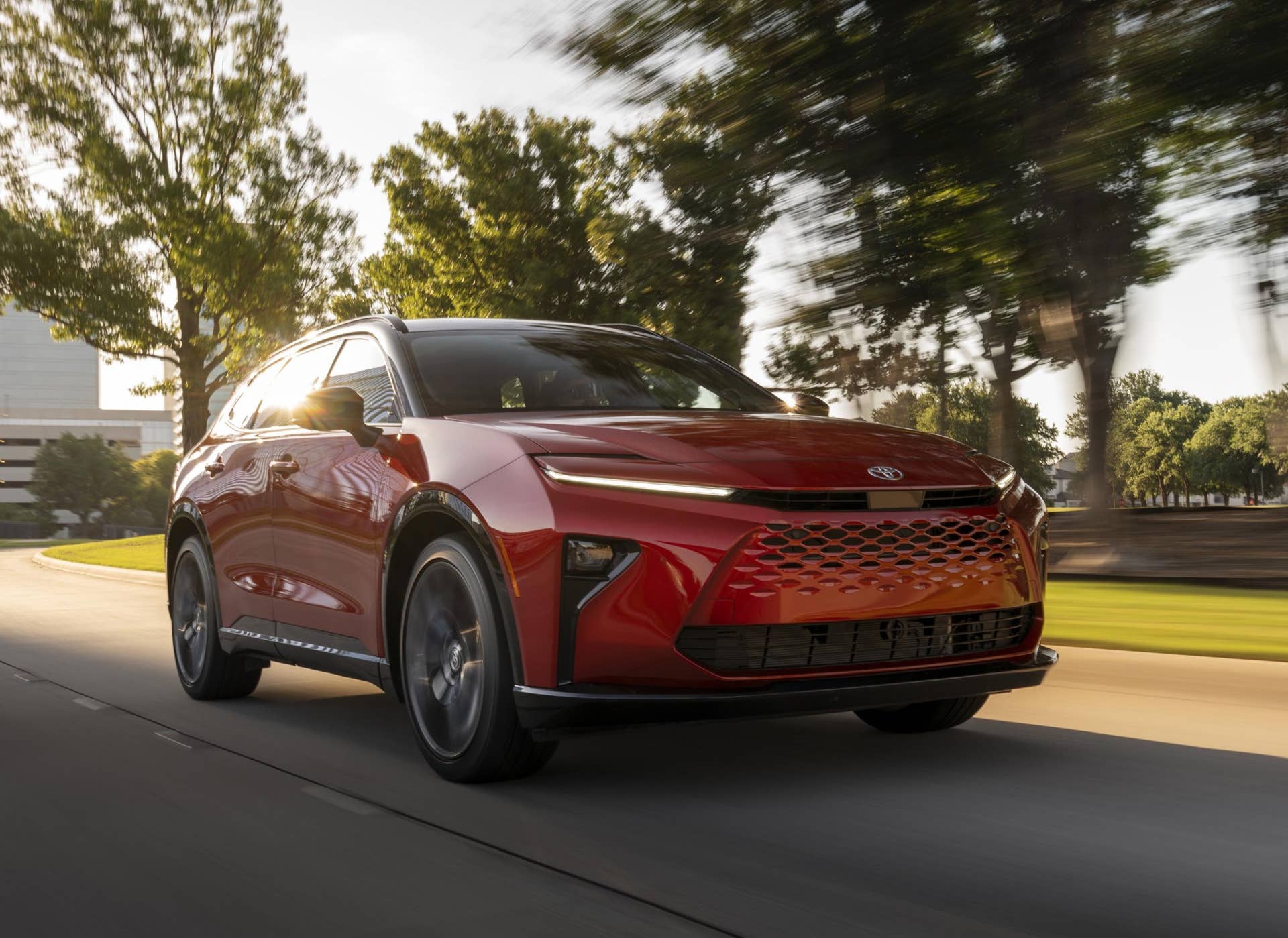
Toyota calls the Crown Signia an SUV, but its shape, stance, and ride height lean more towards the station wagon ilk than more upright and boxier competitors. The Crown Signia’s handsome maw gets a body-colored lattice grille, Prius-like lighting elements, and an overall better appearance than its Crown sedan sibling. The long roof, relatively low stance, and gently tapering rear give it an elegant, Lexus-like profile.

Toyota

View the 4 images of this gallery on the original article

Speaking of the sedan, the rear third of that car doesn’t look nearly as good as the one found on the Crown Signia. It’s long roofline, roof spoiler, canted D-pillar, and muscular haunches complete the look cohesively. It also lacks the weird two-tone babooon butt of the sedan.

Toyota

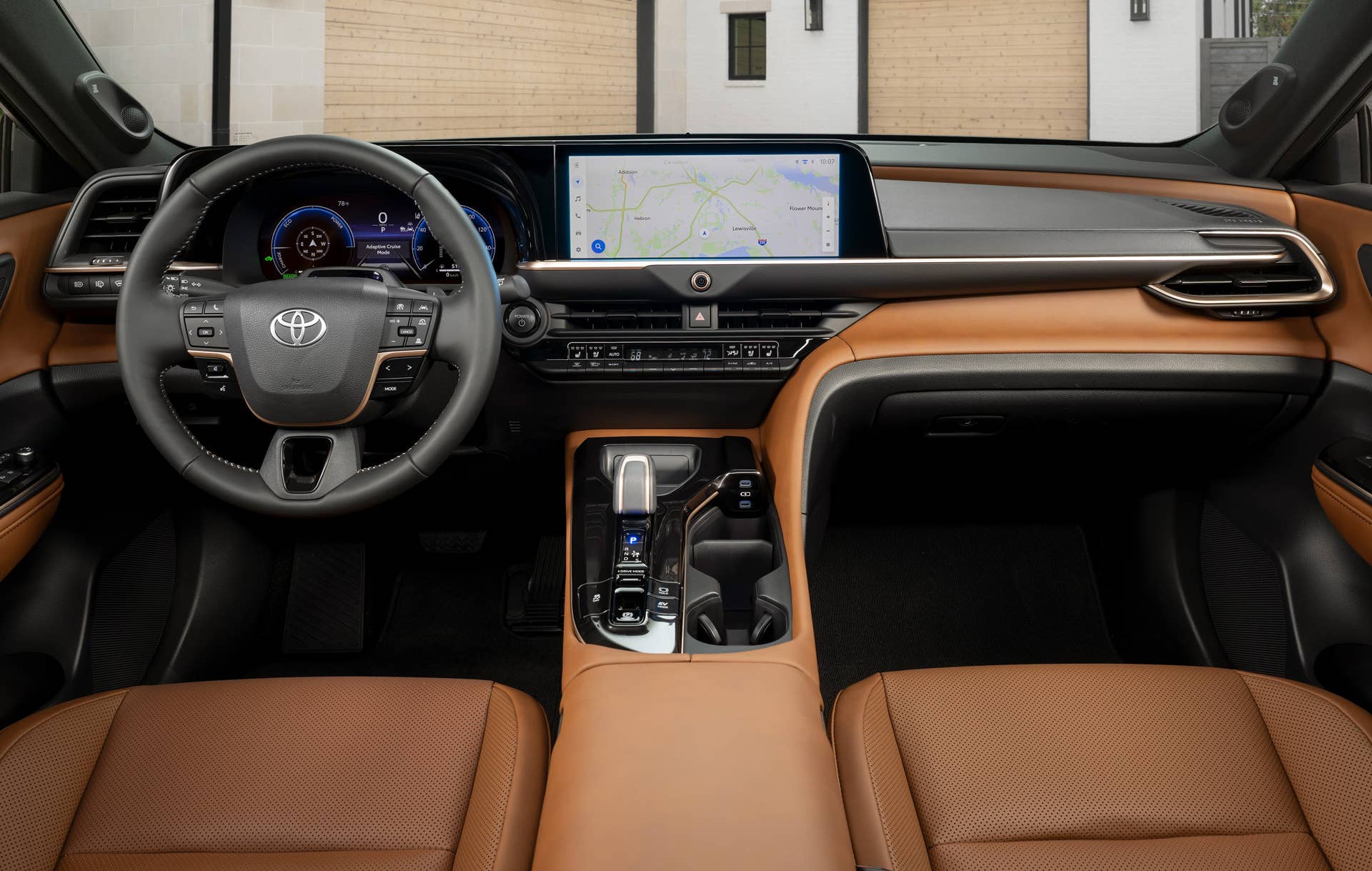
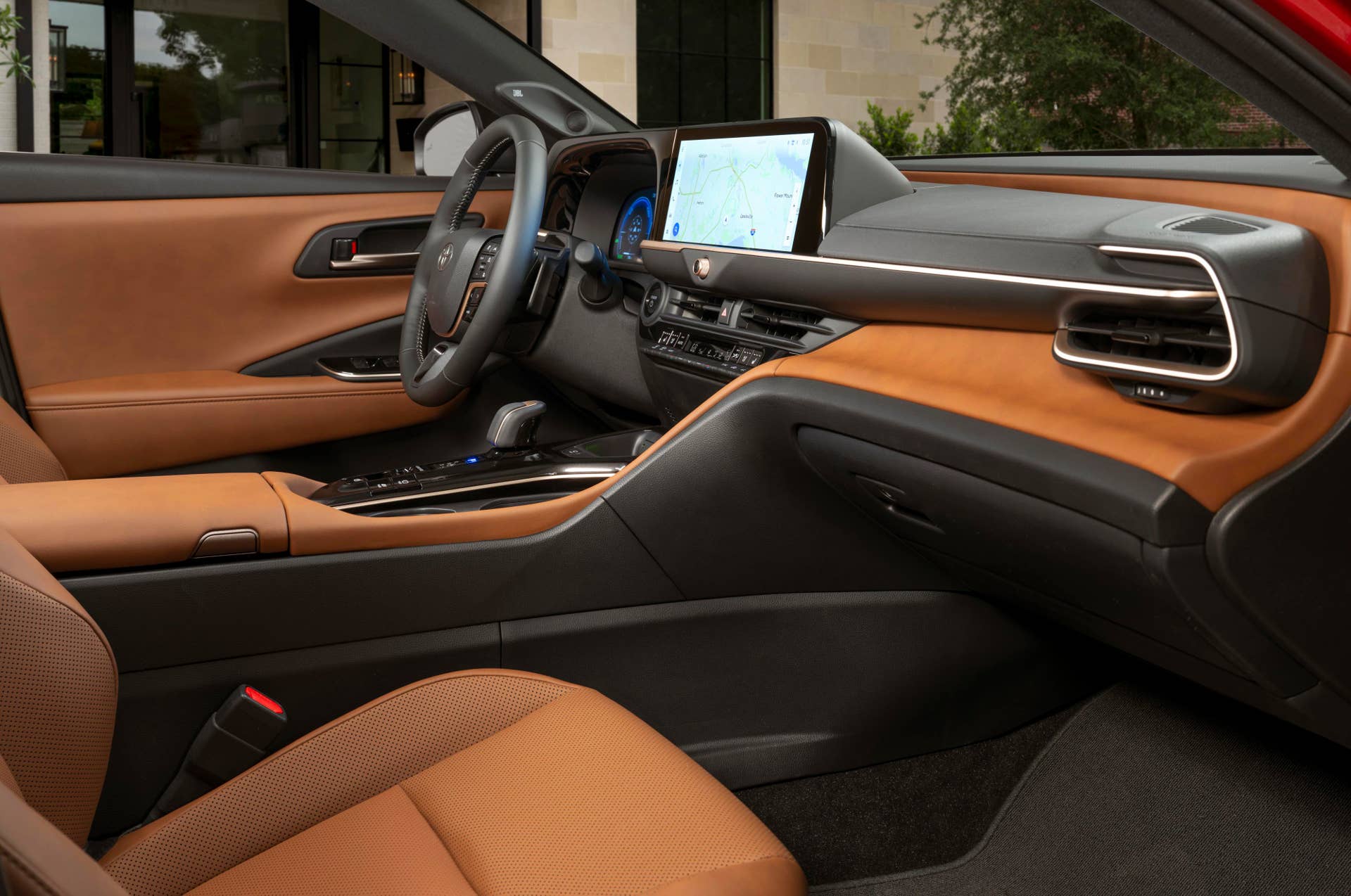
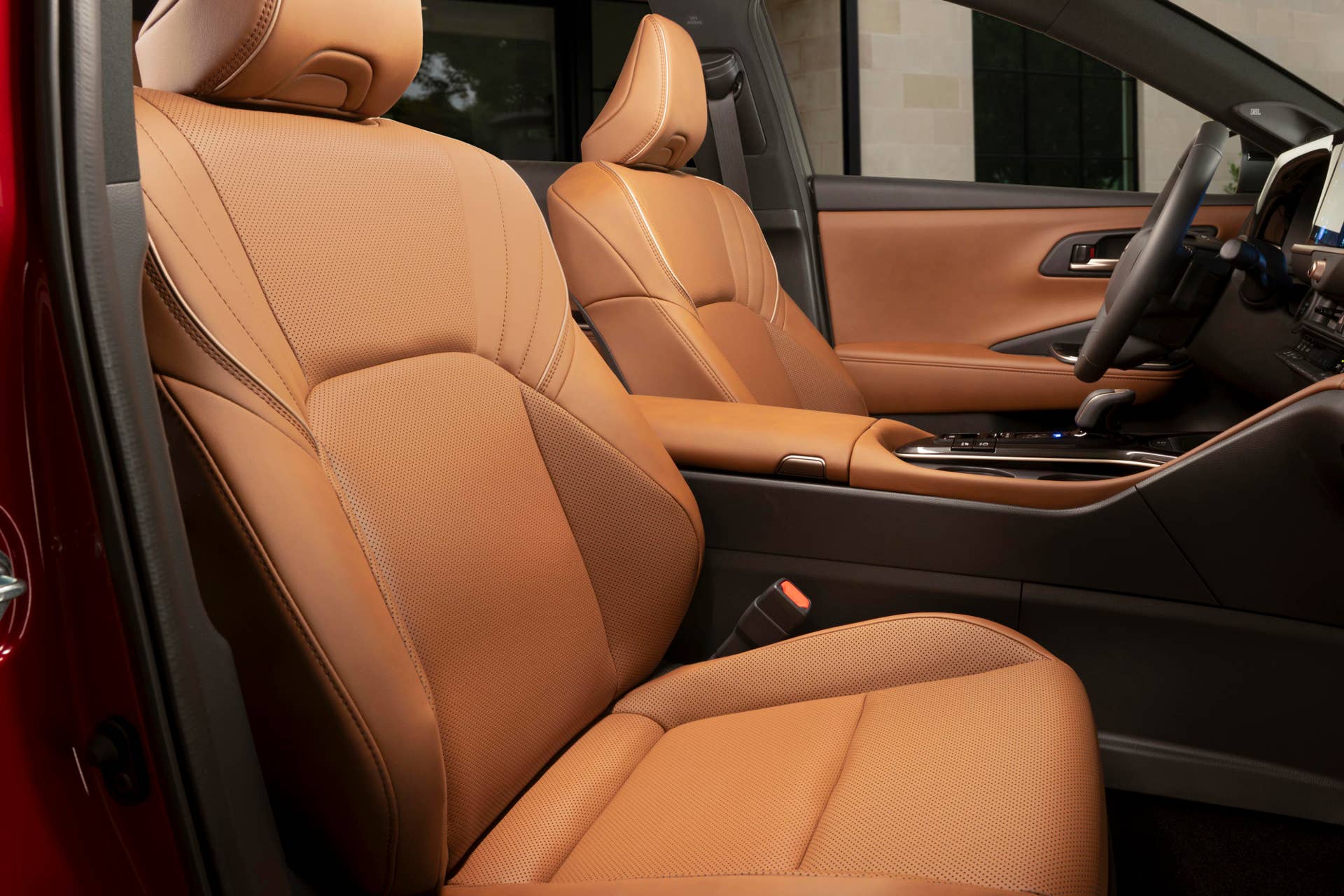
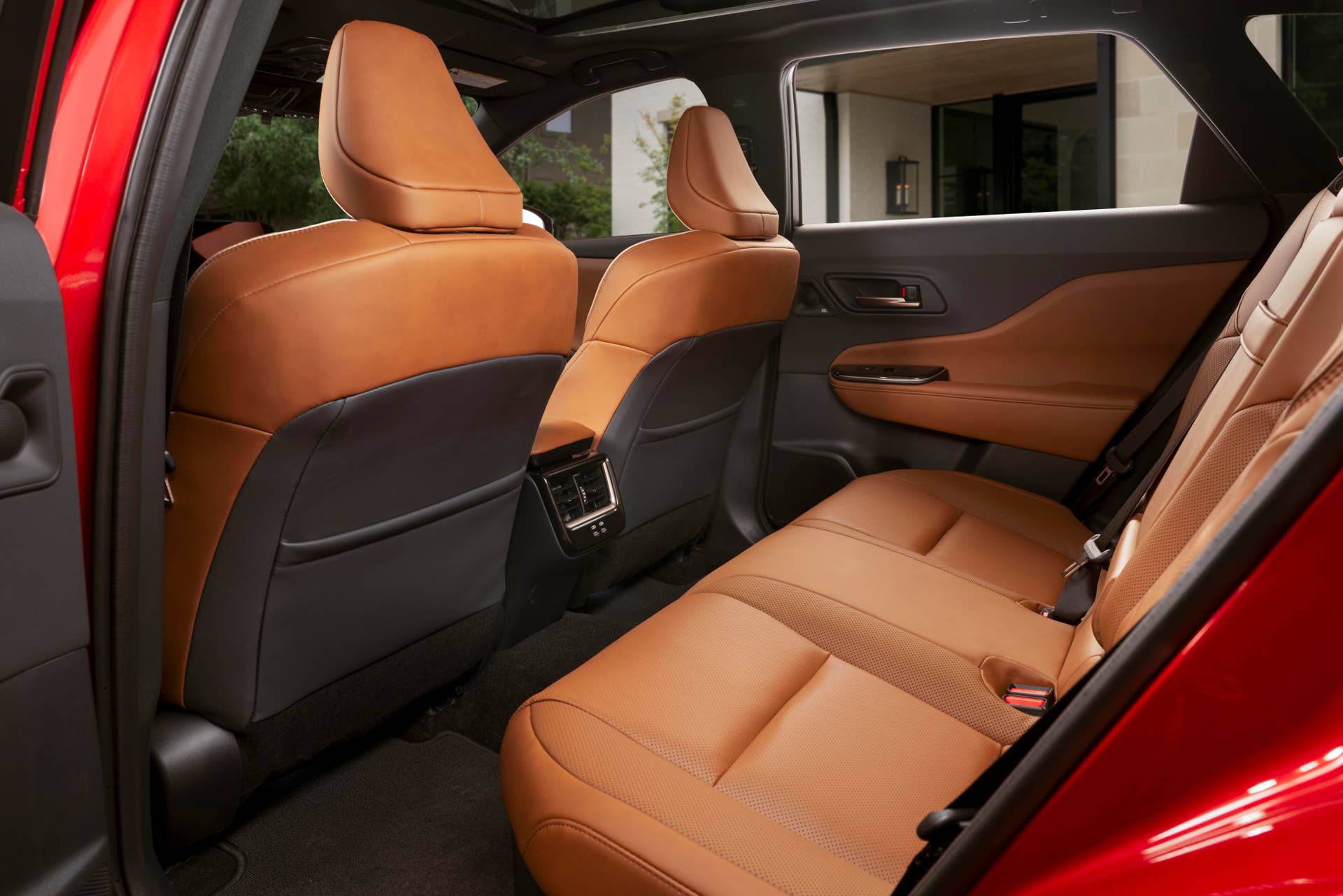
The cabin, like the exterior profile, might as well be a Lexus. My test vehicle combined perforated Saddle Tanleather, satin-finished trim, copper-colored details, and attractive switchgear in an environment that felt decidedly more upscale than a typical mainstream Toyota. The layered dash, half-waterfall center console, and the two-tone colorway provide a degree of sophistication oftentimes missing from comparably priced crossovers.

Toyota

View the 4 images of this gallery on the original article

The stylized door card is thoughtful, and the bisected front outboard HVAC bents are a thing of beauty. It isn’t a Lexus in every detail. Nevertheless, buyers who care more about what they touch and see than having an “L” emblem on the steering wheel should find a lot to love. It’s understated luxury, and it whispers rather than screams. Maybe BMW could use some of these cues for their next generation of vehicles.

Thinking about selling your car? Get an instant cash offer online now. Click here to get started.

Infotainment & Technology – 8.5/10

Toyota

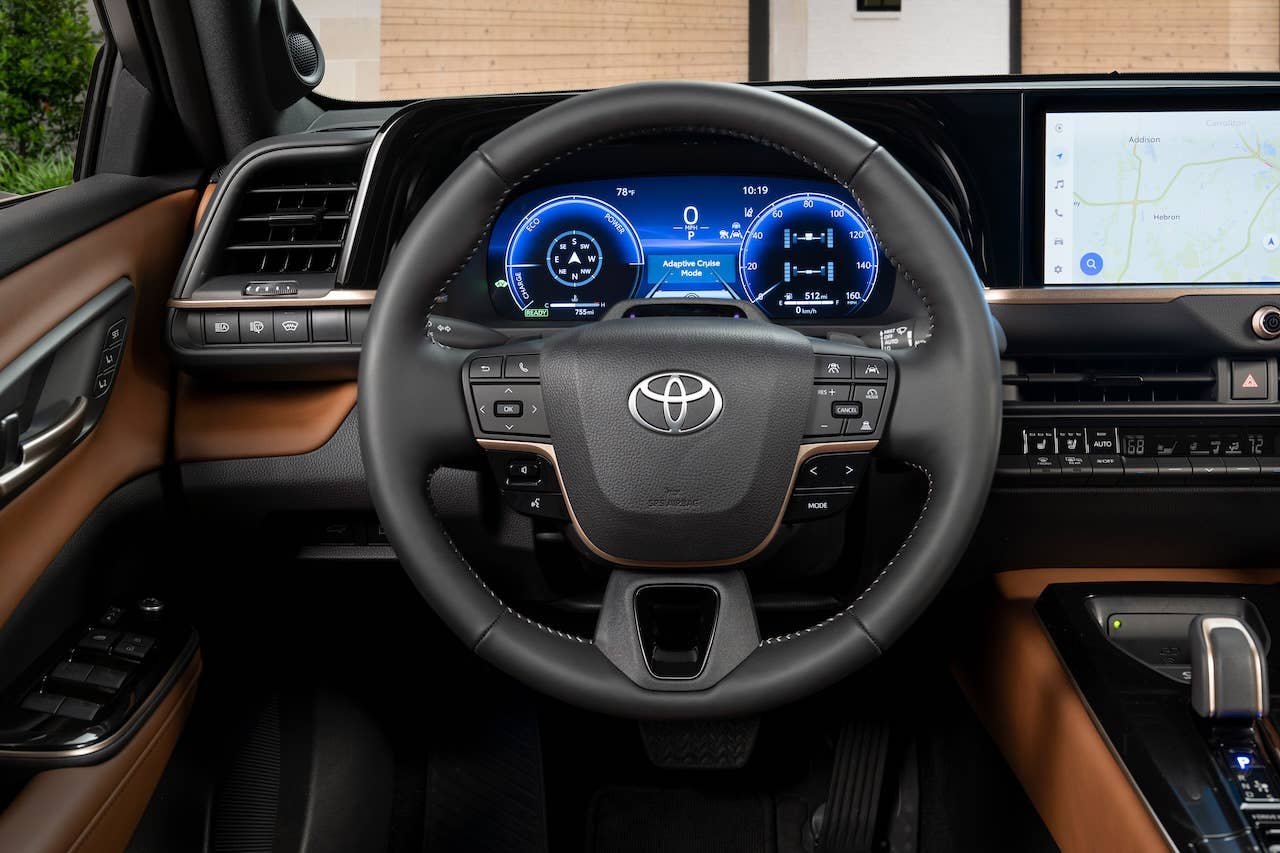
The Crown Signia demonstrates that large screens don’t have to overwhelm an interior. Okay, so they’re not diminutive. I’d say more “right-sized” is the proper term. A 12.3-inch central touchscreen and a matching digital instrument display match the interior’s elegant simplicity. The Crown Signia’s touchscreen has a crisp and simple vertical menu, making finding the right function quick and easy.

Toyota

In my Limited, the infotainment system responded promptly, smartphone pairing was quick, and the interface was easy to understand. Wireless Apple CarPlay and Android Auto comes standard, and phone mirroring never presented any hangups upon startup. I also liked the instrument display’s relatively straightforward presentation. It conveyed useful driving and hybrid-system information without burying key info beneath flashy graphics.

The 2027 Limited comes with a comprehensive collection of driver-assistance technology, including a panoramic-view camera, lane-change assistance, front cross-traffic alert, and front and rear parking assistance with automatic braking. Traffic Jam Assist and a 360 camera are now standard on the Limited. although it requires the applicable connected-services subscription.

Comfort, Space, and Usability – 9/10

Toyota

The Crown Signia isn’t huge inside, but it is very comfortable. The front seats in my Limited were broad and supportive, with a good amount of cushioniong and solid bolstering. Heated and ventilated front seats, heated rear outboard positions, and a heated steering wheel added the comfort features I wanted for changing Chicago seasons.

Rear legroom measures 37.1 inches. It’s a little less than the roomy Toyota Camry. It was sufficient me (6’0″, 200 lbs) to sit behind myself but not enough for me to stretch out. The seats are very comfortable in the outboard positions.The middle position is a little compromised with seat and transmission tunnel bulge, but it’s fine for shorter trips.

Toyota

The Crown Signia provides 24.8 cubic feet behind the rear seats and 66.1 cubic feet with them folded. During a week involving three kids, school activities, sports equipment, and groceries, I never felt as though the vehicle was struggling to take on stuff. It’s just right for a family of five, as long as the kids aren’t linebackers.

Storage is good but not outstanding. The center armest door opens to either side, and the charging deck swallows an iPhone 16 Pro no problem. I love its location and space-saving vertical design. The door pockets are small-ish, so don’t bring massive thermal water bottles or long items into the front row.

Toyota

View the 2 images of this gallery on the original article

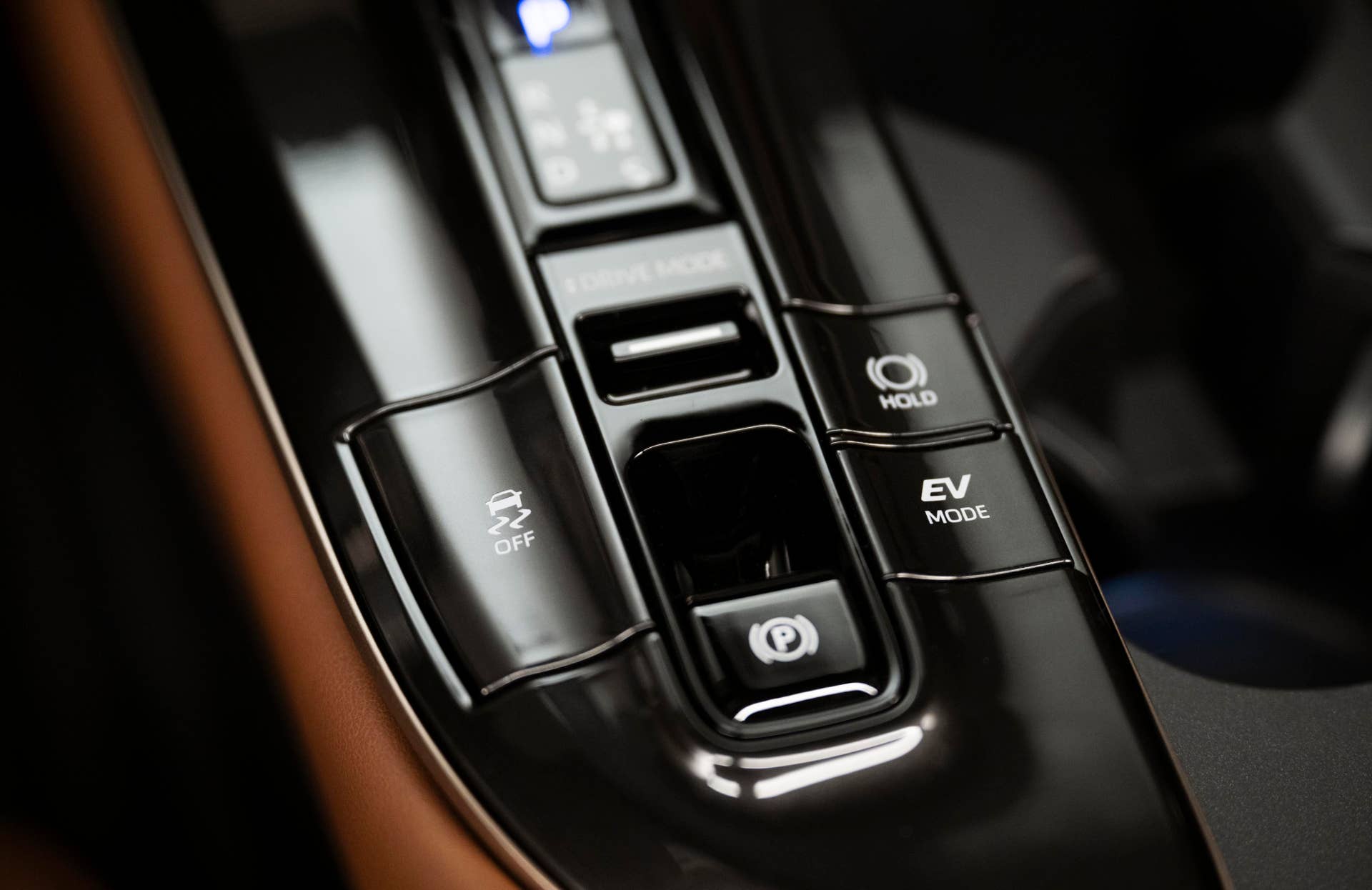
The physical controls in the Crown Signia are superb. The Lexus shift knob is short and quick to operate, and the center console buttons and switches are quick to access and operate. I appreciate the presence of a center audio knob and a line of buttons and switches for climate. None of them are haptic feedback or touch sensitive, and the Crown Signia deserves high marks for that.

Driving Experience – 7.5/10

Toyota

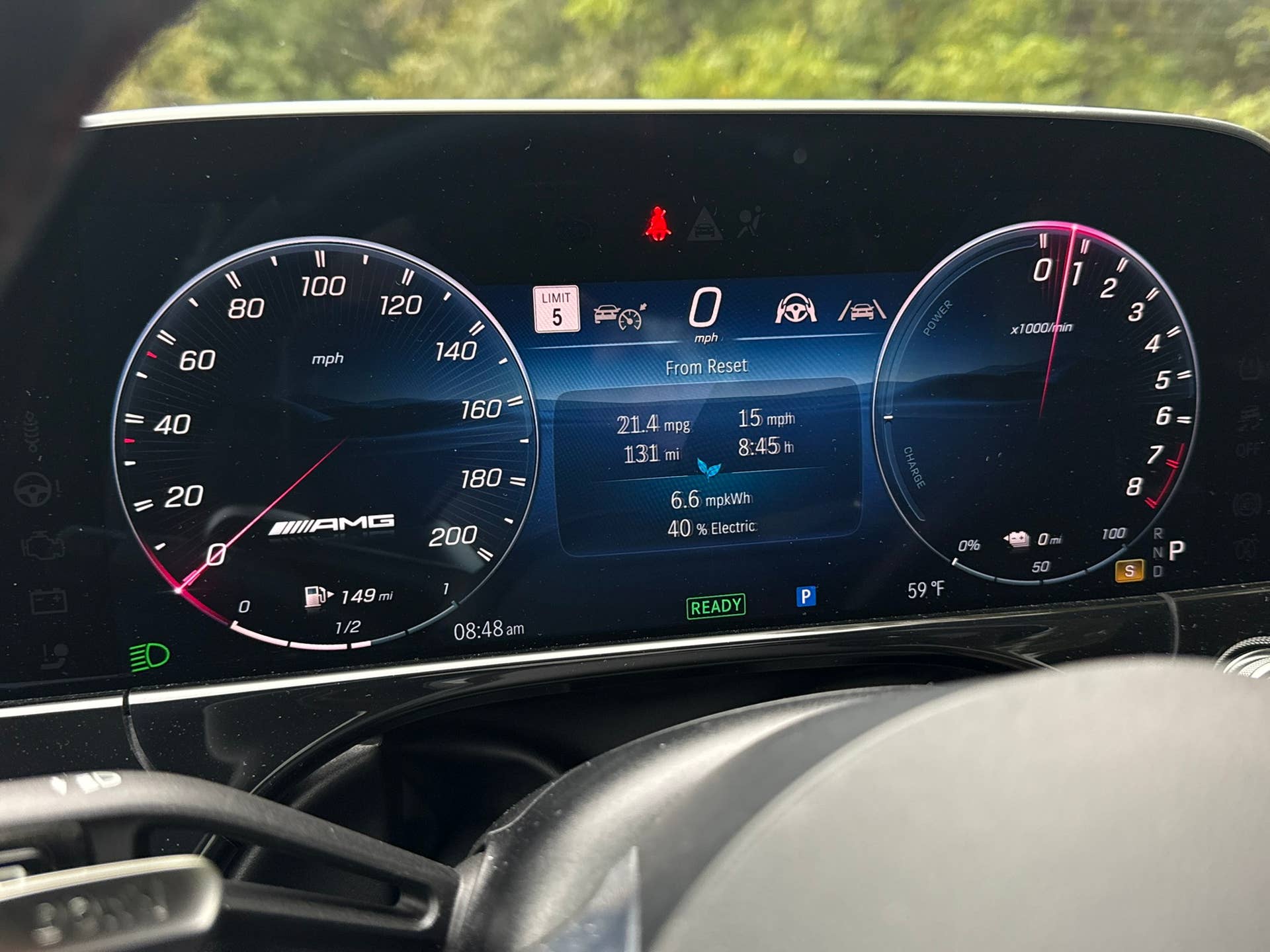
The Crown Signia’s driving character won’t get your blood pumping, but that’s not what it’s designed to do. The 2.5-liter four-cylinder hybrid system produces 238 horsepower, with electronic on-demand all-wheel drive standard. The dual electric motors (a front transaxle electric drive motor and a dedicated rear-mounted electric motor) kick in when needed. Toyota lists an EPA-estimated 38 mpg combined. I averaged 35.1 mpg during my test, with some of it spent in Sport mode.

Toyota

It feels decently quick off the line, and low-speed response was smooth. It’s best suited for cruising and suburban traffic. Steering is light and accurate but, unsurprisingly, without feedback. For the most part, it was quiet, and the powertrain generally stayed unobtrusive during regular driving. Hammer the throttle, and the engine and CVT make themselves known. It could get moving adequately; it simply didn’t make hard acceleration especially immediate and fun. This is a family car, through and through, and that’s more than ok.
Toyota

The Crown Signia’s lower ride height made body movement controlled, if not taut. The Crown Signia’s ride quality is, well, Lexus-like. The suspension took the edge off rough pavement without making the vehicle feel disconnected, and road and wind noise were well contained at highway speeds. It’s another reason to love it as a family car.
Final Verdict – 8.75/10

The 2027 Toyota Crown Signia deserves consideration because it does family remarkably well. Everyone with two or three kids thinks he needs a mammoth SUV or a three-row midsize crossover. The Crown Signia proves you can downsize and love it. My time behind the wheel left me impressed by its usability in everyday life. It sips fuel, doesn’t require tons of parking corrections due to its size, and its controls and tech are very easy. It’s no corner carver, nor is it a disappointment in daily driving. The Crown Signia about as relaxed of a driving experience as you can expect at this price.

The 2026 Mercedes AMG E 53 Hybrid Wagon is an Affordable Superwagon With Almost Everything

“Affordable” is a Relative Term Here

“Affordable” requires some context when the subject is a Mercedes-AMG wagon with a $93,350 base price. My test vehicle approached $112,000 with options and destination, which puts it well beyond anything resembling an everyday family-car budget. But against the BMW M5 Touring and Audi RS 6 Avant Performance, the 2026 Mercedes-AMG E 53 Hybrid Wagon makes a convincing case as the comparatively attainable member of a very exclusive club.

Amos Kwon

It doesn’t match those ballistic wagons in outright power, but its combination of a turbocharged 3.0-liter inline-six and electric motor produces 577 horsepower. Mercedes quotes a four-second sprint to 60 mph, and its 41 miles of electric range give it another dimension beyond the usual fast-wagon formula. You can enjoy its performance on the weekend without necessarily firing up the engine for every weekday errand.

After spending time behind the wheel, I found a lot to love and some glaring issues. This is a quick, sophisticated wagon that makes carrying people and cargo feel considerably more special than it does in most SUVs. Unfortunately, the details that separate a desirable performance car from a great daily driver aren’t all here.

Exterior & Interior Styling – 9/10

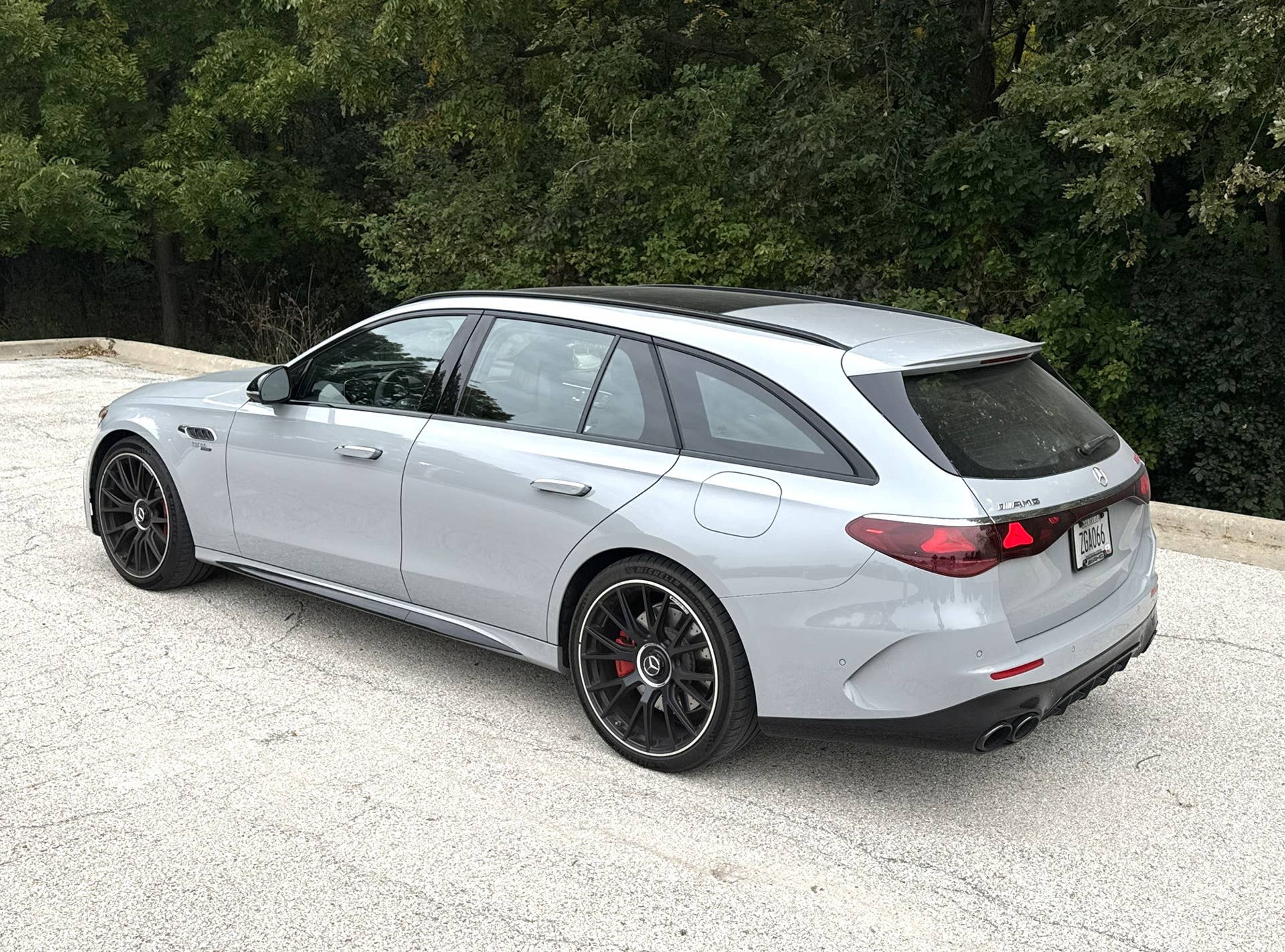
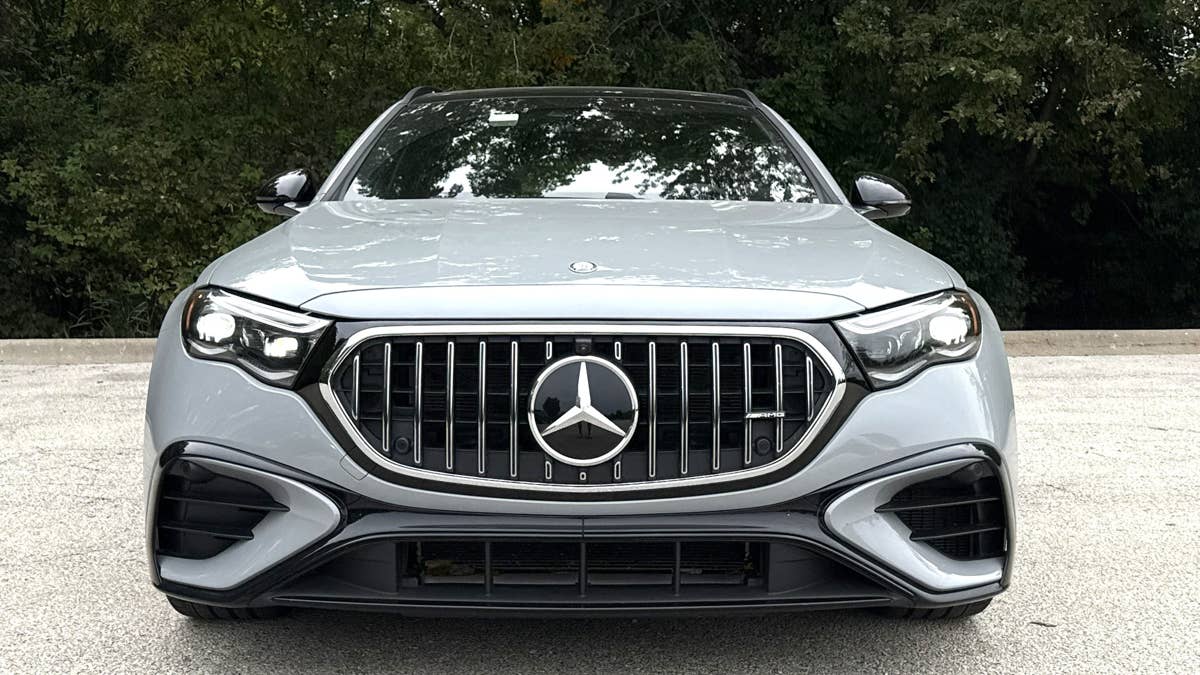
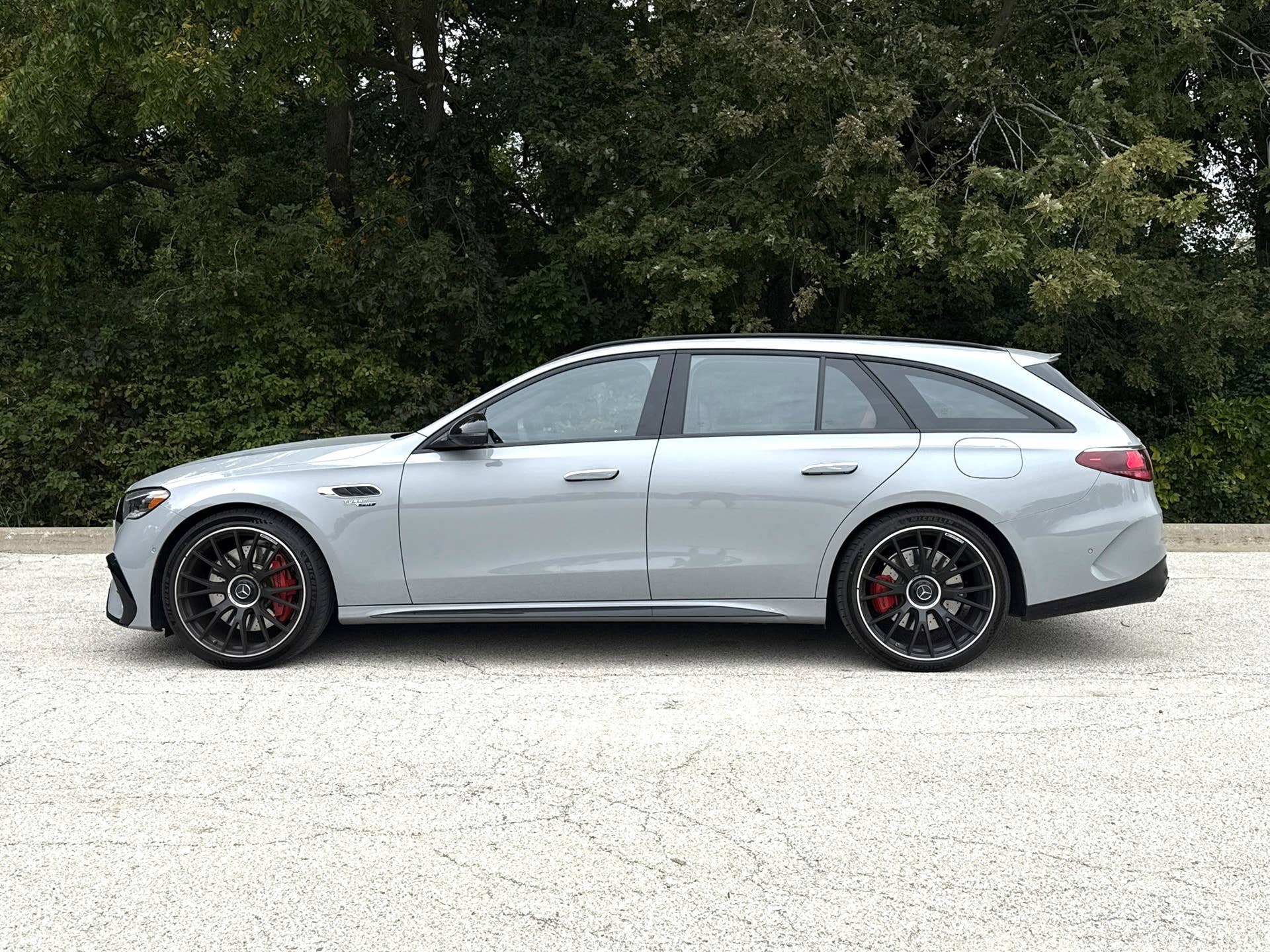
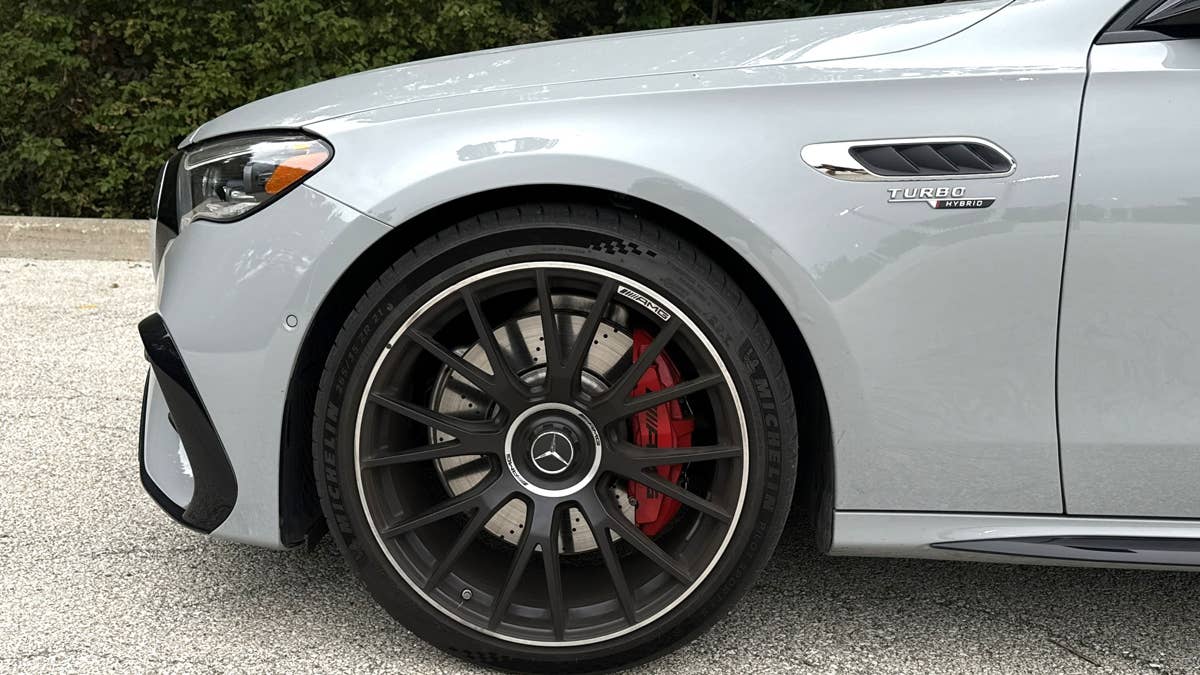
The E 53 Hybrid Wagon looks great. It’s sleek, properly menacing, and even a bit sexy compared to the more brutalist M5 Touring. It certainly attracted attention during my time with it. One gentleman parked his C-Class next to it and ogled it for a few minutes. The AMG GT-style grille with the requisite frisbee-sized tri-star emblem look fantastic, flanked by curvaceous headlight clusters and big lower intakes. The body isn’t overstyled and retains the elegance of the E-Class while adding touches like black window surrounds, black multi-spoke wheels, and red brake calipers.

View the 4 images of this gallery on the original article

I love the clean and steeply raked D-pillar that terminates in a simple but attractive rear end. The E-Class’s tri-star quad taillights, black quad exhaust tips, and sublte roof spoiler finish off the E 53’s Hybrid Wagon handsome exterior. I think it looks better, more cohesive than the sedan. People are definitely taking notice of these premium wagons, and it gives me hope in the return of the segment as a whole.

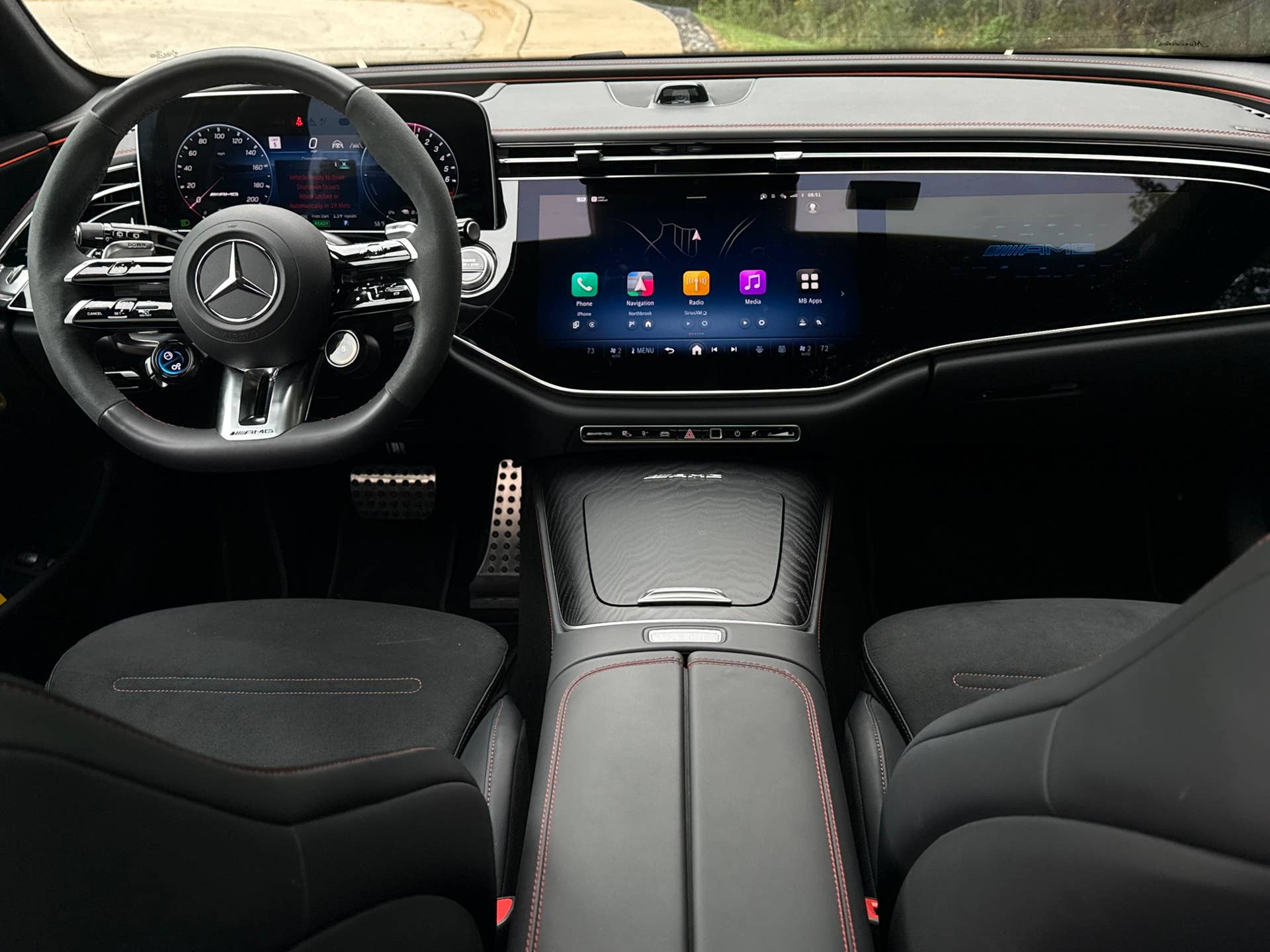
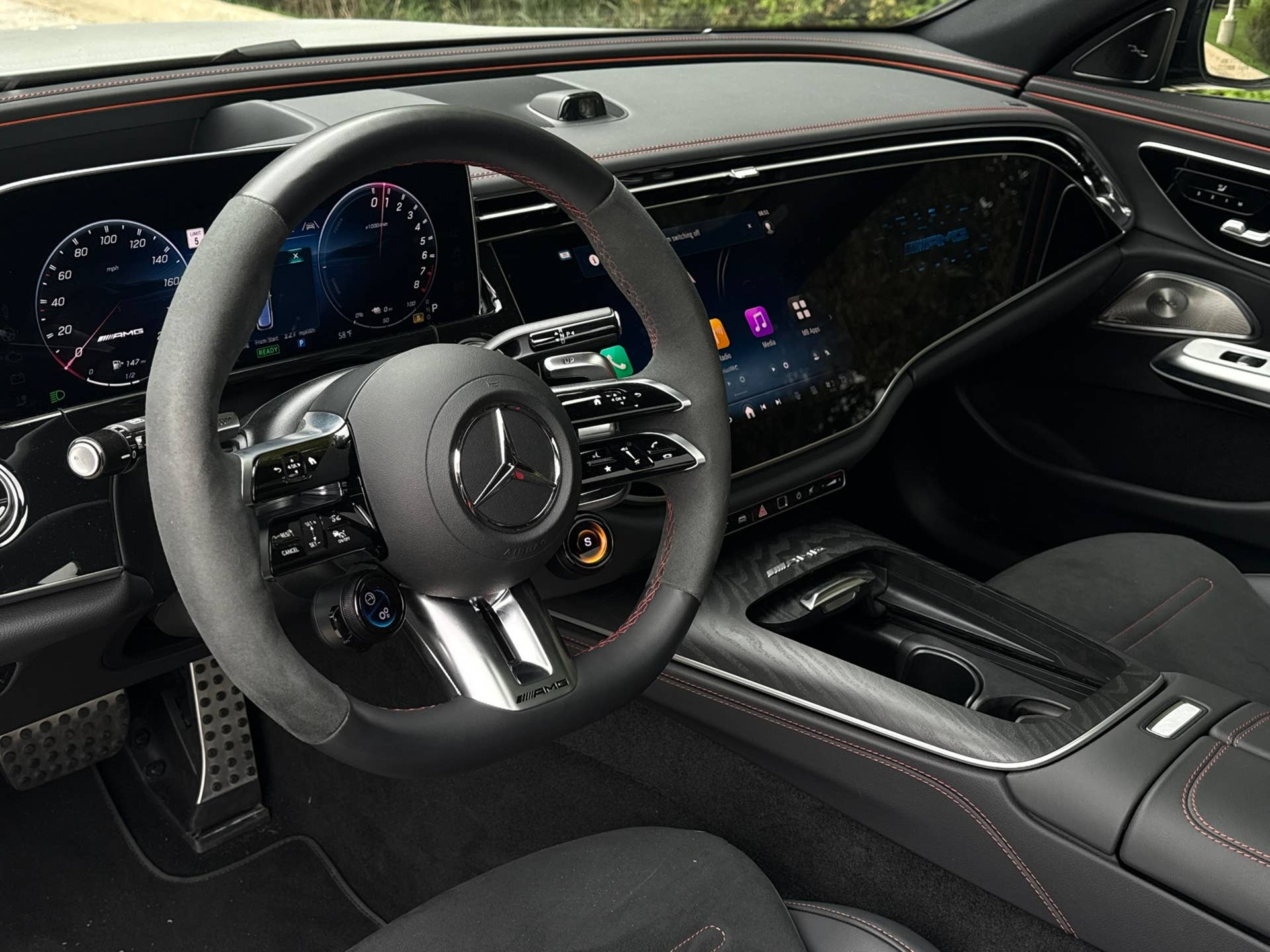
The cabin delivers a similarly strong first impression. It’s opulent, richly presented, and thoroughly committed to the idea that a modern luxury car should also serve as a technology showcase. My tester’s optional MBUX Superscreen gave the dashboard an especially elaborate appearance. For me, it’s a bit too much tech, but it certainly looks premium. More on that later.

Amos Kwon

View the 4 images of this gallery on the original article

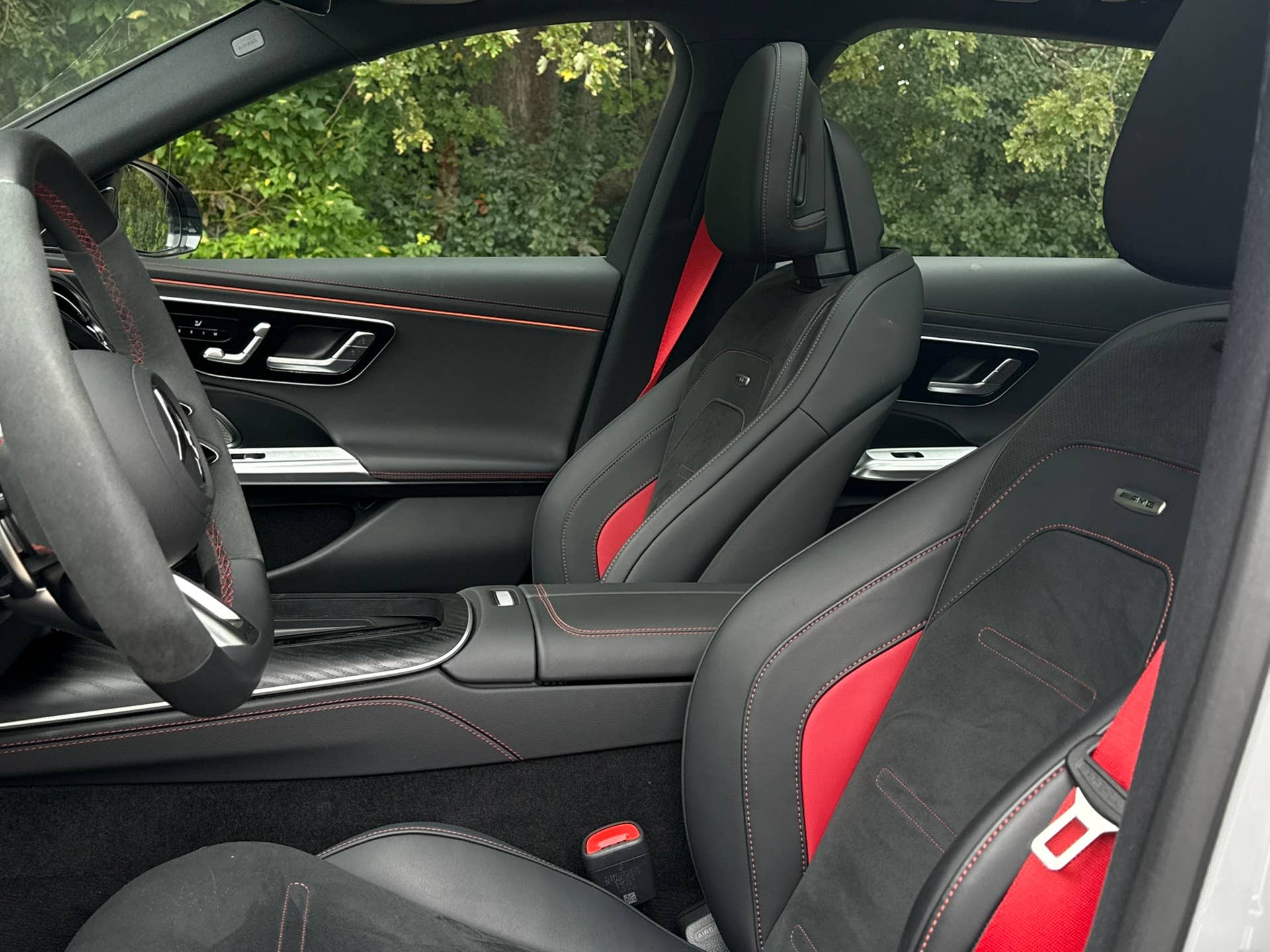
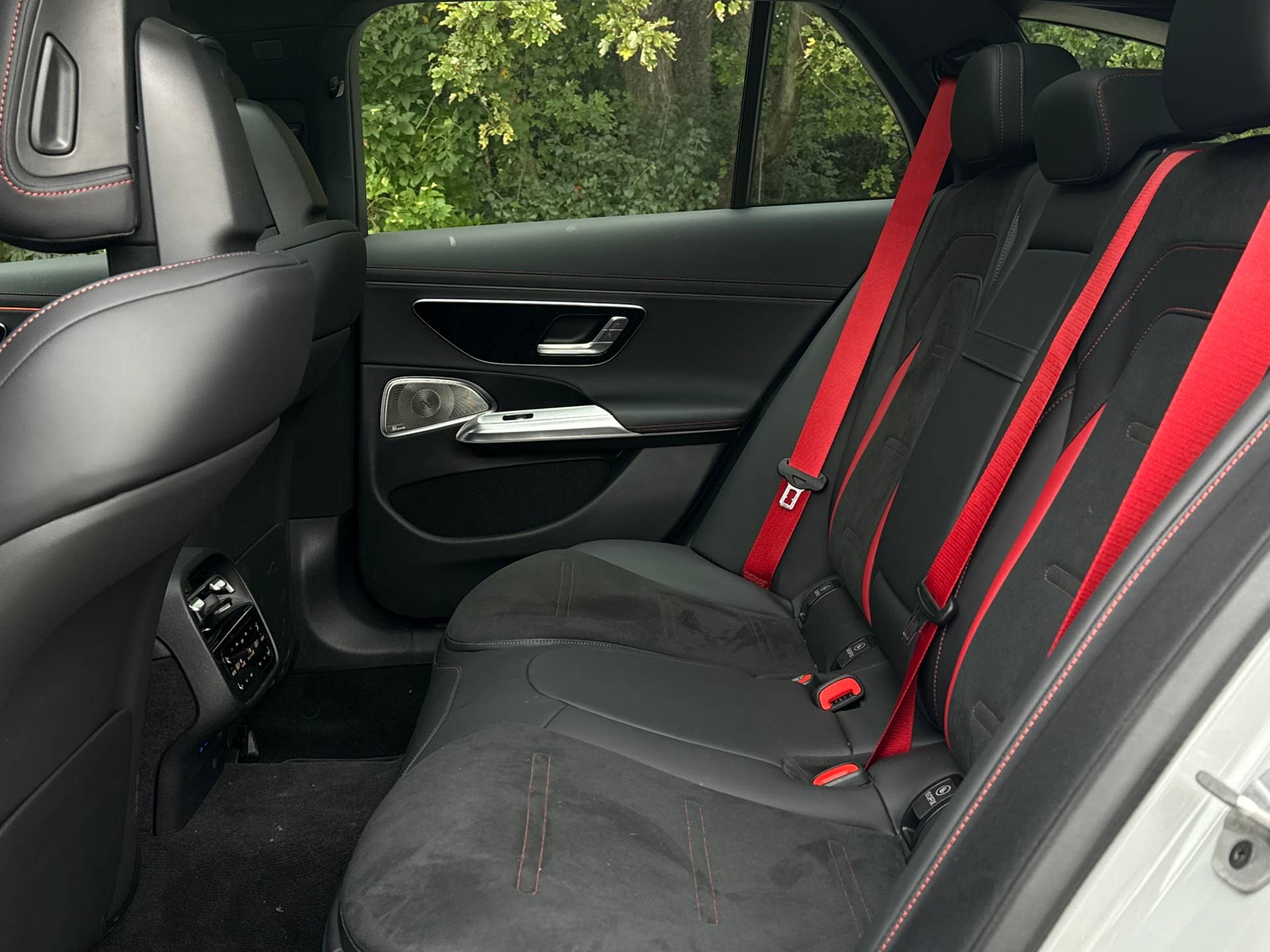
The materials inside the E 53 Hybrid Wagon are top tier. Rich suede and leather, matte wood, and high-grade metallic surfaces abound. Red stitching all over the cabin add to its sportiness, and there are even red seat belts. The only blunder is the use of piano black on the haptic feedback steering wheel controls, which have their own usability issues.

Technology, Controls, User Experience – 8/10

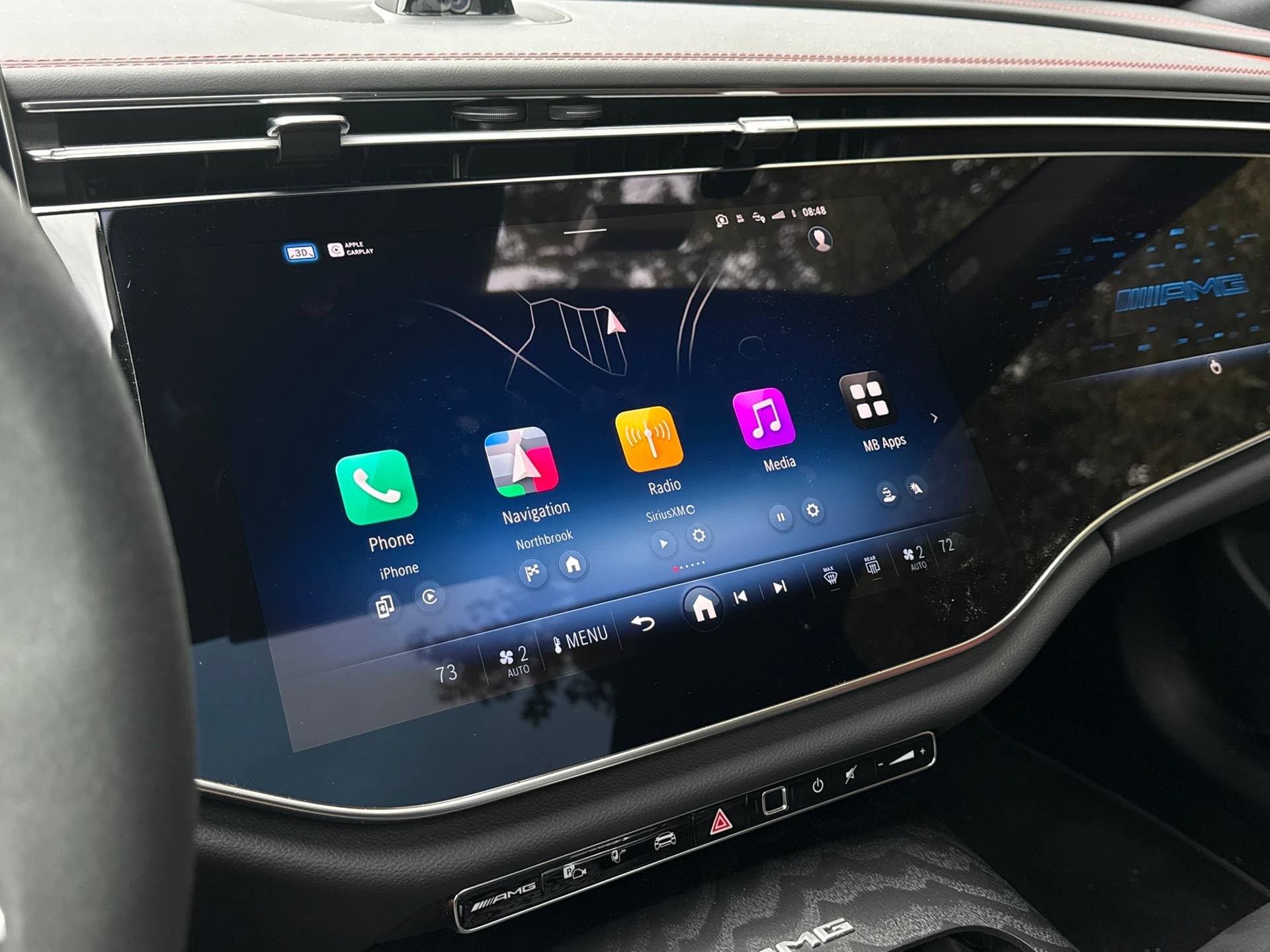
The standard display arrangement includes a 12.3-inch digital instrument cluster and a 14.4-inch central touchscreen. The optional MBUX Superscreen adds a 12.3-inch front-passenger display, creating a colossal digital presentation across the dashboard that almost totally dominates the cabin. The larger issue is how much interaction Mercedes routes through screens and touch-sensitive controls. MBUX’s menus are an improvement over the previous iteration, but basic adjustments still divert too much attention from the road.

An available 3D instrument display adds another layer of visual punch, although I didn’t notice it immediatley. The effect is difficult to convey in photographs because it’s something the driver experiences from behind the wheel. It looks slick, but it’s wholly unnecessary.

Climate functions are a good example. Accessing temperature adjustments and related settings requires tapping the lower portion of the display and working through the interface. It’s an unnecessarily involved process for something drivers should be able to manage with minimal distraction.

Audio controls are even more frustrating. There’s no conventional volume knob, and the touch-sensitive slider below the screen proved difficult to use precisely. Sometimes an input produced a larger change than I wanted; other times, it barely seemed to register. The small slider on the steering wheel wasn’t much better. A physical volume knob would improve the daily experience more than a massive display or an additional passenger display.

Comfort and Space – 8.5/10

A fast family wagon needs to handle the family shuttling as well as it handles highways and backroads. This is where the E 53’s appeal became diminished for me. The front seats are superb with the right balance of cushioning and bolstering. Adjustability is excellent, despite the door-mounted controls. The suede inserts are grippy, and the headrests move forward and back, a nice touch that adds another level of comfort.

The rear outboard seats are comfortable, but the space around them isn’t especially generous. With a front occupant taller than six feet, the person behind has limited room to stretch out. Rear legroom is 36.2 inches, accompanied by 37.6 inches of headroom. Those figures are comparable to the M5 Touring’s, but the RS 6 Avant offers more room in both measurements.The center position is the bigger disappointment. A substantial center tunnel and the rear climate-control console consume much of the available foot space.

My test vehicle also lacked heated rear seats. At nearly $112,000, that omission felt Merc was nickel and diming. I would give up the fancy speaker grilles just to have this. Buyers should verify availability on the specific model year and vehicle they’re considering rather than assume a six-figure sticker means you automatically get this.

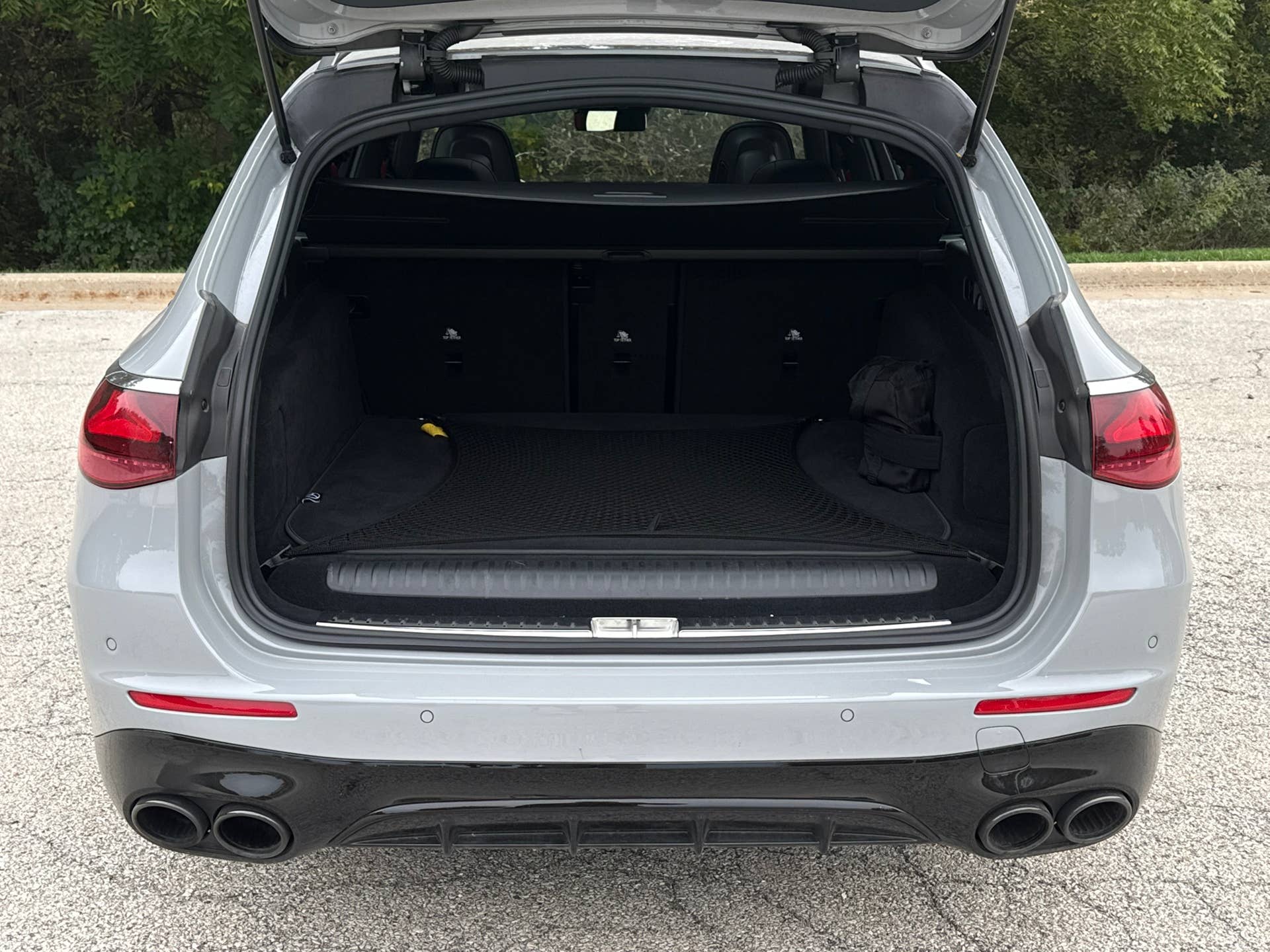
Cargo space is more than commendable in the E 53. It’s not as capacious as a GLE SUV, but it’s solid with 33.1 cubic feet behind the rear seats and up to 64.6 cubic feet with them folded. More important than just the numbers, its low, wide load floor makes loading heavy items and reaching farther into the compartment easier than in a taller SUV. The rear-seat accommodations might require some compromises, but the cargo area delivers the everyday versatility that makes this fast wagon so appealing.

Driving Experience – 9/10

The E 53 is quick and maneuverable. It doesn’t scare you the way the 717-hp BMW M5 Touring does, but the 577 horsepower from its inline-six and electric motor delivers performance that lands between composed and nutty. The transmission shifts quickly, and the car gets to 60 in four seconds. That’s properly quick, and the brakes are progressive and strong.

The combination of adaptive suspension, rear-axle steering, and all-wheel drive gives this wagon the ingredients for an engaging, daily manageable driving experience. It offers a persuasive alternative to an SUV for someone who also wants to fun behind the wheel. The E 53 Hybrid Wagon more than delivers. The quoted 41 miles of electric range is a boon for commuters, and that range is real. I was able to extract almost 40 miles before the battery was depleted.

Final Verdict – 8.75/10

The 2026 Mercedes-AMG E 53 Hybrid Wagon gets close to being the complete package. It’s fast, visually stunning, luxurious, and capable of handling some everyday driving on electricity. Against its high-performance wagon rivals, its lower starting price makes it even more appealing. But “less expensive” doesn’t mean inexpensive, and a nearly $112,000 test vehicle still invites more scrutiny beyond its performance and looks. It has to be family-friendly and quick to operate. It seems all three premium superwagons could use a lesson here. That said, the E 53 Hybrid Wagon is a worthy member of the German triumvirate, and I’d rather it exist with flaws than not exist at all.

I Drove The 2026 Land Rover Defender 130 X, and It’s My New Dream SUV For Family and Adventure

It Has Dual Purpose Work Cut Out For It

I’m a suburban dad with three kids. My wife and I both own Mazdas, a CX-9 and a Mazda6. Someday, I’ll own a rear-wheel drive, manual transmission sporty car again, but that’s probably when the kids are gone and I’m retired. My wife and I also consider buying a vehicle for overlanding, and I may have found it. The qualifier is that any vehicle chosen for this purpose must also work as a family vehicle to eventually replace our CX-9, while adding the ability to do the rough stuff when necessary.

Amos Kwon

The 2026 Land Rover Defender 130 X brings those two worlds together beautifully. It combines three-row seating with a 395-horsepower inline-six with mild hybrid assist, standard air suspension, and serious four-wheel-drive hardware. This isn’t simply a family SUV with a rugged look. It has the goods to do what most SUV owners never will.

My tester’s base price was already substantial at $105,000. With the $1,850 destination charge and options like the Cold Climate Pack, Towing Pack, and heated second row Captain’s Chairs, the total price arrived at $110,010.

Exterior & Interior Styling – 9.75/10

Amos Kwon

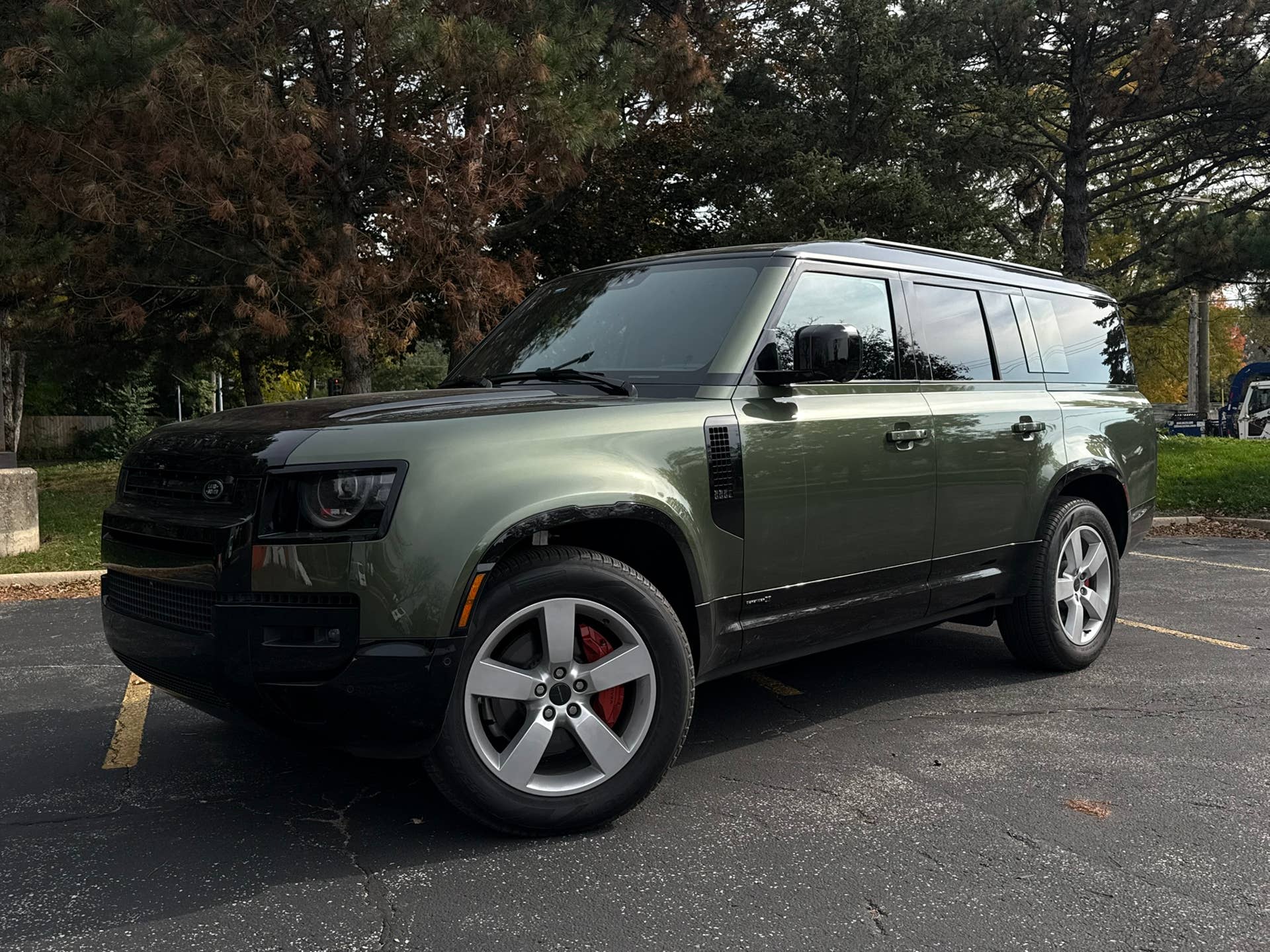
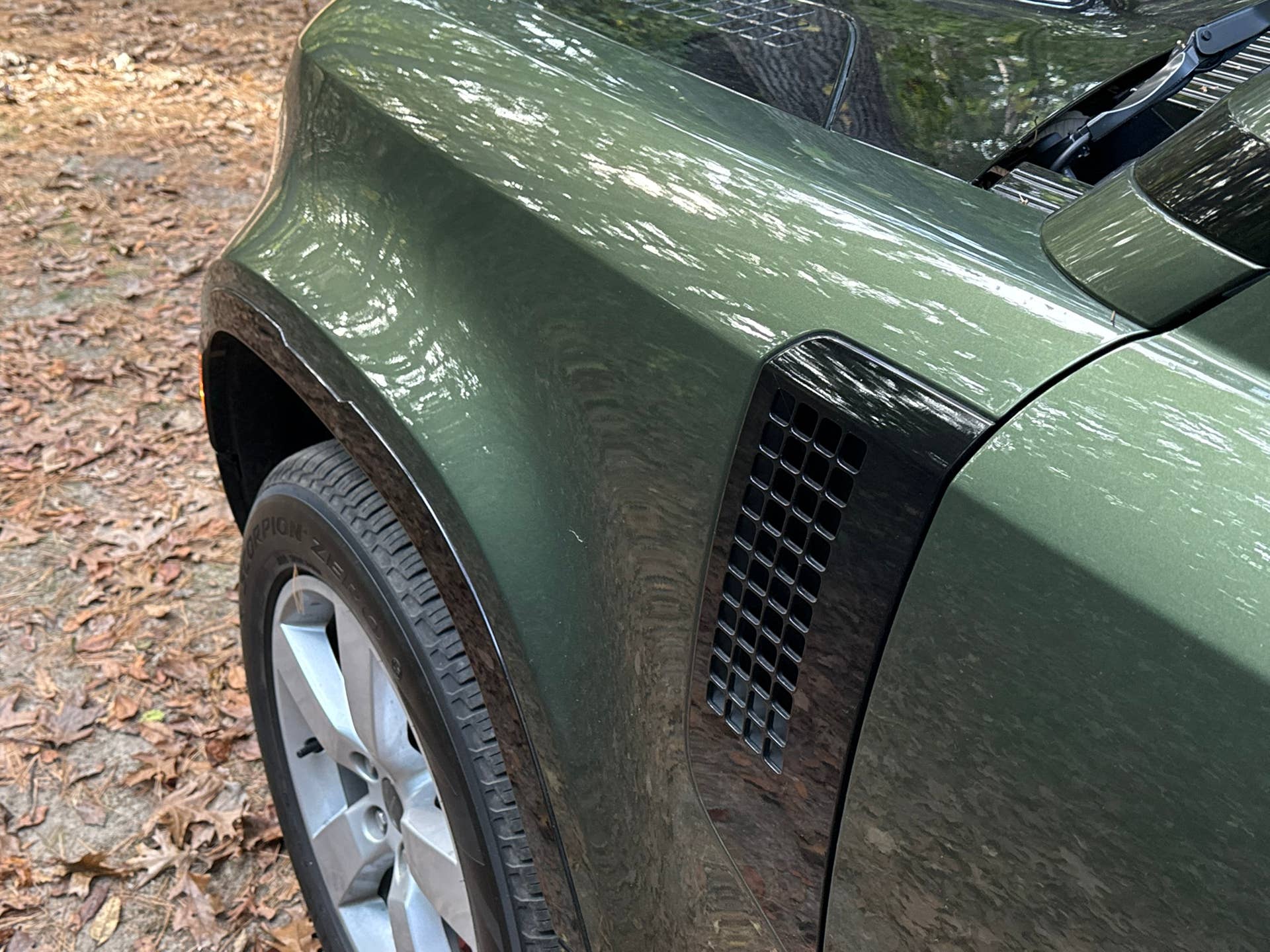
I’ll admit that the 130 isn’t the best-looking version of the Defender. That superlative belongs to the well-proportioned 110. The 90 looks like two-thirds of a Defender. The 130 looks a little ungainly due to the added 13.3 inches of length. It has the same wheelbase as the 110, but that extended tail section makes it seem almost hearse-like. That said, I still love the Defender’s unapologetic uprightness, boxy body, and purpose-built look. The 130 X’s Woolstone Green Paint and black trim pieces might just be the perfect combination. For my family the longer back is what could make ownership a reality.

Amos Kwon

View the 4 images of this gallery on the original article

The cabin is even better than the exterior. It’s a wonderful combination of physical controls, rugged materials, and utilitarian design. None of it looks or feels overdone or chintzy, and it feels like the kind of luxury SUV you’d actually feel okay beating up a litle with mud, camping gear, and kids. The beefy steering wheel, chunky dashboard, integrated grab handles, and huge cubbies give the Defender the right vibe for town and country. It’s refined without pointless decoration and rugged without overkill.

Amos Kwon

I’m utterly fascinated by the powdercoated steering wheel spokes and similarly tactile center console. I don’t know any other vehicle that uses this, and it’s wonderful. Sure, there’s no wood in here, but who cares? The plastics, metal trim pieces, and leather are all handsome and high-quality. It all comes together in a cabin that matches the exterior.

Amos Kwon

View the 4 images of this gallery on the original article

I have to confess that when the new Defender came out in 2020, I was skeptical about its newfangled interior. I thought it would be to posh and too complex, but the result is a near perfect execution of form following function. Land Rover should absolutely take some of this and slide it into the overly minimalist cabin of the top dog Range Rover, which is challenging to use quickly. The Defender’s interior is one of the best I’ve experienced, and it’s one you won’t be afraid to dirty up on occasion.

Infotainment & Technology – 8.25/10

Amos Kwon

For 2026, the Defender gets a standard 13.1-inch infotainment touchscreen running its Pivi Pro interface. The larger curved screen replaces the previous 11.4-inch display. A 12.3-inch configurable instrument display handles the driver’s information, while wireless Apple CarPlay, wireless Android Auto, and wireless phone charging cover the everyday essentials. The system works well, but the main menu takes some adjustment due to the layout and similar coloring. I didn’t score the same system as high in the Range Rover, but that’s largely because of said vehicle’s lack of accompanying physical controls.

Amos Kwon

The instrument display is one of my favorites because it looks genuinely analog. The brushed matte surfaces of the gauges appear to have texture, and the font is a nice blend of modern and classic. Other tech features include surround-view and ground-view camera functions that help with vehicle placement, and an available digital rearview mirror can maintain a useful view when passengers or cargo block the rear window.

Shopping for a new car? Click here to get a great deal on your next vehicle. Powered by Carvana: no-haggle pricing, 100% online.

Comfort, Space, and Usability – 9.5/10

Amos Kwon

The interior of the 130 X is superb. The seating upholstery employs both Windsor leather on the seating surfaces and something called Kvadrat, a premium wool-blend textile, on the side trim. It has texture and can handle more rigors than leather. The seating materials are a combination of refinement and ruggedness, and the formula works.

The front seats are very supportive and the right amount of cushioning. The Captain’s chairs are similarly comfy, and both rear rows can house real adults. The massive opening between the Captain’s Chairs makes third-row access minivan-like. The third row seats have nice level cushions, and even the middle position is comfortable. 31.7 inches of legroom back there is solid. All three rows of the 130 X come with standard heated seats, while the front row also gets ventilation.

Amos Kwon

View the 4 images of this gallery on the original article

Although the cabin is largely utilitarian, the Defender 130 X has great standard amenities like a panoramic sunroof, a power tilt/telescoping steering wheel, configurable cabin lighting, a crisp head-up display, and a booming 700W Meridian Surround Sound System.

Cargo space in the 130 is generous. With just the third row folded flat, there’s 28.4 cubic feet of space. I was able to load it up with gobs of camping gear and firewood and didn’t even need to fold row two down to do so. With the third row in place, there are 15.3 cubic feet behind it. It’s not a lot of room, but I was able to fit 7 full grocery bags across its width. Fold all rows down, and the Defender 130 provides 89 cubes.

Amos Kwon

View the 4 images of this gallery on the original article

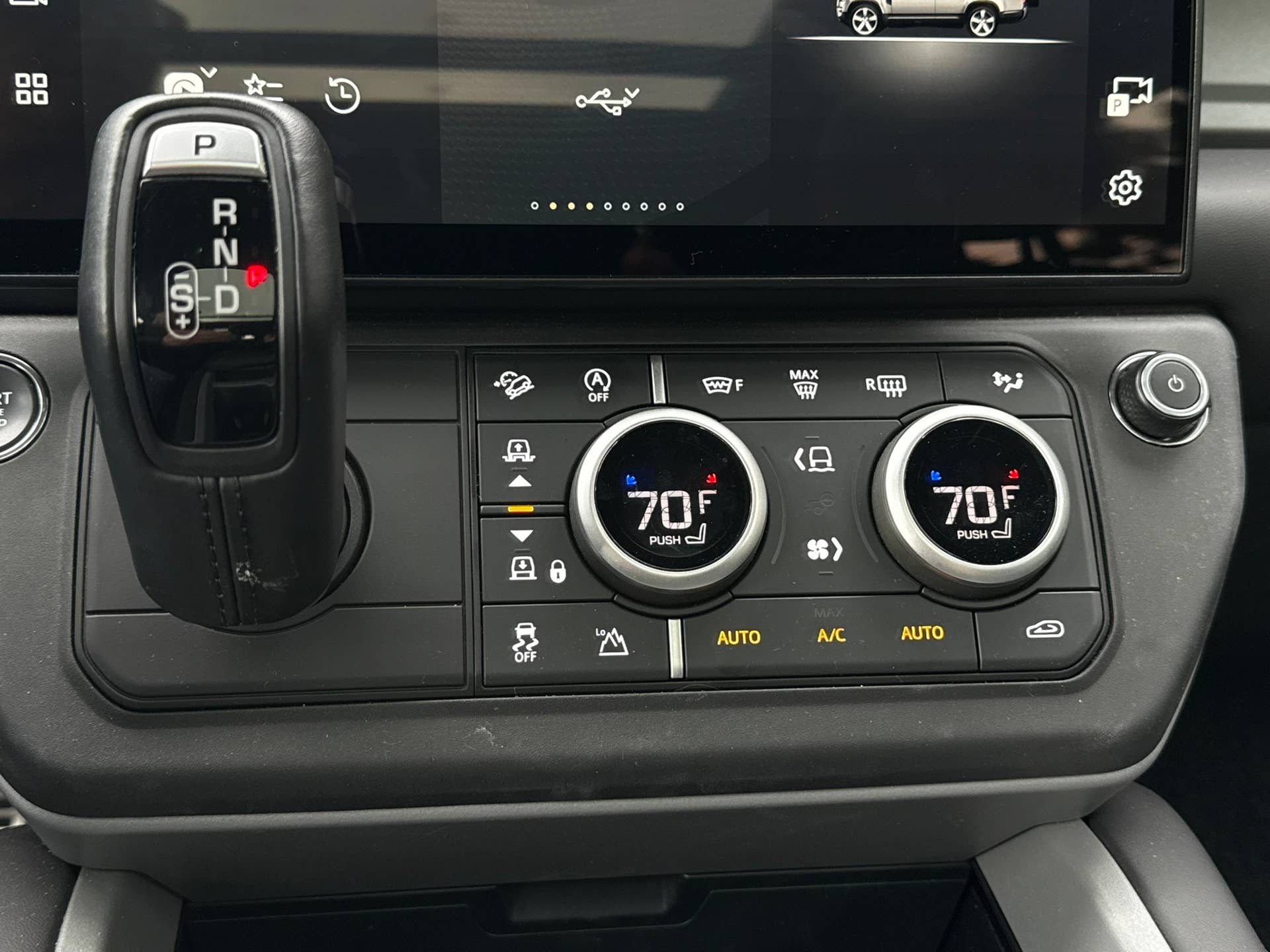
The Defender lineup has some of the best physical controls in the segment. I love bent nail shift knob. It has a mechanical feel, although it returns to the same position each time. The climate control knobs with digital readouts and seat heat/ventilation are excellent. Once you get used to the location of the other buttons for climate, traction control, ride height, etc., it all becomes easy to use. The rear cliamte control knobs are just like the ones for the front row. The control pads and switches on the steering wheel for adaptive cruise control and audio also work very well, making it easy to control while driving.

Driving Experience – 8.5/10

Amos Kwon

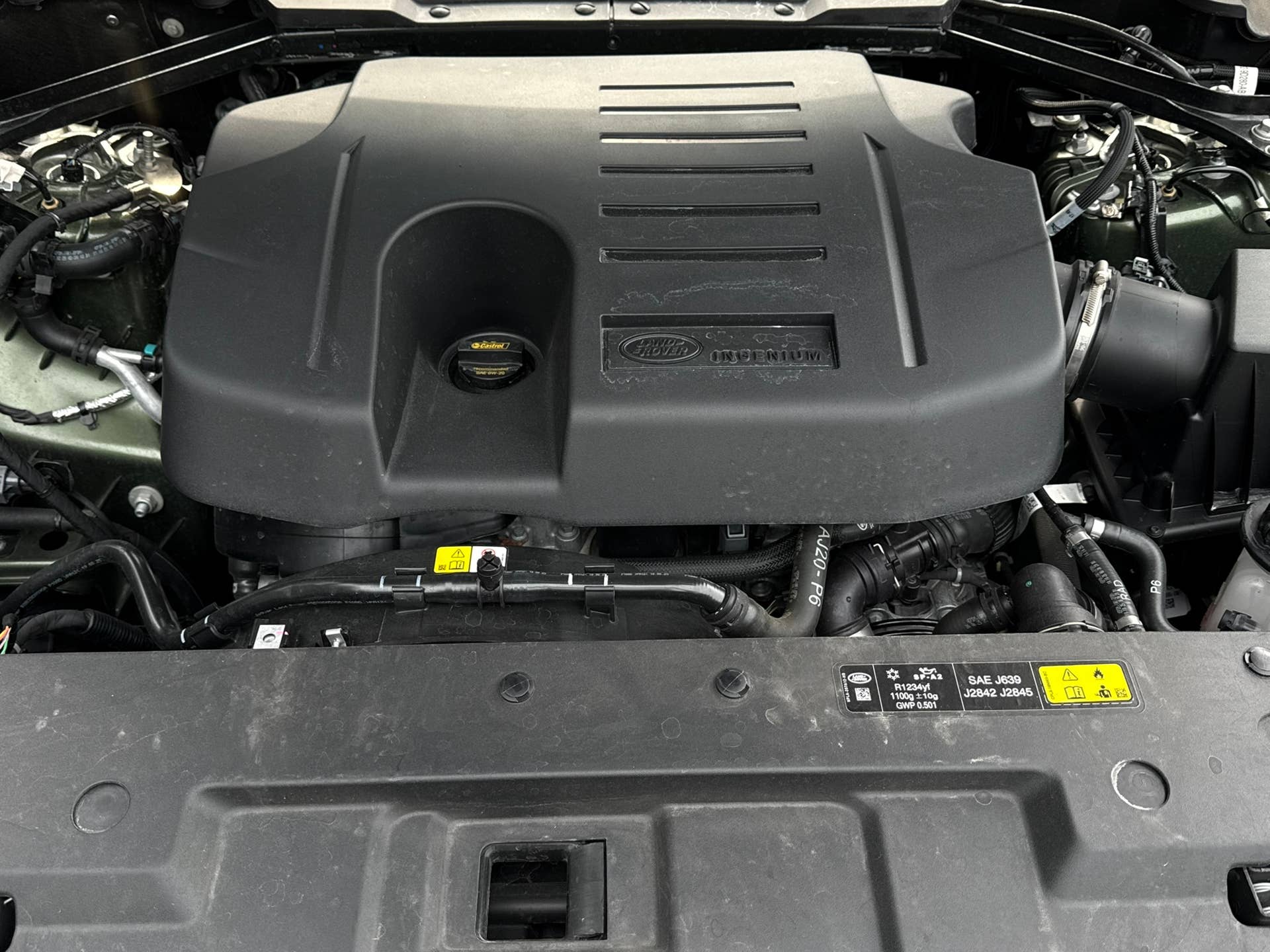
When it comes to a family SUV with solid off-road chops, I don’t require gobs of horsepower. I’d rather have comfortable and roomy accomodations instead of 500+ horsepower. The P400 powertrain feels like the sweet spot for the 130 X. Its 3.0-liter mild-hybrid inline-six produces 395 horsepower and 406 lb-ft of torque, paired with an eight-speed automatic and four-wheel drive. 0-to-60 mph happens in the low-six-second range, and it’s plenty of performance for a large SUV that weighs nearly 6,000 pounds.

Amos Kwon

The result is strong acceleration and smooth shifts, while cruising at 75+ mph highway speeds feels pretty effortless. There’s a little lag off the the line, but it’s quick once it gets going. There’s good steering effort, and its very accurate. The largest Defender is tall and hefty, so managing turns takes a little bit of planning. Standard air suspension and Adaptive Dynamics work wonders, and ride comfort is superb over broken pavement and gaps.

Some might criticize the Defender’s use of unibody (vs. body-on-frame) construction, but it’s rigid as hell without sacrificing comfort. Low-range gearing and Terrain Response 2 wiht Off-Road Modes give the X equipment that goes well beyond rugged styling. I didn’t take it on any serious trails, but dirt roads with divots and drops when I took my boys camping were dispatched with virtually no effort.

Final Verdict – 9.5/10

The Defender line is tremendously good. It manages to do utility, luxury, and style in almost equal measures, and the 130 X makes it very family-friendly. In the entire Land Rover lineup, it’s my favorite vehicle, and one of my favorite rugged SUVs. There’s not much it can’t do, although its added length diminshes the departure angle. On road, it remains surprisingly comfortable and composed. For the family, there are few competitors that can manage the toughness of the Defender 130 X. I’m putting this one on the short list for my family.

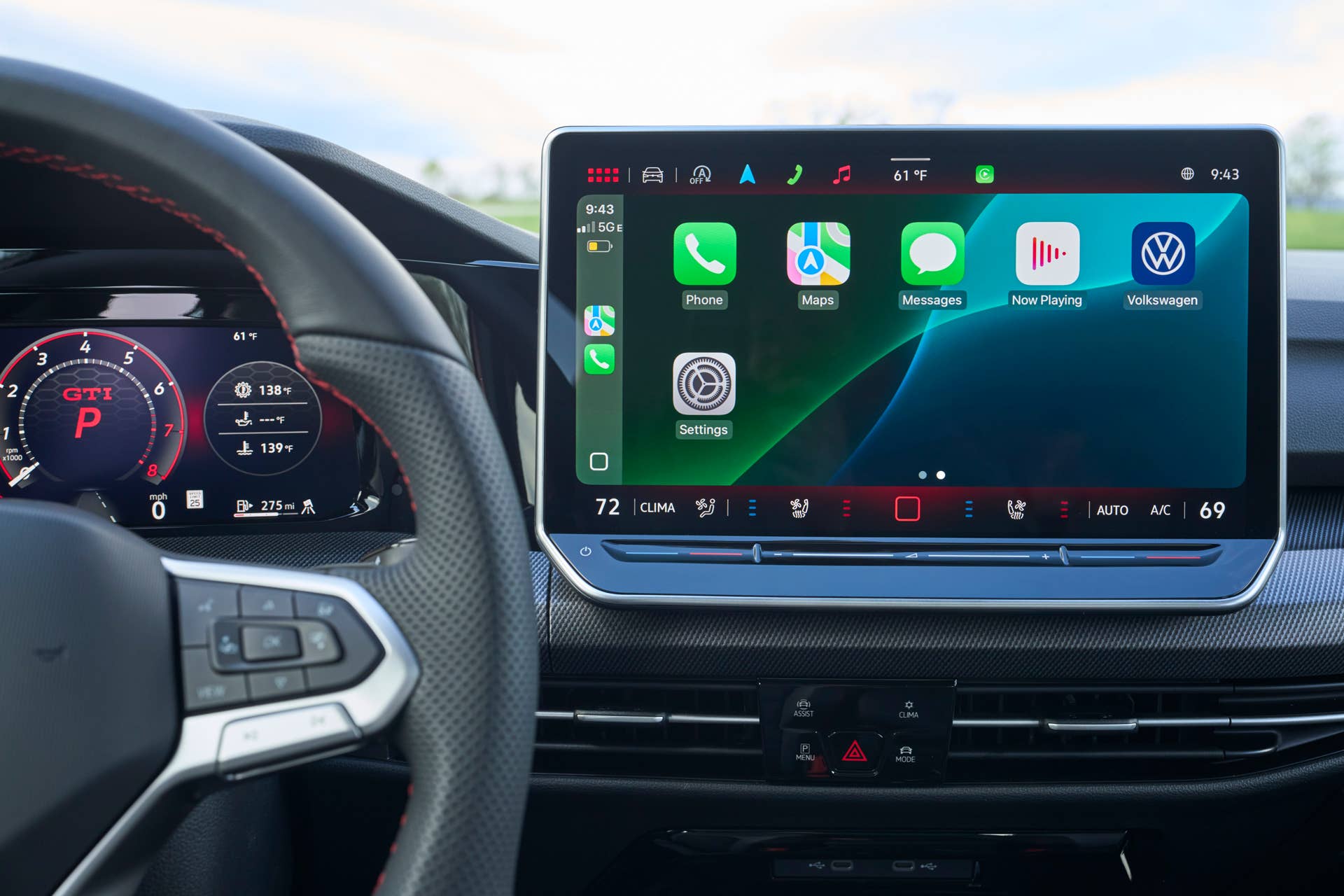
I Drove the 2026 Volkswagen GTI Autobahn. It’s the Nearly Perfect Hot Hatch With Two Huge Flaws

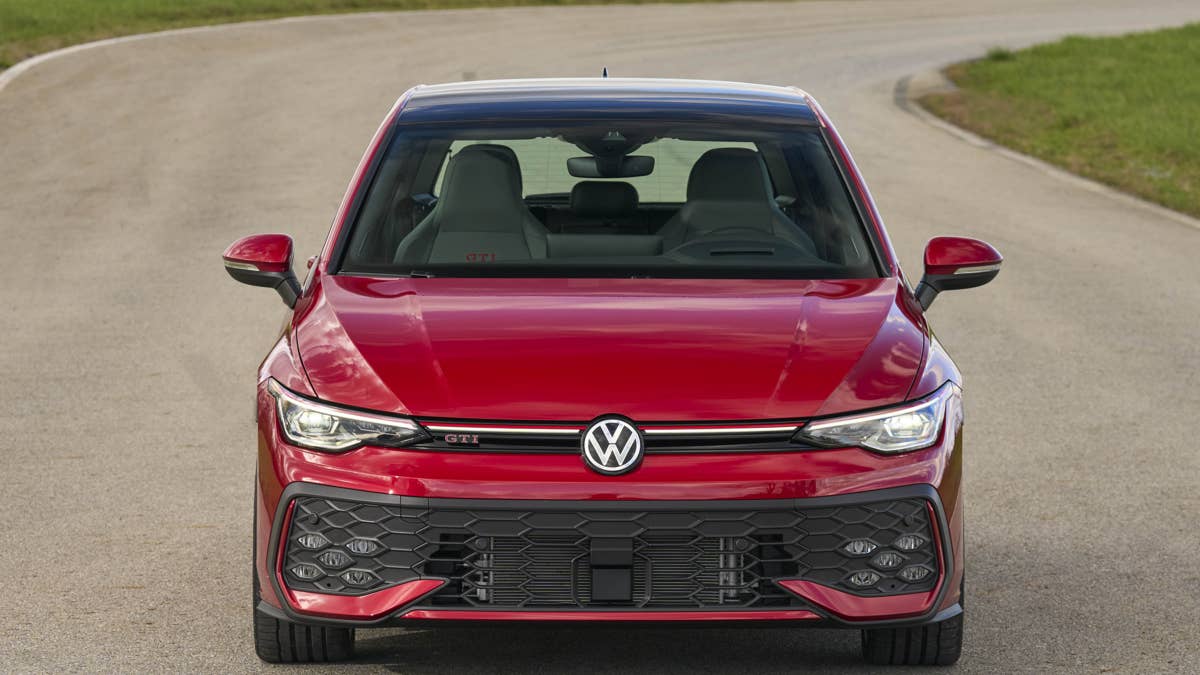
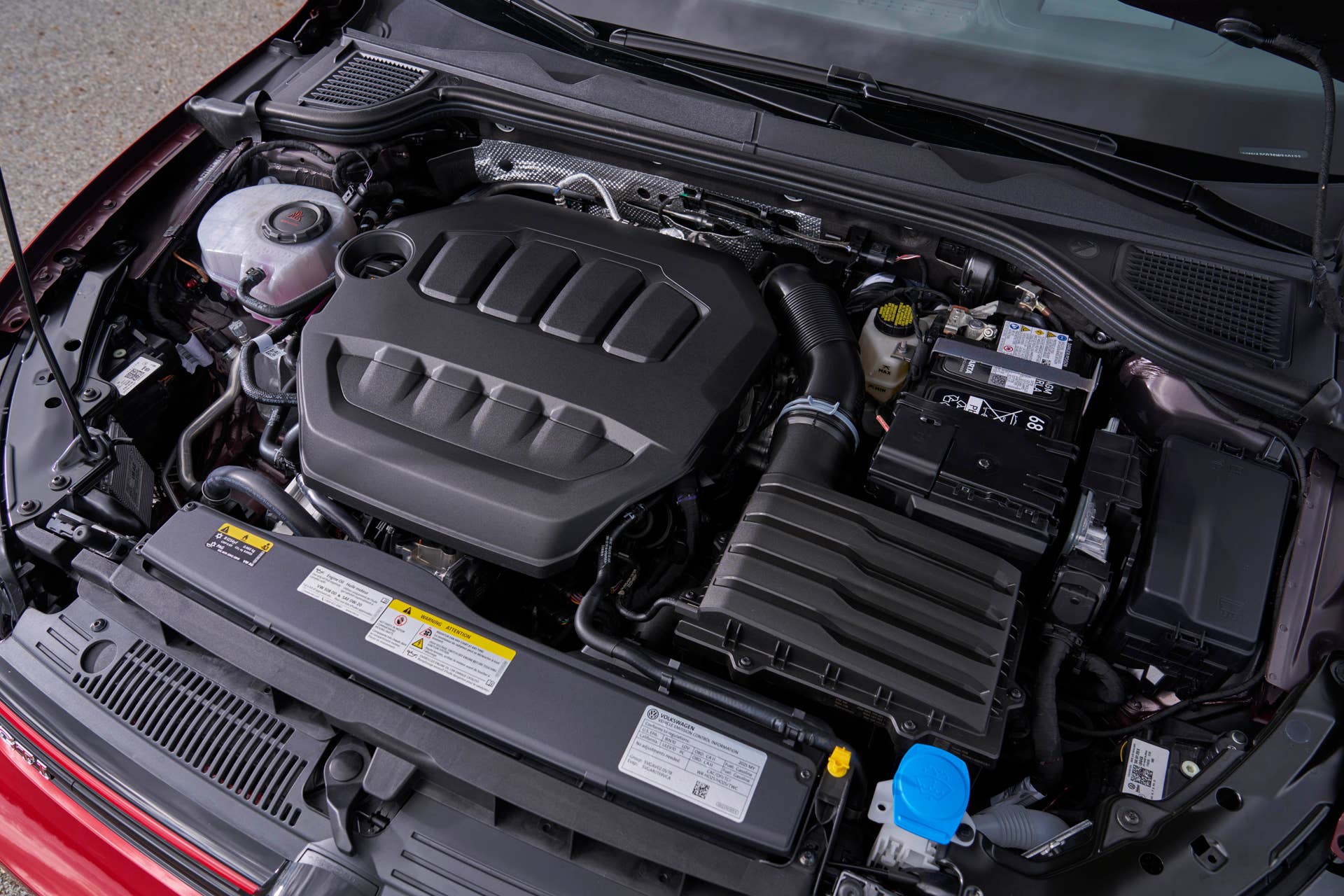
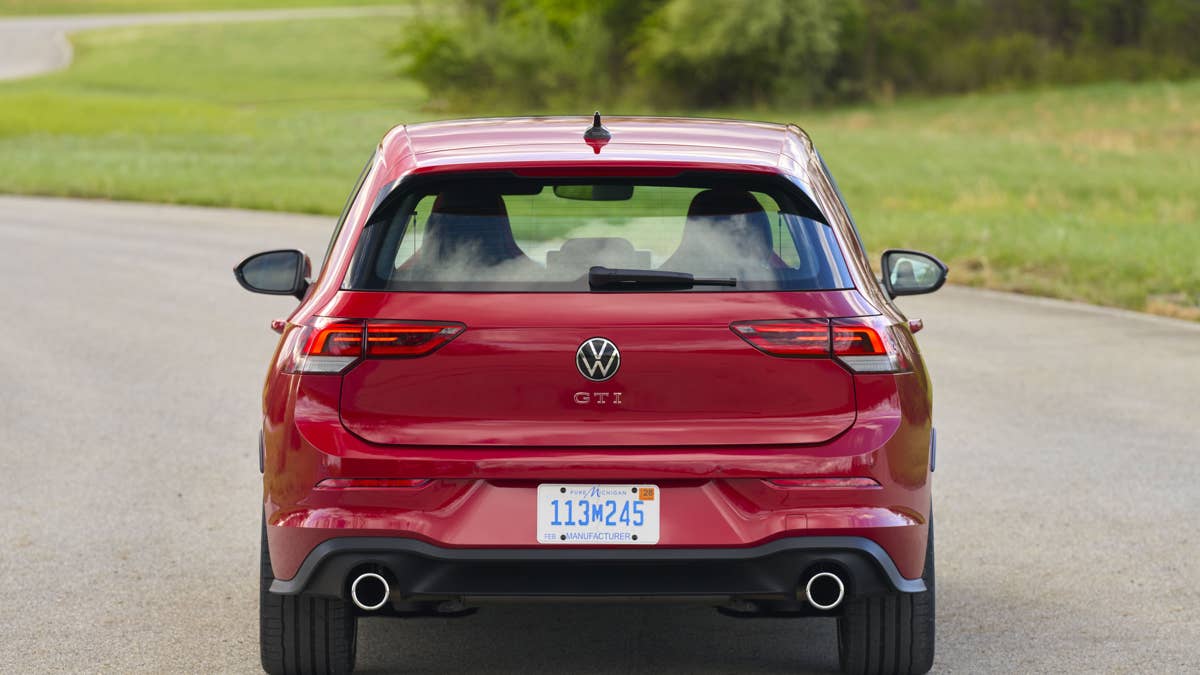
It’s hard to overstate the Volkswagen GTI’s legendary reputation in the pantheon of automotive history. Just like the Mazda Miata’s status as the quintessential roadster, the GTI is the defining hot hatch. It’s now in its second year without the beloved manual transmission, which means this formula isn’t quite the same as before. Nevertheless, the GTI brings the performance goods like a 241 horsepower turbocharged four-cylinder engine, a 7-speed dual clutch automatic transmission, a limited-slip differential, sharp variable-ratio electro-mechanical steering, and impeccable handling. It’s a car that’s meant to be driven, even though purists might walk away from it in its current form. That doesn’t mean they’ll walk towards the upcoming electric version.

Volkswagen

My test vehicle was a top trim 2026 Golf GTI Autobahn with a starting price of $42,480. Standard feature highlights included 19″ alloy wheels with summer performance tires, LED automatic headlights, adaptive front lighting system, multi-mode DCC adaptive chassis control, power folding/heated mirrors with memory/puddle lights, panoramic sunroof, rear roof spoiler, leather seats, heated/ventilated front seats, heated rear seats, heated leather sport steering wheel, ambient lighting, head-up display, 12.9″ touchscreen, Harman Kardon premium audio w/ subwoofer, wireless charging, and wireless smartphone integration. With options and the $1,275 destination charge, the total price came to $44,210.

Exterior Styling – 9/10

Volkswagen

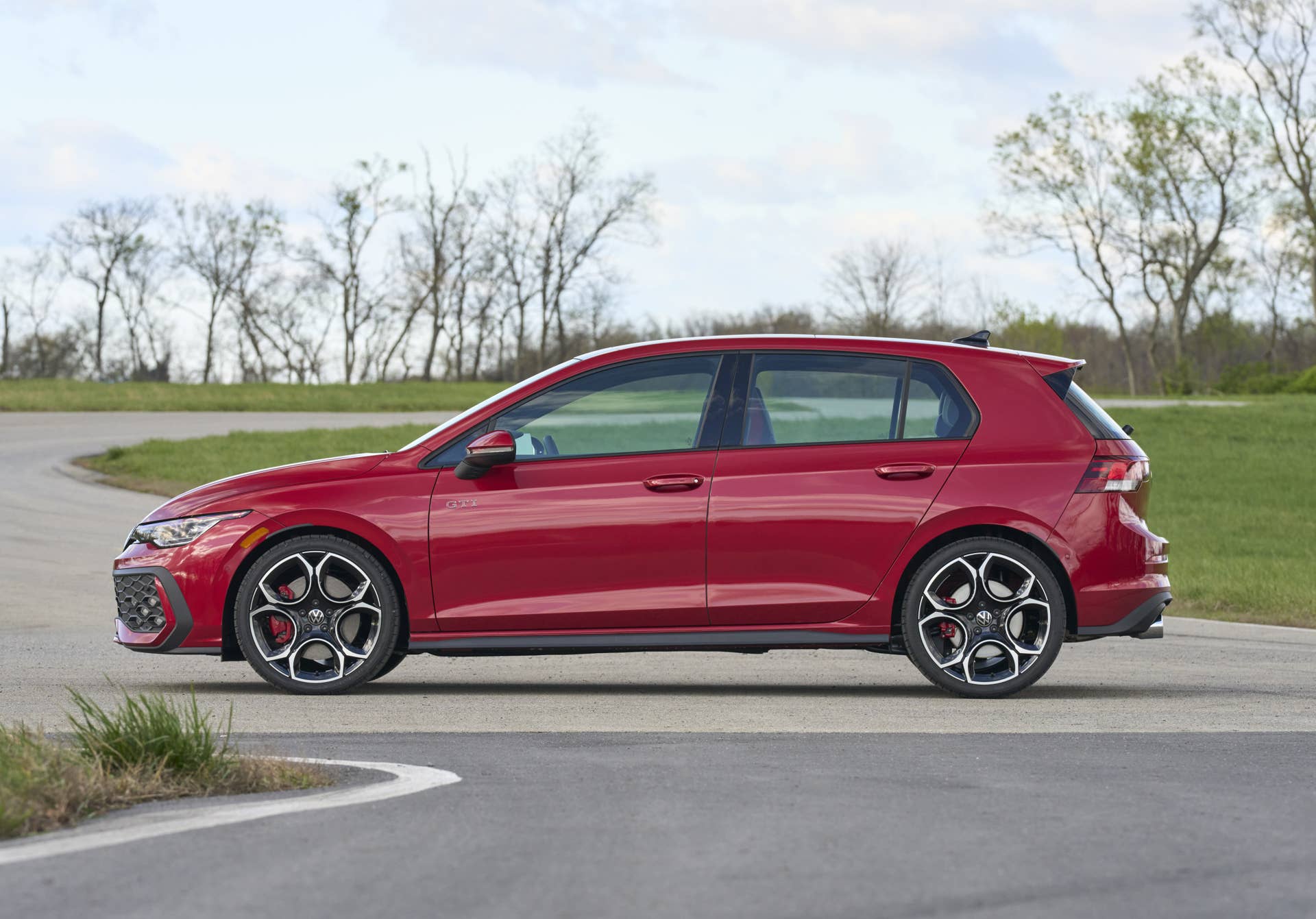
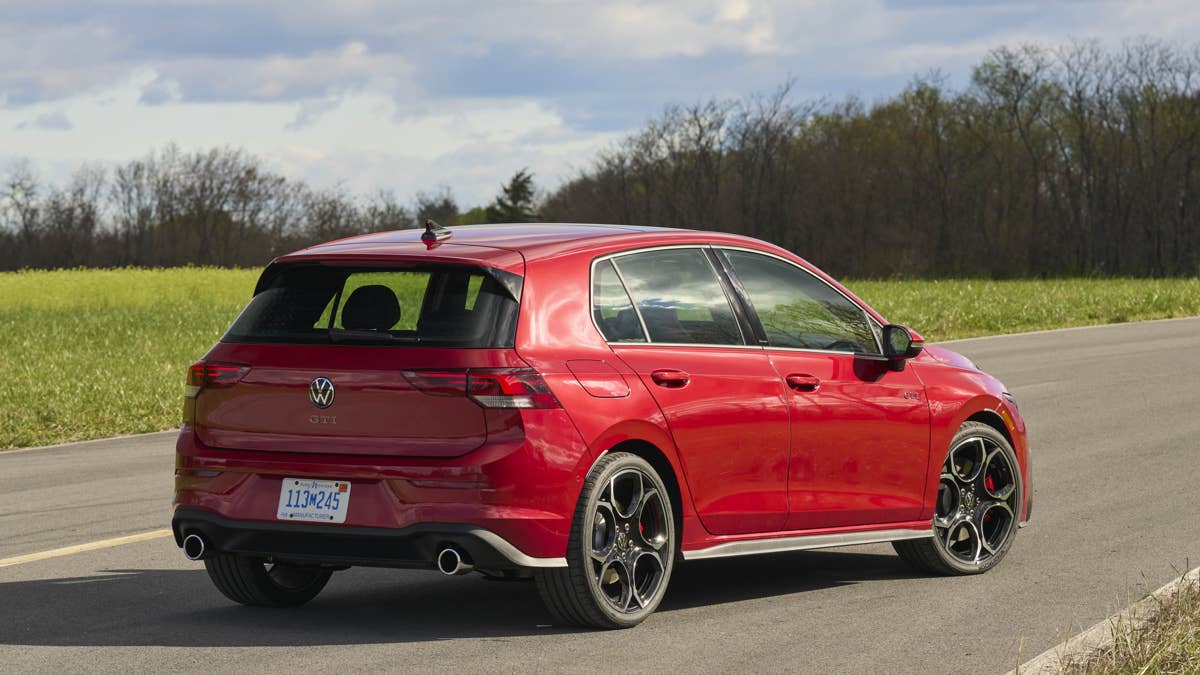
The Golf GTI is one of the most recognizable vehicles in automotive history. Its two-box hatchback shape continues to look sharp, attractive, and consistent with the same essential look over generations. With ongoing changes to its front and rear fascias, lighting, body creases, etc., its essential shape has stood the test of time, and you’d have to be a car idiot to not know the GTI and the Golf on which its based. In 2025, the GTI received new headlights and taillights to keep it fresh, but the rest of the vehicle remains largely the same, meaning handsome.

Volkswagen

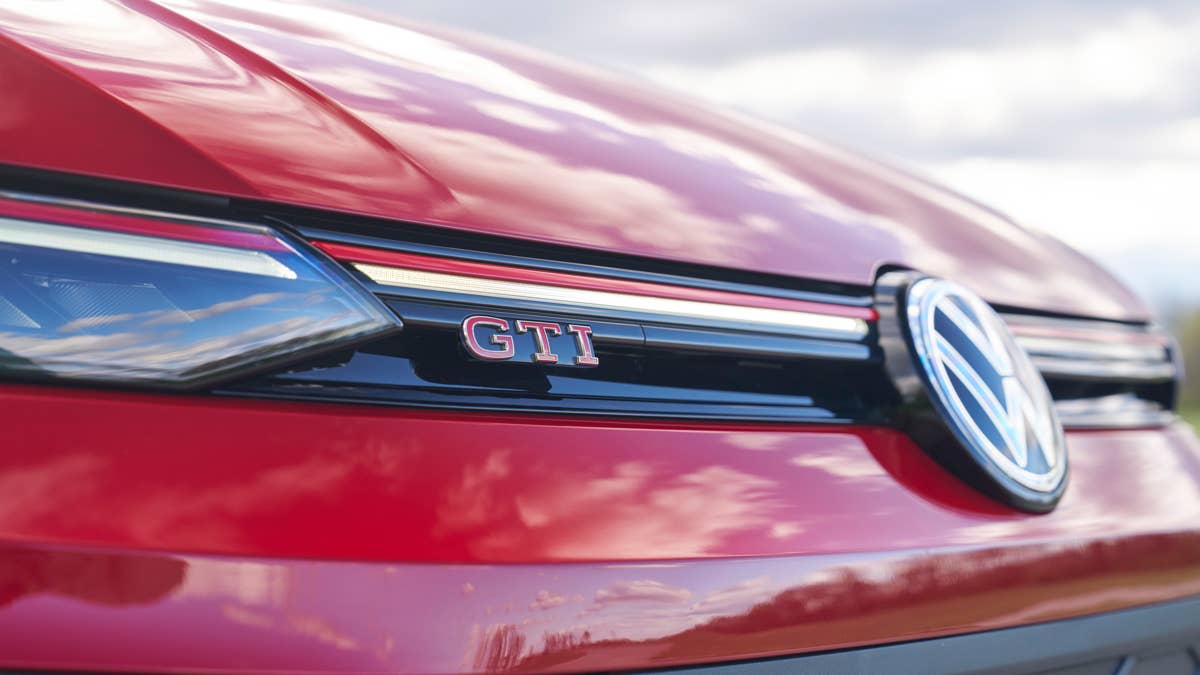
VW makes occasional tweaks to the GTI, but it’s wise to have kept it from being overstyled. Flourishes like the honeycomb lower grille with its integrated fog lights and the new wheels 5-hole wheels that nod to the Mk6 GTI’s “salad shooter” style wheels. These look better and scrapes will be less noticeable due to the elimination of the original’s flat faces. The body has crisp lines, perfect overhangs, nary a hint of chrome, and the easily-recognizable C-pillar. It’s a formula that’s pretty much never wrong. VW should offer its design consulting services to the team that designed the current Subaru WRX.

Interior Style and Comfort – 8/10

Volkswagen

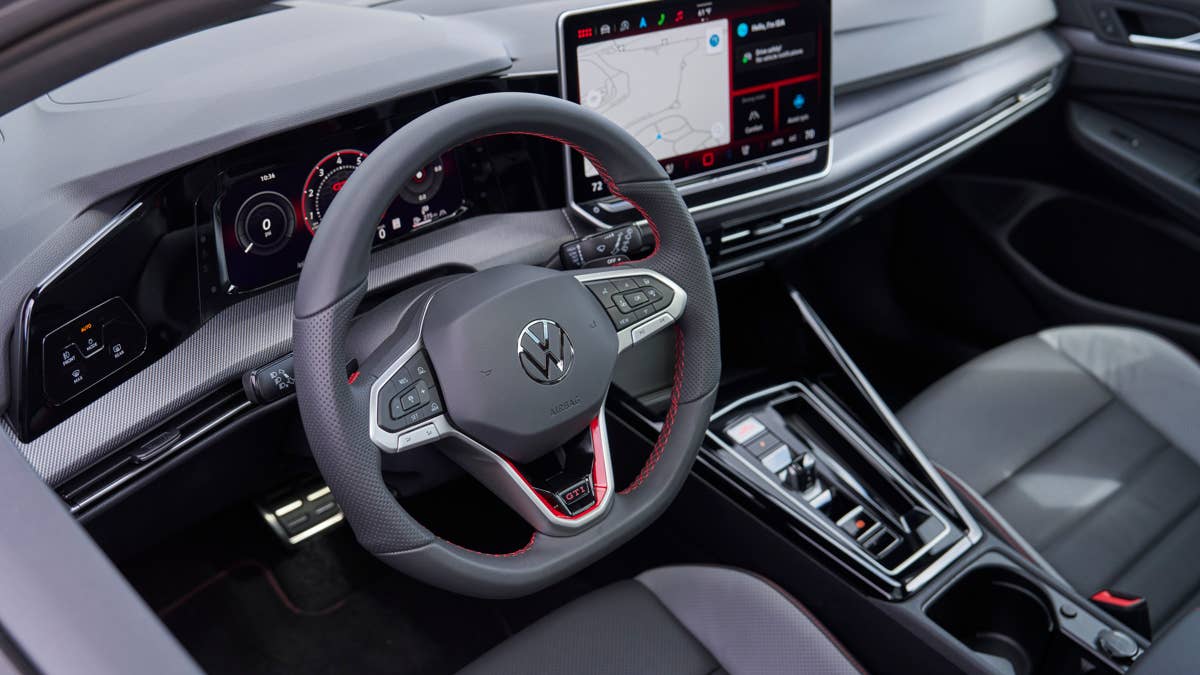
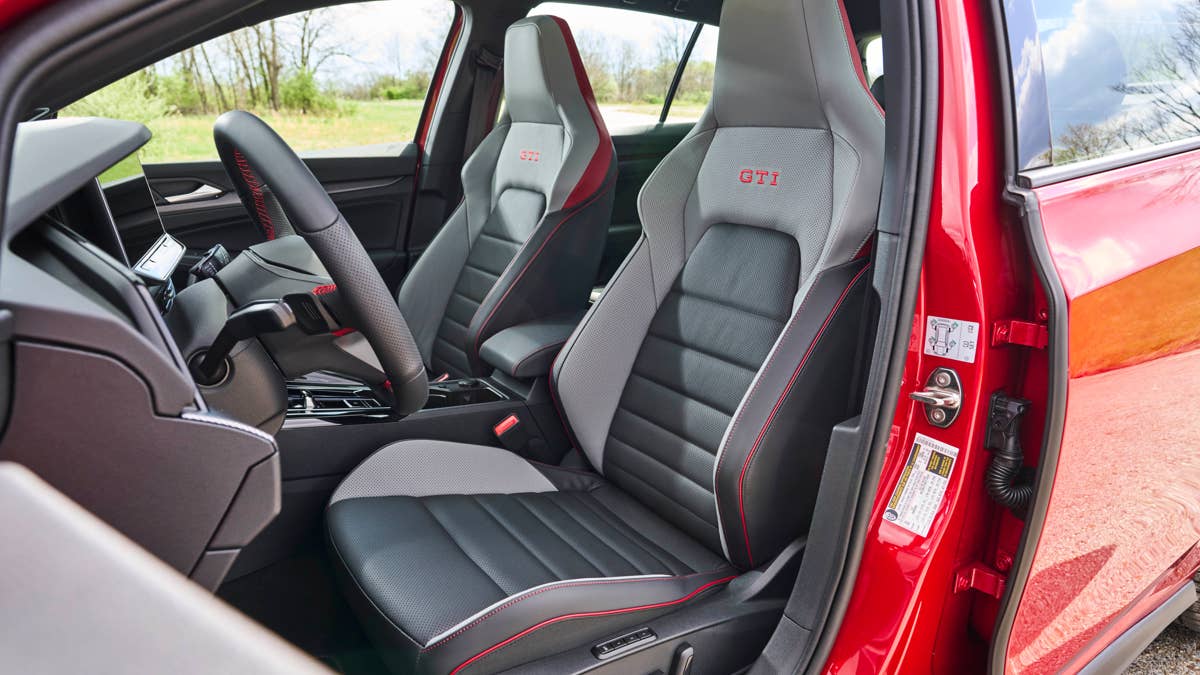
Now, to the interior, which isn’t commensurate with the exterior or with the GTI’s legendary road manners. Although it has racy-looking sport seats, and a great black/grey/red colorway to match the exterior, the cabin looks and feels cheap for the $44k asking price. The modern lines on the dash and center console work well, but the overuse of hard plastics and the fingerprint-happy piano black plastic do the GTI’s cabin a disservice.

View the 4 images of this gallery on the original article

Details like the red stitching, aluminum sport pedals, and perforated upholstery fit the bill, but the unimaginative and plasticky door cards leave much to be desired. For what is, effectively, a premium hot hatch, the touchpoints on the door armrests and the center console armrest, as well as the shifter surround, feel hard and low grade. When Hyundai, Kia, and Mazda do this better on cheaper models, it’s just wrong.

The front seats are supportive but a bit on the firm side for my liking. On the top Autobahn trim, heated leather seats are standard. The rear seats provide 35 inches of legroom, which is surprisingly roomy for a compact hatchback. Its closest competitor provides quite a bit less. The GR Corolla has 29.9 inches of rear legroom.

Infotainment, Controls, User Experience – 7.5/10

Volkswagen

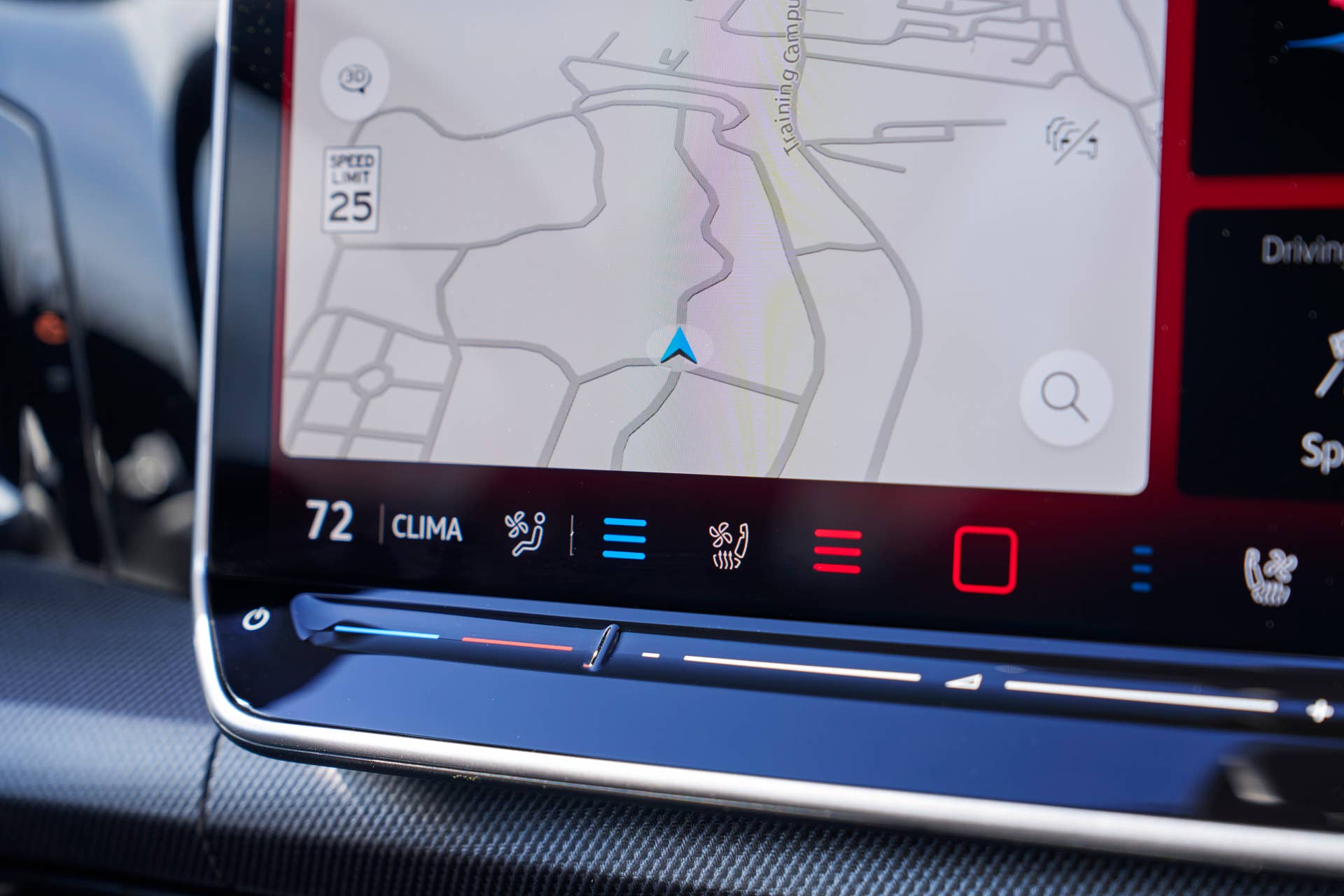
For the GTI’s 7th generation, its Achilles heels has always been its overdone infotainment system. The 12.9″ center touchscreen seems oversized for a driver-focused hot hatch. The problem isn’t just the screen size but the overdependence on it for the most basic controls. Yes, it has climate and audio sliders below it (finally backlit), but the sliders are horrendously bad to use while driving. It’s like doing an adult coloring book while on a carnival ride. Would a few knobs kill them?

Volkswagen

In an effort to make its interiors more modern and minimalist, VW has complicated simple operations. Menu diving continues to impede a good user experience, and the lack of switchgear distracts from the GTI’s driver-focused mission. Aeast the steering wheel controls are no longer haptic feedback as of 2025. They’re far easier to use and don’t pick up smudges like the old ones. It’s a small victory but not nearly enough.

The Driving Experience – 9/10

Volkswagen

I’m generally not a fan of front-wheel drive sporty cars, but the GTI is just so well-balanced and responsive. It’s not just the turbocharged 2.0-liter four-cylinder producing 241 horsepower and 273 lb-ft of torque that thrills, but the quick-shifting seven-speed DSG dual-clutch automatic. Although the GTI isn’t as engaging without the manual, the DSG’s responsive programming keeps the GTI connected and quick. Sport mode adopts a more aggressive shift strategy, and steering-wheel paddles let the driver take control when a winding road calls for greater involvement. That said, it’s no replacement for a three pedal setup.

Volkswagen

The Autobahn’s handling is equally compelling, combining quick, direct steering with a balanced chassis and a limited-slip differential that helps the front tires put power down effectively when exiting corners. Standard summer tires provide substantial grip, while the adaptive dampers keep body motions tidy while maintaining composure over rough pavement. It’s more compliant than a WRX in everyday driving.

Volkswagen

The steering’s precision makes the GTI easy to place through successive bends, although drivers who prefer more effort may find it a little light even in Sport mode. Strong braking performance and reassuring pedal response round out a driving experience that feels agile and composed but still ready for everyday driving. It’s one of those cars that makes you come up with excuses to go out and toss around, even if it’s just through the neighborhood.

Final Thoughts

It’s possible to really love the GTI, even without the manual transmission. I lament that loss like a bad breakup, but the GTI still thrills. A return to a more analog experience inside would vastly improve the user experience, but that’s unlikely to happen in this generation. I celebrate the fact that the GTI continues to exist in a world of boring crossovers.

Is the 2027 Maserati Grancabrio too Italian? Yes, and it’s Magnificient

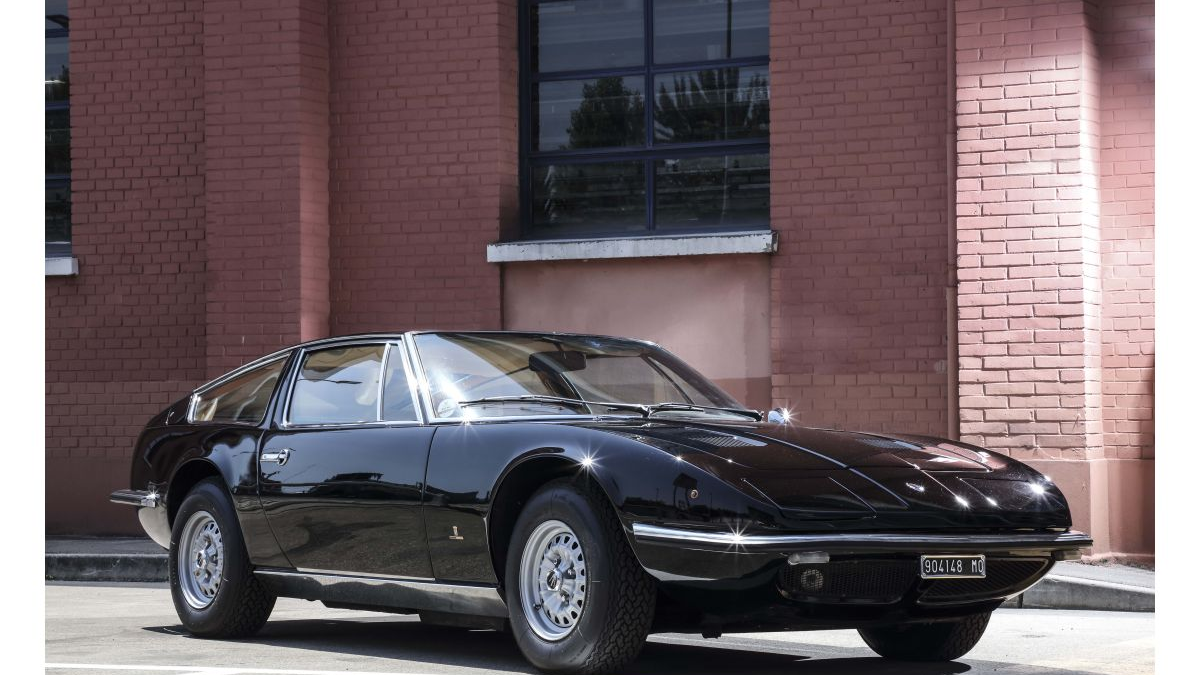
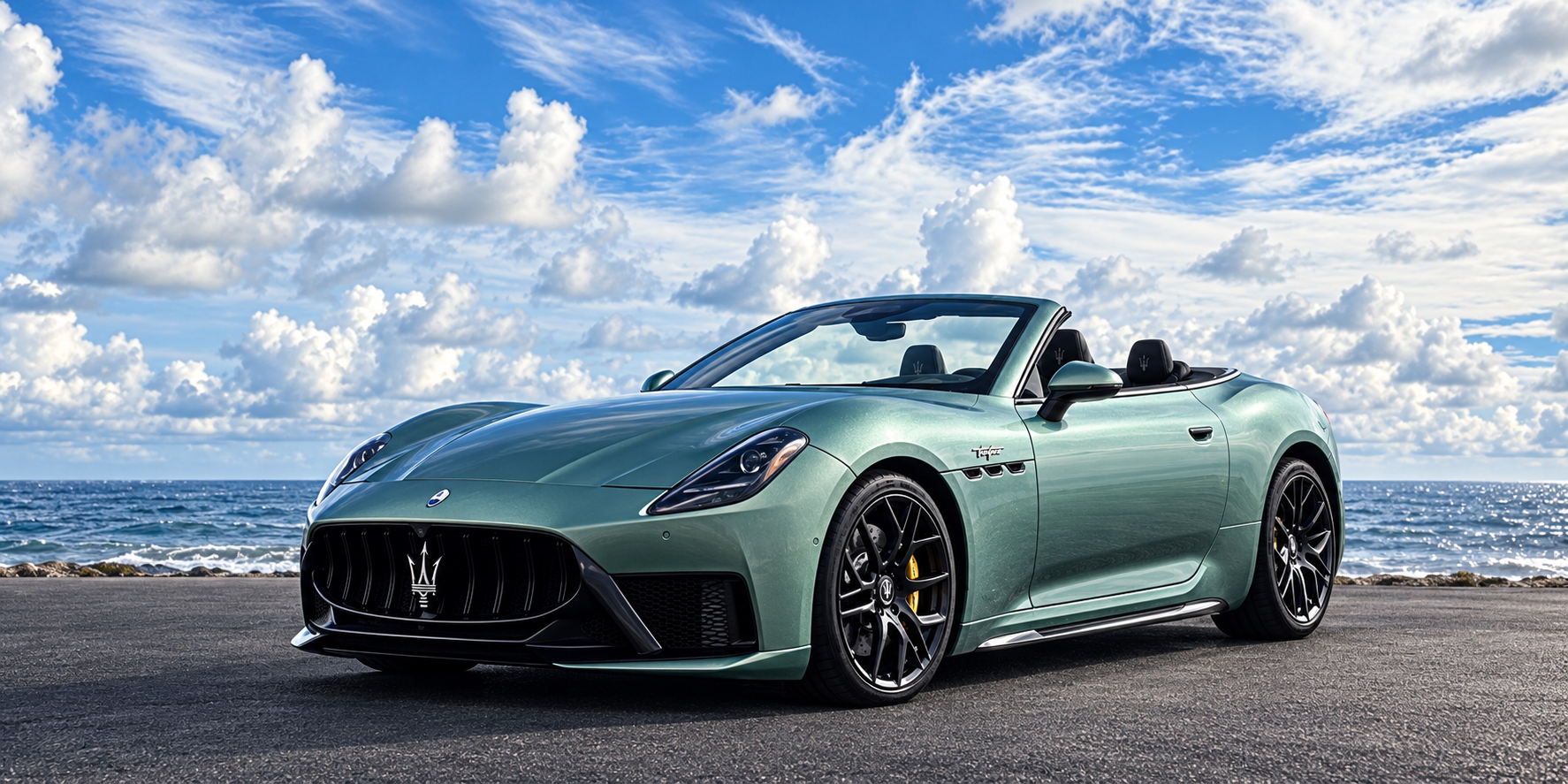
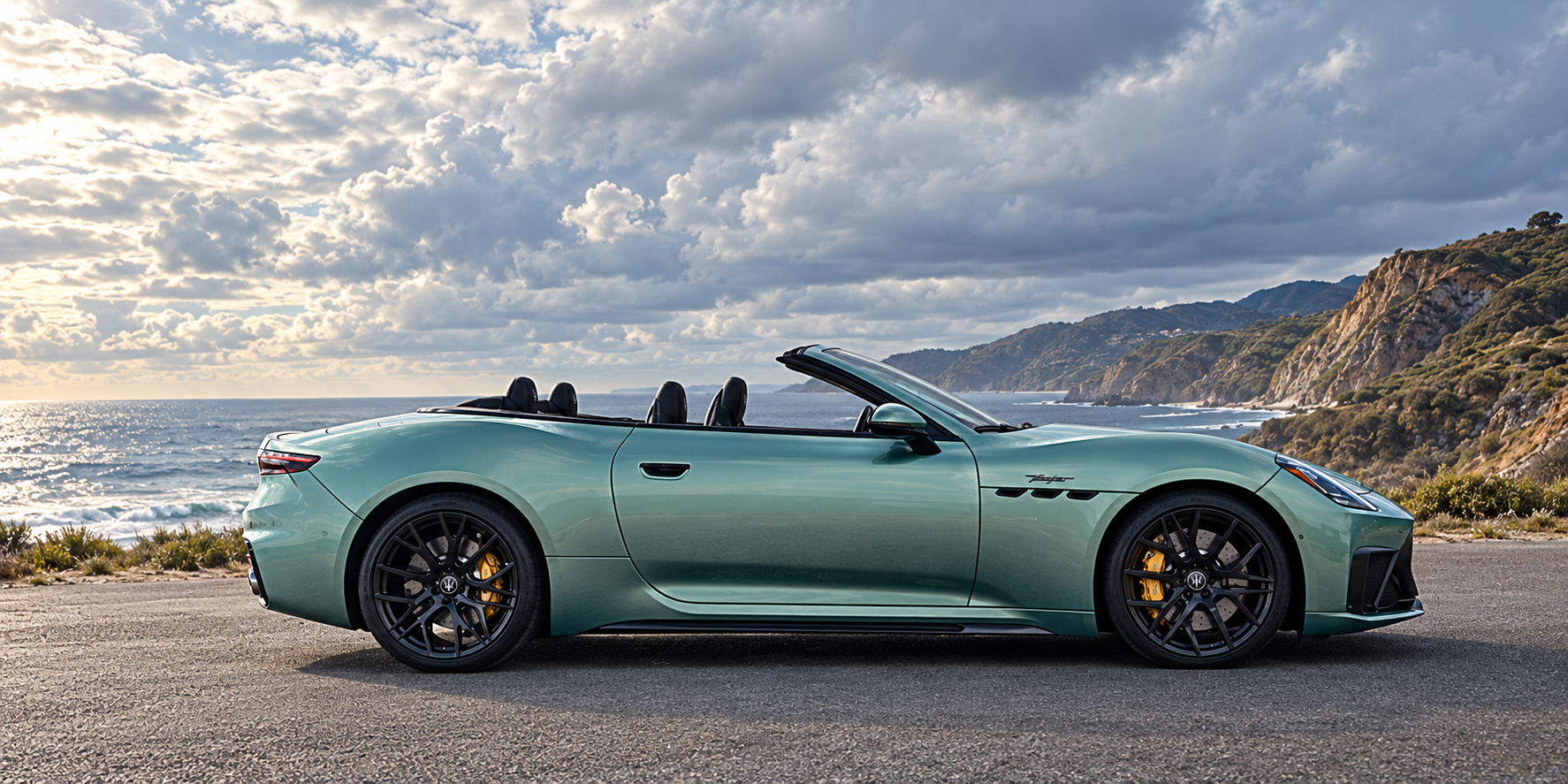
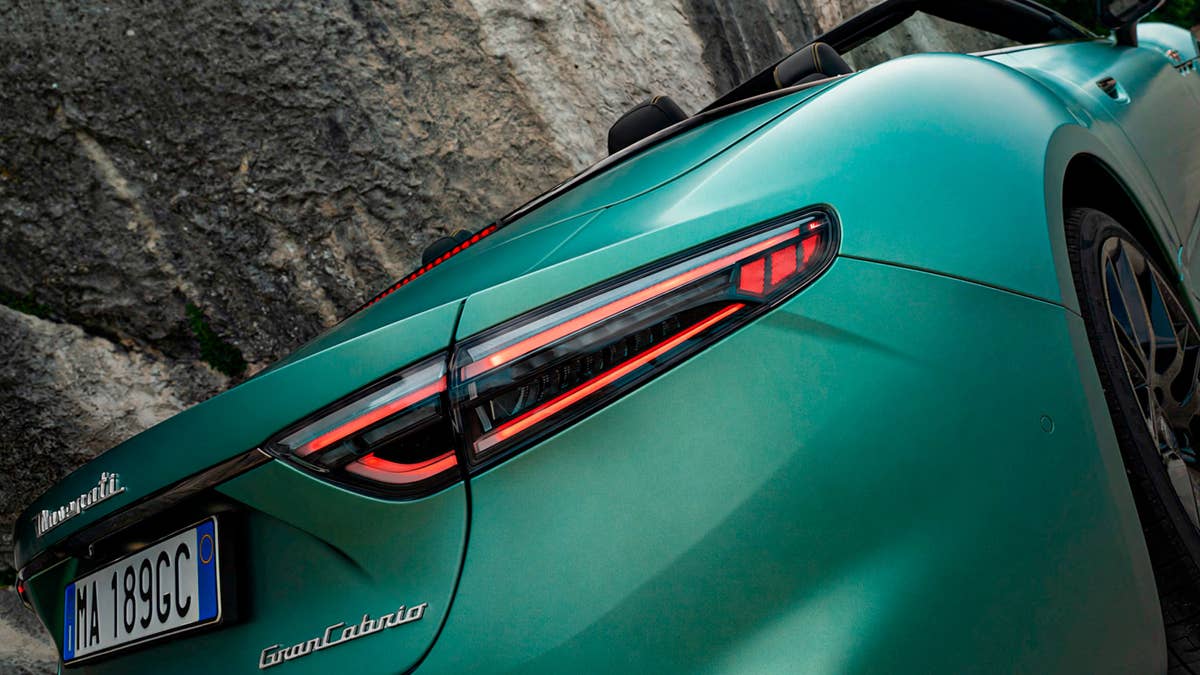
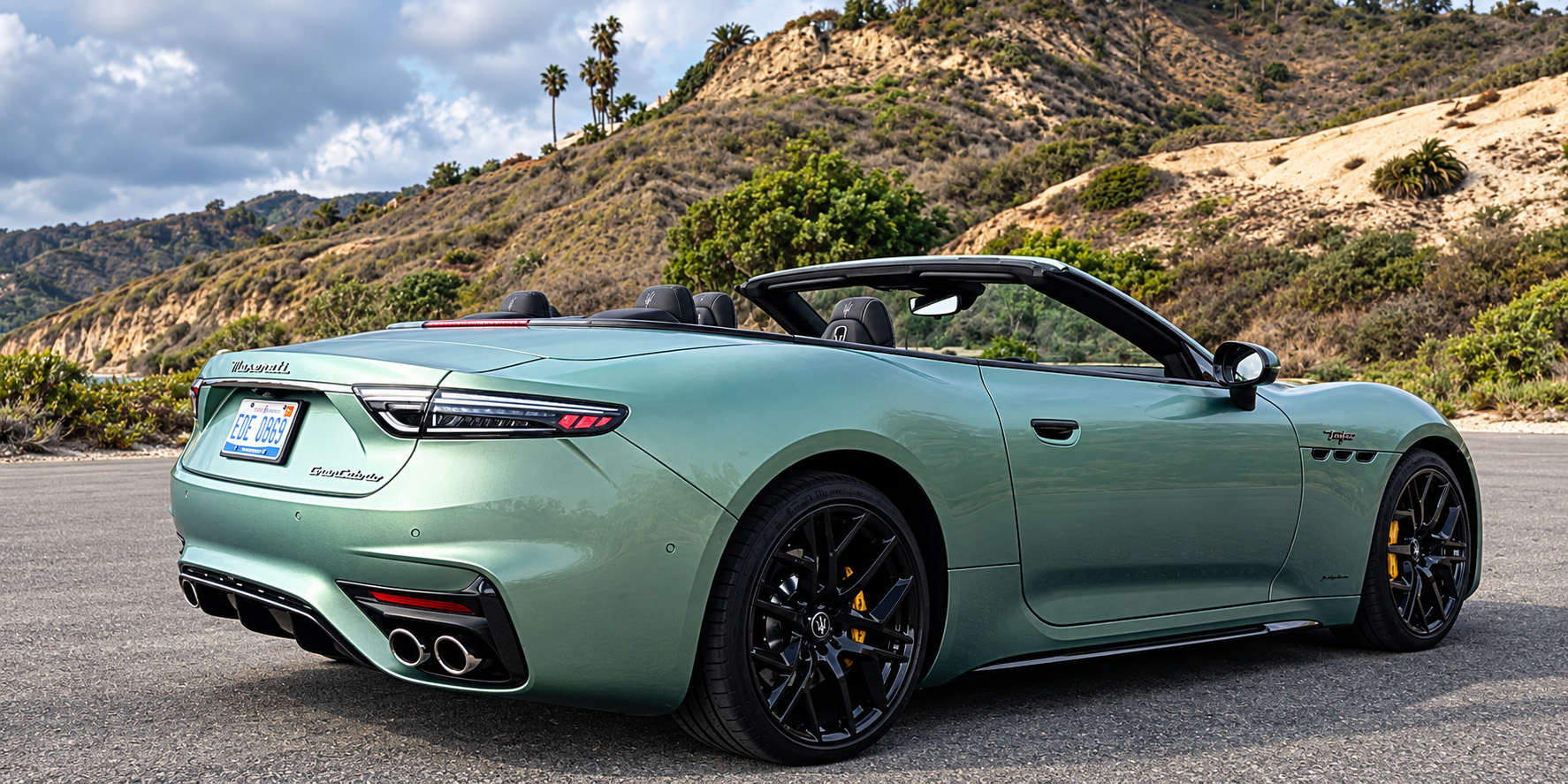
The 2027 Maserati GranCabrio is remarkably rewarding to drive, beautiful to look at, and capable of making an ordinary trip feel like an occasion. I wanted to avoid saying something like “it’s what dreams are made of,” but there’s a personal reason that particular cliché keeps creeping into my head. When I was a kid, my father managed to horse-trade his way into a used 1971 Maserati Indy. That car introduced me to Italian automotive design, sound, and the understanding that transportation could involve considerably more emotion than practicality.

View the 2 images of this gallery on the original article

ND Adlen

It was already an older car, but those weekend drives lit a fire that has yet to go out. Decades later, the GranCabrio and its fixed-roof cousin, the GranTurismo, bring back some of that feeling. Fortunately, this isn’t simply nostalgia doing the heavy lifting. My GranCabrio Trofeo had an exceptionally persuasive argument under its hood.

Powertrain and performance

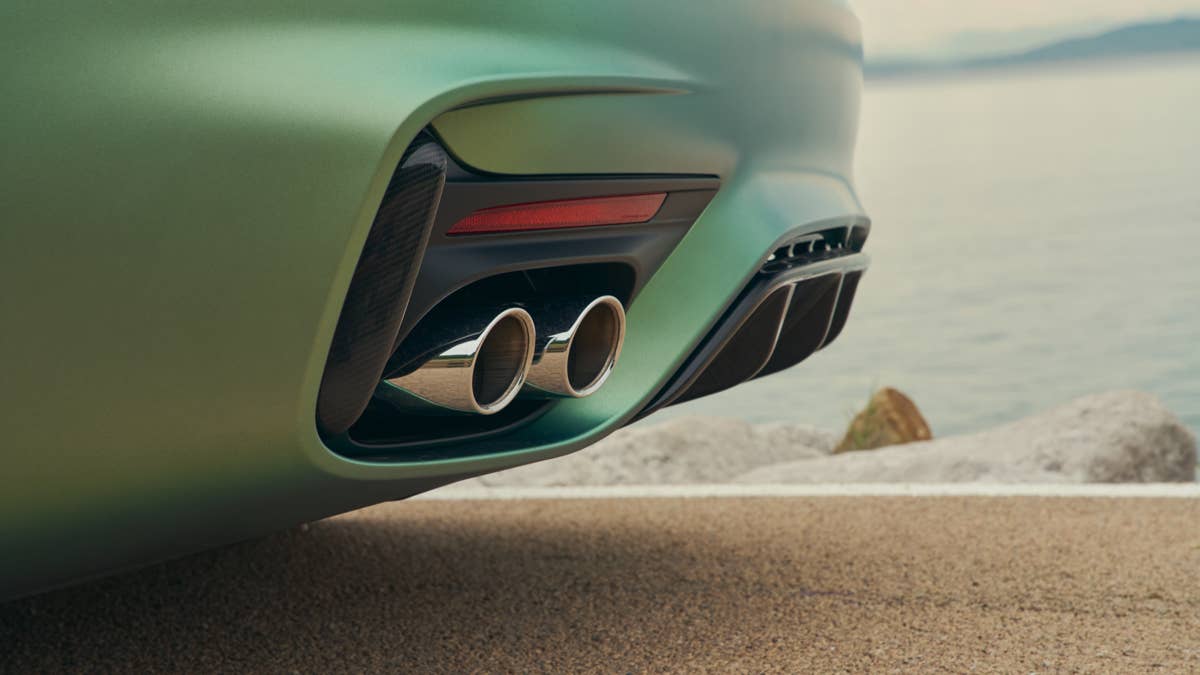
The Trofeo’s 3.0-liter twin-turbocharged Nettuno V6 produces 582 horsepower and 479 pound-feet of torque. That’s a 40-horsepower increase over the previous model year. Maserati’s patented pre-chamber combustion technology has motorsport roots, while cylinder deactivation helps manage fuel consumption when you aren’t exercising all those Italian horses. There’s no hybrid system here, just a muscular engine with a rather enthusiastic exhaust.

An eight-speed automatic sends power through a rear-biased all-wheel-drive system, with an electronically controlled limited-slip rear differential helping put it down. Maserati claims 0–60 mph in 3.4 seconds and a 196-mph maximum. The Trofeo also gets standard staggered forged wheels measuring 20 inches up front and 21 inches at the rear. This is serious performance hardware beneath a body that looks perfectly happy parked outside an expensive lunch.

The transmission isn’t a dual-clutch unit, but its quick shifts suit the engine beautifully. Acceleration feels immediate and sustained, accompanied by an exhaust note that makes the corners of your mouth rise involuntarily. Some cars need simulated sound to manufacture excitement. This one appears to have hired an angry Italian tenor.

Ride and handling

What impressed me most wasn’t simply the speed. It was the GranCabrio’s ability to settle down when I stopped asking for it. In GT mode, the ride is comfortable enough to support the grand-touring promise. Select Sport or Corsa, and the car becomes more insistent, with sharper responses and a considerably less discreet soundtrack. Standard adjustable air suspension helps reconcile those personalities.

Despite the large cabin opening, the structure feels stout through the corners. I didn’t get the impression that the front and rear were debating separate travel plans. Steering response is precise, and the weighting feels appropriate, although I would appreciate more feedback through the wheel. The car tells you where it’s going clearly enough; I simply wanted a little more conversation about the pavement.

This is still a substantial four-seat convertible, so expecting lightweight roadster behavior would be unreasonable. Nevertheless, it changes direction with confidence, and its rear-biased character keeps the experience entertaining. More importantly, it doesn’t demand that you drive aggressively to enjoy it. A relaxed coastal cruise can be just as rewarding as a winding road.

View the 3 images of this gallery on the original article

Exterior and interior design

I haven’t loved every Maserati convertible from the past few decades. Some looked a little too bulky or overly concerned with announcing their grille. The current GranCabrio gets the proportions right: a long hood, flowing shoulders, sculpted flanks, and a neatly resolved rear incorporating four exhaust outlets. The updated nose sharpens the appearance without overwhelming the rest of the car.

Related: BMW vs. Lexus vs. Mercedes-Benz: Which Brand Has the Happiest Owners?

It looks expensive without appearing desperate to prove it. That’s an increasingly rare skill.

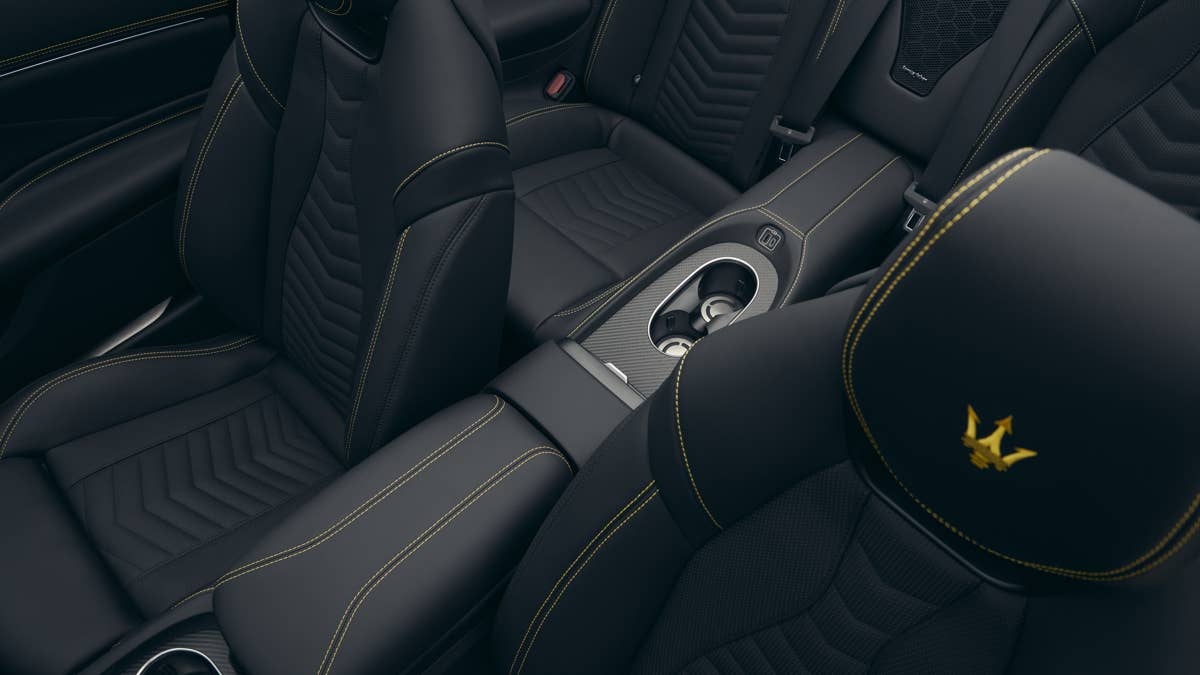
Inside, the material quality and overall fit impressed me. My test car’s bright contrasting stitching drew mixed reactions, but it didn’t bother me. There are plenty of ways to personalize one, and I would rather see somebody exercise a little imagination than order another six-figure vehicle in Accountant Gray.

View the 4 images of this gallery on the original article

The back seats also deserve attention. These are usable accommodations rather than upholstered suggestions. Average-size passengers can fit, provided those up front cooperate with seat positioning. I wouldn’t put an NBA center back there, but bringing friends along is a realistic proposition. That gives the GranCabrio a useful distinction from strictly two-seat roadsters.

Luggage requires more discipline. Maserati lists approximately 6 cubic feet of trunk capacity for the combustion models, with less space available when the roof is lowered. Pack soft bags and leave the oversized suitcase at home. The fabric roof opens in approximately 14 seconds and closes in around 16, and it can operate at speeds up to 31 mph. Standard Trofeo neck warmers help extend the open-air season.

View the 3 images of this gallery on the original article

Infotainment system conundrum

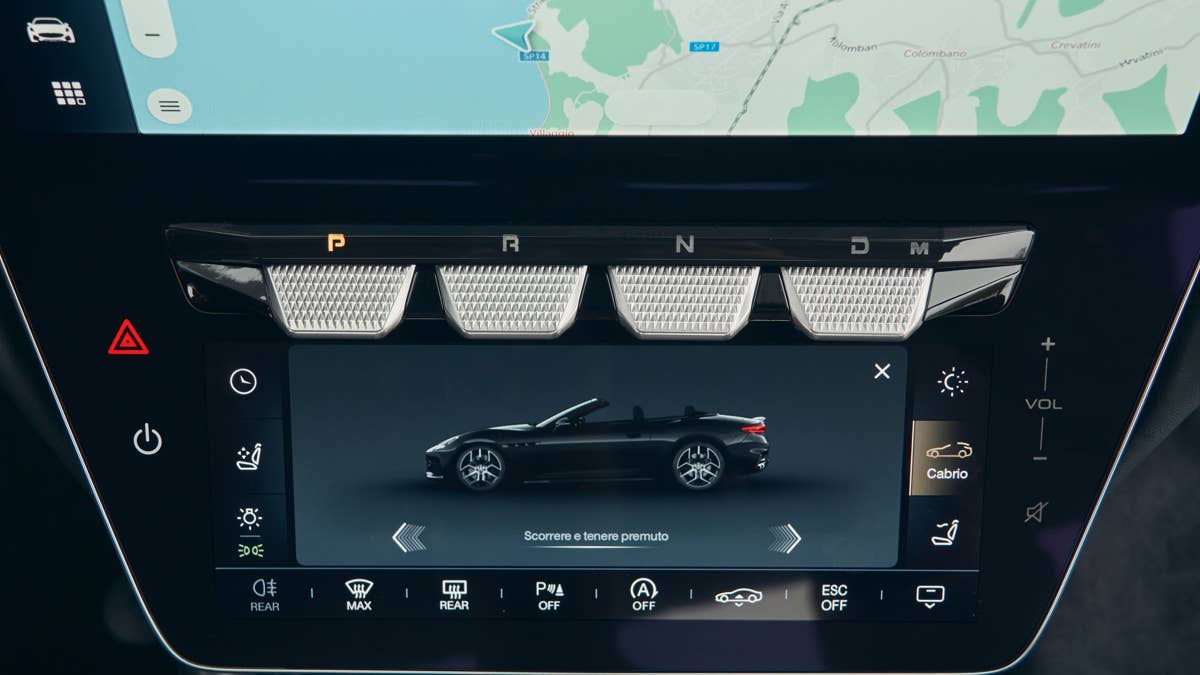
The cabin’s screen arrangement includes a 12.3-inch central touchscreen and an 8.8-inch lower comfort display, alongside a separate digital instrument cluster. The layout looks sophisticated, but looking sophisticated and being convenient are two different assignments.

My main complaint involves the relationship between the lower touchscreen and the push-button gear selector. Reaching for a gear with my ham-fisted mitts occasionally resulted in an unintended climate adjustment. I wanted Drive, not a warmer backside. The buttons are attractive, but I would happily exchange some visual drama for a conventional gear lever and dedicated climate controls.

Related: Bugatti CEO Says a Manual, 986-HP Tourbillon Is Possible

The touchscreen roof operation also feels unnecessarily fussy. Having to locate and slide an on-screen control requires more attention than I think this task deserves. A proper switch would do nicely. The Android-based operating system isn’t inherently a problem for an iPhone owner; my frustration concerns the interface and control placement.

Final thoughts

Maserati lists the 2027 GranCabrio Trofeo from $176,200, before destination and options. That’s serious money, and personalization can push the total well beyond $200,000. The broader lineup offers a 483-horsepower gasoline version, while the electric Folgore delivers 751 horsepower for buyers who want their Italian grand tourer with a charging cable.

For me, the Trofeo supplies the right combination. It’s fast, comfortable, attractive, and engaging without requiring constant effort. The screens need refinement, and nobody will mistake the trunk for a family vacation solution, but those shortcomings don’t extinguish its appeal.

My father’s Indy taught me that a car could make an ordinary weekend feel special. The GranCabrio Trofeo understands that assignment. Fortunately, it also brings 582 horsepower to class.

Related: Genesis GV70 vs. Maserati Grecale: Sensible Luxury Meets Italian Temptation

I Drove The 2026 Infiniti QX80 Autograph: It Might Be Nicer Than The Escalade

A Brand Renaissance

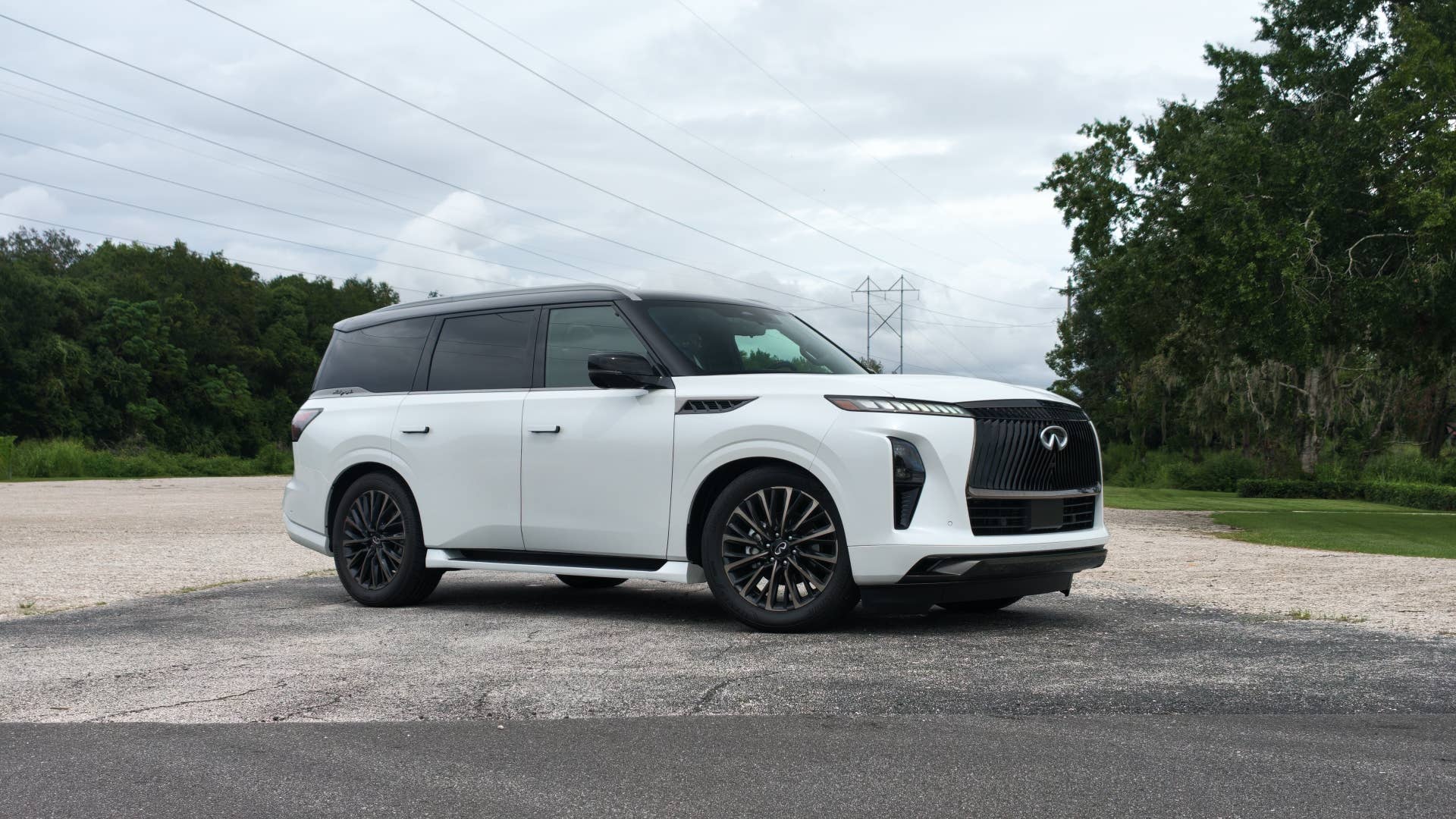
Back in 2023, Infiniti talked about a “brand renaissance” that would reinvigorate sales. It started with the QX80, the company’s flagship SUV, which carries into the 2026 and 2027 model years mostly unchanged. Infiniti will likely refresh the QX80 in the next year or two, but even the current car is pretty competitive in the full-size luxury class.

Jared Levenson/Autoblog

View the 3 images of this gallery on the original article

The QX80 was the first Infiniti to debut the brand’s latest “Artistry in Motion” design language, which has further evolved with models like the QX65. Infiniti knows how to design a handsome car, and after spending a week in the top QX80 Autograph trim, I learned it still knows how to compete with the class leaders.

Luxurious & Practical

The Infiniti QX80 is heavily based on the Nissan Armada, known in other parts of the world as the Patrol. This platform delivers capable off-road prowess, though it’s less spacious than American options like the Cadillac Escalade, Lincoln Navigator, and Jeep Grand Wagoneer. These vehicles also offer extended wheelbase variants that offer even more cargo volume.

Model

Behind 3rd Row

Behind 2nd Row

Behind 1st Row

Infiniti QX80

22 cubic feet

59 cubic feet

101 cubic feet

Cadillac Escalade

25.5 cubic feet

72.9 cubic feet

120.5 cubic feet

Lincoln Navigator

21.6 cubic feet

60.8 cubic feet

107 cubic feet

Jeep Grand Wagoneer

27.9 cubic feet

70.8 cubic feet

116.7 cubic feet

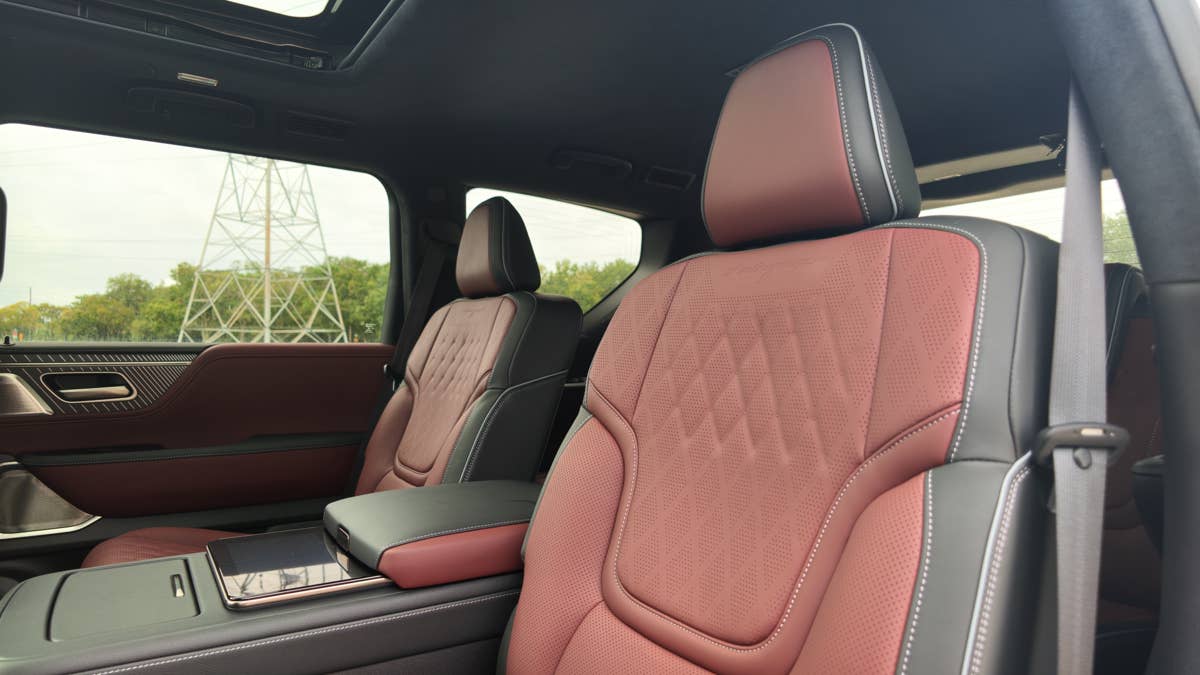
The QX80 offers up to 101 cubic feet of space with the second- and third-row seats folded, but it can still deliver that practicality even in its most luxurious trim. If you opt for massaging second row seats in the Escalade or Navigator (they aren’t available in the Grand Wagoneer), you lose the ability to fold them flat, severely limiting cargo space. The QX80 is the only vehicle in this segment with rear seats that massage you, but can still fold flat to fit a flat screen TV.

Jared Levenson/Autoblog

View the 3 images of this gallery on the original article

Enough Screens

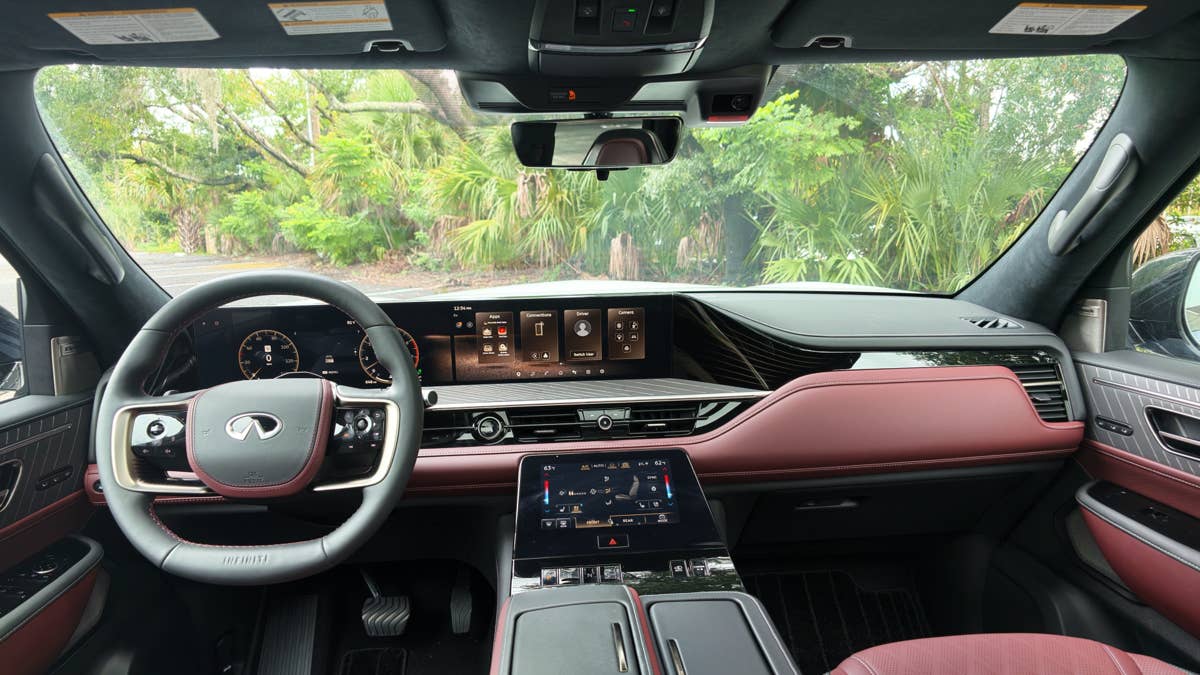
Both the Escalade and Navigator have recently been facelifted with fresh interiors that feature massive screens stretching across the dashboard. Some tech-forward buyers will love the flexibility for apps and widgets in these models, while traditional customers may be overwhelmed by the number of screens.

Jared Levenson/Autoblog

View the 3 images of this gallery on the original article

The QX80 gets it just right, pairing two 14.3-inch displays with a lower climate control touchscreen. If you prefer buttons, the Armada still offers them, but the QX80’s separate climate screen is useful for quickly adjusting settings like temperature without the need to leave CarPlay or other main screen tasks.

Heart Of A Sports Car

I still think the Escalade is the standard by which all vehicles in this segment should be judged for ride and handling. It’s still a body-on-frame vehicle, but GM’s excellent Magnetic Ride Control delivers the most comfortable ride in this class. The Escalade is also the last vehicle in the segment to offer a V8 engine, but it’s no longer my favorite amongst the competitive set.

  • 2024 Cadillac Escalade-V: 4.76 seconds
  • 2026 Lincoln Navigator Black Label: 5.65 seconds
  • 2025 Lexus LX 700h Overtrail: 5.72 seconds
  • 2026 Jeep Grand Wagoneer Summit: 6.17 seconds
  • 2026 Infiniti QX80 Autograph: 6.24 seconds
  • 2025 Cadillac Sport Platinum: 6.68 seconds

Infiniti now uses a 3.5-liter twin-turbocharged V6, which is essentially a bigger version of the 3.0-liter version in the Nissan Z sports car. It produces 450 horsepower and 516 lb-ft in the QX80, going out via a nine-speed automatic transmission. I’ve tested the zero to 60 mph times for several vehicles in this segment, and the QX80 is pretty quick. This Autograph trim hit 60 mph in 6.24 seconds, which is quicker than the last V8 Escalade I tested.

Jared Levenson/Autoblog

View the 3 images of this gallery on the original article

Infiniti has teased a performance variant of the QX80 with more power, but it has been delayed to ensure it offers a substantial upgrade over the base model. While I’d like to see the QX80 get over 600 hp, it’s pretty great as-is.