
I Drove The 2027 Cadillac Lyriq, Here’s My Honest Review

It’s Cadillac’s electric era.

For generations, the name Cadillac has come to be a name that is synonymous with the American luxury car. From the Coupe DeVilles and Sixty Specials of the 50s and 60s to today’s modern marvels like the full-size Escalade SUV, Cadillac has defined itself as a brand committed to cars that offer both smooth-riding comfort and bold, stylish presence. 

These days, it seems that the future of motoring is defined in large part by electrification. EVs, plug-ins and hybrid-electric vehicles have become the center of attention in today’s new-car market. In sharp contrast to its gas-guzzling image, Cadillac entered the EV arena in 2022 with the Lyriq, a boldly-styled mid-size crossover SUV that pit itself against industry rivals like the Tesla Model Y. 

Since its release, Cadillac has experienced an electric renaissance. In late 2024, the Lyriq was recognized as the German Car of the Year in the luxury category, and in May 2025, the brand surpassed more than 100,000 sales. In the interim, Cadillac slowly expanded its EV lineup with SUVs of all sizes like the smaller Optiq, the three-row Vistiq, the Escalade IQ, as well as the six-figure, ultra-limited Celestiq halo sedan. While the EV market has expanded since its debut, the 2027 model year iteration of the Cadillac Lyriq shows that it has still carved a distinct place for itself among other electric midsize luxury SUVs including the BMW iX, the Mercedes EQE and Volvo EX60.
James Ochoa

View the 2 images of this gallery on the original article

“What is that, an Escalade?” 

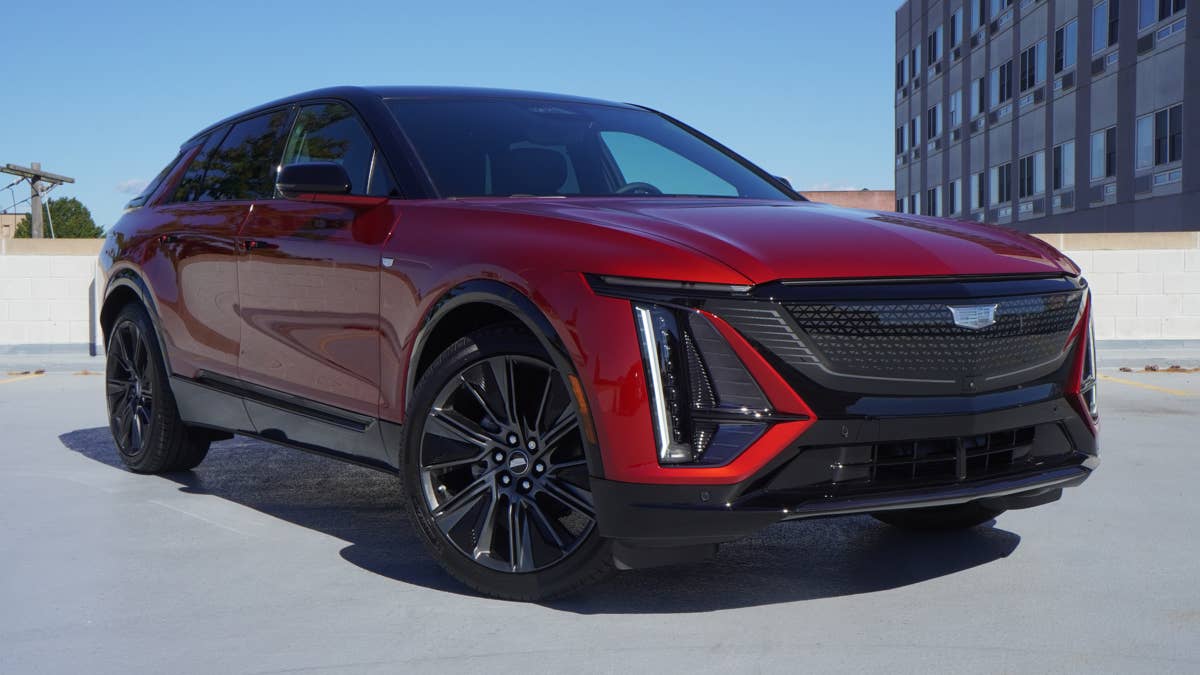
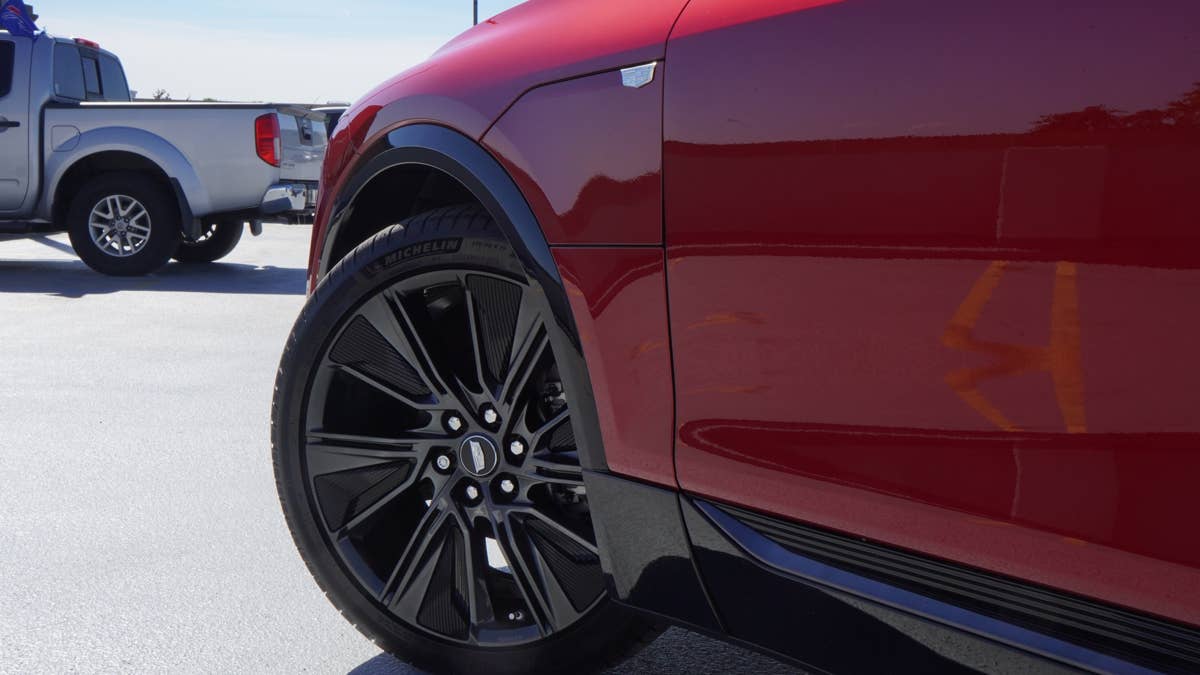
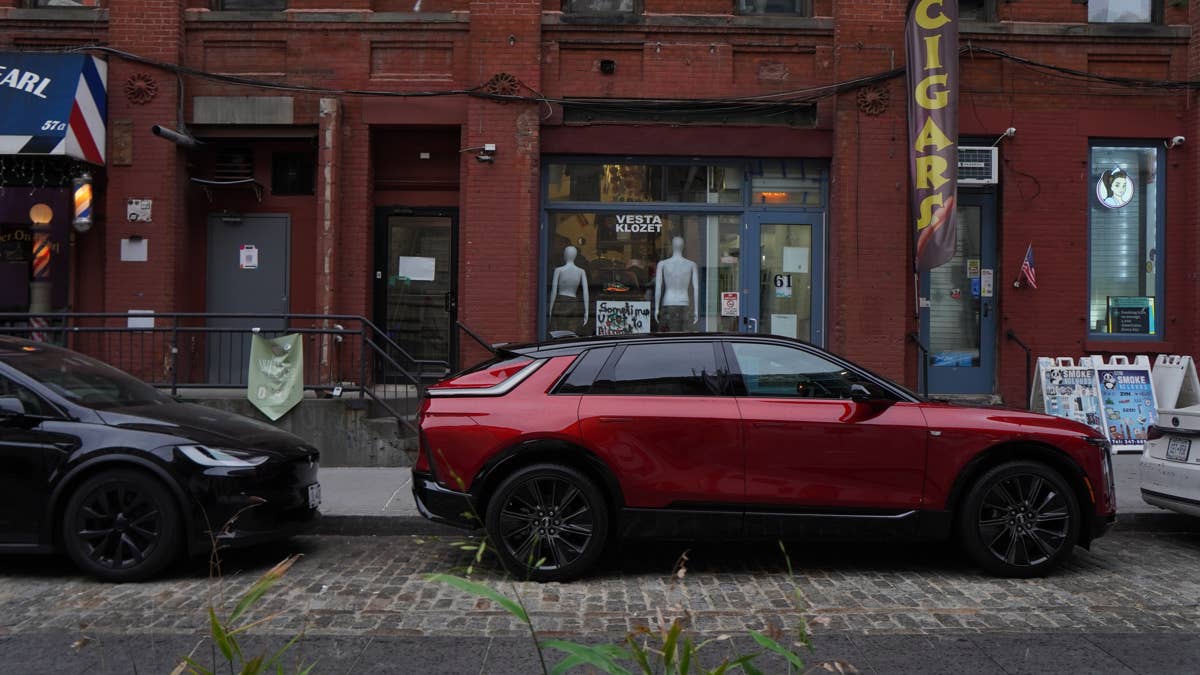
Off the bat, one of the biggest things I love about the Cadillac Lyriq is its styling. In today’s crowded EV marketplace, I feel that it is one of the biggest strengths it has against its direct competitors. Many contemporary premium EVs, including the Tesla Model Y, Mercedes EQE and EQS and even the $560,800 Ferrari have adopted this sort of smooth, formless ‘blob’-shape that some have likened to a jelly bean. You know what it looks like — mentioning those model names triggers something that enthusiasts have burned into their heads; whether on purpose or involuntarily. However, the Lyriq’s pronounced, concept car-esqe curves and chiseled lines gives it a look that can be best described as distinctly Cadillac. 
James Ochoa

View the 5 images of this gallery on the original article

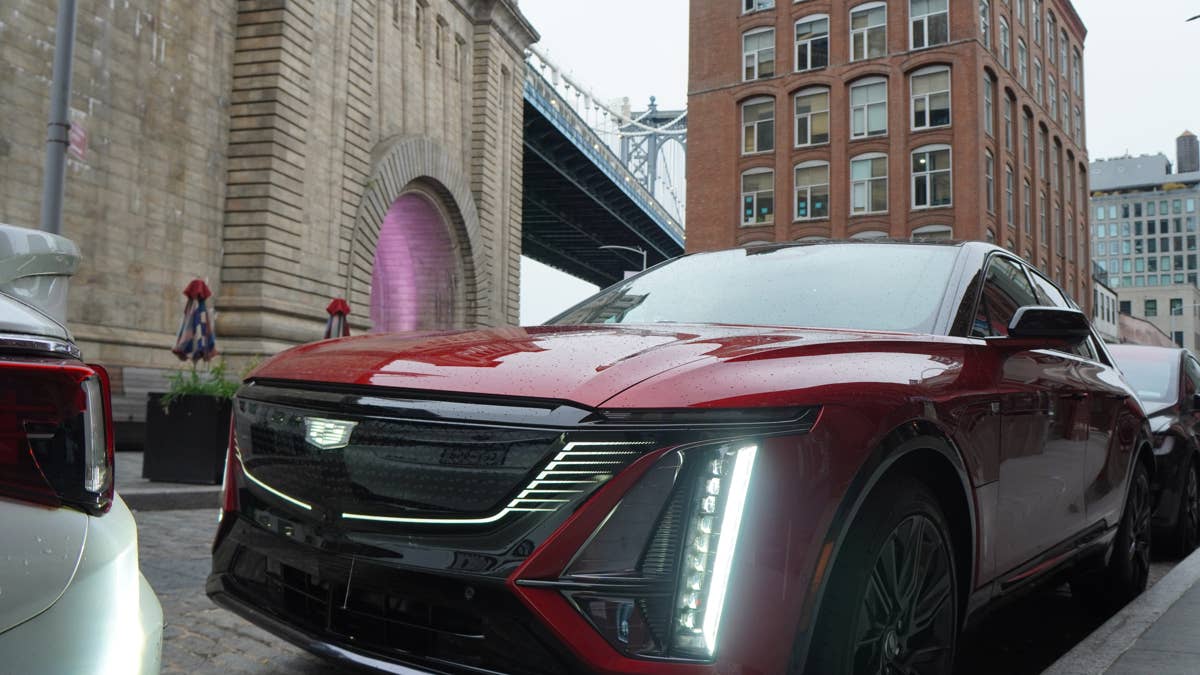
Cadillac’s design expertise is best shown in how its designers have handled the front end of the Lyriq. While competitors like Tesla with the Model Y and Ferrari with the Luce have completely done away with traditional grilles, and Mercedes’ stylists have struggled to integrate a grille on an electric vehicle without an internal combustion engine, Cadillac has seemed to have found a balance. Although the Lyriq does not feature a practical or usable front trunk like the Escalade IQ, it still features a dramatically long hood, which makes its faux grille feel like it belongs there instead of it being there for an ornamental effect.

However, it doesn’t mean that they haven’t done away with any form of pomp and circumstance. When you get within a few feet of the Lyriq, or you press the unlock button, the LEDs illuminating the Cadillac badge and “grille,” as well as its daytime-running lights and headlights flicker on in a sequence that announces its presence and welcomes you inside. It’s a feature that gets attention. In one instance at my local mall, someone in the parking garage asked “what is that, an Escalade?”

Although it isn’t an Escalade, the rest of the car is styled like something you don’t really see out on the road, let alone, it isn’t a design that has been copied by another automaker for their EV. Cadillac officially classifies the Lyriq as an SUV, but its long, elongated and somewhat low stance (for an SUV), as well as its side and rear profile give it more of the character of a shooting brake (not a wagon, sorry) than a traditional crossover. Ideally, I’d like to think that the hatchback-esque rear end is a modern-day callback to past Cadillacs like the “bustle-back” Sevilles from the 1980s, or the CTS and CTS-V Sport Wagons of the 2010s.
James Ochoa

Welcome to Tactile Paradise

While the Cadillac Lyriq is quick and good looking, its paramount strength is in the space of its  cabin; which is an amazing place to be if you are either the driver or a passenger. Your kids, friends or other passengers you might have in the rear will have all the space they need. According to Cadillac, rear seat passengers get 39.6 inches of legroom and 37.7 inches of headroom; an ample space to spread out or sit up, even if you are within the six foot territory. Backseaters also get controls for their own climate zone, heated seats, dual USB-C chargers and a full-size 120V outlet for charging a wide array of devices. Lots of cabin space doesn’t mean the Lyriq has a small trunk. Caddy says there is a cavernous 28 cubic feet of cargo space behind the seats and 60.8 cubic feet with the seats down — more than enough for a family’s Costco run with or without the kids.  

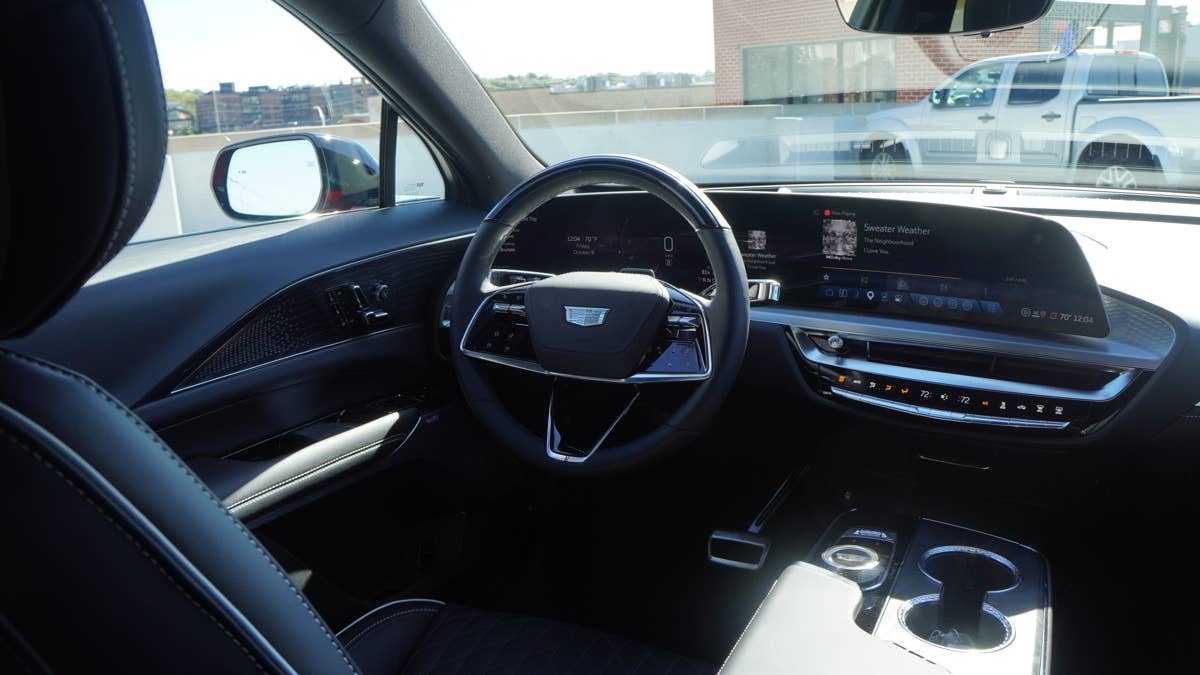
Though passengers in the back get first-class treatment, the driver is treated to a cabin that is driver-focused in both form and function. The top-trim Signature Sport model provided a level of technology and equipment that didn’t diminish from the driving experience, rather, it provided a tactile experience that other brands seem to be shying away from. The dashboard is highlighted by a massive 33-inch touchscreen that acts as its both gauge cluster and infotainment portal, but it isn’t the vehicle’s nexus, it isn’t the center of everything.
James Ochoa

View the 7 images of this gallery on the original article

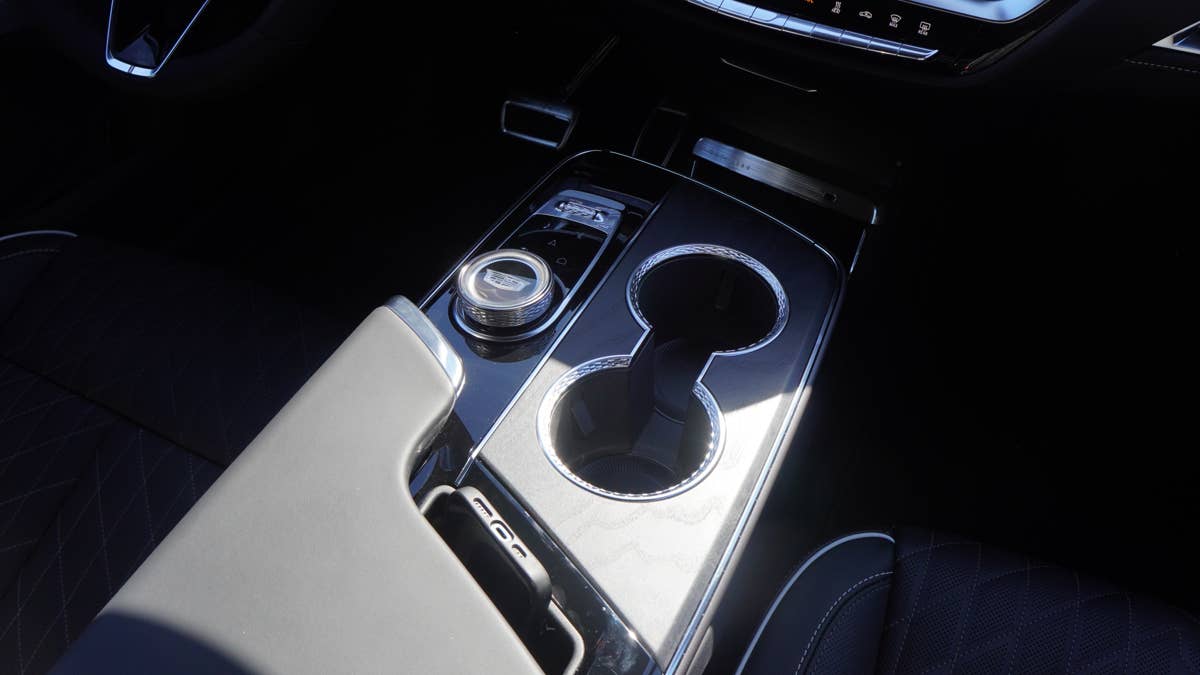
Shifting from park to drive to reverse is still done using a dedicated stalk in around the same place as a traditional old-school column shifter, while the HVAC controls are still rocker switches that are at an easily touchable height level on the dashboard. In addition, resting your right arm on the center console enables use of a scroll wheel, volume controls and an easy-to-temember shortcut pad with buttons for important infotainment functions like maps/navigation and audio controls. Wireless Android Auto and Apple CarPlay are available, but I felt that the Cadillac’s Google built-in applications for services like Google Maps and Apple Music were sufficient.

Up top, a panoramic glass roof with a power shade can help bring sunlight by day and moonlight to the cabin, while ambient lighting around the cabin helps illuminate the mood. However, my favorite feature inside was the 23-speaker AKG Studio audio system, with speakers all over the cabin, including the headliner and even the front-seat headrests. I wrote about how this vehicle’s Dolby Atmos made listening to music while driving a 360-degree experience beyond words in a separate piece, but all I could say is that there is a way to use all 23 speakers and that it sounds amazing.

Related: I Thought My Car Already Sounded Great. Then I Heard Dolby Atmos
James Ochoa

The Cadillac of EVs or The EV That Happens to be a Cadillac?

The 2027 Cadillac Lyriq I tested was the top-line Signature Sport AWD model, which has an MSRP of $67,300. Our vehicle was equipped with a $3,790 Nappa Leather Package, $3,500 AWD system, the $1,480 optional 19.2 kW AC charging module, $1,325 Radiant Red paint, $695 Black Roof, as well as NACS adapters for both CCS1 and J1172 plugs, which cost $189 and $67 respectively. In total, the out-the-door price for the Lyriq I tested, including destination, was $80,141.

After spending some time with the Lyriq, I wanted to conclude that the Lyriq is a vehicle that can be best described as the “ultimate manifestation of Cadillac.” Despite being a midsize crossover SUV, the vehicle’s design and dimensions and behind-the-wheel feel make it feel like a vehicle about one and a half to double its size. In a practical sense, its high beltline, long hood and massive turning circle made it a hoot to drive around the cramped streets of Manhattan and Brooklyn; even early in the morning when the day’s traffic slowly trickles into the madness the city is known for.
James Ochoa

While that may be an inconvenience for most, for me, that’s what screams Cadillac. Add the fact that it’s a silent EV that rewards you with gobs of power every time you advance the accelerator pedal, the immersion and feel could only intensify. This realization and the residual feelings from this experience has only made me wonder about one question that still lingers in my head: is the Lyriq the Cadillac of EVs, or is it an EV that happens to be a Cadillac? 

While there’s enough evidence for interested parties to argue in the comments section to prove that it is both, it only proves to me that the Lyriq is its own unique creation that a brand like Cadillac can only offer. I feel that your conclusion on whether it lies on one side or the other is up to you to decide; no question. But, as we approach about a half-decade of production Cadillac has expanded its luxury EV presence, the 2027 model of the Lyriq only proves that Cadillac hasn’t forgotten about the vehicle that got them there in the first place. If it was good enough for the Germans to award it car of the year in the luxury category in 2024, it’s certainly good enough for you. 
I Drove The 2026 Acura Integra A-Spec 6MT: Here’s My Honest Review Of Acura’s Fun, Practical Manual Hatchback

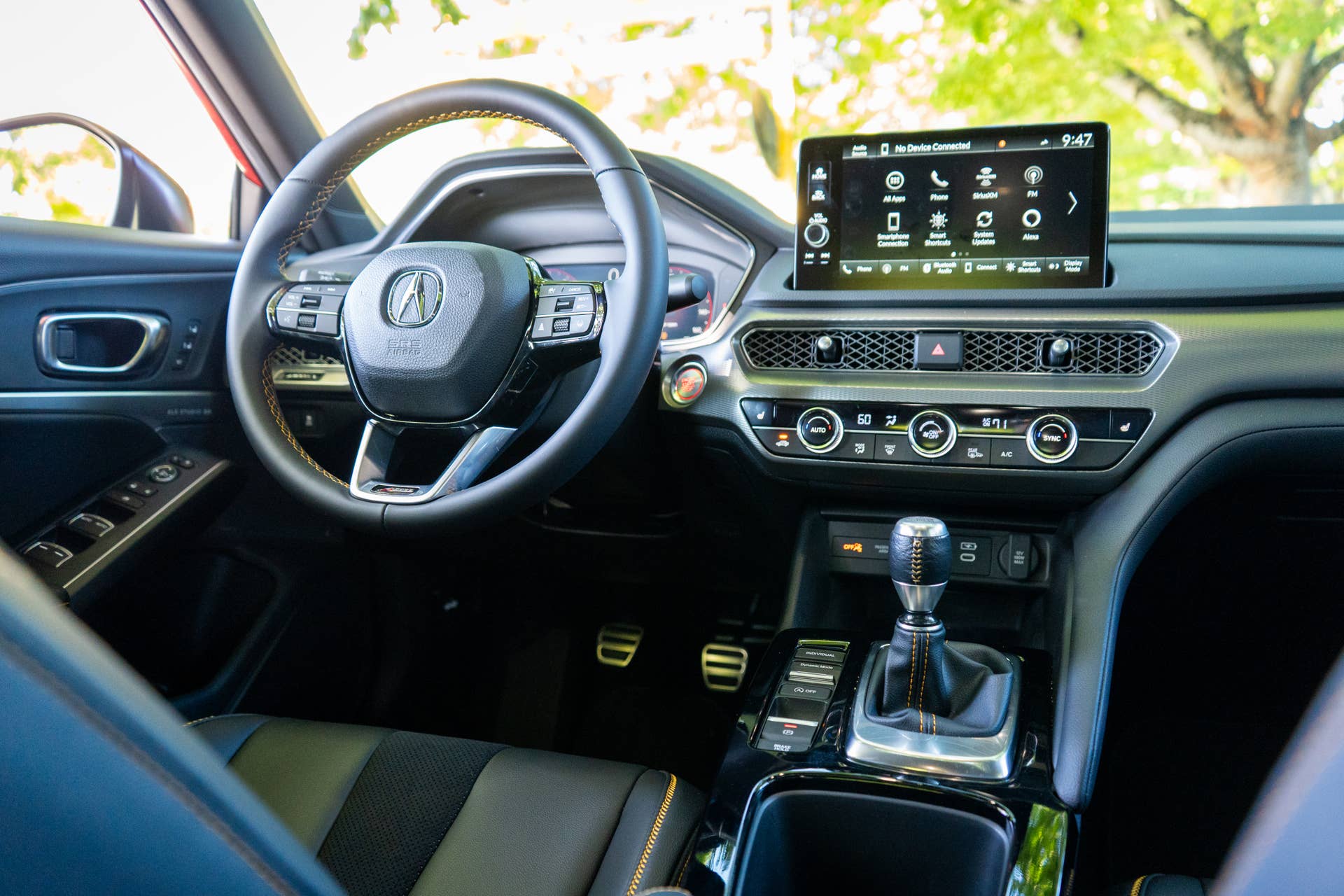
I had recently spent a week with the wonderful Integra Type S before hopping into the 2026 Acura Integra A-Spec at the Northwest Automotive Press Association’s Drive Revolution event. I already knew how much I adored Acura’s faster, more expensive hatchback, so this was a chance to see whether I’d be just as happy recommending the version that costs about $15,000 less and possessed considerably less spice. My speed-date drive lasted roughly half an hour, covering enough tight corners, city streets, and highway cruising to get acquainted with its steering, six-speed manual, and suspension. The A-Spec was comfortable and easygoing, yet still engaging enough that the gearbox alone felt like a good reason to choose it. That combination earned my vote for the event’s best internal-combustion vehicle, a category the Integra ultimately won. I also ranked it second for value.

2026 Acura Integra A-Spec

Cole Attisha

The Manual Makes The Difference

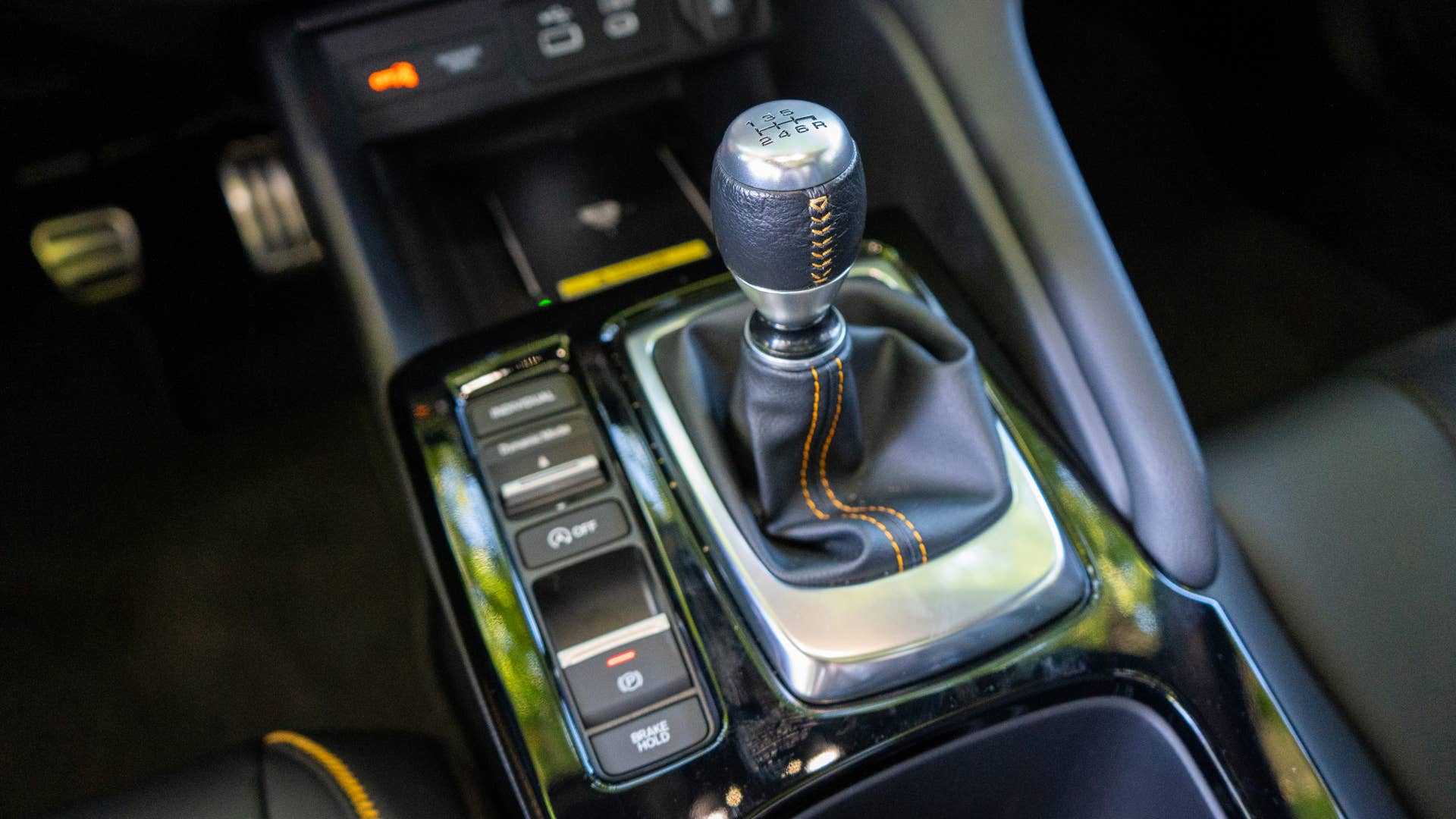
The Integra A-Spec represents one of the last examples of a dying breed of automobile in North America: the affordable, manual hot hatch. An important detail behind that A-Spec badge, though: in the U.S., the six-speed requires the Technology Package. The less expensive A-Spec uses a CVT. Choose the manual, and Acura also supplies a helical limited-slip differential and automatic rev matching. The 1.5-liter turbocharged four-cylinder produces 200 horsepower and 192 lb-ft of torque. Peak torque spans 1,800 to 5,000 rpm, giving the engine a useful working range before its 6,500-rpm redline. Those numbers suit a car weighing just over 3,000 pounds, though shoppers expecting dramatic acceleration should temper their expectations.

I found the engine responsive and the performance ample for an entertaining on-ramp or cloverleaf, but not especially dramatic. The gearbox was the real attraction, with clearly defined gates, tidy throws, and an accommodating clutch. It made operating an otherwise sensible car something to look forward to—an element of otherwise dull daily driving that manual transmission enthusiasts perhaps miss most. The pleasure of engaging with a machine needs to survive those otherwise boring journeys, especially when an automatic would be easier. Acura gives you a good reason to keep reaching for the lever.

Thinking about selling your car? Get an instant cash offer online now. Click here to get started.

2026 Acura Integra A-Spec

Cole Attisha

Comfortable Enough To Enjoy Every Day

The steering’s accuracy carried through the rest of the drive, and the suspension allowed some body movement without spoiling the fun. More importantly, the A-Spec rode beautifully, and Comfort mode calmed the ride tremendously when I just wanted to cruise. Adaptive dampers come with the Technology Package, alongside Comfort, Normal, Sport, and customizable Individual drive modes. Having that adjustment makes particular sense in a car whose job description includes both the commute and the occasional weekend jaunt.

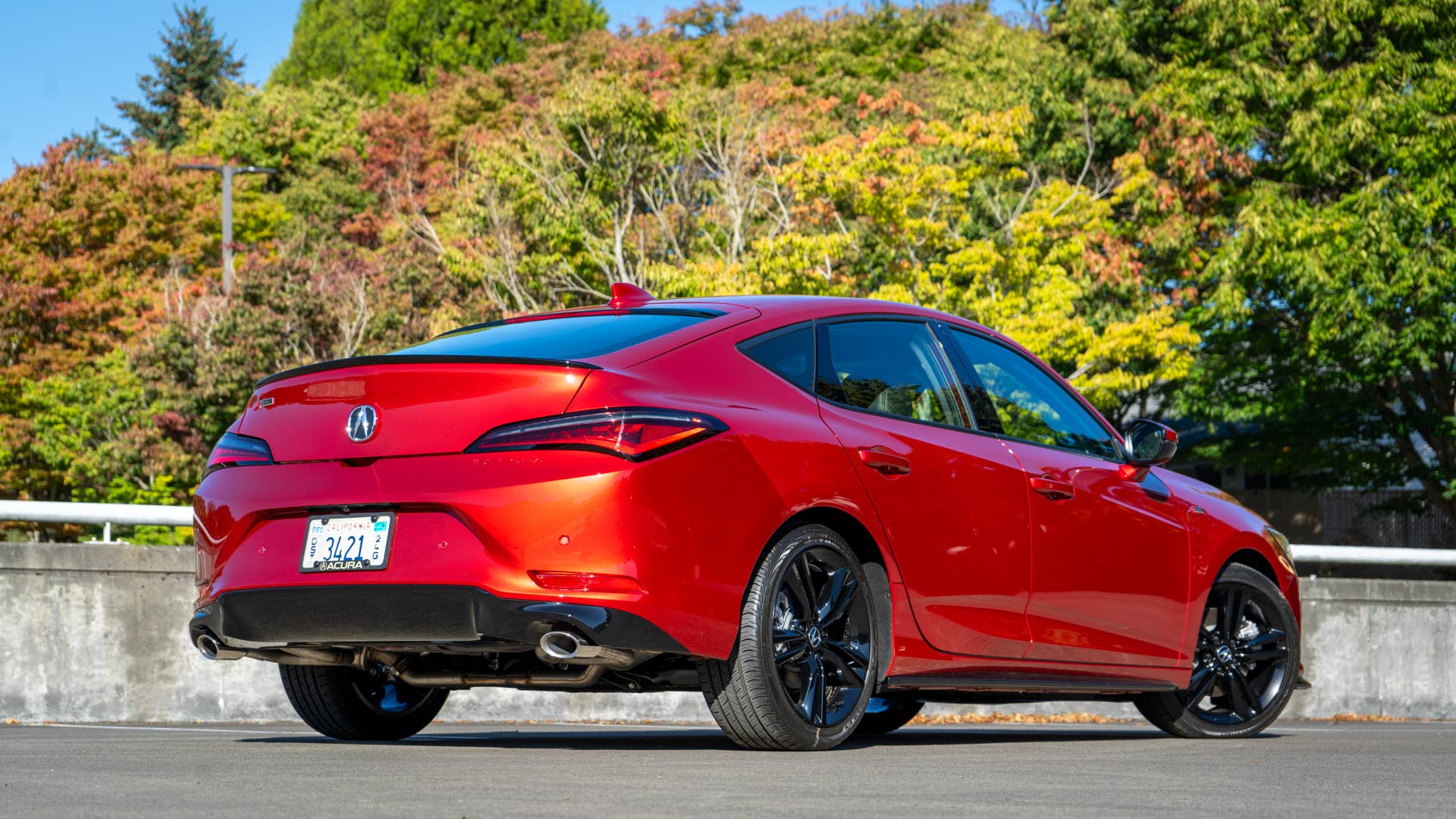
I can see the appeal for someone who enjoys driving but also needs to cover the school run, a wet commute, and a weekend away. The car has to earn its place on all of those trips. For 2026, Acura has freshened the A-Spec with new wheel designs, additional aero detailing, and extended ambient lighting. Performance Red Pearl cars like the one I drove also receive a color-matched grille.

Shopping for a new car? Click here to get a great deal on your next vehicle. Powered by Carvana: no-haggle pricing, 100% online.

2026 Acura Integra A-Spec

Cole Attisha

The Hatchback Is A Major Part Of The Attraction

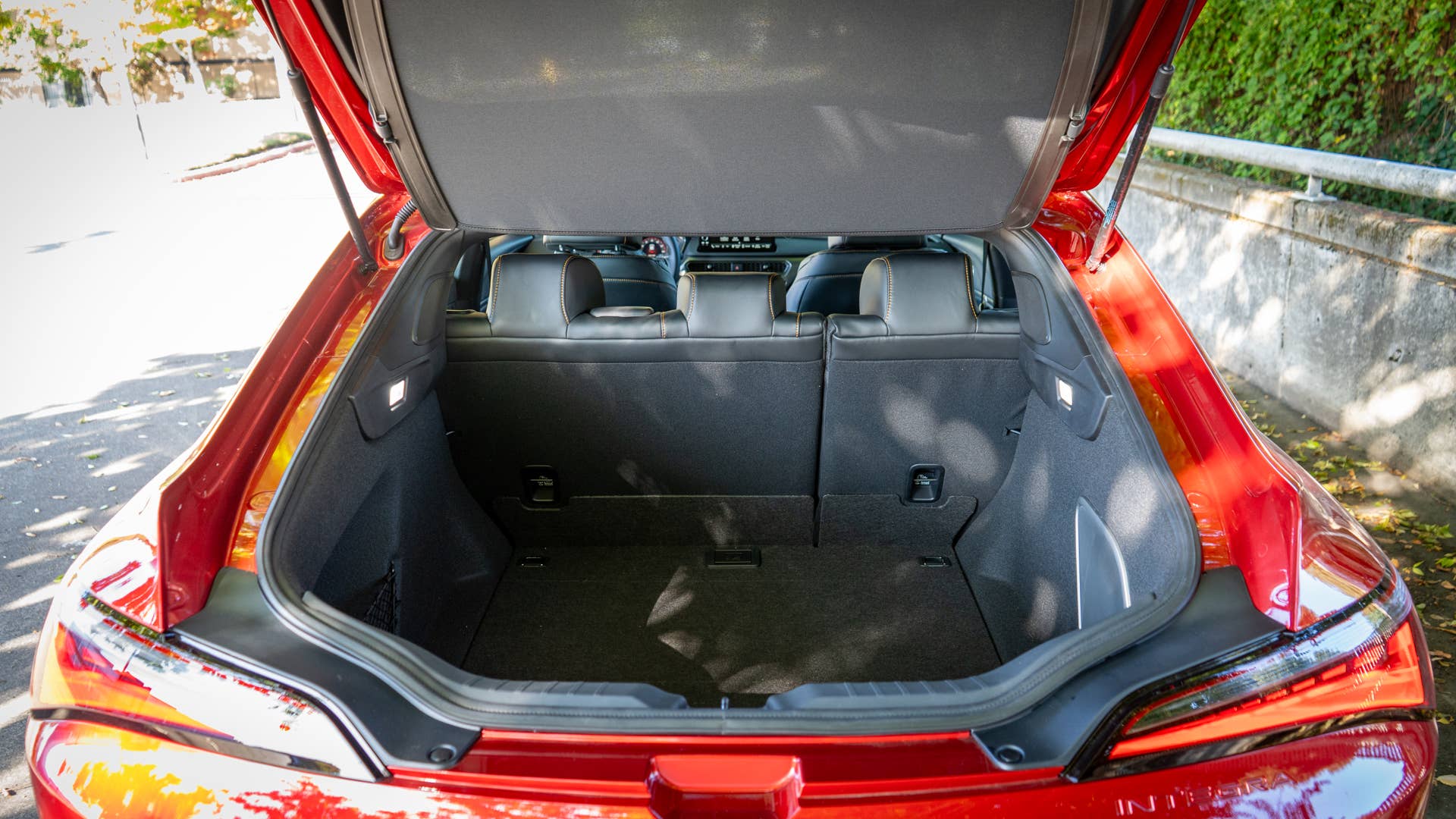
The liftback body deserves as much attention as the manual transmission. Acura lists 24.3 cubic feet of cargo room, and the rear seatbacks split and fold. A larger opening makes it easier to fit awkward luggage than feeding it through a conventional trunk, which is especially appealing if this will be your only car. Before signing up for a crossover, consider whether a hatchback already covers the bags, shopping, and weekend gear you actually carry. The Integra gives enthusiasts a useful answer to a familiar question: how much fun can you retain when the car also has to be sensible?

The Technology Package also includes heated microsuede-trimmed front seats, a head-up display, and a 16-speaker ELS Studio 3D audio system. A moonroof comes standard, too—something you lose when you upgrade to the Type S. Every 2026 Integra now gets a nine-inch touchscreen, wireless Apple CarPlay and Android Auto, and wireless charging. When you choose this version, you’re paying for better audio, seat trim, a head-up display, and adjustable suspension.

2026 Acura Integra A-Spec

Cole Attisha

The Real Verdict

The manual A-Spec with Technology Package starts at $39,200 in the U.S., or $40,595 with Acura’s current $1,395 destination charge, before premium paint. That puts it $14,700 below the Type S on the same basis. The EPA rates it at 26 mpg city, 36 highway, and 30 combined. The Civic Si deserves a place on the shopping list for anyone who wants an engaging manual for even less, but the Acura’s hatchback and extra equipment help justify the added cost.

I’d still stretch for the Type S if driving excitement were the overriding priority. I explored that choice in my A-Spec versus Type S comparison, but I am admittedly a fool with my money. For someone who wants a comfortable daily driver with a rewarding manual and useful cargo space, the A-Spec deserves serious consideration. Its blend of comfort and involvement earned my vote after just half an hour, and it’s worth commending that a vehicle like this even exists in 2026, when seemingly every alternative has swapped engaging driving dynamics for huge screens and automated assists. It’s one of the last examples of a dying breed, and it’s a damned good one.

Autoblog aims to feature only the best products and services. If you buy something via one of our links, we may earn a commission.

2027 Audi Q9 & SQ9 First Drive Review: German Flagship Luxury With American Size

I always felt like Audi never truly understood the American market; the company’s sales numbers proved my sentiment. While BMW introduced its first SUV, the X5, back in 1999, Audi didn’t follow suit with the Q7 until 2005. This trend continued when BMW added the smaller X3 in 2003, and Audi did not match it with the Q5 until five years later in 2008. Fast-forward to late 2018, and BMW took another bold gamble with its largest SUV to-date, the X7. Mercedes-Benz had already introduced GLS (formerly the GL) in 2006, but the X7 quickly proved to be a strong competitor for buyers who wanted a full-size German SUV. 

Audi

View the 3 images of this gallery on the original article

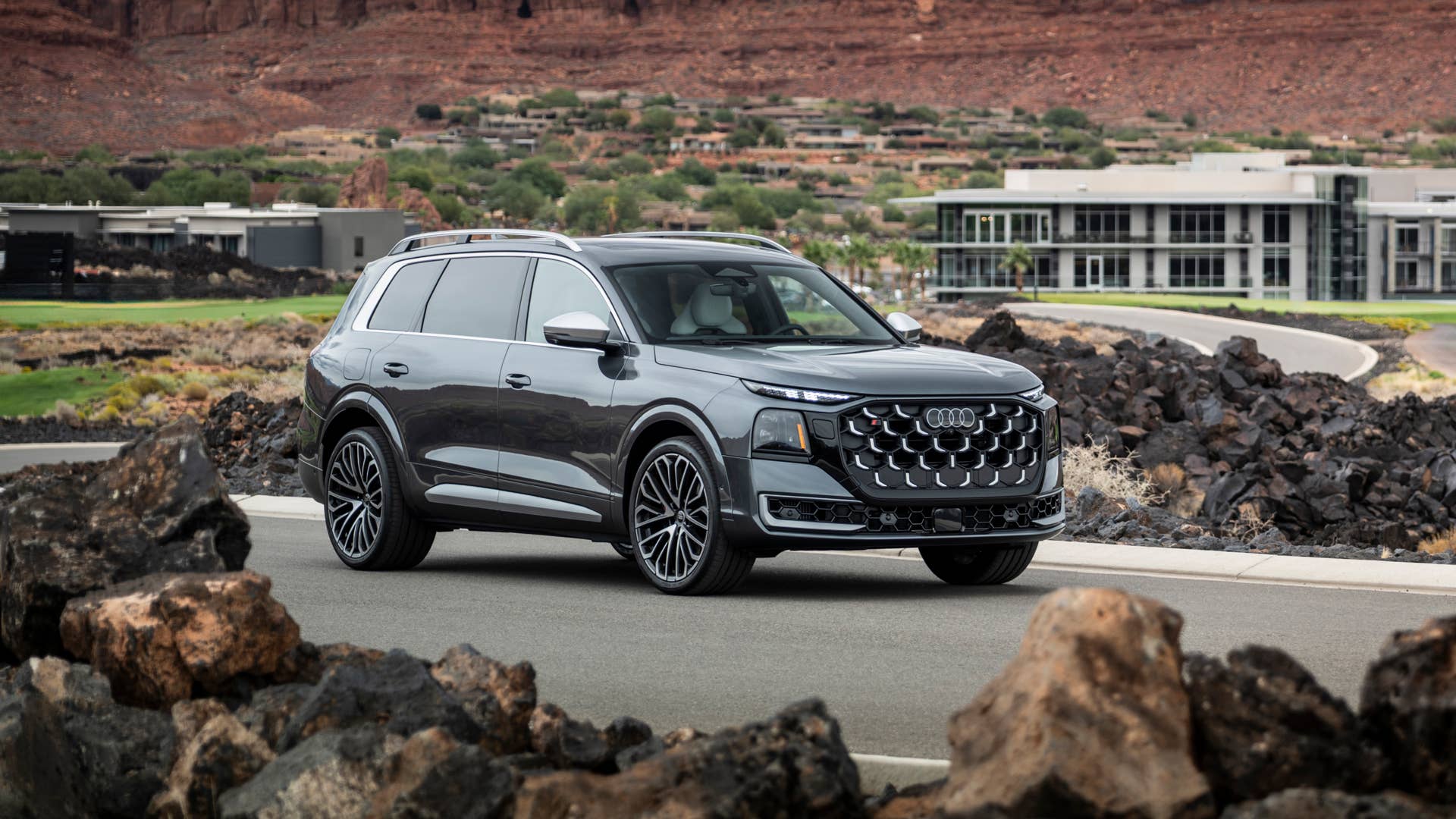
The Audi Q7 had three rows of seats, but it was smaller than the X7 and GLS, and therefore could not match them for comfort and luxury. Nearly a decade after the X7’s debut, the engineers at Ingolstadt have finally realized that American buyers’ idea of a “large SUV” is different from Europe. The 2027 Audi Q9 (and SQ9) enter the market ready to face the competition head-on. With so many years of research and comparisons, Audi could be arriving late to the game but with the perfect playbook to attract new customers to the brand.

What Is The Audi Q9?

At 209 inches long, the Q9 arrives as the largest Audi product in the company’s history. It sits nearly 10 inches longer than the Q7 with a wheelbase that’s stretched by 5.6 inches. That space is valuable for passengers and cargo, where the Q9 is specifically crafted to give BMW and Mercedes a tough time.

Audi

View the 3 images of this gallery on the original article

Second-row passengers get 41.6 inches of legroom, besting the X7 and falling just shy of the GLS. The third-row accommodates 29.1 inches of legroom, which is behind the BMW and Mercedes by a sizable margin. Audi appears to have prioritized cargo space, where the Q9’s 19.3 cubic feet behind the third row leads its German rivals, as does the 43.8-50 cubes behind the second row. With both rows stowed, the Q9 packs 87.7 cubes, more than the GLS but less than the X7. It’s worth noting the Q9 comes with seating for up to seven passengers, but the $450 captain’s chairs limit the seating to six. Those seats are nearly identical to the front ones, but will not have ventilation available for the 2027 model. They also lack the ability to fold flat, severely limiting the cargo capacity.

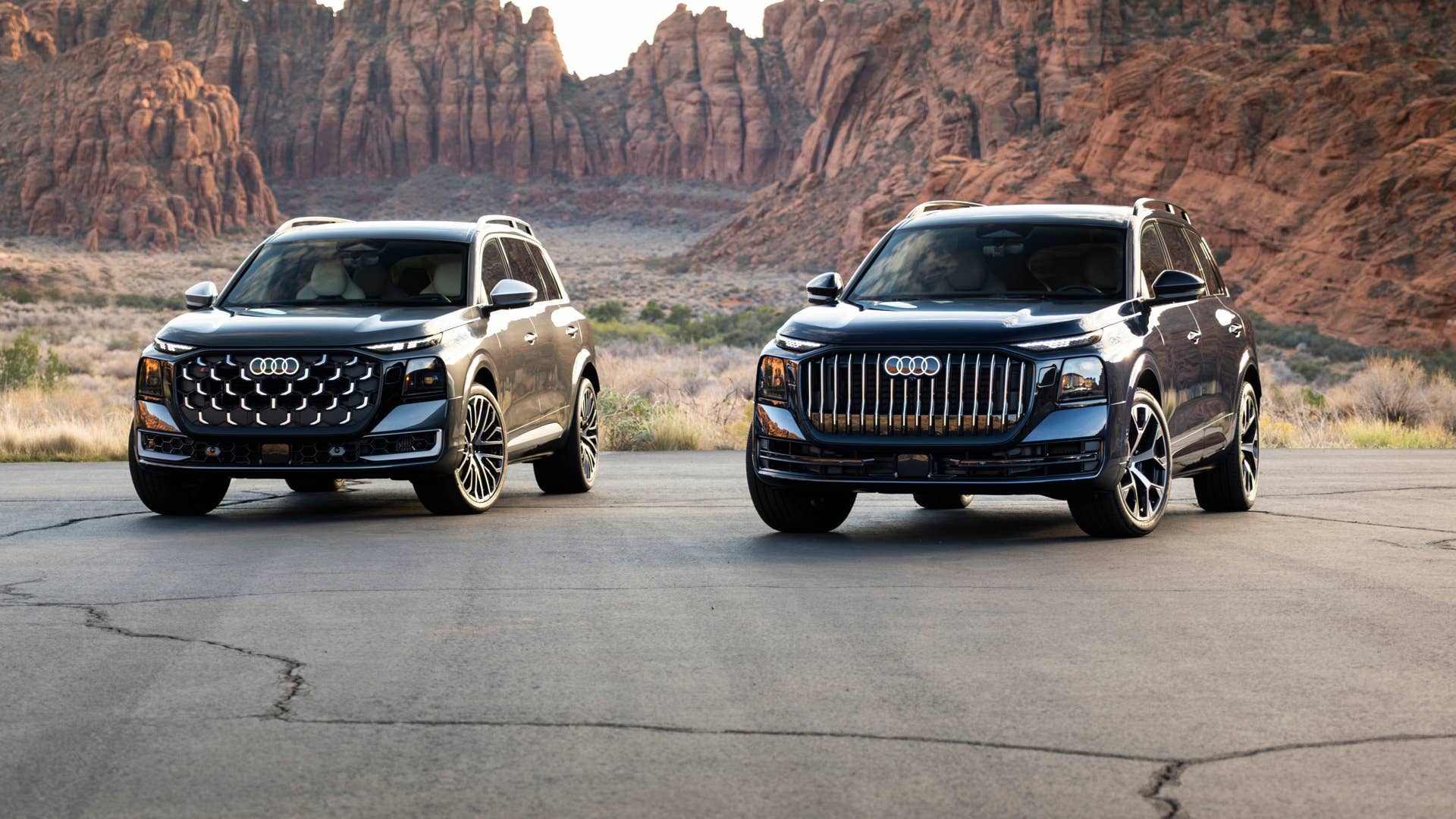
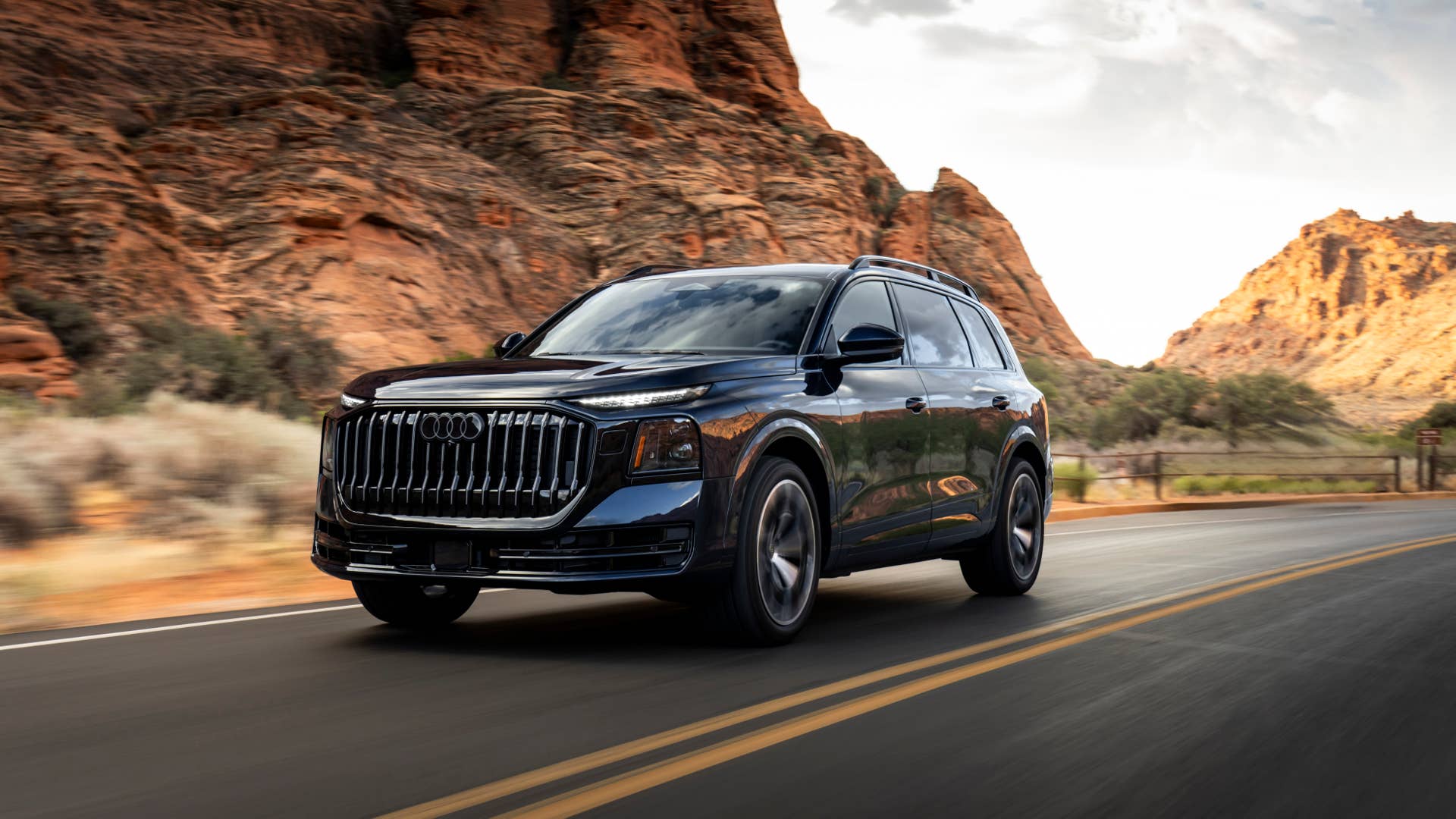
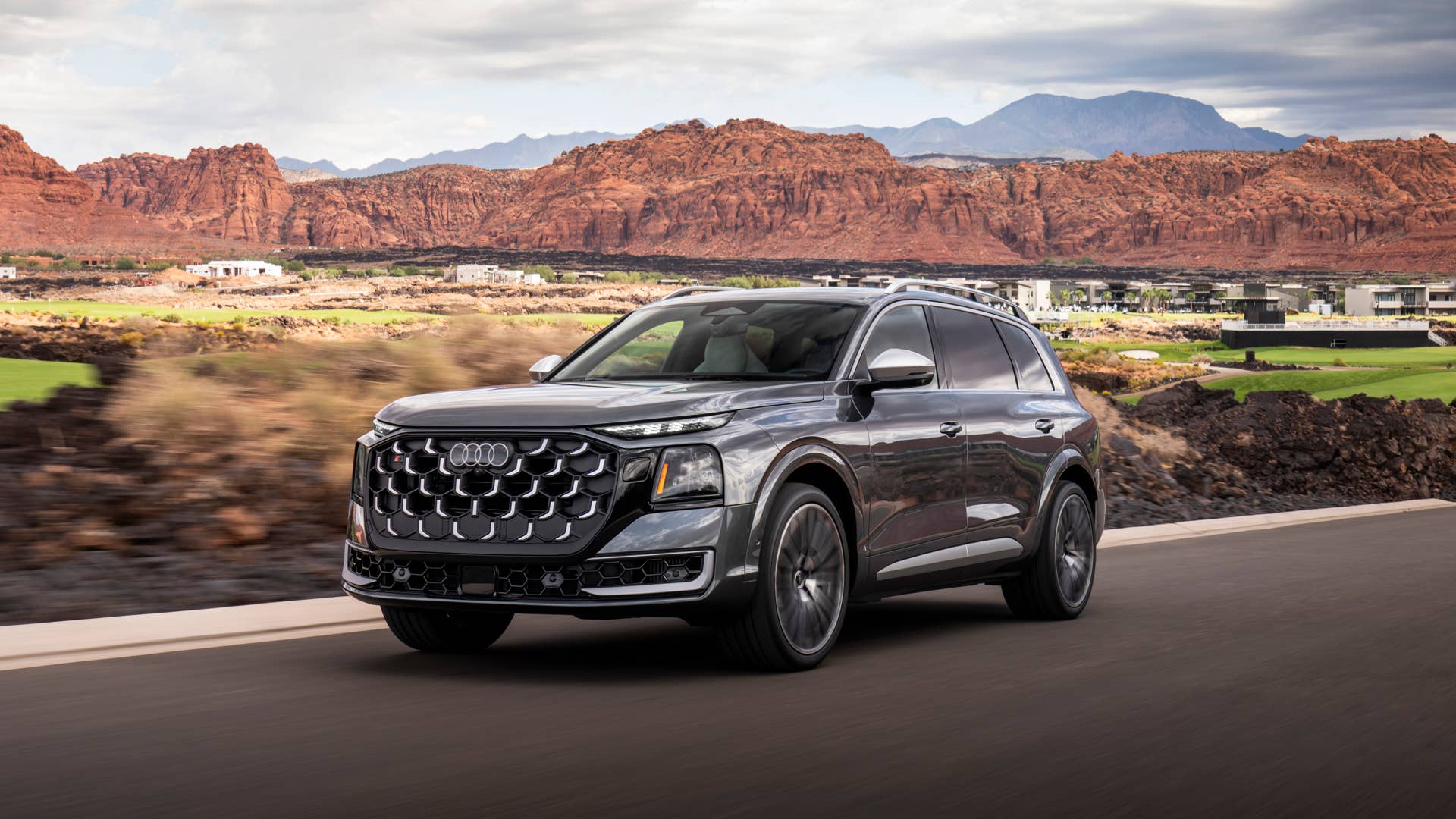
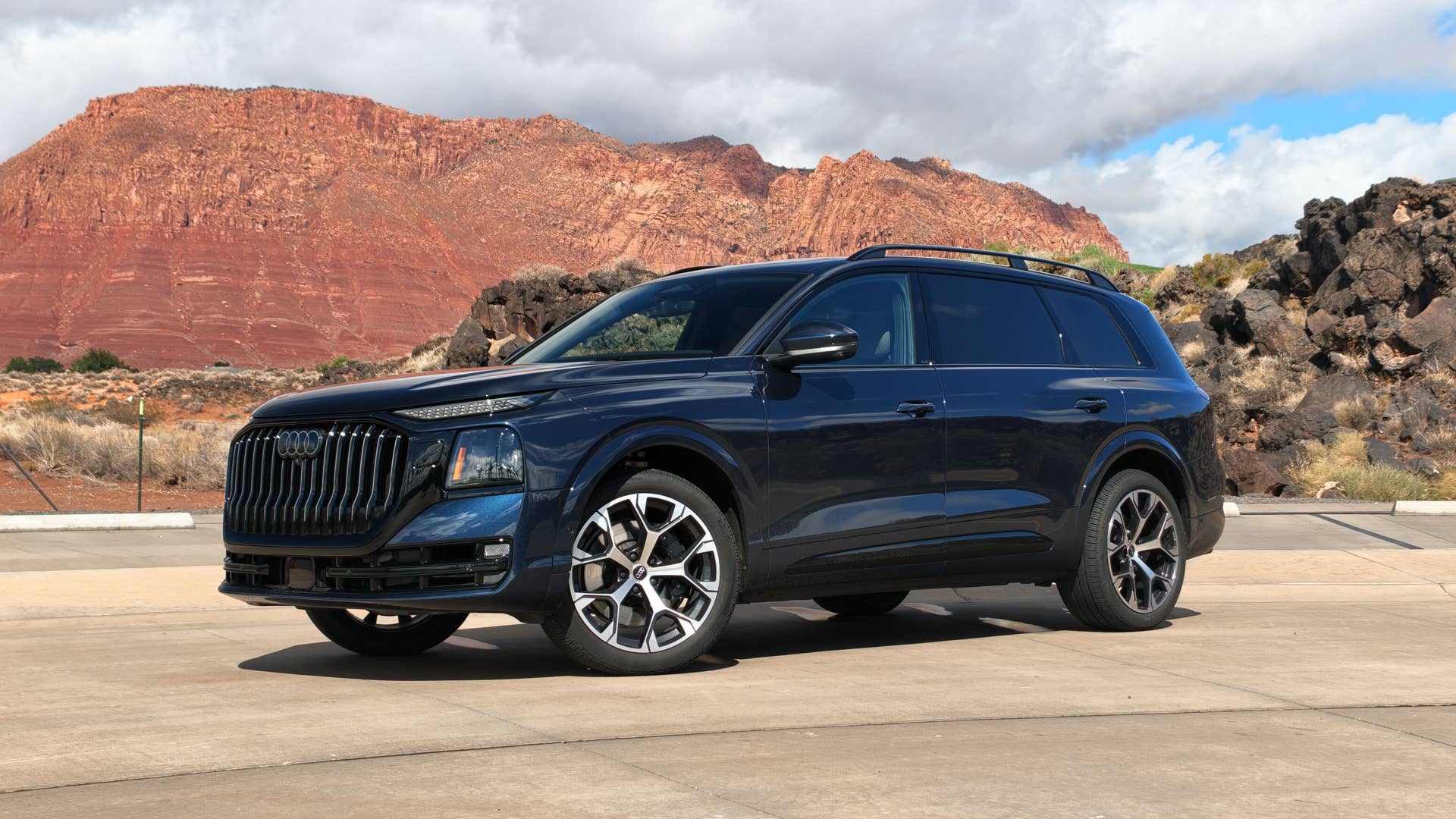
You can easily spot an SQ9 via its more conventional grille. The Q9 features vertical slots with optional illumination, giving it a very unique appearance compared to any existing Audi. I personally don’t love the Q9’s grille, and much prefer the SQ9.

Overpowering The Competition

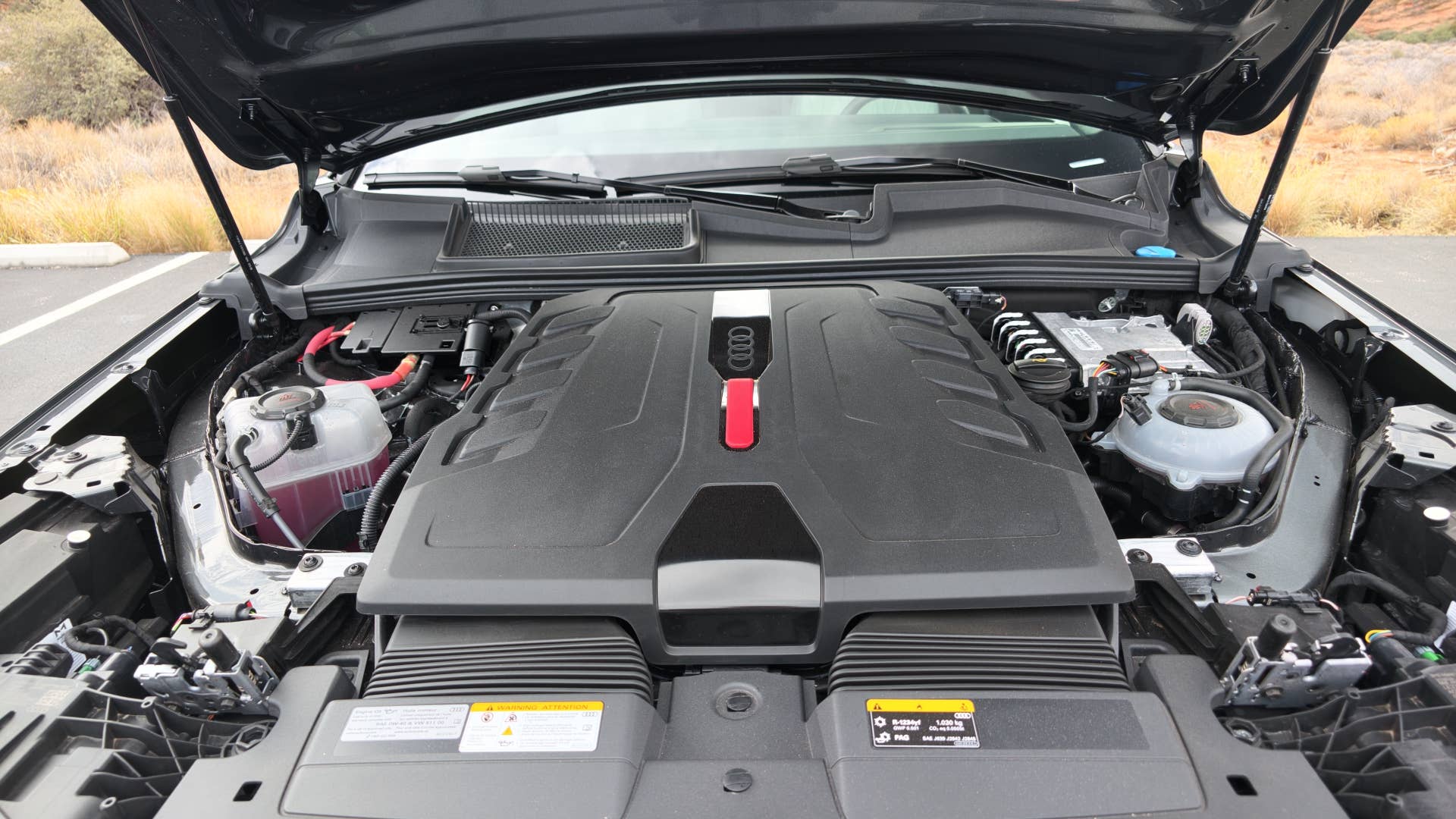
The Q9 might be Audi’s biggest SUV ever, but it arrives sporting an engine that’s slightly smaller than the previous Q7. A 2.9-liter V6 sits under the hood in replacement of the 3.0-liter unit in the outgoing Q7, but this Porsche-derived engine gets two turbochargers instead of one. This results in a massive output  jump from the 3.0-liter’s 335 horsepower and 369 lb-ft of torque to 429 hp and 442 lb-ft. For reference, the inline-six engines X7 and GLS both only produce 375 hp. Audi claims a 4.9-second 0-60 mph time, though I only observed a 5.01-second run at altitude at the first drive event in St. George, Utah. 

Jared Levenson/Autoblog

View the 2 images of this gallery on the original article

Audi will also offer an SQ9, packing a 4.0-liter twin-turbo V8. But whereas the outgoing SQ7 only produced 500 hp and 568 lb-ft, the new SQ9 delivers 591 hp and 590 lb-ft. The SQ9 outmatches the comparably-priced V8 engines in the X7 and GLS (523 hp and 530 hp, respectively), and punches much closer to the Alpina and AMG versions of those vehicles. Audi says the SQ9 can hit 60 mph in 3.8 seconds, quicker than the Alpina XB7 and GLS 63, though my quickest run was only 4.22 seconds in Utah. I’d like to retest the SQ9 at home in Florida, which sits at sea level.

Big Size, Big Luxury

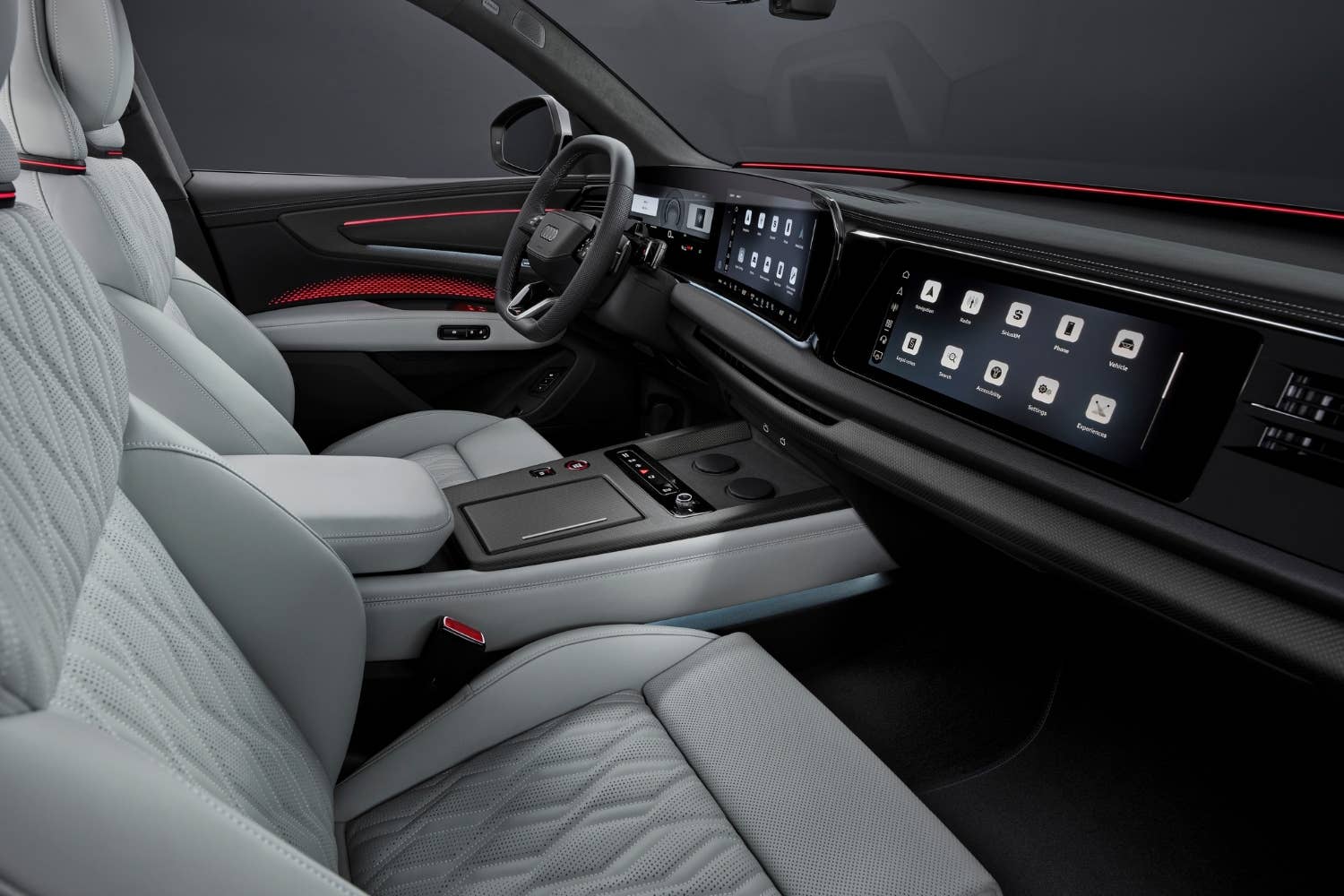
To properly compete with BMW and Mercedes, the Q9 can’t just be spacious, it needs to be Audi’s most luxurious interior. That’s why this flagship SUV is treated to standard heated leather seats with nicer fine leather seats with heating, ventilation, and massage on the Prestige trim. Other standard amenities include wood inlays (carbon fiber on SQ9), four-zone climate control, a head-up display, a Bang & Olufsen Premium sound system with 3D sound, surround-view cameras, panoramic glass sunroof, surround-view camera, ambient interior lighting, and acoustic glass.

Audi

View the 3 images of this gallery on the original article

Uppers trims add a dash camera, five-zone climate control, soft-close doors, power-operated doors, panoramic roof with lighting and variable light control, surround-view cameras with 3D view, and a 22-speaker Bang & Olufsen Premium sound system with 4D audio.

This cabin feels like a top-notch Audi product, and it comes alive more at night. The ambient lighting is vibrant without being tacky, and the sound-insulation is library quiet. My driving partner was mid-conversation with me while taking photos, and once the power door closed, his speech became completely inaudible thanks to the insulated glass.

Tech For Tech’s Sake?

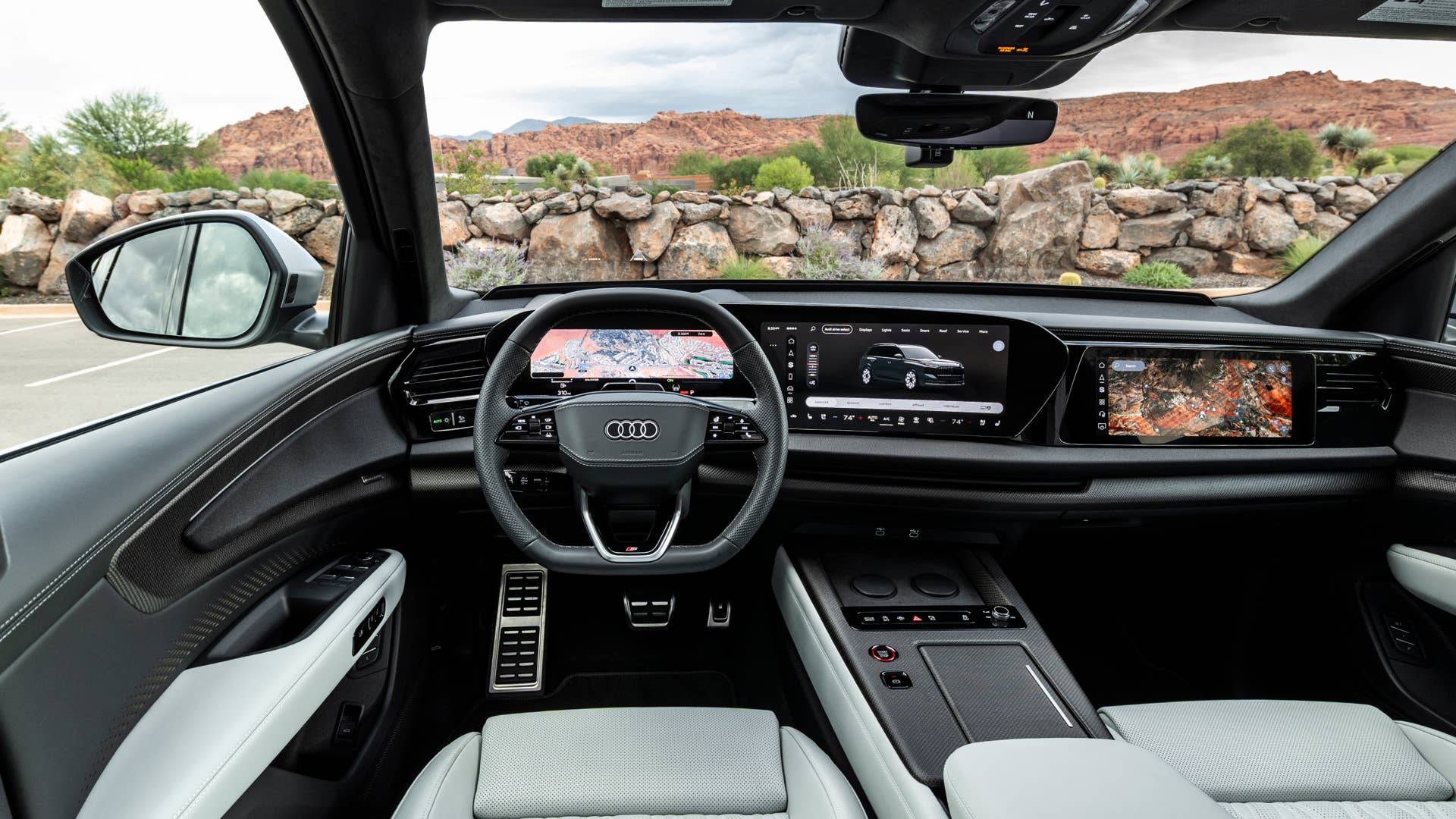
Every Q9 trim includes three screens: an 11.9-inch gauge cluster display, 14.5-inch touchscreen, and a 12.3-inch passenger display. Certain functions are easy to find with visual menus that let you find what you are looking for based on where it is on the car. For example, you click on an image of the head-up display to adjust it. Other functions aren’t as self-explanatory, like adjusting the climate vents or tuning the radio. Audi says many of these tasks can be done with the ChatGPT-powered voice command, but I found it unwilling or unable to execute some of my requests (like closing the power doors). 

Audi

View the 2 images of this gallery on the original article

The digital cockpit gauge cluster is less intuitive than previous Audi MMI systems, and there is seemingly less customizability. I also miss the separate touchscreen for climate controls in the Q7 and Q8, as the Q9 puts these functions on a ribbon that stays on the central touchscreen. You’d think the passenger screen could be used to adjust the temperature or vent positions, but instead you need to leave your current menu on the central screen to change them. The passenger screen has some useful functionality, like the ability to download apps like Disney+ to stream content, but other platforms such as Netflix are not available in the Audi store. There is no rear seat entertainment available in the Q9, so only the front passenger will be able to enjoy this content.

It’s A True Flagship

I started my day in Utah in the standard Q9, which rides on adaptive air suspension as-standard. The ride is sublime, prioritizing comfort over sporty handling. Even in Dynamic mode on 22-inch wheels, large bumps don’t upset the Q9 and rough roads are not transmitted to the driver. This is possibly the most comfortable and quiet vehicle in its class, though it’s less sporty than the X7. I wish this car had the predictive suspension from the A8/S8, but that would likely add over $7,000 to the Q9’s price.

Audi

View the 2 images of this gallery on the original article

Compared to its body-on-frame competition from America and Japan, the Q9 feels spry. Optional rear-wheel steering makes the car feel even more stable through corners, and maneuverable at low speeds. The Q9 has light steering, as most Audi vehicles do, giving drivers a relaxing but not utterly disconnected driving experience. I love the twin-turbo V6, which has been used in several Audi vehicles like the RS5, S6, and S7 as well as Porsche vehicles like the Panamera. It’s quiet when you want it to be and it makes a nice howl when you drive spiritedly.

RS Performance At An S Price

While I fully believe the Q9 packs enough performance for most buyers, the extra grunt from the SQ9 is intoxicating. The additional power makes the car even more effortless and the rumble from the V8 sounds even more premium. Audi also grants the SQ9 an electronically controlled locking rear differential with a more rear-biased quattro all-wheel-drive system. It’s noticeable on curvy roads, sending more power rearward and nudging the car more aggressively around corners.

Audi

View the 3 images of this gallery on the original article

The SQ9 also rides on a sport-tuned air suspension that sacrifices some of the standard Q9 cushiness in exchange for superior handling. Heavier steering, rear-wheel steering, and more aggressive tuning make the SQ9 shrink around the driver. On a back road, you can forget there are two rows of seats behind you as the SQ9 does its best impression of an RS6 wagon. Audi has done something impressive here: making an S model feel like an RS.

A Well-Priced Status Symbol

Audi’s largest SUV ever arrives priced at $89,095 (including a $1,395 destination fee) for the base Premium model. The Premium Plus trim adds $5,600 while the Prestige is a whopping $14,700, and there are still packages to add on top of those. The Q9 I drove rang in at $110,095 with the Prestige, Black Optic, and Luxury packages equipped. For only a bit more, the SQ9 starts at $119,395, though it too can add options. The ones I drove checked in at $128,045 with 23-inch wheels, B&O 4D audio, captain’s chairs, and the Luxury Package.

Jared Levenson/Autoblog

View the 3 images of this gallery on the original article

Those might seem like high price tags, but the Q9 and SQ9 are well-priced for their segment. The Q9 is marginally more expensive than the X7 but significantly less than the GLS despite having more power than both. Audi priced the SQ9 about $2,000 to $3,000 above the V8-powered GLS 580 and X7 M60i, but it’s nearer to the GLS 63 and Alpina XB7 in terms of power and performance. That makes the SQ9 the best “bargain” in the segment until the updated X7 possibly dethrones it.

American customers and dealerships have been begging Audi to build something larger than the Q7 for at least a decade now. Audi may be late, but it has the right game plan to be a strong competitor, possibly the strongest in the segment. This is the most America-friendly SUV Audi has ever made. Traditional Audi buyers are going to love it, and it should attract plenty of new buyers to the brand.

Yamaha Racing Ironman: Motorcycle Race Report

The Progressive Grand National Cross Country (GNCC Racing) Series, an AMA National Championship, continued its penultimate round of the 2026 season on Sunday, October 25, with an action-packed day of motorcycle racing at the Yamaha Racing Ironman GNCC in Crawfordsville, Indiana.

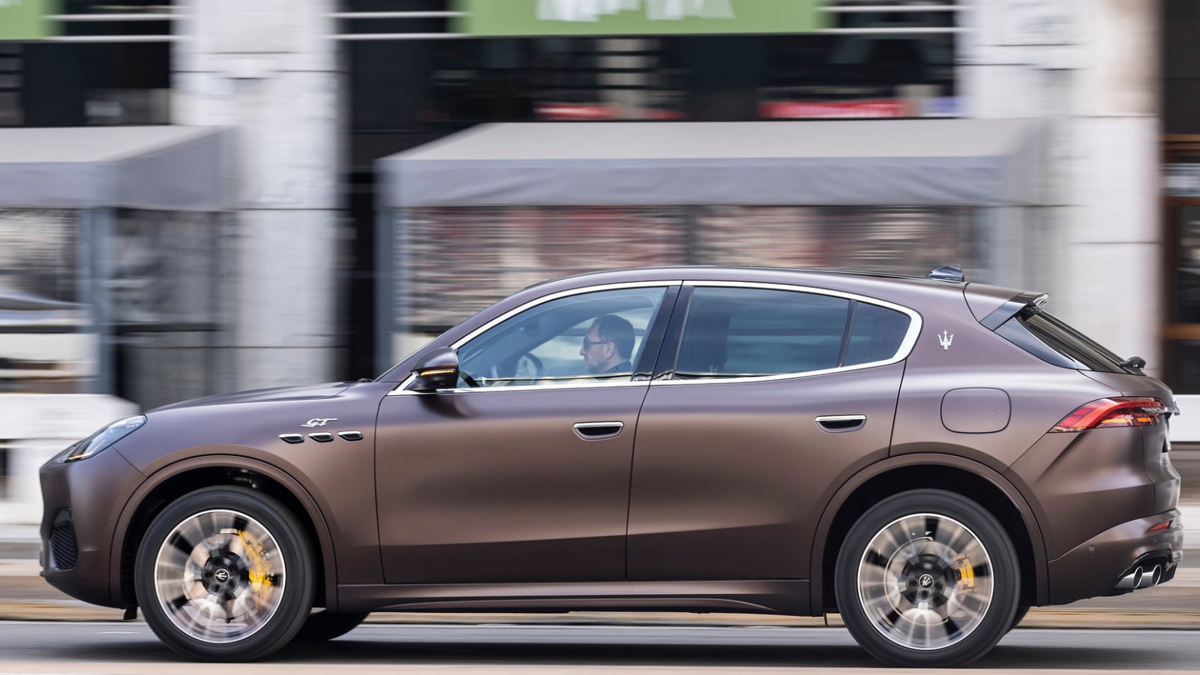
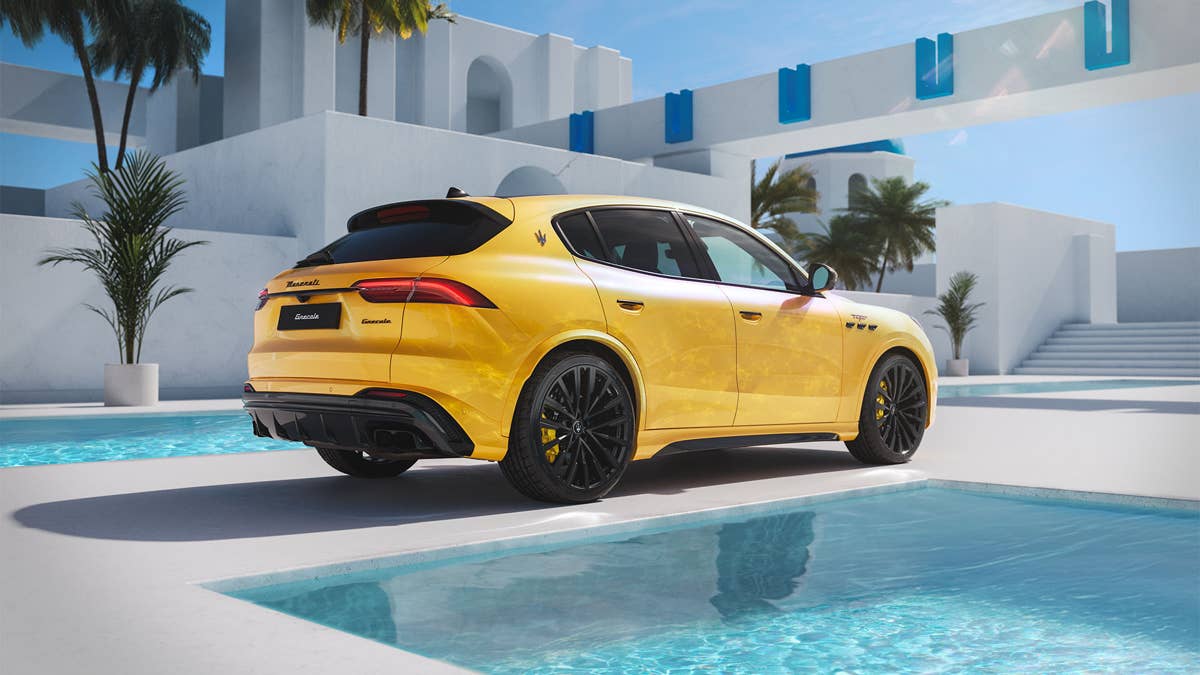
Genesis GV70 vs. Maserati Grecale: Sensible Luxury Meets Italian Temptation

The Genesis GV70 has become one of my favorite luxury SUVs because it combines comfort, performance, utility and a little personality. That last ingredient matters. Modern crossovers are a dime a dozen, and too many have the emotional appeal of a vending machine. The GV70 gives you something to enjoy beyond discovering another USB port.

Then I drove the Maserati Grecale Trofeo, and my sensible comparison briefly went out the window.

With 523 horsepower, the Trofeo plays in a different performance league from the 375-horsepower GV70 3.5T. However, Maserati now offers less powerful V6 versions that bring the two vehicles closer together on paper. The new entry-level Grecale V6 and Modena V6 produce 385 horsepower, making them more relevant alternatives to a well-equipped Genesis. Maserati’s North American lineup now includes those two, the Trofeo and the fully electric Folgore.

Here’s the distinction: I drove the Trofeo, not the entry-level V6. My impressions describe that vehicle. The comparison with the less expensive Maserati is about specifications and positioning, rather than pretending I tested something I didn’t.

Maserati

View the 2 images of this gallery on the original article

Powertrain and performance

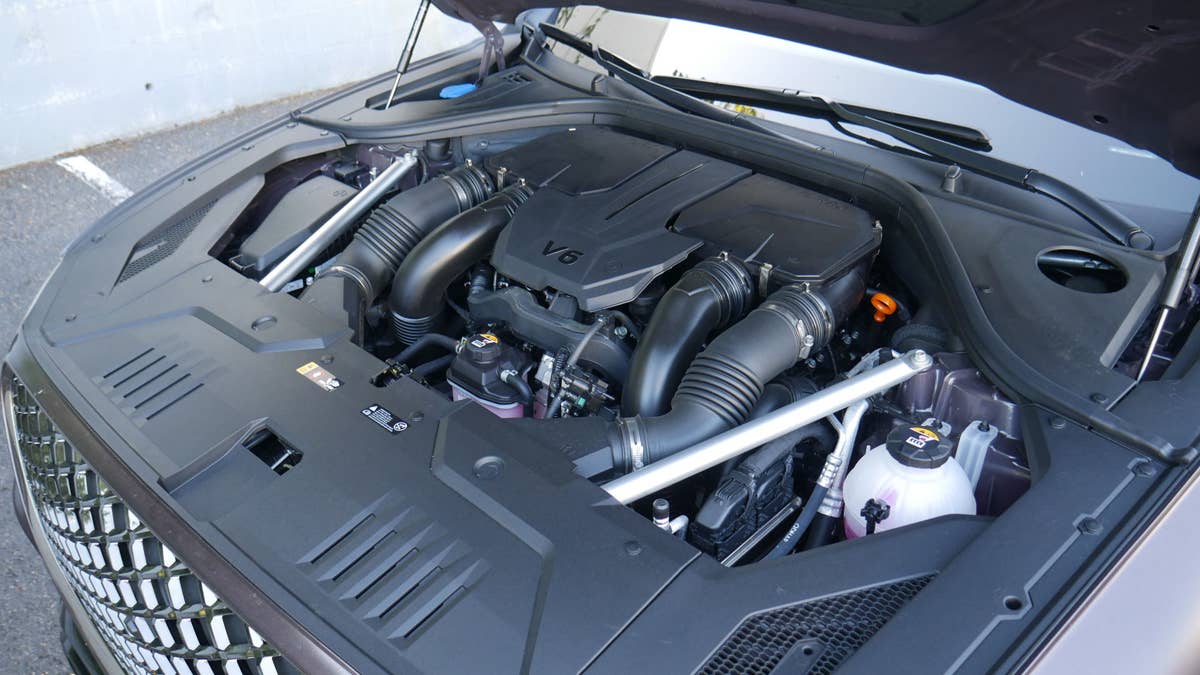
The GV70 3.5T uses a twin-turbocharged 3.5-liter V6 producing 375 horsepower and 391 pound-feet of torque. An eight-speed automatic and standard all-wheel drive complete the package. It’s strong, smooth and entirely capable of reminding you that the groceries weren’t secured properly. Genesis lists the 2027 GV70 lineup from $49,350 before destination, although that starting price buys the four-cylinder version. The 3.5T occupies considerably more expensive territory.

James Riswick

View the 2 images of this gallery on the original article

Maserati’s lower-output 3.0-liter twin-turbo V6 produces 385 horsepower and 368 pound-feet. That gives it a modest horsepower advantage over the Genesis, while the GV70 counters with more torque. Maserati quotes a five-second run to 60 mph for the Modena V6. Its ZF eight-speed automatic works with an all-wheel-drive system that normally favors the rear axle and can send power forward when needed. The Modena also offers serious chassis equipment, including an electronic rear limited-slip differential and adaptive air suspension.

The Trofeo turns up the temperature with 523 horsepower and 457 pound-feet of torque. This is where the comparison stops being particularly fair to the Genesis. The Maserati’s Nettuno-derived V6 uses pre-chamber combustion technology with roots in Formula 1, although that doesn’t mean you’ve bought a Grand Prix engine with cupholders. It does mean there’s engineering behind the theatrics.

View the 4 images of this gallery on the original article

Exterior and interior design

The GV70 remains a handsome vehicle, and the Prestige Graphite treatment adds dark exterior accents, 21-inch wheels and red brake calipers. Inside, Nappa leather with suede inserts and carbon-fiber trim give it a more athletic presentation. I appreciate that Genesis can add visual attitude without making the vehicle look like it’s auditioning for a nightclub security position.

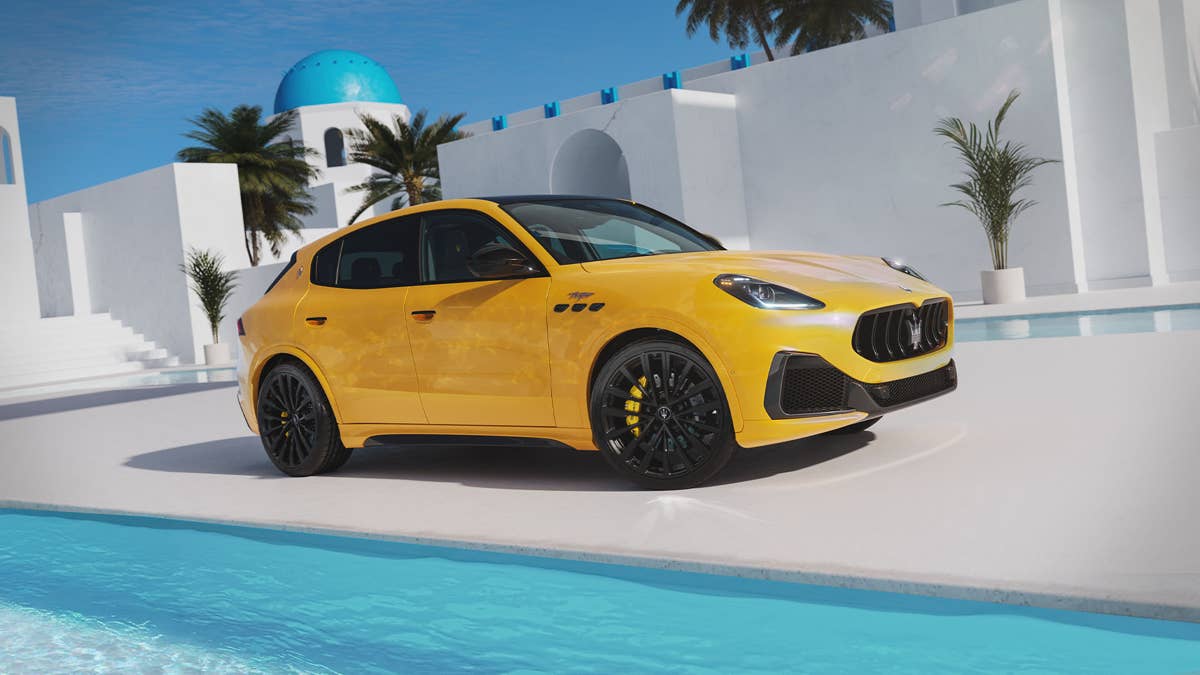
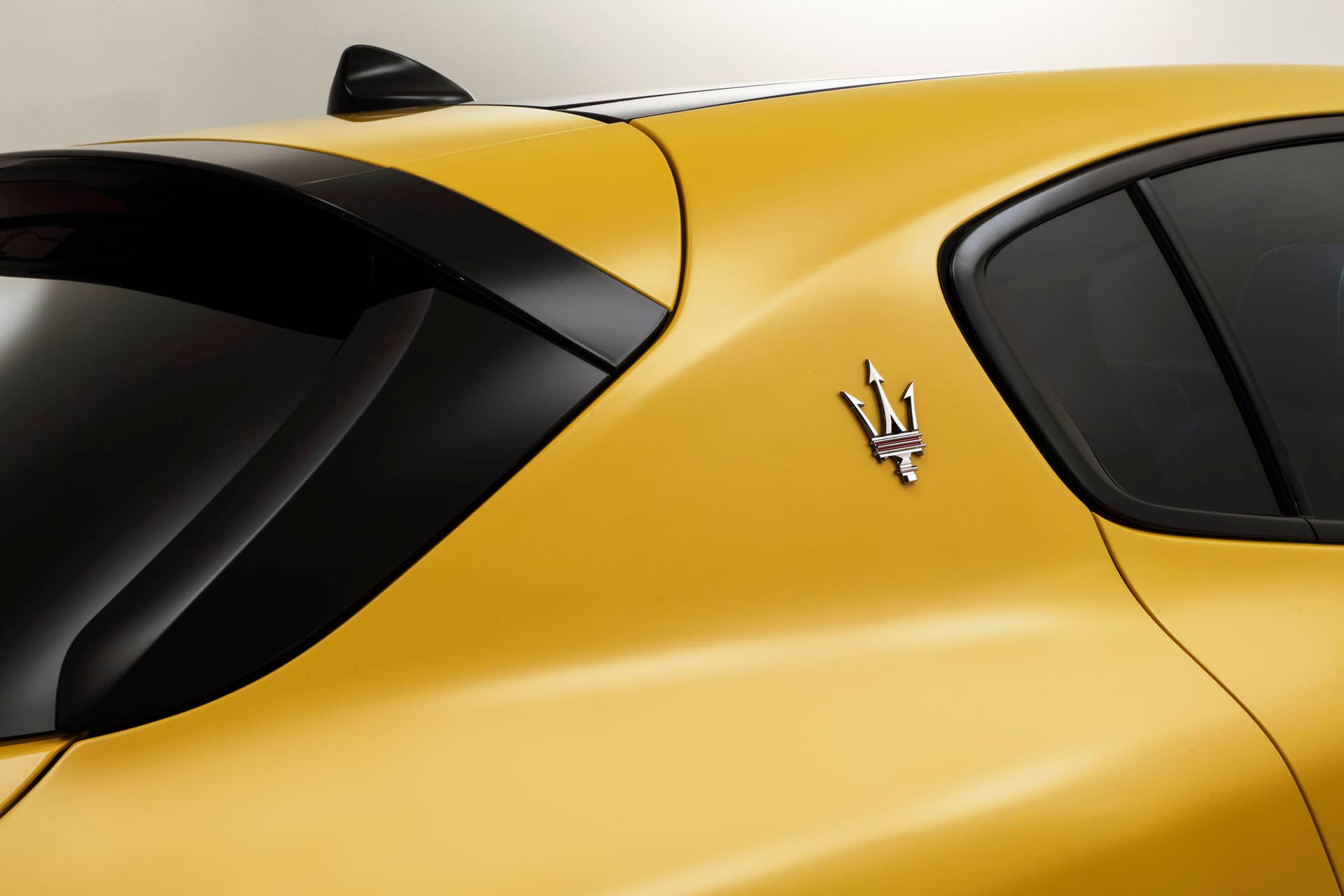
The Grecale makes a different statement. Recently, Maserati updated its exterior design ethos with a sharper, shark-like nose design that proliferates across the fleet. It’s stunning. It’s recognizably Italian without relying entirely on the trident badge, and the cabin surprised me.

Genesis Motor North America

View the 3 images of this gallery on the original article

Maserati hasn’t always been my benchmark for interior execution, but this particular vehicle felt carefully assembled, with excellent seats and attractive materials throughout. That’s a substantial improvement over merely asking buyers to forgive everything because the engine sounds magnificent.

Both provide comfortable accommodations for five, but their seating positions feel different. In the Maserati, I felt lower and more tucked into a sporting seat. The Genesis emphasizes a softer, more luxurious atmosphere. Neither approach is wrong. One encourages you to settle in; the other encourages you to investigate the drive-mode selector.

Genesis

View the 2 images of this gallery on the original article

Screens, switches and accidental seat heating

Maserati combines a 12.3-inch central touchscreen with a lower comfort-control display. It looks attractive, but the arrangement occasionally turned my large, ape-like hands into unauthorized climate technicians. Reaching toward the transmission buttons, I sometimes brushed a nearby control and changed a setting. Nothing enhances a warm Malibu afternoon quite like accidentally activating your own seat heater.

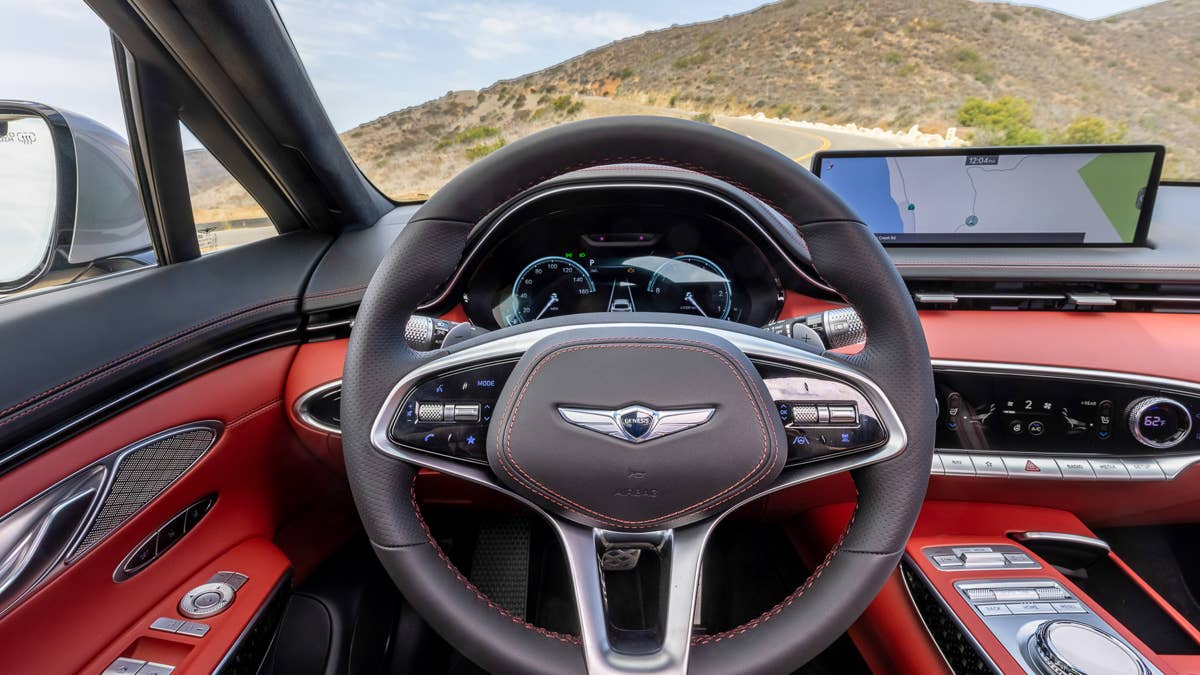
The Genesis has the easier control layout in my experience. I still prefer a conventional gear lever to its rotary selector, but it works well enough. Likewise, Maserati’s piano-key-style transmission controls look elegant, yet I’d rather have something I can grab without checking whether I’ve also ordered additional lumbar support.

Then there’s the audio. The available Sonus faber system may be the finest automotive sound system I’ve experienced. Full stop. The upper specification offers as many as 21 speakers and 1,285 watts, and the result is extraordinary. I’d happily spend considerable time evaluating it with Rush, strictly in the interest of journalism.

Maserati

View the 2 images of this gallery on the original article

Driving impressions

My Grecale drive took place around Malibu, where construction and reduced speed limits kept proceedings restrained. That limited any meaningful exploration of the Trofeo’s outright performance, but it still revealed a responsive, enjoyable vehicle. Steering weight, body control and throttle response contributed to a sense of occasion even at ordinary speeds.

What I can’t do is transfer those impressions wholesale to the entry-level Grecale. Different suspension specifications, tires and powertrain calibrations matter. Sharing a body and an engine family doesn’t make every version behave identically.

Related: Toyota vs. Honda vs. Chevy: Which Brand Comes Out Safest?

The Trofeo’s engine becomes considerably more vocal when encouraged, particularly in its sporting settings. The GV70 3.5T feels calmer and quieter, although calling it slow would be ridiculous. Both isolate occupants well, but the Maserati makes more of an event out of accelerating.

One frustration involved the Maserati’s audible speed warning. Finding the appropriate setting took longer than I wanted. A warning system has a purpose, but repeated electronic scolding can interrupt an otherwise pleasant drive. I already have people in my life qualified to question my decisions. Many.

Oh, and the turn signal makes a “bing – bong” noise that sounds like it’s from a 1980s video game.

Genesis

View the 2 images of this gallery on the original article

Pricing and value

A well-equipped GV70 3.5T in the low-$70,000 range remains a compelling luxury proposition. The entry Grecale V6 starts around $80,000 including destination, while the Modena pushes into the mid-$80,000s. The Trofeo I drove occupied roughly $116,000 territory. These figures put the less powerful Maseratis closer to the Genesis, but “closer” still involves several thousand dollars and dipping into junior’s college funds.

Equipment matters, too. An entry Maserati isn’t automatically equivalent to a heavily equipped Genesis simply because their prices approach each other.

Related: Porsche Wants to Make Fake Manual Shifting Feel Real in EVs

Maserati provides a four-year/50,000-mile new-car limited warranty, including powertrain coverage, with roadside assistance during the warranty period. Remaining factory coverage can transfer to the next owner. It’s a respectable package, although the warranty doesn’t become more generous just because the engine sings in Italian.

Genesis makes the stronger offer: five years/60,000 miles of new-vehicle limited coverage and 10 years/100,000 miles of powertrain coverage for the original owner, whichever comes first. Subsequent owners generally receive powertrain protection only within the original five-year/60,000-mile period, unless separate coverage applies. For buyers keeping their SUV long term, Genesis wins this round.

Maserati

View the 2 images of this gallery on the original article

Final thoughts

The GV70 remains my pick for balancing luxury, useful performance and value. It’s distinctive, enjoyable and impressively accommodating without requiring an exotic badge to justify itself.

The Grecale surprised me because it delivered more than an entertaining engine. Its cabin, seats and overall presentation made me reconsider a brand I’d become increasingly skeptical about. The Trofeo is an expensive indulgence, but the lower-output V6 models deserve their own test drive.

Genesis still makes the stronger argument to my sensible side. Maserati has apparently found the department responsible for my less sensible side.

Unfortunately, that department has excellent hearing and a weakness for Italian exhaust notes. Bottom line: the Grecale is my new favorite.

Related: The 2026 Volvo XC90 PHEV is a Commuting Star, But It’s Pricey

Yamaha Racing Ironman: ATV Race Report

The Progressive Grand National Cross Country (GNCC Racing) Series, an AMA National Championship, kicked off an action-packed weekend of racing on Saturday, October 24, at the Yamaha Racing Ironman GNCC in Crawfordsville, Indiana. The penultimate round of the 2026 season brought racers and fans together at the iconic Ironman Raceway for a day filled with intense competition, championship battles and unforgettable moments.

2026 GMC Sierra 1500 AT4 vs. 2026 Toyota Tundra TRD Off-Road: I Drove Both To See Which Rugged Pickup I’d Buy

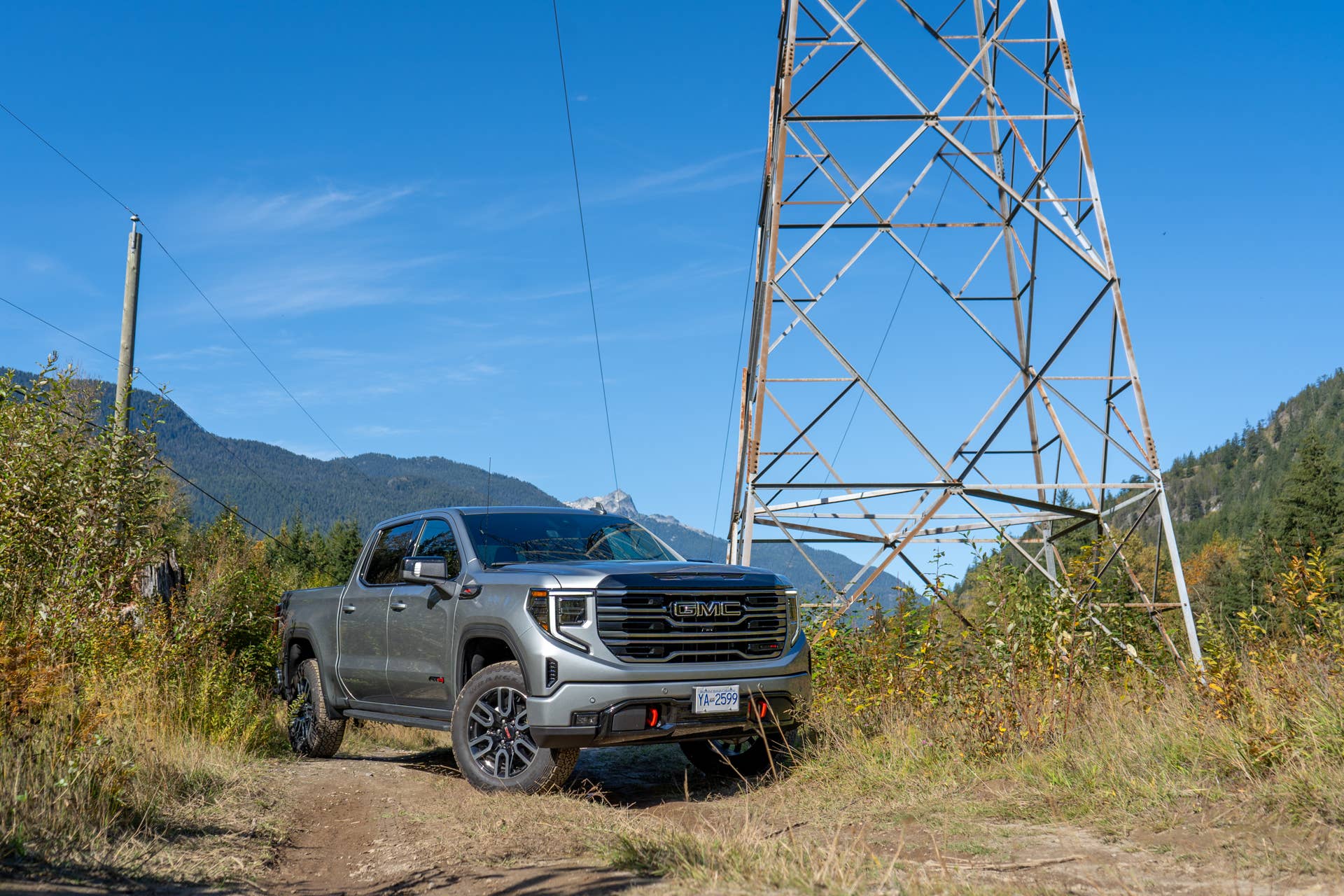
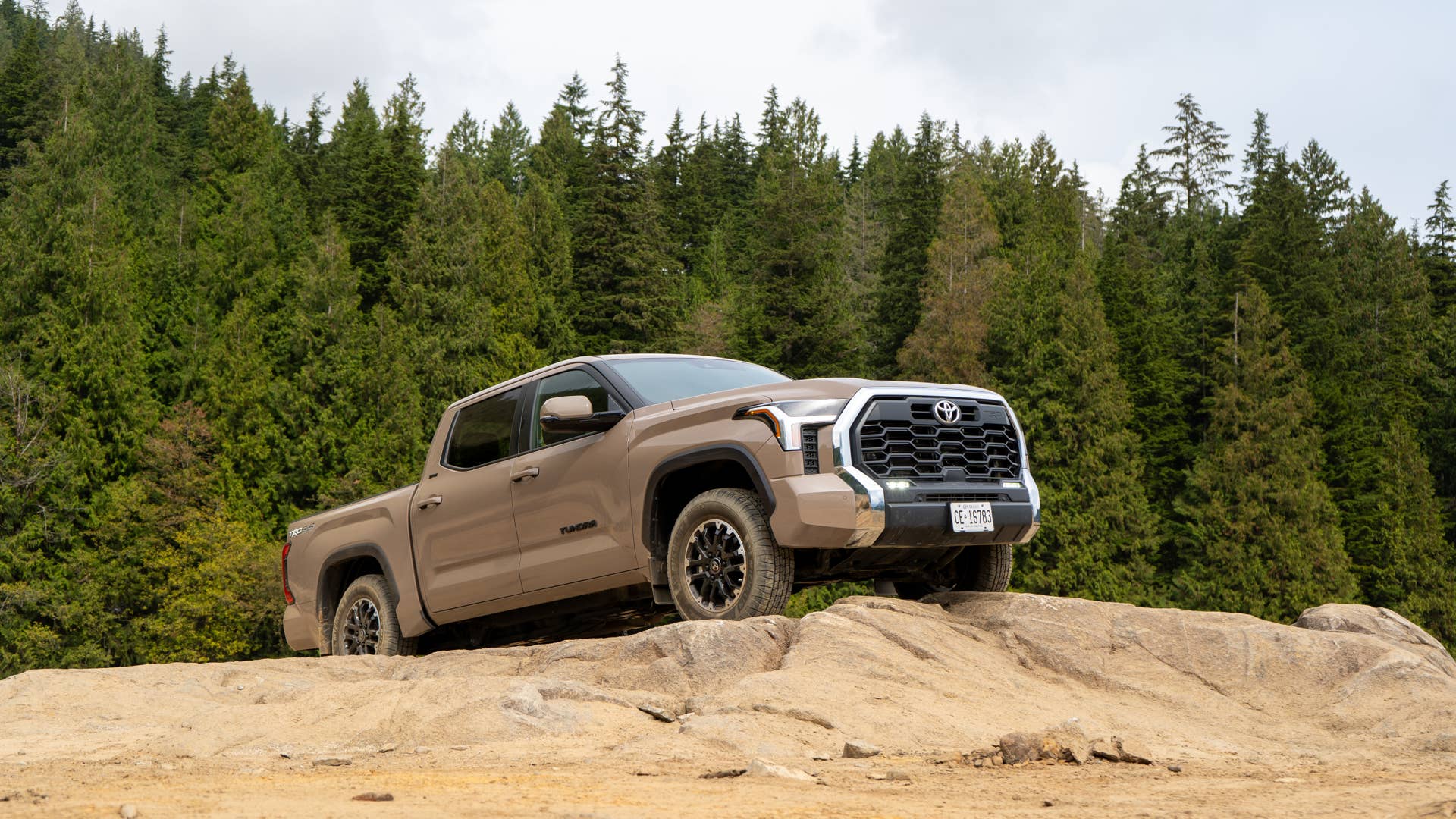
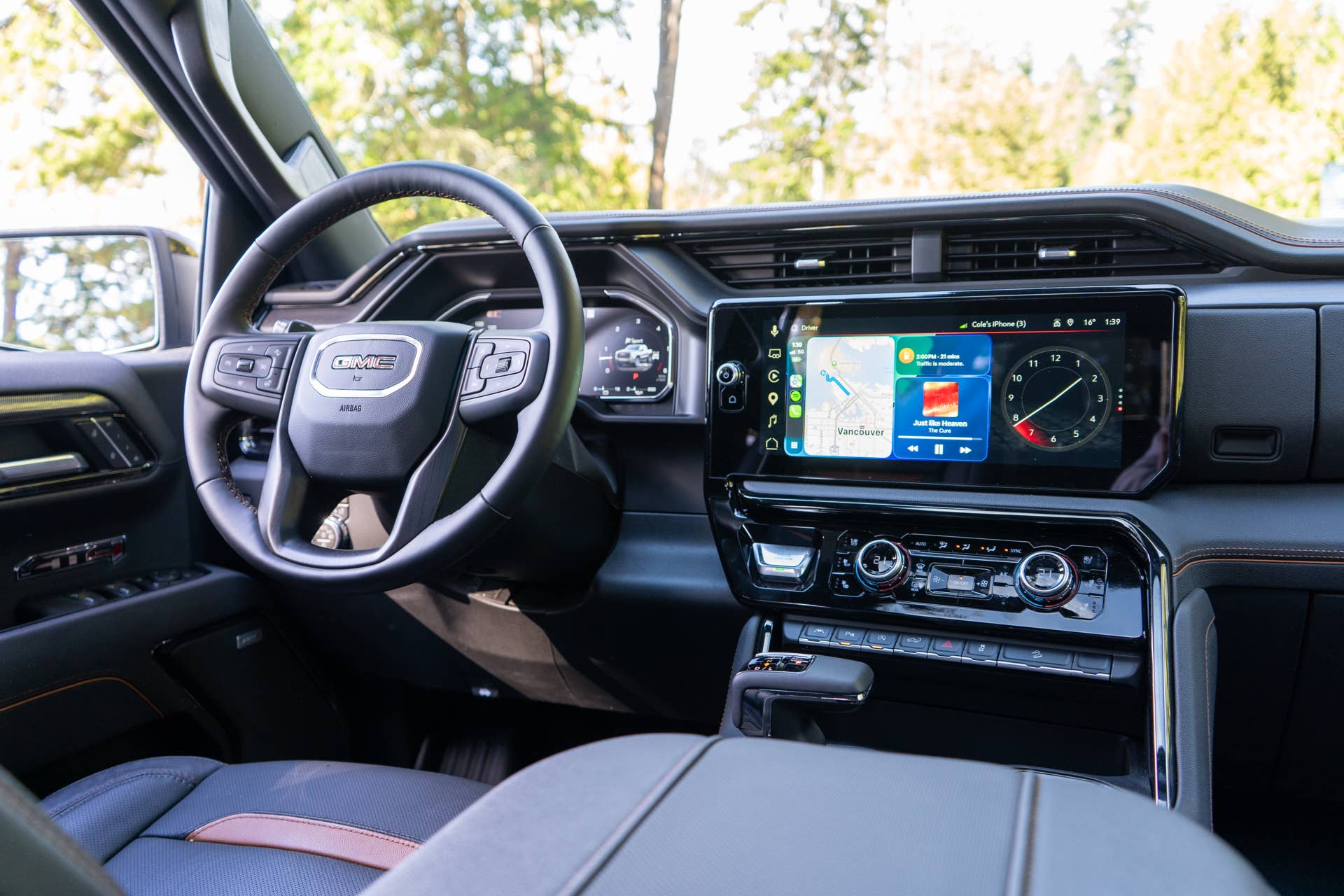
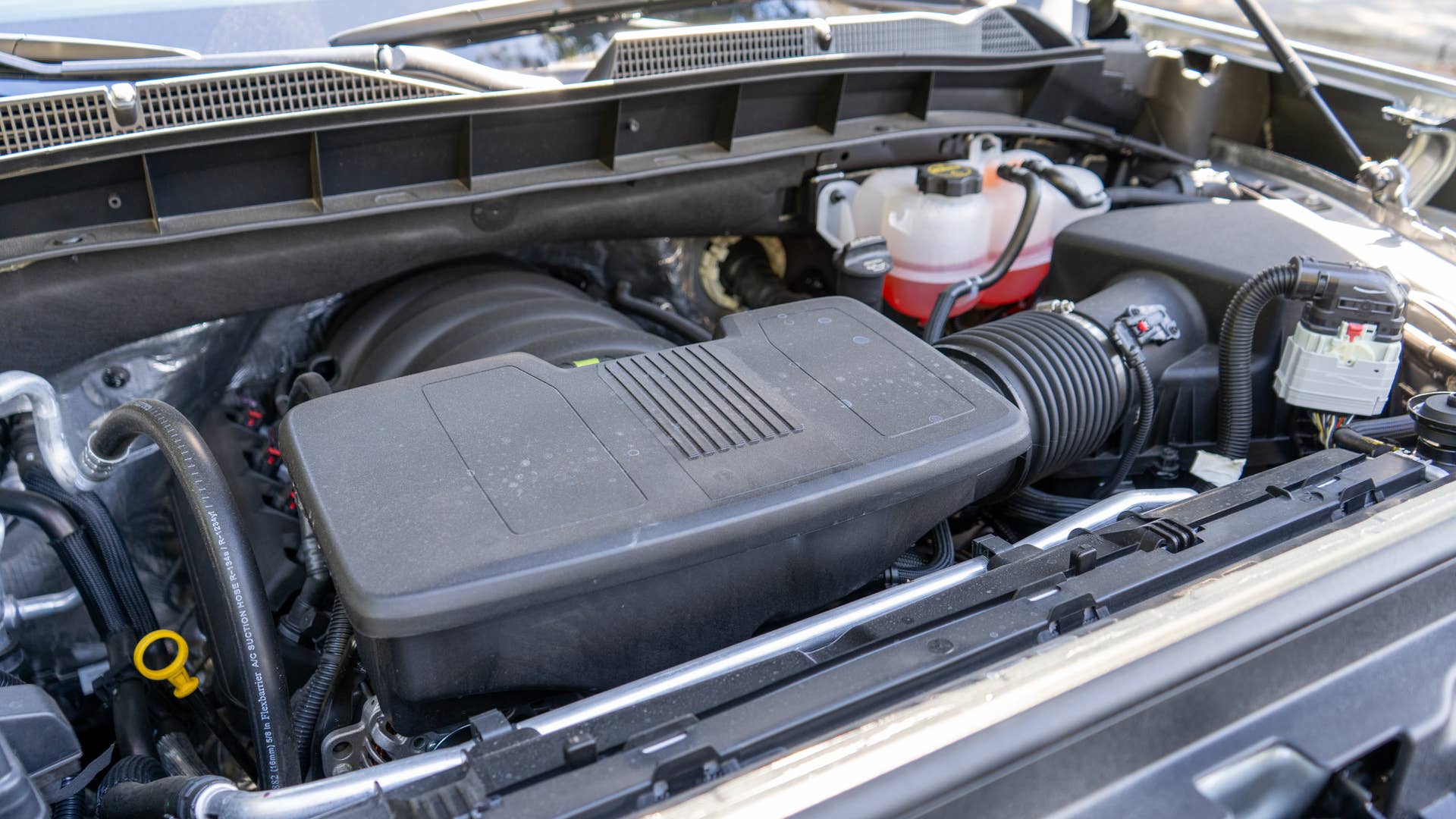
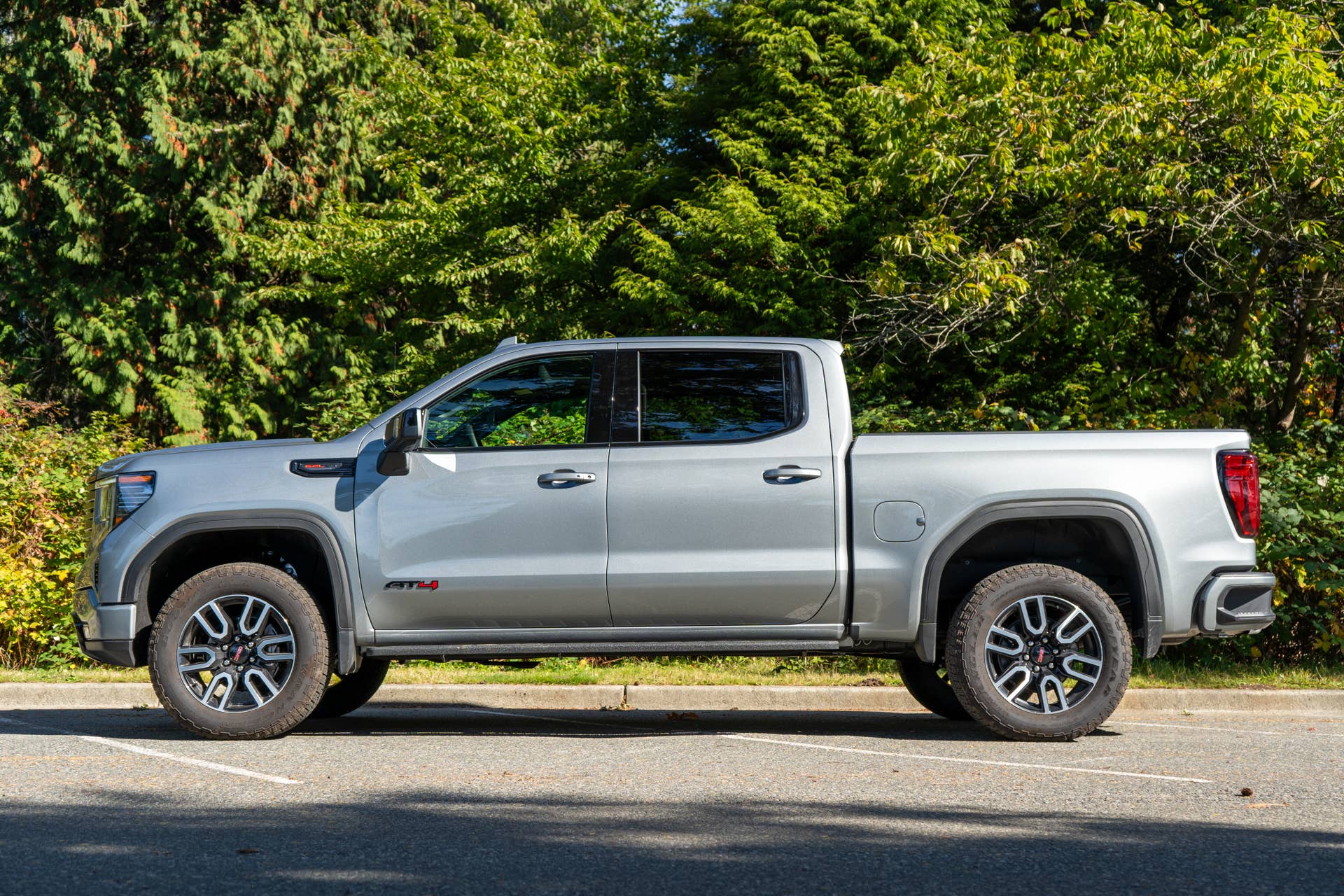
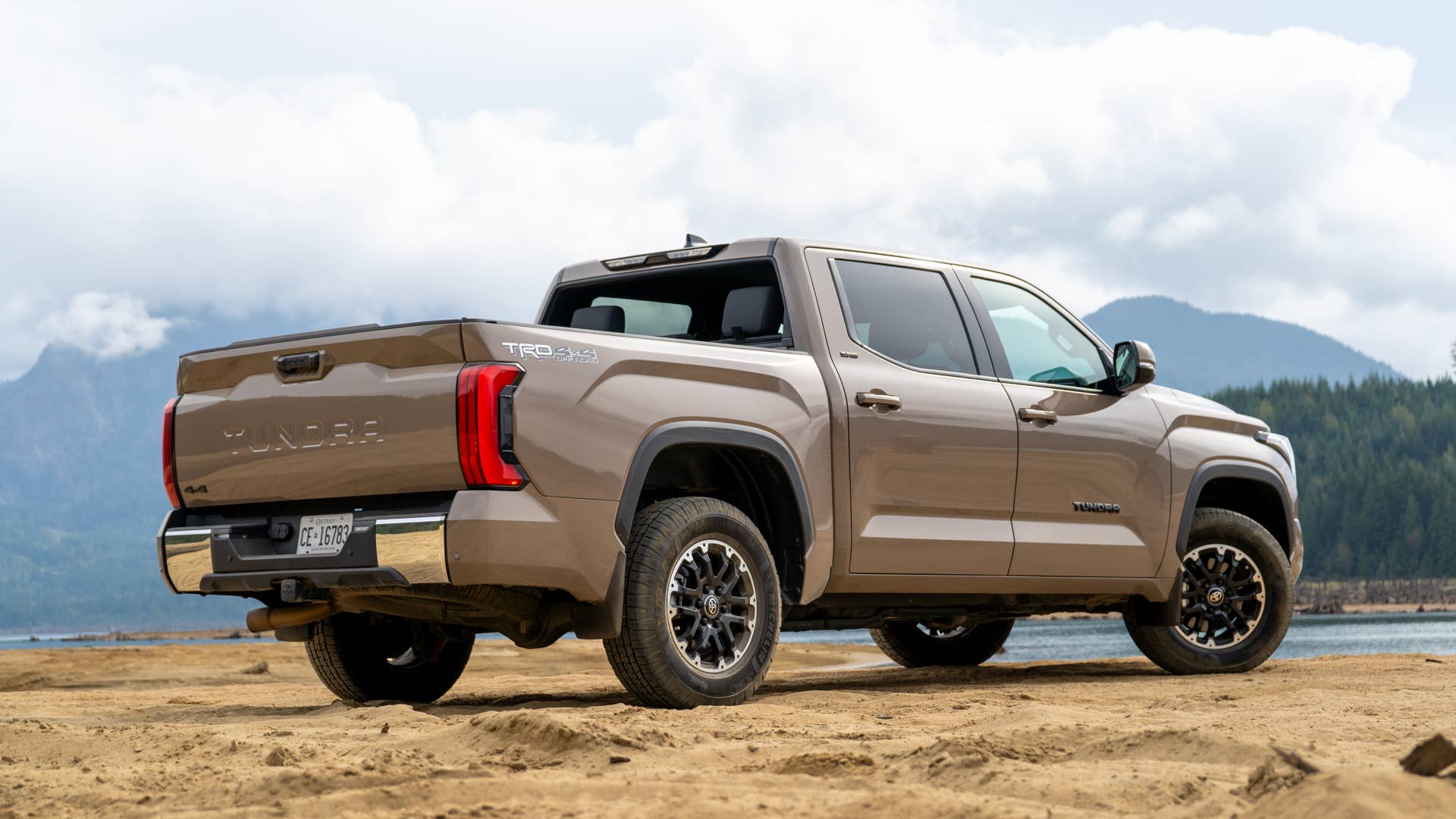
The 2026 GMC Sierra 1500 AT4 made fuel prices feel momentarily irrelevant, usually with a downshift beneath an overpass. I knew its 6.2-liter V8 was a serious indulgence, but that hardly stopped me from enjoying it. The 2026 Toyota Tundra TRD Off-Road took me longer to warm up to. Its cabin looked underwhelming for the money, while the truck surrounding it became increasingly agreeable with use. After a week in each, I could see good reasons to want either. Choosing between them requires careful math. The Sierra I drove had more equipment and cost considerably more, while Toyota offers several ways to pair its trail hardware with a nicer interior. How much of the GMC’s premium buys a better pickup, and how much buys a pickup I simply enjoyed more?

2026 GMC Sierra 1500 AT4

Cole Attisha

First, make sure the prices describe the trucks you want

AT4 is a trim; in the United States, TRD Off-Road is a package offered on several Tundra grades. My Canadian Toyota tester’s closest U.S. equivalent is an SR5 CrewMax 4WD with the 5.5-foot bed and TRD Off-Road Package. That SR5 starts at $51,510, and the $2,125 package brings the base-plus-package sum to $53,635. GMC advertises the AT4 at $68,300, but that includes the standard Duramax diesel. The V8 and active exhaust add $1,895, bringing that combination to about $70,195 before additional equipment.

U.S. configuration

Base MSRP

Specified additions

Base plus additions

Sierra AT4, standard diesel

$68,300

—

$68,300

Sierra AT4, V8 and active exhaust

$68,300

$1,500 + $395

$70,195

Tundra SR5 CrewMax 4WD, short bed, TRD Off-Road

$51,510

$2,125

$53,635

Tundra Limited CrewMax 4WD, short bed, TRD Off-Road

$57,860

$3,580

$61,440

All figures are in U.S. dollars and exclude destination, taxes, and other equipment. Totals are calculated examples, rather than U.S. prices for my Canadian test vehicles.

Thinking about selling your car? Get an instant cash offer online now. Click here to get started.

2026 Toyota Tundra TRD Off-Road

Cole Attisha

The roughly $16,600 difference between the V8 GMC and SR5 Toyota therefore includes a substantial jump in cabin equipment. Moving to a Limited, Toyota adds leather, ventilated front seats, and larger displays. Its TRD package also costs more—$3,580—so the full step from SR5 TRD to Limited TRD is $7,805, not just the $6,350 separating their base prices. That narrows the illustrated GMC’s premium to about $8,800. My Sierra’s additional packages, sunroof, cover, and other options would widen it again. The Limited is a closer comfort comparison, although my firsthand Toyota impressions come from the simpler truck.

2026 GMC Sierra 1500 AT4

Cole Attisha

The GMC makes a stronger first impression inside

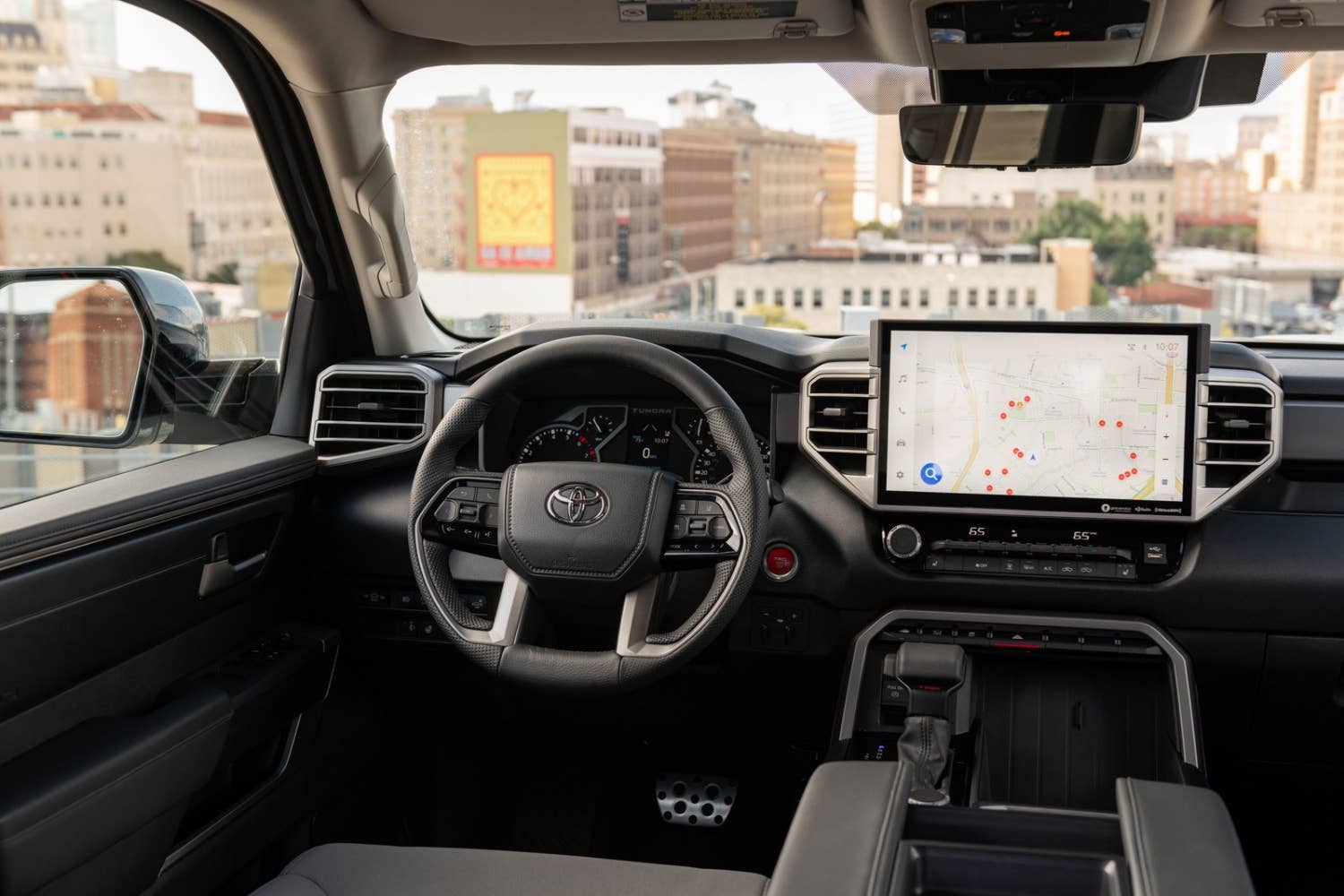
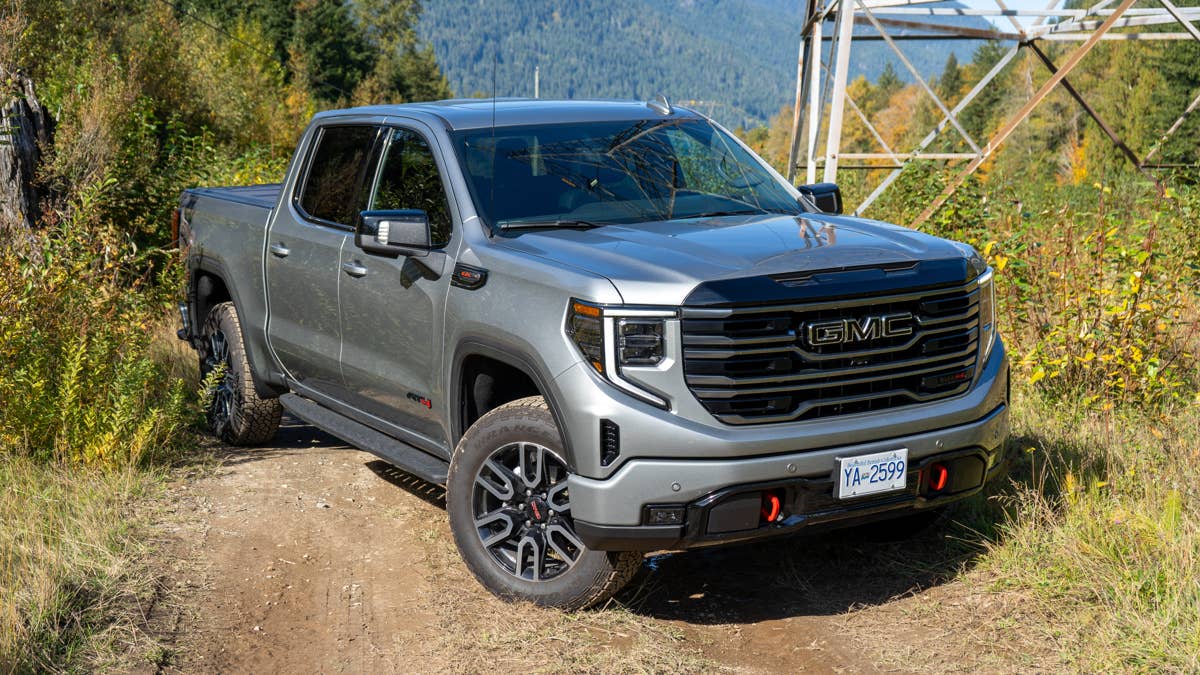
The Sierra’s lifted stance, red recovery hooks, and 20-inch wheels give it plenty of presence. The Tundra’s Mudbath paint and 18-inch TRD wheels suit its more straightforward specification. Open the doors, though, and the price difference becomes much clearer. GMC adds perforated leather and Kalahari accents, plus heated and ventilated front seats, a 13.4-inch touchscreen, and a 12.3-inch instrument display. The SR5-based Toyota has cloth, an eight-inch touchscreen, and a 4.2-inch information display between analog gauges. The off-road package hasn’t transformed the rest of its interior.

Shopping for a new car? Click here to get a great deal on your next vehicle. Powered by Carvana: no-haggle pricing, 100% online.

2026 Toyota Tundra SR5

Toyota

I found Toyota’s presentation a bit simpler, for better or worse, though both trucks retain useful physical controls and wireless Apple CarPlay. The Sierra’s richer surroundings don’t automatically settle the comfort question, either: its front cushions felt firm on longer drives, while the Toyota’s seats remained supportive. This is where I would revisit the Limited. Its larger displays and better upholstery bring the Toyota much closer to what I expect at this price. Buyers should also check individual options: my GMC’s head-up display and rear camera mirror were add-on technology, and its sliding rear window was additional equipment.

A Limited TRD also moves to 20-inch wheels, so it changes more than the dashboard and upholstery. I would drive that configuration before assuming it reproduces everything I liked about the 18-inch-wheel test truck. An appealing spec sheet still needs to suit you from behind the wheel. Toyota supplies an especially good alternative to that little sliding pane. The CrewMax’s entire rear window lowers electrically, opening the cabin in a way the GMC cannot match. I’d miss it after getting used to it. Both trucks offer plenty of passenger space, with rear legroom measuring 43.4 inches in the Sierra and 41.6 in the Tundra. GMC’s extra room is another worthwhile advantage if the rear bench regularly carries adults, rather than jackets and shopping bags.

2026 GMC Sierra 1500 AT4

Cole Attisha

The V8 earns its appeal on the road

Tested powertrain

Sierra AT4

Tundra TRD Off-Road

Engine

6.2-liter naturally aspirated V8

3.4-liter twin-turbo V6

Power

420 hp

389 hp

Torque

460 lb-ft

479 lb-ft

Transmission

10-speed automatic

10-speed automatic

Toyota extracts more torque from a much smaller displacement. Its 479 lb-ft exceeds the GMC’s 460, although the delivery feels different. A hard acceleration request in the Tundra brought a pause for kickdown and boost before the shove arrived; the Sierra’s response felt more immediate. The GMC also delivered the soundtrack I wanted from a big pickup, helped by my truck’s optional exhaust. I chose the Sierra because I enjoyed driving it so much more, even though the Toyota could do the job for less.

The Toyota countered with a comfortable ride and light steering that made it feel manageable around town. Its coil-spring rear suspension handled imperfect pavement well. The Sierra felt composed through the Sea-to-Sky’s bends, but its size was harder to ignore in tight parking spaces. More engine didn’t translate into a meaningful difference in economy in these tests. I recorded about 15 U.S. mpg in the GMC and 14.7 in the Toyota, though they were driven on different routes and under different conditions. Neither result made the Tundra’s smaller engine an obvious financial consolation. Those impressions only apply to the engines driven. AT4 buyers can keep the standard diesel, while higher Tundra grades offer the 437-hp, 583-lb-ft i-FORCE MAX hybrid.

2026 GMC Sierra 1500 AT4

Cole Attisha

Similar ambitions, different useful hardware

Both trucks have credible equipment beneath the styling. The AT4 combines a two-inch lift, Rancho monotube shocks, skid plates, and an automatic locking rear differential. Toyota’s TRD package supplies Bilstein shocks, a selectable rear locker, terrain settings, and Crawl Control. GMC’s Autotrac transfer case also offers an Auto setting to adapt to changing traction conditions. Toyota’s part-time four-wheel drive requires the driver to select the appropriate range, and its rear locker operates in low range. The GMC’s automatic 4WD mode is a useful everyday distinction, separate from its automatically locking rear differential.

2026 Toyota Tundra TRD Off-Road

Cole Attisha

I used the Toyota’s off-road systems at Stave Lake in British Columbia, while the GMC tackled moderate terrain in Squamish Valley. Both handled their respective outings, but the different routes leave me without a fair basis for naming an ultimate trail winner. More specialized options exist when the trails demand them. The AT4X adds Multimatic dampers and front and rear electronic lockers; Toyota’s TRD Pro uses FOX shocks and hybrid power. Their prices reflect different suspension and traction hardware. Neither badge is necessary to get a rugged truck with a comfortable cabin.

2026 GMC Sierra 1500 AT4

Cole Attisha

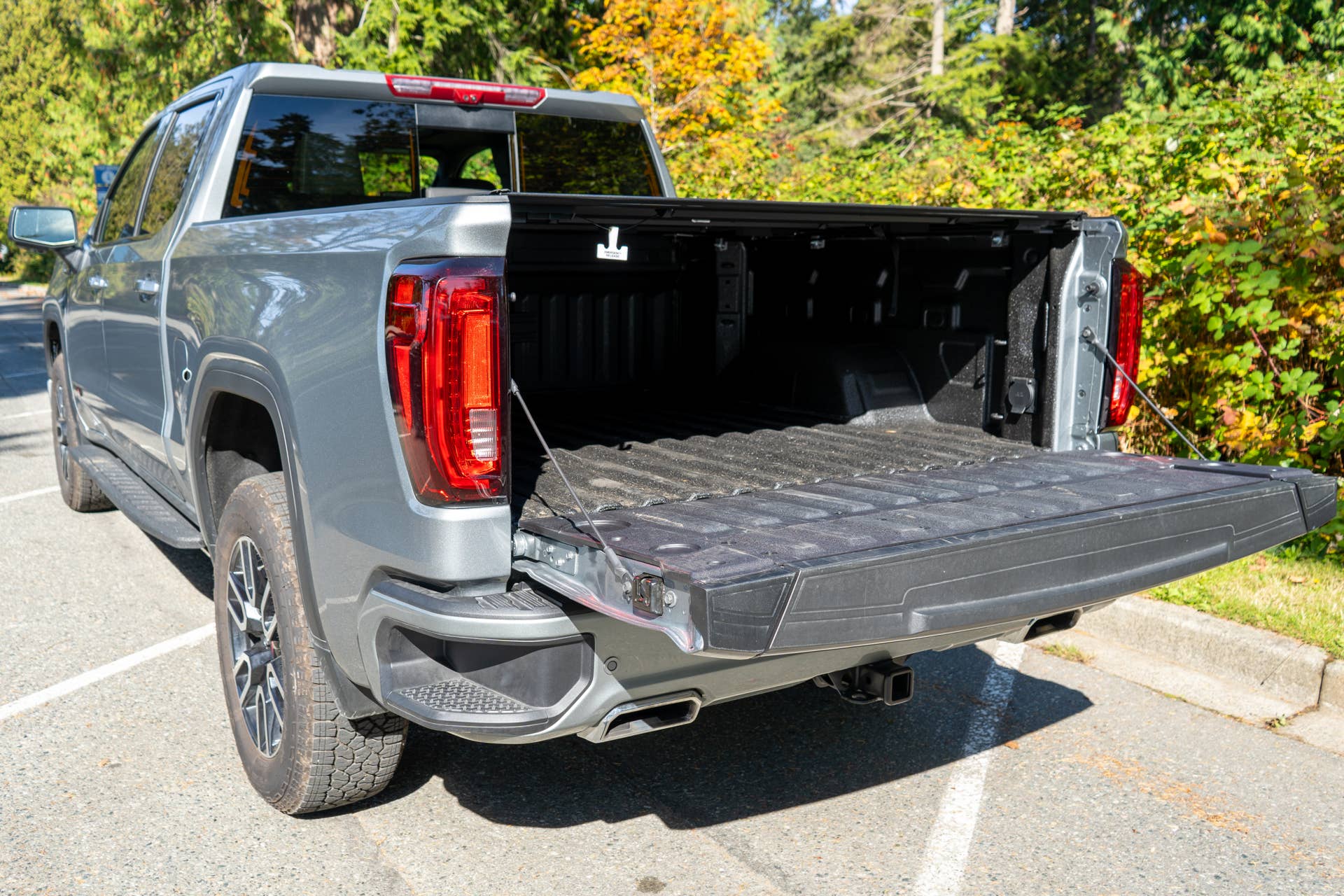
Around the back, GMC’s MultiPro tailgate gives the AT4 something Toyota cannot duplicate: several opening arrangements, including a load stop and a step into the bed. On a tall, lifted pickup, easier access matters. The Sierra’s short box offers 62.9 cubic feet, and Toyota uses an aluminum-reinforced composite bed. Towing gives the less expensive Toyota another argument. GMC advertises up to 9,000 pounds for the AT4, while Toyota rates the comparable short-bed CrewMax TRD Off-Road at roughly 11,000. The Sierra range’s 13,300-pound maximum belongs to a different configuration.

Bed volume and payload also answer different questions. A larger box gives you more space, while the payload rating limits the combined weight the truck can carry. A family, their luggage, and a trailer’s tongue weight can use that allowance before the bed looks particularly full. I did not tow with either. Buyers should check the specific truck’s trailer and payload ratings, allowing for occupants, cargo, and tongue weight; choosing an off-road version can change what remains available for work.

2026 GMC Sierra 1500 AT4

Cole Attisha

What I would actually pay for

Between the trucks I drove, I would choose the V8 Sierra. Its engine delivered enough enjoyment to make the indulgence feel worthwhile, and the cabin gave me more to appreciate between uses. I would be more selective about the options, though. The engine, useful cameras, and practical bed equipment deserve priority over additions that mainly dress up the truck.

The Toyota becomes much harder to dismiss when I price a Limited TRD Off-Road. Around $8,800 separates the illustrated configurations before destination and further options, with the Toyota now supplying several comforts missing from my SR5-based tester. That leaves a more honest buying decision. Someone content with cloth and smaller screens can save considerably more with the SR5, while someone who wants comfort alongside trail capability should compare the Limited before deciding whether the GMC is worth the stretch.

Autoblog aims to feature only the best products and services. If you buy something via one of our links, we may earn a commission.

Can You Make a 2026 Ford Bronco Outer Banks Work for Families?

When you think of a new off-roader, you likely think of the essentials: four-wheel drive, front, center, or rear-locking differentials. Quick sway bar disconnect. Torque figures. Low range. Hill descent control. Towing capacity. Maybe even low-speed cruise control, or overall rear cargo space. I’d venture that most enthusiasts don’t even consider the rear seats, rear passenger accommodations, or outward visibility. As the proud owner of a 2006 Jeep Wrangler, I can vouch for its capabilities, but also for its severe lack of passenger consideration. It was meant for wheeling, and wheeling only. 

Kristen Brown

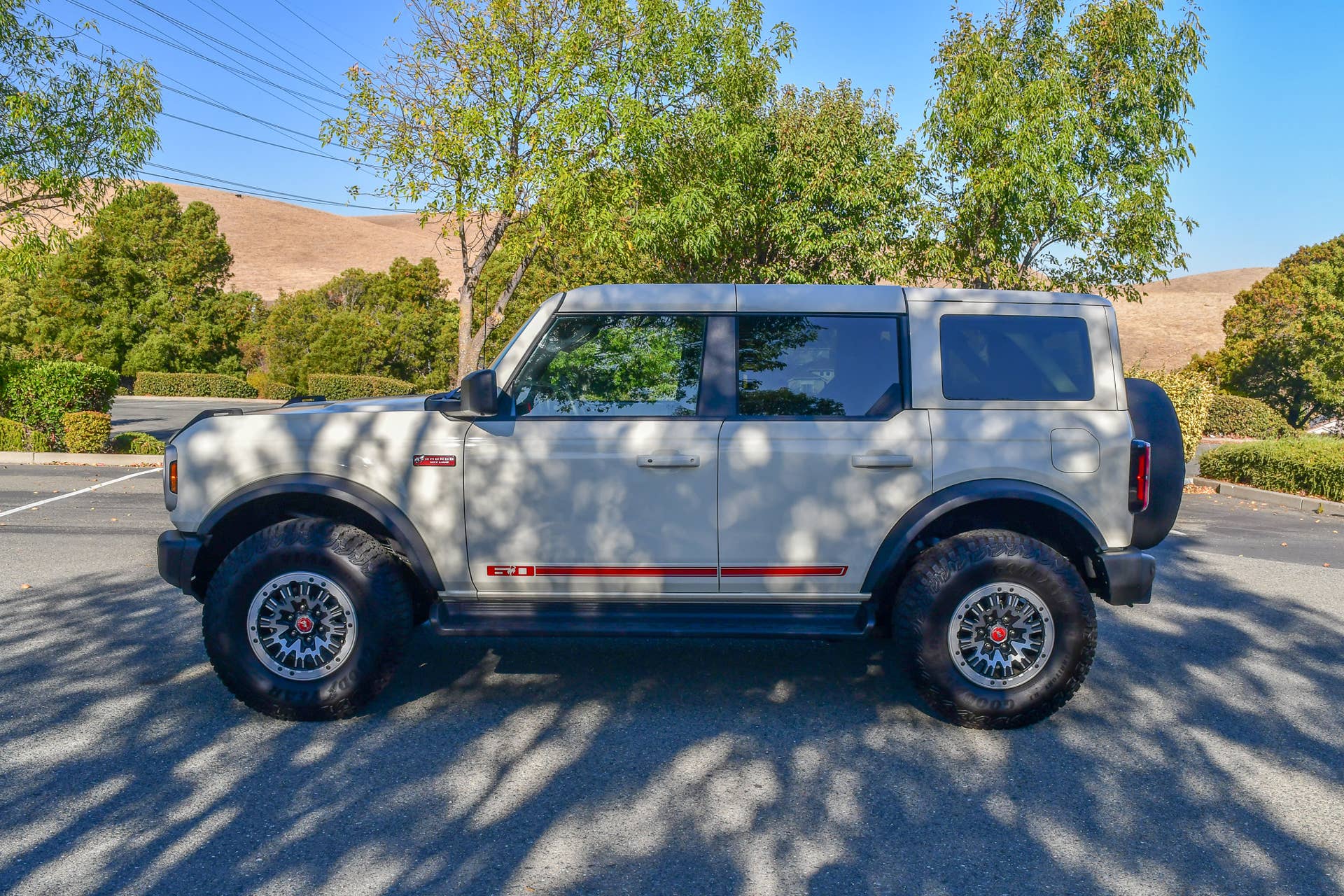
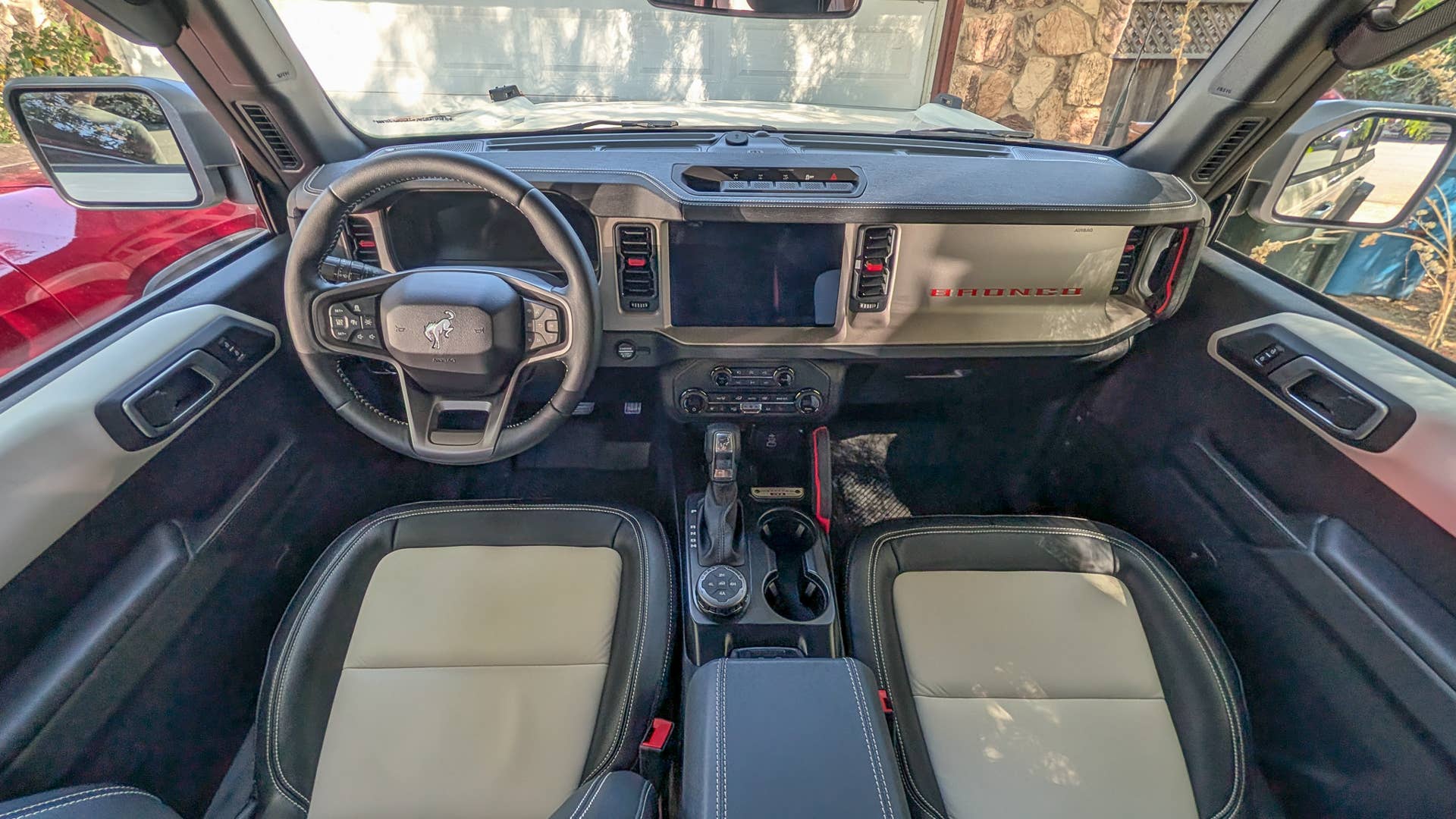
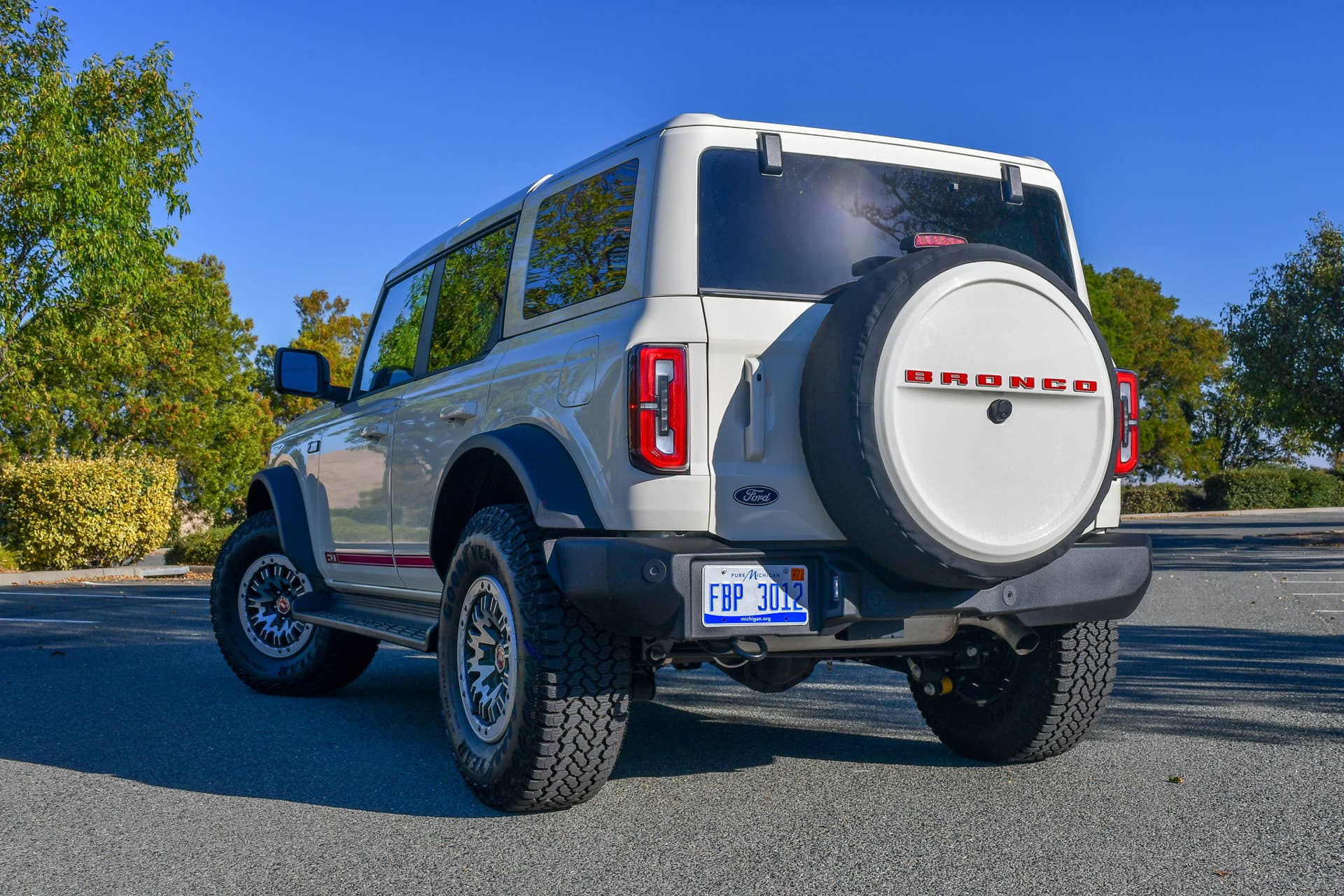
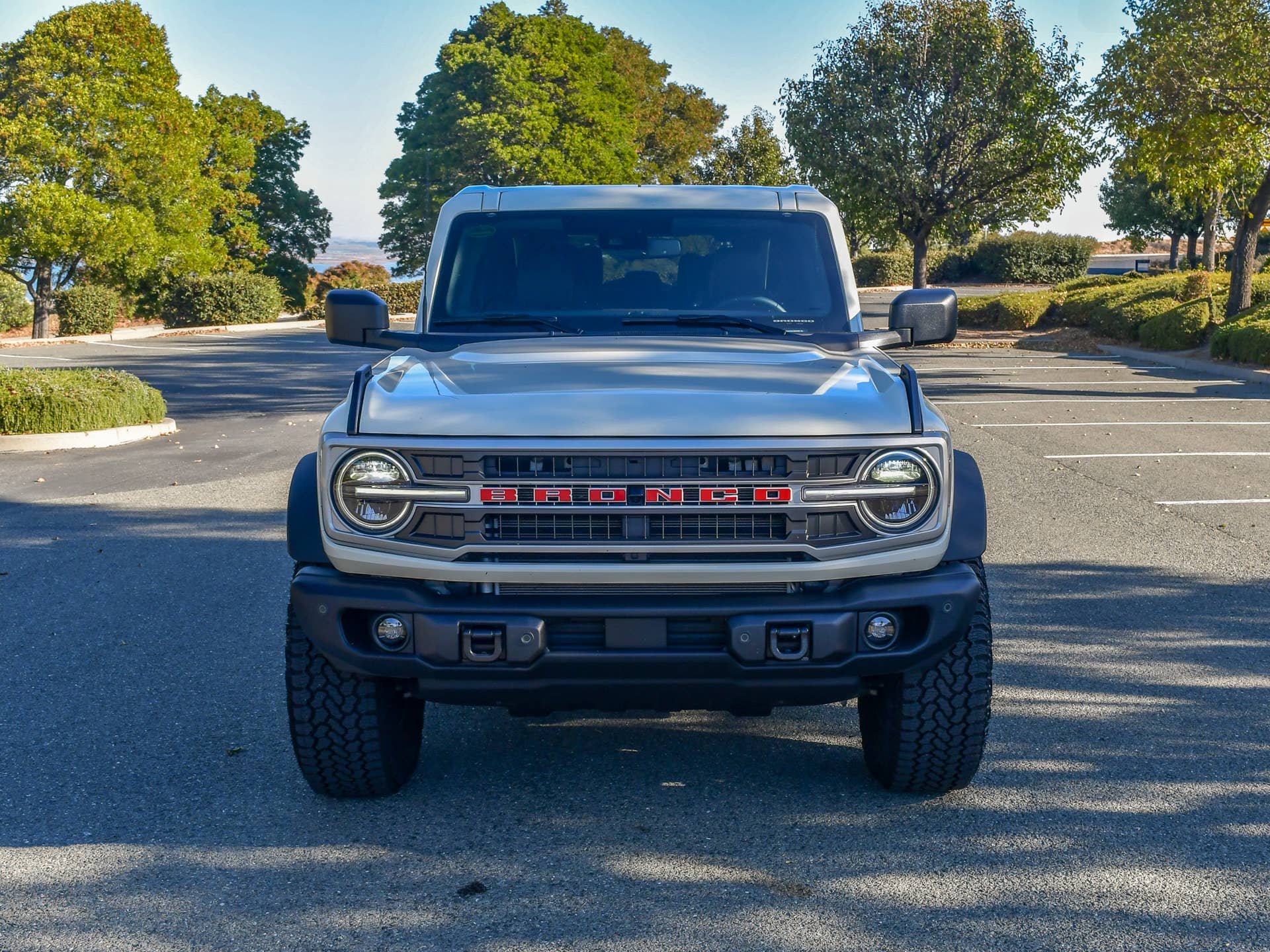
The Ford Bronco, not unlike its predecessors, flipped that narrative right on its head. I took one look at the Wimbledon White beauty and knew I’d love it (I did), but I had very low expectations for how it’d work for my two car seat-bound daughters. I figured, like the 4Runner or the Wrangler, rear passengers were at the very bottom of the list of priorities. But I was wrong. While it’s obviously not as family-friendly as, say, a Ford Explorer or Expedition, I was pretty thrown by how many families were brought into the equation. Here’s what else stuck out to me. 

Related: Road Ethos Launches: The New Automotive Lifestyle Site You Should Read

Passenger and cargo space is more than reasonable

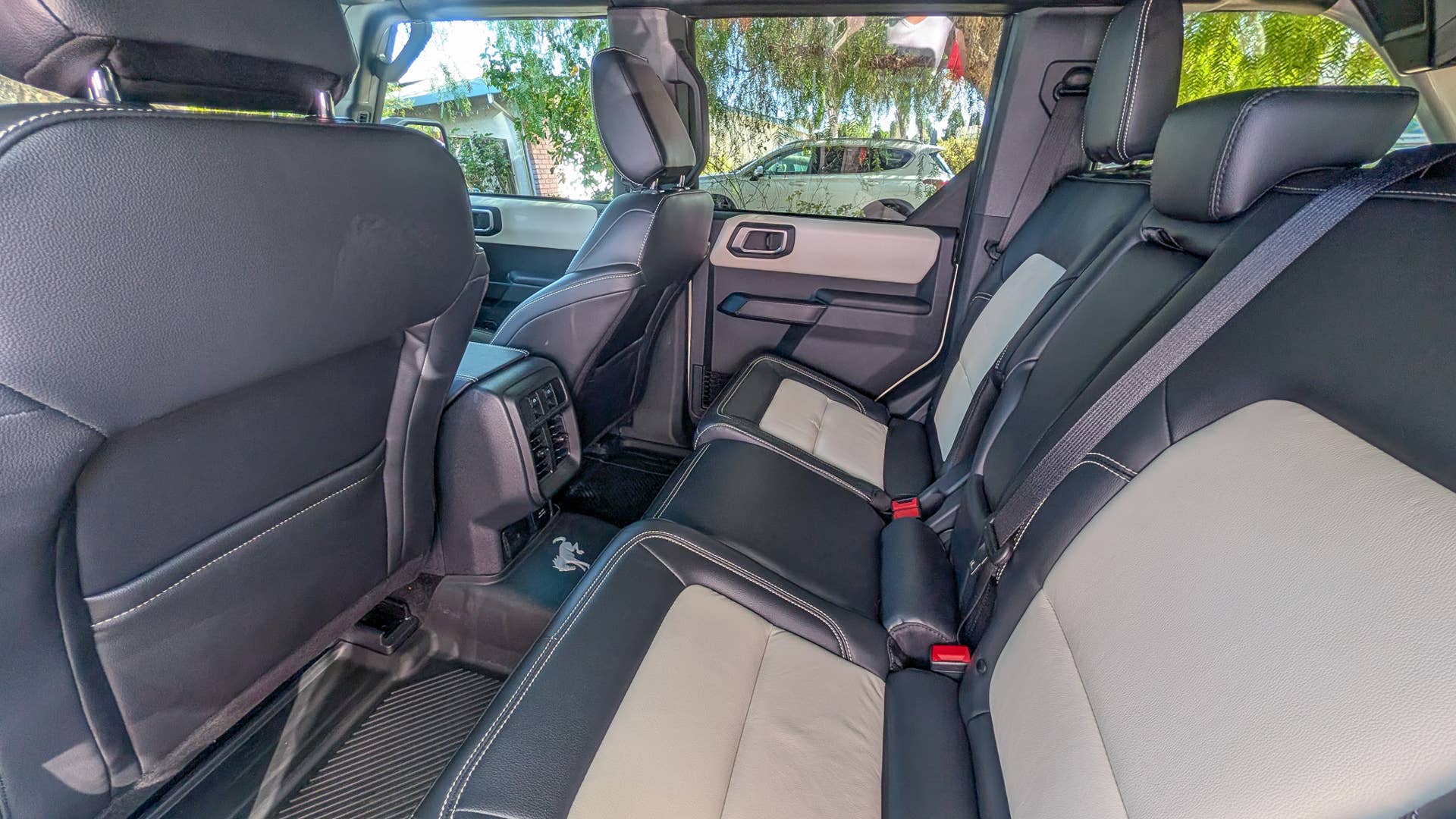
In the back, the four-door Bronco lends a respectable 36.3 inches of legroom. It’s identical to the third row in a Subaru Ascent or a Chevy Suburban, so it’s not the most accommodating, but it’s a lot more than the 2026 Toyota 4Runner (34 inches) and just a tad less than the four-door Jeep Wrangler (38.3 inches). With my daughters’ car seats, there was plenty of room.

Kristen Brown

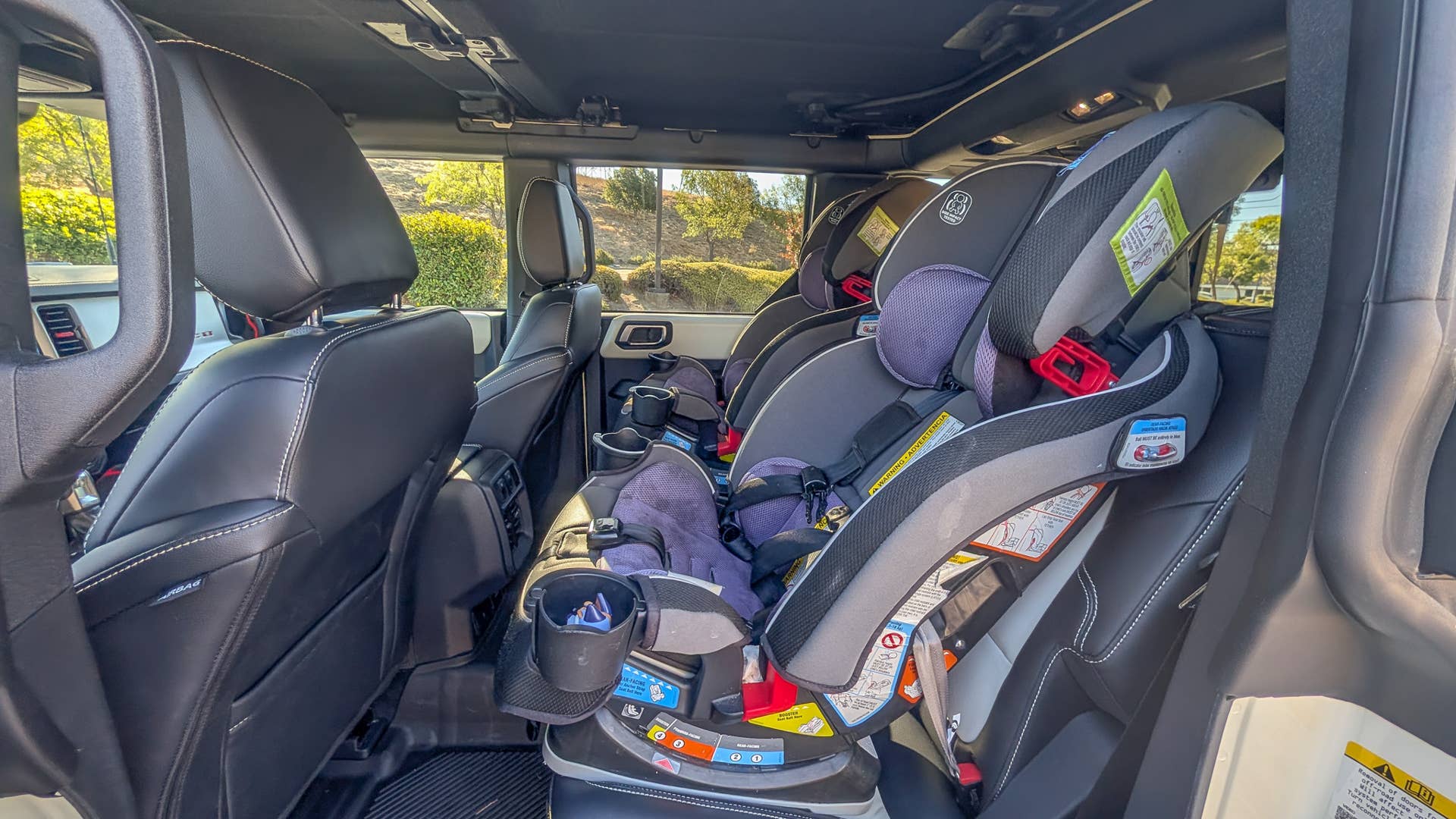
Speaking of car seats, while the doors were ultra-lightweight (because, you know, they’re removable), they opened wide, making installing their seats delightfully easy. I had to do a bit of digging into the seat bight to find the lower LATCH points, but the top tether was simple—attached to the back of the outboard seats. Thanks to the tall hard top, I didn’t have to fold the seats to remove the headrests, either. 

The rear seats of the 2026 Ford Bronco Outer Banks with my kids’ car seats installed

Kristen Brown

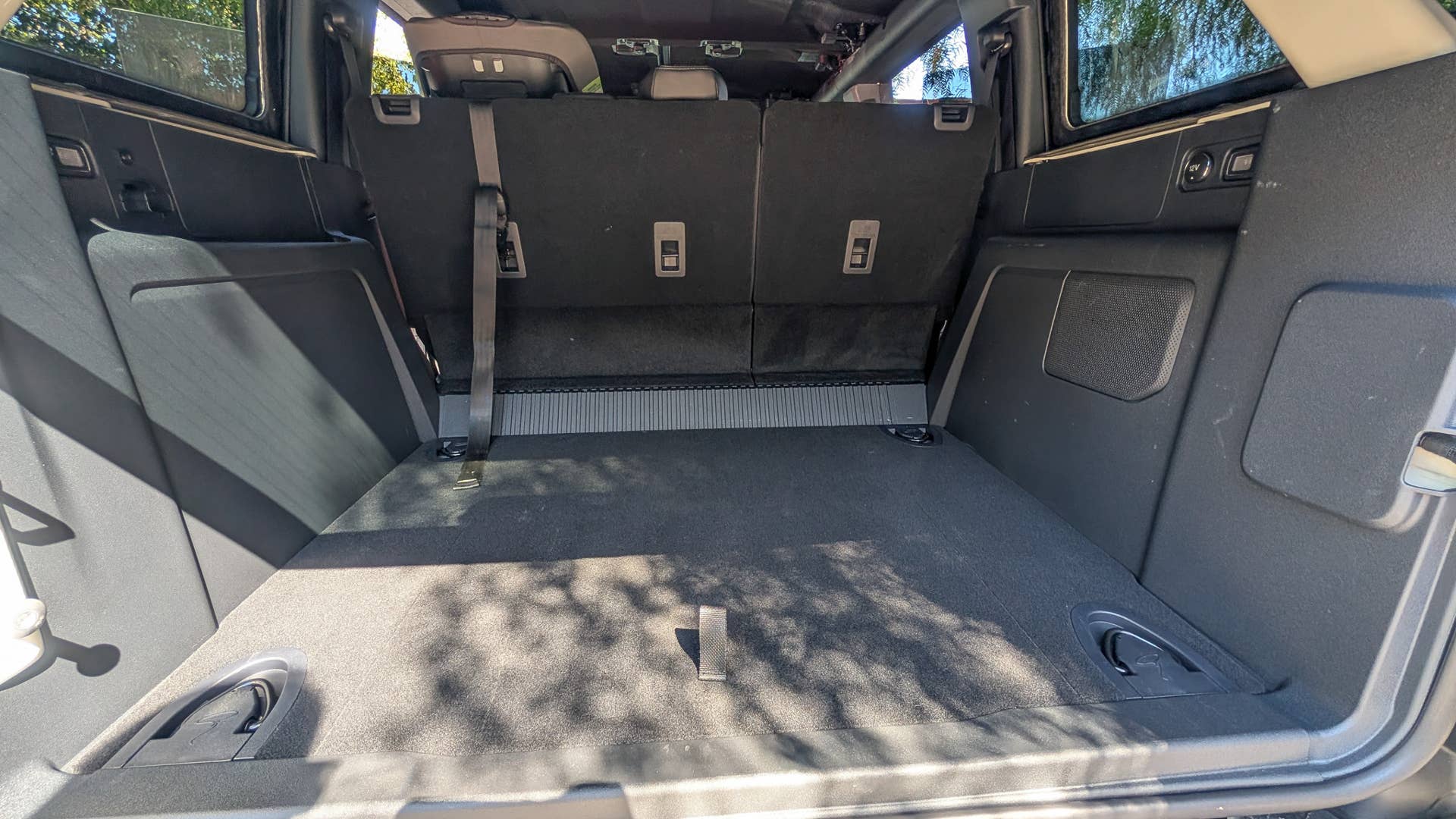
Behind the rear seats, the hard top granted 35.6 cubic feet of space, which for my family and me was plenty. It would get a bit tight if we all had luggage or if I had to shove a double stroller back there, but for the everyday demands a family typically has—shopping trips, grocery runs, school drop offs/pick ups—it’s fine.

Kristen Brown

If you were using it for what it was intended to do, like camping and wheeling, that’s more than enough room for camping or recovery gear. If you need a bit more, the soft top somehow stretches the rear cargo space to 38.3 cubic feet. When the rear seats are folded, it expands to 77.6 cubic feet in the hardtop and 83 for the soft top.

Because it’s built for the open air, there are clever storage spaces. And waterproofing!

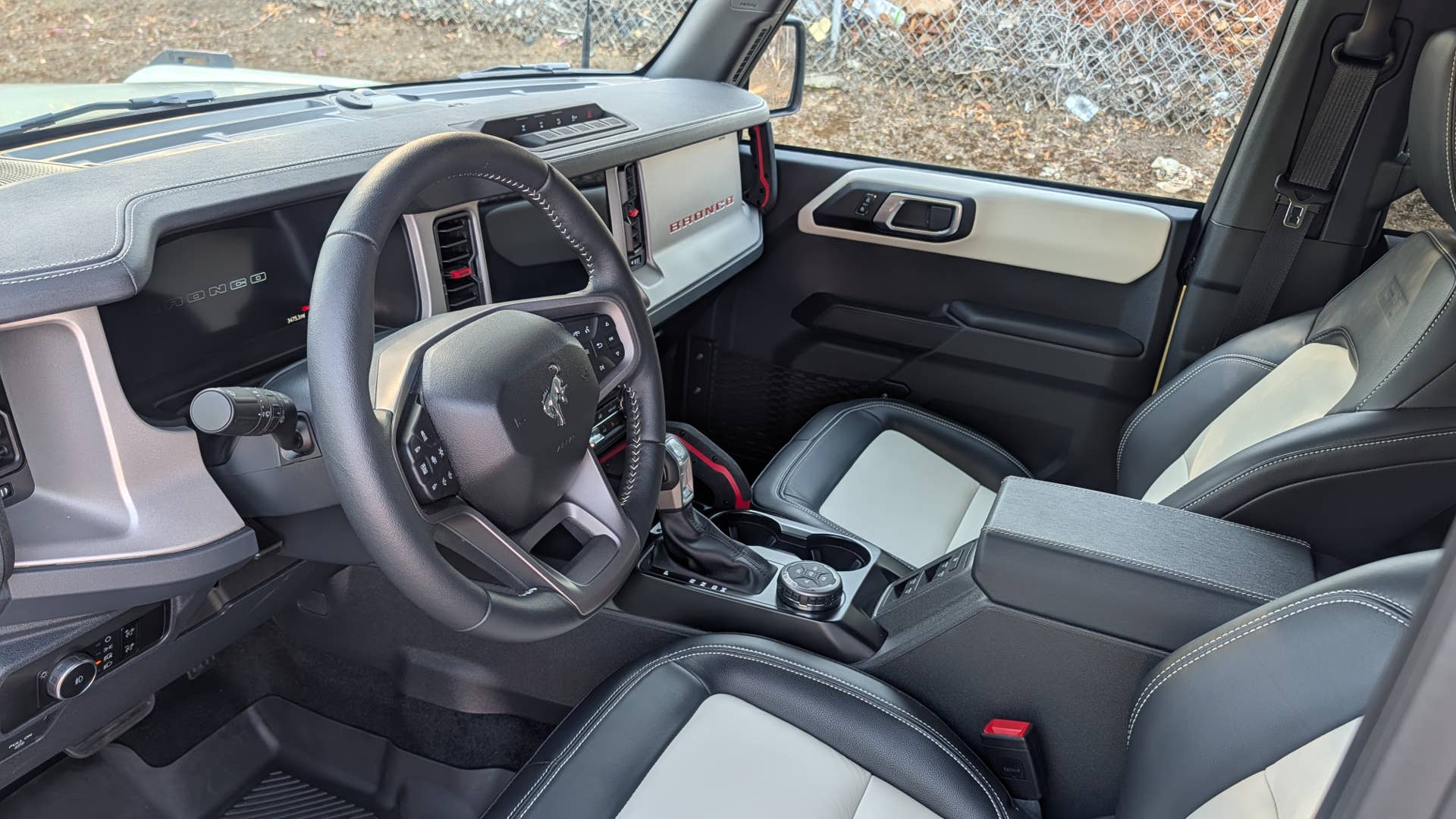
Since the doors and roof are removable, Ford had to think about things like window switches and additional storage places for things that would, you know, normally go in the door panel cubbies. So, the window switches were moved to the center console, like the switches on my 1996 Land Rover Discovery, and then additional storage was added to the center console for the rear passengers, and the strap system on the back of the rear seats is meant to keep gear secure when you take the top off, which could easily be used to keep items you don’t want to be thrown around while you’re driving, like bottles of wine, gallons of milk, or even valuables. 

Kristen Brown

There’s also something to be said about the hose-it-out, all-weather, easy-to-clean interior. Rubberized floors, all-weather floor mats, and water-resistant vinyl seats that were originally designed to repel mud, dirt, and water from ruining the interior also protect against spilled milk, juice, ice cream, and greasy French fries. Ask me how I know. Dog owners would love that, too. 

Related: Ford Wants $18,995 To Turn Your Bronco Into an Off-Road Beast

The onboard tech is easy, seamless, and responsive

Ford truly understands its audience when it formulated the Bronco, taking notes from Jeep and not making the Bronco too tech-forward. If anything, it has the perfect blend of physical touch points and screens. The off-road information display is in the driver’s screen behind the steering wheel, but it’s very easy to access, and equally as easy to interpret. The center screen is where you get your phone mirroring, settings, and more in-depth off-road information, like torque distribution, pitch and roll, or a tire placement predictor—which is always nice if you’re wheeling and don’t have a spotter. The central screen isn’t too big at 12 inches, and it fits perfectly in the dashboard so it doesn’t obstruct your view, either. It didn’t come with Blue Cruise, but the adaptive cruise control that comes with it is more than enough for me.

Kristen Brown

I particularly liked the driver display because it was simple. Every piece of information you needed was right there, in perfect view, and it wasn’t buried in flowery graphics or flashy colors. It was delightfully easygoing. You could change the feed to show whatever else you wanted, like tire pressure, mileage, a trailer/towing information display, and your driver assistance or cruise control functions. Both screens were responsive, fast, and easy to navigate. More than anything, other manufacturers who make off-roaders should be paying close attention.

Kristen Brown

As a parent, not having to worry about this took a lot of weight off of my shoulders. Not having to fret about changing the feed from cruise control to mileage, digging around to reset the trip meter, or returning to the main screen was very much appreciated when I had to calm a fussy toddler down. It doesn’t seem like a lot, but when you’re in the middle of a tantrum, the last thing you want to do is dig around a bunch of menus to accomplish something that should be simple.

It’s a lot quieter (and rides way nicer) than you’d expect

Granted, my tester had the removable hard top with the optional sound dampening material on the panels (a nearly $4k option) and the acoustic glass, so a lot less road noise was translated into the cabin than you’d experience in a four-door that didn’t have those add-ons. And it wasn’t a soft-top, which are notoriously noisy, especially at highway speeds. On the choppy, uneven, pothole-ridden roads of the San Francisco Bay Area, I was very shocked at how smooth and quiet it was for an off-roader. Because mine was fitted with the $6,000 Sasquatch package, it sat on 35” all-terrain tires with 17” wheels with a factory lift, making it a giant box with lots of space between the car’s underside and the road, giving way to a lot of noise. 

Kristen Brown

But it was unexpectedly quiet. In fact, my kids fell asleep every time they rode in it, and they’re incredibly hard to knock out. So, if anything, I’m here to tell you that paying extra for the sound dampening and acoustic glass is definitely worth the investment, especially if you’re planning on driving it often. Not even the Toyota 4Runner or Wrangler Rubicon was that quiet. And I know loud—my 2006 Jeep Wrangler has a soft top, a four-inch lift, and 35-inch tires. Nothing is quite as loud.

Related: I Took My 2006 Jeep Wrangler on a 12-Hour Drive. Now I Know Why People Trailer Their Rigs

My kids were the Ford Bronco’s biggest little fans

I should have seen this coming, but my four- and three-year-old daughters adored it. My oldest even nicknamed it “The Bronc.” She adored crawling in and out of it, having an excuse to climb on the running boards, grab onto all the handles, and how high she sat above the road. Both of my girls loved having tall, large windows to see out of, and the fact that the rear window switches were on the center console (which, unfortunately, they could reach with their feet…). It was fun and different for them, without sacrificing comfort by too much. They still had rear-facing A/C vents, older passengers would enjoy USB-C charging ports, and a very plush seat cushion. 

Kristen Brown

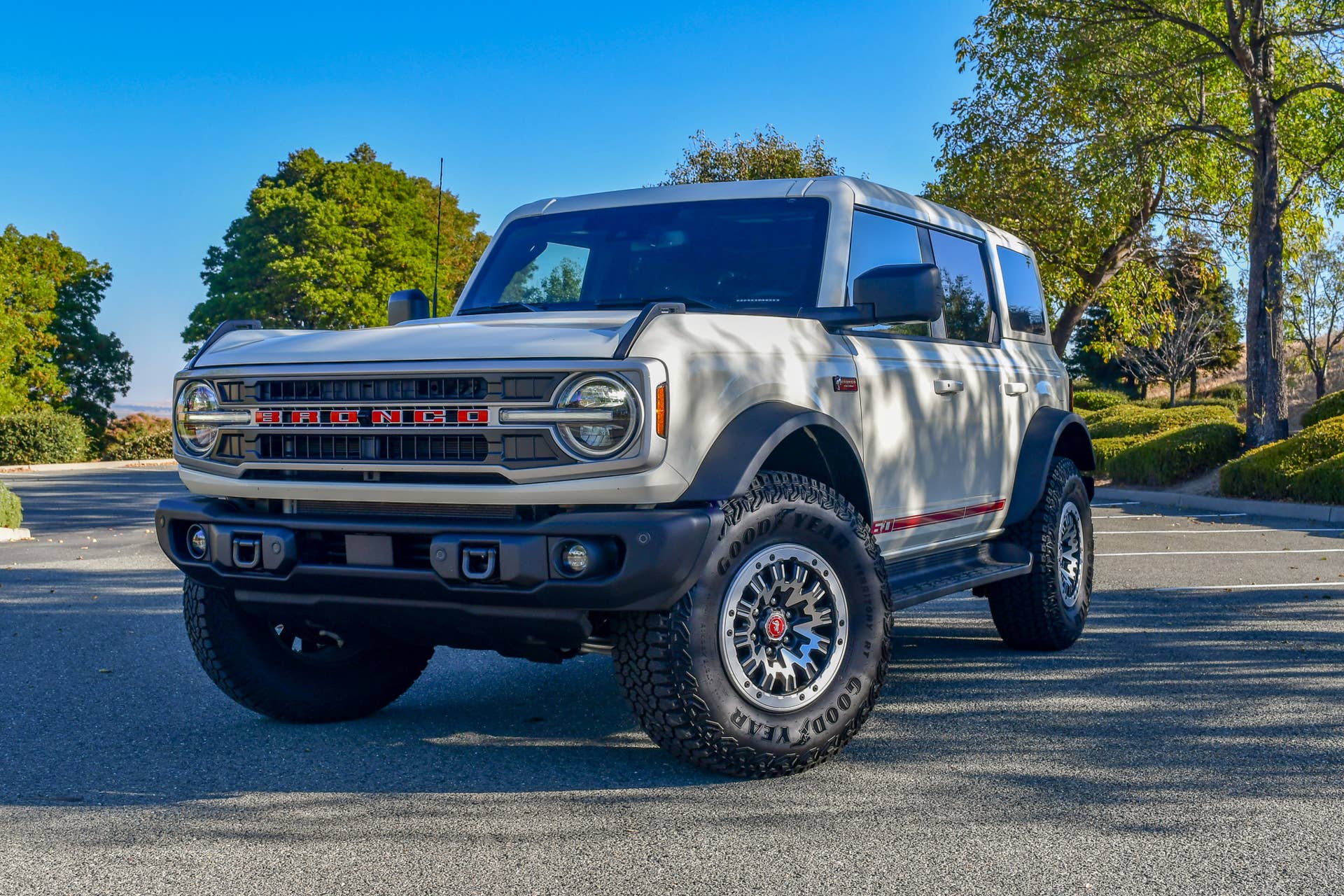
My youngest daughter said the widened fender flares, tall tires, and all the 60th anniversary badges made it look like one of her Hot Wheels toys, and I agree. It looks like something that belongs on a collector’s shelf, but that you can drive and fully enjoy. When it was time to hand the keys back to the press fleet driver, they were both very upset to see it go.

Final thoughts: it’ll work, but there’s better out there

This shouldn’t surprise anyone, but while the Ford Bronco technically checks every box as far as passenger space, cargo space, comfort, and convenience features, and mileage wasn’t even that terrible at 20.5 MPG on average with the optional 2.3-liter twin-turbo V6—it was built as an off-roader first and a family-friendly SUV second. It’ll move the kids to and fro, but it’s a huge waste of its purpose-built capabilities. Unless, of course, you’re planning on actually taking it off-road a lot. Then it’s absolutely worth it.

If you’re browsing this specifically to trade in your Honda Pilot for one of these, I encourage you to check out the Ford Explorer Tremor or Honda Passport TrailSport.

2026 Ford Ranger vs. 2026 Chevrolet Colorado: I Drove Both To See Which Midsize Truck I’d Rather Live With

The appeal of a midsize pickup is easy to understand if you’ve ever tried to park a full-size truck in an underground lot. You want a useful bed and enough muscle for what you tow, without feeling like every little errand requires a spotter. Choosing the right one gets even more complicated when you consider bigger engines, better-equipped cabins, and beefier off-road suspensions built for weekends you haven’t yet planned.

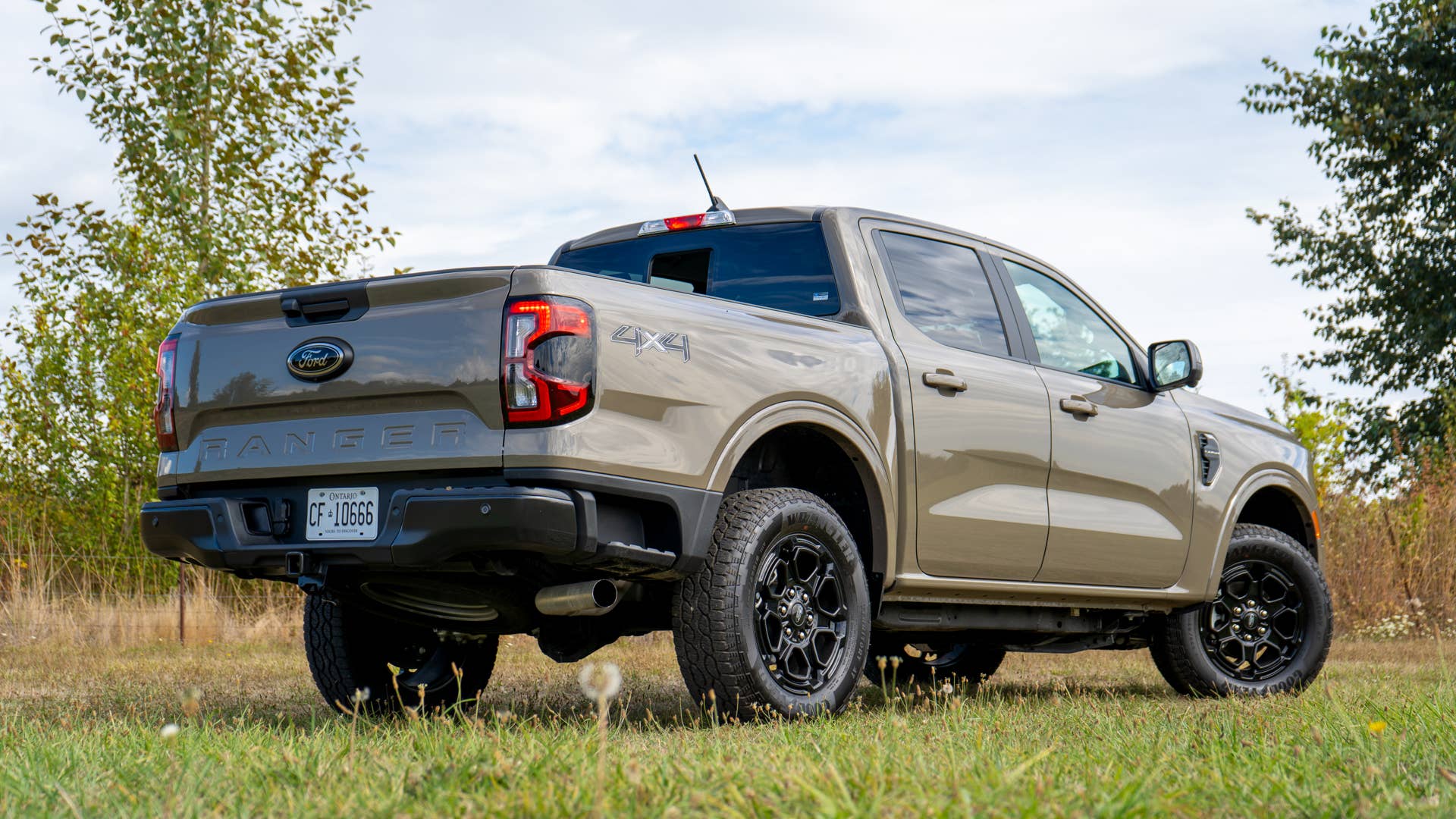
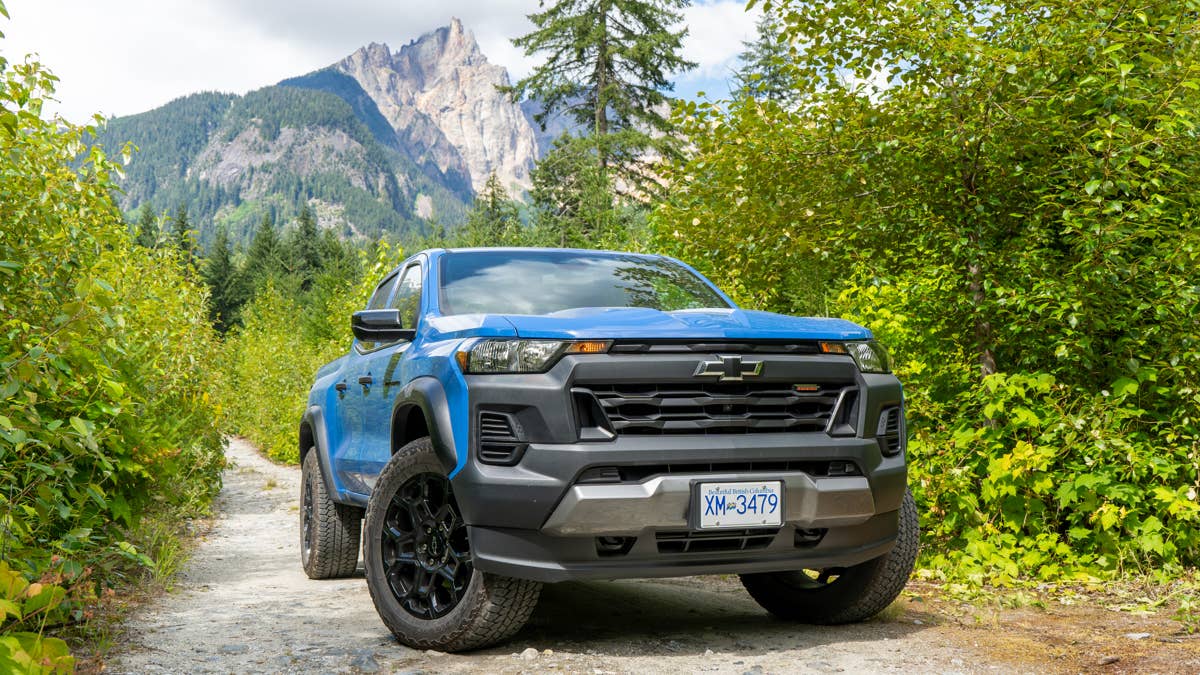
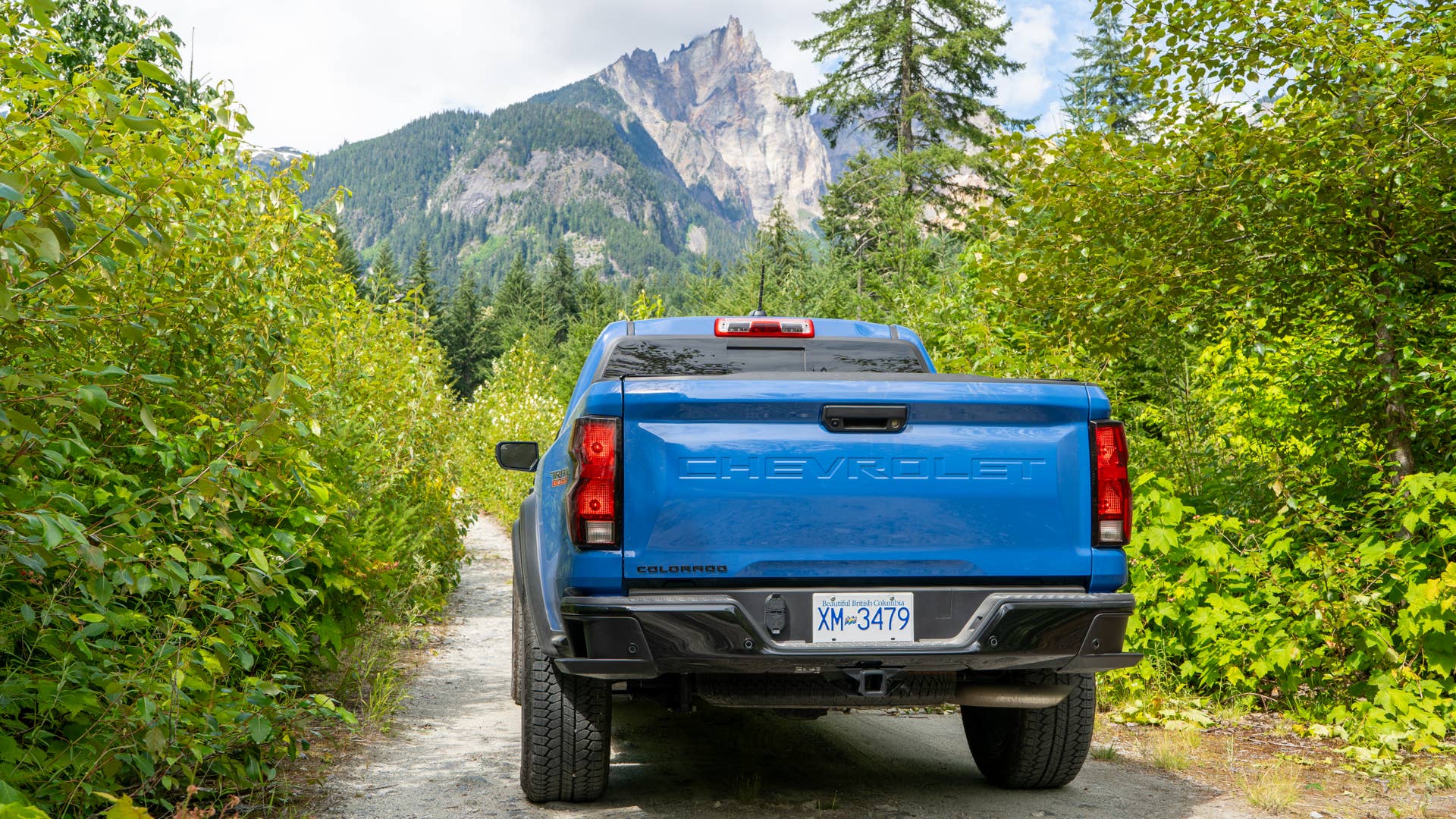
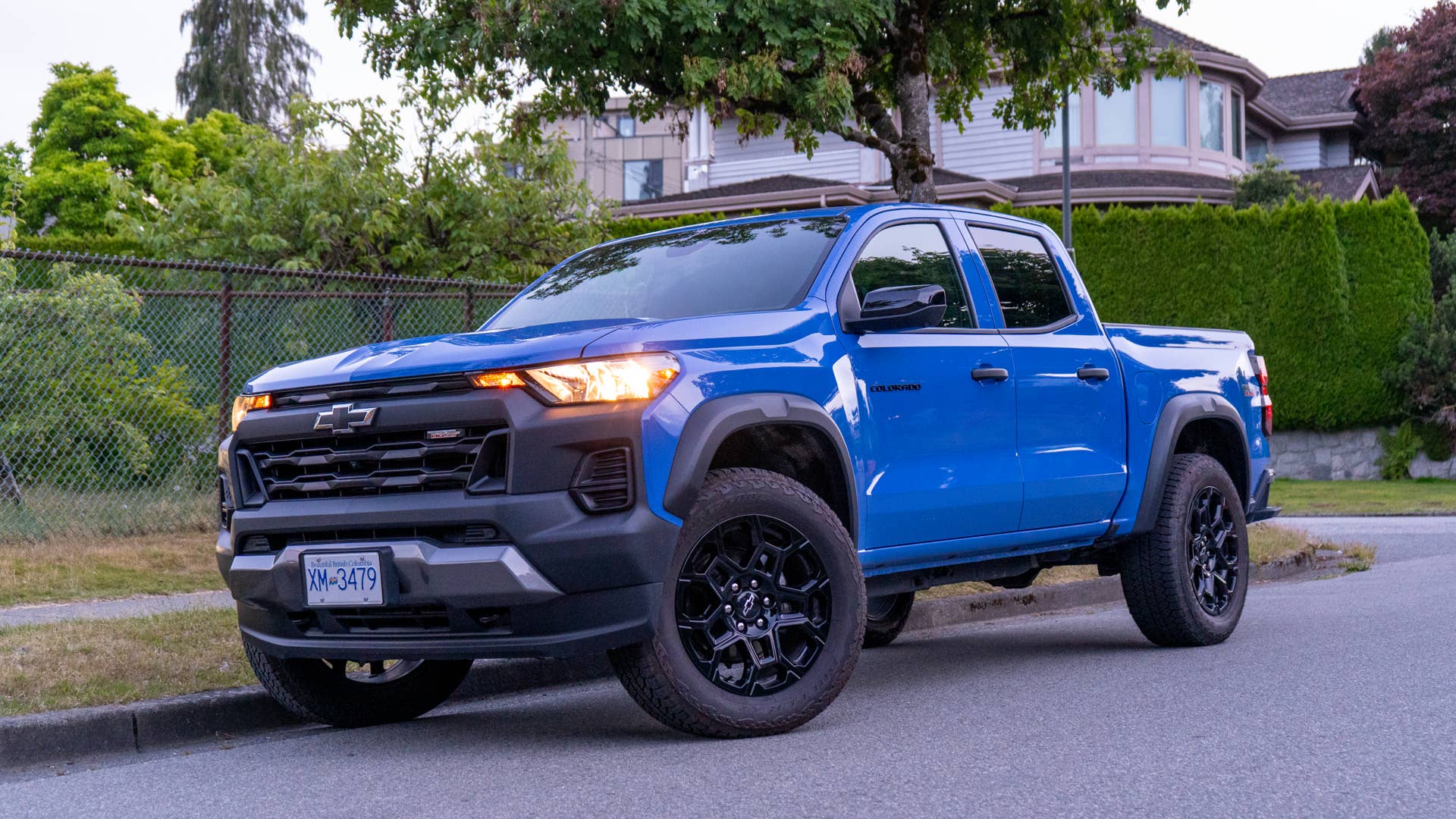
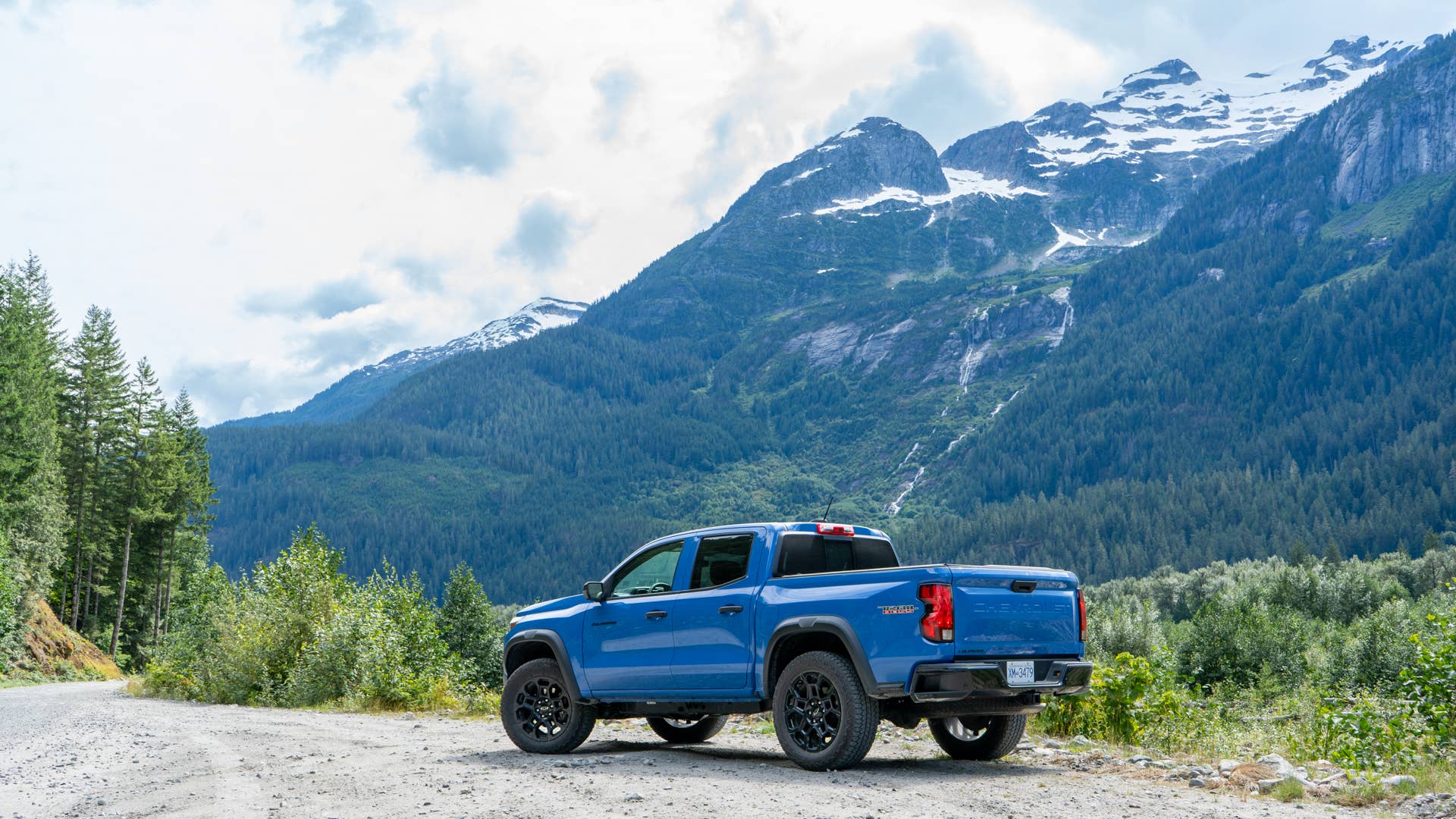
The 2026 Ford Ranger and Chevrolet Colorado give buyers plenty of room to make those decisions. I got to know them through a 2.7-liter V6 Ranger Lariat on a roughly 620-mile trip between Vancouver, B.C., and Vancouver, Washington, and a week with a Colorado Trail Boss around coastal British Columbia. City traffic and gravel backroads gave their respective talents—and irritations—somewhere to expose themselves. Those two trucks are the lenses through which I experienced both lineups, but we’ll start with what the different trims buy you, then move on to the engines, cabins, beds, and towing capabilities. Along the way, my time behind each wheel helps answer the question that gets harder as the options accumulate: which features would I actually pay for, and which truck would I rather live with?

2026 Chevrolet Colorado Trail Boss Crew 4WD

Cole Attisha

What Your Money Buys Across The Lineups

Ford offers XL, XLT, Lariat, and Raptor variants of the Ranger. Chevrolet advertises WT, Custom, LT, Trail Boss, Z71, and ZR2 versions, with the Bison package taking the ZR2 further into specialist territory.

Model

Version

Starting U.S. MSRP

Main emphasis

Ranger

XL

$33,550

Basic utility

Ranger

XLT

$35,970

Midrange equipment and option flexibility

Ranger

Lariat

$44,450

More standard cabin equipment

Ranger

Raptor

$57,665

Performance and specialist off-road hardware

Colorado

WT

$32,400

Basic utility

Colorado

Custom

$33,545

Appearance and value

Colorado

LT

$36,000

Everyday comfort and convenience

Colorado

Trail Boss

$40,500

Factory lift and off-road equipment

Colorado

Z71

$44,600

More cabin amenities with standard 4WD

Colorado

ZR2

$50,700

Specialist suspension and locking differentials

Prices exclude destination, options, taxes, and dealer charges. Regular Ranger starting prices cover the 2.3-liter engine and rear-wheel drive; the 2.7-liter V6 requires optional 4×4. Colorado Trail Boss, Z71, and ZR2 have standard 4WD.

Chevrolet starts $1,150 lower, but neither brand wins the value argument at every price point. XLT and LT begin around $36,000; Lariat and Z71 start within $150 of each other. A ZR2 starts $6,965 below a Raptor, before Bison or other options, but offers far less potent performance. Ford lets buyers combine its regular trims with an FX4 package, whereas Chevrolet gives its off-road models more distinct identities. The handsome, lifted Trail Boss I drove occupies one branch of that range, though we suspect a Tremor-branded Ranger will eventually arrive to directly take on Chevy’s no-frills overland-ready version.

Thinking about selling your car? Get an instant cash offer online now. Click here to get started.

2026 Ford Ranger Lariat 4×4

Cole Attisha/Autoblog

Two 2.7s, With Two Fewer Cylinders In The Chevy

Ford offers three engines in the Ranger: a 2.3-liter EcoBoost four-cylinder, a 2.7-liter EcoBoost V6, and a 3.0-liter EcoBoost V6. Chevrolet uses the same 2.7-liter TurboMax four-cylinder throughout the Colorado range, paired with an eight-speed automatic. Every Ranger uses a 10-speed automatic transmission, and every Colorado uses an 8-speed.

Engine

Availability

Horsepower

Torque

Ranger 2.3L turbo four-cylinder

Standard XL, XLT, Lariat

270 hp

310 lb-ft

Ranger 2.7L twin-turbo V6

Optional XLT and Lariat, with 4×4

315 hp

400 lb-ft

Ranger 3.0L twin-turbo V6

Raptor only

405 hp

430 lb-ft

Colorado 2.7L turbo four-cylinder

Every version

310 hp

430 lb-ft

Manufacturer-rated outputs; Raptor figures are based on premium fuel.[4–6]

That gives even the least expensive Colorado 40 more horsepower and 120 more lb-ft than a standard Ranger. Comparing the two 2.7-liter engines I drove, Ford has just five more horsepower, while Chevrolet has 30 more lb-ft, meaning that opting for six cylinders doesn’t automatically get you the strongest torque figure. In fact, Chevrolet’s four-cylinder makes the same torque as the Ranger Raptor, albeit with far less horsepower.

2026 Chevrolet Colorado Trail Boss Crew 4WD

Cole Attisha

The Chevy backed that up with eager low-speed response, a well-matched eight-speed, and an entertaining turbo whistle. The Ranger pulled hard on boost, but lag and reluctant downshifts could disrupt smooth driving. Its transmission was also less agreeable in slower traffic, where it often seemed unsure of which gear to be in. My impressions favor the TurboMax for everyday driving. Ford’s more diverse engine lineup still deserves credit: you can retain the less expensive 2.3, upgrade to the 2.7 without buying a Raptor, or spend considerably more for the Raptor’s additional 95 horsepower over any Colorado. Still, the Colorado’s powertrain offers far more for less, generally speaking.

That engine equation is likely to change for 2027, however. As Autoblog reported on October 19, the Ranger’s XLT and Lariat are expected to replace their optional 2.7-liter V6 with “a bigger, more powerful 3.0-liter EcoBoost V6.” That likely means a detuned version of the Raptor’s engine, though that report didn’t confirm final output or pricing.

Shopping for a new car? Click here to get a great deal on your next vehicle. Powered by Carvana: no-haggle pricing, 100% online.

2026 Ford Ranger Raptor

Ford

The Cabin Changes As You Climb The Range

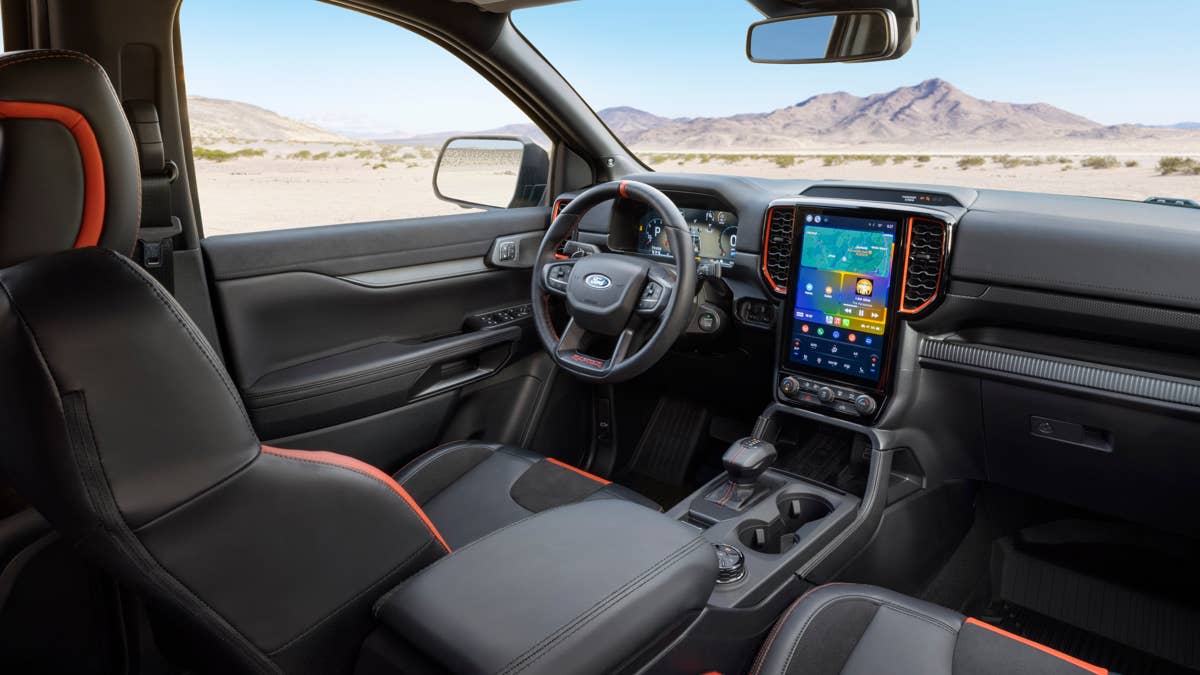
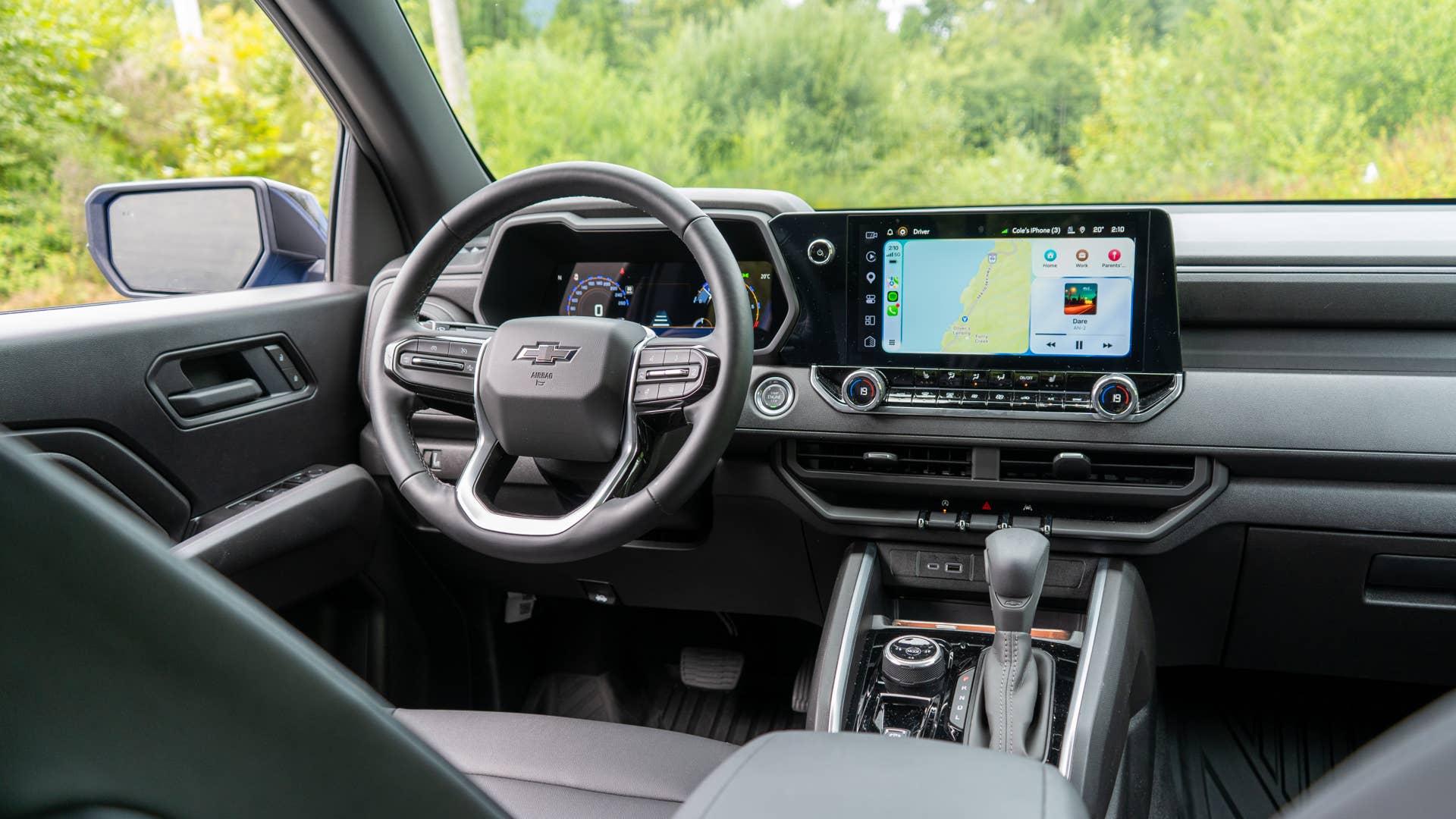
Both trucks offer crew cabs and five seats. Chevrolet installs an 11.3-inch touchscreen and 11-inch instrument display across its range. Ranger XL and XLT start with a 10-inch touchscreen and an 11-inch cluster; XLT adds a 12-inch touchscreen, while Lariat and Raptor get two 12-inch displays. My Lariat demonstrated the appeal of spending more on the Ford: heated ActiveX seats, B&O audio, proximity entry, and a useful power-sliding rear window. Opening that glass reduced buffeting with the side windows down. The seat, though durably appointed, wasn’t the most comfortable place to spend two separate six-hour straight driving stints, and its stiff headrests and limited arm support left my neck and shoulders aching. The Colorado’s Evotex seats suited my outings better, though apart from some multi-hour highway jaunts, I didn’t take the Colorado on as extensive a road trip as I did with the Ranger, so take that with a grain of salt.

2026 Chevrolet Colorado Trail Boss Crew 4WD

Cole Attisha/Autoblog

My Trail Boss lacked proximity unlocking and a telescoping steering wheel, but crucially, those aren’t shortcomings across the Colorado lineup. LT, Z71, and ZR2 have both, but even a Ranger XL supplies a telescoping wheel. Chevrolet’s trim ladder therefore requires closer scrutiny before consideration. The less expensive LT has conveniences the Trail Boss omits. Z71 combines more cabin amenities with its outdoorsy presentation, and it also offers ventilated front seats, which ZR2 includes as standard; the upper Rangers’ front seats offer heating without ventilation. I preferred the Chevy’s cabin overall, but I’d choose its equipment carefully. Paying more doesn’t always mean keeping everything from the cheaper version.

2026 Chevrolet Colorado Trail Boss Crew 4WD

Cole Attisha

Off-Road Hardware Changes The Character

The regular Rangers provide a familiar pickup layout, with rear leaf springs. The FX4 package adds off-road-tuned shocks, skid protection, and Trail Control without requiring the Raptor’s price or thirsty engine. The Colorado Trail Boss, by contrast, takes a visibly different approach with a two-inch lift and a wider stance. My Reef Blue example’s optional 20-inch wheels and 33-inch tires looked the part, although its firm ride was obvious on rough roads. The standard setup is 18-inch wheels with 32-inch tires.

Z71 brings additional equipment without the Trail Boss’s two-inch lift. ZR2 is the more substantial mechanical departure, with a three-inch lift, Multimatic DSSV dampers, and front and rear lockers. Bison adds 35-inch mud-terrain tires, further underbody protection, and jounce-control dampers. Ford answers with the Raptor’s Fox Live Valve dampers, coil-sprung Watts-link rear suspension, front and rear lockers, and a 405-hp V6. These are meaningful reasons to shop particular versions.

2026 Ford Ranger Lariat

Cole Attisha

Beds, Back Seats, And Trailer Numbers

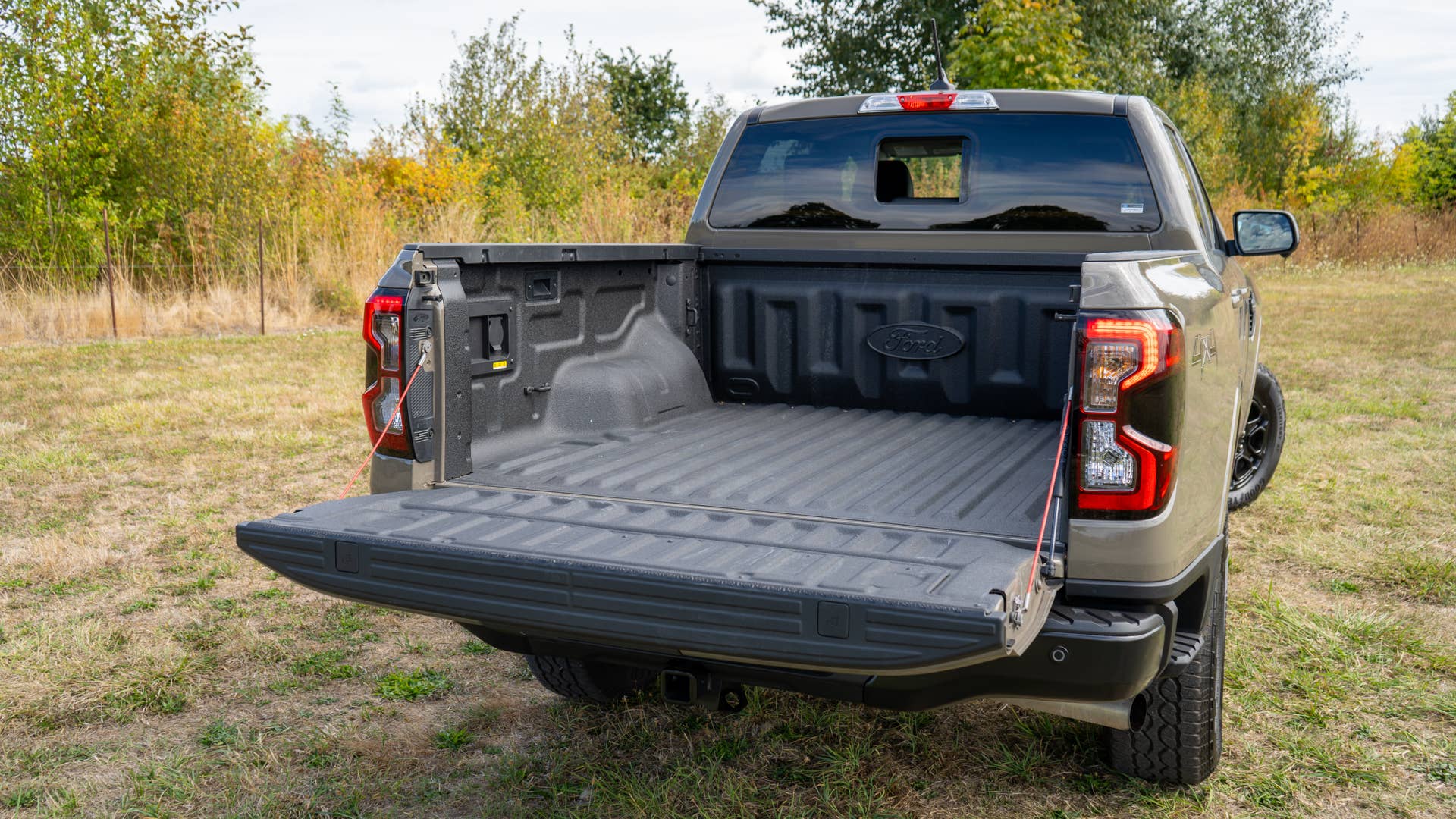
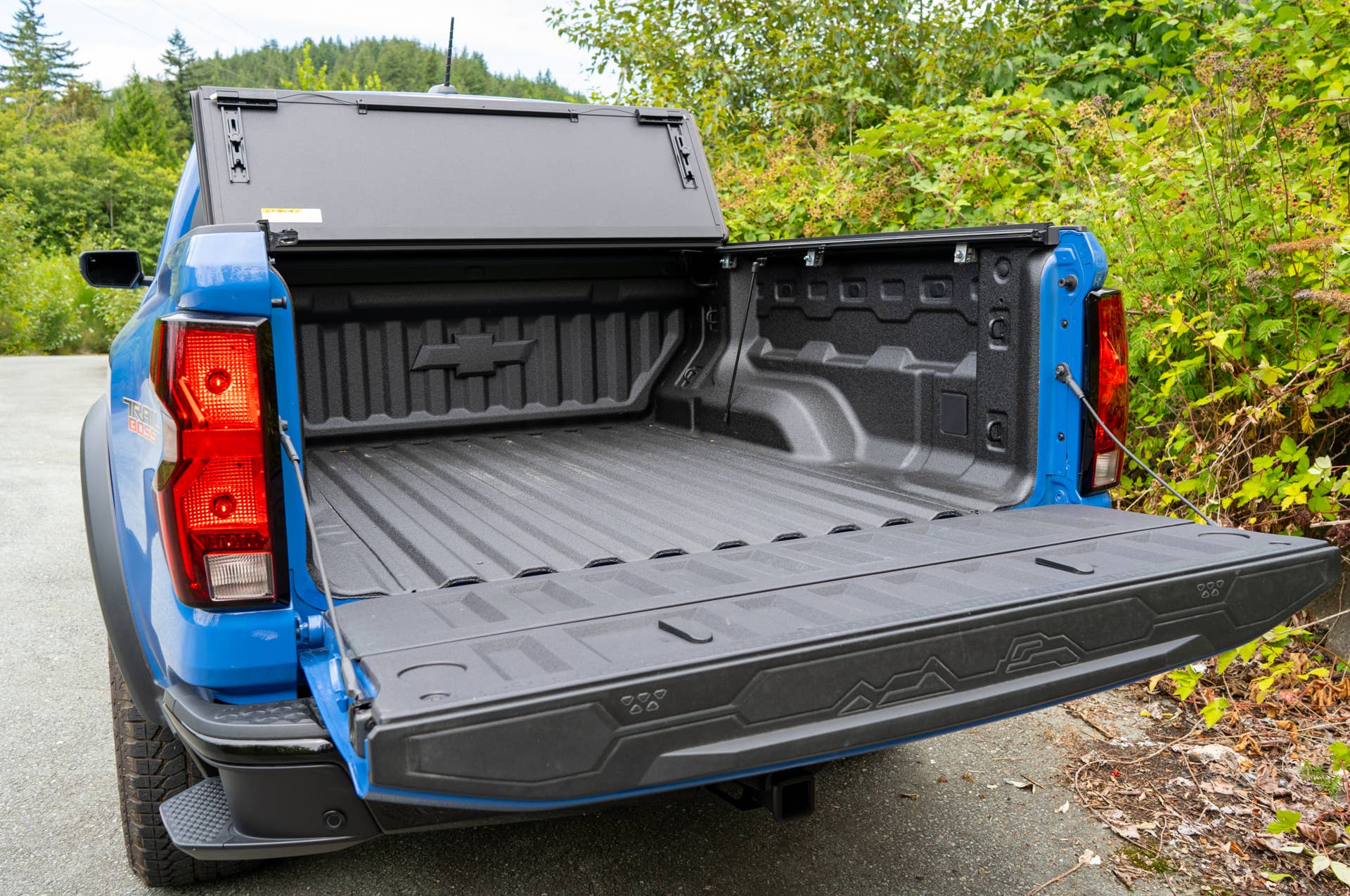
Both ranges offer a single crew-cab, roughly five-foot-bed format. Ford gives you a wider bed floor; Chevrolet gives you more length.

Practicality measure

Ford Ranger

Chevrolet Colorado

Bed length

59.6 inches (5 ft)

61.7 inches (5 ft 2 in)

Width between wheel housings

48.2 inches

45.5 inches

Bed volume

43.5 cu. ft.
41.9 cu. ft.

Rear legroom

34.6 inches

34.7 inches

Maximum advertised payload

1,767 pounds

1,710 pounds

Maximum towing, regular configurations

7,500 pounds — 2.3L or 2.7L

7,700 pounds — appropriate trailering equipment

Specialist-model towing maximum

5,510 pounds — Raptor

6,000 pounds — ZR2

Payload and towing are configuration-dependent maxima, not every truck’s capacity. Options, occupants, cargo, and trailer tongue weight affect usable capacity. The highest payload and towing figures need not occur together.

2026 Chevrolet Colorado Trail Boss Crew 4WD

Cole Attisha

A tenth of an inch doesn’t make one rearward cabin substantially more desirable than the other, but the bed-width difference could matter for your regular load. I also liked the Colorado’s tailgate ruler markings, and its roughly 2 more inches of length is worth noting. For towing, Chevrolet’s headline advantage is only 200 pounds on most models. Ford’s base four-cylinder can reach its regular Ranger maximum, so the V6 upgrade doesn’t raise the ceiling. Choose Raptor or ZR2 hardware, and the towing limit drops, though the Raptor sacrifices more hauling capability than the ZR2 does. Fuel economy also depends entirely upon specification. My V6 Ranger returned 22.2 mpg on its highway-heavy trip; the Trail Boss managed roughly 17 in mixed use, but their different routes skew that comparison.

2026 Chevrolet Colorado Trail Boss Crew 4WD

Cole Attisha

Which One I’d Rather Live With

Ford makes a persuasive case through choice: an affordable four-cylinder, an optional V6, and a Raptor with substantially more horsepower than Chevrolet offers. Its wider bed and available cabin equipment add practical reasons to consider it. That said, I’d still buy the Colorado out of these two if it came down to it. Its standard engine supplies the torque I want without an upgrade, and I preferred how its powertrain and cabin worked during my test. Plus, I’d be lying if I didn’t admit its loud, whistling turbo noises hadn’t factored into that decision. The Colorado’s appeal goes beyond the Trail Boss badge, but it’s still the one I’d go for, since I appreciated its no-frills, pure-capability direction, though I still wish it at least had a telescoping steering wheel.

Autoblog aims to feature only the best products and services. If you buy something via one of our links, we may earn a commission.